


It’s Homecoming week in Berkeley, and the Golden Bears have had a full two weeks to lick their wounds from their horrible road swing through Reno and Tucson.
With the UCLA Bruins and their own version of the dreaded pistol offense rolling into town, Coach Tedford and his troops have their work cut out for them.
The Bears need to avoid starting 0-2 in conference play for the second consecutive year, and UCLA – winners of three in a row—is not the pushover they at first appeared to be.
Here are five matchups to keep an eye on.
5. Cal’s O-Line Vs. UCLA’s Unpredictable Pass Rush
1 of 5
The play of the offensive line was one of the few bright spots in Cal’s loss at Arizona. Against a front seven that eats quarterbacks alive, they didn’t allow a single sack.
UCLA’s pass rush, on the other hand, is more of a Jekyll-and-Hide affair. In three games against Stanford, Houston, and Texas, they recorded just three sacks. Against Kansas State and Washington State, however, they racked up 11.
One of the things that makes the Bruins pass rush tough to defend is the multitude of looks they’ll show at the line of scrimmage. Most of them have something to do with the positioning of their stud outside linebacker, Akeem Ayers. He’ll alternate between linebacker and defensive end: shifts that have allowed him record a team-high 6.5 sacks.
Because UCLA is quite vulnerable against the pass, Kevin Riley will have a very good chance to succeed if he isn’t being harassed on every play.
4. The Bears’ Strong Side Vs. Kevin Prince
2 of 5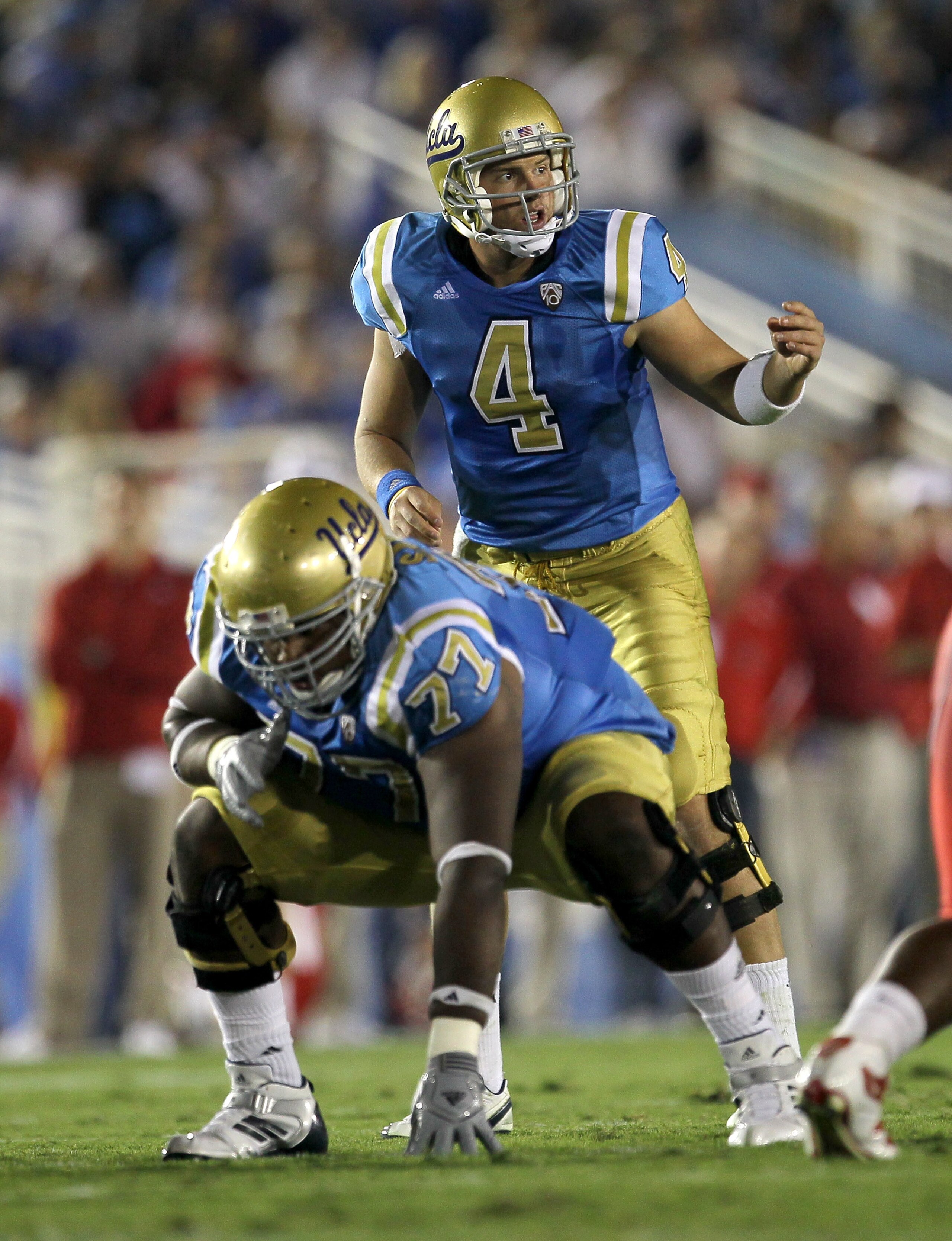
Cal's players and coaches appear to have hedged their bets on the general opinion that UCLA simply doesn't run the pistol as well as Nevada.
“UCLA does a nice job with it,” said Tedford earlier this week, “but they’re not as in depth as Nevada, as of yet.”
Exhibit A is Bruins sophomore quarterback Kevin Prince, who is nowhere near as explosive as Colin Kaepernick. To illustrate, Prince has fewer rushing yards on the season (142) than Kaepernick had in one game against Cal (148).
Containing Prince is a task that is going to fall primarily on the strong side of the Bears defense. When Prince keeps the ball, he almost always rolls out to the right. If Mychal Kendricks, Ernest Owusu and others can avoid overpursuing fake handoffs up the middle, they might be able to force Prince into making plays with his arm.
Given Prince’s 81.81 passer rating, which is dead last among Pac-10 starters, this bodes well for the Bears.
3. Vertical Passes Vs. Rahim Moore
3 of 5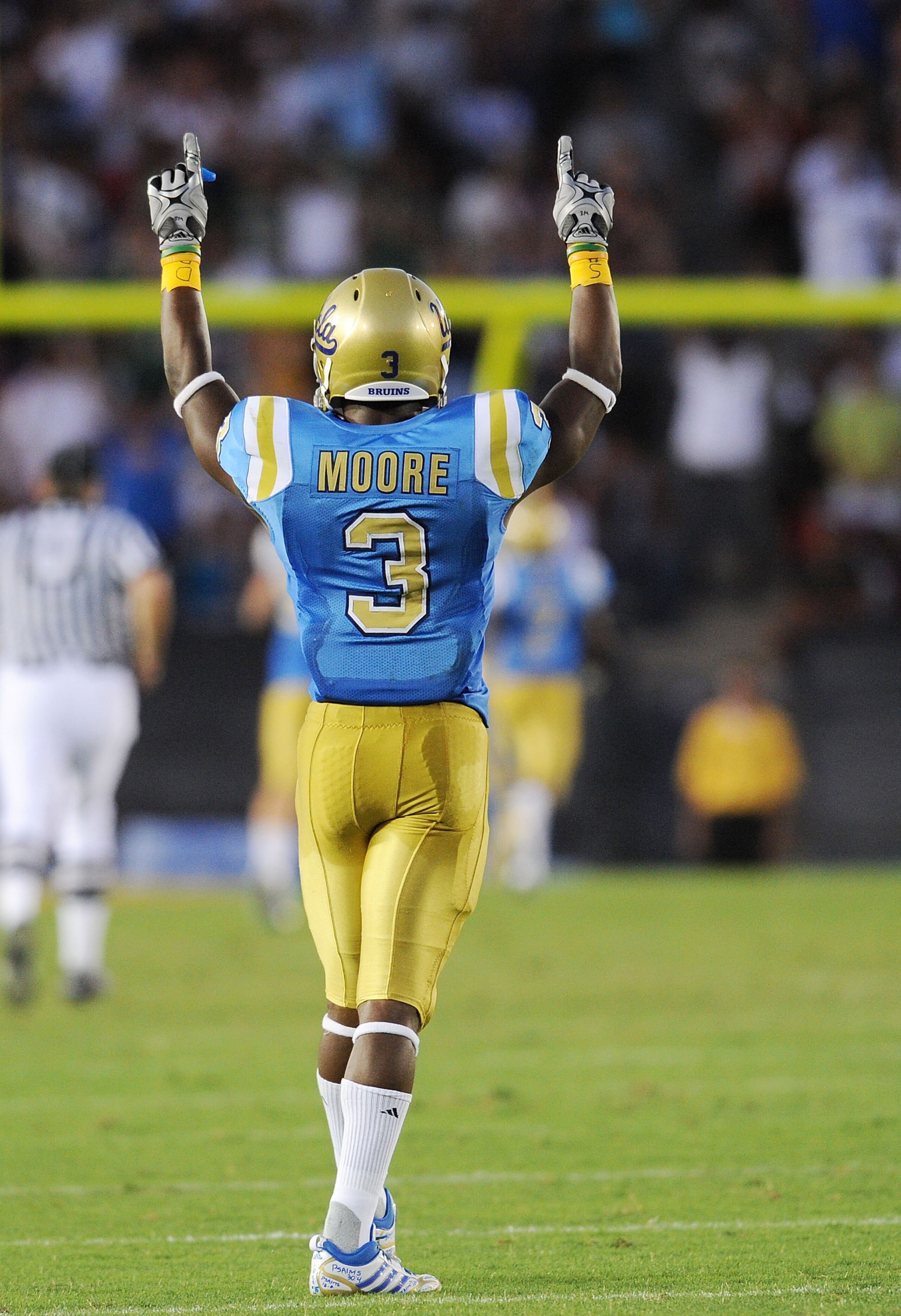
UCLA’s defensive averages—23.8 points and 366.4 yards per game—aren’t all that impressive. Nevertheless, they boast a couple players who are best left untested. One is Akeem Ayers. The other is junior safety Rahim Moore.
Moore’s ten interceptions in 2009 led the nation. So far in 2010, he has only one. Instead of blaming Moore, it seems more likely that teams have simply been avoiding him. It’s probably a good idea for Andy Ludwig’s offense to do the same.
Given Riley’s recent accuracy woes, Moore is probably an even bigger threat than usual this time around. Of Riley’s four interceptions in the last couple contests, two of them were on deep passes over the middle of the field that tipped off the hands of his intended receivers and into those of an opposing safety.
It’s a safe bet that Moore knows this as well as anyone.

2. Shane Vereen Vs. UCLA’s New-Look Front Seven
4 of 5
The numbers suggest that running the ball against UCLA is the way to go. They allow an average of 158 yards a game, and were torched for more than 200 yards by Kansas State and Stanford. However, they've held each of their last three opponents to less than 110 yards on the ground.
Nevertheless, the word around the campfire is that they’re going to change things up a bit for Shane Vereen.
The Bruins' front seven is going to see a major overhaul this week. Highly regarded true freshman Owamagbe Odighizuwa is likely to get the start at defensive end, which slides junior Nate Chandler over to defensive tackle, while the other end position will consist of a rotation of freshmen Keenan Graham and Damian Holmes, with cameo appearances by Akeem Ayers.
Did you get all that? No? Well, here’s the gist of it: UCLA defensive coordinator Chuck Bullough believes these changes are going to help stop the run and the pass.
This is the same guy who had to watch Vereen and Jahvid Best rack up 256 rushing yards against his squad last year. It appears that he doesn't want to repeat that experience.
1. Cal Linebackers Vs. UCLA’s Ground Attack
5 of 5
With only 455 passing yards all season, it’s apparent that UCLA just doesn’t move the ball through the air. Meanwhile, only Oregon has more rush yards within the conference, and their average of 262.4 rush yards per game is the tenth best average in the country.
The primary culprits are Derrick Coleman and Johnathan Franklin, the latter of whom is sixth in the nation in rushing with 625 yards. The tandem is coming off a 401-yard effort against Washington State, and it is likely that they will once again carry the load for UCLA on offense.
When it comes to the pistol, the Bears should know firsthand that stopping the run is easier said than done. And while everyone on the front seven needs to do their part, the linebackers in particular can’t afford to repeat their performance from the Nevada game. By their own admittance, the linebacking corps was overaggressive against Nevada, too often letting the play get behind them and forcing their mates in the secondary to contain the big play.
Having Mike Mohamed this time around against the pistol should be a huge boost. Couple this with the fact that Cal linebackers should know what not to do, and you’re left with the feeling Cal's defense probably won't be shredded again.
If they can limit the Bruins to pedestrian rushing totals, the Bears stand a very good chance of earning their first conference victory of 2010.
.jpg?w=2560)

.jpg?w=2560 "Jonathan Taylor Landing Spots")
.jpg?w=2560 "Malik Beasley Negotiating Plea Deal (AP)")

.jpg?w=2560 "NFL House in Paris Closes for Protests (AP)")