

Michigan Football: Denard Robinson and 10 Greatest Wolverines Ever
With all of Michigan football's accomplishments over the years, it takes quite a bit to become one of the Wolverines' greatest players of all time. There are players who had fantastic collegiate careers who failed to make the cut.
But in just five games as a starter, sophomore quarterback Denard Robinson has already been mentioned amongst the greatest players in the Maize and Blue's history. He's the most dynamic player in all of football, but is that enough to crack the top 10?
We broke down the 10 greatest players in Wolverines history, based off of their collegiate performance and their impact on the program; we also explain why they could be higher or lower in the rankings. Let's start with number 10.
10. Denard Robinson, QB, 2009-Present
1 of 10
Career Stats: 1,196 Passing yards (NR), 1,256 rush yards (NR), 6 passing touchdowns, 11 rushing touchdowns. 5 career starts
Impact on Program: Shoelace is the most electric player in Wolverines' history, setting single game yardage records in three of his first five games of 2010. If he keeps this up, he'll finish as the greatest Wolverine of all time. He has been the impetus behind Michigan's 5-0 start to 2010.
Why He Could Be Higher: Robinson is on pace to set all kinds of yardage records. His upside is tremendous, and he's a Heisman favorite through five weeks.
Why He Could Be Lower: The fact is, Robinson has yet to perform over the course of a full season. When he does, he'll cement his place among the all-time greats.
9. Tim Biakabatuka, RB, 1993-1995
2 of 10
Career Stats: 2,180 rushing yards (10), 24 rushing touchdowns (15).
Impact on Program: Biakabatuka was the bruising tailback for the Wolverines between 1993-1995, but only got significant playing time in 1994 and 1995. His 1995 season still ranks as the best statistical rushing season in Michigan history.
Why He Could Be Higher: Biakabatuka's stats were impacted by his lack of carries prior to 1994. His bruising style of play made him an excellent runner, and if he'd stayed for his senior season, he would have been higher on the list.
Why He Could Be Lower: Biakabatuka's tenure at Michigan was marked by finishes between 15-25 in the polls. For Michigan, that's not very good.
8. Tyrone Wheatley, RB, 1991-1994
3 of 10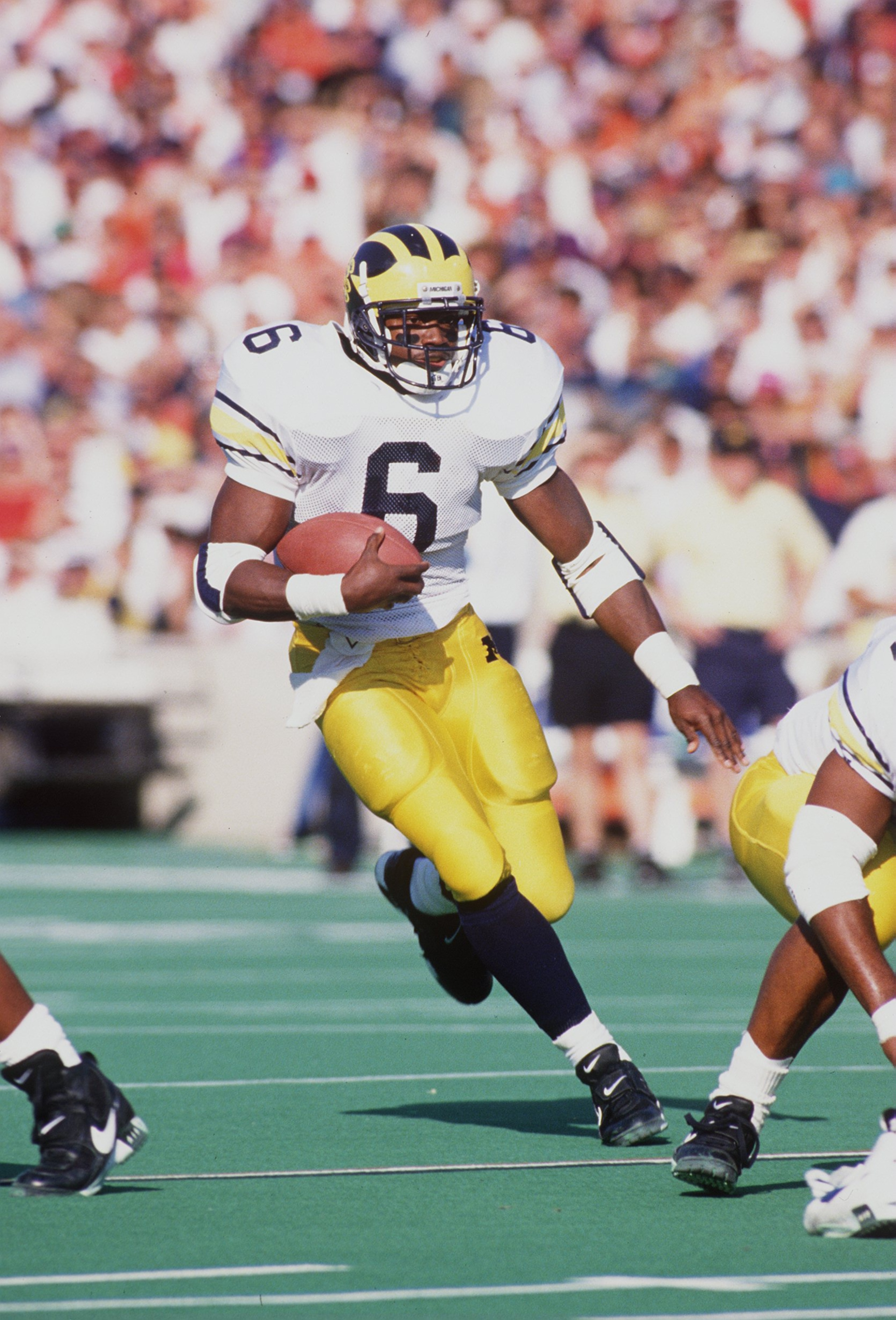
Career Stats: 4,178 Rush yards (4), 47 rushing touchdowns (2)
Impact on Program: Wheatley was one of Michigan's most successful runners of all time. He averaged over 1,100 yards per season in the three seasons he started for the Wolverines, and scored 12 or 13 touchdowns each of those last three seasons. He gashed defenses every game, but he loses points because of Michigan's mediocrity in those seasons.
Why He Could Be Higher: There haven't been many rushers in college football with Wheatley's career numbers. He was an excellent back, incredibly consistent week in and week out.
Why He Could Be Lower: For all his consistency, Wheatley failed to have one of those monster games or seasons that can define a career. He was simply a big, powerful runner, nothing more.


7. Braylon Edwards, WR, 2001-2004
4 of 10
Career Stats: 252 catches (1), 3,541 receiving yards (1), 39 touchdowns (1)
Impact on Program: Edwards was statistically the best wide receiver in Michigan history. He holds every major statistical category's record, and he won the Biletnikoff award for college football's best wideout in 2004. But the Wolverines never lost fewer than three games in Edwards' tenure, and he wasn't the best on-field leader.
Why He Could Be Higher: He's the best wideout in Michigan history, according to the stats.
Why He Could Be Lower: Michigan failed to win much of anything during his time at the school.
6. Jim Harbaugh, QB, 1983-1986
5 of 10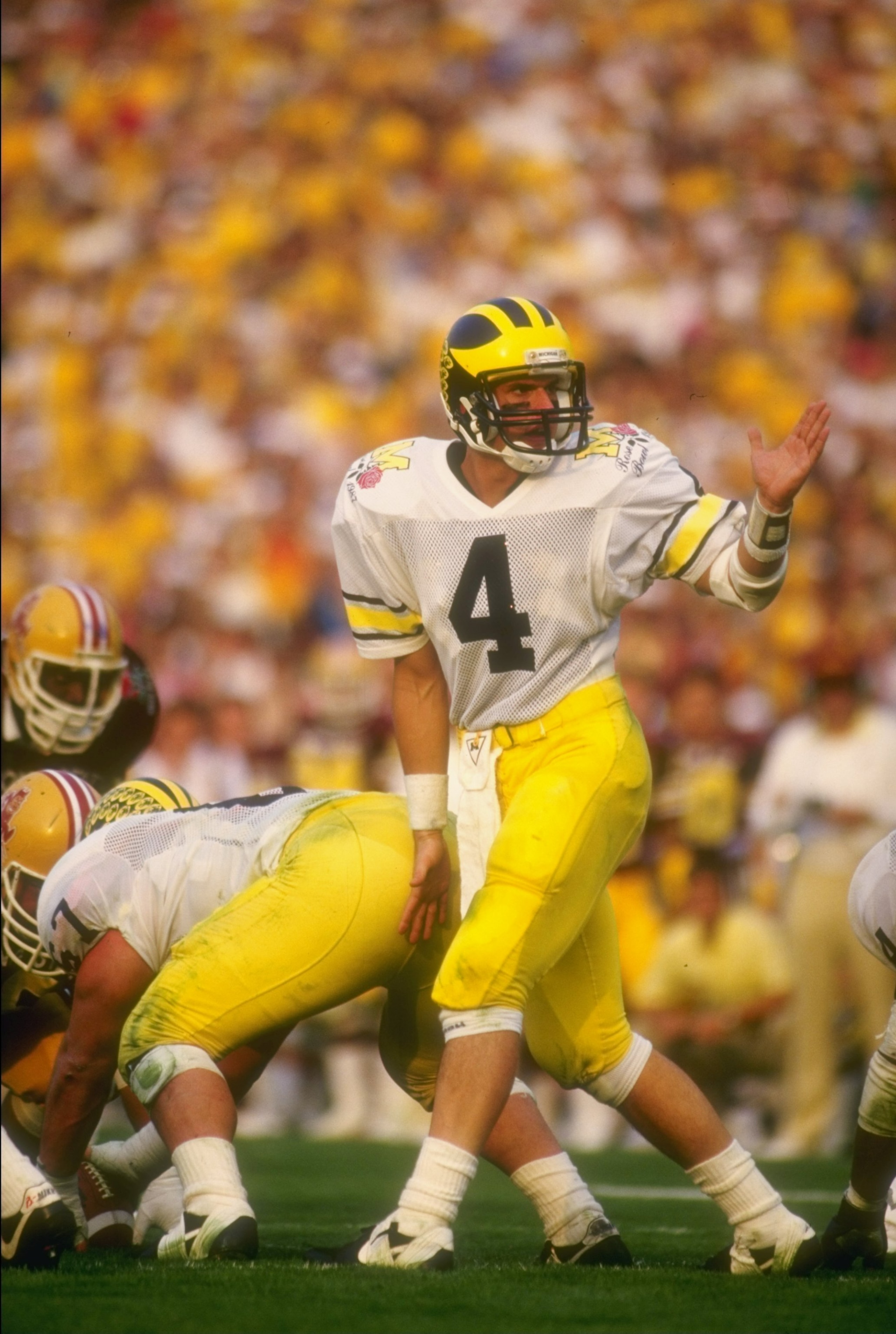
Career Stats: 5,449 passing yards (5), 31 passing touchdowns (9)
Impact on Program: Harbaugh is one of Michigan's most legendary quarterbacks. He finished his career in the top five in every major statistical category in Wolverines history, and in 1985 and 1986, led the Wolverines to a combined 21-3-1 record. If he hadn't lost most of 1984 to an injury, he'd be even higher.
Why He Could Be Higher: Harbaugh was an on-field leader, and you can't measure those intangibles with stats. Plus, his stats are still top 10 in Michigan history despite missing almost all of his sophomore year.
Why He Could Be Lower: Harbaugh's touchdown totals were low for a player who's yard totals were so high, and two seasons wasn't enough to get him into the top 5.
5. Rick Leach, QB, 1975-1978
6 of 10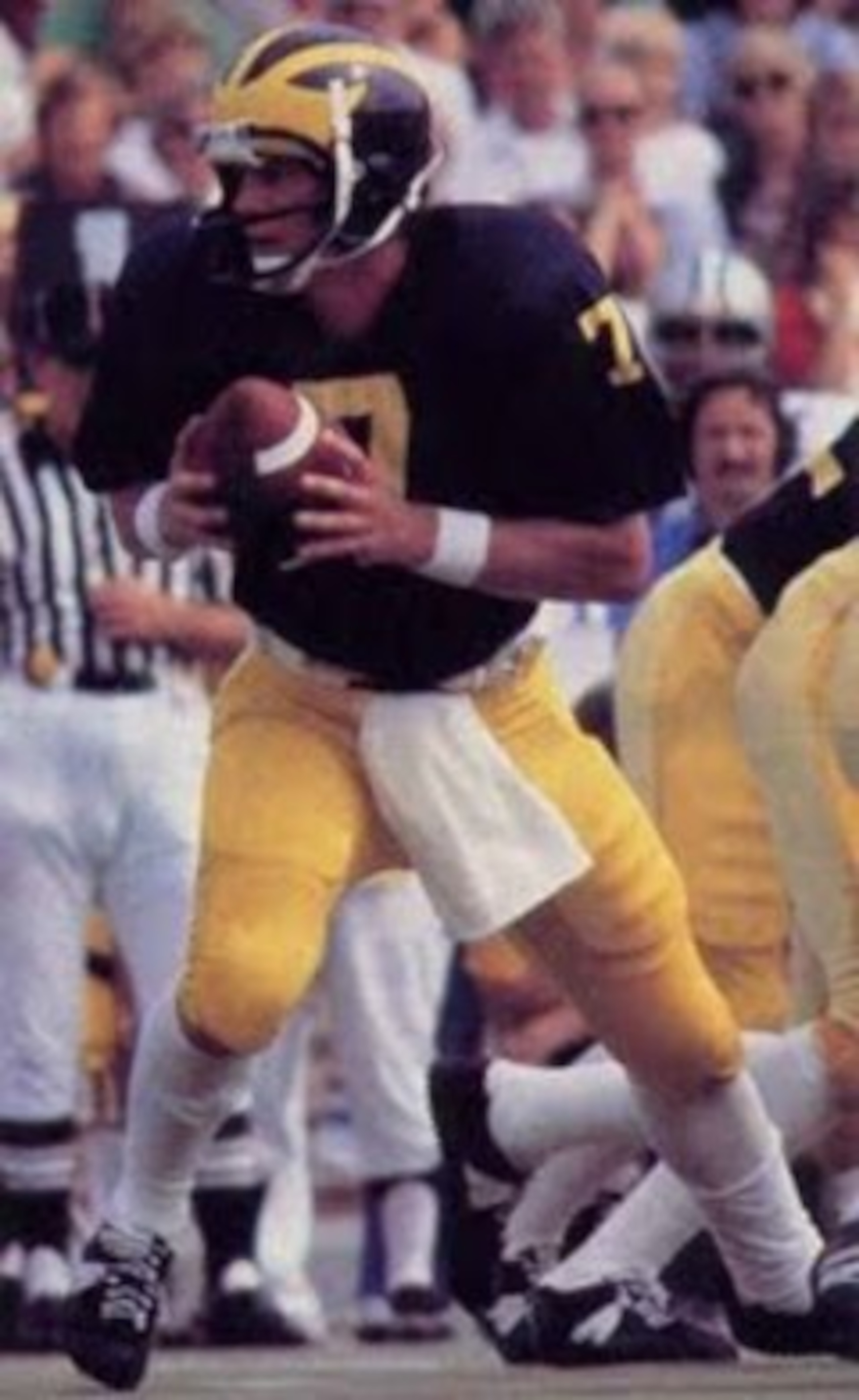
Career Stats (Michigan Ranks in Parenthesis): 4,284 Passing yards (9), 2,176 rushing yards (19), 42 passing touchdowns (4), 34 rushing touchdowns (5)
Impact on Program: Long before Denard Robinson was even conceived, there was another dual threat quarterback in Ann Arbor. Leach holds the Wolverines' record for most combined touchdowns, and with him at the helm, Michigan went 10-2 for three consecutive seasons, and 8-2-2 his freshman year. When he left, he was the most successful quarterback in the program's history.
Why He Could Be Higher: Rick Leach was a quarterback before his time. He could run and throw with equal skill, something not as heavily valued in those days. He was a fantastic leader, and the Wolverines were incredibly successful in his tenure.
Why He Could Be Lower: Despite his regular season leadership, Leach's tenure as Wolverines quarterback was marked by failure in bowl games. He went 0-4 in his four years in Ann Arbor. For all his success, he failed to win a single national award.
4. Desmond Howard, WR, 1989-1991
7 of 10
Career Stats: 2,146 receiving yards (10), 32 touchdowns (3)
Impact on Program: As one of just 4 Heisman trophy winners in Wolverines history, Howard deserves a top 5 spot on the list. His receiving numbers weren't great, but they were bolstered by his incredible kick return skills. One of the greatest athletes in college football history.
Why He Could Be Higher: Really, he couldn't. Howard's right about his peak on this list.
Why He Could Be Lower: Howard's numbers aren't all that great, especially when compared to other Michigan receivers. He was a burner who never quite lived up to the hype, even in his Heisman Trophy season.
3. Charles Woodson, CB, 1995-1997
8 of 10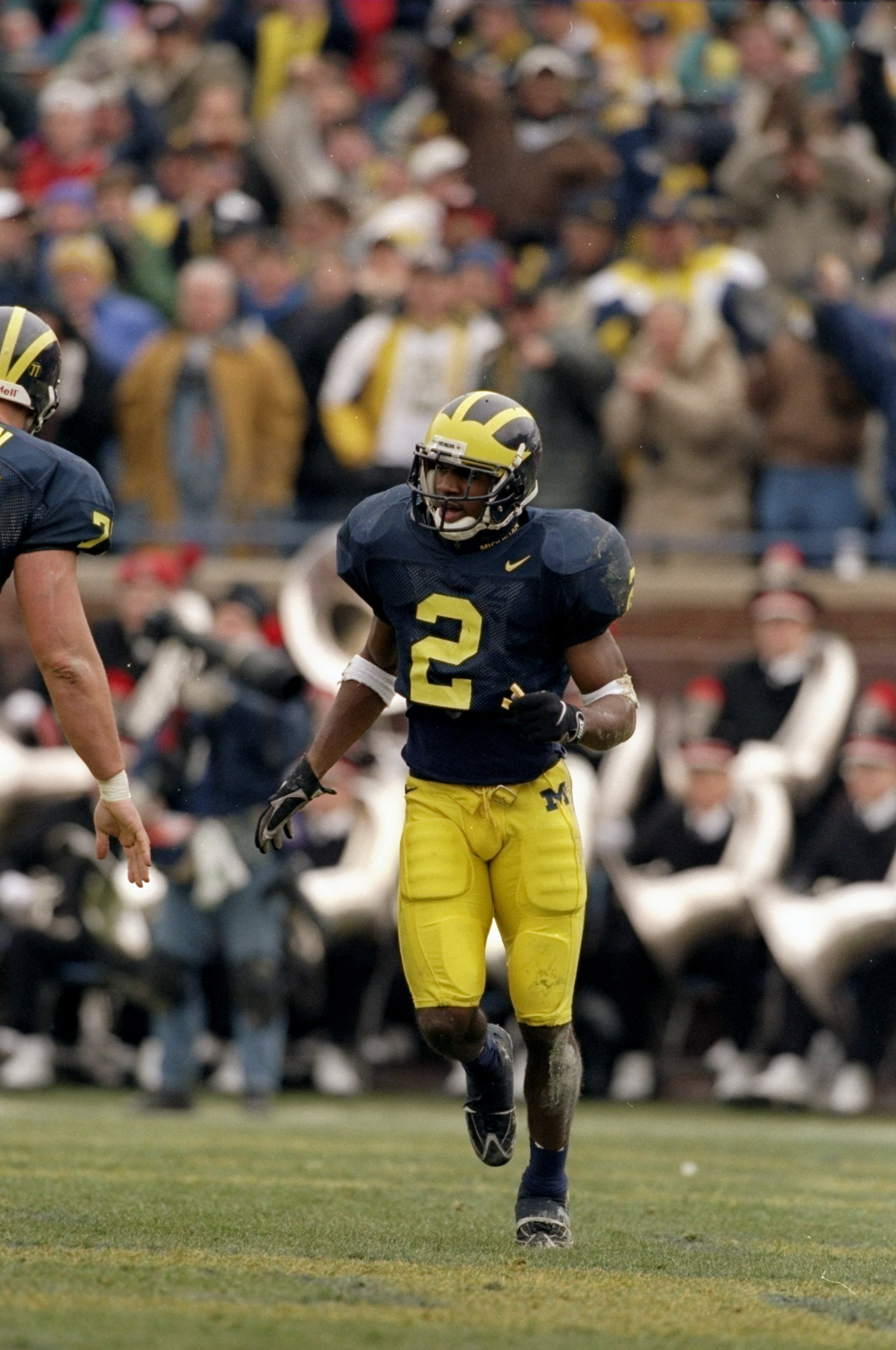
Career Stats: 18 Interceptions, 141 tackles (120 solo, 42 assisted)
Impact on Program: Woodson was one of college football's most versatile players during his tenure at Michigan. The cornerback won the Heisman trophy in 1997, and led that year's Wolverine team to it's first national title since 1948. Sounds like he had a pretty significant impact on the program.
Why He Could Be Higher: It's tough to measure defensive players' impact on football games, and Woodson is no exception. Who knows what h ecould have done if teams hadn't stopped throwing at him.
Why He Could Be Lower: Woodson was great, but he wasn't the sole reason for Michigan's success during his tenure. Quarterbacks Brian Griese and Tom Brady were excellent, as well.
2. Anthony Thomas, RB, 1997-2000
9 of 10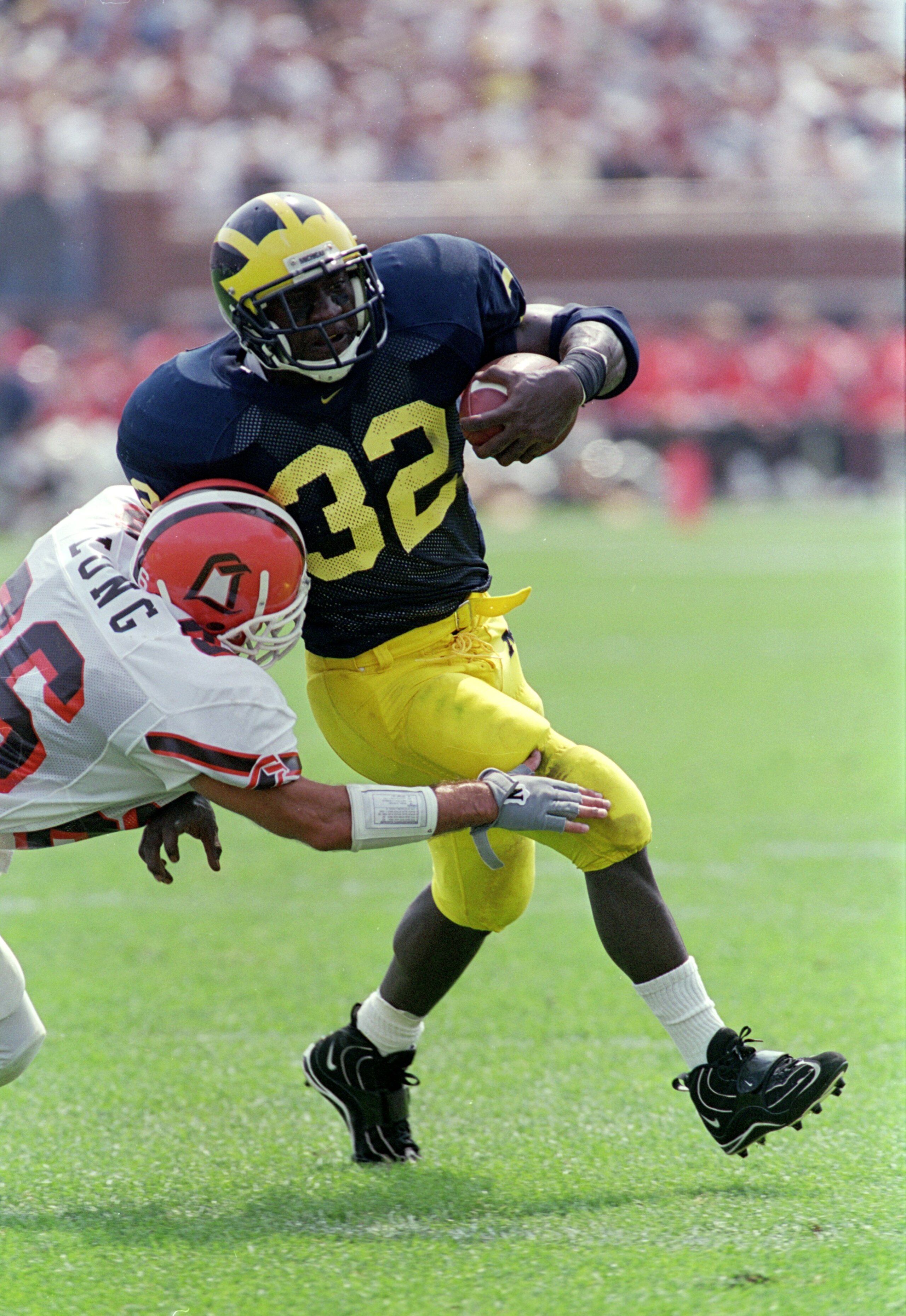
Career Stats: 4,472 rushing yards (2), 55 rushing touchdowns (1)
Impact on Program: Johnson was one of college football's best running backs nearly his entire collegiate career. He posted the second highest single season yardage total in Michigan history with 1,733 yards in 2000, and holds three of the Wolverines' top five single season touchdown performances. He blew up defeneses every time he touched the ball, and his combination of power and speed was a perfect fit for Lloyd Carr's offenses.
Why He Could Be Higher: He can't go any higher than this. There's no way Thomas surpasses the greatest Wolverine of all time.
Why He Could Be Lower: In 2000, Michigan finished 9-3, their worst record during Thomas' tenure. 2000 was also the year Thomas hit his career high in rushing yards. Coincidence?
1. Tom Harmon, RB, 1938-1940
10 of 10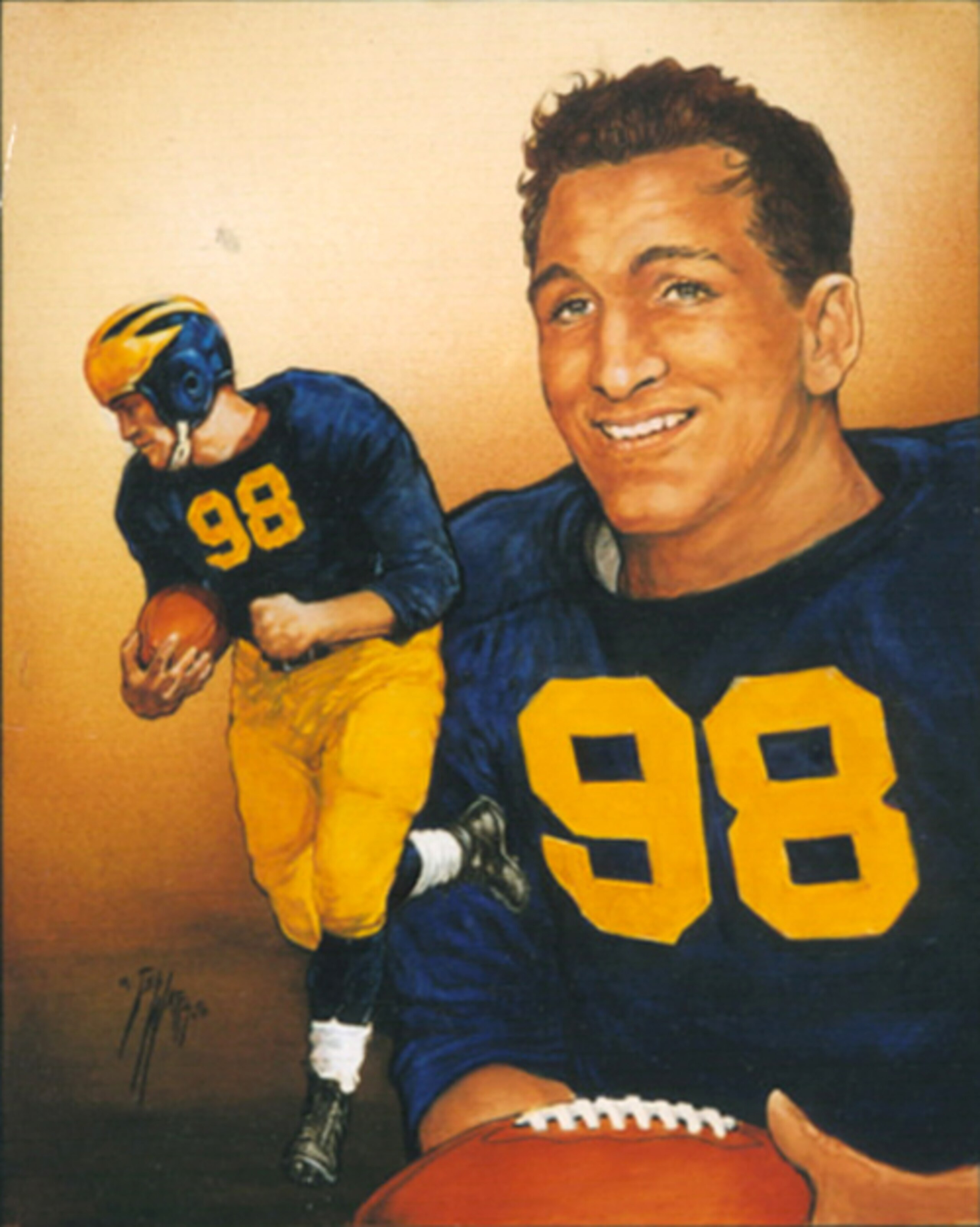
Career Stats: 2,338 rush yards, 30 rushing touchdowns, 1,354 passing yards, 16 touchdowns, 296 return yards, 1 return touchdown, 33 PAT's, 2 field goals, 8 interceptions, 2 interception return touchdowns
Impact on Program: Harmon was the greatest Wolverine ever to don the Maize and Blue. He played both sides of the ball exceptionally, could run, throw and catch, and was a ferocious defender. He won the 1940 Heisman Trophy, and led the Wolverines to a 19-4-1 record in his three years at the school. He is widely considered to be the best player in Michigan history.
Why He Could Be Higher: Seeing as he's ranked number one, he can't be ranked higher.
Why He Could Be Lower: He couldn't be. The best player in Michigan history.
.jpg?w=2560)

.jpg?w=2560 "Jonathan Taylor Landing Spots")
.jpg?w=2560 "Malik Beasley Negotiating Plea Deal (AP)")

.jpg?w=2560 "NFL House in Paris Closes for Protests (AP)")