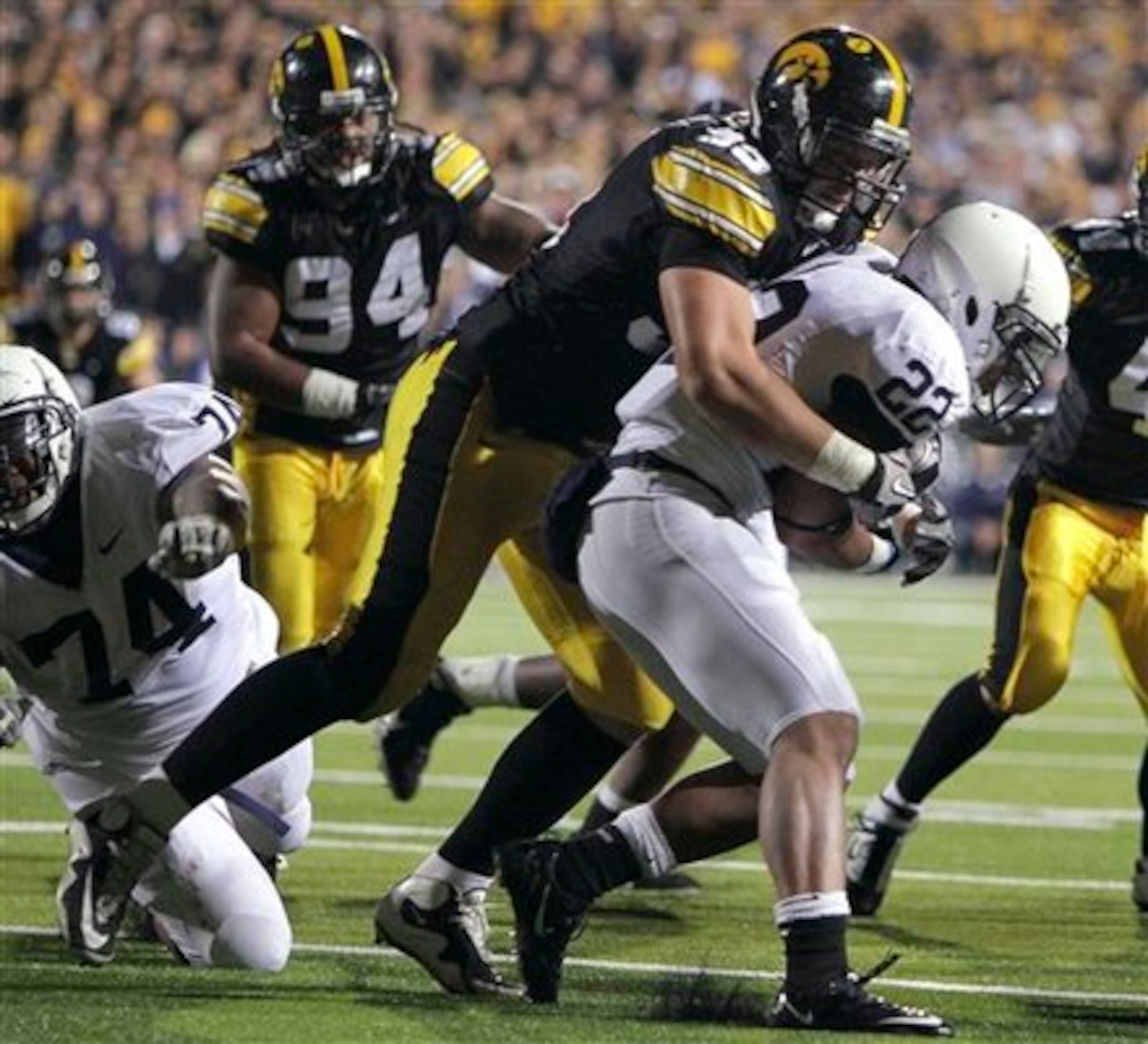

Big Ten Football: Power Ranking the Conference Defenses Going Into Week 6
I think by this point in the season, we have a clear picture regarding team dynamics and, specifically, how good (or bad) each defensive unit is.
Basically, I'll spare everybody any suspense, and say that it looks like there is a four-team bottom tier comprised of Minnesota, Indiana, Purdue, and Michigan.
Then there is the five-team average tier, which includes Northwestern, Wisconsin, Illinois, Michigan State, and Penn State (as an aside, when was the last time you could call a Penn State defense "average?").
Finally, there are the two elite defenses: Iowa and Ohio State.
I don't think any of this is a shock to anybody. I also don't think there will be any major changes in these groupings from now until the end of the season, crippling injuries aside.
Certainly, teams will improve. Furthermore, from week-to-week, a team within one tier might play above itself and move to the top of that group, while another team might stumble a bit and fall a place or two.
However, as regards defense, Indiana is not going to have a defensive epiphany and start mauling opposing tailbacks. Conversely, Ohio State is not going to fall to pieces and allow Purdue to put up 40 points.
That said, it should also be noted that it is no coincidence that the teams that currently project to be at the top of the conference—potentially Michigan aside—are also the top three defenses. Or, in the words of Adam Smith, "Defense is superior to opulence."
And so, without further adieu, the Big Ten's best and worst defenses.
Minnesota Golden Gophers
1 of 11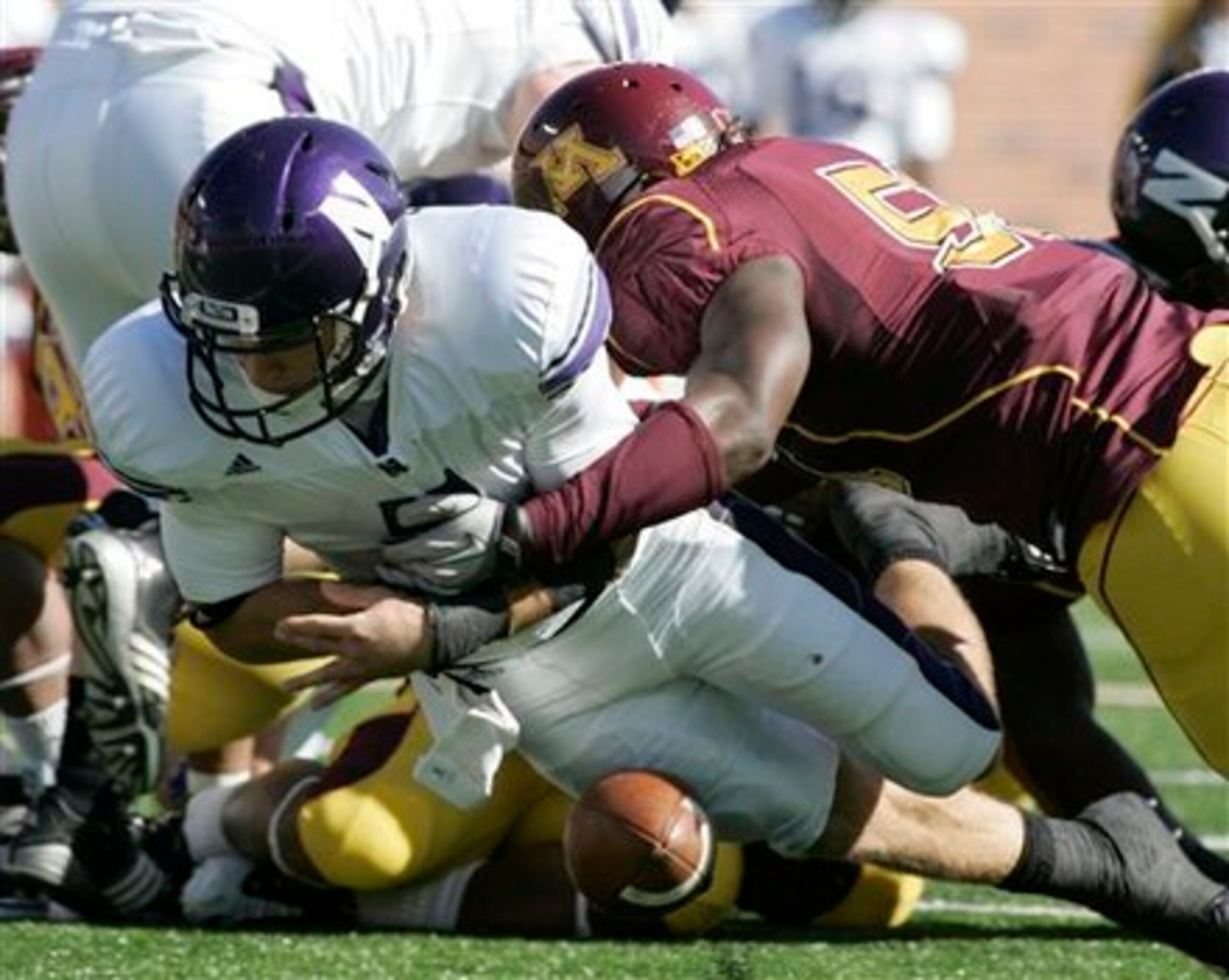
Games Played: At Middle Tennessee- W 24-17. South Dakota (FCS)- L 38-41. Southern Cal- L 21-32. Northern Illinois- L 23-34. Northwestern- L 28-29.
Team Leaders in Tackles: Gary Tinsley LB, 32, Keanon Cooper LB, 26, Kyle Theret, S, 25.
Tackles-for-loss: Jewhan Edwards, DL, 5.5.
Sacks: Three tied with one apiece.
Interceptions: Mike Rallis LB, and Michael Carter CB, tied with two apiece.
Team Statistics: 30.6 points allowed per game. 406.8 yards allowed per game. 185.6 rushing yards allowed per game. Defense pass efficiency: 164.34. Three sacks, six interceptions, three forced fumbles, and three fumble recoveries. 18 first downs allowed per game. Opponents' third down conversion percentage: 46.15. Opponents' fourth down conversion percentage: 75. Red zone defense: 13-15.
What is Wrong: Ugh. Just about everything. Their pass defense is a joke. In fact, they are ranked 116th nationally in terms of defensive pass efficiency. That is four from dead last. Contributing directly to that is their pass rush. With only three sacks, said pass rush is non-existent and ranks second-to-last nationally.
Perhaps that means they are selling out to stop the run?
Nope. Their rush defense isn't much better at 96th nationally.
In fact, the only defensive statistic where Minnesota ranks higher than eighth in the Big Ten is tackles-for-loss. In that, they rank fifth.
What is even worse is that they run a ball control offense. They are currently No. 1 in the Big Ten in time of possession. This sort of offense is supposed to take pressure off the defense by keeping them off the field. Imagine if they ran an offense more like Michigan's up-tempo O.
What is Right: About the only good thing I can think to say about this defense is that junior linebacker Gary Tinsley is playing decent ball.
It's a shame, because they've got a decent offense—unlike last year—and if their defense could do anything, they could win a few ballgames.
Indiana Hoosiers
2 of 11
Games Played: Towson (FCS)- W 51-17. Western Kentucky- W 38-21. Akron- W 35-20. Michigan- L 35-42.
Team Leaders in Tackles: Tyler Repogle LB- 26, Leon Beckum LB and Jeff Thomas LB- tied with 20 apiece.
Tackles-for-loss: Three players tied with two each.
Sacks: Three players tied with one each.
Interceptions: Three players tied with one each.
Team Statistics: 25 points allowed per game. 397.25 yards allowed per game. 207 rushing yards allowed per game. Defense pass efficiency: 140.78. Four sacks, three interceptions, four forced fumbles, and two fumble recoveries. 16.25 first downs allowed per game. Opponents' third down conversion percentage: 35.56. Opponents' fourth down conversion percentage: 33.33. Red zone defense: 8-9.
What is Wrong: The Hoosiers rank 107th nationally in both sacks and tackles-for-loss. On top of that, their rush defense is ranked 108th. It would appear that the defensive line is getting little to no penetration, and is just getting pushed around by the opposition.
This is particularly disturbing when you consider who they've played so far this year. Towson is a lousy FCS team, and Akron and Western Kentucky have a combined record of 0-9.
Given that, I'm almost surprised Michigan—the third best rushing offense in the country—didn't put more points on Indiana.
Unfortunately, their problems don't end with the run, as their pass defense efficiency ranks 98th.
What is Right: The Hoosier back seven really aren't that terrible (surprisingly). The problem is, there is only so much they can do with no pass rush.
In fact, if Indiana had a line with a semblance of a pulse, it is possible that the pass defense would at least put up average numbers. Unfortunately, that is not the case.
Purdue Boilermakers
3 of 11
Games Played: At Notre Dame- L 12-23. Western Illinois- W 31-21. Ball State- W 24-13. Toledo- L 20-31.
Team Leaders in Tackles: Ryan Kerrigan DE- 34, Joe Holland DB and Link Logan DB- 23 each.
Tackles-for-loss: Ryan Kerrigan DE- 12
Sacks: Ryan Kerrigan DE- 4.5
Interceptions: Jason Werner LB and Ricardo Allen CB- one apiece.
Team Statistics: 22 points allowed per game. 349.5 yards allowed per game. 148 rushing yards allowed per game. Defensive pass efficiency: 136.57. 12 sacks, two interceptions, ten forced fumbles, and four fumble recoveries. 19.25 first downs allowed per game. Opponents' third down conversion percentage: 46.3. Opponents' fourth down conversion percentage: Zero (two attempts). Red zone defense: 12-17.
What is Wrong: Independent of statistics, Purdue might have the worst pass defense in the conference. More specifically, they probably do have the worst secondary in the conference.
What separates them from the teams that actually rank lower than them is the fact that they have a good pass rush. However, their third down conversion percentage—which ranks 103rd in the country—gives one a clue that if a team gameplans against the pass rush, the Boilers have no ability to counter.
On top of that, their rush defense is ninth in the conference.
What is Right: Ryan Kerrigan and sixth-year senior linebacker Jason Werner. That's about it.
I'll get back to Kerrigan in a second. As for Werner, the Boilers are quite lucky he was granted a hardship redshirt. I'm not saying he didn't deserve it, but if not for him, there wouldn't be anybody notable on this D other than Kerrigan.
As for Kerrigan, statistically speaking, he is obviously all-world. Furthermore, due primarily to Kerrigan, the Boilers have the most sacks in the Big Ten. They also have the most tackles-for-loss.
Nevertheless, one has to wonder about a team that has the most sacks and tackles-for-loss, yet also has the ninth worst rushing defense, the ninth worst pass efficiency defense, the seventh worst total defense, and the eight worst scoring defense.
It would appear that as long as the opposition can move the ball past the line of scrimmage, one way or the other, it's going to go for a solid gain.
Either way, they're certainly finding their way into the backfield.


Michigan Wolverines
4 of 11
Games Played: UConn- W 30-10. At Notre Dame- W 28-24. UMass (FCS)- W 42-37. Bowling Green- W 65-21. At Indiana- W 42-35.
Team Leaders in Tackles: Jonas Mouton LB- 47, Jordan Kovacs S- 46, Cam Gordon S- 39.
Tackles-for-loss: Mike Martin DE- 4.5.
Sacks: Mike Martin DE and Greg Banks DL- tied with two apiece.
Interceptions: Cam Gordon S and Jonas Mouton LB- tied with two apiece.
Team Statistics: 25.4 points allowed per game. 433.6 yards allowed per game. 125.8 rushing yards allowed per game. Defense pass efficiency: 129.47. Seven sacks, seven interceptions, two forced fumbles, and two fumble recoveries. 22.4 first downs allowed per game. Opponents' third down conversion percentage: 41.89. Opponents' fourth down conversion percentage: 60. Red zone defense: 16-19.
What is Wrong: Primarily the pass defense. This is hardly a surprise given the attrition of UM's secondary.
In the backfield, the Wolverines are starting two recently converted wide receivers. Also, of the four players, two are redshirt sophomores and one is a redshirt freshman. The other is a senior, but he is one of the recently converted wideouts.
All four of the second string D-backs are true freshmen.
Due to this, Michigan's pass efficiency defense is ranked eighth in the conference. Their overall pass defense is ranked last. This lackluster pass defense contributes directly to the Wolverines' third down defense, which is ninth in the conference.
Also, complicating the defensive issues is Michigan's up-tempo offense. Certainly, they score a lot, which is good, but they score quickly. In fact, UM is dead last in the conference in time of possession. This puts a good amount of pressure on an already struggling defense.
Nevertheless, what I find most concerning about the Wolverine defense is the lack of development of the linebackers. The secondary's issues make sense. They're young and inexperienced. On the other hand, these linebackers are experienced, and they aren't much better than last year.
What is Right: Michigan does have an adequate rush defense. They are ranked seventh in the conference and 37th nationally.
A large part of the reason for this is because of the play up front, particularly linemen Mike Martin and Ryan Van Bergen. Both of these juniors are playmakers that might get more attention if not for how woeful much of the rest of the defense is, as well as how stellar the UM offense is.
Also, given the youth of the secondary, the reality is they should only get better. This bodes well for the future, as well as for the rest of the season.
Northwestern Wildcats
5 of 11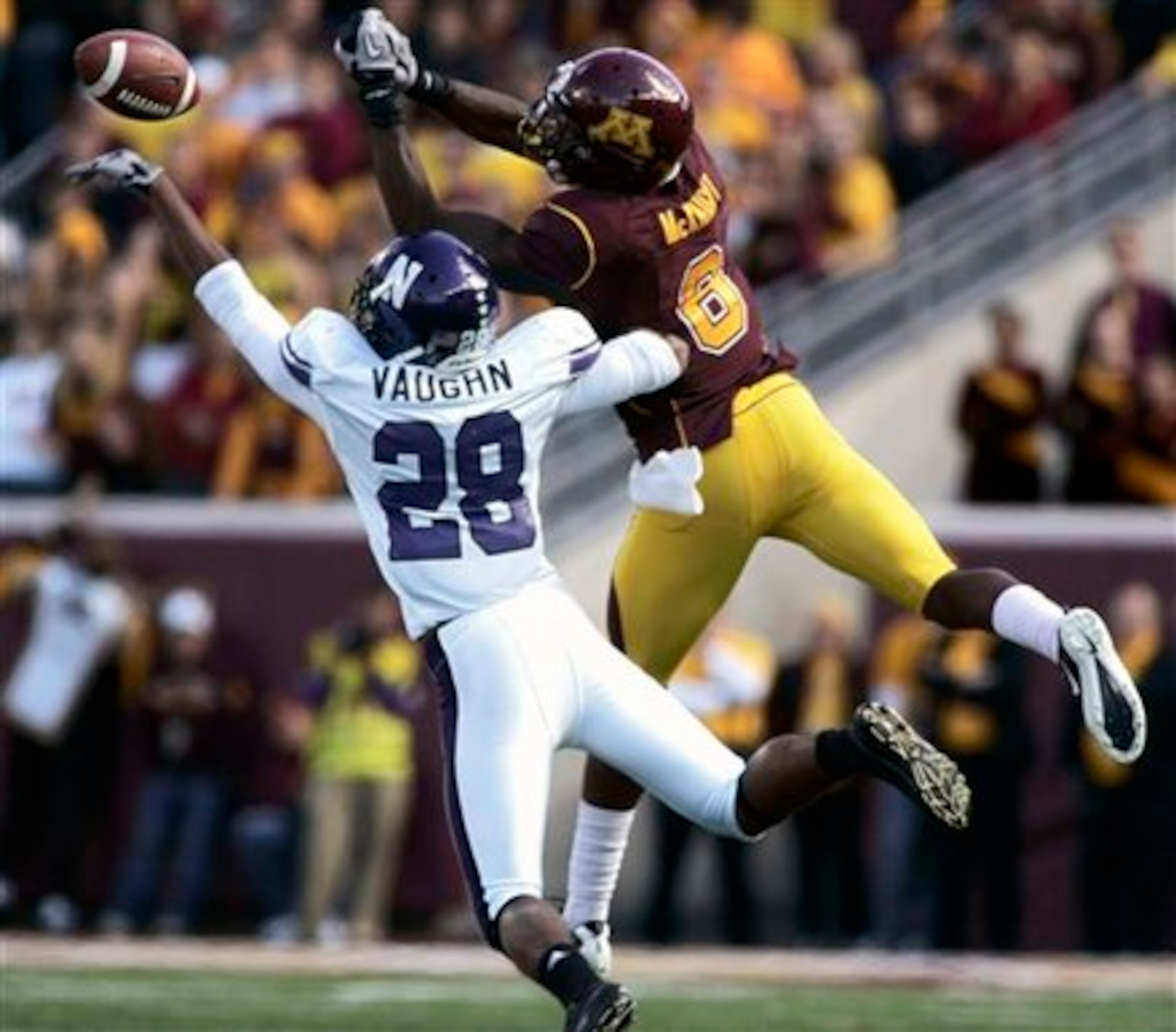
Games Played: At Vanderbilt- W 23-21. Illinois State (FCS)- W 37-3. At Rice- W 30-13. Central Michigan- W 30-25. At Minnesota- W 29-28.
Team Leaders in Tackles: Brian Peters S- 37, Nate Williams LB- 28, Justan Vaughn CB- 24.
Tackles-for-loss: Vince Browne DE- eight.
Sacks: Vince Browne DE- five.
Interceptions: Quentin Davie LB- three.
Team Statistics: 18 points allowed per game. 372.4 yards allowed per game. 122.2 rushing yards allowed per game. Defensive pass efficiency: 118.39. 10 sacks, nine interceptions, eight forced fumbles, and four fumble recoveries. 18 first downs allowed per game. Opponents' third down conversion percentage: 30.77. Opponents' fourth down conversion percentage: 66.67. Red zone defense: 10-13.
What is Wrong: Northwestern is a team that likes to blitz a lot. Out of every formation and from every position.
Nevertheless, one look at the team leaders in tackles should tell a casual viewer quite a bit. Specifically, two of the top three tacklers are defensive backs.
A good portion of the reason for this has been due to a lackluster run defense. Even though 122.2 rushing yards allowed per game ranks 36 nationally, that has as much to do with the teams NU has played, as with Northwestern's success at stopping the run.
Right now, the Wildcats are letting up over four yards a carry. Given the schedule they have played thus far, there is no reason for that.
Minnesota, who had been averaging 3.82 yards a carry, averaged 4.5 against the Cats.
This will have to be fixed before the second half of the season, when five of NU's six opponents are teams that lead with the run.
Finally, 372.2 yards allowed per game is hardly acceptable given the Cats' opponents.
What is Right: Northwestern is creating plenty of sacks and plenty of turnovers. They rank third in the Big Ten in the former, and second in the conference in turnover margin.
Junior defensive end Vince Browne is playing at an all-conference caliber, and is making Cat fans forget about their recently departed All-Big Ten defensive mainstay Corey Wootten.
Quentin Davie is a solid anchor in the middle of the defense, and even though Brian Peters is overworked at safety, he has still handled his responsibilities well.
Admittedly, I think this has been a somewhat lucky defense and a somewhat lucky team, but how many years in a row can a person say that? Eventually, one has to give some credit where credit is due, and the Cats are 5-0 for a reason.
Wisconsin Badgers
6 of 11
Games Played: At UNLV- W 41-21. San Jose State- W 27-14. Arizona State- W 20-19. Austin Peay- W 70-3. At Michigan State- L 24-34.
Team Leaders in Tackles: Blake Sorensen LB and J.J. Watt DE- 24 apiece. Antonio Fenelus CB and St. Jean Culmer- 23 apiece.
Tackles-for-loss: J.J. Watt DE- seven
Sacks: Kevin Rouse LB and Louis Nzegwu- two apiece.
Interceptions: Antonio Fenelus CB- two.
Team Statistics: 18.2 points allowed per game. 301 yards allowed per game. 110.6 rushing yards allowed per game. Defense pass efficiency: 129.29. Ten sacks, four interceptions, five forced fumbles, and two fumble recoveries. 14 first downs allowed per game. Opponents' third down conversion percentage: 33.33. Opponents' fourth down conversion percentage: 60. Red zone defense: 11-13.
What is Wrong: Last year's All-Big Ten freshman of the year, linebacker Chris Borland is sidelined for the season. I don't know that I can impress just how much that hurts the Badgers. He is a playmaker extraordinaire, and arguably the first great linebacker in the Bret Bielema era.
His presence will be sorely missed.
Moreover, the woes of last year's pass defense have continued into this season, as the Badgers' pass efficiency D currently ranks eighth in the conference. Among other things, it is always a bad sign when a cornerback is one of your top three tacklers.
On top of that, the inside of UW's defensive line has proved a bit soft. However...
What is Right: ...they really didn't play poorly in last week's loss at Michigan State. In the end, they held a Spartan rushing attack that had been averaging well over five yards per carry to 3.9.
I admittedly have been hard on the Badgers' defense in previous articles, having felt that they looked okay against decidedly inferior competition. However, against MSU, the defense played respectably, although not dominantly.
J.J. Watt is a force on the Badger line, and Louis Nzegwu is developing into a pass rushing specialist.
Illinois Illini
7 of 11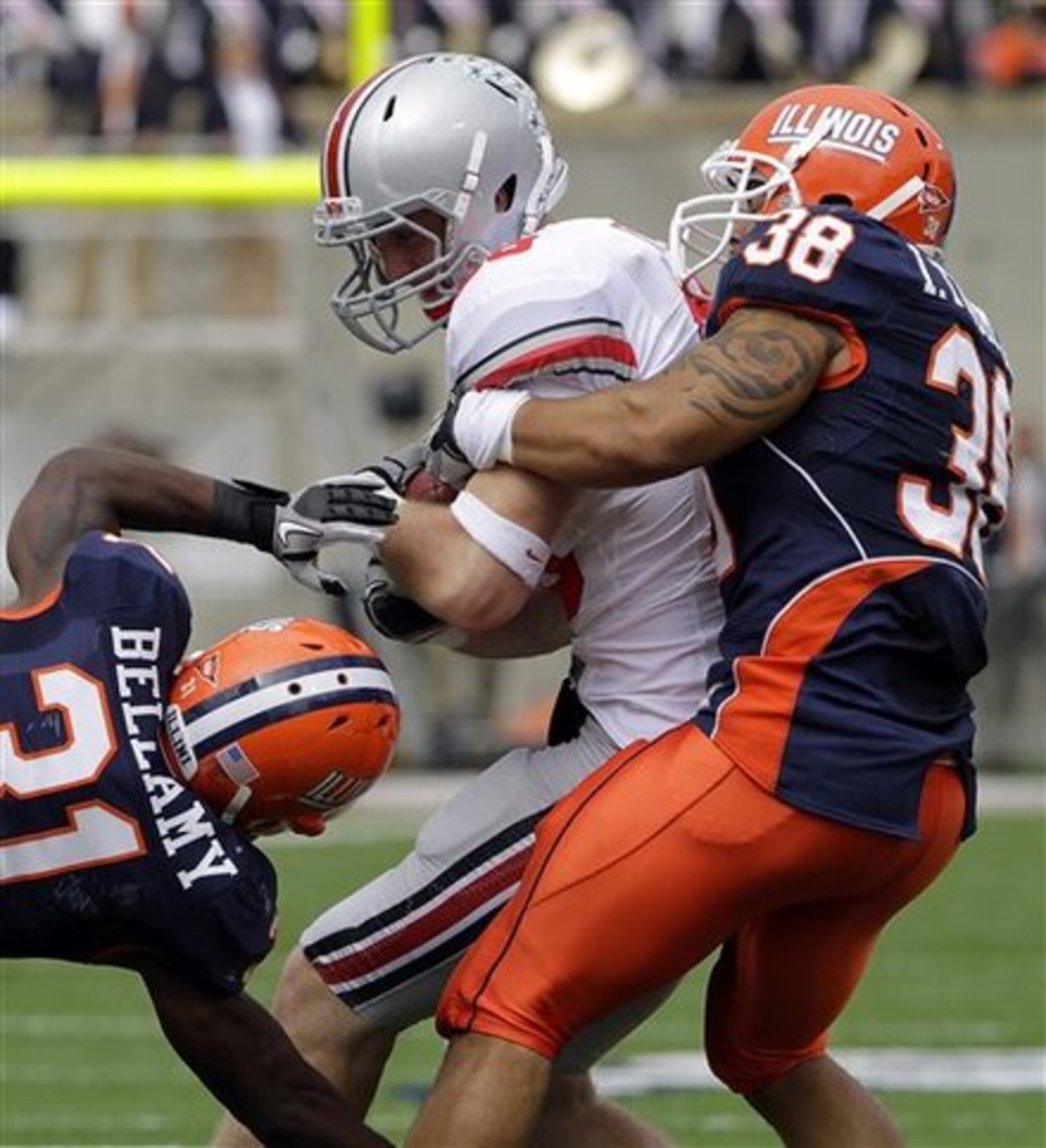
Games Played: Missouri (at the Edward Jones Dome, St. Louis, MO)- L 13-23. Southern Illinois- W 35-3. Northern Illinois- W 28-22. Ohio State- L 13-24.
Team Leaders in Tackles: Martez Wilson LB- 34, Ian Thomas LB- 31, Travon Bellamy S- 28.
Tackles-for-loss: Martez Wilson LB- five.
Sacks: Martez Wilson LB- two.
Interceptions: Henry Trulon DB- two.
Team Statistics: 18 points allowed per game. 322.25 yards allowed per game. 130 rushing yards allowed per game. Defense pass efficiency: 125.66. Ten sacks, two interceptions, five forced fumbles, and four fumble recoveries. 18 first downs allowed per game. Opponents' third down conversion percentage: 37.93. Opponents' fourth down conversion percentage: 33.33. Red zone defense: 12-16.
What is Wrong: The secondary is decidedly banged up. They lost one of their starting safeties before the season began. He is out for the year. They also lost their starting cornerback for the first six or so weeks of play.
This has led to a pass defense that has been vulnerable. In terms of pass efficiency defense, they are ranked sixth in the conference. However, their vulnerability has led to a less-than-stellar third down conversion percentage.
Teams looking at third-and-five probably have a pretty good shot of converting.
Furthermore, the lack of experience in the backfield has led to the worst turnover margin in the conference. Until their last game against OSU, Illinois had yet to record an interception. Needless to say, timely turnovers would help out their struggling offense a great deal.
What is Right: Illinois has yet to allow any of its opponents to score more than their average for the year. In fact, Missouri is currently averaging 37.8 points. Ohio State is averaging 44.2.
It is difficult to compare teams based on that criteria, but Mizzou and OSU are both top 25 teams, and Illinois held them to well over 10 points less than what they are averaging thus far. Of course, they still lost both games.
Martez Wilson's return has been of great advantage to the Illini, and he is currently playing—maybe not at all-conference level, but perhaps second team level.
Penn State Nittany Lions
8 of 11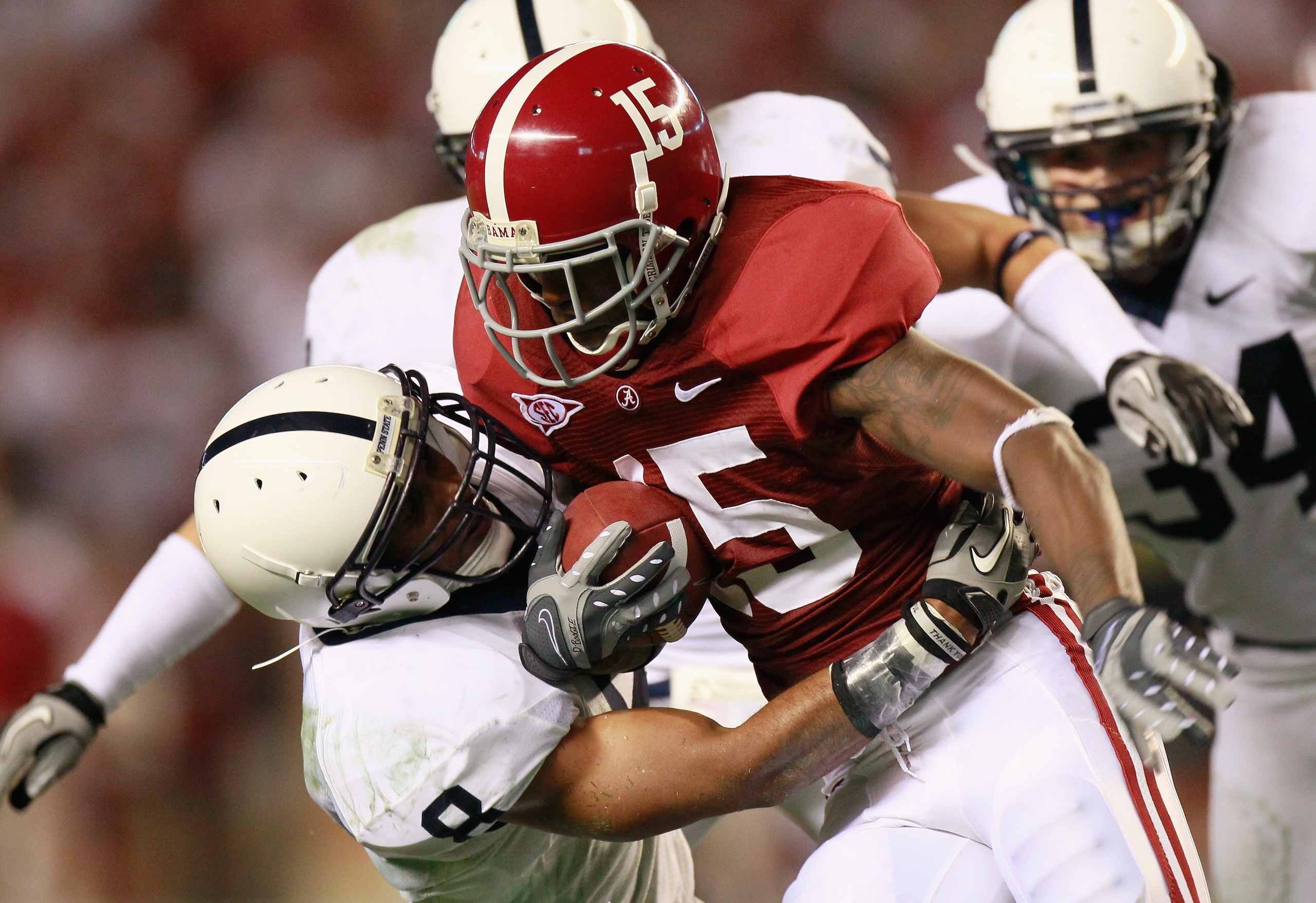
Games Played: Youngstown State (FCS)- W 44-14. At Alabama- L 3-24. Kent State- W 24-0. Temple- W 22-13. At Iowa- L 3-24.
Team Leaders in Tackles: Chris Colasanti LB- 41, Michael Mauti LB- 31, Nick Sukay S- 26.
Tackles-for-loss: Ollie Ogbu DT and Devon Still DT- 4.5 each.
Sacks: Three tied with two each.
Interceptions: Nick Sukay S- three.
Team Statistics: 15 points allowed per game. 290.4 yards allowed per game. 118.2 rushing yards allowed per game. Defensive passing efficiency: 125.27. Eight sacks, six interceptions, five forced fumbles, and two fumble recoveries. 15 first downs allowed per game. Opponents' third down conversion percentage: 21.05. Opponents' fourth down conversion percentage: 60. Red zone defense: 9-9.
What is Wrong: The last season that Penn State allowed over 100 yards rushing per game and over three yards per carry was 2004. This season, they are currently well over both numbers, and they've yet to play any of the top five rushing teams in the conference.
Furthermore, while Penn State's linebackers are perfectly able, for possibly the first time in as long as I can remember, their linebackers aren't all-conference caliber. They are fundamentally sound, but they lack the aggressiveness and instincts of past Linebacker U graduates.
Right now, there is a certain reality that has to be faced: Penn State has a decent defense, but not much more than that. And Penn State without much more than a decent defense is a decidedly less competitive Penn State team.
What is Right: Again, this isn't a bad defense. If Minnesota had this defense, they'd probably win six games, which would be good enough to call it a successful season for the Gophers. On the other hand, the Nits set the bar a little higher.
Nick Sukay is playing at an all-conference level at the free safety position. Moreover, his partner at the HERO position, Nick Astorino, is also playing well.
Ollie Ogbu and Devon Still are doing a nice job of jamming up the middle, and, as I said, the linebackers are certainly able.
Michigan State Spartans
9 of 11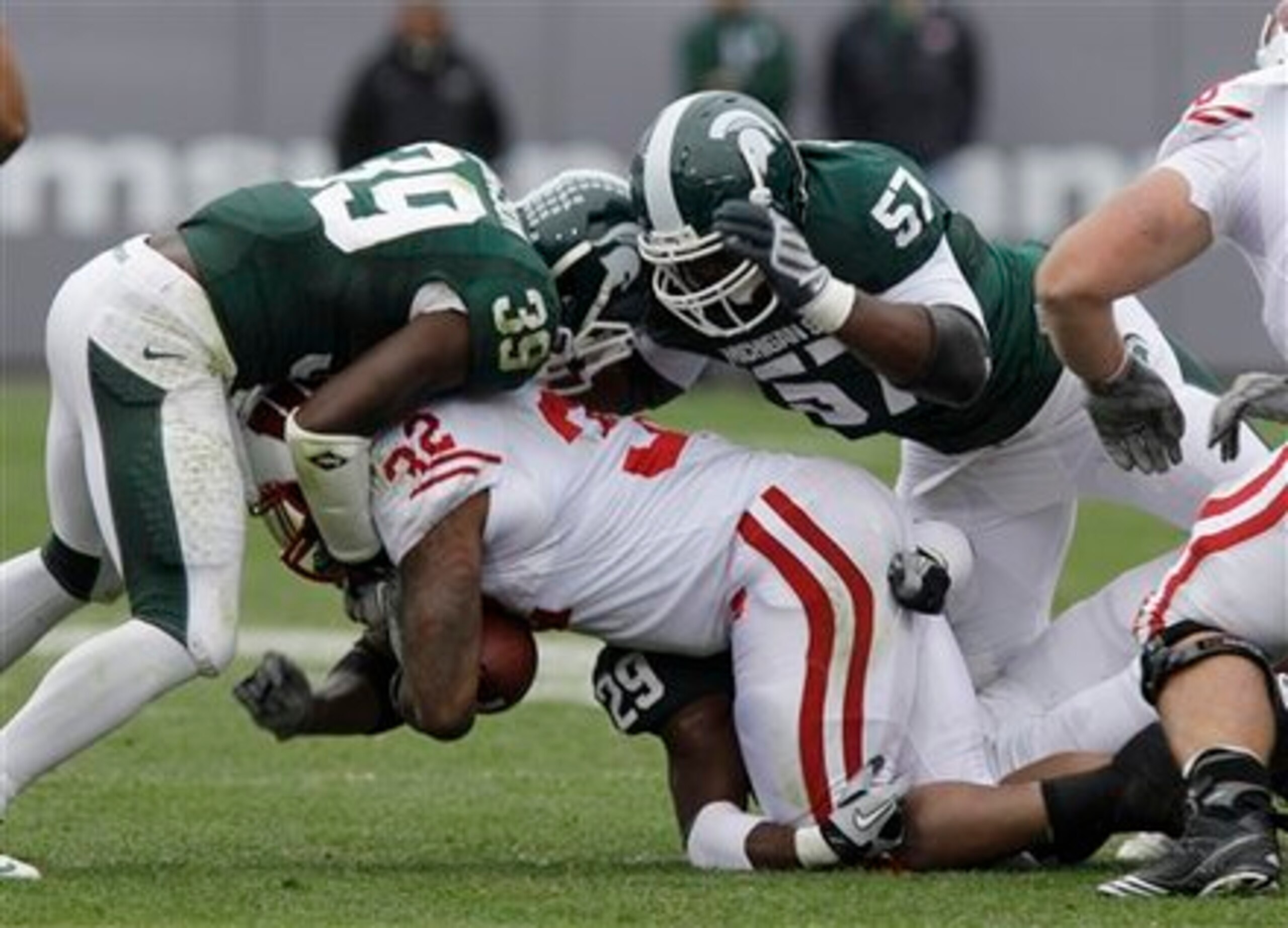
Games Played: Western Michigan- W 38-14. Florida Atlantic (at Ford Field, Detroit, MI)- W 30-17. Notre Dame- W 34-31 (OT). Northern Colorado (FCS)- W 45-7. Wisconsin- W 34-24.
Team Leaders in Tackles: Greg Jones LB- 41, Chris L. Rucker CB- 37, Eric Gordon LB- 34.
Tackles-for-loss: Greg Jones LB- five.
Sacks: Colin Neely DL- 1.5
Interceptions: Greg Jones LB- two.
Team Statistics: 18.6 points allowed per game. 328.6 yards allowed per game. 101.2 rushing yards allowed per game. Defensive pass efficiency: 101.68. Five sacks, six interceptions, eleven forced fumbles, and five fumble recoveries. 18.8 first downs allowed per game. Opponents' third down conversion percentage: 38.16. Opponents' fourth down conversion percentage: 50. Red zone defense: 11-14.
What is Wrong: Sparty is currently ranked 107th in terms of sacks. This is a problem MSU struggled with last season. It usually led to a degree of excessive blitzing, which led to ill-equipped cornerbacks being left on an island they were unprepared to defend.
Having not really watched Michigan State this season, I don't know if they have gone back to that philosophy. However, despite a very respectable defensive pass efficiency rating, they are ranked ninth in the conference in overall pass defense.
On top of that, their defensive third down conversions are eighth in the Big Ten.
In short, much like Purdue, their secondary is vulnerable when specifically gameplanned against.
What is Right: On the other hand, unlike Purdue, they have a strong front seven, one of the best run defenses in the conference, and arguably the best group of linebackers in the conference.
On top of that, they have one of the best individual linebackers in the country in Greg Jones. Moreover, due to the recognition Jones gets, his partner in crime, Eric Gordon, doesn't really get the attention he deserves.
Finally, while the Spartan pass defense is still average-at-best, it is much improved over last year's mess. Part of the reason for this is the return of Johnny Adams at cornerback.
Iowa Hawkeyes
10 of 11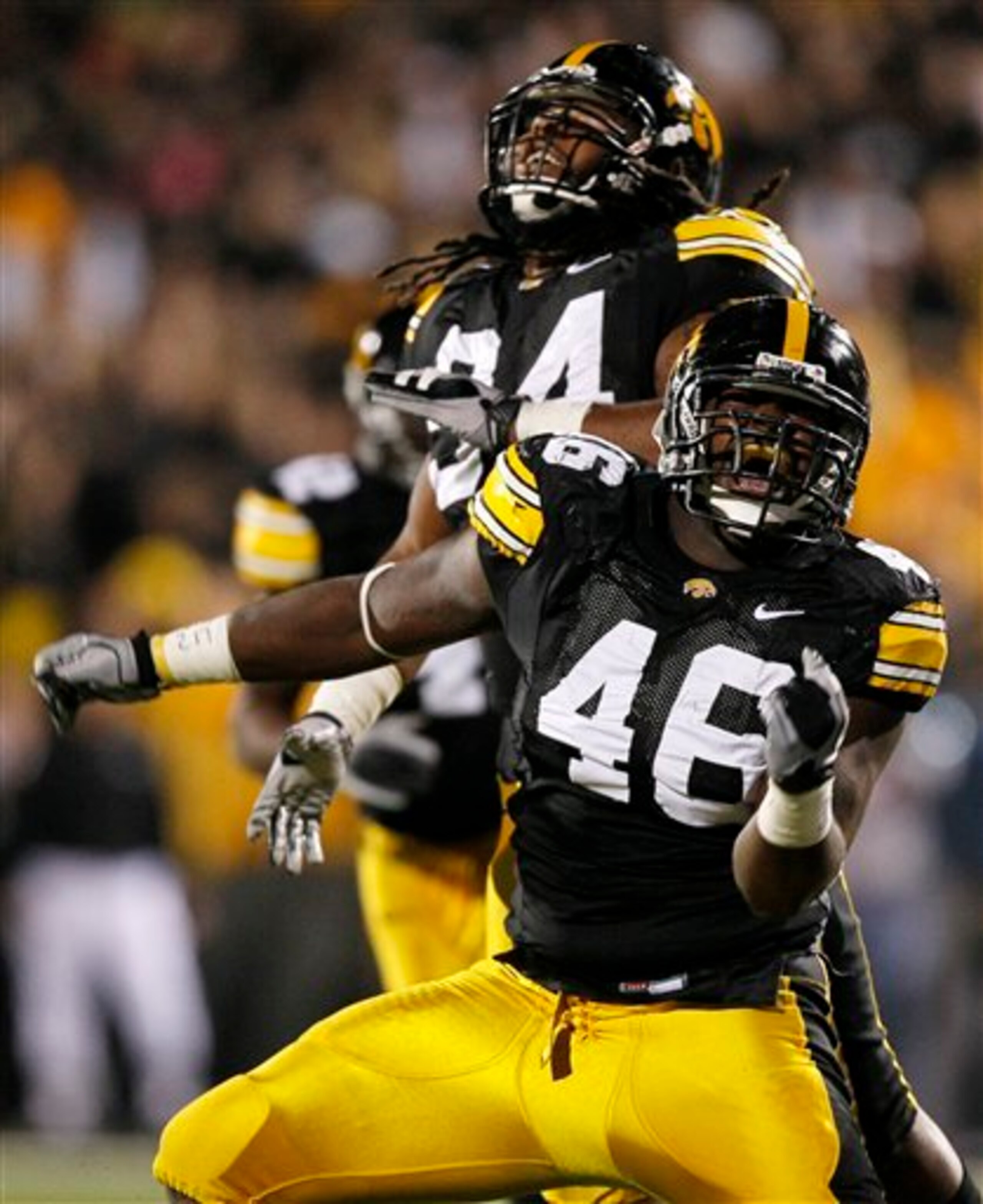
Games Played: Eastern Illinois (FCS)- W 37-7. Iowa State- W 35-7. At Arizona- L 27-34. Ball State- W 45-0. Penn State- W 24-3.
Team Leaders in Tackles: Jeff Tarpinian LB- 32, Jeremiah Hunter LB- 29, Tyler Sash S and Adrian Clayborn DE- 25 apiece.
Tackles-for-loss: Mike Daniels DT- eight.
Sacks: Mike Daniels DT- three.
Interceptions: Shaun Prater CB- two.
Team Statistics: 10.2 points allowed per game. 242.2 yards allowed per game. 63.2 rushing yards allowed per game. Defensive pass efficiency: 102.7. 10 sacks, six interceptions, three forced fumbles, and three fumble recoveries. 12.6 first downs allowed per game. Opponents' third down conversion percentage: 28.99. Opponents' fourth down conversion percentage: 20. Red zone defense: 6-12.
What is Wrong: Not too much. However, the secondary has proved vulnerable the few times it has been tested.
Also, at times, when All-American candidate Adrian Clayborn has been double and triple teamed—which will continue throughout the year—the rest of the line has not picked up the slack in the pass rush.
Finally, middle linebacker Jeff Tarpinian continues to be hampered by injuries. With backup linebacker Bruce Davis out for the year, this could leave true freshman James Morris patrolling Iowa's MIKE position.
What is Right: Right now, Iowa ranks second in the country in rushing defense. They have done this without loading the box, or altering their basic lunch pail style in any way.
This will prove to be invaluable over their next three games, as they play Michigan, Wisconsin, and Michigan State; the best, second best, and fourth best rushing teams in the Big Ten.
It is also worth bringing attention to their red zone defense, which is tied with Oregon for best in the country.
What makes the Hawkeyes' numbers even more impressive is that, along with Penn State and Illinois, they are the only team in the conference to have played two ranked teams.
There is not an offensive lineman in the conference that can or will be able to match up man-to-man against Clayborn. This should open up plenty of opportunities for Iowa's other lineman. Also, the emergence of Mike Daniels provides a nice rotation that will keep the line fresh.
Finally, Jeff Tarpinian has stepped nicely into his starting role, if only he can stay healthy.
Ohio State Buckeyes
11 of 11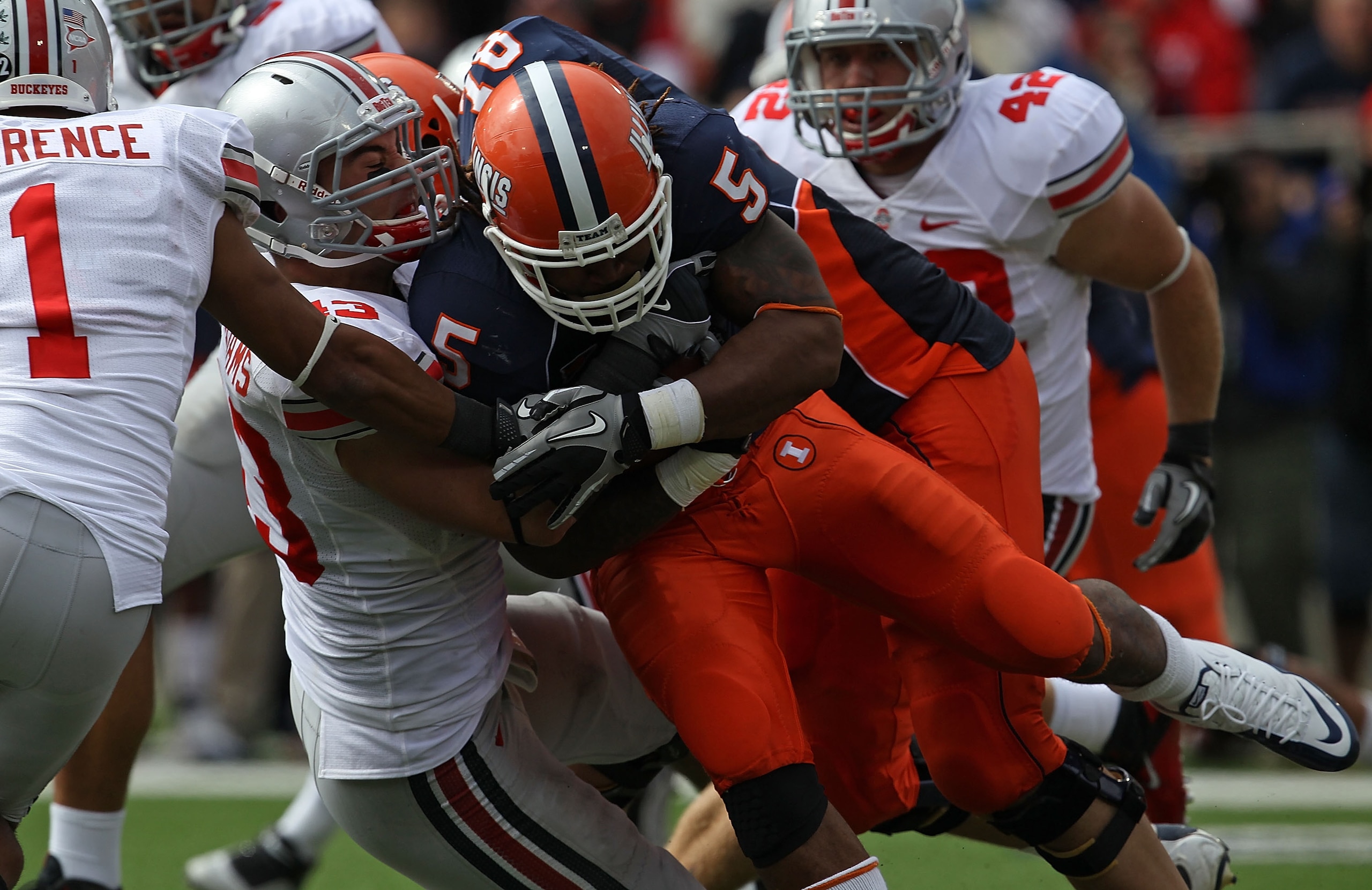
Games Played: Marshall- W 45-7. Miami- W 36-24. Ohio- W 43-7. Eastern Michigan- W 73-20. At Illinois- W 24-13.
Team Leaders in Tackles: Ross Homan LB- 33, Brian Rolle LB- 25, Tyler Moeller S/LB- 20.
Tackles-for-loss: Tyler Moeller S/LB- 4.5.
Sacks: Nathan Williams DL and Dexter Larimore DL- 1.5 each.
Interceptions: Chimdi Chekwa CB- two.
Team Statistics: 14.2 points allowed per game. 242.4 yards allowed per game. 80.6 rushing yards allowed per game. Defensive pass efficiency: 99.38. Eight sacks, eight interceptions, 10 forced fumbles, and six fumble recoveries. 12 first downs allowed per game. Opponents' third down conversion percentage: 28.79. Opponents' fourth down conversion percentage: 40. Red zone defense: 7-10.
What is Wrong: Injuries.
At this point, the most notable are back spasms that Chimdi Chekwa has been nursing, and a torn muscle that will likely end Tyler Moeller's season.
The Buckeyes are, as ever, a deep team, but one more major injury or two could really be the proverbial straw.
Also, the pass rush is something of a concern. Right now, the Bucks rank 79th nationally in sacks.
What is Right: At the beginning of the season, OSU's biggest concern seemed to be their secondary. Yet, right now, their pass defense has a national ranking of 15, and their pass efficiency D ranks No. 11.
Assuming they can ride the injury storm, it is apparent that any questions concerning their pass defense seem to have been answered.
Moreover, their rush defense is, as always, stout, and they lead the conference in turnover margin.
In the end, Iowa and OSU are probably 1A and 1B in terms of the conference's best defense. Ultimately, I put Ohio State above the Hawks simply because of their overall record.
Speaking as an Iowa fan, hopefully, we'll have an old fashioned Big Ten, workmanlike game on November 20, when the Buckeyes come to Iowa City, and hopefully more will be at stake than the unofficial title of conference's best defense.
.jpg?w=2560)

.jpg?w=2560 "Malik Beasley Negotiating Plea Deal (AP)")
.jpg?w=2560 "Jonathan Taylor Landing Spots")

.jpg?w=2560 "NFL House in Paris Closes for Protests (AP)")