Texas Big 12 Conference: How the Longhorns Got Their Money, Saved College Sports
The Longhorns saved the college sports world we have come to know and love by spurning Pac-10 commissioner Larry Scott’s invitation to join his conference, and ultimately keeping The Eyes of Texas in, well, Texas.
University of Texas President Bill Powers reportedly seriously considered ditching the Big 12 conference to head west and help build a mega-conference by the Pacific (the Pac-16?) with Oklahoma, Oklahoma State and Texas A&M all following.
Colorado already joined the Pac-10, and some think Texas Tech would have been the sixth team to join.
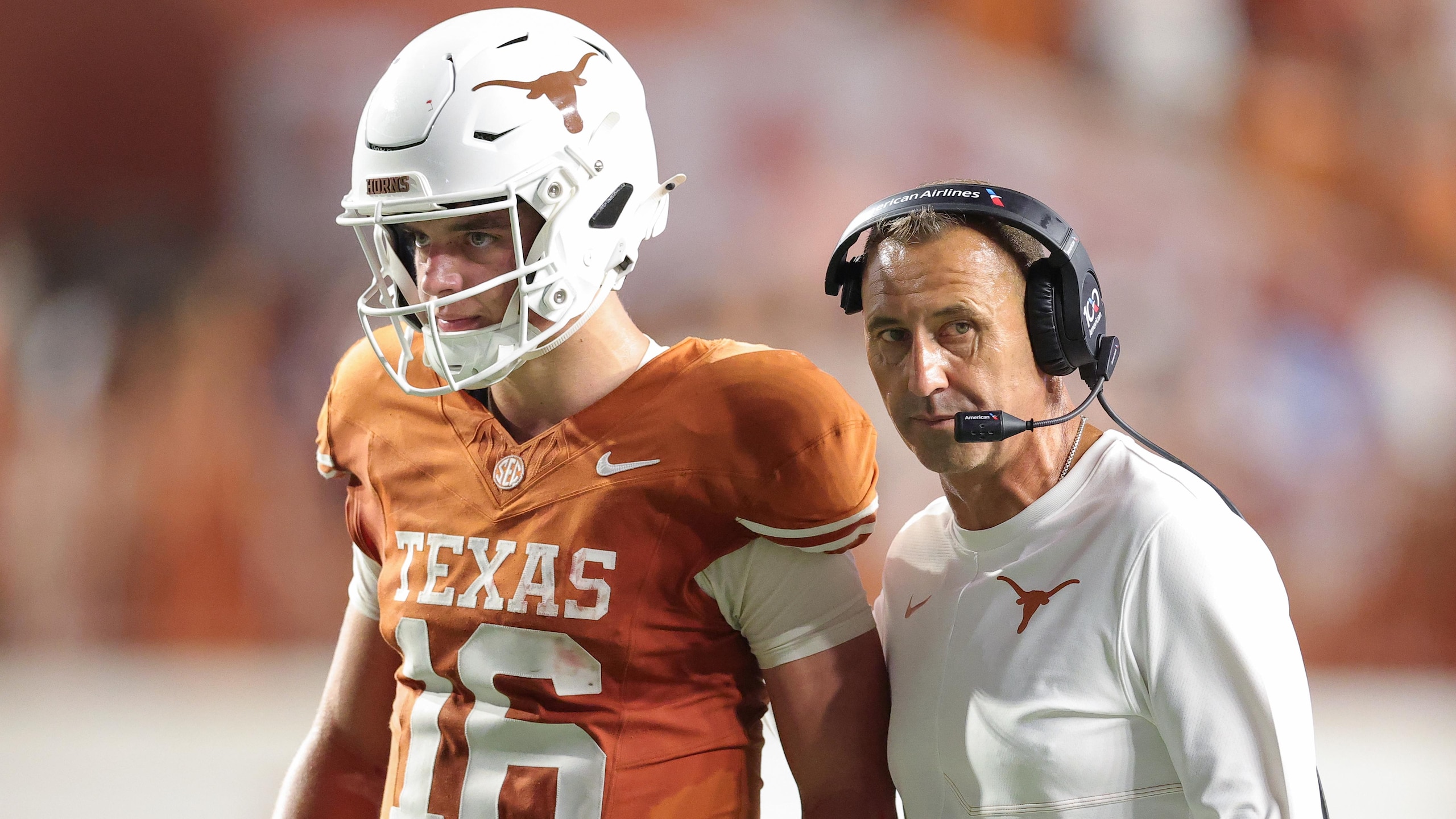


“Bill Powers has informed us that the 10 remaining schools in the Big 12 Conference intend to stay together,” Scott said in a statement Monday. “We are excited about the future of the Pac-10 Conference, and we will continue to evaluate future expansion opportunities.”
Heading west excited Texas, and the other Big 12 ditchers, because of the possibility of a cable TV deal that may have granted the new Pacific conference its own network.
It would be encouraging to think that the Big 12 remained intact because of the desire to uphold tradition and history in college athletics, but of course—that’s never the case.
Texas and its conference pals stayed put because Big 12 commissioner Dan Beebe threw together a desperation TV proposal at the last minute, which apparently satisfied the conference powers enough to rethink their future.
Orangebloods.com’s Chip Brown reported the new TV deal proposed by Beebe, agreements in conjunction with ESPN and Fox Sports, will generate nearly $200 million in annual revenue for the conference, up from approximately $139 million this past year.
The new deal will favor the conference powers, according to Brown’s sources.
Texas, Oklahoma, and Texas A&M will receive at least $20 million per year while the remaining seven programs in the conference will take home somewhere between $14 million and $17 million.
What makes this deal sweeter for Texas compared to anything out west is the potential of their own network which would pay the university up to an additional $5 million annually, according to Orangebloods.com.
The Big 12 still takes a huge hit, but the “new” conference remains more appealing to university officials than no conference.
Beebe will have to explain exactly how his new conference will continue to prosper as well as the old version now that the conference will be without a title game due to having only 10 teams.
Nebraska bolted for the Big Ten after Colorado left, but Big 12 officials say this shouldn’t affect the conference’s negotiating power with TV networks in the future. Losing the Denver market shouldn’t be an issue, they say.
Still, the new proposal isn’t about making money for Beebe per se. This new ploy kept the Big 12 conference alive—and that’s what matters.
But more importantly, keeping Texas at home in the Big 12 with its traditional rivals may have kept the entire college sports landscape in one piece, not just football.
If Texas and Oklahoma brought their big brands and national prominence to the Pac-10 (we are talking about two programs that regularly compete for BCS titles, including five of the last seven) the Big 12 may as well have floated into the Gulf.
Other conferences, such as the SEC and Big Ten, would have been forced to further expand to keep up.
With such fierce expansion, some feared that the future of college football would be four super-conferences breaking away from the NCAA to create their own league.
If you’re a fan of a major college football program, the thought of that ought to put a Longhorn-sized smile on your face.
After all, the NCAA doesn’t bring anything to the table that competitive programs couldn’t create for themselves.
Nobody needs the asinine rules and the group-think mentality that continues to impede the growth of college athletics a decade into the 21st century.
And we certainly don’t need the NCAA commercials telling us, “Almost all student-athletes will go pro in something other than sports,” as they show athletes dabbling in science labs and playing musical instruments.
Please—save us the marketing ploy.
The NCAA is big-time business. They are as much about the money as any other corporation.
But the one thing that the NCAA brings to the table is the ability to keep the spirit of college athletics alive—something that would die in a small way if the giant programs formed and broke away from the association.
On a small scale, it’s about the lesser-known schools still having the opportunity to compete and provide educational opportunities to kids through athletics.
That’s a great thing.
On a grand scale, it’s about upholding sports other than football, namely men’s basketball and its billion-dollar tournament.
The NCAA makes approximately 90 percent of its revenue off the March Madness bonanza, and CBS will pay the NCAA $2.13 billion over the next three years to broadcast the tournament.
The NCAA’s lifeline is college basketball, but the bigwigs can’t survive without the cooperation of the nation’s football programs.
Advantage—college football.
But if we slice back the layers of greed encompassing these expansion talks, we get to the core reason why Texas staying in the Big 12 is so important.
It’s important because golf, tennis, volleyball, baseball, et al, will continue to exist at the intercollegiate level.
This may not be the sexy thing, but it’s the right thing.
At some level, the well-being of college sports needs to be more important than stuffing the pocketbooks of a select few.
No, the University of Texas shouldn’t exactly be revered for making the decision it did.
Naturally, UT went where it believes the biggest bucks live. That’s fair. But the Longhorns also opted for tradition instead of breaking new ground, and in return it allowed thousands of other college athletes to keep playing.
Kansas basketball coach Bill Self admitted the possible expansion worried him because of the ramifications it may have had on storied non-football programs.
But that’s the cutthroat nature of the big business we call the NCAA and college athletics.
Follow the money, the competition be damned.
Biggie Smalls nailed the motto of the NCAA when he penned “Gimme The Loot.”
Texas opted for the cash and the convenience of staying put.
The Longhorns had to do that since we know the NCAA will try to exploit any areas of possible revenue in the future.
Conference expansion will rear its head again sometime, and portions of college athletics may be buried for good.
But for now, Texas’ preference made them the most prosperous athletic department in the country while keeping other fields and courts around the nation open for competition.
Follow Teddy Mitrosilis on Twitter . You can reach him at tm4000@yahoo.com.


.jpg?w=2560 "Report: Darnold Could Miss 3-6 Weeks")
.jpg?w=2560 "Breaking News")
.jpg?w=2560 "Week 1 Fantasy Duds 👎")