College Football Realignment: Opening The Door For a Playoff?
If there’s potential to make it better, make it happen. If there’s a better way to do things, adapt. If it’s broke, fix it.
Debates have raged in recent years over the Bowl Championship Series and the potential for a playoff system in college football, and one of the primary arguments against the adoption of a playoff format is under attack by realignment.
As Nebraska is set to bolt for the Big Ten and Colorado prepares to join the Pac-10, questions surrounding the viability of the Big 12 moving forward are swirling.
If the Big 12 fizzles-out, the Football Bowl Subdivision will likely be left with five BCS conferences: the Big Ten, Pac-10, Big East, the Atlantic Coast Conference (ACC), and the Southeastern Conference (SEC).
Including independents Notre Dame, Army, and Navy, there are 68 BCS teams contending for a national title each year.
The proper realignment of these 68 teams can lay the foundation for a feasible playoff format to follow.
First, remove Army and Navy from the BCS. May God bless our troops for what they do for our country, but the the days of Army and Navy competing for a national title have long passed.
Down to 66 teams.
Next, add Boise State and Texas Christian (TCU). No more BCS-busters in college football. Just let them. If you’re afraid they’ll beat you, let them join you.
Back up to 68 teams.
But it’s not over yet. The field must expand to 70.
Enter Brigham Young (BYU) and Fresno State. BYU was a potential BCS-buster in 2009, and Fresno State has made a habit of knocking-off Pac-10 teams with BCS title hopes. Let them play with the big boys already.
Now that there are 70 BCS-eligible teams, divide them evenly among the five conferences, 14 teams in each. Then, divide them into two divisions. North, South, East, West—it doesn’t matter what you call them.
Finally, each season every team plays 12 games. Six of those games come against the other teams in their division and two come from the other division in their conference, leaving four non-conference games for each school.

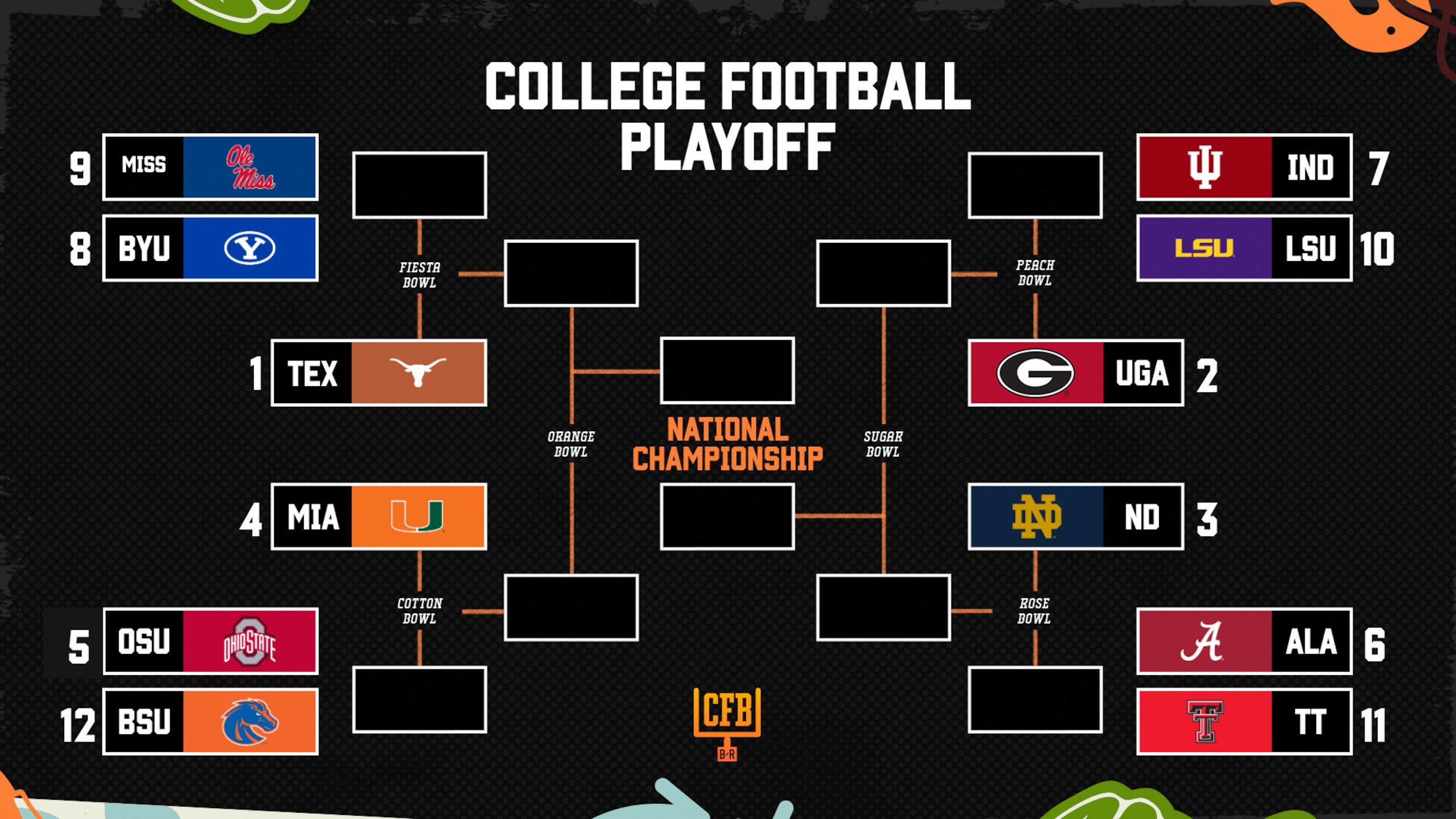
_0.png?w=2560)
After the 12-game season is complete, the winners of each division face-off in a conference championship game, which is where the bowl games come in. Take the four major BCS bowls, the Fiesta, Orange, Sugar, and Rose Bowls, and add a fifth. For argument’s sake, we’ll call it the Cotton Bowl.
Bowl sanctity in tact, the BCS rankings, one of the distinct characteristics of college football, can remain all season long. After the Bowl series is complete, there are five teams left standing, one of which will be the consensus No. 1 team in the country, as determined by the BCS standings.
The No. 1 team after the Bowl series gets the bye.
The four remaining conference champions face-off, according to their BCS rankings. No. 2 hosts No. 5 and No. 3 hosts No. 4, and the winners play the following week to determine who has a shot at unseating the consensus No. 1, who gets two bye weeks before the BCS National Championship game in January.
Thus, crowning a national champion the old-fashioned way, all while maintaining the sanctity of Bowl season and the BCS rankings.
The remaining bowl-eligible teams can still be invited to December bowl games sponsored by PapaJohns.com and Meineke Car Care, among others. But those with a real shot at the title will get a fair shot, something the system has lacked in recent years.
No more BCS-busters. No more debates. No more controversy.
The Big 12 is in disarray at it’s potential dismantling sparked by Nebraska and Colorado’s departure. Other schools will likely follow, and in doing so, could open the door for the adoption of a playoff format in college football.
If it’s broke, fix it.
America loves controversy and people love to debate, but there's nothing like finding a true champion. Let’s look at this realignment not as the potential death of the Big 12, but as an opportunity to make an already great college football season even better.
.jpg?w=2560 "NFL investigating 2 referees for separate viral exchanges")
.jpg?w=2560 "OBJ Calls Out Giants After Release")

.jpg?w=2560 "Tyreek makes another cryptic post amid Chiefs rumors")