
2010 Chicago White Sox: Has the Defense Really Improved?
Baseball season is almost upon us, and I couldn't be happier.
There's Spring Training baseball broadcasts on the television and radio, newspaper pages are once again filled with daily box scores and matchups; and then there are the calendars, serving as the most definite of reminders that Opening Day is less than two weeks away.
As a White Sox fan, this winter has been especially brutal: I've had to watch as the Sox signed aged infielder Omar Vizquel, passed on slugger Jim Thome (who was practically begging to re-sign at a reduced rate), and introduced the "DH by committee" proposition, which could easily result in the aforementioned aged infielder starting a few games in the role of designated hitter.
TOP NEWS
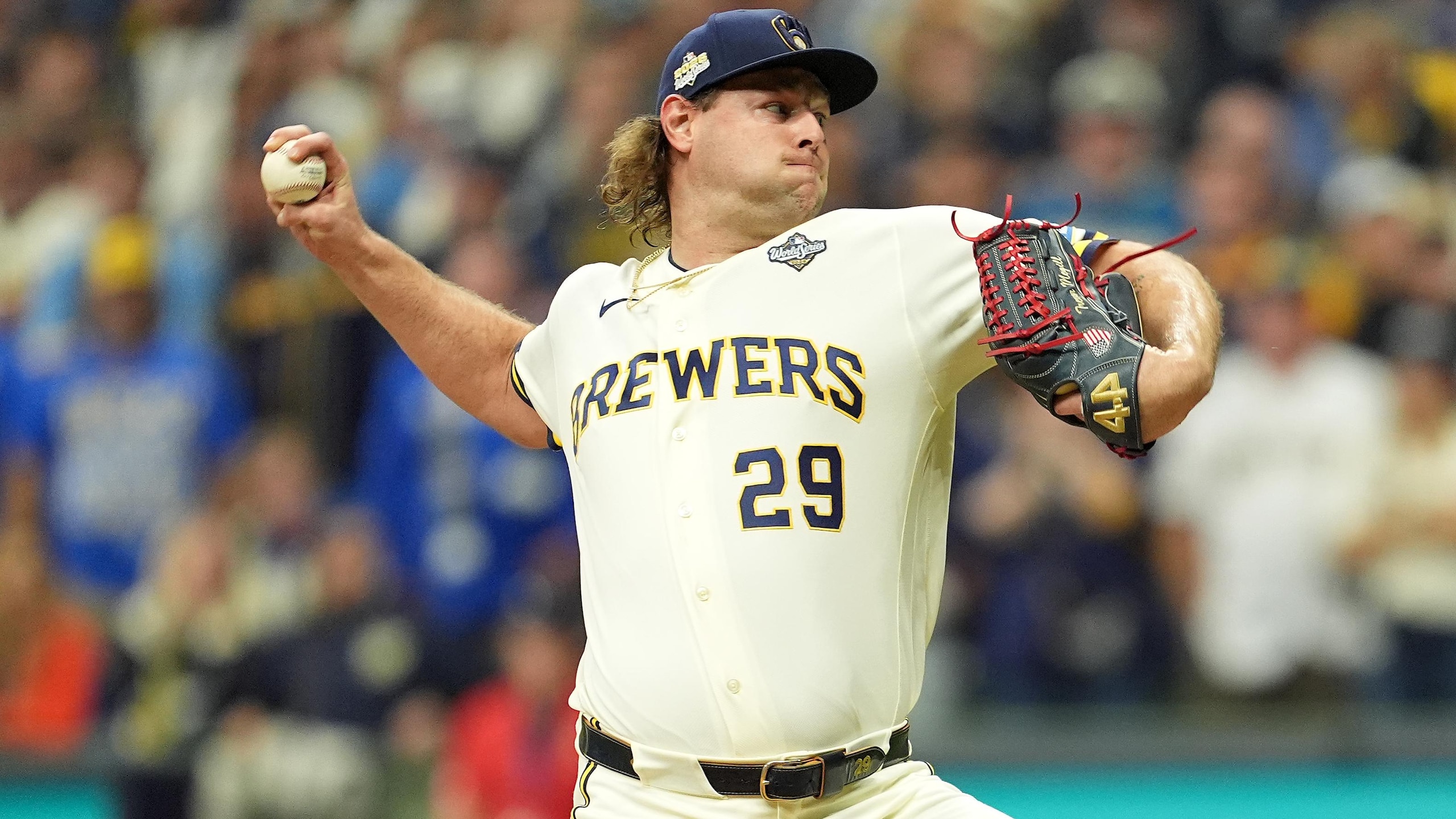
Brewers Closer Blasts Tropicana Field Roof

Latest MLB Trade Rumors 👂

World Series Game 2 Takeaways 🍿
Throughout all of this (I'm not even going to discuss the Oney Guillen saga at this time, it's just too embarrassing), I have been told that three facets of baseball will come to rule the day on the South Side, and that we will all be better for it: pitching, small-ball, and defense.
With Jake Peavy, Mark Buehrle, John Danks and Gavin Floyd in the rotation for 2010, the pitching aspect of this year's White Sox team should be soothing enough.
That is, until one takes a quick glance at the bullpen, which is currently comprised of Tony Pena (bad), Scott Linebrink (bad and overpaid), JJ Putz (bad and hurt over the last two seasons), and Bobby Jenks (underachieving and overweight). Really, the only redeeming quality of the bullpen should be Matt Thornton, the only one who carried his own weight out of the pen last year.
So with pitching as a whole being a wash in terms of calming my nerves, and small-ball not being a viable offensive strategy for teams that want to contend (studies have shown that "small-ball" tactics such as bunting and stolen base attempts, while valuable when successful, are vastly overused to the point of costing a team runs over the course of a season), there is one last aspect of this 2010 White Sox team that many people have been lauding: Improved defense.
After watching Mark Teahen fumble with a few routine plays at third the other day, I came to the very real and pertinent question that not many Sox fans are asking: Is this team really improved defensively over last year's club, and are they even above average at picking up the ball?
Not having access to loads of game film, I looked at the career-average Rate for each player in their primary defensive position for both the 2009 White Sox and the projected starters for the 2010 squad.
According to BaseballProspectus.com , Rate is "A way to look at the fielder's rate of production, equal to 100 plus the number of runs above or below average this fielder is per 100 games."
For instance, if a player was nine runs above average at his position on the year, his Rate would be around 109, and his Rate would be around 91 if he cost his team nine runs below the average with his glove.
The 2009 version of the Chicago White Sox rated as a below-average team, though probably not as below average as some would think: The Sox averaged a Rate of 99 for each of the defensive positions on the field, not including the pitcher and catcher.
Looking at the Rates of the 2010 White Sox is obviously impossible, so instead what I looked at were the career-average Rates of each projected starting position-player at that specific position.
So instead of looking at Juan Pierre's career Rate as a center-fielder, I would instead look at his career-average as a left-fielder, etc.
As for players still in the same positions as last season, I included either their career-average Rate at the position or the Rate accumulated in 2009, whichever was higher.
Finally, Gordon Beckham provided a curious case, as he had not previously played second base at any point in his professional career; it would clearly be erroneous to apply the Rate garnered by Beckham at third base to second base, as the two are manifestly different positions.
To fix this, I looked at the table of Comparative Defensive Performances, put together by Baseball Prospectus , which provides the differences (as measured by marginal defensive runs) in performance that can be reasonably expected by moving from one position to another.
In Beckham's case, we can reasonably expect a move from third base to second to result in about one run less in terms of defensive production.
All told, the 2010 Chicago White Sox project to be roughly the same defensively in 2010 as they were in 2009, averaging a Rate of 99.
Initially, this finding is somewhat surprising, though after closer inspection the conclusion makes more sense.
For example, while Carlos Quentin is a better right fielder than Jermaine Dye was in 2009 (104 career Rate for Carlos, 96 Rate in 2009 for Jermaine), and the addition of Alex Rios' glove (110 Rate in 2009 in center) is certainly an upgrade over last year's option, the gain in production by shifting Carlos to right and adding Rios is almost completely nullified by the "wash" that is replacing Chris Getz (100 Rate at second) with Gordon Beckham (projected 98 Rate) and the addition of Mark Teahen (88 Rate at third) to fill the hole left by Beckham's (99 Rate at third in 2009) move.
Also, Juan Pierre is, statistically speaking, not an upgrade over Scott Podsednik in left, as Pierre has a 102 Rate in left field compared with Podsednik's 103.
So then, has the defense really improved?
Not significantly, and while Beckham may see more improvement at second than initially projected (he is a natural shortstop, after all); and while Pierre and Rios may benefit slightly from the cozy dimensions of US Cellular Field, the chances are slim that the defense of the 2010 White Sox is improved enough to garner even the 10 marginal runs necessary for one extra win as a result of improved capabilities with the leather.
-Jonathan Platek


.jpg?w=2560 "Rodgers Iced Out on Plane 💎")
.jpg?w=2560 "Raiders Could Start Mendoza")
.jpg?w=2560 "Mahomes Told Teammate to Leave Meeting")
.jpg?w=2560 "🚨 Week 8 AP Top 25 Poll")


.jpg?w=2560 "Lamar Being Out Shocked Ravens")
.jpg?w=2560 "Lions Outlast Packers")