
Parity In Baseball:Part 2
Here is part two of my discussion on Major League Baseball when it comes to parity. Today we discuss how the current system is working. On Wednesday I will come up with four suggestions on how to fix the current system in Major League Baseball.
There is a debate across Major League Baseball on whether the current system is working. Every argument usually has two opposing sides. We will look at both sides of the argument in an attempt to determine if baseball’s current system is fair?
The current system if handled correctly could be successful. The supporting argument is that there have been several teams with relatively small payrolls that have been successful. The best case supporting this point of view is the 2003 Florida Marlins. The Marlins with smart, young, and determined talent defeated the New York Yankees in 2003 with one of the lowest pay rolls in Major League Baseball. In 2008 the Tampa Bay Rays won the American League Pennant again with young and determined talent. What did the Marlins and Rays do correctly? The Florida Marlins after trading away most of their talents in 1998 were able to obtain superior young talent. The Marlins obtained this talent through outstanding scouting in 1999 and 2000. The result was a team competing for the World Series in 2003. The Marlins were very tactical in how they developed the talent. They were able to win with a payroll of under $50,000,000. The Marlins success was also attributed to the ability to sign some their players to long term contracts before they became major stars. The 2008 Tampa Bay Rays did something very similar to the Marlins when they signed most of their talent to 5 and 8 year contracts. They took a gamble since they were not 100% sure how the talent would develop. For example, Evan Longoria was signed through the 2016 season and right now he is considered one of the best players in baseball. He will earn about $44,000,000 during the course of his contract. What a great value! The Yankees are paying Alex Rodriguez over $20,000,000 a season! In 2009 Longoria had 31 home runs and 113 RBI’s. Alex Rodriguez had 30 homeruns and 100 RBI’s. That has to be an outstanding value for a small market team like the Tampa Bay Rays. The Rays also signed Carl Crawford, Scott Shields, and Matt Garza to long term contracts. All three players were key factors in the success of the Rays in 2008. What the Rays did right was sign the talent to long term contracts before they became stars. If they had waited, the Rays would have had to pay the top players like Longoria more than $10,000,000 a season. (CbsSports Salaries,2009) Unlike the Rays and Marlins the Pittsburgh Pirates failed to sign their young talent to long term contracts before they developed into stars. Jason Bay is a good example of a Pirate failure. The Pirates did the bare minimum; they signed Bay to a rookie deal and failed to extend his contract during his development. The failure to sign Bay long-term came back and hurt the Pirates after he became the Pirate star player. The Pirates later realized that in their market it was too late to sign Bay to a long term contract. The same can be said about the Kansas City Royals who failed to sign both Johnny Damon and Carlos Beltran to long term deals. If the Pirates and Royals had utilized the Tampa Bay method of signing multi-year deals before the talent developed into stars the Pirates would still have players like Jason Bay and Aramis Ramirez and the Royals would have both Johnny Damon and Carlos Beltran. Many baseball experts blame the owners and general managers for not spending money wisely and signing their talent to long term contracts. This is a key factor in what has made the smaller market teams unsuccessful under the current system. Peter Gammons, ESPN’s baseball guru, points to the lack of player development as the weakness of baseball‘s second tier teams. Many small market teams do not properly develop players which damages the player’s development. Teams like the Yankees point to that as a classic example of why smaller market teams cannot win. The Yankees have developed players like Jorge Posada, Derrick Jeter, Mariano Rivera, and Andy Pettite. Through proper development these players have become stars.


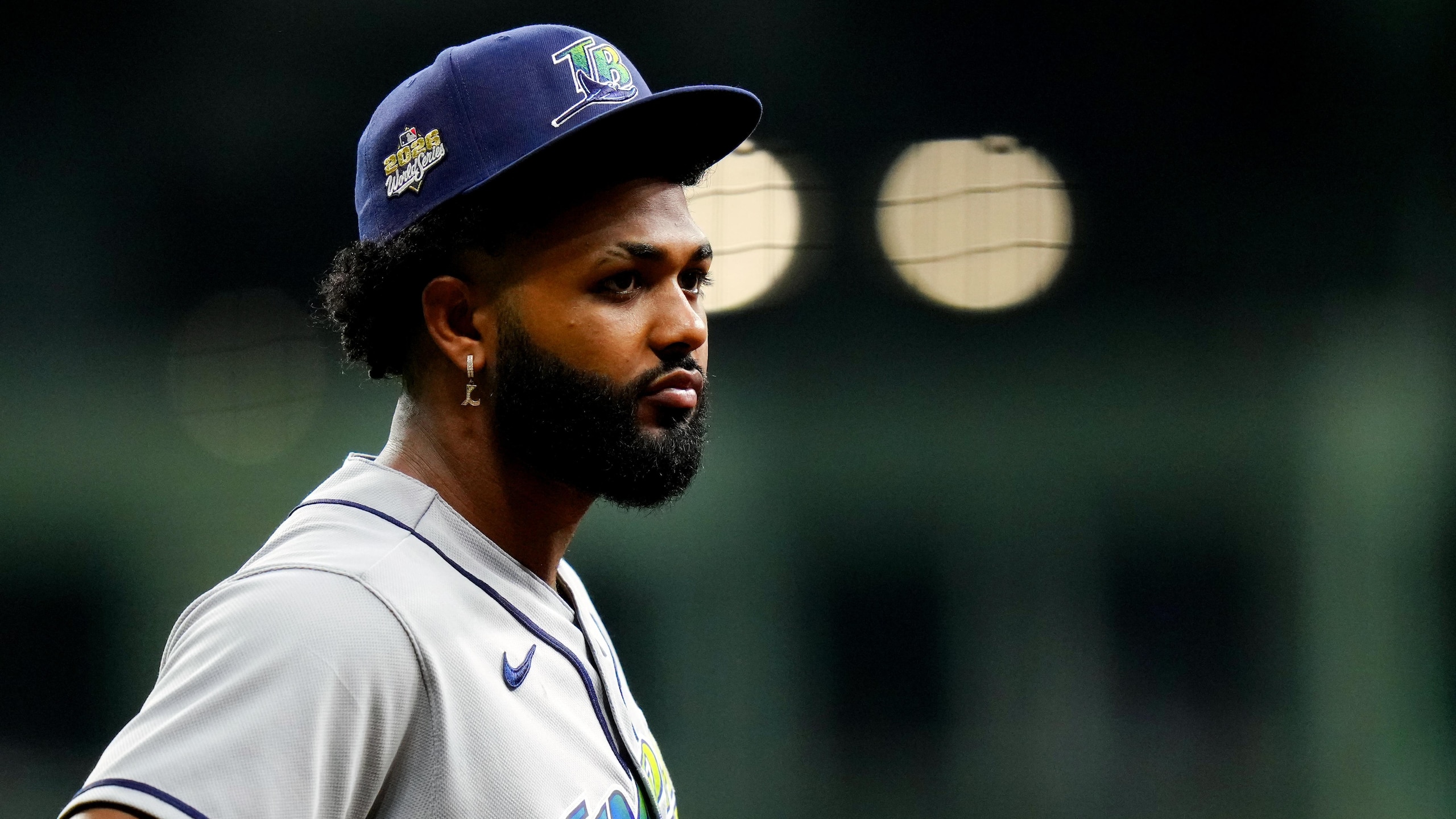
It is also known that teams like the Pittsburgh Pirates who receive luxury tax money from the Yankees do not use that money to field talent but instead pocket that money as profit. Big market teams point the finger at teams like the Pirates and say if they used luxury tax money properly then they could compete with the bigger market teams. (Luxury Tax Lies, 2009)
Overall, if you look at the big picture you can put some blame on the owners and general managers for the mismanagement of talent and not developing talent property. Most importantly it has been noted that teams have not used their Luxury Tax money to field talent.

.jpg?w=2560 "Mahomes Told Teammate to Leave Meeting")
.jpg?w=2560 "🚨 Week 8 AP Top 25 Poll")
.jpg?w=2560 "Baker Gets Glove From Rays 🧤")

.jpg?w=2560 "NFL investigating Eagles")

.jpg?w=2560 "Steelers Roll Saints in Paris")
.jpg?w=2560 "Updates from EVERY NFL Game 🏈")
.jpg?w=2560 "5 Teams Eyeing Jonathan Taylor")