
China Times: Chien-Ming Wang Signs With Nationals for $2 Million Plus Incentives
Two days ago, Chien-Ming Wang wasn’t even a blip on the Nationals’ radar. Yesterday morning, multiple sources reported that he had come to terms with the team.
We were then told that he would not be making his decision for a week to ten days, with Washington and the Los Angeles Dodgers being Wang’s two most likely suitors.
But the Dodgers dropped out yesterday after watching him throw, not because of any concern over his health but rather because they didn’t think they could offer him a major league contract, something Wang demanded. Their 40-man roster was just too full.
TOP NEWS
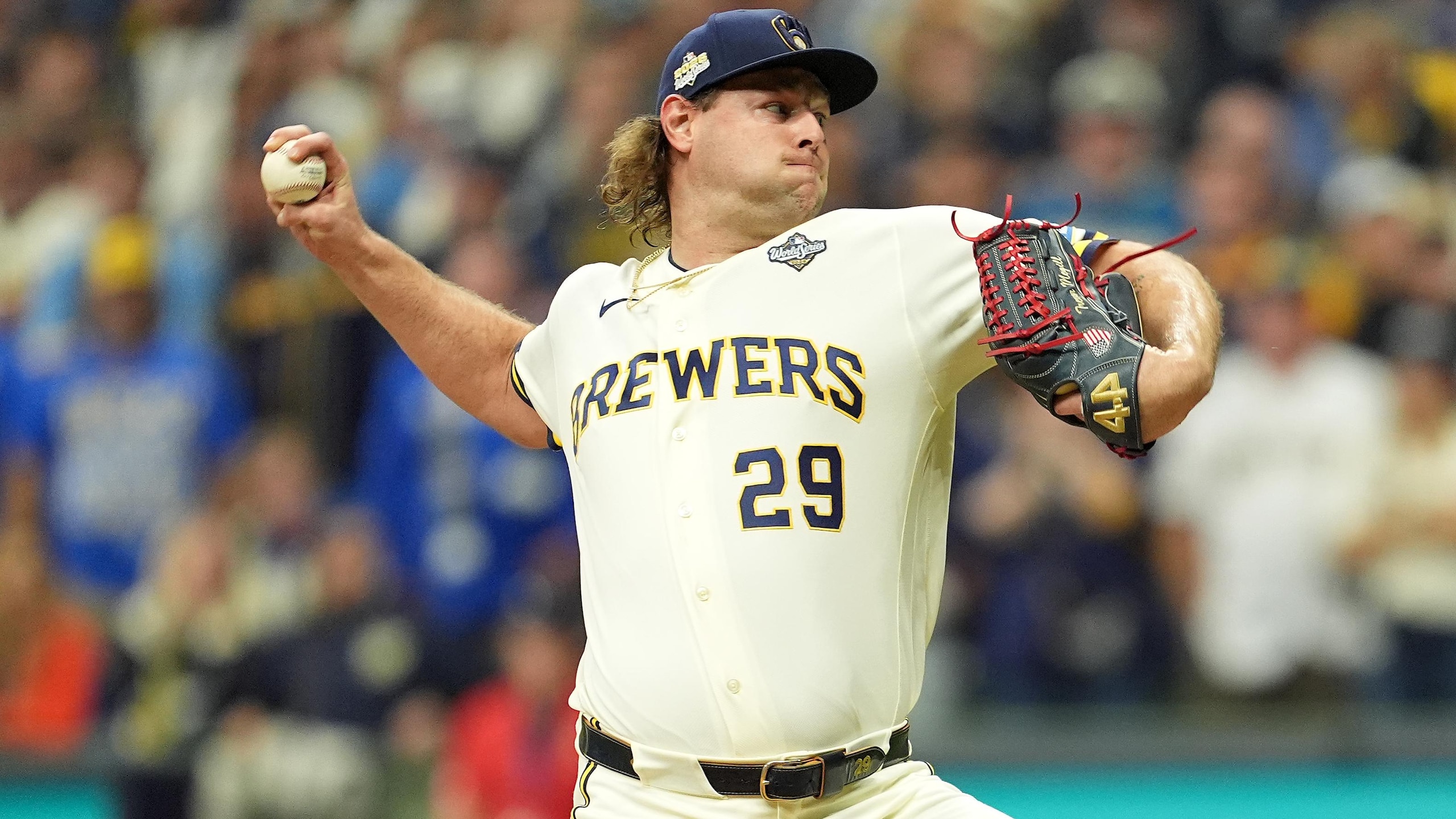
Brewers Closer Blasts Tropicana Field Roof

Latest MLB Trade Rumors 👂

Next MLB Players to Sign $200M Contracts 💰
And now the China Times, a Taiwanese newspaper, is reporting that Wang has indeed agreed to a contract with Washington that guarantees him $2 million in 2010 and provides for up to $3 million in incentives.
There may be a second year involved.
The source says that he has already passed his physical and the team will make the announcement in two or three days.
To be fair, this information was gleaned from a Chinese-language newspaper translated through Yahoo’s Babelfish translation service. It was kind of like going from chicken scratches to Creole in under a second.
So the translation is close, but I can’t guarantee 100% accuracy.
Assuming it is all true, the Nationals are a giant step closer to true baseball respectability.
Maybe.
He is good enough to be the team’s number-three starter, perhaps even number-two.
If he’s healthy.
Chien-Ming Wang was one of the premier college pitchers in Taiwan in the late 1990’s and drew the attention of several major league teams. The Seattle Mariners were impressed enough to offer him a $1 million signing bonus in early 2000.
The contract was filled out and Wang and his family were wearing Mariners’ caps around the house before the New York Yankees came through the door with a signing bonus double Seattle’s offer.
Money talks, even in Taiwan.
In his first 14 professional games, Wang looked as if he was worth every penny of that signing bonus. Pitching for Staten Island of the Low-A New York-Penn League, he had a record of 4-4, 2.48, allowing just eight hits and two walks per nine-innings.
But his world changed in his 15th start.
He blew out his arm that night and missed the rest of that season and all of 2001. Some believe it was just “one of those things” that could happen to any pitcher while others—many others—blame his injury on the extreme training regimens that cause Taiwanese pitchers to break down early.
Chin-hui Tsao, considered a better prospect than Wang, told a Denver reporter that Japanese and American training was “child’s play” compared to what the Taiwanese endured.
“I practiced hard” he said, “When I was just 18, I threw long toss for 30 minutes. Then, I threw three hours of batting practice followed by another hour of live-session BP.” By the time these pitchers reached college, they were already damaged.
Wang returned to Staten Island in 2002 and continued to dominate. In 13 starts, he forged a 6-1 record with an ERA of 1.72.
Over the next five seasons, Wang went 32-18, 3.28 as he worked his way up to Triple-A Columbus of the International League.
He learned his best pitch in 2004 when former Met Neil Allen taught him a 90 mph pseudo-fastball that rode a flat plane towards home plate only to drop about eight inches as it reached the batter.
Johann Santana called it “The Ultimate Weapon.”
Wang arrived in New York in 2005, and from that first year until 2008, his last full season, he was one of the best pitchers in the American League:
Games Started:
Quality Starts:
Record:
54-20
ERA:
Hits/Walks/Strikeouts per Nine Innings:
Opponents Batting Average/On-Base Percentage/Slugging Percent
Innings per Start:
In 2008, Wang won his 50th career game, the fastest major leaguer to that mark since Dwight Gooden in 1986.
Wang has a fastball that is consistently in the low 90’s and tops out at 95 mph. In addition, his sinker, splitter and slider are all quality major league pitches. It’s that straight-to-the-plate-before-it-drops-eight-inches pitch, however, that makes him special.
He is as good on the road as he is at home, and he’s as good against right-handers as he is against lefties. He’s a ground-ball pitcher who relies on his middle defense to get him outs.
Let’s compare Wang’s ground-ball percentage to the Nationals’ starters from last season. Note: John Lannan and Jason Marquis are considered sinker-ball pitchers with high ground-ball out percentages:
Chien-Ming Wang: 61.1%
John Lanan: 52.7%
Jason Marquis: 49.7%
Craig Stammen: 47.1%
J.D. Martin: 36.2%
The sky was the limit for the 28-year-old, or so it seemed until that sky began to reign down upon him over the past two seasons.
In June 2008, Wang was running the bases in Houston when he tore a ligament in his right foot. Though surgery wasn’t required he was forced to miss the rest of the season as the damaged foot healed.
Wang said that his foot was 100% when the 2009 season started, but something was still very wrong. After three starts, Wang’s record was 0-3 with an ERA of 34.50. He was giving up 14.1 hits and 4.2 walks per nine-innings.
In the end, it became obvious that Wang’s mechanics were being altered by his foot injury from the season before. Southern Connecticut University did a study and found out that his release point was now five inches higher than normal.
Wang was again placed on the disabled list on July 15th and underwent shoulder surgery two weeks later. He began throwing in late December and most of his throwing today is away from the pitcher’s mound.
Because of an embarrassment of riches, both on the field and in the bank, the Yankees chose not to tender Wang and instead will fill his roster spot with one of the team’s many young talents.
Wang will be able to take the mound sometime in May and will likely spend time rehabbing in the minor leagues before he is strong enough—and accurate enough—to pitch at the major league level.
For the Nationals’ Jordan Zimmermann, arm or shoulder surgery is frightening because for him, velocity is everything. Wang, however, makes his living with his sinker and chances are he’ll return to the mound the same pitcher who left it.
It is clear that Chien-Ming Wang will not be a short term placeholder waiting for Stephen Strasburg to mature or Jordan Zimmermann to heal. He will be counted upon to anchor the middle of the team’s rotation.
By next season, the Washington Nationals will have the makings of an outstanding starting rotation. The starting five could include:
Stephen Strasburg
Jason Marquis
John Lannan
Jordan Zimmermann
Chien-Ming Wang
Waiting in the wings will be Scott Olsen, Craig Stammen, J.D. Martin, Ross Detwiler, Matt Chico, Colin Balester, Garrett Mock and Shairon Martis.
And for all we know, the team’s top pick in 2010—the top pick in the draft—could be another pitcher.
Often, the difference between a competitive team and an also-ran is that third starting pitcher. If Wang can return to the form that allowed him to win 19 wins in both 2006 and 2007, the Nationals could win—dare I say it?—more games than they lose in 2010.
If the Nationals have indeed signed Chien-Ming Wang (and all indications are that they have) and if he returns to form, the Nationals might finally be in the position to end the joke about baseball in Washington once and for all.



.jpg?w=2560 "Raiders Could Start Mendoza")



.jpg?w=2560 "Rodgers Iced Out on Plane 💎")

.jpg?w=2560 "🚨 Week 8 AP Top 25 Poll")