Is Jacoby Ellsbury Worth a Second-Round Selection?
Also featured on Rotoprofessor.com !
Once baseball’s 13th-rated prospect in 2008 and the Boston Red Sox’s second best prospect in the same year, Jacoby Ellsbury is now becoming firmly entrenched as Boston’s table setter.
Blessed with phenomenal speed, once Ellsbury gets on base he’s almost a near-lock to steal a base, as evidenced by his league-leading stolen base total.
TOP NEWS
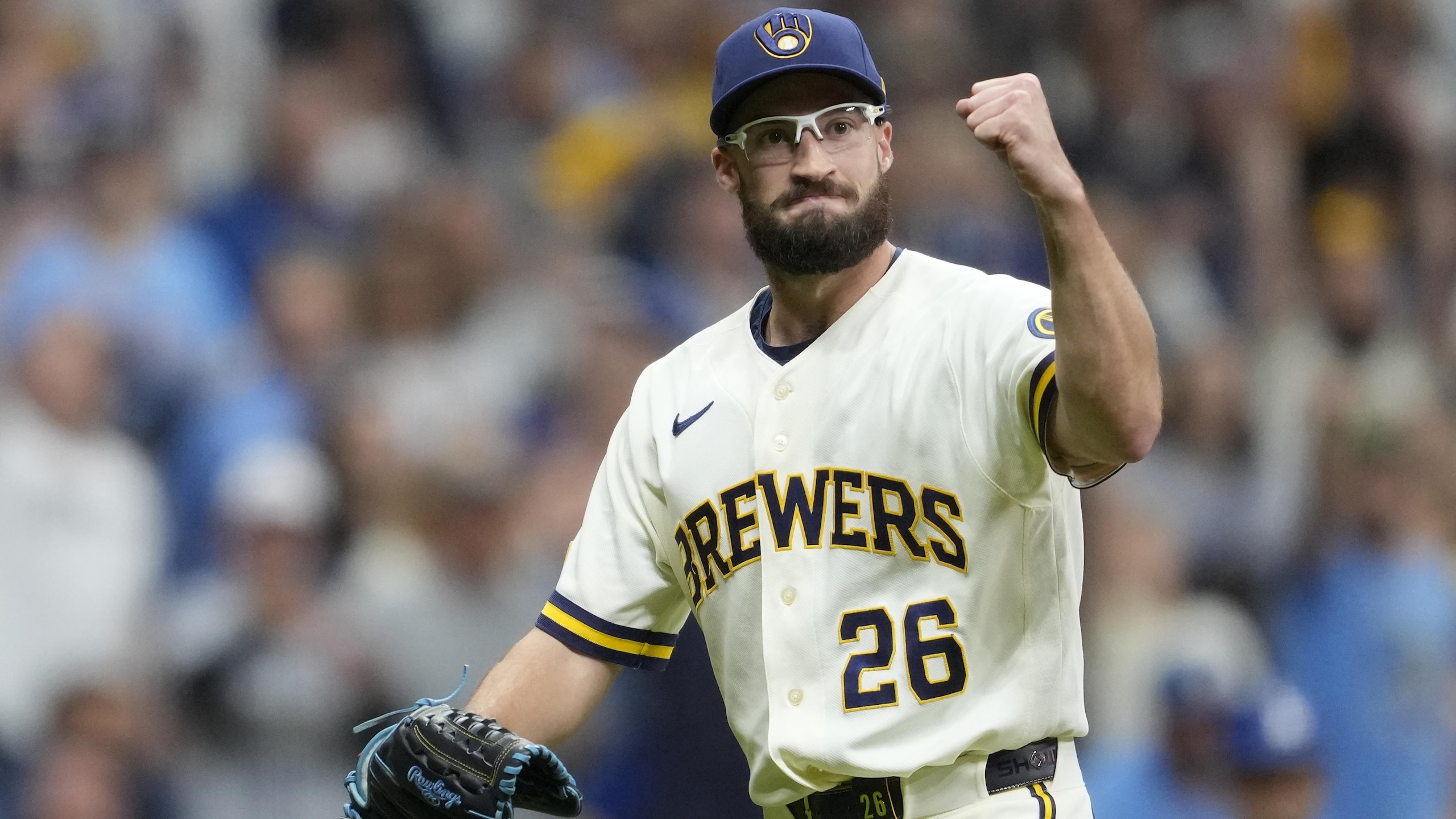
Brewers Beat Dodgers In Game 1

Breaking down why Brewers can stop Dodgers 3-peat
.jpg?w=2560)
Trent Grisham Landing Spots 📍
Even though Ellsbury plays in a lineup that has considerable depth, it also has been significantly downgraded—RBI-wise—over the past offseason due to the loss of Jason Bay, who had driven in 119 runs.
Yet as fantasy leaguers prepare for the quickly approaching 2010 season, Ellsbury is being drafted in the middle of the second round, with an average ADP of 18.66.
The question certainly arises, and I pose it to the readers: Is Jacoby Ellsbury worth a second round selection?
Before we dive into that, let’s first take a look at his 2009 season:
624 At-Bats
.301 Batting Average (188 Hits)
8 Home Runs
60 RBI
94 Runs
70 Stolen Bases
.355 On-Base Percentage
.415 Slugging Percentage
.332 Batting Average on Balls in Play
For every player that we’ve taken a look at on RP, there’s always one-eye popping stat—and the one that sticks out for Ellsbury is his stolen base number, which only was a little more than half of Rickey Henderson’s 130, but still dominant nonetheless. It isn’t often that you can use the word "dominant" when describing a hitter, but in Ellsbury’s case, he’s lethal when he’s on base.
The stolen base total alone is certainly a reason why the speed demon needs to be drafted amongst the top outfielders in baseball, though I’m still hesitant to call Ellsbury a second-round option.
With the signing of Mike Cameron, the Red Sox have moved Ellsbury from his most familiar position in the majors, center field, to one he’s played less often, left field. We all know Cameron is a smooth fielder who has one of the better gloves in the game, but the Red Sox and baseball analysts alike have both raved over Ellsbury’s defensive potential since day one—it was raw, but there was a lot to like about it.
Still, last season, the 26-year-old’s defense in CF fell to that of a liability: -18.3 UZR/150. Thus it was an easy switch for Boston to make. Add in the acquisition of Jeremy Hermida, a below average defender himself, and J.D. Drew in right field, and there is the slight chance that a struggling Jacoby Ellsbury signals a sitting Jacoby Ellsbury.
Injuries and career struggles left behind, the Red Sox have exciting potential in the outfield, among players who are capable, if someone struggles, to fill in.
Even though Ellsbury has been the Sox’s gem since the beginning, the depth of the outfield is still worth noting. Besides that, there is an issue that Ellsbury does nothing but steal bases. Sure, his average was strong at .301, but from a fantasy standpoint he’s a singles hitter with a putrid .114 ISO that will do nothing to help in the power/RBI department.
Further, his average is tied directly to his speed and contact ability. For a leadoff hitter, Ellsbury hasn’t the slightest clue how to draw a walk—a 7.3 percent rate—leading to a .355 OBP. His walk rate has never improved throughout his career, and at age 26, it’s about time he shows improvement in it if he wants to become a star rather than just an excellent player.
To supplement that point, his average is also directly tied to his higher-than-average BABIP, which sat at .332 last season, right in line with his career norm. Though you’ll never have to worry about Ellsbury striking out too often, someone with 143 singles and just 27 doubles needs to have more than great speed to get on base.
As long as he’s connecting with the ball at a near 90 percent clip, Ellsbury should remain a great stolen base source. If he became more patient, he’d easily vault into the discussion as a top second round option.
The biggest detriment to Ellsbury is his knack for hitting fly balls at the expense of line drives. Since only 4.6 percent of his fly balls translated into home runs and he hit just 17.7 percent line drives, the .300 average will be influenced by where those groundballs go and his propensity to beat one out for an infield single (nearly 10 percent last year) every once in a while.
A career six percent HR/FB hitter remains pathetic no matter how you look at it.
The additions this offseason for the Red Sox should improve their team as a whole, especially defensively, but could dampen Ellsbury’s run total. Adrian Beltre is an improvement at third base, and a full year from Victor Martinez should help, but David Ortiz’ continued demise will not. While I can’t predict the future, it’s a real possibility that Boston’s scoring output falls this season.
Now that we’ve gotten all of the statistical measures out of the way, I have one more thing to point out. Looking at the ADP report, Carl Crawford is being taken three to four spots ahead of Ellsbury, while someone like Jose Reyes is being taken four spots behind Ellsbury.
I’d take the chance on a healthy year from Reyes, at a position that’s pretty top-heavy, over an outfielder that fills a deep position. Plus, Crawford has just as much speed, is in the midst of his prime years, and can do a little of it all, yet he’s nearly valued just as highly. It’s preposterous to me.
What do you guys think? Am I being unfair on the assessment of Ellsbury? Where would you draft him?

.jpg?w=2560 "Cam Ward Says He's Not A Loser")
.jpg?w=2560 "Texans Trade for MHJ")
.jpg?w=2560 "Chargers Fall to 0-5 🤢")

.jpg?w=2560 "Grading MHJ Trade 📝")