The 2022 NBA playoffs are just weeks away, meaning this is the final chance for teams to make their run at reaching the postseason or locking down a top seed.
It also represents the last opportunity to experiment with lineups and rotations to make sure teams have the best five-man units possible come playoff time.
For the 16 squads that have already clinched a playoff spot or are projected to do so (based on FiveThirtyEight's projections), we're looking at the weakest link in every starting five, who could replace them and ultimately if a change should be made.
While some teams' starting lineups have been dominant, others could use some small tweaking before April 16.
East No. 1: Miami Heat
1 of 16
Weakest Starter: Duncan Robinson
Possible Replacements: Tyler Herro, Max Strus
For someone who provides little else outside three-point shooting, Robinson has even struggled to consistently connect from deep this season.
The 27-year-old shot just 32.0 percent from deep over his previous seven games before a 5-of-8 performance Monday and is shooting 37.0 percent for the season. While the threat of Robinson knocking down treys still helps keep the defense honest for Jimmy Butler and Kyle Lowry to operate, the Miami Heat would certainly like to see the version of Robinson who hit 42.3 percent of his career threes entering this year.
Herro is the superior player and likely Sixth Man of the Year, but keeping him in that role should be the Heat's priority. Miami has also been far better with Robinson in the traditional starting five along with Butler, Lowry, Bam Adebayo and P.J. Tucker (plus-12.5 net rating) than when Herro is swapped in (minus-7.9 rating).
Strus is an option as someone who's shot better than Robinson this season (39.6 percent from three), although he's spent just 26 minutes with the rest of the regular starters. He did earn the starting nod over Robinson in a recent win over the Sacramento Kings, however, although a 3-of-12 shooting performance did little to prove he deserves to stay there.
While Robinson has struggled individually, Miami has still been quite good with him on the floor.
East No. 2: Milwaukee Bucks
2 of 16
Weakest Starter: Brook Lopez
Possible Replacement: Bobby Portis
Lopez recently returned to the Milwaukee Bucks following back surgery, an absence that saw him miss nearly five months.
He's understandably been rusty, even if he regained his spot in the starting lineup after just two games.
Averaging 9.5 points, 3.5 rebounds, 1.0 assists and 1.0 blocks in 20.7 minutes over his six contests, Lopez has yet to find his outside shot (28.6 percent), an area his backup, Portis, excels at.
This could come down to offense vs. defense for the Bucks and how Lopez's back responds to increased minutes and some grueling playoff series. Portis was quite good while filling in as the starting center (15.4 points, 9.3 rebounds, 1.2 steals, 40.9 percent from three in 58 starts), but he doesn't bring the rim-protecting ability that a healthy Lopez does.
The Bucks will give Lopez every opportunity to keep his spot next to Giannis Antetokounmpo, a right he's earned, but Portis is a terrific backup and ready to go if needed.
East No. 3: Boston Celtics
3 of 16
Weakest Starter: Al Horford
Possible Replacement: Grant Williams
Horford has become the real-time Ninja Turtles meme, going from an All-Star in 2018 while leading a young Boston Celtics team to the weakest member of a stacked starting five.
The 35-year-old is averaging the fewest points of his career (10.0) yet still makes a strong impact with his defense, passing and overall leadership.
Boston has been destroying teams with him in the starting lineup alongside Jayson Tatum, Jaylen Brown, Marcus Smart and Robert Williams III (plus-24.6 net rating in 443 total minutes), so any thoughts of benching Horford should be forgotten, right?
Welllll....
Subbing Horford out in favor of Grant Williams has actually resulted in an even more successful five-man unit for the Celtics, one that registers a net rating of plus-31.0 (albeit in just 109 total minutes). Williams is Boston's best three-point shooter (42.0 percent), so putting him in a starting lineup where no other player connects on 35.6 percent of their attempts adds another dynamic.
Williams has averaged 11.3 points, 4.5 rebounds and nailed 43.4 percent of his threes in 19 games as a starter, so the Celtics should feel comfortable making the switch if they feel more floor-spacing is needed.
With the news that starting center Robert Williams III will be sidelined with a meniscus tear, the Celtics could end up starting both Horford and Williams side by side.
East No. 4: Philadelphia 76ers
4 of 16
Weakest Starter: Matisse Thybulle
Possible Replacement: Danny Green
With plenty of scoring punch in a starting lineup featuring Joel Embiid, James Harden, Tyrese Maxey and Tobias Harris, the Philadelphia 76ers simply need their small forward to defend and hit open shots.
Thybulle is one of the league's premier wing defenders, even if he's not much of an offensive threat. In this starting five, however, he doesn't need to be.
The 25-year-old is leading the NBA in steal percentage this season (3.4 percent) and has shown an improved interior game as a finisher around the rim (80.4 field-goal percentage from within three feet, 67.1 percent on two-pointers overall). While Thybulle may never become an elite three-point shooter, he's at least worth paying attention to from the outside (31.6 percent).
Green is the superior floor-spacer and has far more playoff games on his resume (153 to Thybulle's 16), but his defense has slipped at age 34.
It's fair to complain about Thybulle's lack of offensive contributions, but the Sixers have a blistering net rating of plus-20.3 with him in their normal starting five. There's no need to make a change.
East No. 5: Chicago Bulls
5 of 16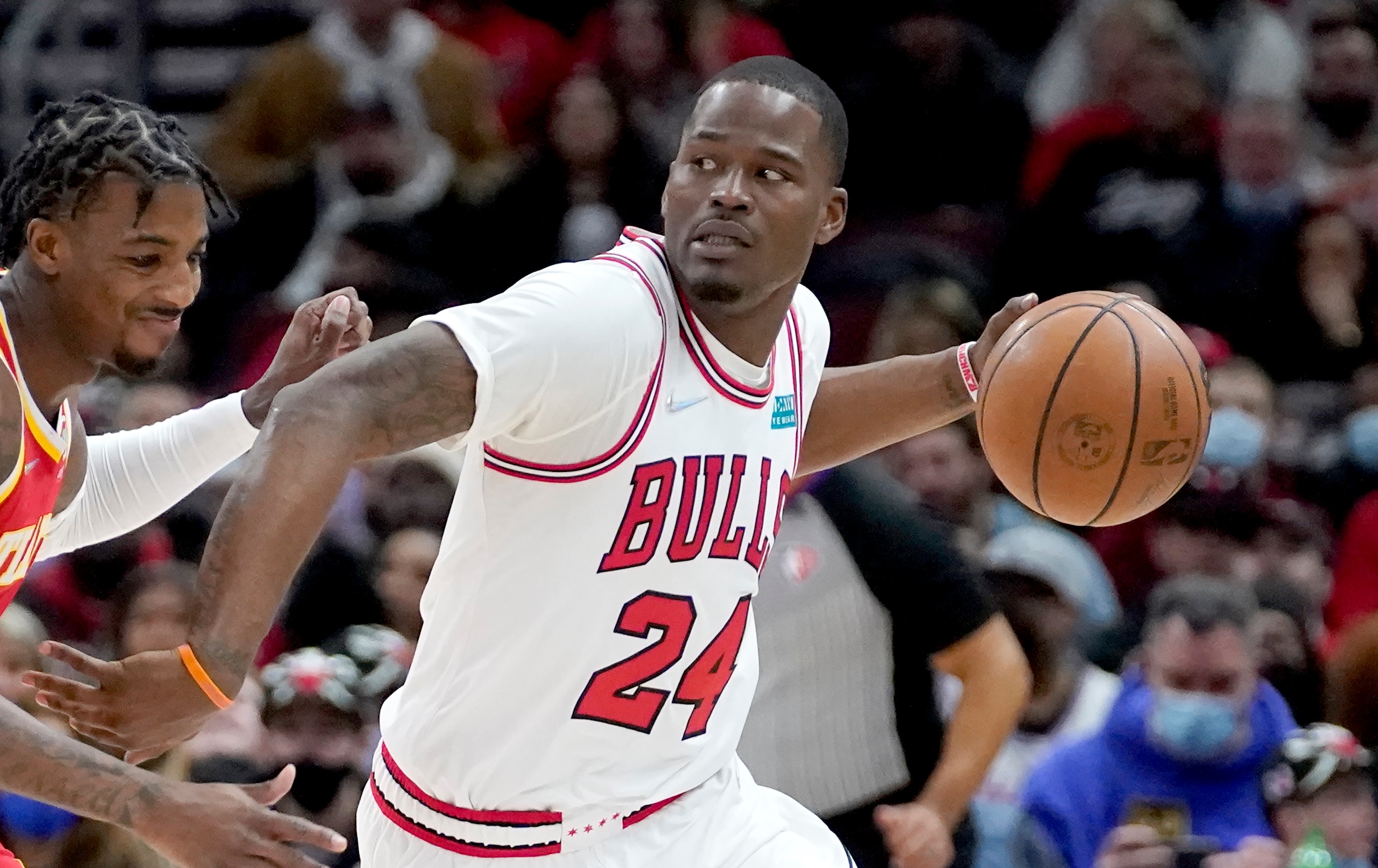
Weakest Starter: Javonte Green
Possible Replacements: Patrick Williams, Ayo Dosunmu
Green has largely been the Chicago Bulls' starting power forward since Williams was sidelined following wrist surgery in October, but this is far from a settled unit.
With Williams back, we could see him eventually establish himself as the opening 4 (or 3, depending on what you consider DeMar DeRozan), although Chicago has experimented with smaller lineups as well.
A recent win over the Cleveland Cavaliers saw Alex Caruso and rookie Ayo Dosunmu start together in the backcourt, with a forward combination of Zach LaVine and DeRozan, and Nikola Vucevic as the opening center. This is a smaller, better defensive option with Caruso in, one that held the Cavs to 94 points.
Eventually, Williams should get the nod over Green, Dosunmu and anyone else because of his versatility, defense and ceiling after being selected No. 4 overall in 2020.
With Lonzo Ball still sidelined with a knee injury, we may not see Chicago's original starting five (Ball, LaVine, DeRozan, Williams, Vucevic) back together until the playoffs. In just five games as a group all season (63 total minutes), the Bulls' original starters did register a sparkling net rating of plus-9.6.
East No. 6: Toronto Raptors
6 of 16
Weakest Starter: Scottie Barnes?
Possible Replacements: Precious Achiuwa, Thaddeus Young
Finding the worst starter on the Toronto Raptors is like trying to find a bad Josiah Johnson tweet. There simply isn't one.
Barnes is the reluctant choice as the only Toronto starter to register a negative swing rating this season. You could make an argument for Gary Trent Jr. as well, but every starter the Raptors possess is awesome, which is probably why head coach Nick Nurse plays them all 34 to 38 minutes per game.
The weird part about Toronto's starting unit? It actually has a negative net rating this season, coming in at minus-2.0 in 310 minutes together.
Nurse could attempt to stagger his starter-heavy rotation by moving Barnes to the bench as a do-it-all sixth man, something he's yet to try in 67 games.
Making such a move would likely involve putting one of the Raptors' other big men into the starting lineup next to Siakam, be it Achiuwa, Young, Khem Birch or Chris Boucher.
Given the surprisingly low lineup rating the Raptors' starters have registered together, Nurse could try experimenting before the playoffs begin, but there's little debate on who the five best players on this team are.
East No. 7: Cleveland Cavaliers
7 of 16
Weakest Starter: Isaac Okoro
Possible Replacement: Cedi Osman
The Cleveland Cavaliers are plugging any healthy body they can find into the starting lineup on a roster that's witnessed Collin Sexton, Ricky Rubio, Lauri Markkanen and Jarrett Allen miss significant time with injuries this season.
With Allen out because of a fractured finger, rookie Evan Mobley has been moved to center, and Markkanen and Caris LeVert have joined him in the frontcourt. While Darius Garland has been terrific as the team's starting point guard (21.5 points, 8.6 assists, 1.2 steals per game), Okoro hasn't had the offensive breakout people in Cleveland were hoping for.
Already a talented wing defender, Okoro has improved his outside shooting (59.1 percent over his last 10 games), although his scoring is extremely streaky.
With Sexton out for the year because of a torn meniscus, the Cavs have desperately needed another guard capable of handling the ball and creating scoring opportunities for others, even after trading for LeVert. While Okoro is showing the ability to hit open shots and make timely cuts to the basket, 69.8 percent of his twos and a whopping 94.3 percent of his threes have come off an assist this season.
While Osman is the better ball-handler, he's been in J.B. Bickerstaff's doghouse lately and hasn't received consistent minutes off the bench. He's not nearly the defender Okoro is, either.
Osman may not challenge for Okoro's starting job, but getting a healthy Allen back may move the second-year wing to the bench. Assuming Bickerstaff wants to return to his three-big lineup with Allen, Mobley and Markkanen, LeVert will likely stay next to Garland to keep multiple playmakers on the floor together.
East No. 8: Brooklyn Nets
8 of 16
Weakest Starter: Bruce Brown
Possible Replacements: (Ben Simmons), Kessler Edwards, LaMarcus Aldridge, Blake Griffin
The Brooklyn Nets' starting lineup received a nice boost when Kyrie Irving was cleared to play in home games, and it's been understandably overlooked just how good he's been this season (27.1 points, 4.4 rebounds, 5.7 assists, 1.3 steals, 41.3 percent shooting from three).
A backcourt of him and Seth Curry is a fireworks show offensively, and Kevin Durant and Andre Drummond make a solid frontcourt duo.
For now, Brown is the one filling in the gaps of this star-studded roster with his defense and versatility, but it's hard to imagine Steve Nash won't bench him for Simmons when the three-time All-Star returns from a herniated disk. Joe Harris would likely play the starting small forward role ahead of Brown if not for his season-ending ankle surgery as well.
If the Nets want to make a change from Brown before Simmons can come back, there's slim pickings.
Edwards has actually started 21 games for Brooklyn this season, although the rookie second-round pick has watched his playing time get slashed as the roster has gotten healthier. Aldridge or Griffin would give the starting lineup more size, but neither moves that well anymore or can switch on to wings like Brown can.
Until Simmons can return, the starting small forward job is probably Brown's.
West No. 1: Phoenix Suns
9 of 16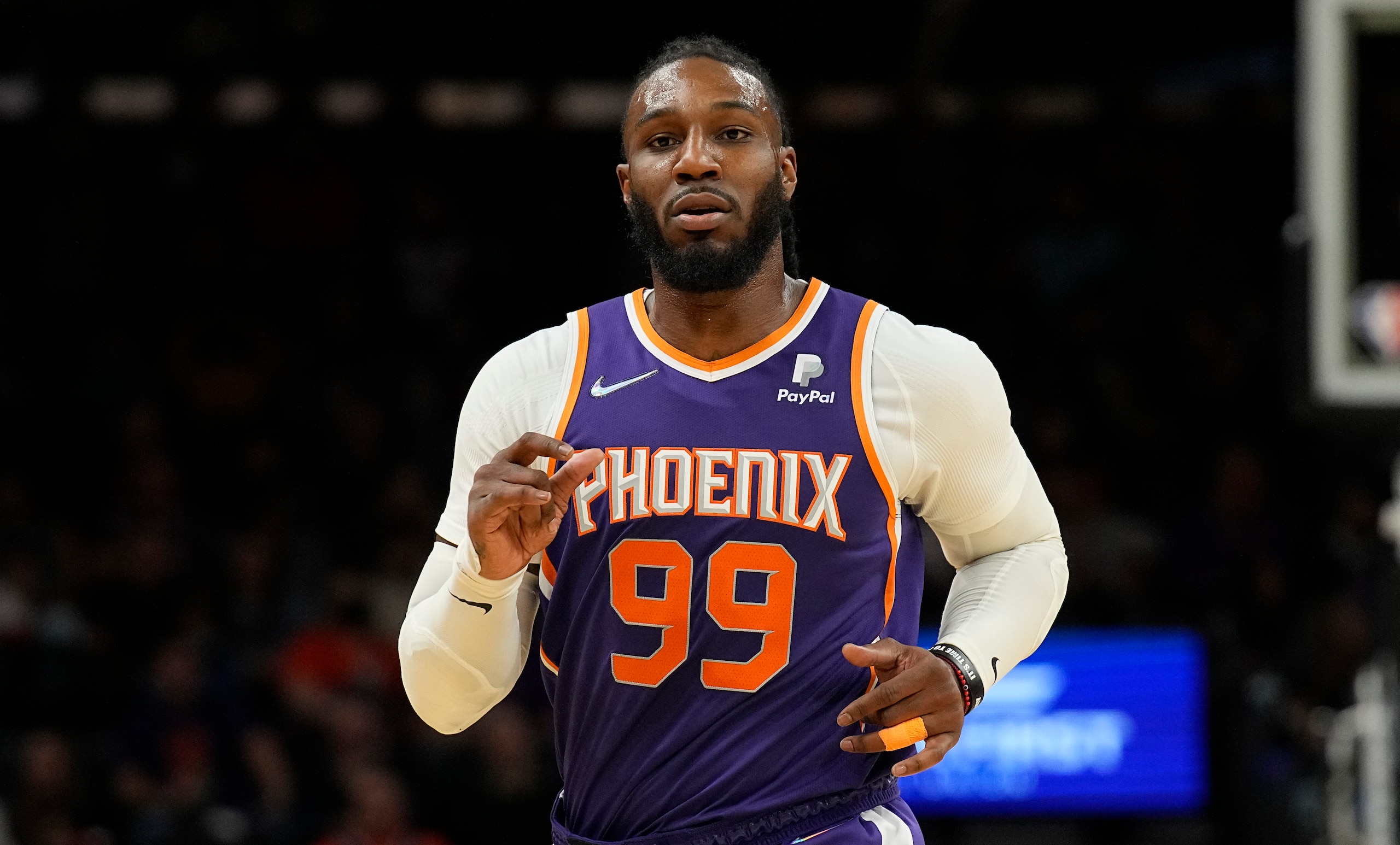
Weakest Starter: Jae Crowder
Possible Replacement: Cameron Johnson
With Johnson nearing a return following a right quad contusion that's kept him out since March 4, the Phoenix Suns should seriously consider starting him over Crowder.
Why mess with a starting lineup that's anchored a 61-14 record, you ask?
The core four in Phoenix (Devin Booker, Chris Paul, Deandre Ayton and Mikal Bridges) have registered a net rating of plus-7.6 with Crowder as the starting power forward. When those same four share the floor with Johnson, however, this number jumps all the way to plus-25.2.
Johnson is first in the NBA in three-point shooting (44.8 percent), giving the Suns an elite floor-spacer for Paul and Booker to operate next to. While Crowder is the more versatile defender, having Bridges as the team's starting small forward already gives this lineup an elite wing stopper.
In the end, it probably doesn't matter who joins the other four in Phoenix. This team has easily been the most dominant throughout the course of the season.
Should Crowder, 31, start to show some major decline in play, Johnson is ready to take his job.
West No. 2: Memphis Grizzlies
10 of 16
Weakest Starter: Steven Adams?
Possible Replacements: Brandon Clarke, Ziaire Williams
As with the Raptors, it's extremely difficult to find a weak link in the Memphis Grizzlies' starting lineup, especially for a team that's gone 18-2 without Ja Morant this season.
Out of respect to Morant, Desmond Bane, Dillon Brooks and Jaren Jackson Jr., we'll regrettably give the dishonor to Adams, who continues to quietly go about his business as a terrific rebounder, screener and ball-mover on offense.
Adams has been the NBA's best offensive rebounder this season (18.2 percent) while also posting an assist rate that's more than doubled his career average (15.7 percent). He doesn't score much (7.1 points per game), but he isn't asked to, either.
Memphis has some quality backup bigs in Clarke and Xavier Tillman Sr., but neither possesses the experience or glass-cleaning ability of Adams. The Grizzlies could go smaller and quicker with Jackson at center and Williams inserted into the starting lineup but would become worse defensively.
In the end, there's no reason to bench Adams, even with his limitations as a scorer. He's the perfect complementary center for this group, one who doesn't need to put up points to be ultra-effective.
West No. 3: Golden State Warriors
11 of 16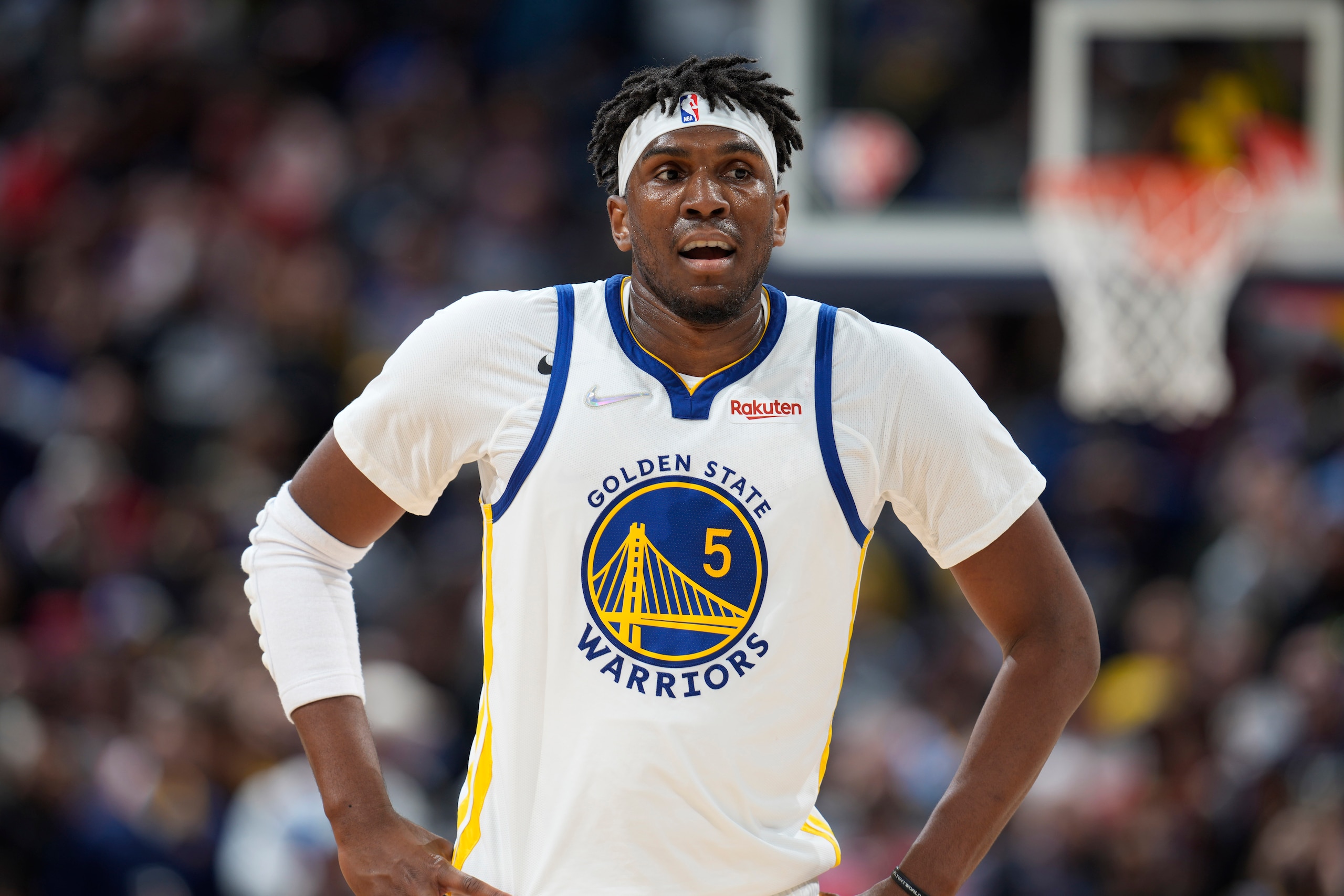
Weakest Starter: Kevon Looney
Possible Replacement: Jonathan Kuminga
In a perfect world, this would have been James Wiseman's job by now, with his incredible size and athleticism giving the Warriors' starting lineup a new dynamic.
With news that Wiseman will be shut down for the year after swelling in his right knee following meniscus surgery, the 2020 No. 2 pick has played in just 39 games over two years. He suited up for three G League contests this season, unable to get his knee healthy enough to join the Warriors.
This isn't meant to take anything from Looney, who's become one of the NBA's most underrated players behind his defense, rebounding and ability to play within his role in Golden State. Still, he's limited offensively and isn't a threat to shoot from outside 10 feet.
Head coach Steve Kerr did experiment with a Draymond Green-Kuminga starting frontcourt, one that's extremely undersized. If going against hulking towers such as Nikola Jokic, Steven Adams, Rudy Gobert or Karl-Anthony Towns in the playoffs, the Warriors will need more muscle down low.
With no Wiseman, this is almost certainly Looney's job to keep come playoff time. The Warriors simply don't have many other options.
West No. 4: Dallas Mavericks
12 of 16
Weakest Starter: Reggie Bullock
Possible Replacement: Maxi Kleber
Following a rough start to his Dallas Mavericks career, Bullock has been better over the past few months.
His defense is saving the Mavs 3.0 points per 100 possessions (73rd percentile) per Cleaning the Glass, and Bullock's three-point percentage has jumped to 36.0 percent in his 30 games as the team's starting small forward.
Still, Dallas could use Bullock to become more of an offensive threat, especially with Tim Hardaway Jr. unlikely to play again this season following foot surgery. Bullock is making just 39.6 percent of his shots, his worst mark since 2014-15.
Head coach Jason Kidd could go big with Kleber as the starting power forward and move Dorian Finney-Smith to the 3, although early results have been disastrous. While lineups featuring Bullock (along with Luka Doncic, Jalen Brunson, Dwight Powell and Finney-Smith) have a net rating of plus-10.6, those with Kleber and the rest of the starters are minus-12.4 in 142 minutes.
This could change if Kleber can rediscover his shooting stroke (32.6 percent from three after 41.0 percent last season), although this smaller, faster version of the Mavs seems to be working better.
Bullock hasn't quite lived up to his three-year, $30 million contract just yet, but he's Dallas' best option as the starting small forward.
West No. 5: Utah Jazz
13 of 16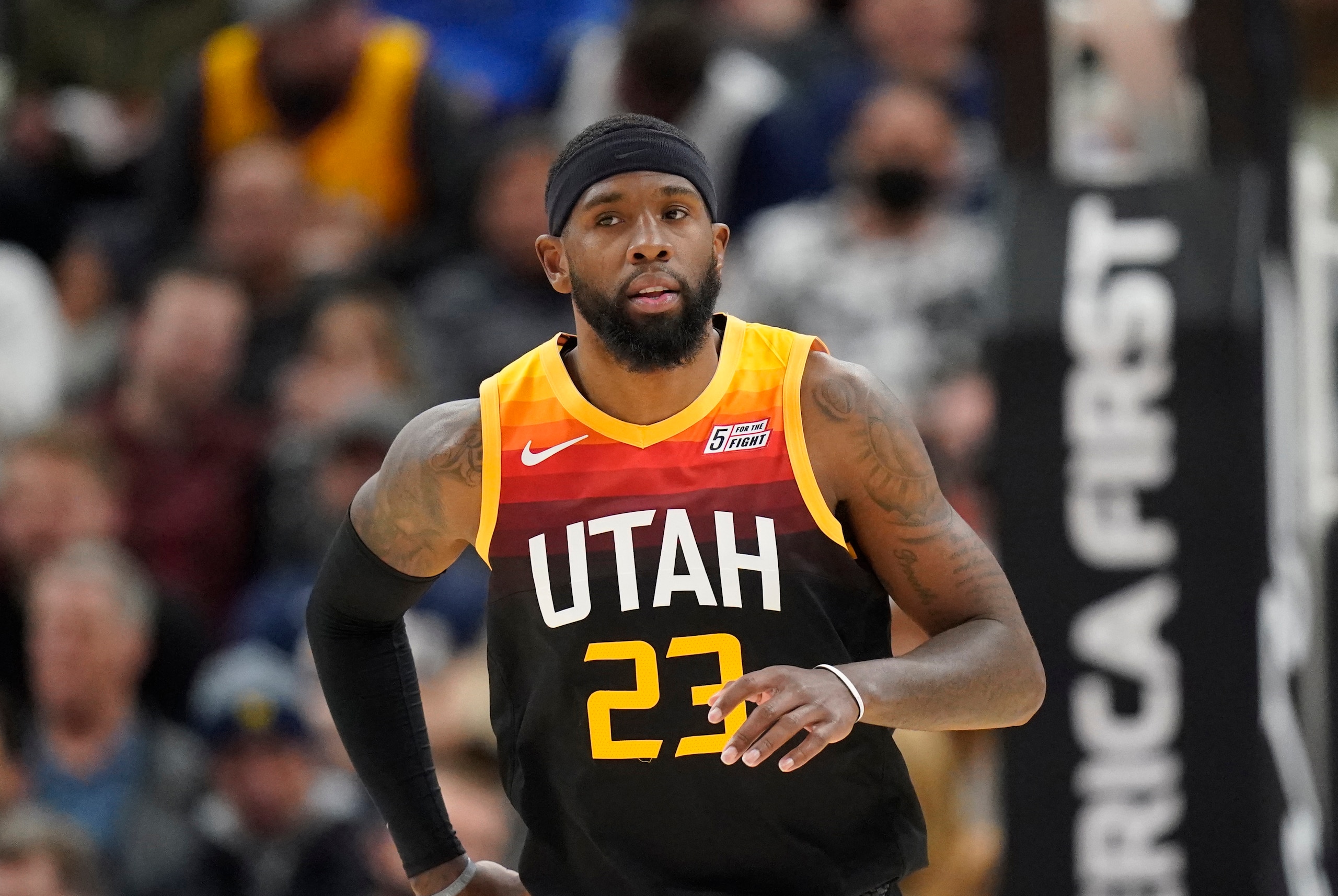
Weakest Starter: Royce O'Neale
Possible Replacements: Rudy Gay, Danuel House Jr.
While his numbers don't pop off the page like those of the other Utah Jazz starters, O'Neale is still a very valuable member of the opening five, and there's no backup good enough to push him.
The team's best perimeter defender, O'Neale has also been the rotation's most consistent three-point shooter (40.6 percent).
With Joe Ingles lost for the season to a torn ACL and later traded to the Portland Trail Blazers, only Gay and House could conceivably hold down a starting forward job. Gay, who's in his 16th season, has the experience, and House has been lights out from three (44.6 percent in his 19 games in Utah), but neither can defend like O'Neale.
Starting Jordan Clarkson would throw off the entire balance of the offense and shouldn't be considered, either.
While Utah may want to upgrade in the offseason, O'Neale is still easily the team's best option as a starting forward.
West No. 6: Denver Nuggets
14 of 16
Weakest Starter: Jeff Green
Possible Replacements: (Michael Porter Jr.), Bryn Forbes, Austin Rivers
No offense to Uncle Jeff, but at 35, Green probably shouldn't be a starter on a playoff-bound team anymore.
While he's done an admirable job of keeping Porter's seat warm, Green's outside shot is beginning to disappear (29.4 percent from three over his last 18 games), and his defense hasn't been a plus for years.
Going small with Aaron Gordon at power forward, Will Barton at small forward and a pair of guards might be best for Denver, at least until Porter can return from back surgery. While ESPN's Adrian Wojnarowski was originally told by Porter's agent this could be in March, we're quickly running out of time.
Forbes is knocking down 40.2 percent of his threes following a trade to the Nuggets, and swapping Green for Rivers has resulted in a net rating of plus-27.7 in 90 total minutes.
Denver still has a real chance at getting home-court advantage in the first round of the playoffs, although more so in spite of Green than because of him.
West No. 7: Minnesota Timberwolves
15 of 16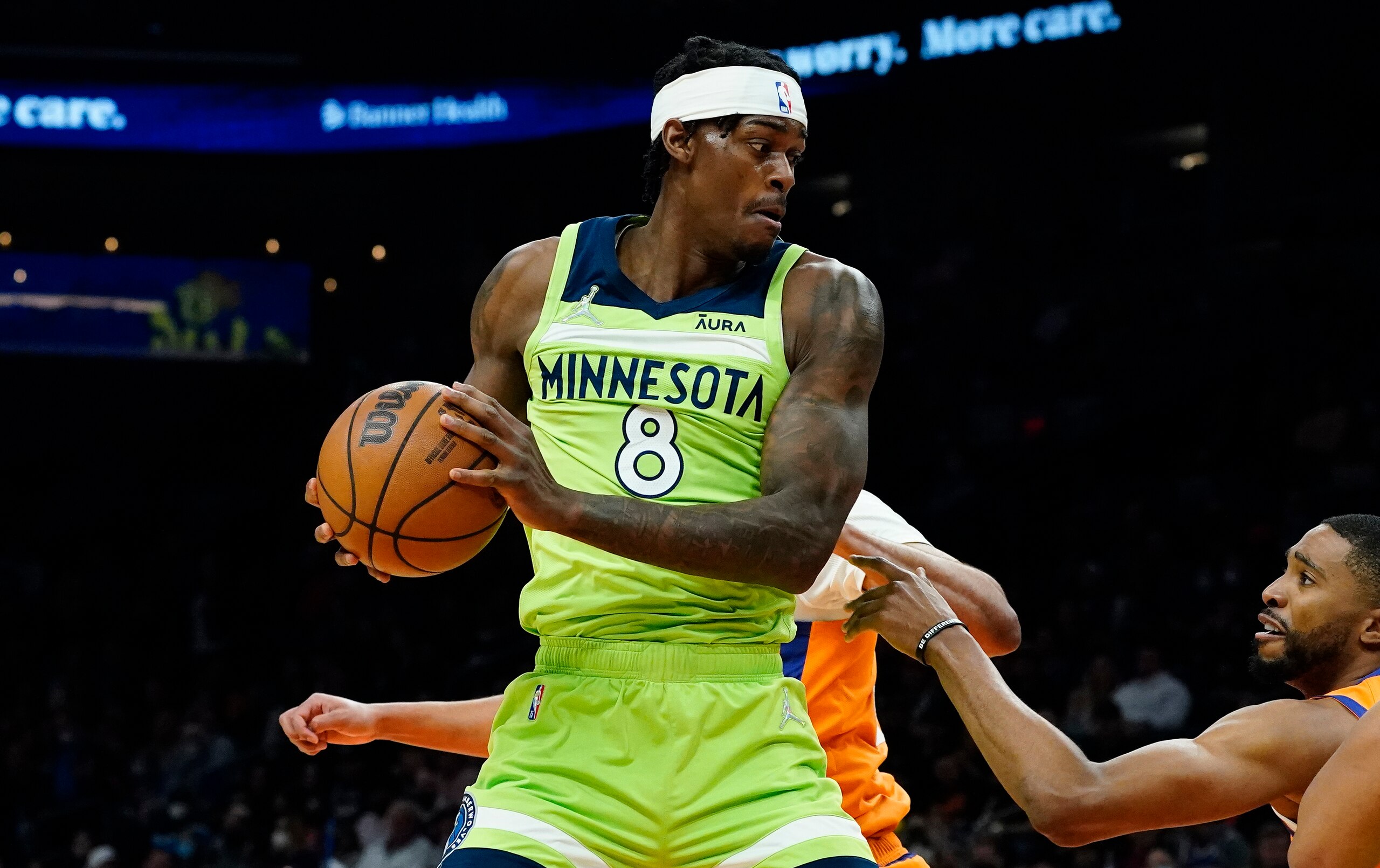
Weakest Starter: Jarred Vanderbilt
Possible Replacements: Jaden McDaniels, Taurean Prince
One major reason for the Minnesota Timberwolves' success this season is the way in which role players such as Vanderbilt have thrived, even if he's technically the worst member of the starting five.
The 22-year-old forward has become a terrific rebounder (8.7 per game) and defender, even if his offensive game is pretty obsolete. Vanderbilt isn't a three-point threat or playmaker of any kind, which is fine when he shares the floor with so many other offensive threats.
If the Wolves want more spacing, McDaniels and Prince are better options.
After nearly splitting his time between starter and reserve this season, McDaniels has actually been more effective when coming off the bench. He's averaging 9.9 points and shooting 33.3 percent from three as a reserve, compared to 8.8 points and 29.1 percent shooting as a starter.
Prince doesn't bring the rebounding or defense that Vanderbilt can, even if he's a superior shooter (37.9 percent from three).
With Minnesota separating itself from the rest of the pack for the seventh seed, there's no need to make a change here.
West No. 8: Los Angeles Clippers
16 of 16
Weakest Starter: Nicolas Batum
Possible Replacements: (Kawhi Leonard), Terance Mann, Amir Coffey
Kudos to head coach Tyronn Lue, who's kept the Los Angeles Clippers near .500 despite Paul George recently missing over three months with a torn UCL and Kawhi Leonard yet to play this year following ACL surgery in July.
The good news for Lue is that George made his return Tuesday night, recording 34 points on 10-of-20 shooting, including 6-of-9 from deep. He's gotten the most out of his role players, including Batum, who's helped fill George's spot in the starting lineup as a versatile wing defender.
With George, Reggie Jackson and Ivica Zubac all safely penciled in, it will be up to Batum and Marcus Morris Sr. to fight for a starting job once Leonard is cleared.
For now, Batum should be safe unless Lue feels he needs more scoring pop for an offense that's ranked just 26th this year (108.1 rating).
Mann and Luke Kennard have also started double-digit games for the Clippers this season, and Coffey recently started 28 games with George sidelined.
Moving Coffey out of the starting lineup is something Lue should have probably done a while ago, however, as the Clippers possess a net rating of minus-13.5 when he opens games with the regular starters. With Mann swapped in instead, Los Angeles' net jumps to plus-12.9.
With George back, here's hoping Leonard can return before or during the playoffs as well.
Stats via NBA.com and Basketball Reference unless otherwise noted.
.jpg?w=2560 "B/R's Expert Week 7 NFL Picks 🔮")
.jpg?w=2560 "Report reveals list of next NFL international locations")
.jpg?w=2560 "JJ Watt to Be Top CBS Analyst")