
Early Flight-Risk Meters for NBA's Top 2022 Free Agents
The 2021-22 NBA season is in full swing, but it's never too early to speculate on the upcoming offseason. And depending on a few player options, this free agency class could feature some star power at the top.
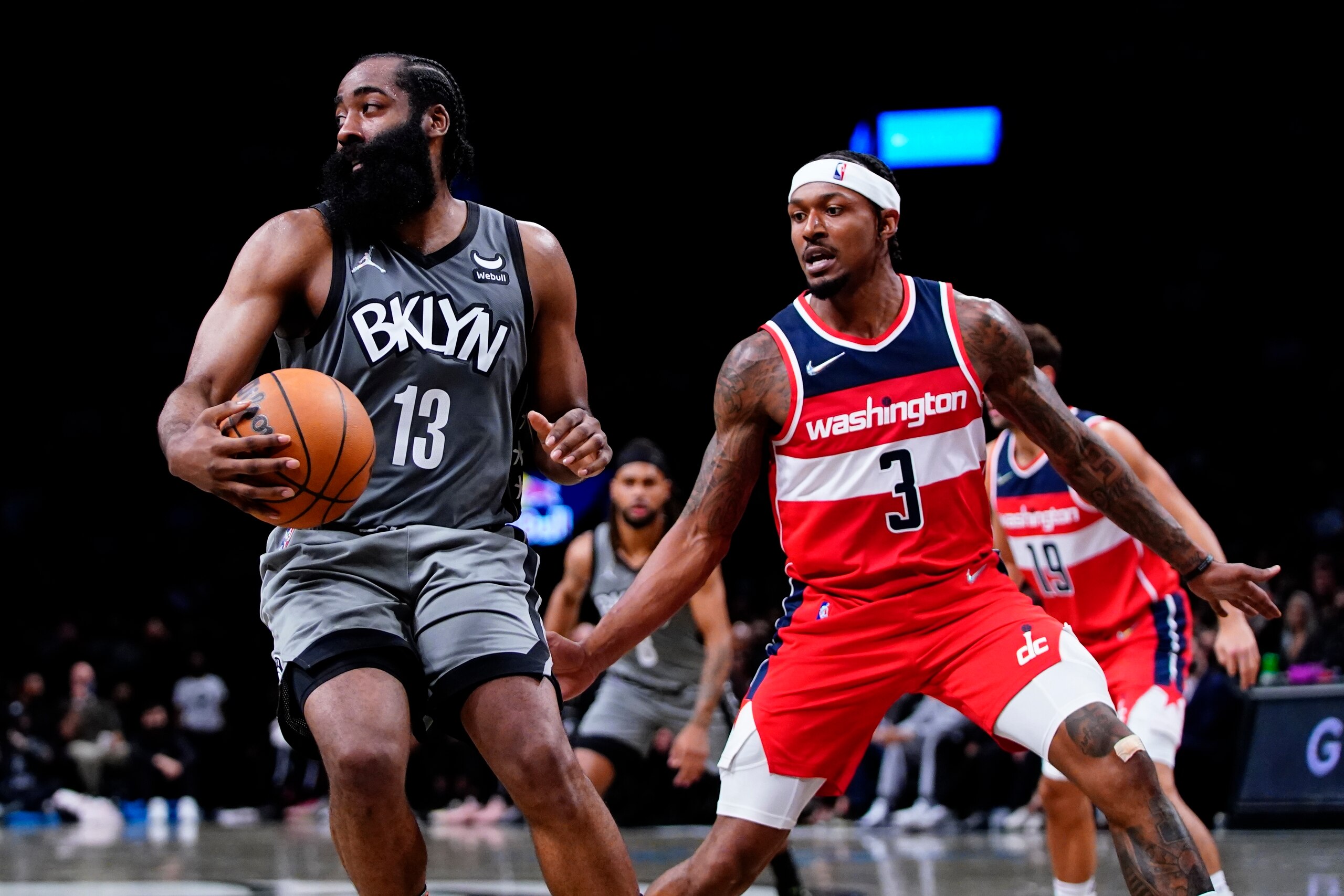
A couple months ago, it looked like extensions might get done for the Brooklyn Nets' James Harden and Kyrie Irving. They didn't, and now both can become free agents this summer.
Bradley Beal is coming off back-to-back seasons with a 30-plus scoring average. And he too can join this group by declining an option. Zach LaVine, meanwhile, will be an unrestricted free agent.
Then, there's a solid bunch of restricted free agents, including Deandre Ayton, Collin Sexton and the surging Miles Bridges.
But how many of theses players are real threats to actually leave the teams they're already on? Let's check the wholly scientific Flight-Risk Meter on all of the above (and a few more).
10. Collin Sexton (Restricted)
1 of 10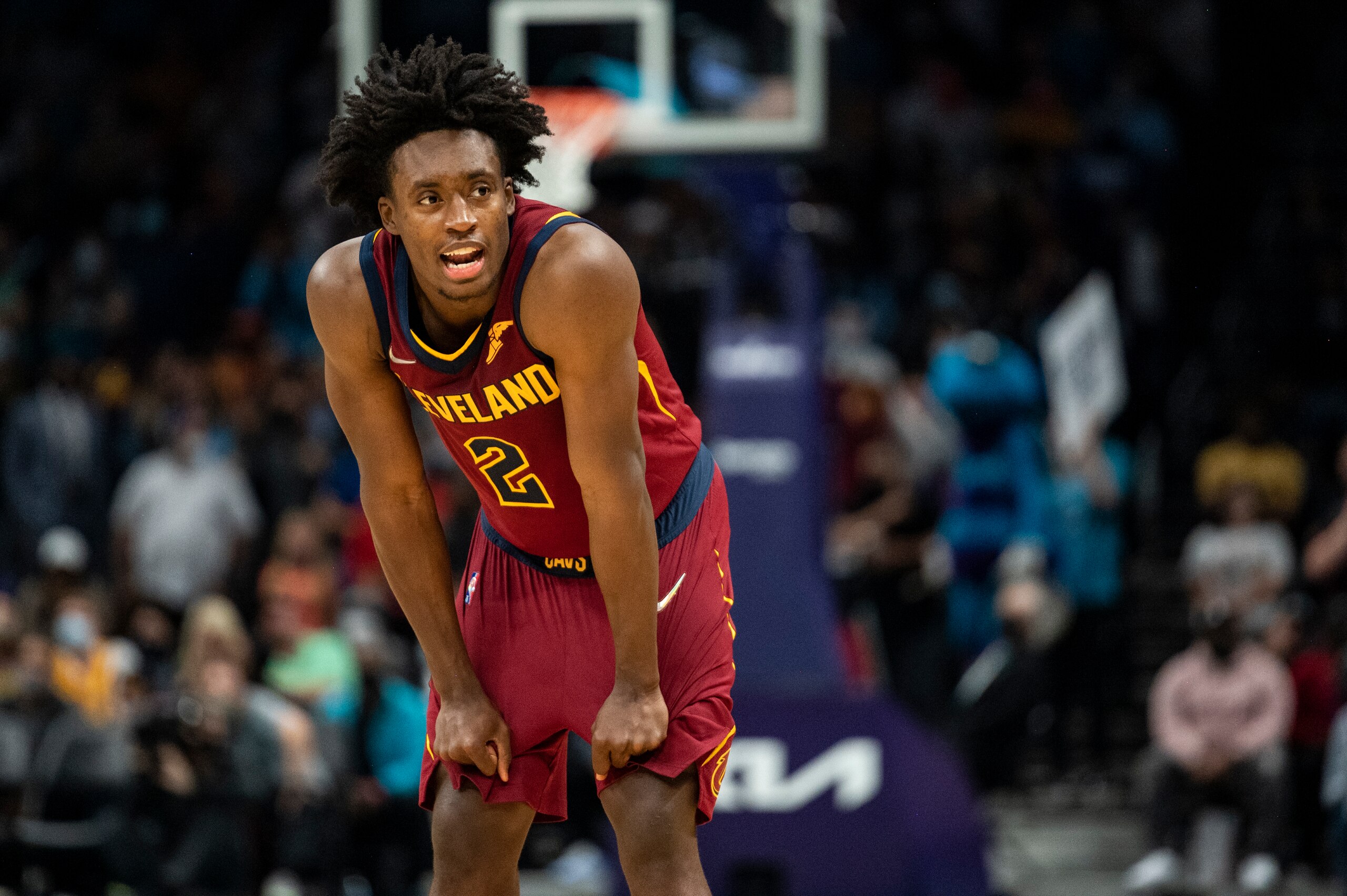
An infusion of talent, including Lauri Markkanen, Ricky Rubio and rookie Evan Mobley, has contributed to a little less usage and seven fewer points per game for Collin Sexton.
Perhaps more alarming, for the fourth consecutive season, the Cleveland Cavaliers' point differential is worse with Sexton on the floor. Over his career, Cleveland is minus-10.4 points per 100 possessions when Sexton plays and minus-5.6 when he doesn't.
Of course, there may be some missing context there, but a four-year sample is significant. And over the years, watching the Cavs attempt to defend opposing backcourts with Sexton and Darius Garland (both 6'1") has been an adventure in mismatches.
Going forward, Cleveland may have to choose one or the other and look for a bigger wing who can take on more difficult defensive assignments. And some within the organization may already have a preference.
"[The Cavaliers] need a focal point, someone to build around instead of with," Chris Fedor wrote for Cleveland.com. "As it stands, point guard Darius Garland is most important. He displayed the playmaking skill set that has many within the organization believing he’s already the team’s best player."
Early returns from 2021-22 have likely reinforced that thinking. Garland has a better box plus/minus than Sexton (BPM "...is a basketball box score-based metric that estimates a basketball player’s contribution to the team when that player is on the court," according to Basketball Reference), and his assist percentage is nearly four times as high.
Still, there are factors in play that level off the Flight-Risk Meter a bit. The biggest is probably Sexton's talent. Yes, there are valid concerns over his defense and lack of playmaking, but you can't ignore 24.3 points per game (his average in 2020-21) in an age-22 season, even in a supercharged offensive era.
Letting that kind of offensive production walk for nothing is far from ideal. At the very least, Cleveland can match any offer sheet he signs with another team, retain the asset and flip him for another player down the road.
Productive restricted free agents leaving immediately after their rookie deals are up is rare, even if the fits aren't perfect.
Flight-Risk Meter: Medium
9. Jusuf Nurkic
2 of 10
Jusuf Nurkic leaving the Portland Trail Blazers this offseason would have little to nothing to do with impact on the team. With the exception of one season that was ended by injury after eight games, the Portland Trail Blazers' point differential has been better with Nurkic on the floor every year.
With Damian Lillard and CJ McCollum understandably taking most of the shots, Nurkic doesn't put up eye-popping scoring numbers, but he's a heck of a gap-filler. He can dominate the glass, is typically in the right spots on defense and is an underrated passer.
As long as he, Lillard and McCollum are on the floor, the Blazers are competitive. And they'd likely continue to be if Portland kept all three together a while longer.
The complicating factor here is that this core has already been together a while. And plenty have been forecasting the breakup for years. If the Blazers underwhelm in 2021-22 under new head coach Chauncey Billups, they could be looking for a shakeup. And though speculation on that front typically zeroes in on McCollum (and occasionally Lillard), Nurkic being an unrestricted free agent makes him a candidate.
There is a severe shortage of available cap space this summer, though. And with Portland having Bird rights (the ability to sign an incumbent to a deal that takes the team over the cap) on Nurkic, re-signing might be his best path to a decent contract.
Sign-and-trade deals have recently returned to favor around front offices around the league (thanks to that dearth of cap space), but those can be tricky.
Flight-Risk Meter: Medium
8. Russell Westbrook (Player Option)
3 of 10
Russell Westbrook spending the last few chapters of his career as a season-by-season mercenary for different teams would be fun (the Los Angeles Lakers are his third team in three years), but his start to 2021-22 should probably have him thinking about picking up his player option.
The Lakers are 5-3, but they're in the middle of the pack in net rating (net points per 100 possessions) and have struggled to put away tanking teams like the Oklahoma City Thunder and Houston Rockets. A predictably wonky fit with Westbrook, LeBron James and Anthony Davis is largely to blame.
It's early enough that these numbers could shift dramatically after a few good games, but L.A. is currently minus-2.9 points per 100 possessions when Westbrook plays and plus-12.1 when he sits. He's third on the team in shots per game (not far behind LeBron and AD) and posting a 46.9 effective field-goal percentage that's well shy of the league average.
Several attempts per game feel forced, especially when much more efficient options like Davis and James are available.
There were similar growing pains with the Houston Rockets and Washington Wizards, and in both cases Westbrook eventually turned things around (though it took a radical mid-season change in roster structure in Houston). There's plenty of time for a similar story arc here.
If Westbrook never jells and survives the trade deadline, though, it'll be hard for him to turn down $47 million guaranteed in his hometown. He's almost 33, and his game has long been heavily reliant on athleticism. Teams might be wary of giving a below-average shooter outside his prime decent longterm money.
Flight-Risk Meter: Medium



7. Mitchell Robinson
4 of 10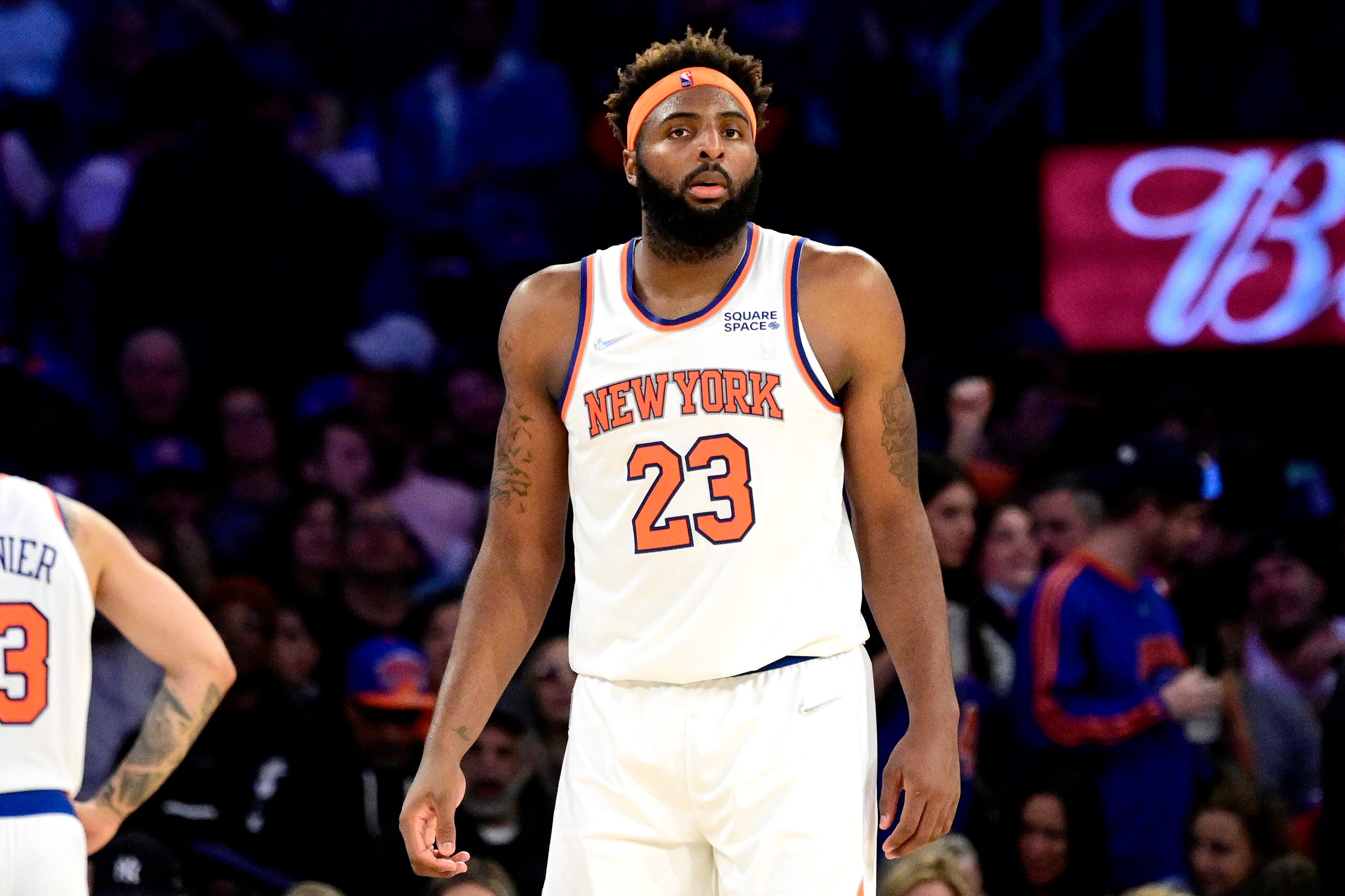
Mitchell Robinson's advanced numbers tailed off quite a bit when he moved from a reserve role (most of his first two seasons) to the starting lineup (the last two seasons).
That's not unusual. When you're a starter, of course, you're more often matched up with better players. It also shouldn't be all that alarming, as Robinson is just 23 years old and seemingly learning the nuance of NBA defense under coach Tom Thibodeau.
During those first couple campaigns, Robinson was more prone to chase blocks at the expense of rotations and the overall defensive scheme. This season, he looks a bit more controlled. The length and athleticism that helped him average 3.7 blocks per 75 possessions as a rookie and sophomore is still there, he's just smarter about when he unleashes it.
On offense, Robinson still looks like a archetypal rim-runner and offensive rebounder. He may not be quite as prolific in the paint as someone like Rudy Gobert, but his efficiency is outrageous. For his career, Robinson has a 69.9 true shooting percentage, but this season he's up to an astronomical 78.1 (the league average is 54.7).
With the right guard or wing setting him up, Robinson could be the kind of vertical threat who'd force defenses to collapse inside, leaving shooters with a little extra time on the catch.
For the New York Knicks, specifically, Mitchell seems like a good fit next to a playmaking 4 like Julius Randle. And he's four years younger than Nerlens Noel (who does a lot of the same things).
The better Robinson plays this season, the more expensive he'll become. But New York is on the rise and has full Bird rights for Robinson. Losing a key cog now could slow some of the momentum built since the start of last season.
Flight-Risk Meter: Low
6. Miles Bridges (Restricted)
5 of 10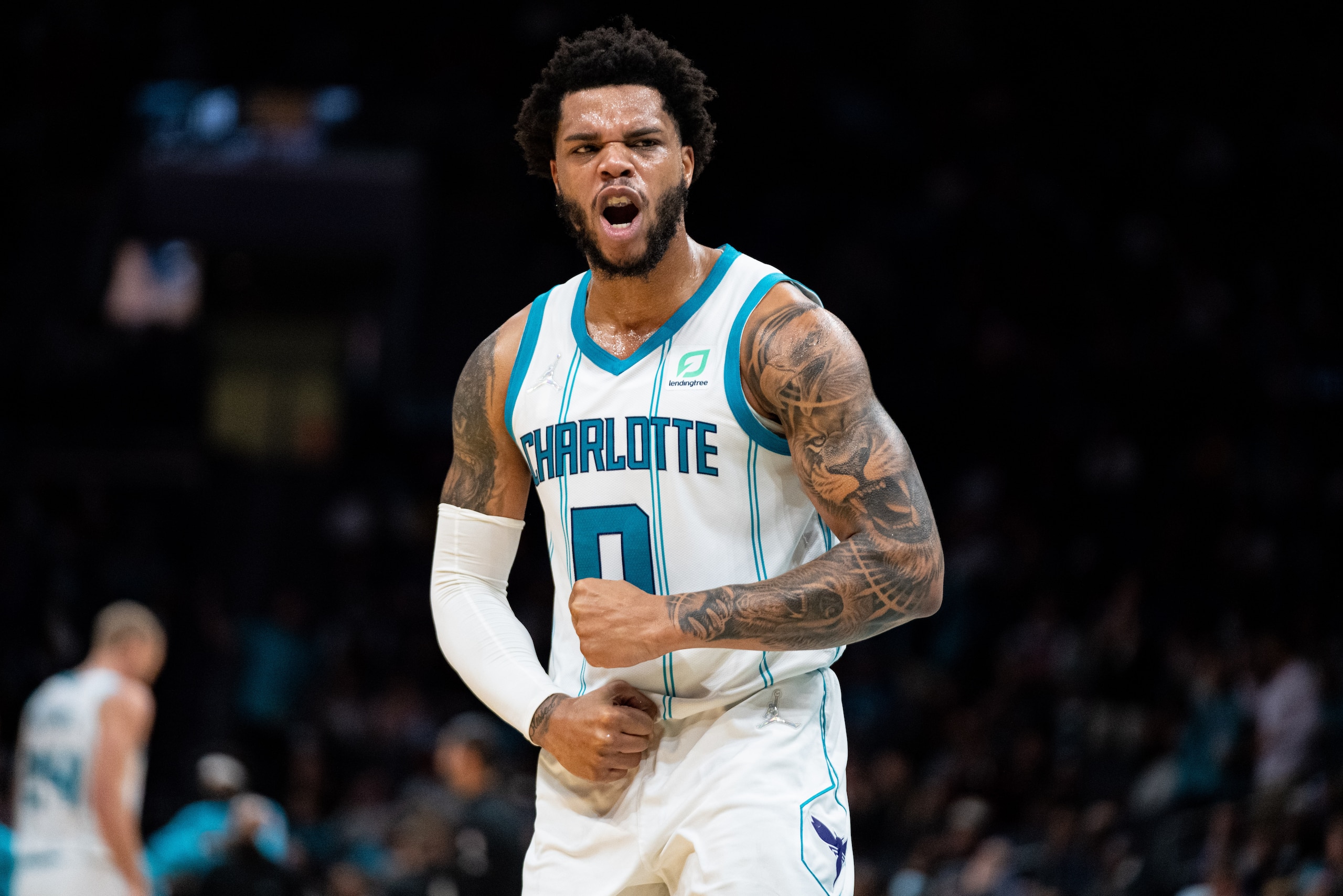
Miles Bridges is making himself an awful lot of money this season. The Charlotte Hornets reportedly offered him an extension in the neighborhood of four years and $60 million over the summer, but a bet on himself is paying off.
Now, Bridges appears headed to restricted free agency with loads of momentum (not unlike his bully-ball drives to the rim in 2021-22).
Through eight games, Bridges is averaging career highs in points (23.1), rebounds (7.9), assists (3.4), steals (1.8) and blocks (0.9) per game. His three-point shooting has cooled a bit, but with everything else he's doing, he doesn't have to be Seth Curry out there. Bridges' range at least has to be respected by defenders, and that introduces unpredictability that helps his dribble-drive game.
This season has also helped with the chemistry between Bridges and second-year point guard LaMelo Ball. The latter looks like he could be a generational passer, and Bridges may be his favorite target (he's certainly the most exciting).
It's early, but more of LaMelo's assists have gone to Bridges than any other Hornet. And as a finisher, Bridges looks like something of an evolution from Dominique Wilkins. He made a name for himself with the highlight-worthy dunks, but it's everything he's added leading up to this season that could make him a $100 million man this summer (Mikal Bridges' recent extension was worth $90 million).
Even if Bridges costs that much to retain, it's hard to imagine Charlotte not being his home next season. The team is headed in the right direction, with multiple potential stars. Allowing one to walk, especially when restricted free agency gives you the opportunity to match any offer sheet, could derail the progress.
Flight-Risk Meter: Low
5. Deandre Ayton (Restricted)
6 of 10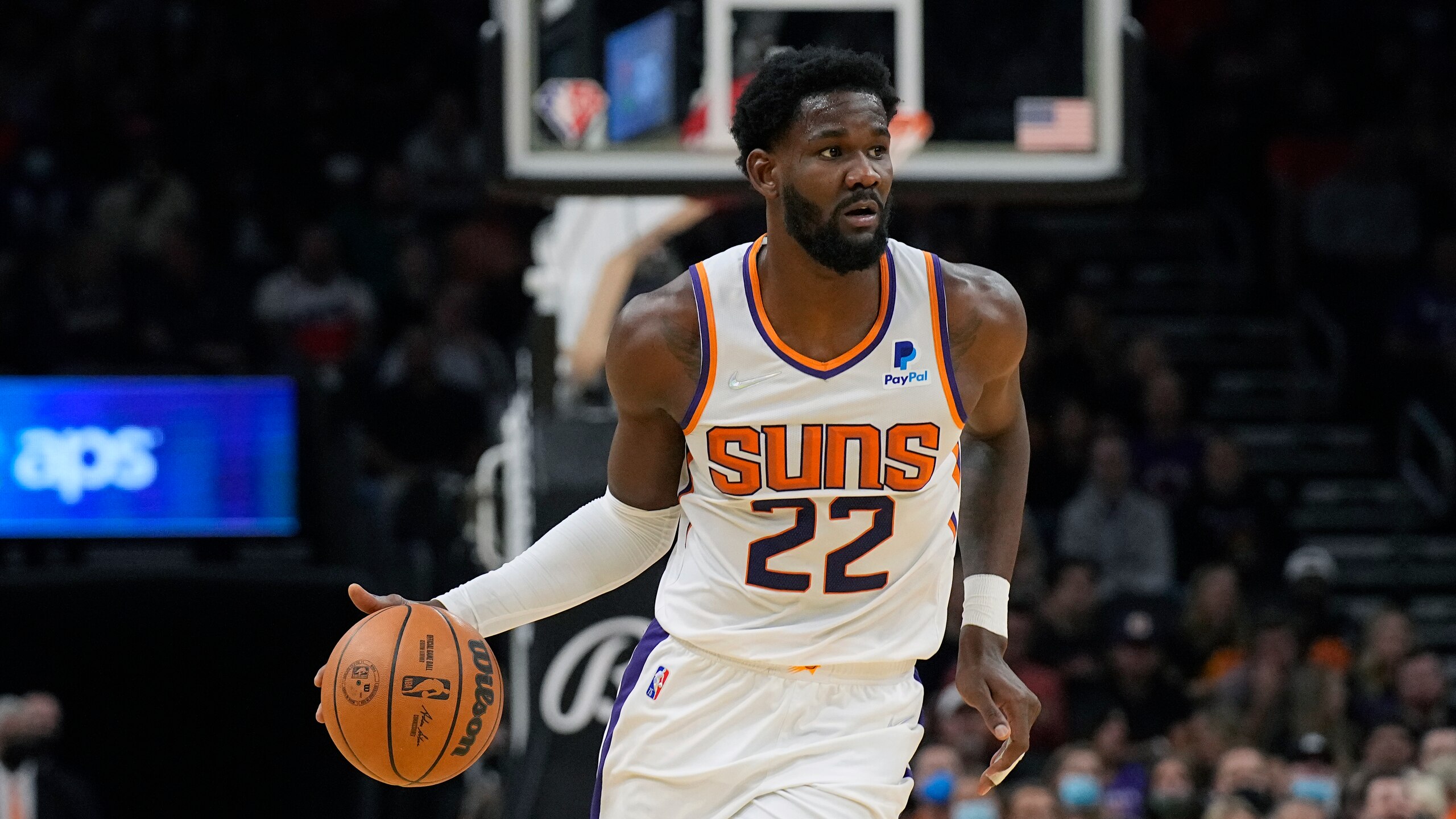
The Phoenix Suns' inability to extend Deandre Ayton received a lot more attention than Bridges' situation in Charlotte, and it's not hard to see why.
Ayton was the No. 1 pick of the 2018 draft (ahead of Luka Doncic and Trae Young) and had just played a key role in the Suns' run to the 2021 NBA Finals.
The 23-year-old center reportedly wanting a five-year max deal made sense, but Phoenix wasn't willing to go all the way there. And that's maybe generated some harsh feelings.
"One thing about me, throughout my whole life, I've always learned to control what I can control," Ayton told reporters in October. "At the same time, obviously I'm disappointed, but I'm still trying to get us back to the Finals."
Achieving that goal could certainly move Ayton closer to max money (and years) this offseason. But even if Phoenix doesn't make it all the way back to the game's biggest stage, it's hard to imagine the Suns declining to match any offer sheet Ayton might sign with someone else.
Ayton is 23 years old and has averaged a double-double in every season he's been in the league. He accepted a reduced offensive role when Chris Paul arrived ahead of 2020-21, with little to no drama. And he's made significant improvements on defense over the course of his short career.
Even with decent production from centers perhaps easier to come by than it is at other positions, Ayton will likely be worth whatever deal he's offered this summer. And, as is the case with Sexton, if things don't work out, it's better to have the option to trade a player down the line than lose him for nothing.
Flight-Risk Meter: Low
4. Kyrie Irving (Player Option)
7 of 10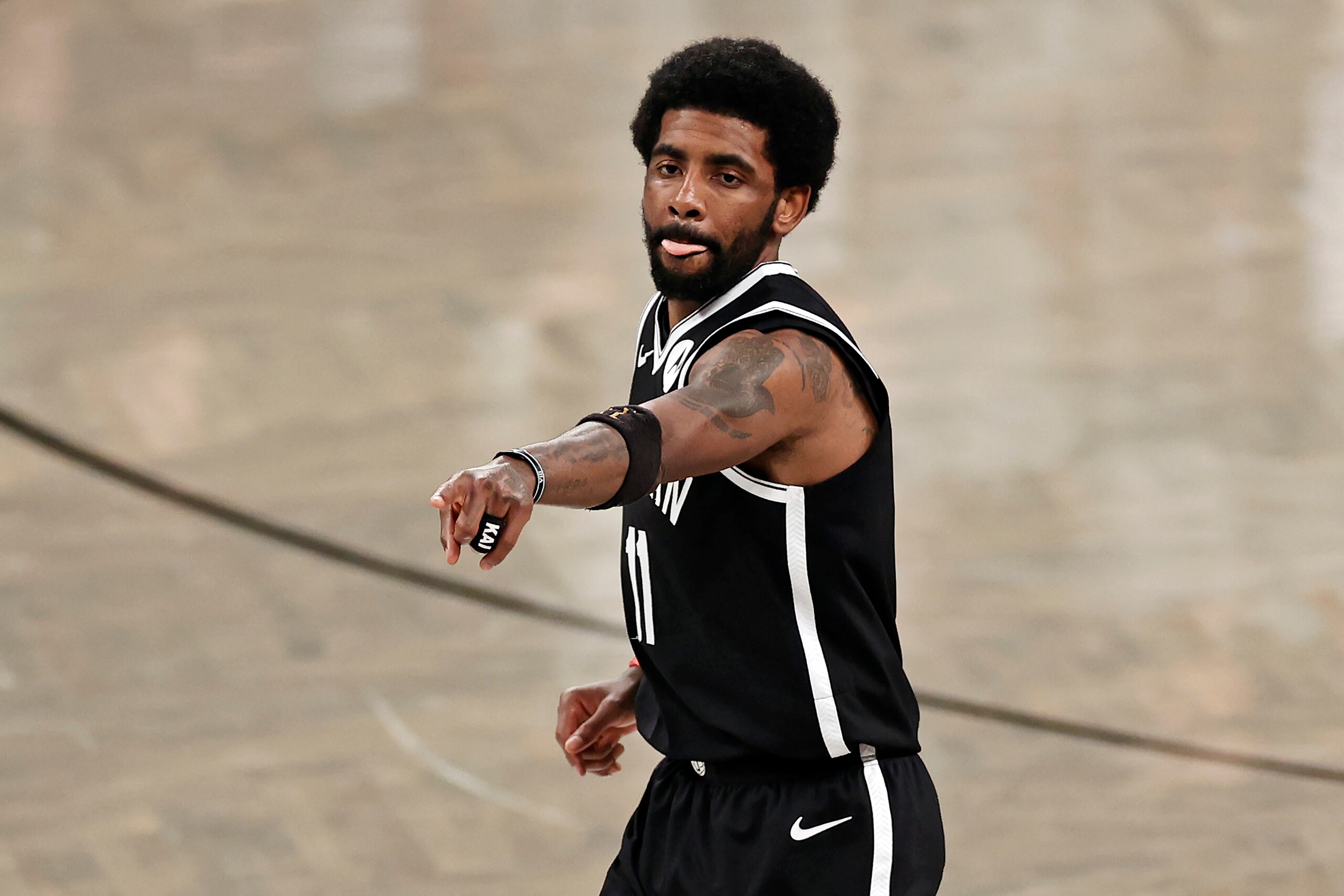
Kyrie Irving's situation could certainly be more volatile within another organization. It could get worse with the Brooklyn Nets too. His refusal to get vaccinated against COVID-19 and be able to play under the local vaccine mandate certainly isn't the first dramatic moment of his career. It's maybe just the most unusual.
But as seemingly mercurial as Irving has been throughout his NBA career, he's adored by players around the league. And he's a big part of why the Nets have Kevin Durant. With KD and James Harden, Brooklyn can probably survive Irving's absence (early-season concerns notwithstanding), and that may not be as permanent as originally thought.
On Wednesday, New York City's mayor-elect, Eric Adams said, "We need to revisit how we are going to address the vaccine mandates."
He was speaking in the context of local unions that have resisted the current mandate for municipal workers, but if there is some wiggle room, and Irving makes it onto the court after Adams takes office in January, it sure seems like that would impact the Flight-Risk Meter too.
Of course, the status quo is a possibility too. If Irving sits the entire season and forfeits his payment for all home games, the desire to enter unrestricted free agency and be in a market where he can play might be enticing.
Ultimately, it's impossible to predict what happens with Kyrie. It has been for years. At this point, nothing would be all that surprising, so we'll default to middle of the Meter.
Flight-Risk Meter: Medium
3. Bradley Beal (Player Option)
8 of 10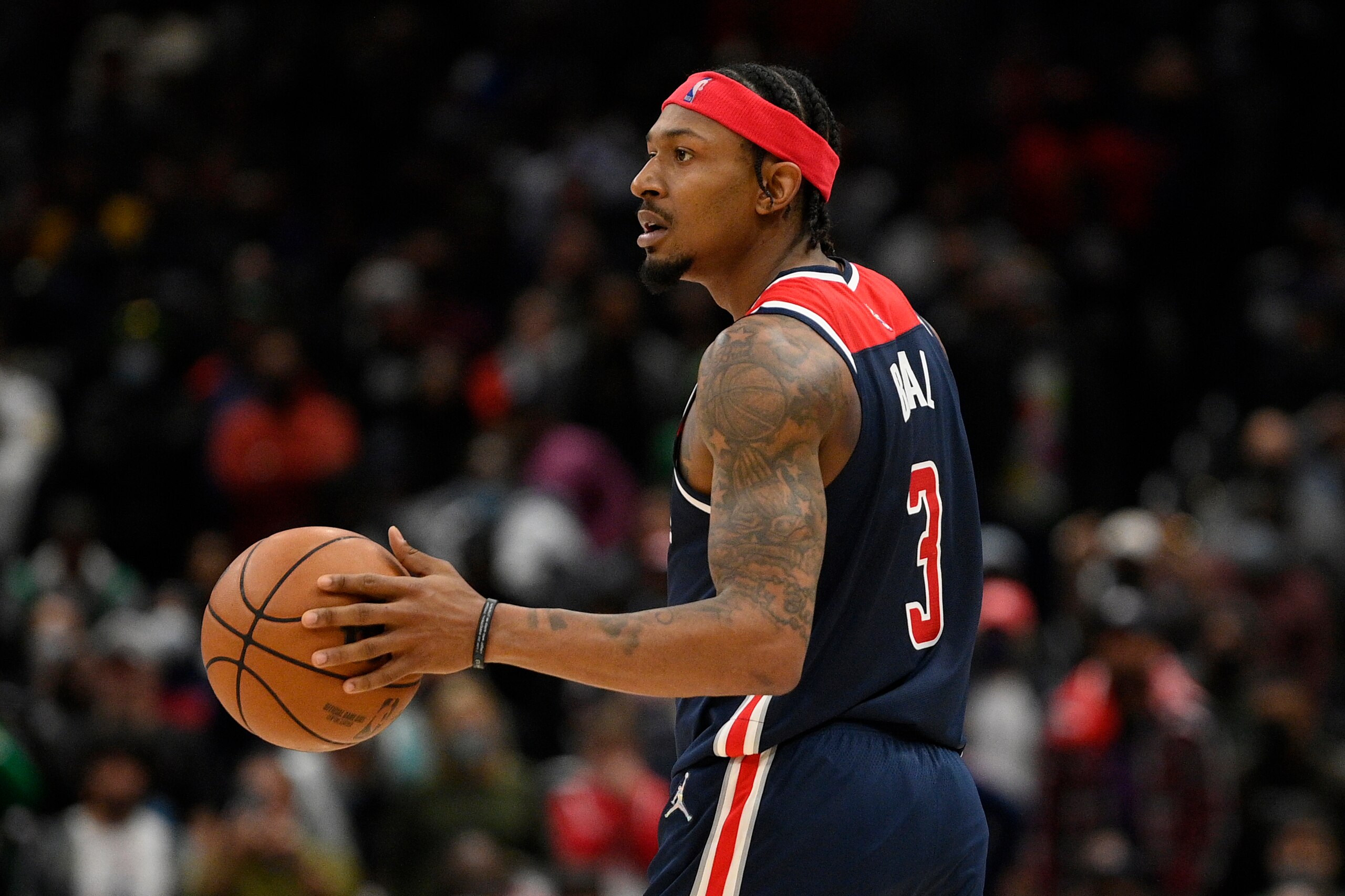
It feels like Bradley Beal has been in various trade rumors for three or four years now. And every time the noise makes its way to Beal or someone in the organization, there's a familiar refrain. General manager Tommy Sheppard was the messenger in June.
"Nothing's changing for me, for Bradley," Sheppard said, per Ava Wallace of the Washington Post. "We built this team around Bradley, and that's our intention moving forward."
So, if we can take that quote at face value (Sheppard had previously said he had "no plans" to trade John Wall either), one side of the Flight-Risk Meter's equation is wrapped up.
The Washington Wizards aren't really in control of this situation, though. If Beal declines his $37.3 million player option for 2022-23 and enters unrestricted free agency, there really isn't anything Washington can do to stop him. Other than, of course, building a winning team around him.
The time for that has passed, but it does look like the Wizards are headed in the right direction. By trading Westbrook to the Lakers for a number of role players, Washington did wonders for its depth. And though it's early, a 5-2 start has to breed a little confidence that this team is better than the 2020-21 squad.
If the Wizards comfortably make it to the playoffs behind a more team-oriented approach, Beal will likely still be in their uniform for 2022-23.
Flight-Risk Meter: Low
2. Zach LaVine
9 of 10
The Chicago Bulls are seemingly all in on a core built around 26-year-old wing Zach LaVine.
After trading Otto Porter Jr., Wendell Carter Jr. and two first-round draft picks for Nikola Vucevic last season, they added DeMar DeRozan and Lonzo Ball in the summer. And with all of those newcomers under contract for 2022-23, it's hard to fathom them not wanting to keep LaVine too (even if that means flirting with the luxury tax).
So, as is the case with Beal, this slide is mostly about what LaVine wants. This offseason, he'll be an unrestricted free agent, and he's absolutely earned himself a raise.
LaVine ranks 60th in the NBA in 2021-22 salary. But since the start of the 2020-21 season, he's 25th in BPM (15th in offensive BPM) and seventh in points per game.
Stephen Curry and Giannis Antetokounmpo are the only players who match or exceed both of LaVine's marks for points per game and effective field-goal percentage over that stretch.
Somewhat quietly (probably because of Chicago's record since the departure of Jimmy Butler), LaVine has become one of the game's most prolific and efficient scorers. And he now has a supporting cast that looks poised to get him into the playoffs for the first time in his career.
Assuming the Bulls are willing to give him a max deal (or something close to it), LaVine should want to see how far this group can go too.
Flight-Risk Meter: Low
1. James Harden (Player Option)
10 of 10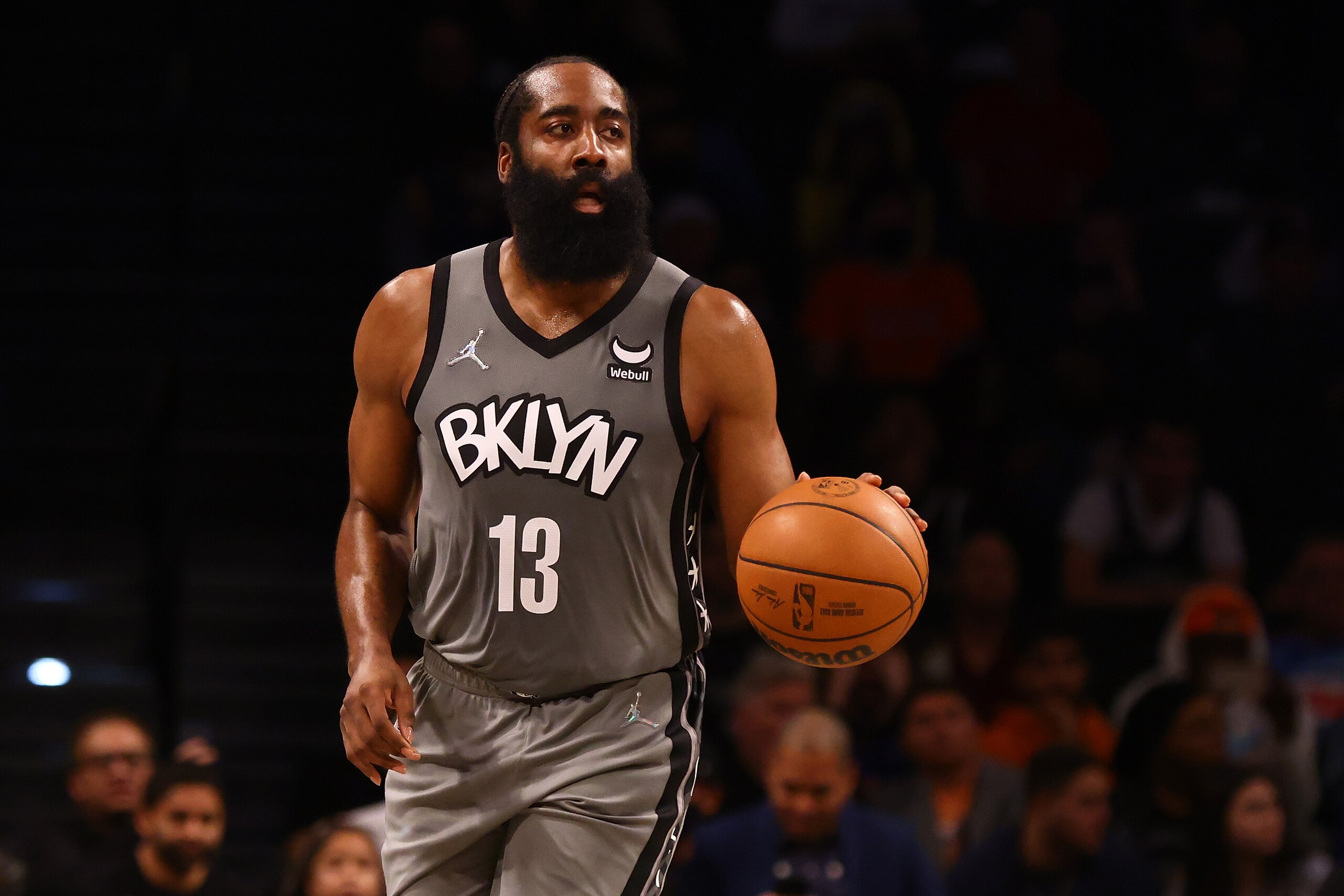
Much was made of Harden's early-season struggles to get to the free-throw line, an ability that has long been a staple of Harden's game.
Through his first five games in 2021-22, Harden had attempted a total of 15 free throws. Prior to this season, he'd taken at least 15 free throws in a single game on 128 occasions (playoffs included).
He seemed to break in his sixth game of the season, attempting 19 free throws in a Nets win, but his ongoing adjustment to rule changes is something to monitor.
At the moment, his offensive impact appears severely limited by an emphasis on not rewarding non-basketball moves. A 2.8 offensive BPM is 34th in the league and his lowest mark there since 2010-11 (his second season).
Brooklyn is also scoring 9.7 fewer points per 100 possessions when Harden is on the floor. A few big games could move that number in the right direction quickly, but these are all indications that the suddenly more physical game could be challenging for Harden.
Still, it almost seems like a given that he and Durant will figure out how to keep the Nets in the title picture, rule changes or not.
The threat of a trip to the free-throw line might've given Harden a bit more space to make passes in prior seasons, but he's still creating for others at a high rate. And with two score-first stars like Durant and Irving on the roster, someone who'll spread the shots around is important.
The Nets may not have hammered out an extension with Harden this offseason, but he'll likely stay put.
Flight-Risk Meter: Low


.jpg?w=2560 "Weather Channel Trolls Texans-Titans 💀")