

Re-Grading Top 2020 Free-Agent Signings 1 Month into NBA Season
Roughly one-quarter of the way through the 2020-21 NBA season feels like a good time to re-evaluate the biggest free-agency deals.
So, let's do it.
Figuring out which contracts qualify as top signings is a subjective process. We're choosing to interpret it as the most expensive. Household names signing cheap deals doesn't provide much of a talking point. If Marc Gasol, for example, flops with the Los Angeles Lakers (he's not), he's so cheap it doesn't actually matter.
To further narrow the field, our focus will lie exclusively with contracts that have an average annual value above $18 million and run at least two guaranteed years. Goran Dragic (team option in Year 2) and Bogdan Bogdanovic ($18 million average salary on the button) have our apologies. Extensions also aren't on the table, because, well, players were not free agents when they signed him.
Grades will, as always, be directed at the teams. Low marks are not meant to insult players. They are worth every single penny they're guaranteed because that contract was offered to them. Kudos to them for getting the bag.
Nothing that follows is written in stone. The season is still in its infancy, and the coronavirus pandemic continues to force postponements and limit availability. We'll still do what we can to assess the biggest free-agent signings based on everything that's happened so far, and in the context of each team's larger picture.
Anthony Davis, Los Angeles Lakers: A+
1 of 7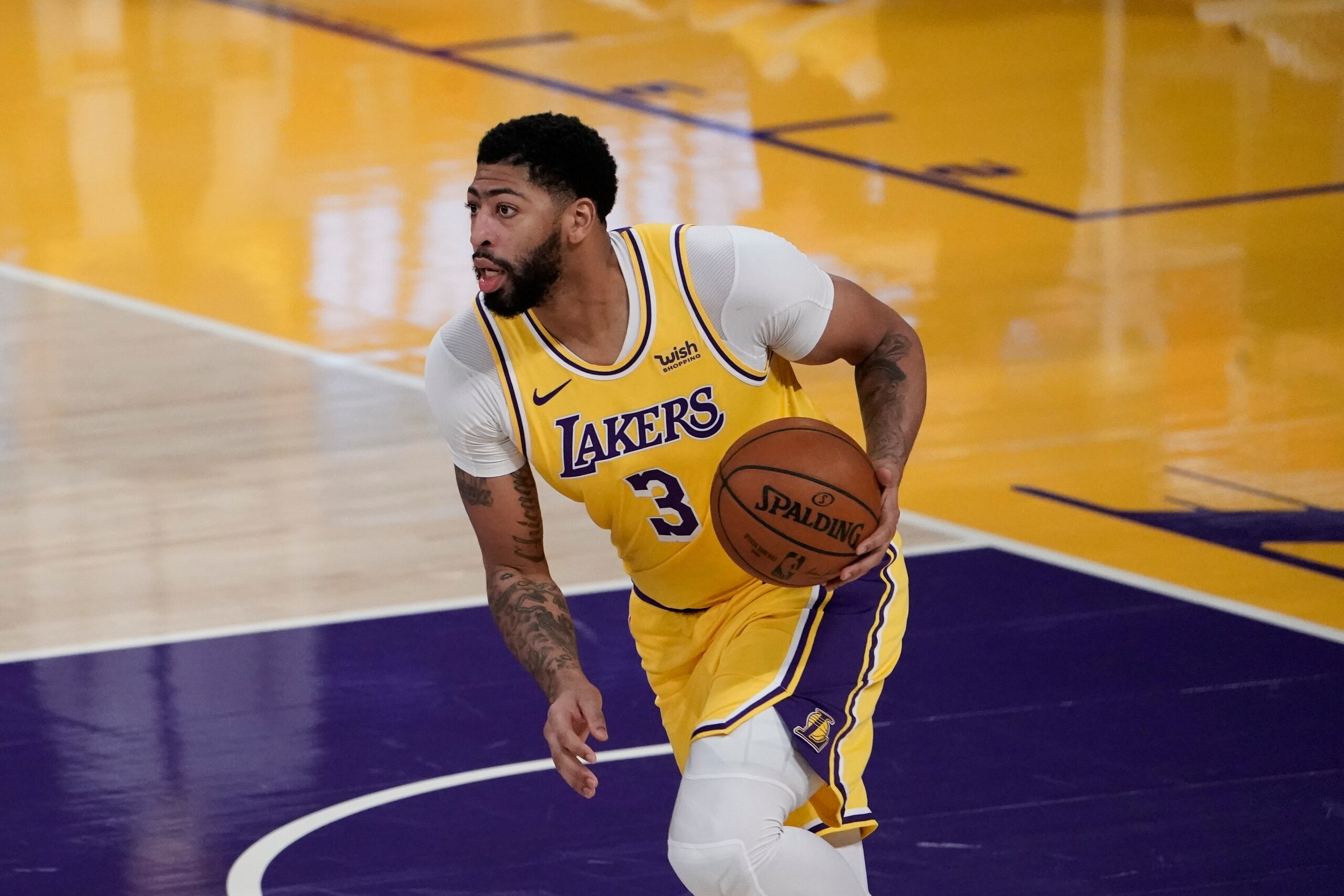
Contract: Five years, $189.9 million (early termination option in 2024-25)
Anthony Davis could be stinking it up at the moment, and bagging him for at least the next four years would still be a gigantic win for the Los Angeles Lakers. Future certainty trounces temporary ruts, and they now have security beyond LeBron James' prime, assuming it ever ends.
Of course, Davis isn't stinking it up. Any drop in his raw numbers mostly aligns with his decline in minutes. He's still averaging 21.3 points, 9.0 rebounds, 3.4 assists, 1.2 steals and 1.9 blocks while downing 56.9 percent of his twos and 36.1 percent of his triples—both of which would be career highs.
This whole outside-shooting thing feels real. Davis has returned to solid ground after a mind-melting start, but if he continues to hover around league average behind the rainbow and near 50 percent from mid-range, no fewer than 27 to 28 of the NBA's other teams might as well pack up and call it a season.
Oh, and then there's his defense.
Other players—Joel Embiid, Rudy Gobert, Myles Turner, etc.—have splashier counting stats and even on-off splits. Whatever. Davis should still be considered among the top two favorites, if not the absolute favorite, to win Defensive Player of the Year.
He continues to be everywhere, someone capable of defending everyone. Certain lineup combinations don't tread water for the Lakers without him. His ability to switch and work from the outside in is invaluable to a rotation who's top true-wing defender is a choice between Kentavious Caldwell-Pope, Kyle Kuzma and Playoff LeBron. He is the rare player who deters shots from the three-point line up to the restricted area merely by being on the floor.
Simplified further: The Lakers are first in points allowed per possession and even stingier when Davis is on the court. They are, and will remain, fortunate he didn't opt for a shorter deal that allowed him to re-explore free agency in the next year or two—or three.
Danilo Gallinari, Atlanta Hawks: Incomplete
2 of 7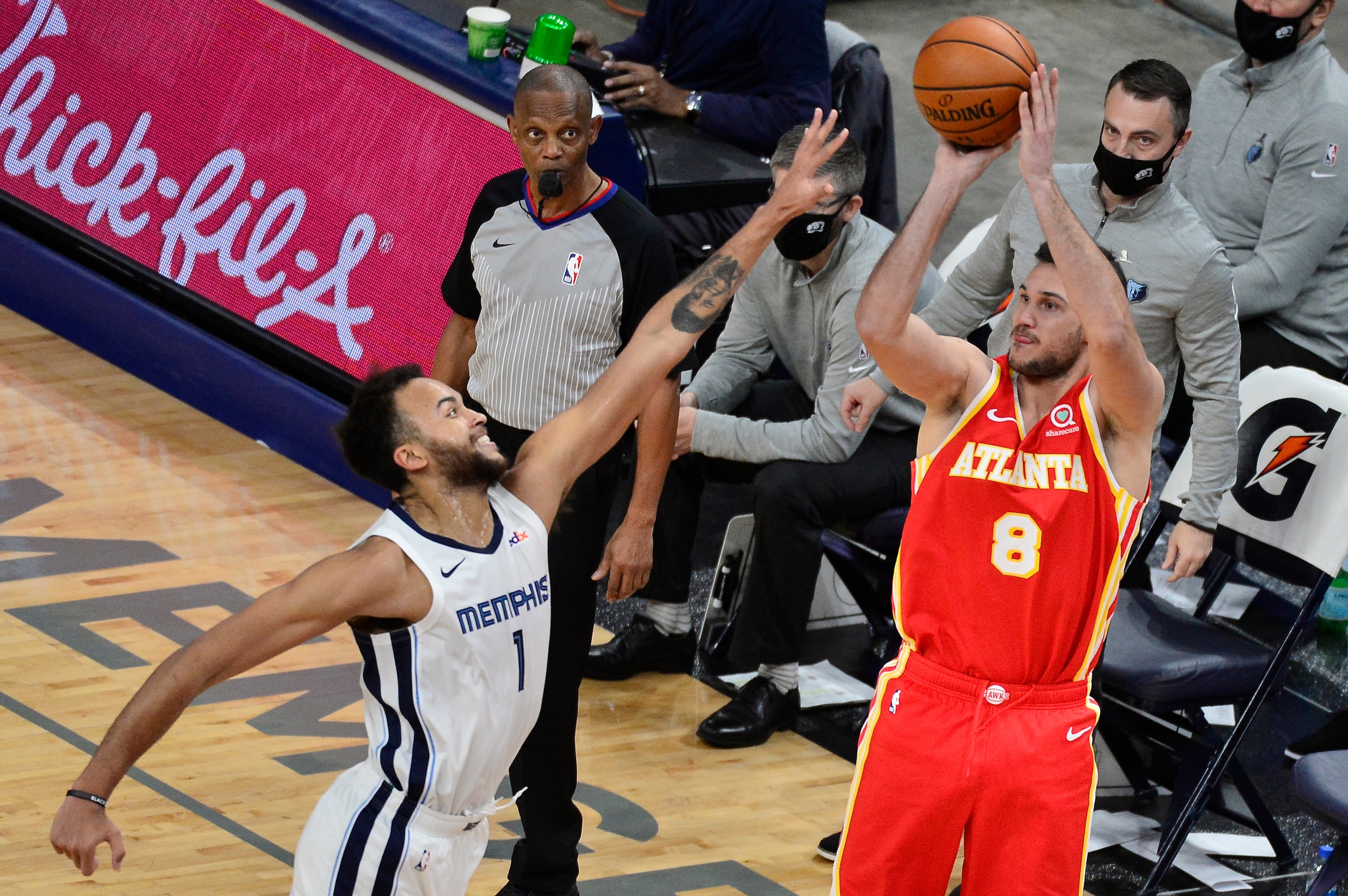
Contract: Three Years, $61.4 million ($5 million partially guaranteed in 2022-23)
Danilo Gallinari doesn't have a large enough sample size to render a concrete verdict on the Atlanta Hawks' behalf. He has logged a total of 28 minutes across two appearances and spent the rest of the time recovering from injuries to his left foot and, currently, right ankle.
This might serve to confirm any fears posed by skeptics over the offseason. Despite claiming he's not injury-prone, this will now be the 10th time in 13 years he fails to make the equivalent of 70 appearances. Forking over $20 million-plus per year for someone with his track record, on a deal that runs through his age-34 season, is a fairly large risk.
Then again, the Hawks have a digestible out on the final season. They can view this as a two-year, $45 million investment if they please. Everything is more palatable over such a short term.
Plus, Gallinari can actually help the Hawks. They've fallen off after an encouraging start, in no small part because of injuries—Bogdan Bogdanovic is out as well—but also because Trae Young is struggling. He's "up" to 29.5 percent shooting from three and converting just 34.8 percent of his trademark floaters.
Inserting Gallinari into the rotation should open up Young's game. At the very least, the resistance he faces in the lane shouldn't be so much of a logjam. Gallinari's impact isn't a given, but we can't yet declare the Hawks mistaken for spending on him.
Jerami Grant, Detroit Pistons: B+
3 of 7
Contract: Three years, $60 million
Jokes were uncorked in droves when the Detroit Pistons signed Jerami Grant. The length of his deal is low-risk, but the idea of a bound-to-be-bad team paying $20 million per year for a three-and-D wing it planned to use as an offensive fulcrum was legitimately laughable.
It is no longer funny.
Grant isn't just surviving his bigger role. He's averaging 25.4 points and 2.6 assists (both career highs) on efficiency almost identical to last season...when he didn't operate on-ball nearly as often.
Pull-up jumpers never accounted for more than 12.3 percent of his shots prior to this season. They make up more than 24 percent of his looks now. A career-high 33.6 percent of his buckets are coming unassisted. His previous watermark was 27.1 percent in 2015-16. He has already set a career high for the number of pick-and-roll possessions he's finished as the ball-handler.
Grant has also finished more isolations this season (39) than he did all of last season (31). His 1.26 points per possession in these situations ranks second, behind only DeMar DeRozan, among everyone who has seen at least as much volume as him.
Whether all this is sustainable remains a matter of course. It's still early. Either way, both he and Detroit are absolved from the criticism they previously faced.
Less clear is what this means for the Pistons over the longer term. Any offense headlined by Grant will have a hard cap. Detroit is scoring 9.3 points per 100 possessions more with him in the lineup but is still below average overall. He is not a savior and doesn't expedite its rebuild.
That's OK. He is still valuable in the interim—either as someone who takes pressure off everyone else or, eventually, an asset the Pistons can flip for positive value. Both are stark departures from the onset reactions to his contract.


Joe Harris, Brooklyn Nets: A
4 of 7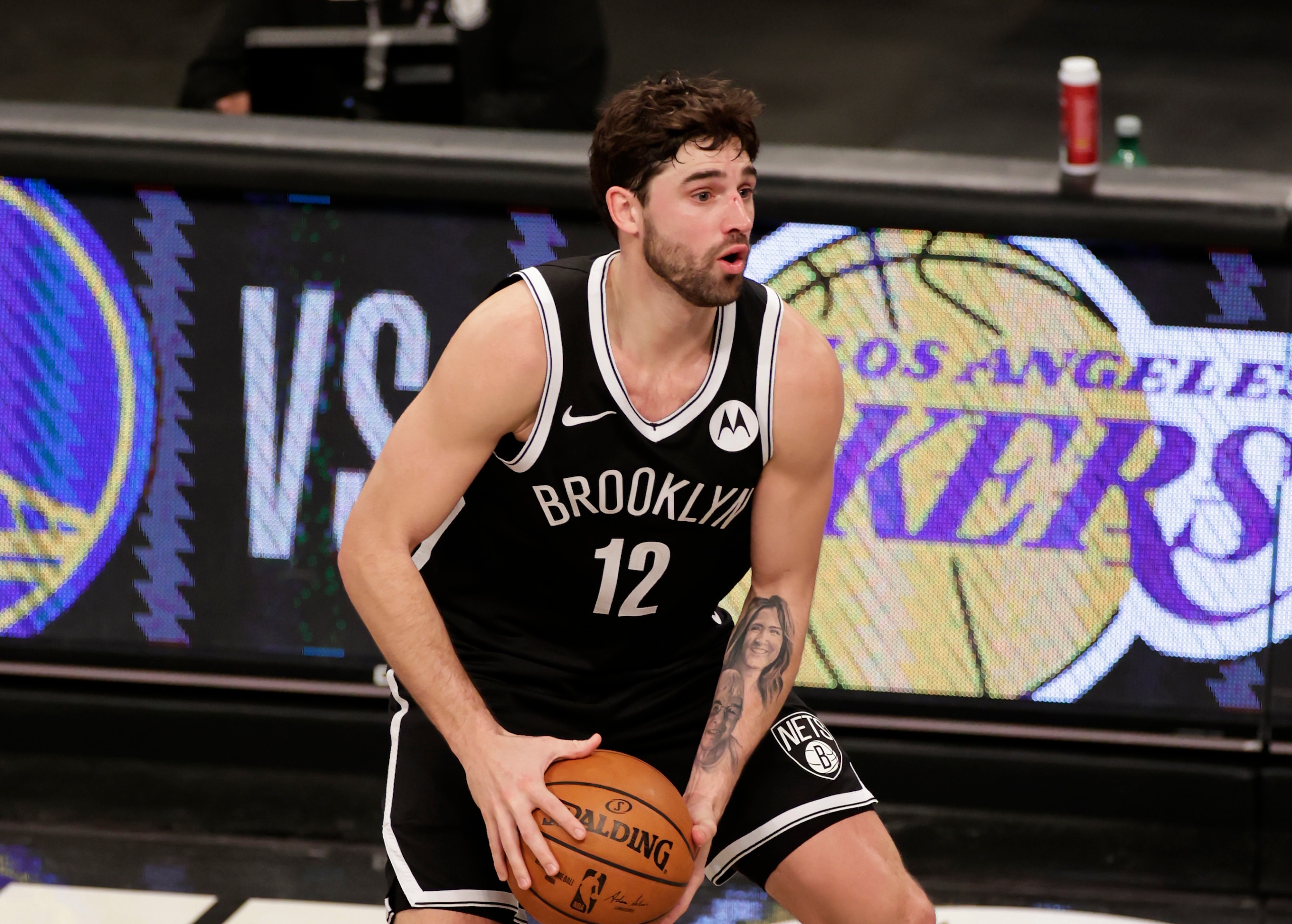
Contract: Four years, $75 million
Complementary scorers are everything to teams with multiple stars on the roster—which means Joe Harris is even more important to the Brooklyn Nets than when he signed his mammoth deal.
Trading for James Harden elevates both their championship ceiling and combustibility. Harris is mission critical to maximizing the former. He won't eat into touches for Harden, Kevin Durant and Kyrie Irving and works as part of the starting five or coming off the bench (his current role...maybe).
Do not underestimate the scalability of what Harris does. His numbers don't jump off the page for someone earning so much coin—14.4 points and 1.9 assists in just over 30 minutes per game—but the Nets have, out of necessity, shoehorned him into even more of an off-ball role.
Just under 42 percent of his looks came off the catch last season. That number has jumped to 52 percent now. His 79.4 effective field-goal rate on these shots ranks first among 73 players who have launched at least 50 such attempts. He can still put the ball on the floor in space and will make quick passes, but he's crushing his primary responsibility of working off superstar teammates.
That Brooklyn can get away with sticking him on secondary wings at the other end is also huge. The perimeter rotation is shallower than ever after the Nets sent Taurean Prince to the Cleveland Cavaliers as part of the Harden blockbuster. Harris can't steal much time guarding 4s or patented stars, but he's a capable body the Nets can move around the 2 and 3 slots.
Paying through the teeth for proven flame-throwing is eternally defensible, but not every team could spin a four-year, $75 million deal for him as a monster win. Brooklyn can.
Gordon Hayward, Charlotte Hornets: C
5 of 7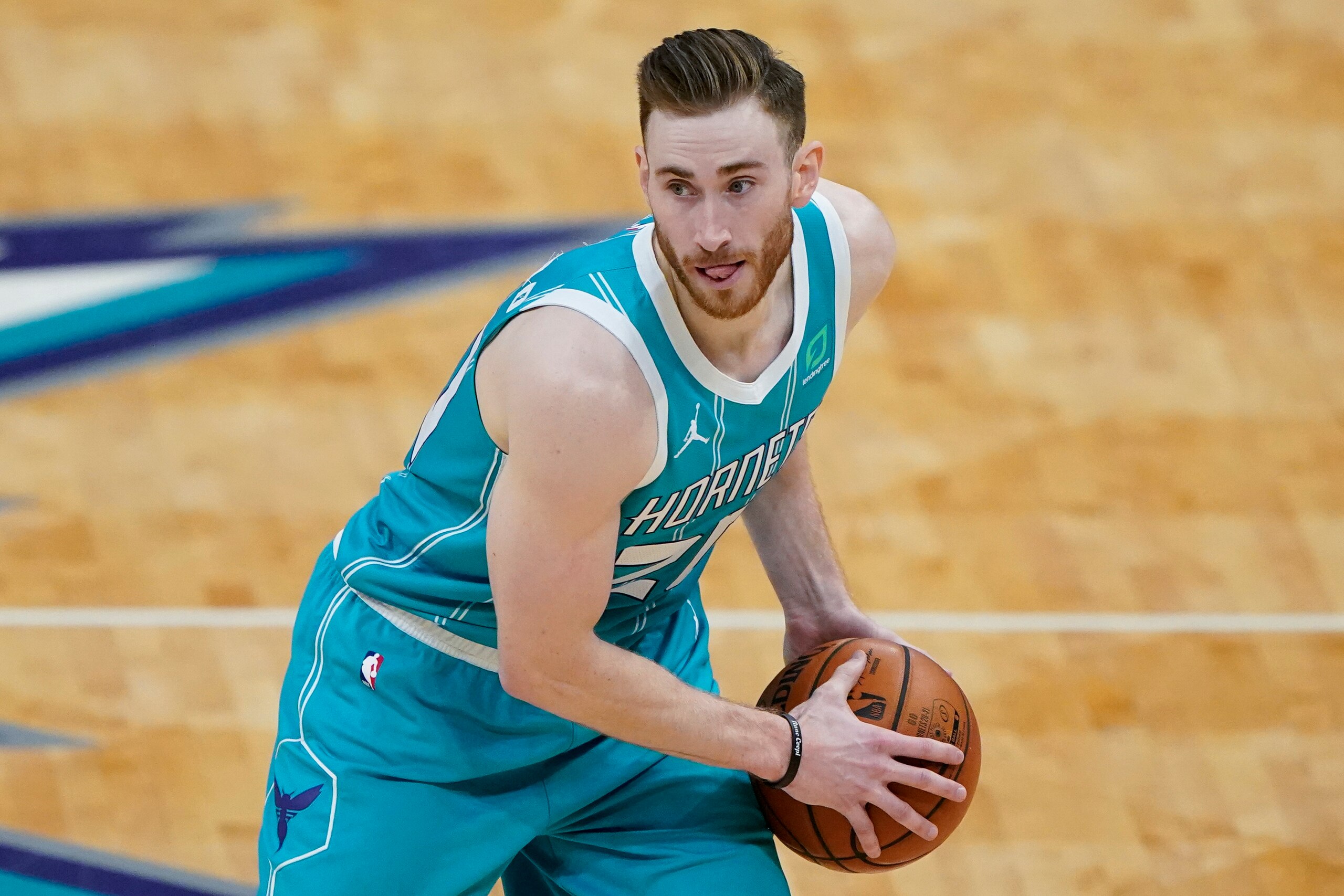
Contract: Four years, $120 million
Signing Gordon Hayward in free agency earned the Charlotte Hornets a lot of flak. They deserved it.
And they deserve to get less of it now.
Hayward is averaging a career-high 22.2 points while hitting 53.1 percent of his twos and 40.9 percent of his threes. His in-between game has been molten; he's draining 52.1 percent of his pull-up jumpers inside the arc.
Digging a little deeper yields some wonky returns. The Hornets offense is better with him on the floor, but he isn't having this profound impact on the efficiency of his teammates. His value is more so rooted in the level of competition he faces. Hayward provides a steadying hand against rival starters. Charlotte isn't going to cough up the ball as much when he's in the game, and he allows Terry Rozier to dominate off the ball.
Adding Hayward seems to have broken Devonte' Graham. He's on the come-up, but he looked far more comfortable last year as the driver of the offense. Even so, his three-point clip has actually been passable (34.8 percent) with Hayward on the court.
If nothing else, Hayward is the type of impact player who doesn't get in the way of anything going on around him. He isn't single-handedly ruining the Hornets' chance to tank just as he isn't infringing upon the development of anyone. Without him, Charlotte might feel a greater sense of urgency to start LaMelo Ball. That is clearly the endgame, but there may be value in minimizing the pressure he faces out of the gate.
Anyway, Hayward's fit with the Hornets was never the primary issue. It was the method by which he arrived, and the back half of his deal after dealing with so many injuries in Boston. Those concerns endure.
Say what you must about cap space not meaning as much in a market like Charlotte. You'll be right. But waiving and stretching Nicolas Batum to get him remains a mishandling of resources. The Hornets have basically punted on a mid-level exception's worth of money in each of the next two seasons. And the latter two years of Hayward's contract will pay him over $30 million, at ages 32 and 33. This investment looks better but is still rife with risk.
Brandon Ingram, New Orleans Pelicans: A
6 of 7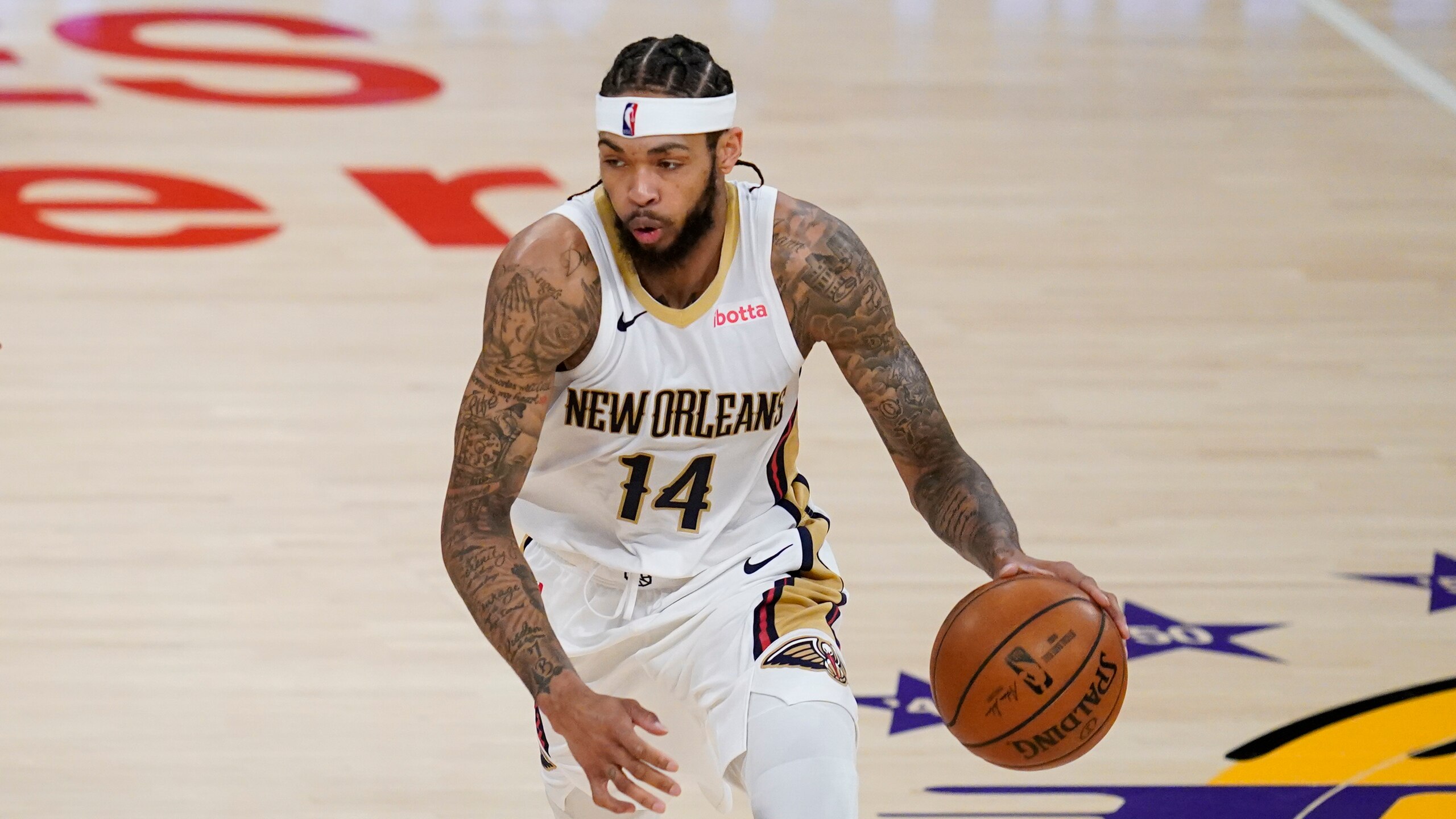
Contract: Five years, $158.3 million
Some wondered whether Brandon Ingram might take a step back from last season's career performance. Contract-year jumps are always a little fishy, and the New Orleans Pelicans crimped their floor balance by replacing Jrue Holiday with Eric Bledsoe (who's actually shooting above 41 percent from deep).
Spending more time with Zion Williamson would add another variable to the equation. The Pelicans fared just fine when they played together last year, but the sophomore is another non-threat from beyond the arc. Ingram would—and does—have tougher ground to navigate in the half-court.
It has not been a problem for him. Emphasis on him. The Pelicans half-court offense is strained; it ranks 25th in efficiency. But Ingram is their lifeline to making life manageable. He leads the team in drives—on which he's shooting 52.3 percent—and assists as essentially one of only 2.5 players who can put consistent pressure on set defenses.
Ingram's scoring (22.8 points per game) is almost identical to last year's 23.8. His efficiency has dipped, but he's still around league-average true shooting while getting to the rim substantially less and basically doubling the number of pull-up jumpers he takes every game.
Maybe this is untenable long term. He shouldn't be this reliant on his perimeter game. But the Pelicans will eventually find another attacking playmaker to partner him with or add more snipers to the fold—or both. Perhaps Nickeil Alexander-Walker ends up alleviating the traffic Ingram is traversing.
More important is Ingram delivering an effective encore to last year while hinting at a best-player-on-a-really-good-team ceiling. It is easy to envision this version of Ingram detonating at an even higher level within roomier lineups. Maxing him out may have been the Pelicans' only feasible move. It just also happened to be the right one.
Fred VanVleet, Toronto Raptors: B
7 of 7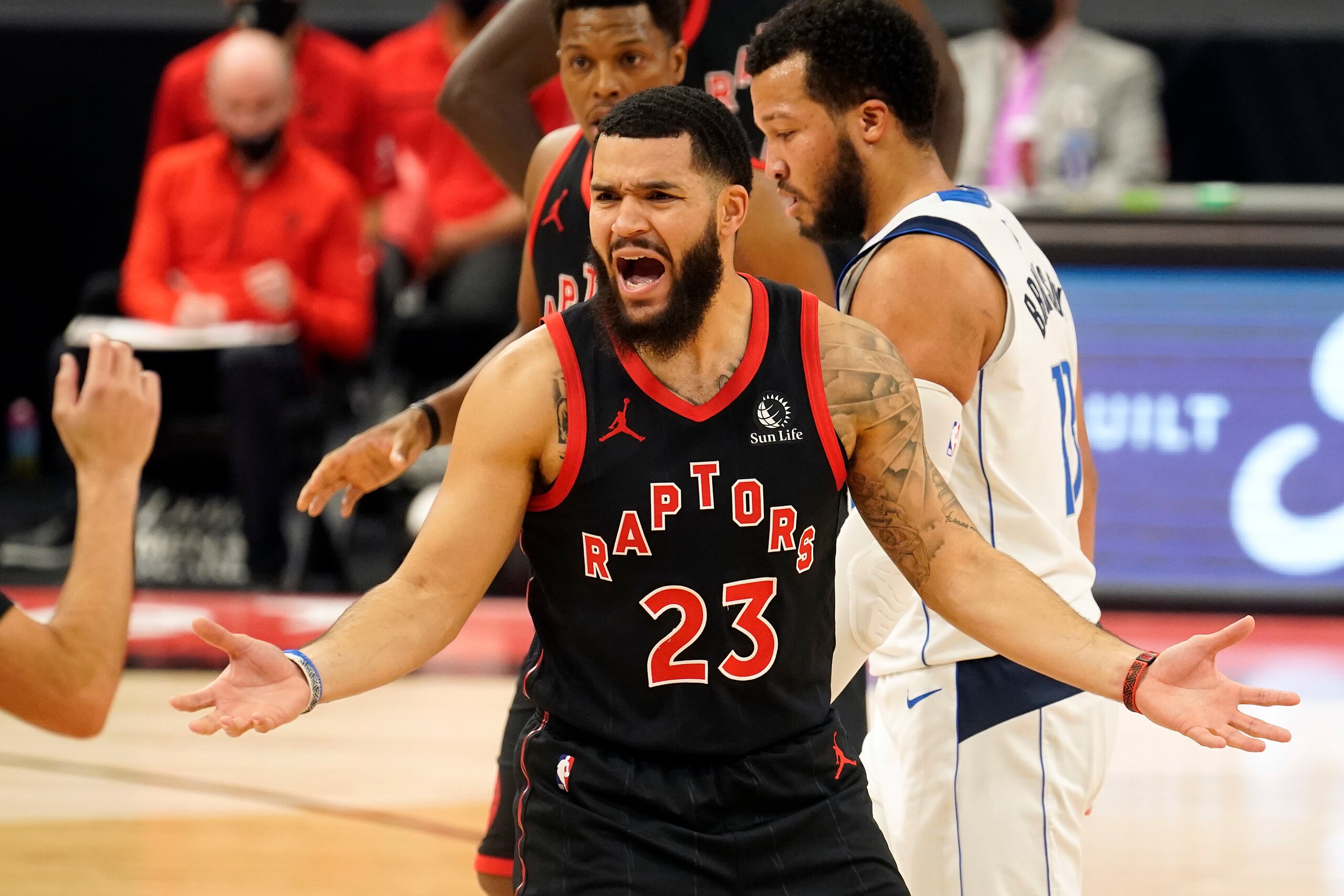
Contract: Four years, $85 million (2023-24 player option)
Fred VanVleet is at once tracking toward a ceremonial All-Star selection and leaving plenty to be desired.
Nobody can quibble about the raw production. His efficiency has not plummeted despite an uptick in usage. Only five other players are averaging over 19 points and six assists per game while drilling 36-plus percent of their threes: Malcolm Brogdon, Stephen Curry, Shai Gilgeous-Alexander, LeBron James and Damian Lillard.
The Toronto Raptors remain a monumental letdown, but VanVleet is among their sources of hope. Though this isn't telltale of everything, he's currently their only rotation player with a positive net rating on both sides of the floor.
At the same time, elements of VanVleet's performance feel fragile. He is both reaching and finishing around the rim at career-worst rates. Neither has ever been pivotal to his game, but he's not really branching out elsewhere. His 46.9 effective field-goal percentage on pull-up jumpers is higher than last year's 42.8 yet hardly elite. Among 49 players to attempt at least five of these shots per game, his clip ranks 24th. He's hitting more of his mid-range looks but getting to the foul line less.
Assuming more volume matters. Ditto for taking harder shots. More of his attempts are going unassisted. VanVleet is throwing up 6.3 pull-up jumpers per game compared to 4.4 last season—a sizable increase.
Perhaps that makes questioning the longer-term value of his deal unfair. It definitely doesn't look any worse than when he signed it. Someone who swishes catch-and-shoot threes and defends his butt off will always be a super valuable player. But the Raptors are paying him to be something more, even if only slightly. He hasn't shown that gear—at least not yet.
Unless otherwise noted, stats courtesy of NBA.com, Basketball Reference, Stathead or Cleaning the Glass and accurate entering games on Jan. 21. Salary information via Basketball Insiders and Spotrac.
Dan Favale covers the NBA for Bleacher Report. Follow him on Twitter (@danfavale), and listen to his Hardwood Knocks podcast, co-hosted by B/R's Adam Fromal.


.jpg?w=2560 "Love's Body Already 'Tired'")
.jpg?w=2560 "2 NFL Officials Suspended")
.jpg?w=2560 "Mahomes' Wife Trolls Kubiak 💀")
