
NBA Free Agency 2020: Analyzing Most Underrated Contracts This Offseason
For all of the hand-wringing about the NBA's financial state amid the COVID-19 pandemic, teams certainly didn't spend like they're pinching pennies.
The free-agency period was fast and furious, with a vast majority of deals getting completed in the first 48 hours of free agency as teams look to formalize their rosters ahead of rapidly approaching training camps.
While some teams spent their money like a college student with access to their parents' credit cards (hello, Detroit), others did so more wisely. Here's a look at some of the best bargain deals with free agency winding down.
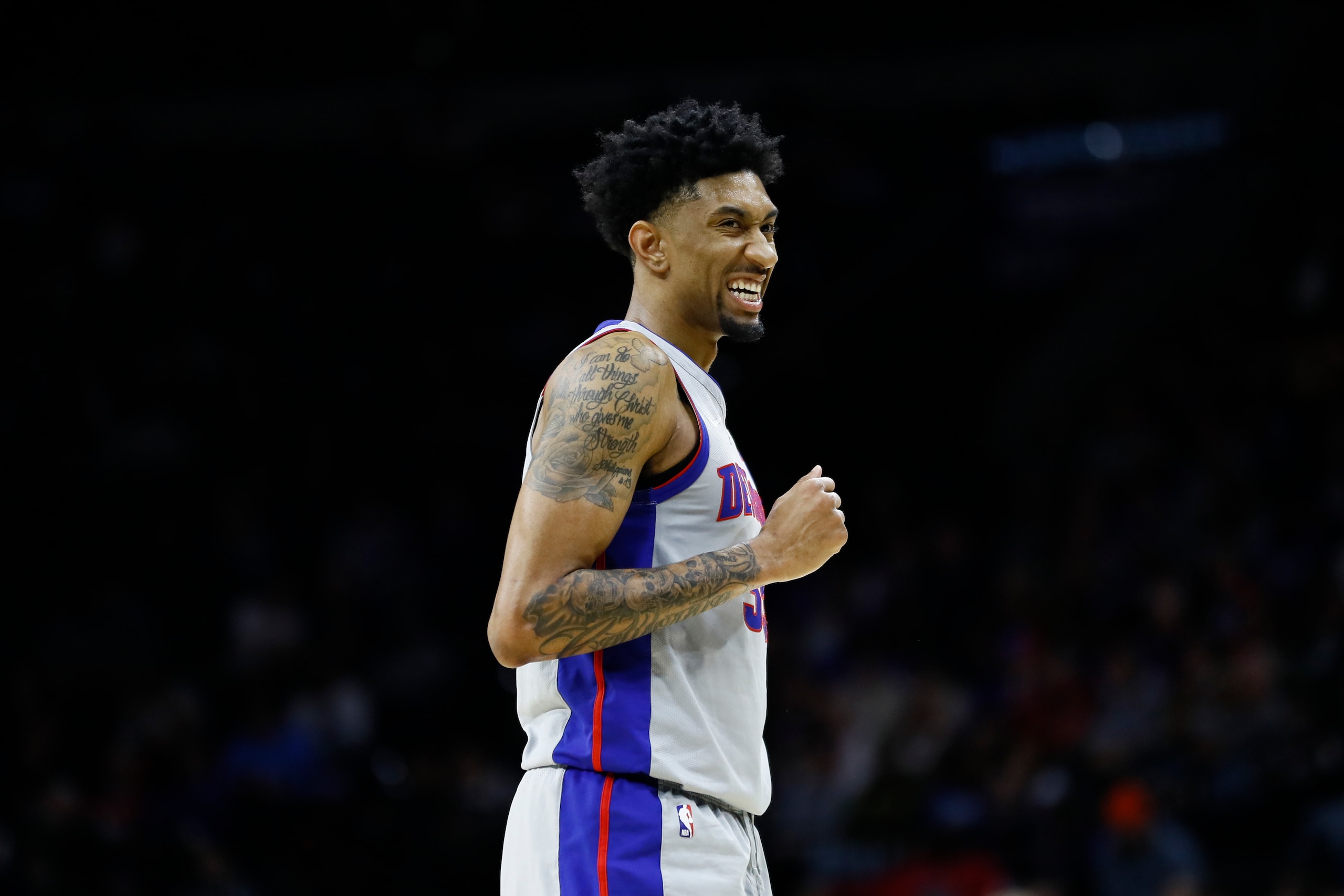
Christian Wood
1 of 3
Contract: Three years, $41 million (Houston Rockets)
It's been a week, and I'm still going to need someone to explain the Detroit Pistons' offseason to me like I'm five. The Pistons, a team with no discernible hopes of making the playoffs next season, decided to tie up their cap space on the Nuggets' backup frontcourt (Jerami Grant and Mason Plumlee) and the Mavericks' backup point guard (Delon Wright).
Meanwhile, they allowed their best incumbent free agent (Wood) to walk on perhaps the offseason's best value contract. Wood is a 25-year-old athletic big man coming off a breakout season that saw him average 13.1 points and 6.3 rebounds while flashing an improved jumper (38.6 percent from three). In 13 games after the Pistons traded Andre Drummond to Cleveland, Wood averaged 22.8 points and 9.9 rebounds while shooting 40 percent from three on 4.0 attempts per game.
That level of production may not be sustainable, but it's certainly a preferable long-term bet to Plumlee, whose rim-running and athleticism seems certain to wane at age 30. Wood is the type of player a team like the Pistons should have been investing their resources in developing.
Instead, he's a shrewd signing for Rockets general manager Rafael Stone—regardless of whether James Harden and Russell Westbrook are around for the long term. Wood is a seamless fit for the as-currently-constituted Rockets on both ends of the floor. He's a decent enough shooter to provide spacing and rim-running skills, while allowing P.J. Tucker to take on less wear at age 35.
If the Rockets ultimately do rebuild, Wood has a below-market contract that could easily be moved for a first-round pick and a young player to a team looking for versatility in the middle. There is some inherent risk with Wood having only one year of plus NBA production, but this looks like a home run.
Serge Ibaka
2 of 3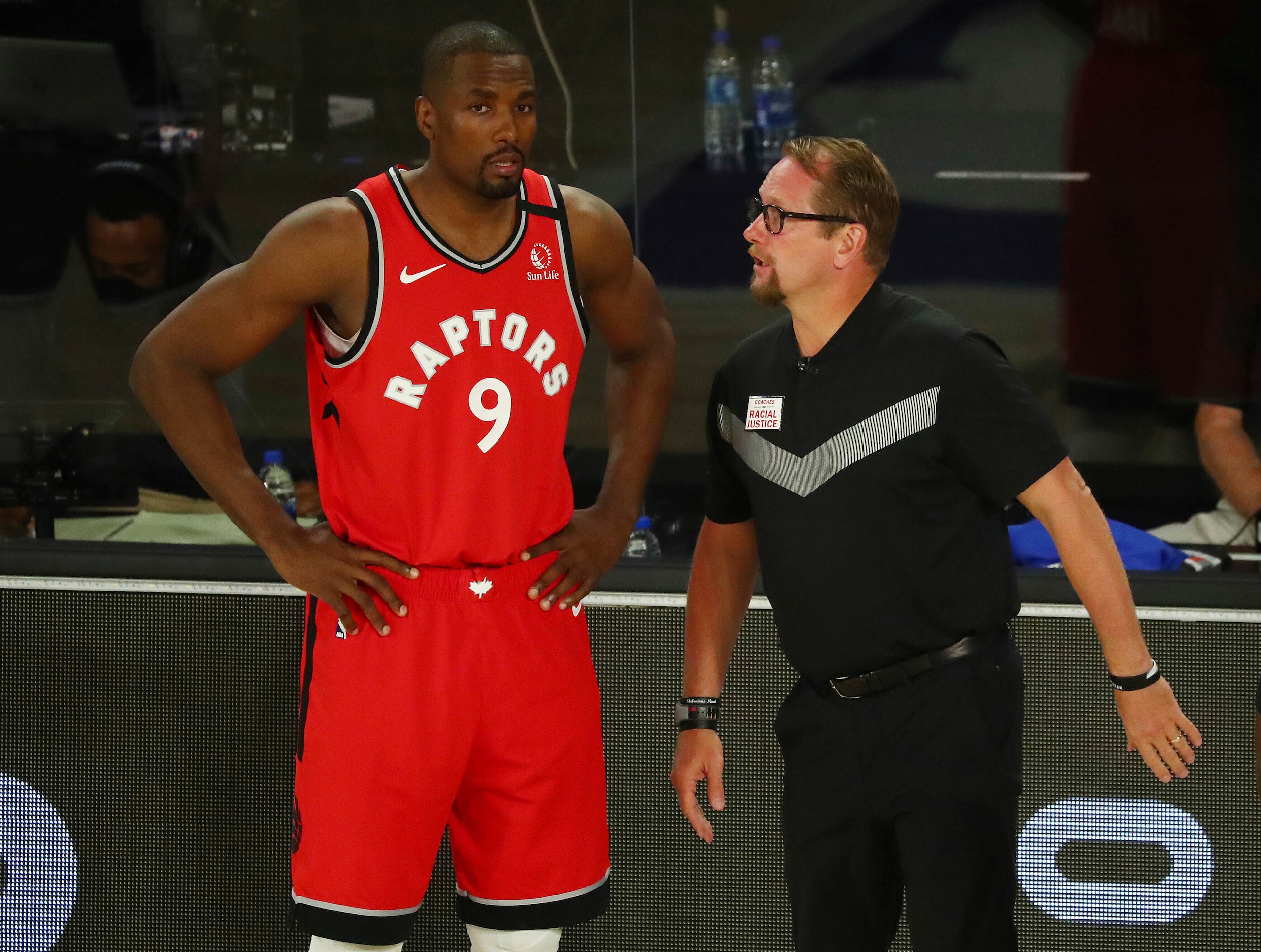
Contract: Two years, $19.5 million (Los Angeles Clippers)
The Lakers won the initial battle by signing Montrezl Harrell away from the Clippers, but their rivals across the hallway may have won the free-agency war.
Signing Ibaka to the mid-level exception is nothing short of a steal for the Clippers, who replaced Harrell and JaMychal Green (Nuggets) in one fell swoop.
Ibaka is a better player than Harrell in every aspect making the exact same money over the exact same period of time. He's a superior defender, still spry enough to not get torched on pick-and-rolls while providing shot-blocking and presence in the middle. Harrell was borderline unplayable in the Nuggets series because of his defensive shortcomings. That won't be the case with Ibaka.
Ibaka also spaces the floor in a way that Harrell, largely a rim-runner, could not. The Clippers' best five will feature Patrick Beverley, Paul George, Kawhi Leonard, Marcus Morris and Ibaka. All five players can defend, switch on defense and stretch the floor.
That lineup will have issues with lead ball-handling, and it's possible the Clips still have another move in their chamber for a Beverley replacement. For now, though, the Clippers turned what could have been a massive loss into a win for their roster.
Kentavious Caldwell-Pope
3 of 3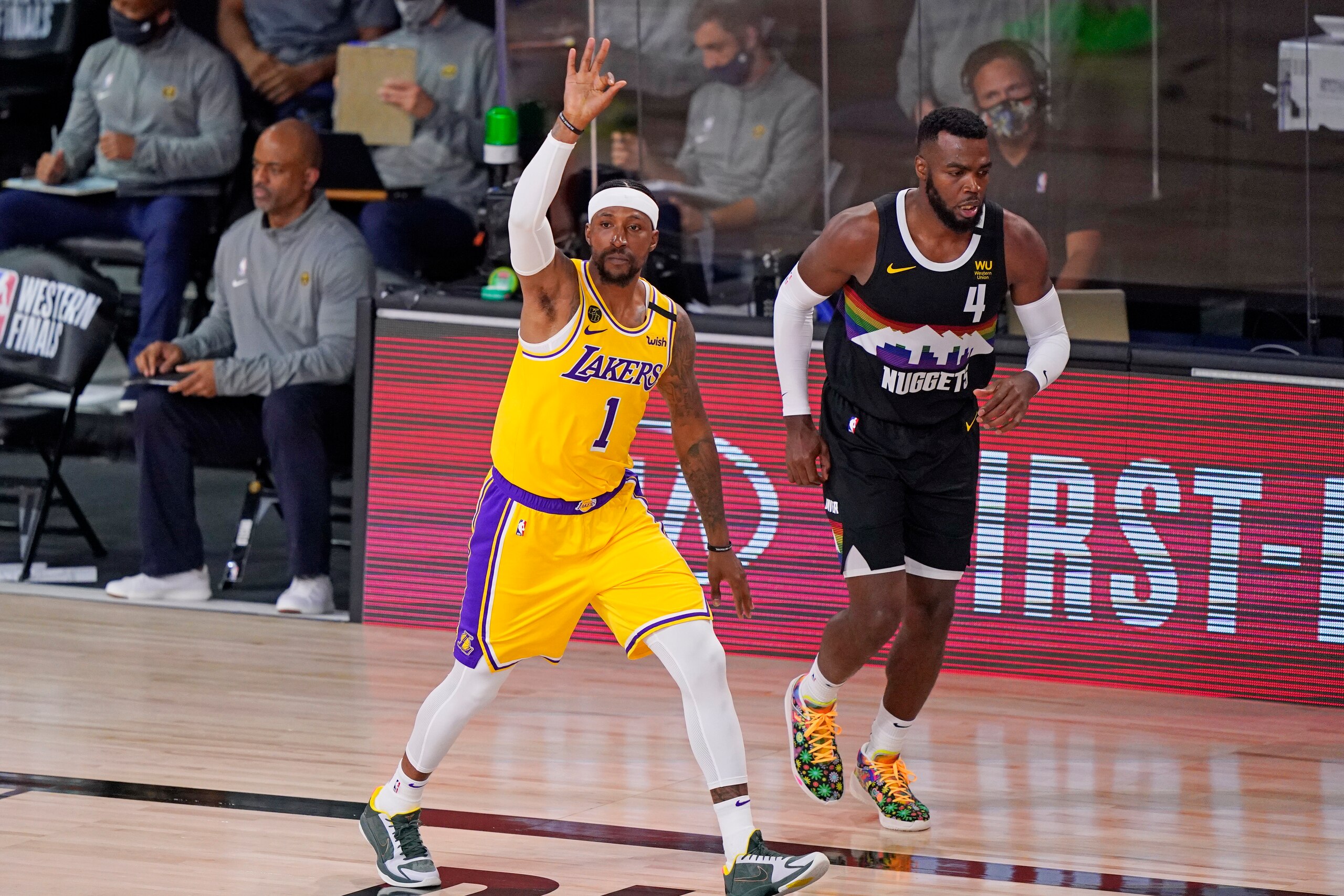
Contract: Three years, $39.1 million (Los Angeles Lakers)
The obvious Lakers choice is Marc Gasol, whose two-year contract will be a bargain even if he winds up playing 12 minutes per game. Getting a likely starter for the minimum is just stealing. It also feels a little bit like cheating for the purposes of this exercise, so let's instead highlight the Lakers' unsung bubble hero.
Caldwell-Pope's time with the Lakers has been nothing short of a roller coaster. He joined the team on a one-year, $18 million contract in 2017 and got $30 million over his first two years with the team, seemingly as a "Klutch tax" to bring in LeBron James.
That distinction always undersold what Caldwell-Pope (legitimate three-and-D play) brought to the team. Consistency isn't Caldwell-Pope's strong suit, but he's shot over 38 percent from three in two of his three seasons with the Lakers while providing consistently solid perimeter defense. He's versatile enough to defend three positions, doesn't complain about his role and is still firmly in the prime of his career at age 27.
Look at some of the other contracts given out this offseason. Davis Bertans got five years and $80 million. Bodan Bogdanovic got four years and $72 million. Grant got three years and $60 million.
You may want all of those players over Caldwell-Pope in a macro sense, but the difference isn't as much as you think—and certainly isn't $5 million a year's worth of difference.
Making things even better: The final year of Caldwell-Pope's contract is only partially guaranteed. He's providing solid two-way play at a below-market deal that also gives the Lakers long-term flexibility. If he was a Klutch tax at first, Caldwell-Pope is paying it forward (and then some) now.




.png?w=2560 "Week 8 Winners & Losers 📊")


.jpg?w=2560 "Jonathan Taylor Landing Spots")