
Every NBA Team's Best Surprise This Season
Without games to enjoy, players to follow or postseason races to agonize over, we need some bright-side reminders of all the fun and excitement the 2019-20 NBA season generated before it shut down March 11.
We go into every season expecting certain narratives to play out. But the best parts of the year are always the ones we fail to see coming. Even the most sad-sack operations produce unforeseen pleasantness if you look hard enough.
What better way to celebrate the season during a pause than to highlight every team's most welcome surprise?
Atlanta Hawks: Trae Young's Advanced Craftiness
1 of 30
Foul-drawing is a skill that rubs some fans the wrong way, as it often crosses the invisible line that separates gamesmanship from flopping.
However you feel about Trae Young's efforts to embellish contact—particularly his penchant for feigning whiplash whenever touched on drives—you have to admit he's developed a knack for preventing defenders from trying to physically overpower his slight 6'1", 180-pound frame.
As a rookie in 2018-19, Young's free-throw rate (the ratio of foul shots to field-goal attempts) was 33.3 percent. That's a good number, particularly for a first-year guard. It ranked 39th all time among rookies who attempted at least 15 shots per game.
He took his craft to another level this season, upping his free-throw rate to 44.8 percent. James Harden, basically the king of foul-drawing, is the only active guard to top that figure in a season. If you're looking for reasons Young was the sole source of offense in Atlanta, this ability deserves prime consideration.
Everyone knew Young was a threat from long range, and 2018-19 also taught us he was grossly underrated as a passer coming out of college. But few could have expected the remarkable, efficiency-boosting trickery he'd use to sucker opponents into putting him on the line so often.
Boston Celtics: Jayson Tatum's Superstar Leap
2 of 30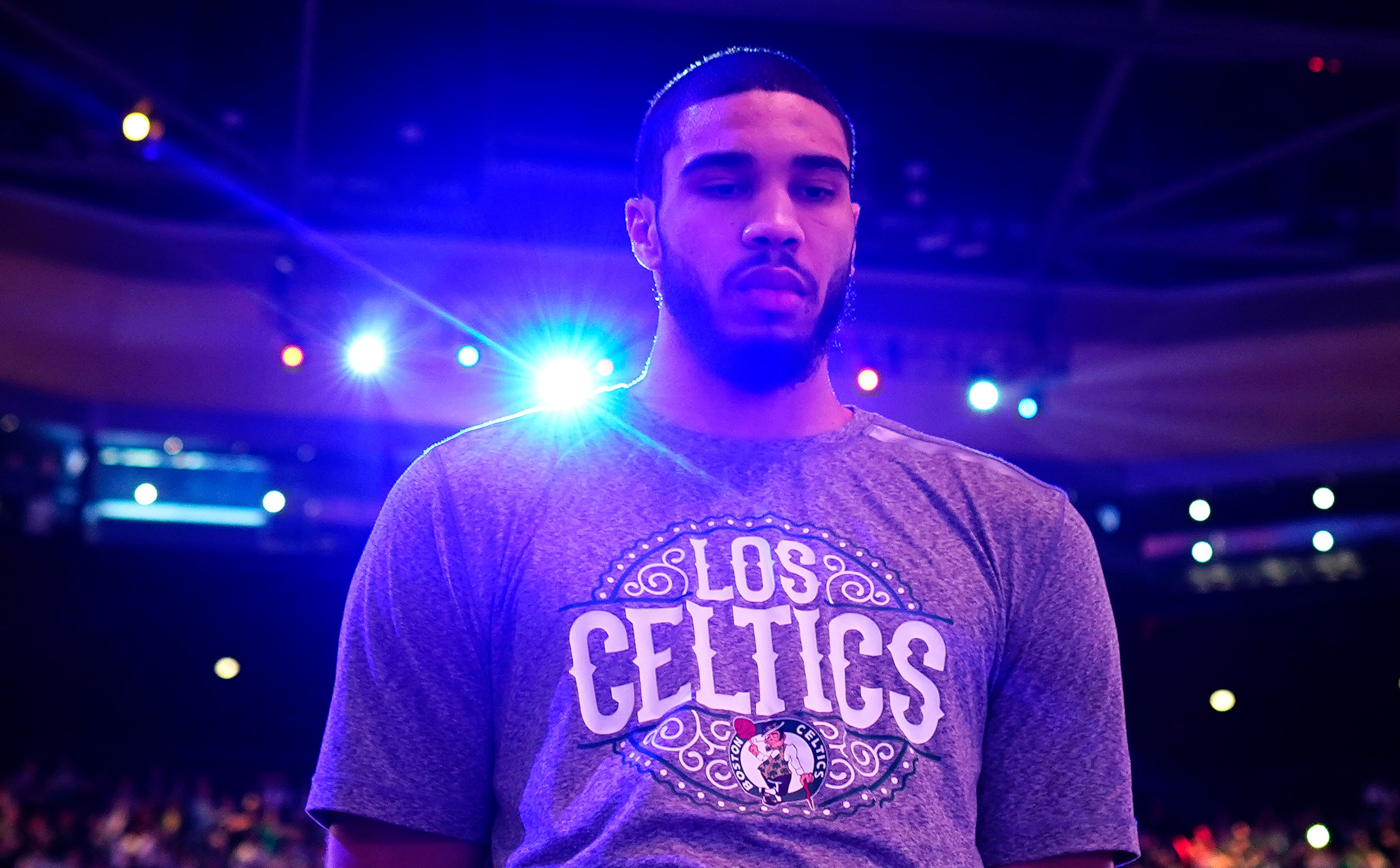
Forget the Boston Celtics; Jayson Tatum's ascent might be the most consequential surprise of the entire season. It took a battering ram to the Celtics' title window, bashing it wide open for the next several years.
A 38.9 percent conversion rate on catch-and-shoot treys made Tatum a "stay close at all costs" cover away from the ball, but it was his work off the dribble that changed everything. Only Damian Lillard was a more accurate high-volume three-point shooter off the bounce this season. And Tatum's 55.6 effective field-goal percentage as a pick-and-roll ball-handler was bettered only by a quintet of high-usage lead guards: Chris Paul, Kemba Walker, Luka Doncic, Kyle Lowry and Lillard.
What Tatum subtracted from his game may have been just as valuable as what he added. By reducing his mid-range attempts, he scrubbed the final inefficient blemish from his scoring profile.
A first-time All-Star and an unquestioned No. 1 option who removes any doubt about Boston's pecking order, Tatum is on a short list of players you'd bet on to win an MVP award in the next half-decade.
Brooklyn Nets: Caris LeVert's Takeover
3 of 30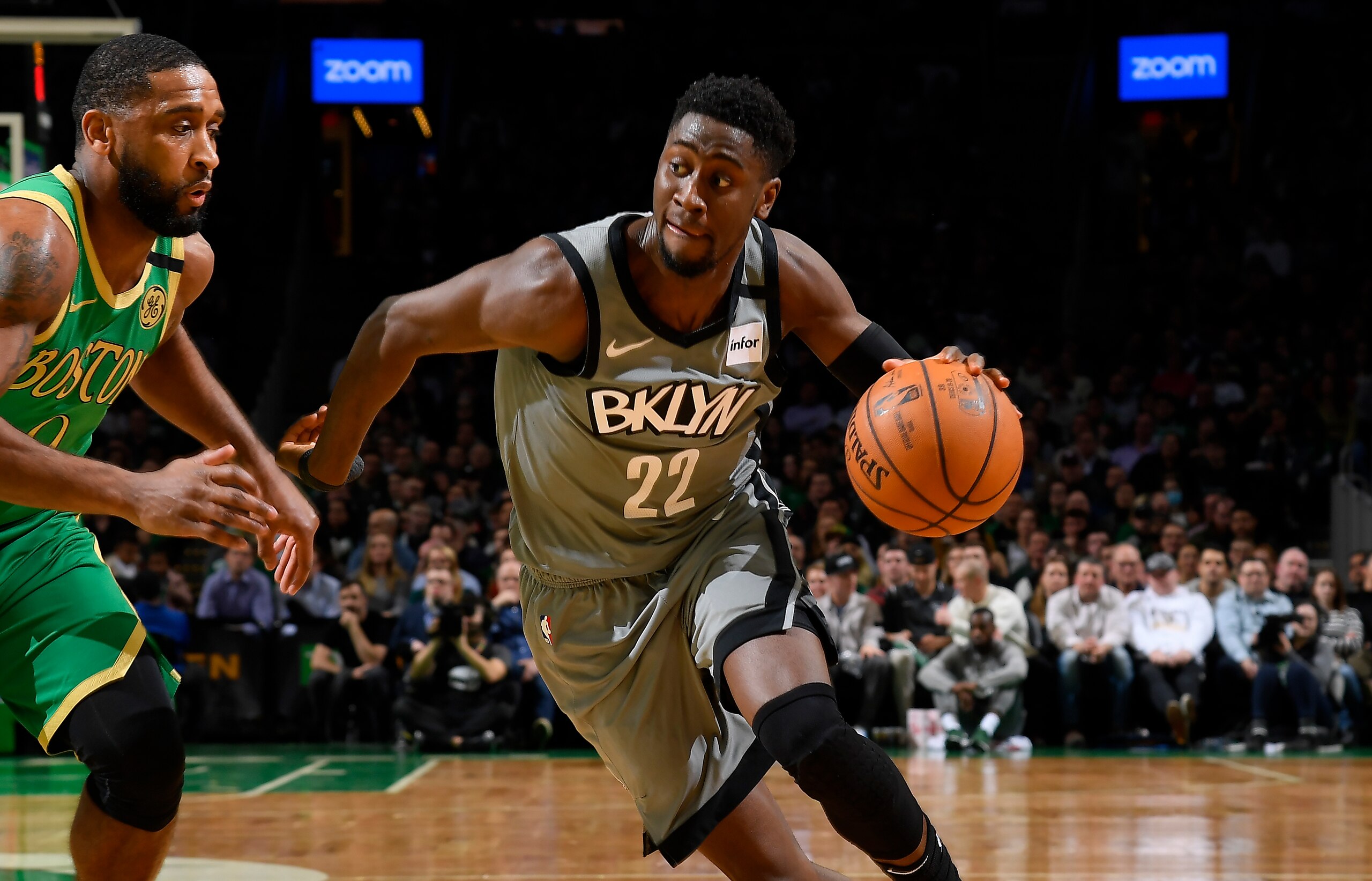
When Caris LeVert scored 51 points in a 129-120 overtime win against the Celtics on March 3, a world of possibilities opened for the Brooklyn Nets.
Assuming health, Kevin Durant and Kyrie Irving project as Brooklyn's obvious one-two punch. And though there should be concern about the redundancy of another ball-in-the-hands scoring dynamo on a roster that already has two of the best in the world, LeVert's breakout game (part of a breakout season) proved his worth as a third star.
If the Nets would rather pair a more conventional three-and-D role player with KD and Irving, LeVert's game should scale up with more touches, allowing him to occupy a prime role for any team that trades for him. The three-year, $52.5 million extension he signed in August only makes him more attractive.
Either way, Brooklyn wins.
Persistent injury woes and the presence of Spencer Dinwiddie made LeVert's ascent unlikely. But in addition to that 51-point eruption (which included 37 points in the fourth quarter and overtime), he was one of just nine players to average at least 17 points, four rebounds and four assists while shooting over 38 percent from deep in 2019-20.
He was exceptionally productive all year.
The Nets built their roster around high-profile free agents, but it might be a homegrown player who puts them over the top.
Charlotte Hornets: Devonte' Graham, Elite Deep Threat
4 of 30
The three-point revolution has reached a level of prevalence that it can't ever be a shock when Player X shows up for a new season ready to fire away like never before.
But could anybody have anticipated that Devonte' Graham, he of the 28.1 percent hit rate from deep as a rookie, would have become one of the league's most prolific long-range threats as a sophomore?
The only players to hit more than Graham's 218 threes in 2019-20 were James Harden, Buddy Hield, Damian Lillard and Duncan Robinson. And even if Graham's horrendous finishing inside the arc made it an easy decision for defenses to trail him over screens, his passing eye made opponents pay for chasing him off the line.
He and Trae Young were the only players to hit at least 200 threes and hand out at least 470 assists this season.
Graham's proven marksmanship makes him a quality starter at the point. Charlotte lost Kemba Walker in the summer of 2019. Turns out it had a pretty good facsimile waiting to take over.
Chicago Bulls: Extreme Ball-Hawking Behavior
5 of 30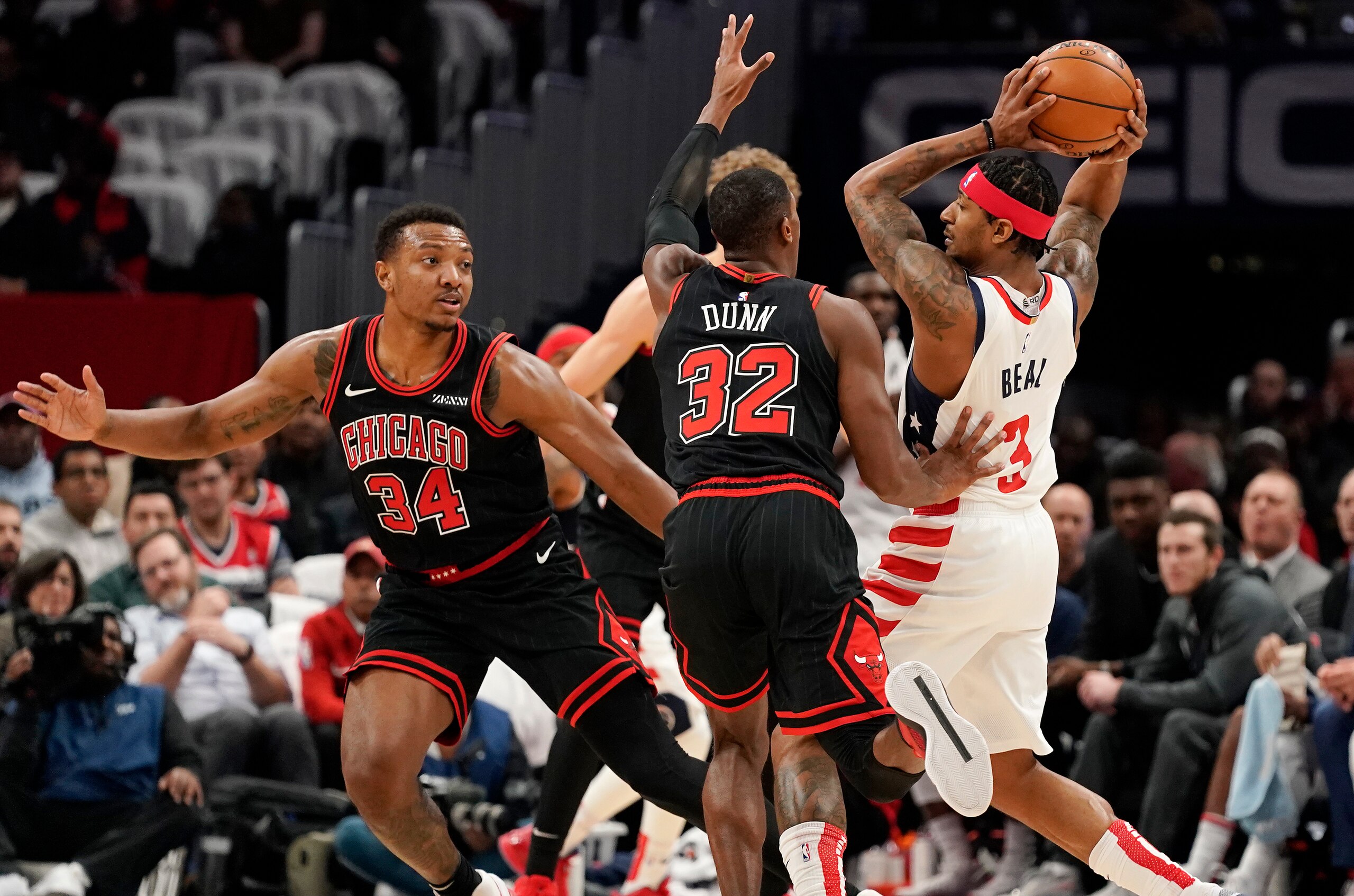
It might have been enough to stay broad and cite the Chicago Bulls defense as a pleasant surprise. They ranked a respectable 13th in defensive efficiency this year after clocking in at 25th in 2018-19 and 28th in 2017-18.
But a glance at the underlying factors that produced that solid defense reveals something more interesting.
Chicago tied the 2011-12 Memphis Grizzlies for the highest opponent turnover rate in the last 10 seasons.
Your first reaction to that stat should be: "I'm pretty sure this year's Bulls didn't have All-Defensive mainstays Tony Allen and Marc Gasol. So...HOW?!"
Chicago's extremely aggressive trapping scheme is the main reason, followed in some order by Wendell Carter Jr.'s mobility, Kris Dunn's hands and head coach Jim Boylen's zero-tolerance policy for loafing.
Sending two to the ball so often had its drawbacks. Once broken, the Bulls' traps yielded advantageous situations for opposing offenses. Chicago allowed opponents the league's highest share of shots at the rim.
Still, any time a previously terrible defense does something on par with the Grit 'n Grind Grizzlies, it has to count as a surprise.
Cleveland Cavaliers: Collin Sexton's Quiet Growth
6 of 30
As a rookie in 2018-19, Collin Sexton ranked 509th out of 514 players in ESPN's real plus-minus. From that baseline, there was nowhere to go but up.
Still, you've got to hand it to Sexton for progressing as a sophomore under difficult circumstances.
Despite tension between players and head coach John Beilein that eventually led to an in-season coaching change, and even though veterans showed Sexton less than total support, he took several positive steps.
He upped his scoring average from 16.7 to 20.8 points per game and increased his efficiency from 52.0 to 56.0 percent true shooting, just a hair below the league average of 56.4 percent. More importantly, he altered his shot profile. As a rookie, Sexton attempted 26 percent of his shots from the deep mid-range. He cut that figure to 12 percent in 2019-20.
There was little reason to be optimistic about Sexton's future after his first season, but it's now reasonable to see him as a quality starter. That's a big deal for a Cavs team that needs a young core to build around.
Dallas Mavericks: Luka Doncic Is Already an MVP Candidate
7 of 30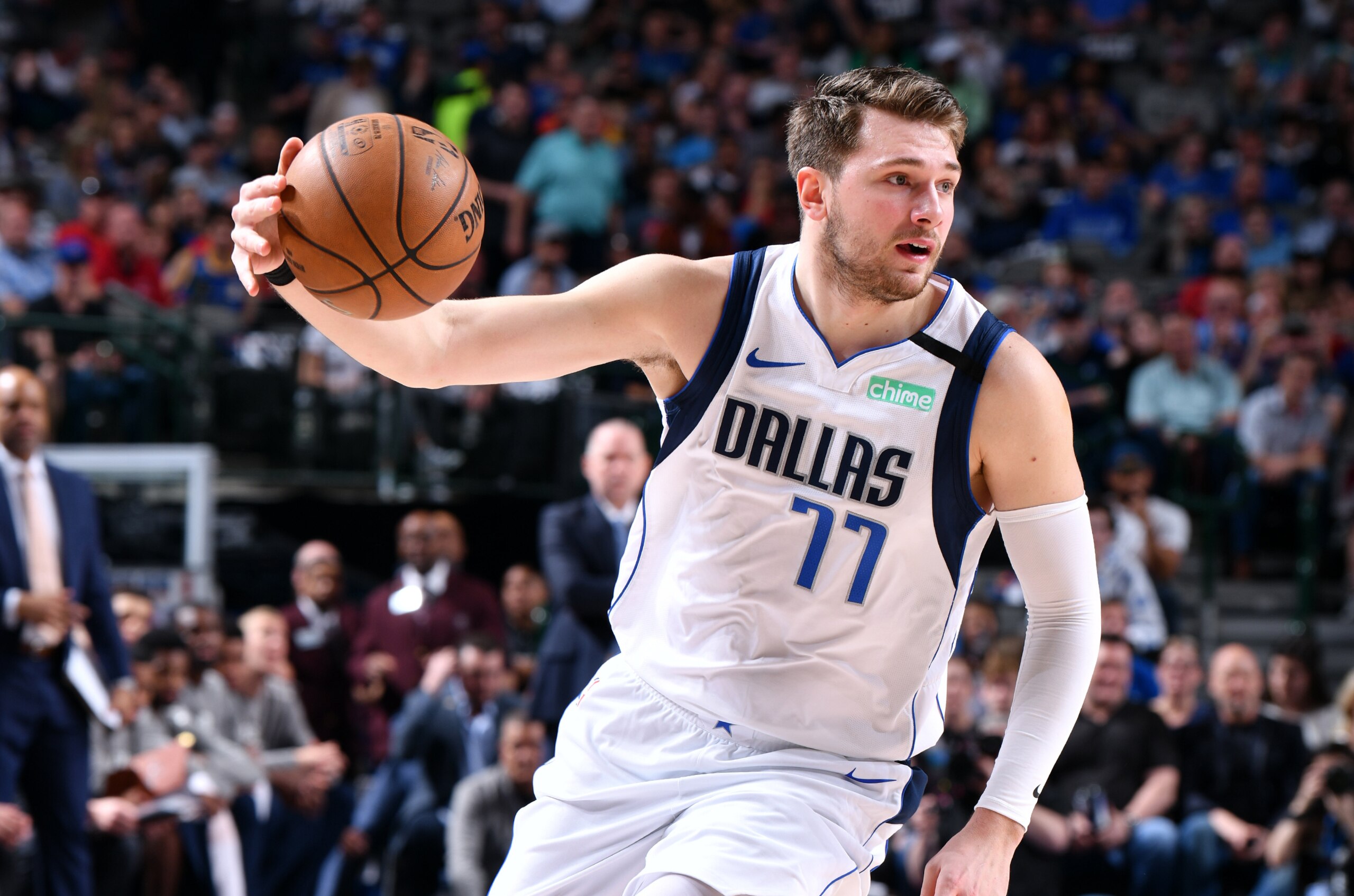
After a rookie year as stunning as the one Luka Doncic posted, it was reasonable to envision an MVP award in his future.
It's just that nobody imagined he'd reach that level so soon.
With averages of 28.7 points, 9.3 rebounds and 8.7 assists per game, Doncic had the Dallas Mavericks on pace to post the highest offensive rating in NBA history before the season was suspended.
In his age-20 campaign, Doncic exhibited a mind-boggling level of control over the nine other players on the floor, slinging three-steps-ahead passes and getting to his preferred spots like some lab-created hybrid of LeBron James, Chris Paul and James Harden.
And if it feels hyperbolic to invoke those names when describing a second-year player, understand that none of those all-time greats ever managed a season with averages of at least 28 points, nine boards and eight assists.
The point here isn't that Doncic is better than those three, but that he showed clear elements of all their best qualities...as a 20-year-old.
If there's an MVP award at all this season, James or Giannis Antetokounmpo will win it. But Doncic was in the conversation late into the year. And he'll headline it every season for another decade or so.
Denver Nuggets: Handling Business Against Good Teams
8 of 30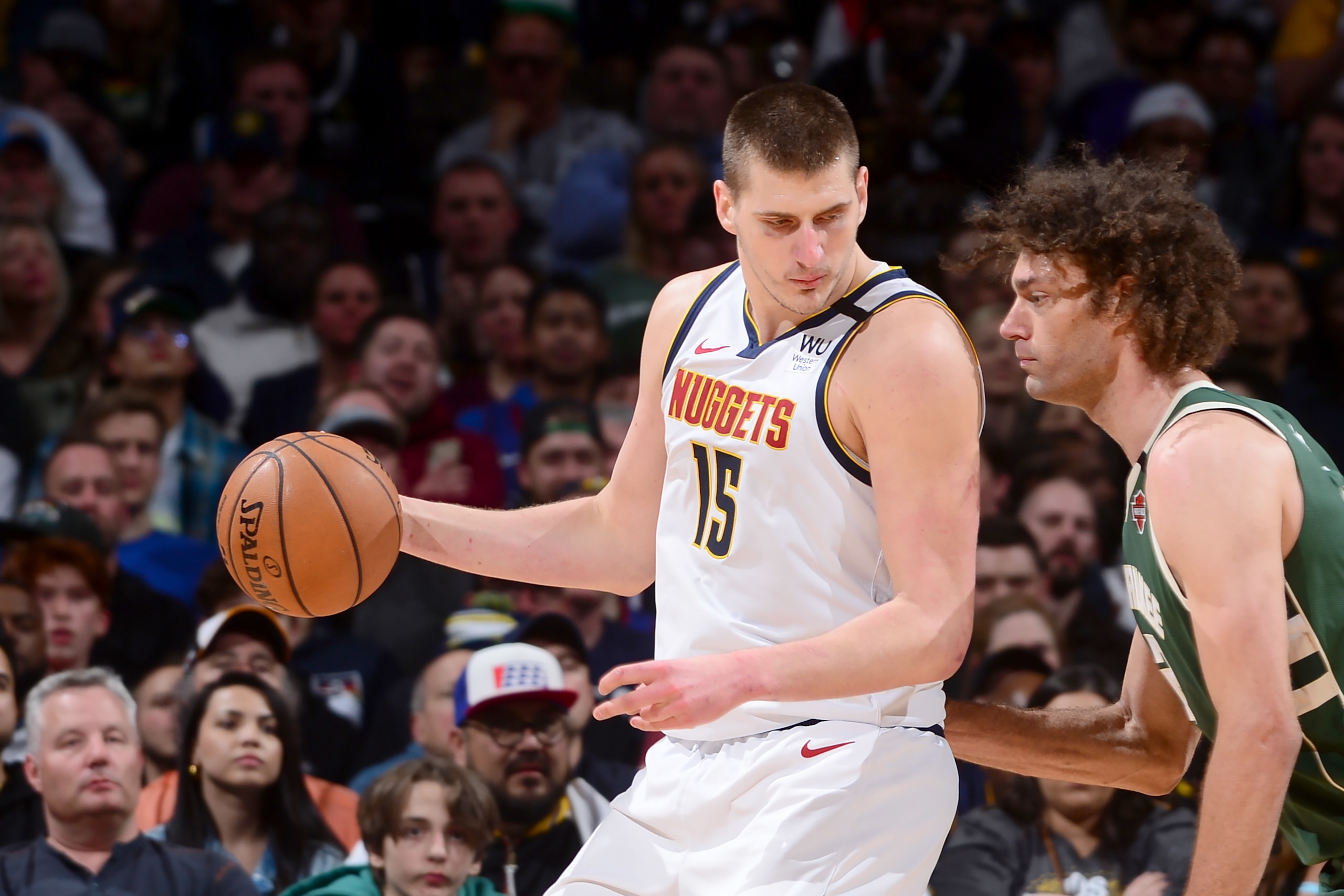
The Denver Nuggets hit the hiatus with a similar profile to the one they produced in 2018-19. They posted a .659 winning percentage last year, and their 43-22 mark through March 11 this season was good for .662.
Pleasant surprises were hard to come by, as Nikola Jokic started the season out of shape and the team's penchant for snoozing against opponents it should have throttled stood out as unexpected negatives. Michael Porter Jr.'s alternately tantalizing and frustrating play was what you'd expect from a talented prospect after two years on the shelf.
Here's something encouraging, though: Denver was 15-11 against teams with records of .500 or better—a significantly higher success rate than last year, when it went 24-20 against competition of that quality. That 15-11 mark is the fourth-best figure in the league, and maybe it means the Nuggets, despite some disappointing work against losing opponents, would have upped their game against playoff foes.
Here's hoping we get to find out for sure.
Detroit Pistons: Christian Wood Steps in and Steps Up
9 of 30
Coming into this season, Christian Wood had played 51 games spread over three years and four teams. To say little was expected of him would be an understatement. That he even made the Detroit Pistons out of camp was an accomplishment.
What he did from there was remarkable.
Initially stuck behind Blake Griffin, Andre Drummond and virtually every other big man on the depth chart, Wood became a steady, efficient producer in a limited role. His length and bounce, coupled with an intriguing three-point shot made the 6'10" 24-year-old a hidden gem on a bad Pistons team that was attracting little attention early in the year.
As injuries and trades cleared the way for more minutes, Wood took hold of his opportunity and never let go.
After the All-Star break, he averaged 24.0 points and 9.6 rebounds per game on 65.8 percent true shooting. And though on/off splits can sometimes obscure the truth, it's compelling to note the Pistons, 20-46 with a minus-3.5 net rating, outscored opponents by two points per 100 possessions with Wood on the floor this year.
Wood didn't just prove he belonged in the NBA. He set himself up for a potentially massive free-agent payoff from a team that'll view him as a high-end starter.
Golden State Warriors: Marquese Chriss Is an NBA Player
10 of 30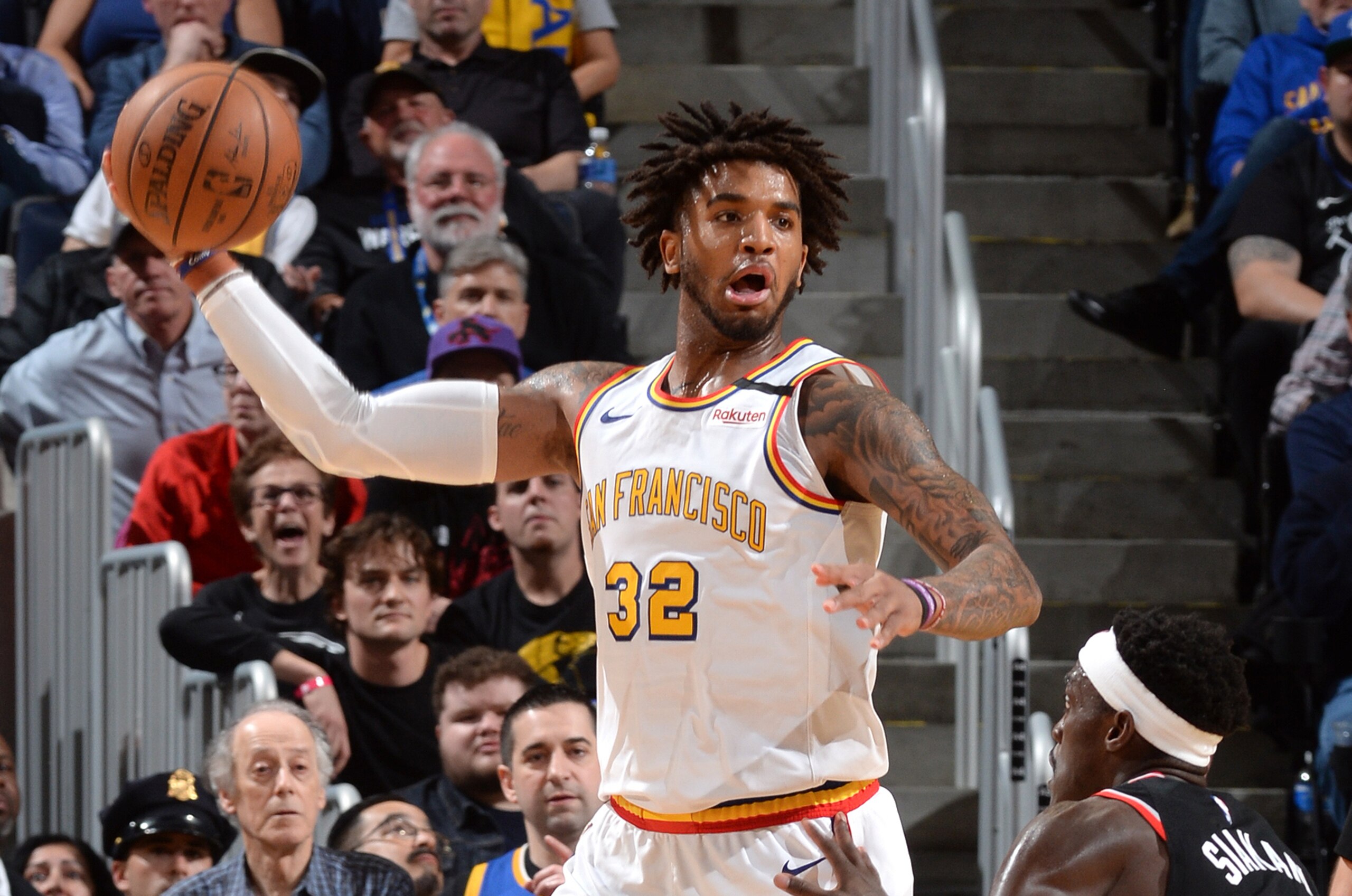
The 15-50 Warriors didn't win many games this year, but their threadbare roster provided opportunities for a long list of rookies, projects and castoffs.
Marquese Chriss was the biggest beneficiary of the Dubs' down year.
After washing out with the Phoenix Suns, 2016's No. 8 overall pick couldn't stick with the Cavs or Rockets and signed a nonguaranteed deal with Golden State this past offseason. Even as he impressed in camp and showed a few flashes during the season, nothing was certain. The Warriors actually waived him as part of a roster shuffle to get Damion Lee a new deal.
Chriss passed through waivers, came back on a two-way contract and started 18 of the Warriors' final 19 games.
Though undersized at 6'9", Chriss demonstrated he could handle the 5 and displayed surprisingly deft passing skills to complement the athleticism everybody knew he had. He was the only player to post an assist rate of at least 15 percent and a block rate over 4 percent. And this wasn't a case of Stephen Curry, Klay Thompson and Kevin Durant making every role player look good.
Chriss produced with as woeful a supporting cast as you could imagine.
His defensive attentiveness is spotty, and Chriss may never establish the three-point shot some thought he'd develop as a prospect. But there's little question he belongs in the league. There's even a chance he starts at center for a 2020-21 Warriors team intent on contending for a ring.
Houston Rockets: Russell Westbrook's Small-Ball Efficiency
11 of 30
The Houston Rockets had several reasons to embrace full-time small-ball: Clint Capela's increasing obsolescence in an iso-heavy system, luxury-tax avoidance and, perhaps, a little desperation. Whatever causes precipitated the change, the most beneficial effect was the activation of Russell Westbrook.
After Houston ditched centers for good Jan. 31, Westbrook averaged 31.0 points, 7.8 rebounds and 5.8 assists per game on 57.5 percent true shooting. Westbrook has never finished a season with a true shooting percentage above 55.4 percent.
With opposing centers drawn out to cover the three-point line, Westbrook barreled into the lane unobstructed by larger help defenders. He led the league in points in the paint per game after Houston changed its look. Westbrook attempted 55 percent of his shots at the rim after Jan. 31, finishing at a 66 percent clip. Before Houston's center-ectomy, those figures were 46 percent and 58 percent, respectively.
It's not surprising the Rockets found a way to make Westbrook more productive. But by making him efficient, Houston accomplished something no one had.
Indiana Pacers: Scoring Where You Wouldn't Expect It
12 of 30
Based on shot location, the Indiana Pacers' seventh-ranked effective field-goal percentage should have been 21st. They took the fourth-highest share of shots from the mid-range area and ranked last in three-point attempt rate. That's typically a recipe for terrible offense, but the Pacers beat the math by playing to their personnel's strengths.
Those projected efficiency figures are based on the conversion rates of average shooters, and the Pacers had several players who were decidedly better than average on those out-of-fashion in-betweeners.
Among forwards, T.J. Warren ranked in the 91st percentile from mid-range. Myles Turner was in the 70th percentile among bigs. Domantas Sabonis was in the 67th. T.J. McConnell and Malcolm Brogdon were both in the top 10 percent of guards in mid-range accuracy, and though he didn't play much, Victor Oladipo was right there with them. Don't forget Jeremy Lamb, who was in the 88th percentile among wings.
Because Indy had so many capable jump-shooters, maybe its efficient offense shouldn't cause a double take. But it's surprising—and a credit to head coach Nate McMillan—that the Pacers trusted their shooters to fire when comfortable, regardless of the leaguewide trend to scrap mid-range shots.
Los Angeles Clippers: Reps Don't Matter
13 of 30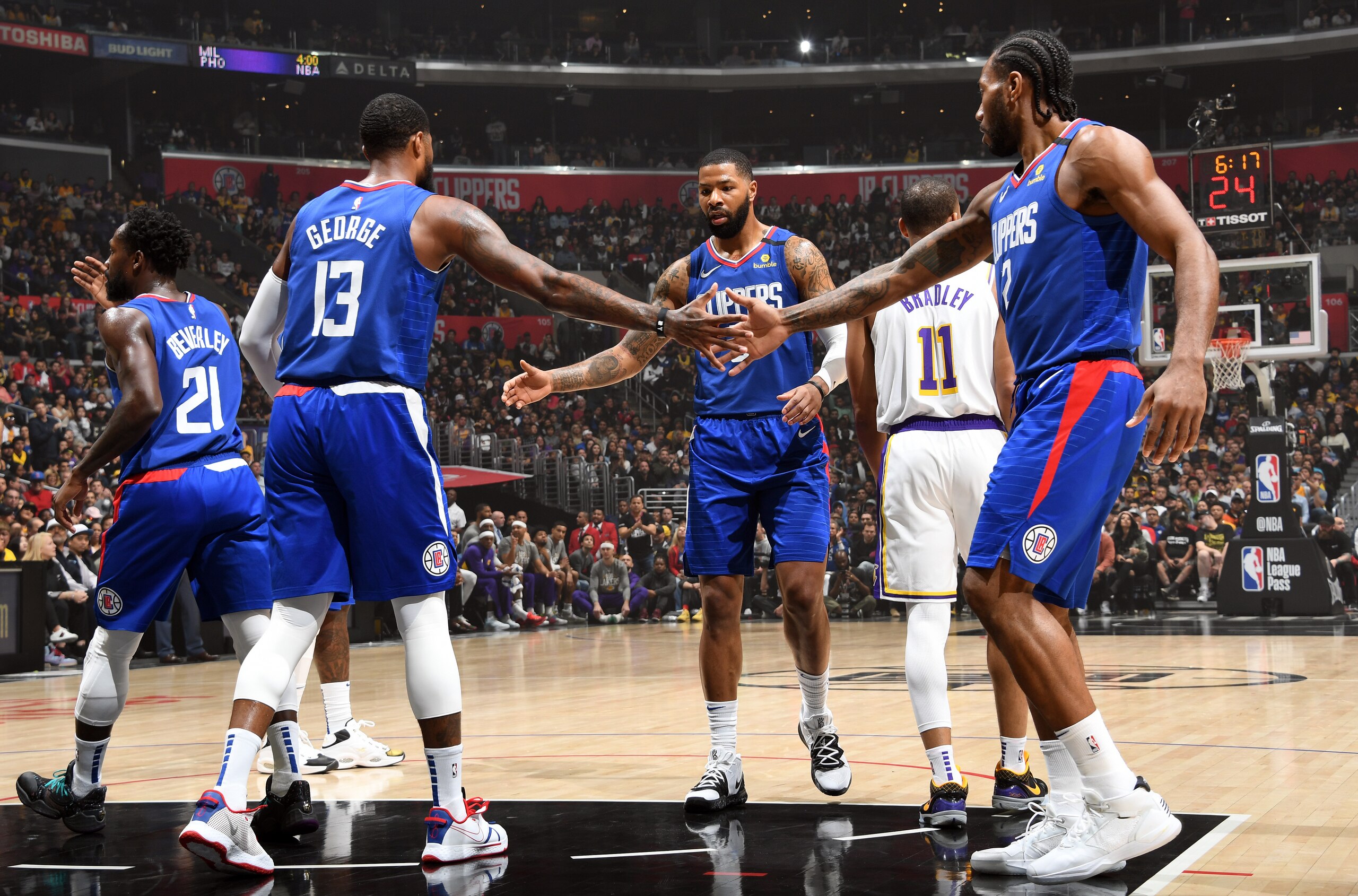
For anyone adhering to the old-school idea that success depends on repetition, chemistry and familiarity with teammates—built over time and through shared struggles—L.A.'s dominance with all hands on deck was shocking.
The Clippers won their first 10 games when their full post-deadline and post-buyout rotation was available, and they went 21-5 in the 26 contests Paul George, Kawhi Leonard and Patrick Beverley shared the floor.
They basically didn't rehearse and then put on a flawless performance on command.
It remains to be seen if L.A.'s casual approach to the regular season and lack of familiarity will matter in the playoffs, but it's a marvel the Clippers looked so good so quickly when they had their desired personnel available.
Talent matters more than reps, it seems.
Los Angeles Lakers: LeBron Still Has It
14 of 30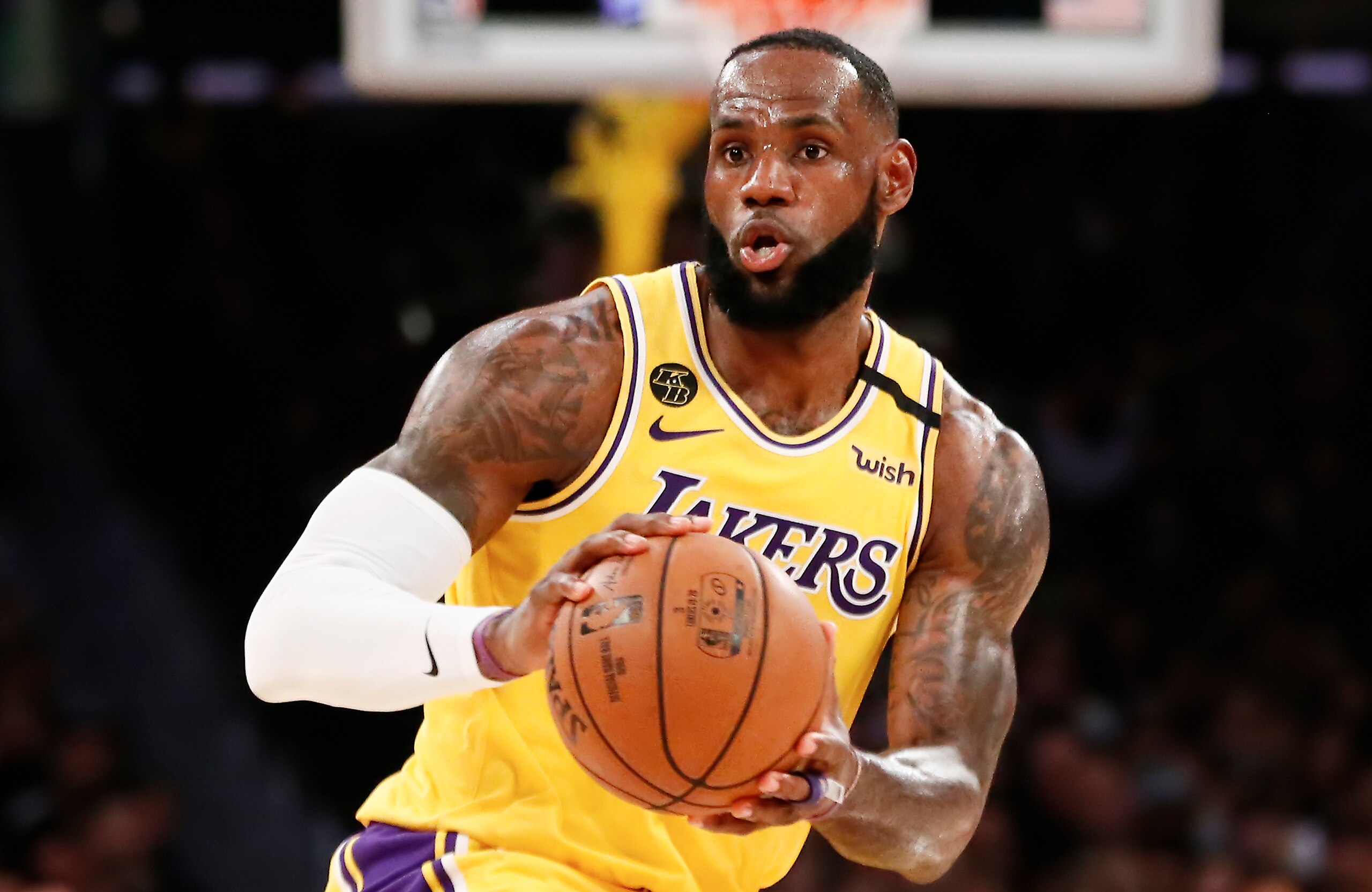
It's been clear for some time that the rules of aging don't apply to LeBron James, but we still need to stop taking his norm-shattering durability for granted.
His MVP-worthy season, at age 35, is more than an anomaly. It's a cosmic glitch.
In addition to James' 2019-20, there have been seven other campaigns in which a player averaged at least 25 points, 10 assists and seven rebounds. None came from someone over age 30.
Michael Jordan is the only other player with a box plus-minus over 8.5 after age 33. James pulled that off two years ago, and he did it again this season.
Maybe it's worth mentioning that the Lakers surprisingly succeeded with big lineups as the rest of the league downsized. And perhaps Dwight Howard's return to rotation-worthy productivity warrants mention. But there's just no case for highlighting anything other than James' complete disregard for the aging curve.
Memphis Grizzlies: Playoff Position
15 of 30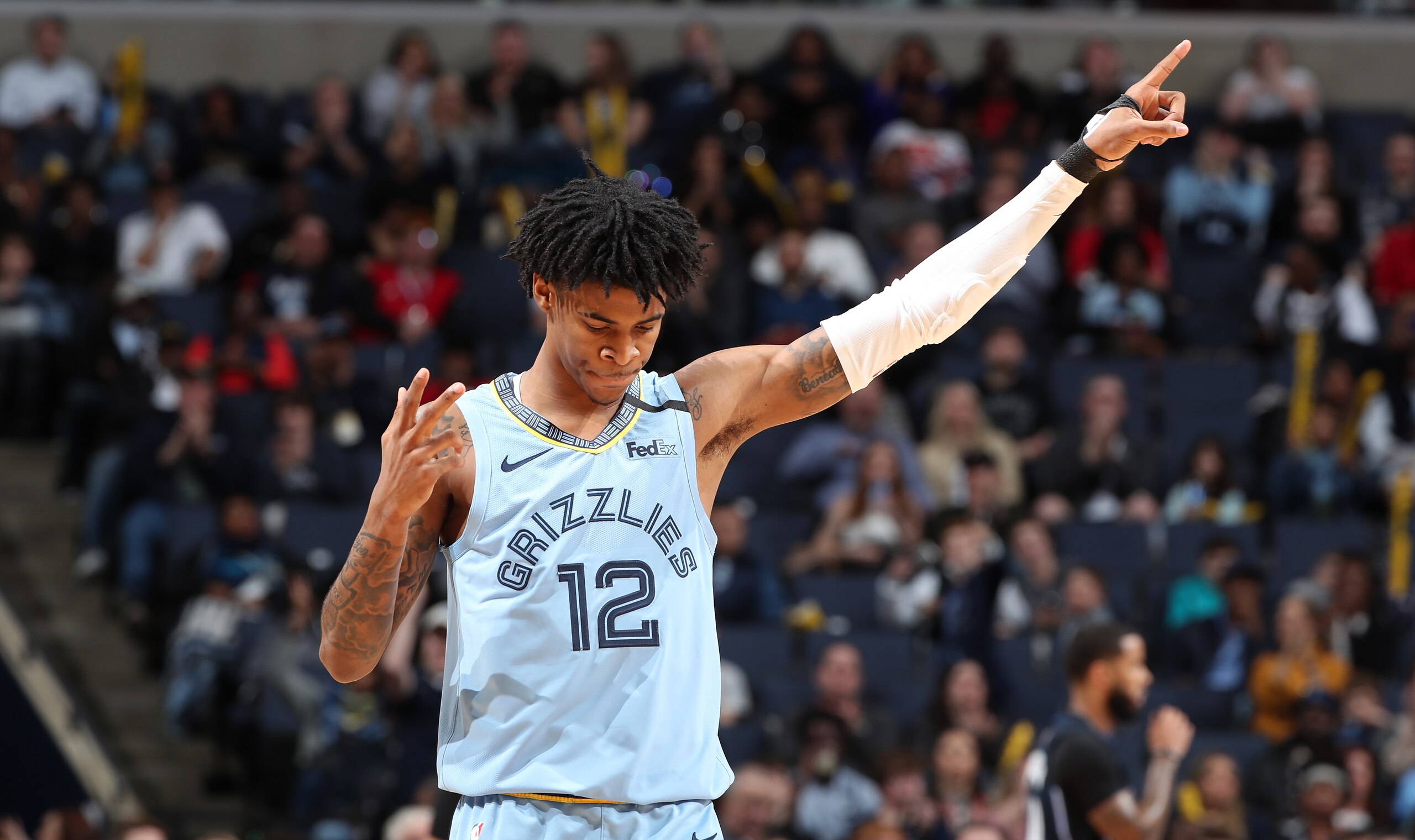
Before the season, FiveThirtyEight projected the Memphis Grizzlies would finish with the second-worst record in the West. Only the Phoenix Suns and Sacramento Kings had a worse chance to make the playoffs.
It made sense at the time.
The Grizzlies were coming off a 33-49 campaign, and instead of veterans Marc Gasol and Mike Conley running the operation, they were about to hand things to rookie point guard Ja Morant. This was supposed to be the first year of a committed rebuild. Lumps were supposed to be taken. Hard lessons learned.
Instead, Morant burst on the scene with gifts both known (ridiculous, physics-busting athleticism) and unexpected (advanced passing IQ and unique finishing craft), leading the Grizz to a winning record and putting them in playoff position at the time of the season's suspension.
Jaren Jackson Jr., 20, and Brandon Clarke, 23, gave Morant two young teammates with whom to grow, and Memphis leaned on veterans Jonas Valanciunas and Kyle Anderson as it blew past even the most optimistic forecasts.
This was supposed to take time. Morant and Memphis weren't interested in waiting.
Miami Heat: Duncan Robinson Fires Away
16 of 30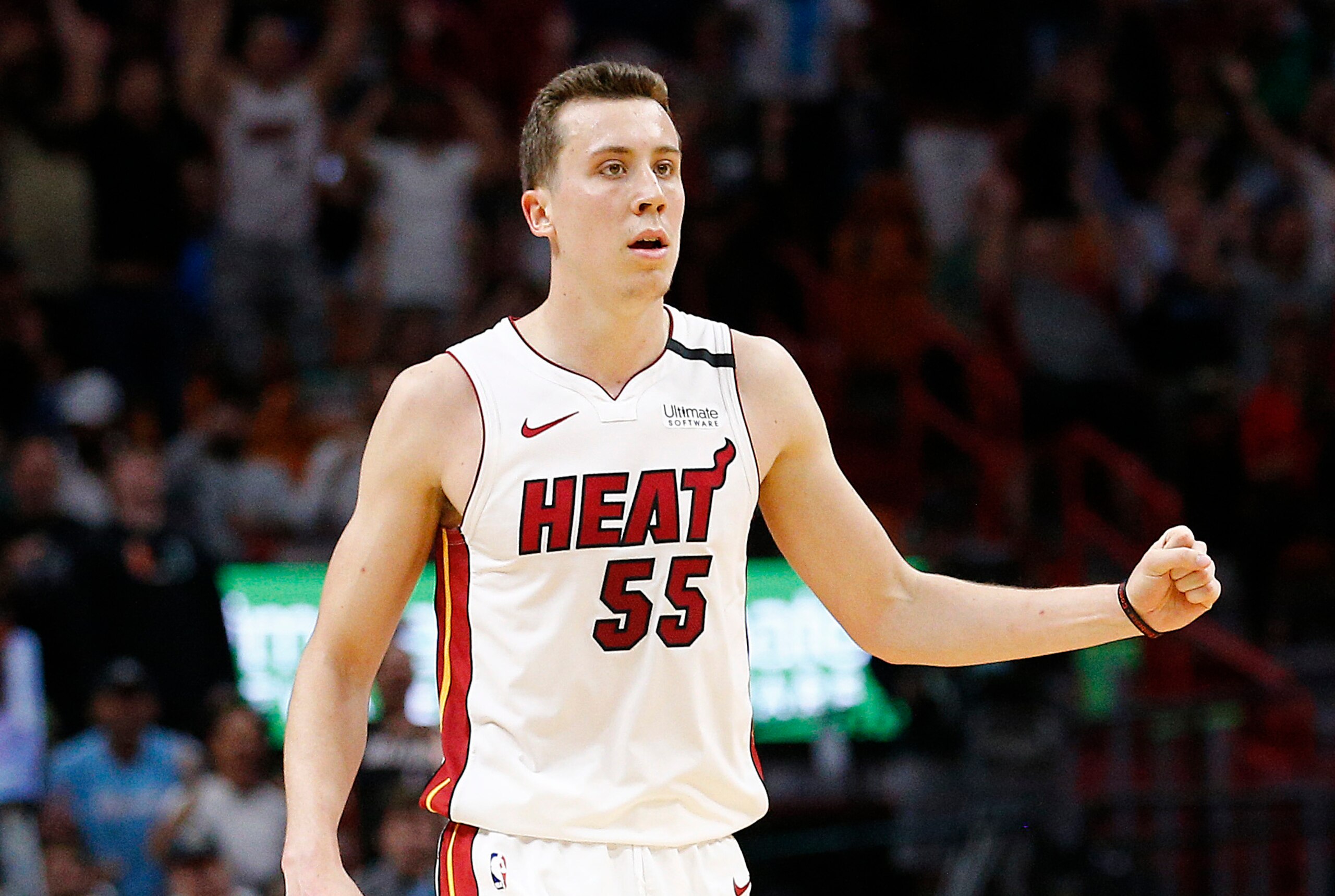
The Miami Heat were full of surprises this season.
Jimmy Butler didn't alienate the coaching staff, management or teammates; Bam Adebayo became the league's best passing center not named Nikola Jokic; and Kendrick Nunn and Tyler Herro were more productive than any pair of rookie guards had any right to be.
But Duncan Robinson has to be the pick.
After playing just 161 minutes and going 10-of-35 from deep during his cup of coffee with the Heat last year, Robinson turned into one of the most prolific three-point snipers in history. He hit at least six threes in a game 14 times this season, a number topped only by the much, much higher-volume approach of James Harden.
Even more impressive: Nobody had ever hit at least 240 threes in as few attempts (543). Any time a 25-year-old comes out of nowhere to make history, it counts as a big surprise.
Milwaukee Bucks: Giannis Antetokounmpo's Time-Compressed Productivity
17 of 30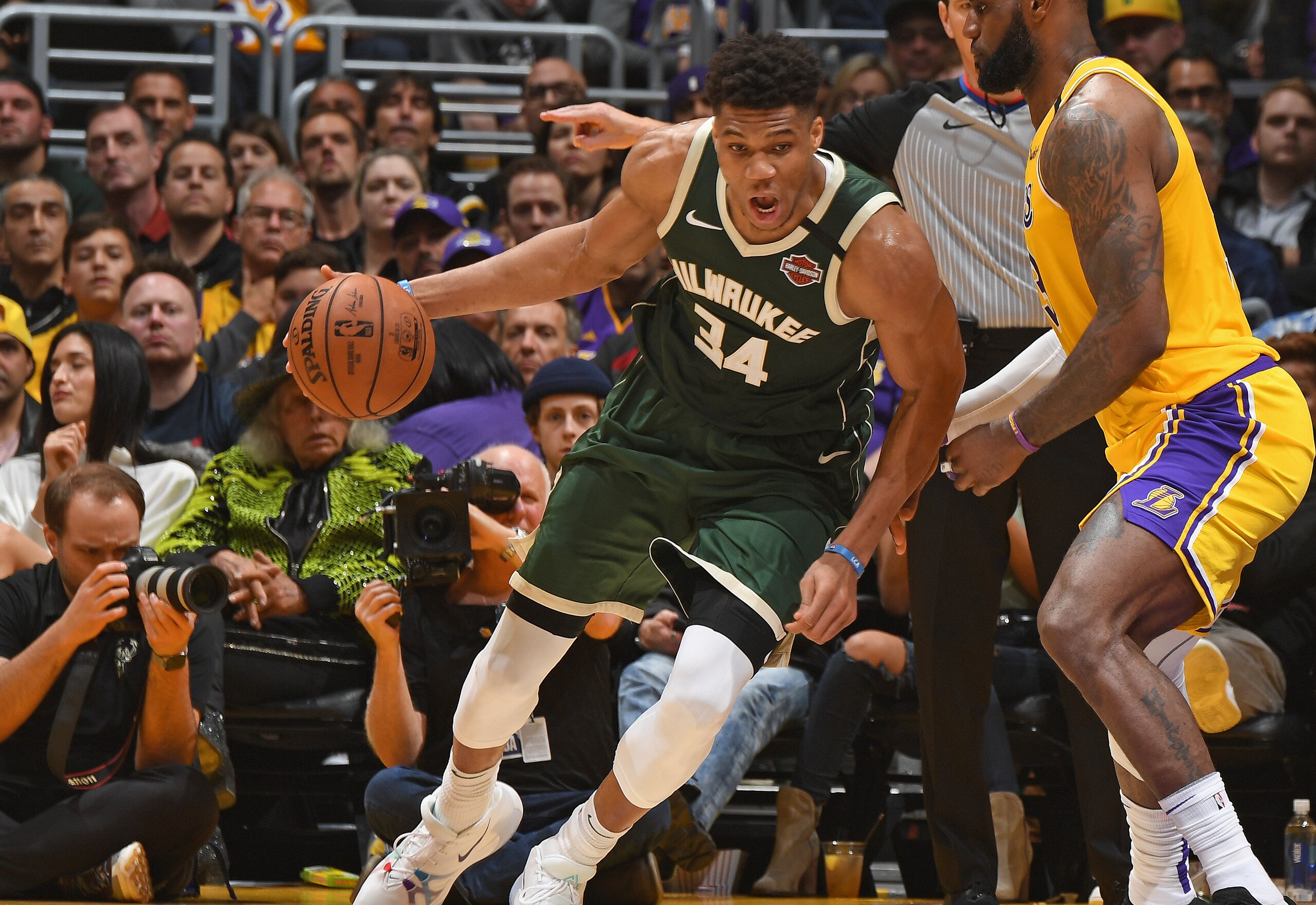
You could term Giannis Antetokounmpo's improvement on an MVP season surprising, but Stephen Curry did that a few years ago. Steve Nash's second MVP season was better than the one that immediately preceded it, too.
It's not that unusual for the MVP to put up better numbers after winning the award. It is, however, uncommon for an MVP to get significantly more productive despite a decrease in playing time. Curry and Nash, for example, both played more minutes per game in their second MVP seasons than their first.
In contrast, Antetokounmpo spent the season setting records by doing more with less. He had three games with at least 30 points, 15 rebounds and five assists in under 30 minutes. There had been five such games in league history before that.
Though his minutes declined from last year, his averages in points, rebounds and free-throw attempts went up.
The best get better all the time...just not quite like this.
Minnesota Timberwolves: Malik Beasley Looks Like a Keeper
18 of 30
Small-sample caveats apply, as Malik Beasley only played 14 games for the Minnesota Timberwolves after heading over from the Nuggets in a deadline deal.
But everything he did in that time verified the hints he showed with Denver that starting-caliber play was in him, ready to be tapped if given the opportunity.
Beasley averaged 20.7 points per game on 42.6 percent shooting from long range for Minnesota, and the 35 threes he hit after the All-Star break were ninth-most in the league.
Though it'd be nice to see him contribute in ways beyond scoring, and though his block and steal rates declined with the Wolves—exposing defense that has long been, at best, spotty—Beasley doesn't need to do much more than shoot efficiently to have serious value for a team that already has D'Angelo Russell and Karl-Anthony Towns to do most of the heavy lifting.
Minnesota will have to pay for its pleasant surprise, though. Beasley is headed for restricted free agency this offseason.
New Orleans Pelicans: Lonzo Ball's Shooting
19 of 30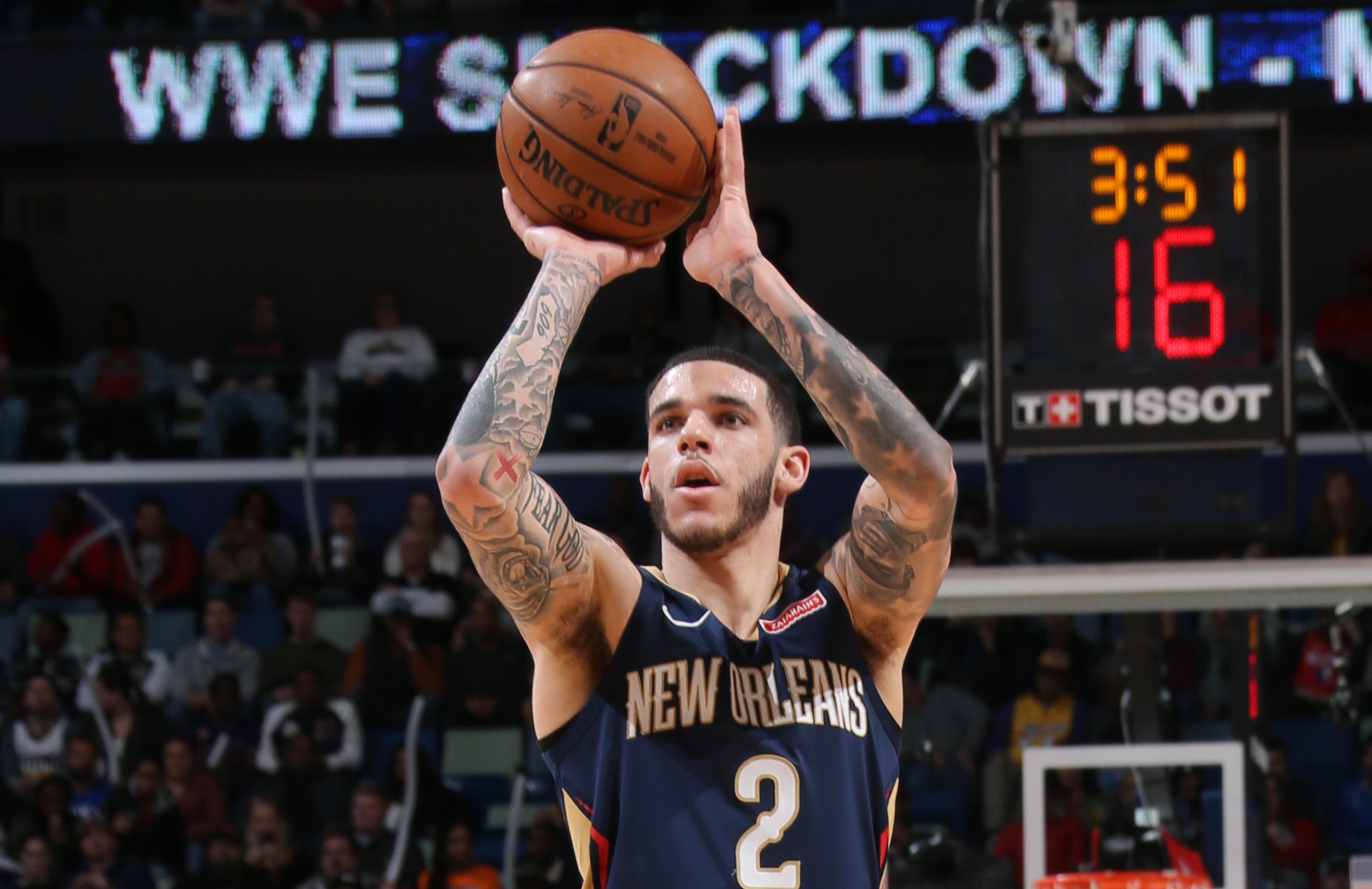
Zion Williamson was phenomenal when he made it onto the floor in January, as expected.
Brandon Ingram's All-Star leap was a sight to be hold, but it was foreseeable.
Lonzo Ball turning into a dangerous three-point shooter, willing to let fly on the catch and off the dribble at high volume? Few would have predicted that.
Ball remade his shot over the 2019 offseason, moving the ball from the left side of his face to the right, thereby straightening the wonky, side-winding trajectory that had made consistency difficult and shooting while moving to his right almost impossible.
He hit 38.3 percent of his deep attempts, a rate that ranked 16th among the 37 players who got up at least 6.5 long-range shots per game.
Ball still avoided contact and struggled to finish inside while barely managing to hit half his free-throw attempts. He's got plenty of other weaknesses to work on. In light of his shooting overhaul, it's a lot easier to believe improvement in those areas is possible.
New York Knicks: March 11, 2020
20 of 30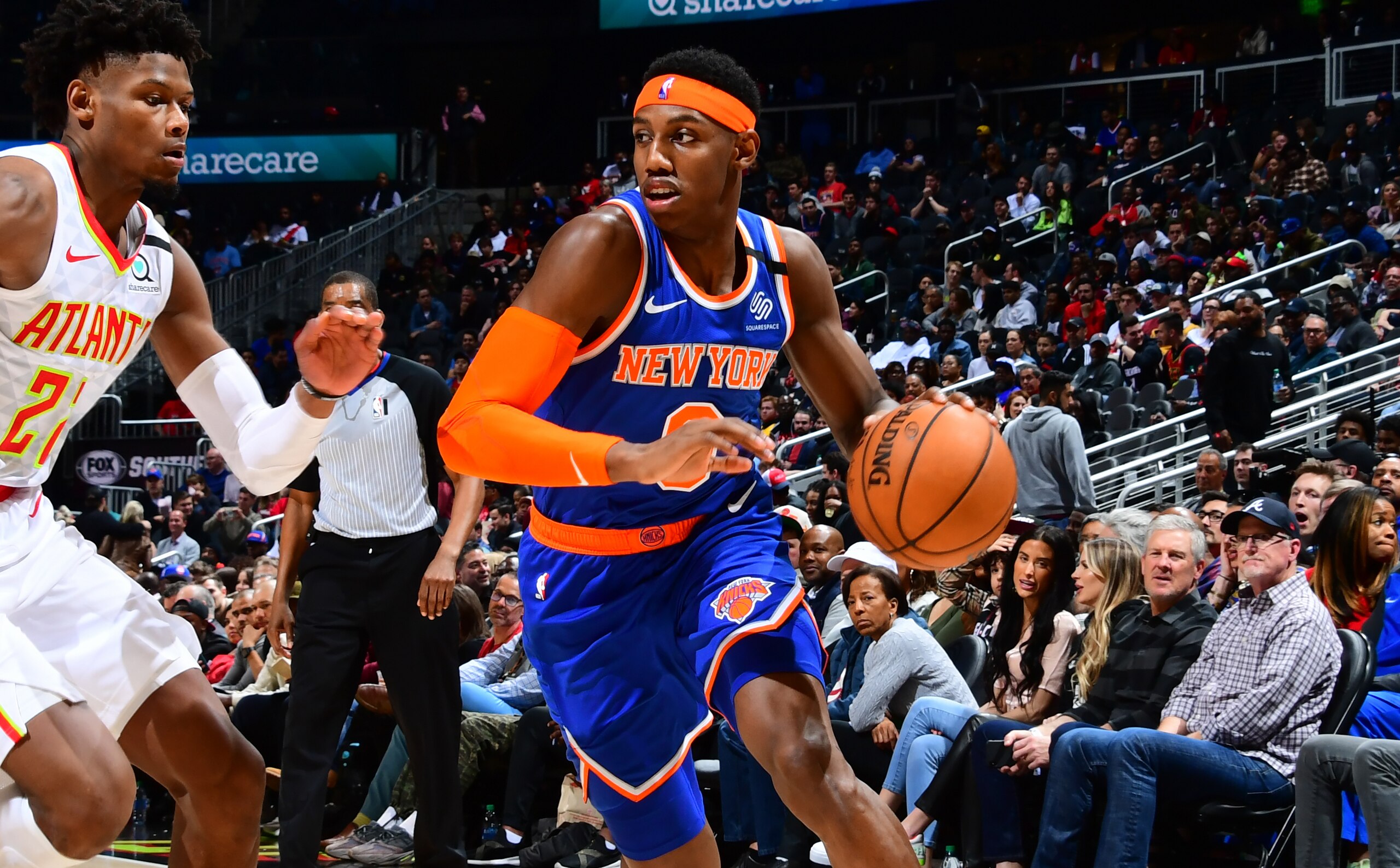
In a Knicks season that started with free-agent whiffs, proceeded to midyear coaching and management turnover and endured persistent chants encouraging James Dolan to sell the team, almost any positivity would count as a surprise.
We're zeroing in on one game—the Knicks' last game in fact: a 136-131 overtime win against the Hawks on March 11.
For starters, New York won. That was unusual in a 21-45 campaign. Beyond that, the victory was significant because the Knicks had squandered a massive lead the night before (even though Frank Ntilikina posted the first 20-point, 10-assist game of his career) and were only in overtime against Atlanta because they'd blown another huge advantage in the fourth quarter. It felt like a similarly disappointing fate was on tap, but the Knicks avoided a second straight bummer.
Least expected of all, it was New York's beleaguered youth that got the job done.
Rookie RJ Barrett played perhaps his best game of the season, scoring 26 points on 14 shots. Even Kevin Knox II was decent, hitting all three of his treys and scoring 12 points.
Look, it was a bleak year for the Knicks. They appear as aimless and mismanaged as ever. A win fueled by the players who, in a best-case scenario, could be part of the first respectable Knicks team in years was as shocking as it was welcome.
Who would have ever expected New York to go out on a high note?
Oklahoma City Thunder: Chris Paul Stayed and Was Awesome
21 of 30
From the moment he became a member of the Oklahoma City Thunder last July, Chris Paul seemed like a short-timer.
OKC had dealt Russell Westbrook and Paul George. It was hoarding other teams' first-rounders. Reports poured in that the Thunder were trying to move CP3 months ahead of the season-opener. The rebuild seemed imminent—not to mention the right decision after three straight first-round eliminations.
But a deal never materialized, and there was Paul, starting at point guard for a team in reconstruction limbo. It may not have been what the Thunder wanted, but keeping Paul turned out to be a blessing.
He was an All-Star in his 15th season, teaming with Dennis Schroder and the ascendent Shai Gilgeous-Alexander in the league's deadliest three-man unit. He averaged 17.7 points and 6.8 assists per game while racking up a series of memorable clutch takeovers.
Paul was still a star—good enough to lead a team of ill-fitting youth and free-agents-to-be to a .625 winning percentage, better than any OKC season since Kevin Durant left in 2016.
Orlando Magic: Markelle Fultz's Redemption
22 of 30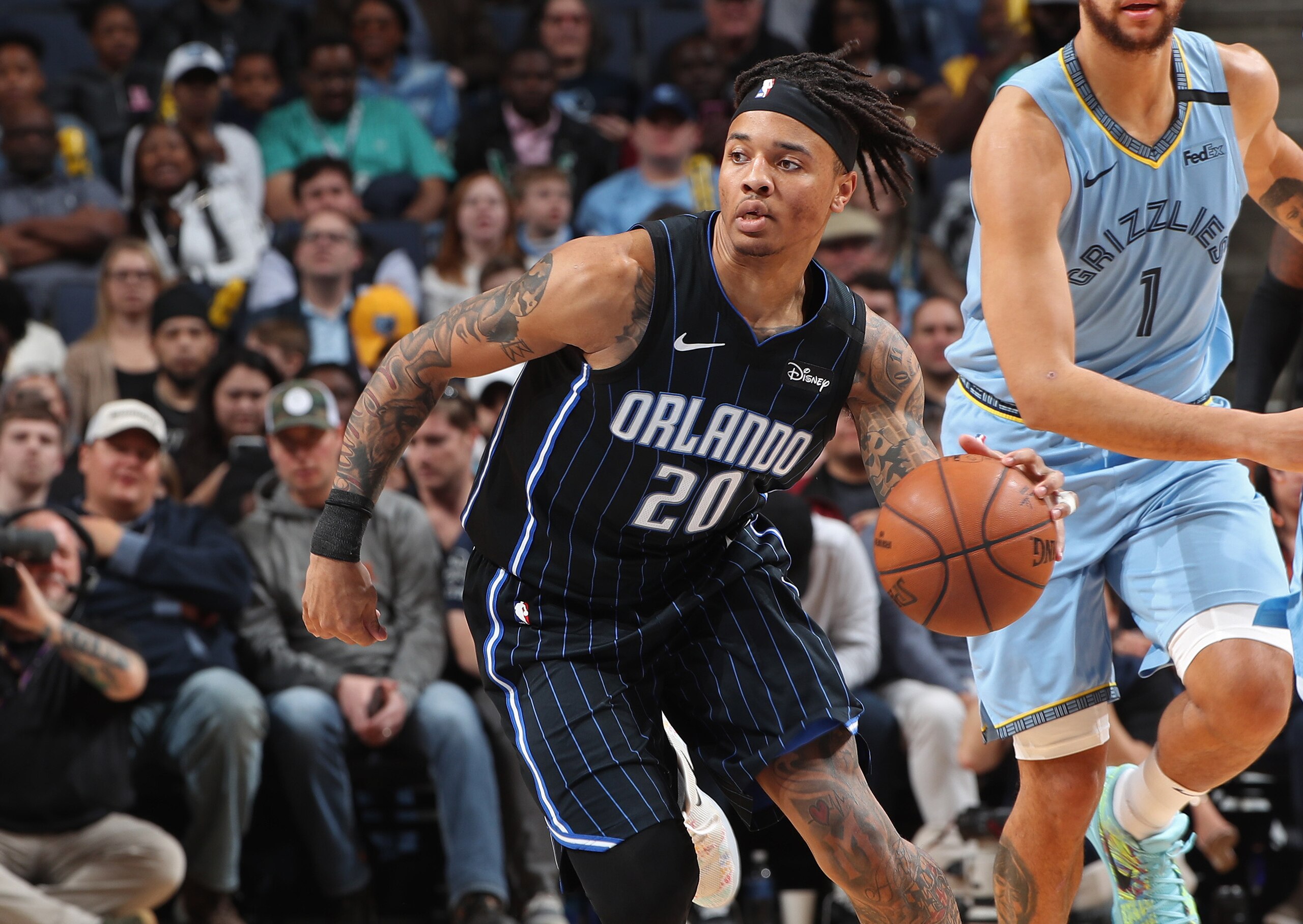
In his third NBA season, Markelle Fultz didn't become an All-Star or validate his status as the top selection in the 2017 draft. He didn't average 20 points or shoot with above-average efficiency. He didn't set the world on fire.
But he was still a massive success.
Fultz was a surefire bust, known more for a mysterious injury, missed games and a funky shot than positive production. By becoming a full-time starter in Orlando, he reclaimed control of his career narrative.
Averages of 12.1 points and 5.2 assists per game don't leap off the stat sheet, but they were easily career highs for the 21-year-old who'd only played 33 contests over his first two seasons. More than that, Fultz flashed several of the skills that made him a No. 1 pick.
A herky-jerky handle, deceptive strength, passing vision and disruptive length on D. They were all still in there, and they crept out as Fultz got the first consistent action of his career.
If the NBA still had a Comeback Player of the Year Award, Fultz would win it.
Philadelphia 76ers: Ben Simmons Hit a Pair of Threes!
23 of 30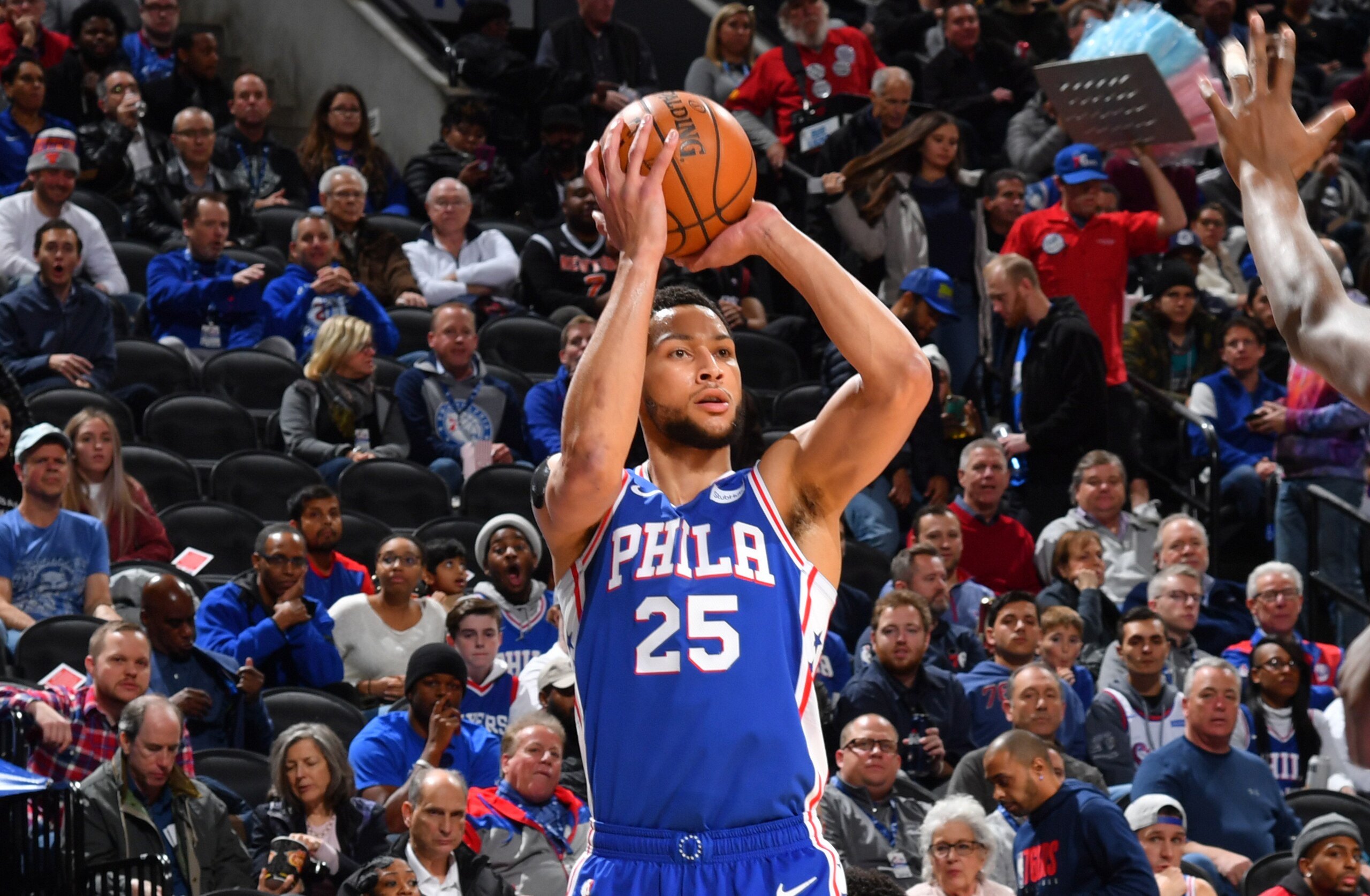
We're tweaking the criteria just a touch.
Ben Simmons didn't trigger an evolution in his game when he made his first career shots from beyond the arc, so his two made threes might not be the Sixers' "best" surprise of the year. But because Simmons' refusal to even attempt shots from long range had become a defining part of his profile, his finally hitting a couple was definitely the biggest shocker of the Sixers' season.
His first make came from the right corner against the Knicks on Nov. 20. His second, a left-corner hit against the Cavs on Dec. 7.
Next up for Simmons: Attempting more than one non-heave three per month.
Phoenix Suns: Cameron Johnson Wasn't a Reach
24 of 30
Know what's valuable in today's NBA?
Shooting, shooting, a little more shooting and then, on top of it, some shooting. Also shooting.
Though Cameron Johnson was the oldest player drafted in June's first round at age 23 and widely pegged as a poor choice at No. 11 overall, his perimeter skills should have caused us all to be more careful with our criticisms. If he could hit threes at a high clip, which he did as a senior at North Carolina (45.7 percent), he'd have a role on any team.
The 6'8" forward delivered, drilling 39.7 percent of his deep shots—the highest conversion rate of any rookie who attempted at least 200 threes.
Johnson may still be a mostly one-dimensional weapon, but he showed a few signs of other skills as a rookie. If all he does is hit close to 40 percent of his threes, well...doesn't every team wish it had a big wing who could do that?
Portland Trail Blazers: Carmelo Anthony Wasn't Washed After All
25 of 30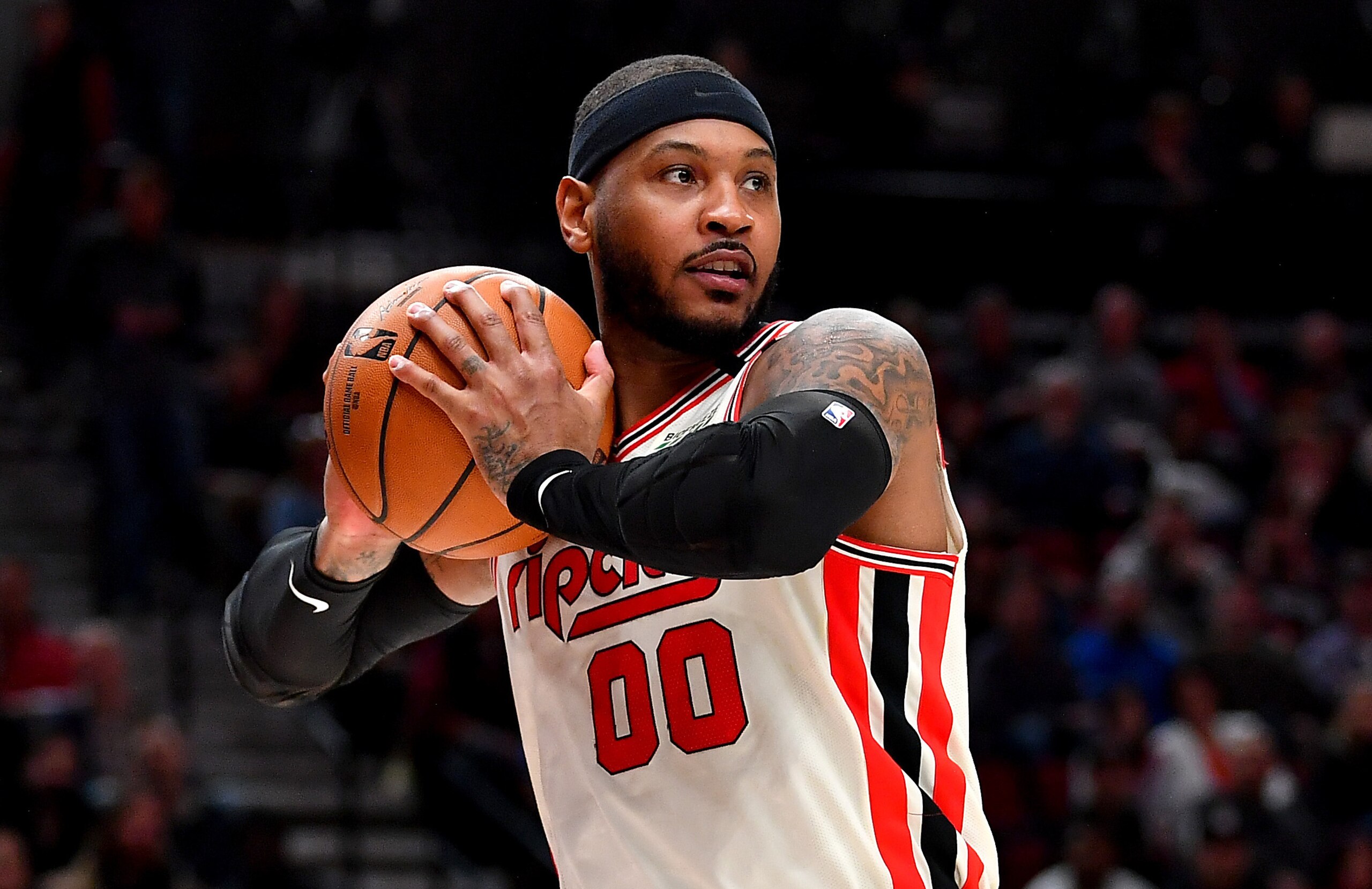
It sure seemed like Carmelo Anthony was done.
He posted a career-worst 50.3 true shooting percentage in 2017-18 with the Thunder and played just 10 games before the Rockets cut him loose in 2018-19. Inefficient, a sieve on defense and still unwilling to embrace a non-star role, Anthony appeared to be out of options.
But the Portland Trail Blazers, desperate for forwards and scoring beyond Damian Lillard and CJ McCollum, took a shot anyway, signing him to a nonguaranteed deal on Nov. 19.
Melo responded with 15.3 points per game and 37.1 percent shooting from deep (his best hit rate since 2013-14 with the Knicks). Though not nearly the same unstoppable scorer he was in his prime, Anthony still became one of just nine players to average at least 15 points and hit 37 percent of his threes at age 35 or older.
In addition, Portland's defensive rating was a fraction of a point better with Anthony on the floor than off.
Nobody saw that coming.
Sacramento Kings: The Buddy Hield Bench Experiment Worked
26 of 30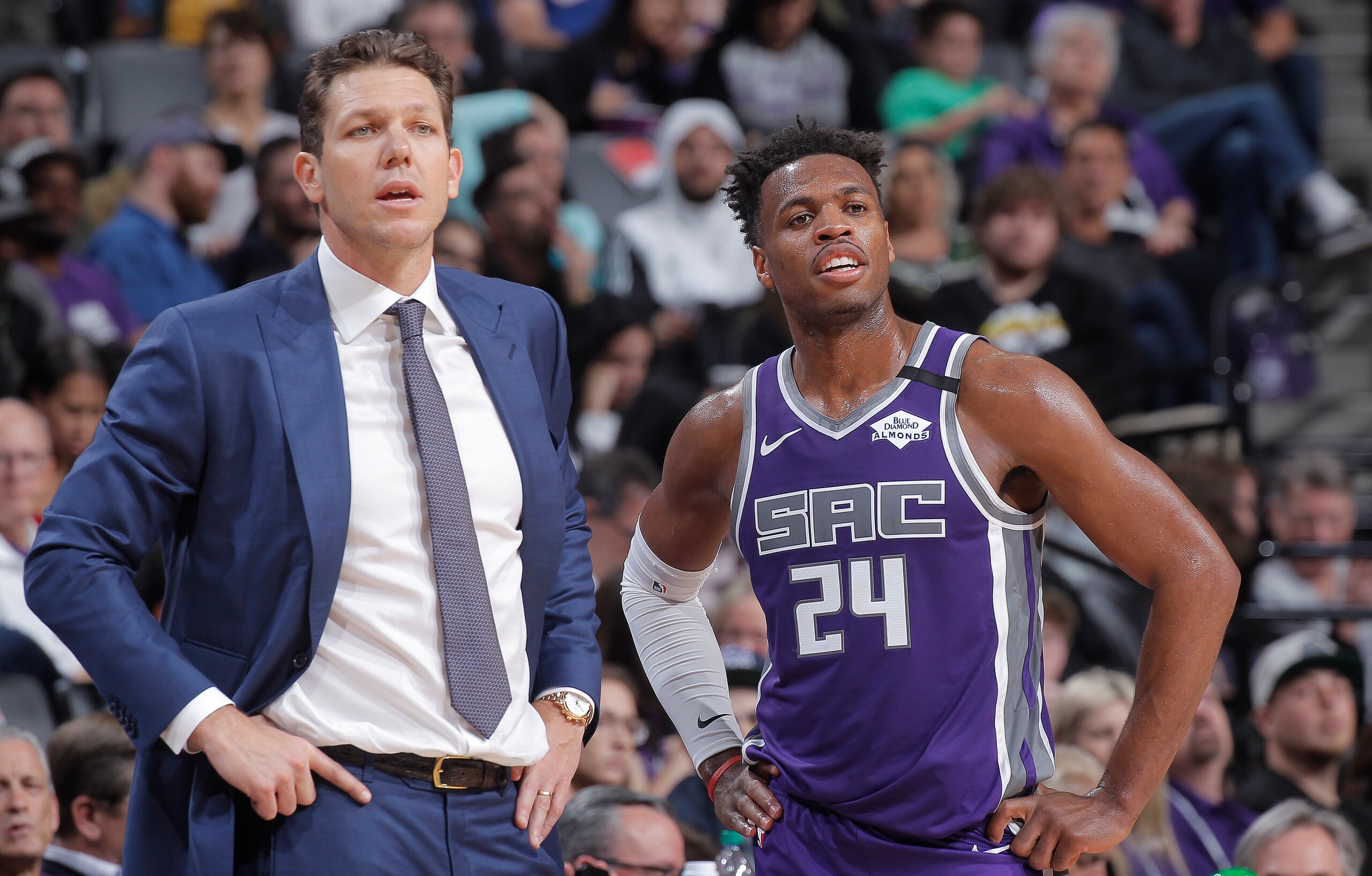
It was so easy to envision Buddy Hield's benching as the catalyst for another in a long series of Sacramento Kings implosions.
Hield had clashed with head coach Luke Walton and aired grievances that only made the Kings' disappointing season seem more hopeless. Fans were frustrated that all the progress made during a 39-43 2018-19 season was for nothing and that familiar disaster was imminent for a franchise that hadn't made the playoffs since 2006.
But the change worked.
Hield started his last game of the season Jan. 22. At that point, the Kings were 15-29, reeling in the wake of a 3-15 stretch.
From then on, they went 13-7, improving their offensive rating from 107.0 before the switch to 113.5 after it.
Hield took off as well. Though he played almost eight fewer minutes per game as a reserve, his scoring average barely budged, going from 20.0 to 19.4 points per game. He drilled a ridiculous 47.6 percent of his threes off the bench, a far cry from the 36.0 percent he shot from distance as a starter.
There may still be long-term fallout. Hield may never be content outside the starting five. But it's hard to argue with the results, as surprising as they are.
San Antonio Spurs: The Spurs Will Get a Lottery Pick
27 of 30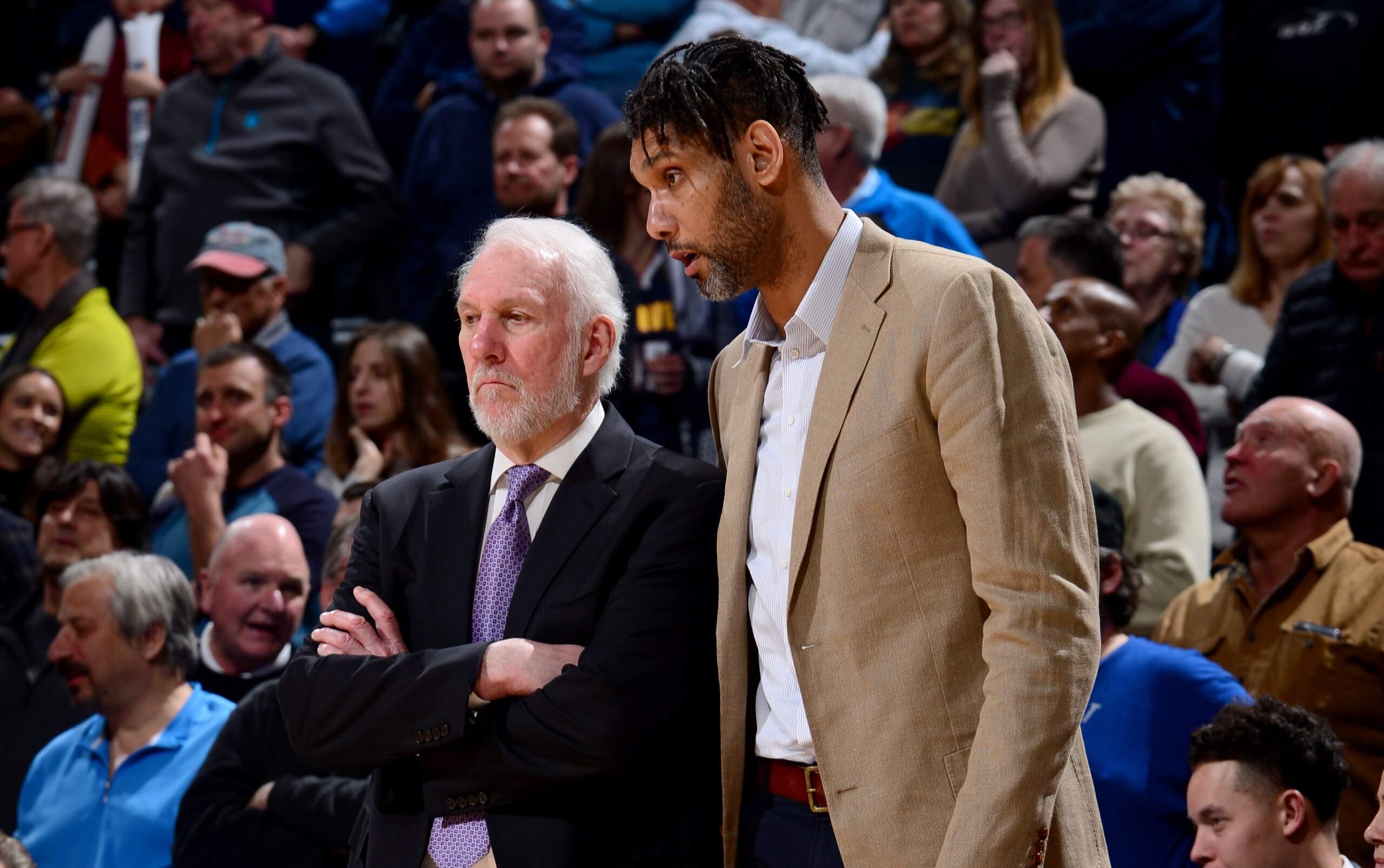
The end of a 22-season playoff streak* is a dark thing, so it's not easy to find the bright spots in the San Antonio Spurs' campaign.
But hey, at least they won't have to scour the end of the first round for talent! It's been a long time since that was the case, as the Spurs haven't picked higher than 19th since they took Tim Duncan first overall in 1997.
Sure, you could point to San Antonio's ability to somehow produce points (11th in offensive rating), despite a shot profile that featured the lowest percentage of attempts at the rim, third-lowest from deep and, you guessed it, most from the mid-range area. But the Spurs pulled off something similar in 2018-19, so doing it again wasn't a shock.
Let's stick with a glass-half-full surprise: The Spurs have a lottery pick.
*Not officially, but with the potential for no more regular-season games and a four-game gap separating them from the eighth spot, we can safely rule the Spurs out of the playoffs.
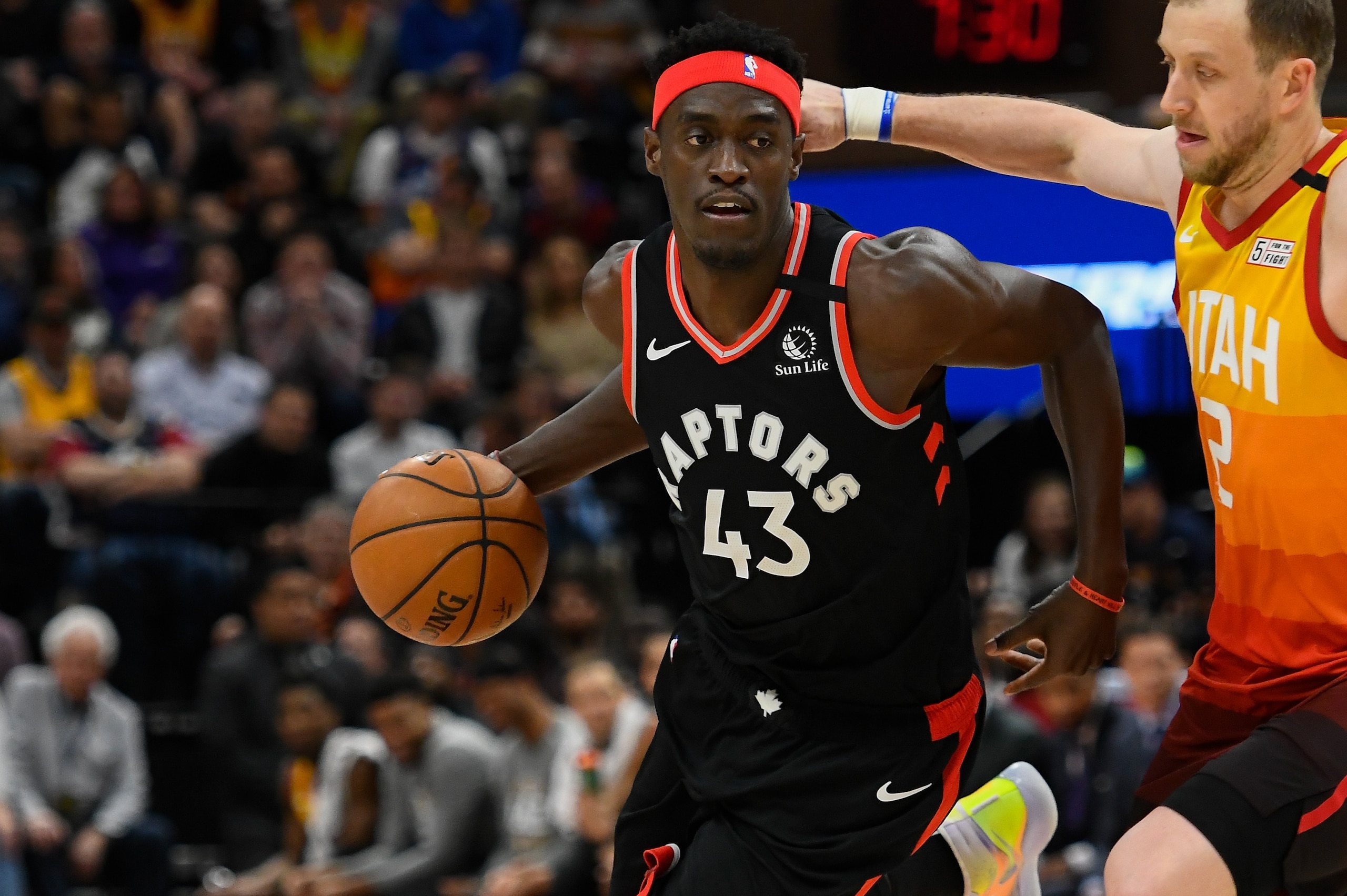
Toronto Raptors: No Kawhi, No Problem
28 of 30
Pascal Siakam made a leap, OG Anunoby took strides, Kyle Lowry improved on last year's age-32 All-Star season, Serge Ibaka set a career-high scoring average and shot better than ever (39.8 percent) from deep, Norman Powell posted a 62.9 true shooting percentage and nearly doubled his points per game, Terence Davis came out of nowhere to dunk on everyone and Kawhi Leonard...
Oh right! That's the whole point here.
Leonard was gone, along with fellow starter Danny Green, and the Toronto Raptors were on pace to post a higher winning percentage and superior net rating than they did in their championship 2018-19 season.
Head coach Nick Nurse broke out a consistent series of junk-it-up defenses, Toronto smothered opponents with its length and, apparently, none of the Raptors got the memo that losing a two-time Finals MVP was supposed to relegate them to the middle of the pack.
The Grizzlies were the West's least-expected success story, but the Raptors were the best surprise in the entire league.
Utah Jazz: Offense!
29 of 30
The Utah Jazz ranked no lower than third in defensive efficiency from 2016-17 to 2018-19, a three-year shutdown run driven by the interior presence of Rudy Gobert.
That all changed this season, as Utah had slipped to 11th in points allowed per possession at the time of the suspension. The trend line was angling sharply downward, too; Utah was 23rd in defensive rating after the All-Star break.
Fortunately, the Jazz compensated with growth on the other end. They hit the suspension ranked eighth in offensive efficiency after never finishing higher than 12th in the last six seasons.
Donovan Mitchell got better at making those short mid-rangers he loves so much, Bojan Bogdanovic provided much-needed secondary scoring and the late-December acquisition of Jordan Clarkson gave the bench its fire-starter.
It's debatable whether the Jazz's identity shift made them better on balance, but that's not the point. The point is: It was jarring to consider a Utah team defined by its offense.
Washington Wizards: Davis Bertans' Range
30 of 30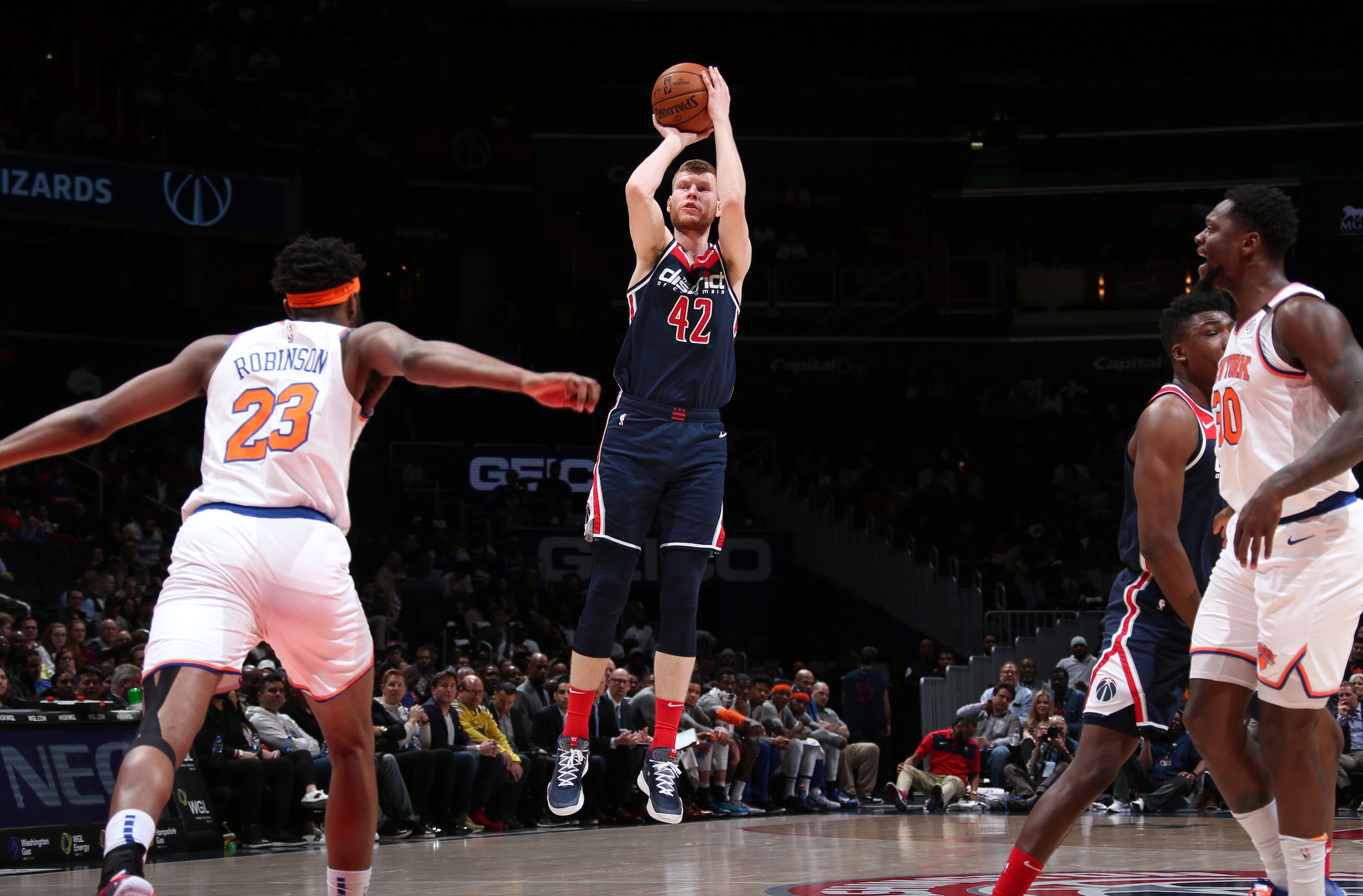
It doesn't exactly dispel the Spurs' stodgy, "no fun zone" image* that they never let Davis Bertans shoot more than 4.4 threes per game.
They had to know how much joy they were withholding from fans, but maybe the Spurs didn't realize how much of a benefit it is to an offense when a 6'10" forward can come sprinting off a screen and drill a 30-footer with a defender inside his jersey.
The Washington Wizards sure had a good idea of what Bertans could do when loosed from San Antonio's tethers.
The fourth-year forward fired off 8.7 treys per game, hitting 42.4 percent of them. He attempted nearly a quarter of his triples under tight coverage (defender within 2-4 feet), making 40.4 percent of them. As Bertans knocked down deeper and more closely guarded shots, he became one of those rare players who elicited a collective intake of breath from the crowd before he even got the ball.
Bradley Beal was a fan.
Nine players tried at least 350 extra-long shots (25-29 feet) in 2019-20. Bertans was more accurate than any of them, burying 39.8 percent of his super-deep looks.
If you saw this coming from Bertans, you had more foresight than San Antonio, which is saying something.
*"Beautiful Game" Spurs explicitly excluded.


.jpg?w=2560 "AD Trolls Bears WR on IG 😂")
.jpg?w=2560 "Buzz: MHJ Hired Agents for Trade")
.jpg?w=2560 "Report: Steelers WR to Miss 'Weeks'")
.jpg?w=2560 "Viral Dan Campbell Presser 💙")


.jpg?w=2560 "Cam Ward Says He's Not A Loser")