Predicting 5 Years from Now Which 2019 NBA Offseason Moves Look Best
Nothing lasts forever. That's the lesson of the 2019 NBA offseason.
Actually, based on the shake-ups, teardowns, undertakings and overhauls we saw this summer, it seems more accurate to say nothing lasts for more than a year or two. Example: Of the 25 players named to All-Star teams in 2017, only eight play for the same organization.
With the roster turnover rate accelerating thanks to shorter contracts and general player empowerment, the shape of the league will be entirely different in a half-decade. That means most of the moves we saw this summer won't affect the NBA of 2024.
Some might, though. So we're going to squint into the future, fingers crossed, and hope we can guess at which ones figure to have significance that far down the line.
Do we need to go full galaxy brain to pursue this exercise? Are we trafficking in long shots and freewheeling speculation? Absolutely.
But that's how it goes when you're forecasting five years into the future of a league that can't maintain the status quo for five minutes.
[For more hot-button NBA analysis, interviews and conversation, please subscribe to Bleacher Report's Full 48 podcast with B/R senior NBA writer Howard Beck.]
OKC's Hard Reset
1 of 4
One way to be sure your offseason moves will impact the distant future is to acquire assets from which you can't technically derive value for several years.
Enter the sweeping, transformative summer of the Oklahoma City Thunder, who flipped Paul George, Jerami Grant and Russell Westbrook (yes, we're lumping these together as part of one grand offseason plan) for a total of eight future first-rounders, four pick swaps, Chris Paul, Shai Gilgeous-Alexander and Danilo Gallinari.
Four of those incoming first-rounders are in 2024 or later, and it seems likely the Thunder could add at least one more by moving Paul to another destination.
The Thunder may utilize some of their selections to swing other deals, so there's no guarantee they'll use all those picks in the draft. But few teams are better positioned to pluck talent from the amateur ranks or acquire it via trade (with first-rounders as sweeteners) than they are.
Oklahoma City's future is necessarily uncertain, but it's not hard to imagine a scenario five years from now in which one or two of its hypothetical draft selections profile as stars. By then those players could be entering their early primes, and the Thunder would have the capital to either draft more young help or seek trade partners who could offer veteran supporting pieces in exchange for a couple of those 2026 selections.
Though a trove of future draft assets doesn't assure anything, the Thunder's deals help avoid an alternate 2024 future in which they're just one year free of Westbrook's onerous contract and only then starting to rebuild.
First-round picks are currency for reconstructions, and OKC is filthy rich.
Lakers' Lasting Relevance
2 of 4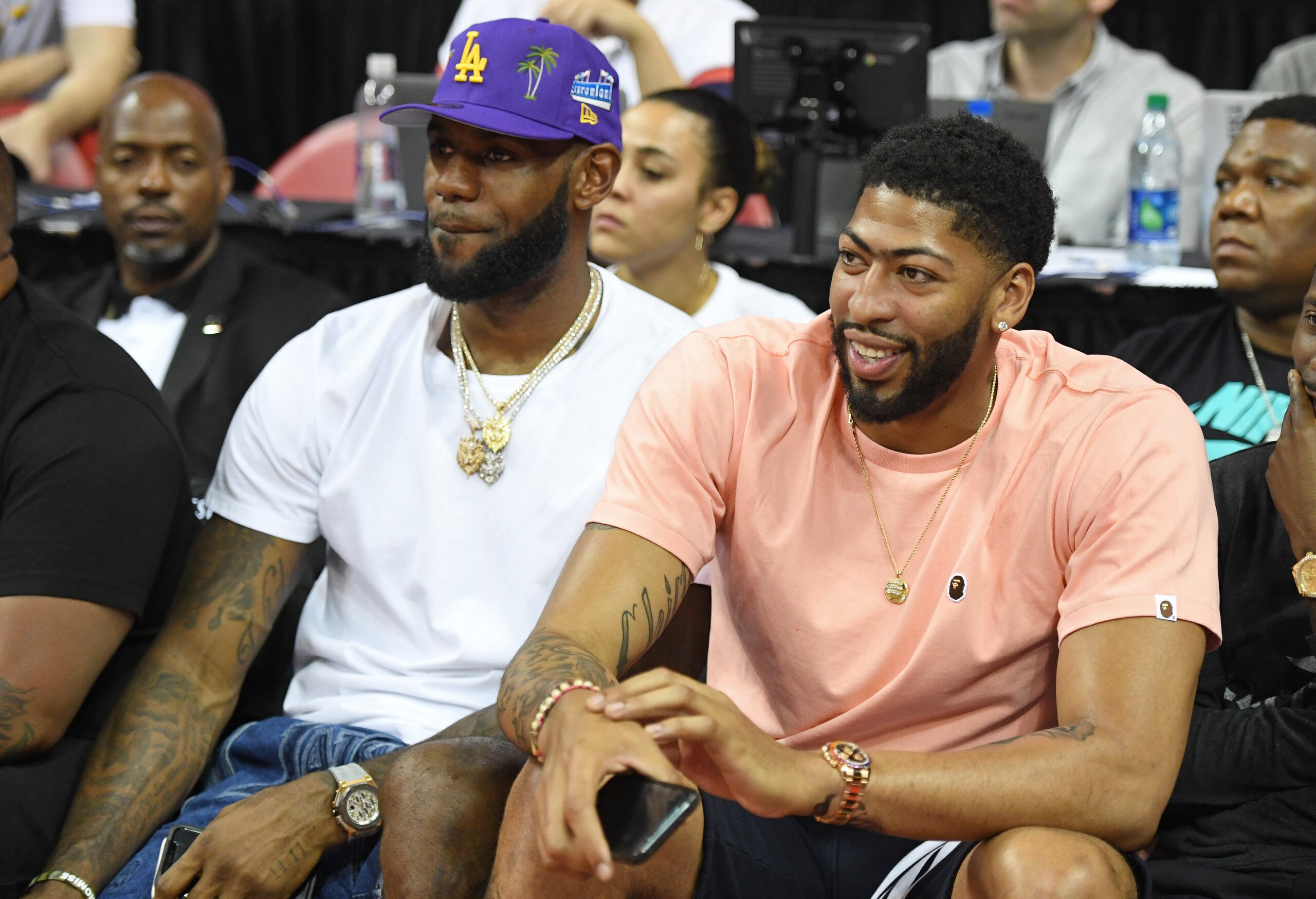
To get Anthony Davis, the Los Angeles Lakers sacrificed their future. That's how it looked, anyway, when they surrendered their best young players, three first-round picks and swap rights on a fourth to add the superstar big man.
Maybe we're looking at this the wrong way, though. Maybe, in a way that somewhat contradicts the logic we just applied to Oklahoma City, the Lakers actually traded for their future.
Given the sea changes we've observed this offseason, only a sucker would assume Davis will be in his current locale for another five years. These days, nobody seems to stay put that long. But suppose AD likes life in Los Angeles enough to re-up with the Lakers on a max deal in 2020 free agency. At that point, he'd probably be moving into an alpha role ahead of a declining LeBron James.
The Lakers would belong to Davis then, with James either accepting secondary status, retiring or moving on after his contract runs out in 2021 (or 2022 if he picks up his player option for the 2021-22 season).
During a press conference to introduce Davis to the media on July 13, Lakers GM Rob Pelinka hinted at that type of succession plan, via Bill Oram of The Athletic. "We feel very excited and very happy and pleased that we have a roster we feel like puts us in a position to win now and also keep our flexibility for the future as we look to building a team around Anthony Davis."
With limited resources to add max-level support around Davis until 2021, the Lakers could find it difficult to keep their future leader content. But if they play things right over the next handful of seasons, there's a possible five-year outlook in which the transition of power from James to Davis is relatively smooth, and AD continues the high-level winning we all expect to result from that pairing in the near term.
Mike Conley, Role Model
3 of 4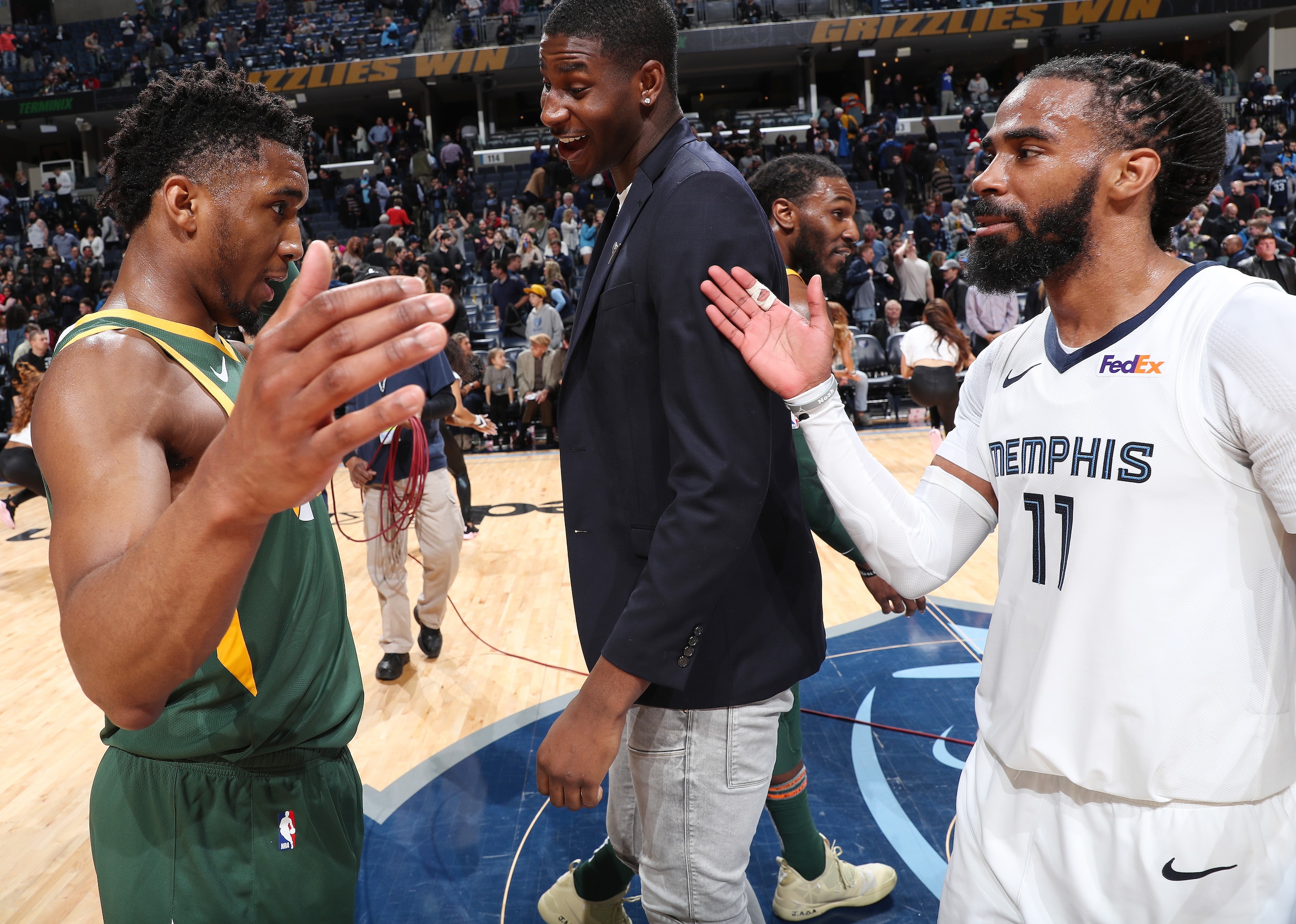
The on-court benefits of adding Mike Conley, perhaps the best player in league history to never make an All-Star Game, are obvious.
He can run the offense, defend capably, impart veteran savvy and give the Utah Jazz the type of pass-dribble-shoot triple threat it has lacked at the point since Deron Williams crankily occupied the position nearly a decade ago. More importantly, he might be the player best suited to groom young Utah star Donovan Mitchell.
Conley's tutelage will extend beyond how to subtly dupe a defender in the pick-and-roll, though he'll surely pass on several such practical tricks of the trade to Mitchell. The real benefit to his presence in Utah is his experience in Memphis. He's a walking symbol of small-market success, a no-nonsense leader who helped the Grizzlies establish an identity, preserve continuity and make seven straight trips to the playoffs, culminating in a conference finals berth in 2013.
Counting his rookie deal, Conley signed three different contracts to stay in Memphis. While others—on his team and around the league—sought greener pastures, he stayed put, willingly, in the Home of the Blues.
From Utah's perspective, who better to convince Mitchell that the door to success isn't necessarily the one marked "exit"? Who better to sell a young star on the virtues of small-market life than the guy who spent a dozen years enjoying them?
Obviously, the Jazz traded for Conley because they believe he'll make a difference for them this season. It's possible the veteran guard will be what puts a very good Utah team over the top.
But there's a long-game element in play here, too. If Conley's arrival prevents Mitchell's departure down the line, Utah's offseason trade will look even better with time.



Clippers Set Up to Win Now, Later
4 of 4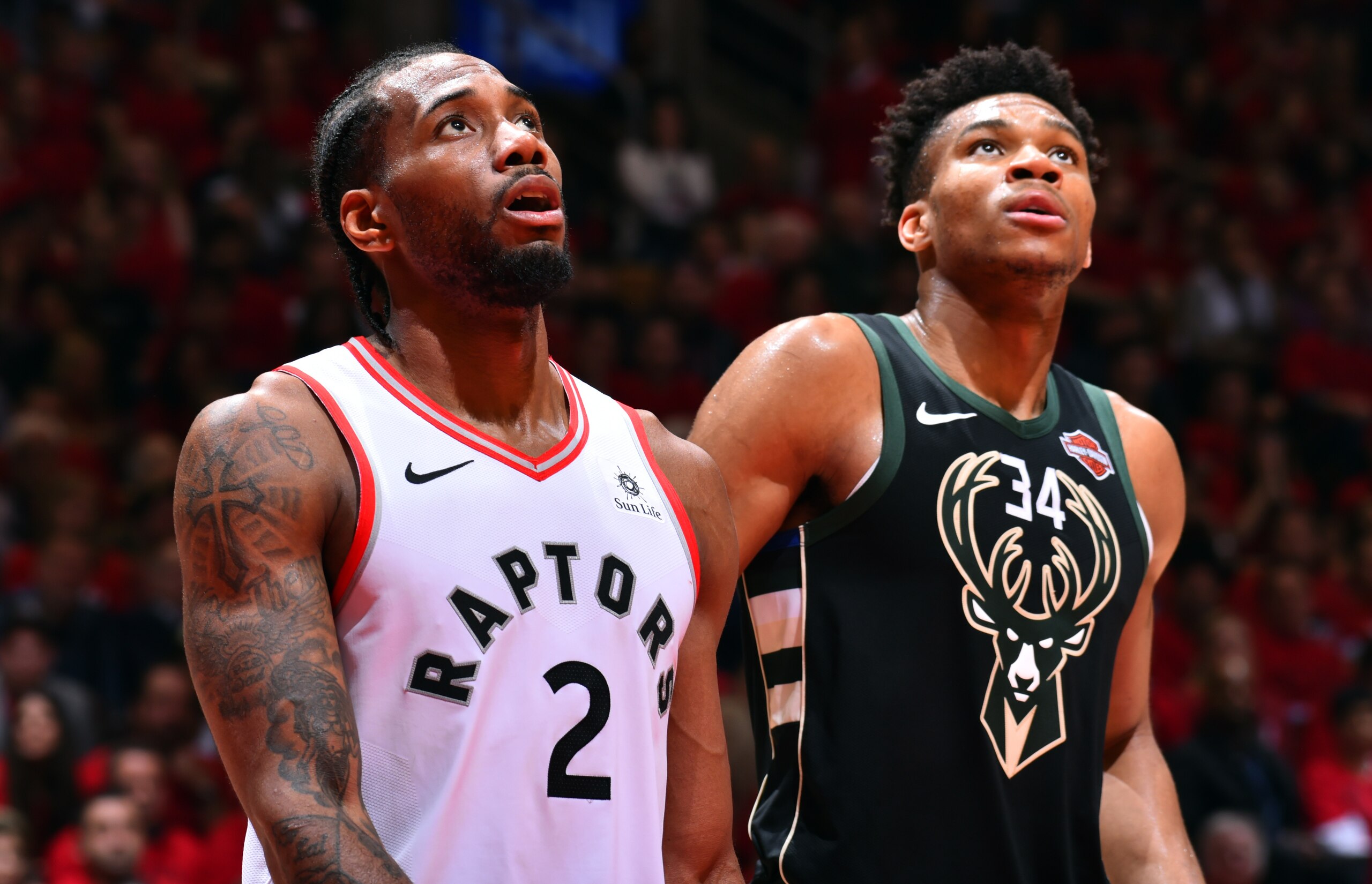
This is the era of extreme superstar agency, so even if he'd only been willing to sign a one-year deal with monthly player options, the Los Angeles Clippers would still have happily taken Kawhi Leonard.
Still, it felt like a minor blow to the Clippers' major offseason overhaul when The Athletic's Shams Charania reported Leonard had only signed a three-year agreement with a player option on that third season. The Clips sacrificed so much for just two assured years of Leonard.
The contract's relative brevity may have been a blessing in disguise—one that could usher in an even longer era of dominance for L.A.'s "other" team.
The 2020 crop of free agents fails to impress, but the 2021 class is something else entirely. Joining Leonard and teammate Paul George as potential free agents that year: LeBron James, Bradley Beal, CJ McCollum, Rudy Gobert, Victor Oladipo, Jrue Holiday and, most intriguingly, Giannis Antetokounmpo.
This means there's a scenario in which the Clippers hit the summer of 2021 with a chance to sign the 2018-19 MVP as either a replacement for Leonard or George, or, and this is where you'll want to sit down, an addition to that tandem. Don't start calculating cap holds or considering how the Clips would need to strip bare the rest of their roster to make that happen. Just understand that there's a scenario in which the Clippers a) look awfully good to Antetokounmpo and b) have a reasonably realistic shot of adding him.
That's 2021, of course, and we're supposed to be imagining which 2019 deals will look best in 2024. But I think we can agree that if this summer's additions in L.A. allow for Antetokounmpo to come aboard in two years, the Clippers' 2024 outlook gets a little rosier as well.
.jpg?w=2560 "NFL investigating 2 referees for separate viral exchanges")
.jpg?w=2560 "OBJ Calls Out Giants After Release")
.jpg?w=2560 "Tyreek makes another cryptic post amid Chiefs rumors")
.jpg?w=2560 "Report: Chiefs Contact Hill's Agent")