
Big-Time Contracts: How Professionals Milk Them For What They Are Worth
Major League Baseball (MLB) is notoriously-known for its players receiving huge contracts after proven success. The problem with most of these contracts is, that after they are signed, the players' performance seems to be directly correlated with poor results.
For instance, Mike Hampton, a mainstay in the Atlanta Braves and Colorado Rockies organizations, was given the 23rd-largest contract in the history of sports. He signed an 8-year, $121 million contract with the Rockies that saw him succumb to the Coors Field air. In just two years with the Rockies, Hampton had a combined record of 21-28, with an ERA at 5.84. Hampton had gone seven consecutive years with an ERA under 3.50.

Additionally, slugger Mo Vaughn signed an $80 million deal with the then-Anaheim Angels, and performed decently. However, when he was dealt to the New York Mets in 2001, Vaughn started to fully realize how much he liked donuts. Instead of eating apples, it appeared as though Vaughn had delved into the pastry department far too many times. He spent the entire 2001 season the bench, and then put up awful numbers in 2002 and 2003 before he left the big leagues.
These two contracts are just some of the many that the MLB has unfortunately seen been signed.
The most recent, however, was Barry Zito. Zito was an incredible pitcher for the Oakland Athletics who had arguably one of the best curveballs in baseball. The San Fransico Giants thought enough of Zito to throw him a seven-year, $126 million contract in 2007. Zito's career has since been in a tailspin since arriving in the Bay area. He went 11-13 last year, and has compiled a 1-9 record thus far in 2008.
It is too bad for some clubs, because when the deal was done, especially in Zito's case, it looked as though he would pan out to be a great player for a long time.
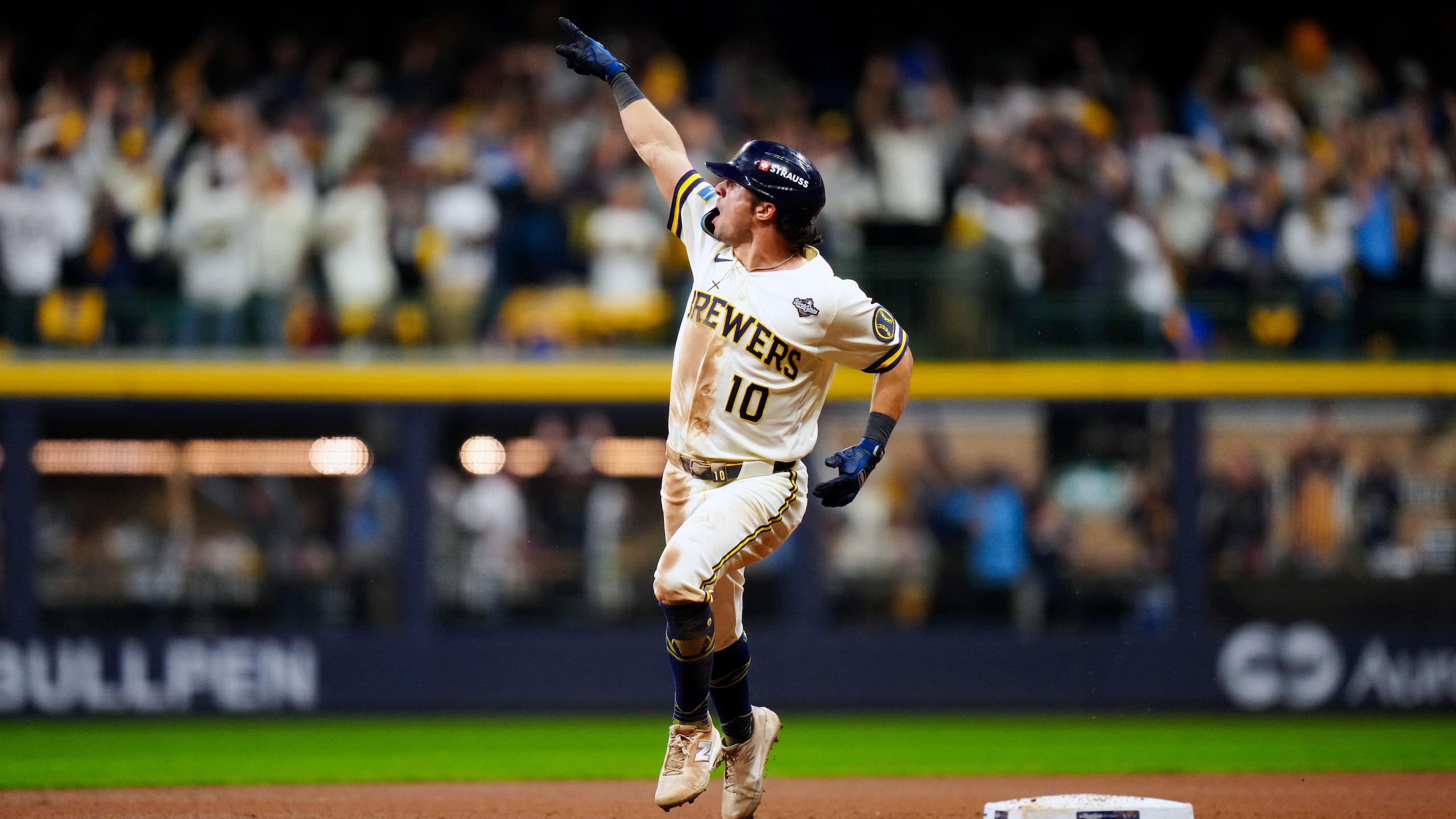
Many more deals involved smaller dollars, less zeros, but provide the same effect. For example, the relatively smaller contract that Bill Hall signed with the Milwaukee Brewers in 2007 for four years and $24 million, has proved fateful thus far. Hall is hitting .228, and has been covered on several fronts, including B/R.
Hall wants a trade, but with his recent slumping, it doesn't seem like any team will be willing to pay $6 million for a backup player.
The MLB, just like all other major sports, is money-driven, but when teams make poor signing such as these three spotlighted, it beckons the question; should teams be taking a closer look at what players potential might be?
Because every year it happens, a player has a breakout season, gets his paycheck, and then drops his work ethic down the toilet.

.jpg?w=2560 "Mahomes Told Teammate to Leave Meeting")
.jpg?w=2560 "🚨 Week 8 AP Top 25 Poll")

.jpg?w=2560 "Baker Gets Glove From Rays 🧤")

.jpg?w=2560 "NFL investigating Eagles")
.jpg?w=2560 "Steelers Roll Saints in Paris")
.jpg?w=2560 "Updates from EVERY NFL Game 🏈")
.jpg?w=2560 "5 Teams Eyeing Jonathan Taylor")