Nike's LeBron Line Finding Its Footing Again with Creativity and Collaboration
In his 15 NBA seasons, there is little LeBron James hasn't accomplished. Trophies. Rings. Respect. He's captured them all. But there is one area in which James has fumbled in recent years: the shoes.
Long Nike's most successful signature line, the LeBrons lost their way, and the public's favor, for a number of years. Four consecutive models released between 2013 and 2016 were ranked among the worst in the LeBron signature line by ESPN.com's Nick DePaula. Though James was king of the court, his shoes were not. But over the past few seasons, the line has enjoyed a renaissance that shows no signs of decline.

That the LeBron line would be in need of resuscitation would have been surprising even a few years ago.
Even when James was at his most hated—when he announced he was leaving the Cleveland Cavaliers to join fellow All-Stars Dwyane Wade and Chris Bosh on what was unflatteringly dubbed a "super-team" in Miami—his sneakers sold well. In fact, Nike followed The Decision with a quintessential Miami colorway for the LeBron 8, a Miami Vice-esque teal-and-pink combination dubbed the "South Beach." It went on to become one of the most valuable LeBrons of all time, with pairs still listed on aftermarket sites such as Grailed and StockX for more than $1,000.
The LeBron 9 and 10 were smash hits as well, and James' back-to-back NBA titles while wearing the shoes didn't hurt. James' dominance on the court and in the stores led Nike to attempt to evolve the line, only this time the results fell below the Swoosh's standard.
The LeBron 11 was the start of a new chapter for Nike's most successful signature sneaker line. While many were satisfied with the fit of the LeBron 10's Hyperfuse upper, the LeBron 11 altered the formula, combining the material with Foamposite to create Hyperposite. This hard material, along with a narrow build and a look some observers described as straight out of the Transformers style guide left many fans disappointed with the shoe, including its namesake.
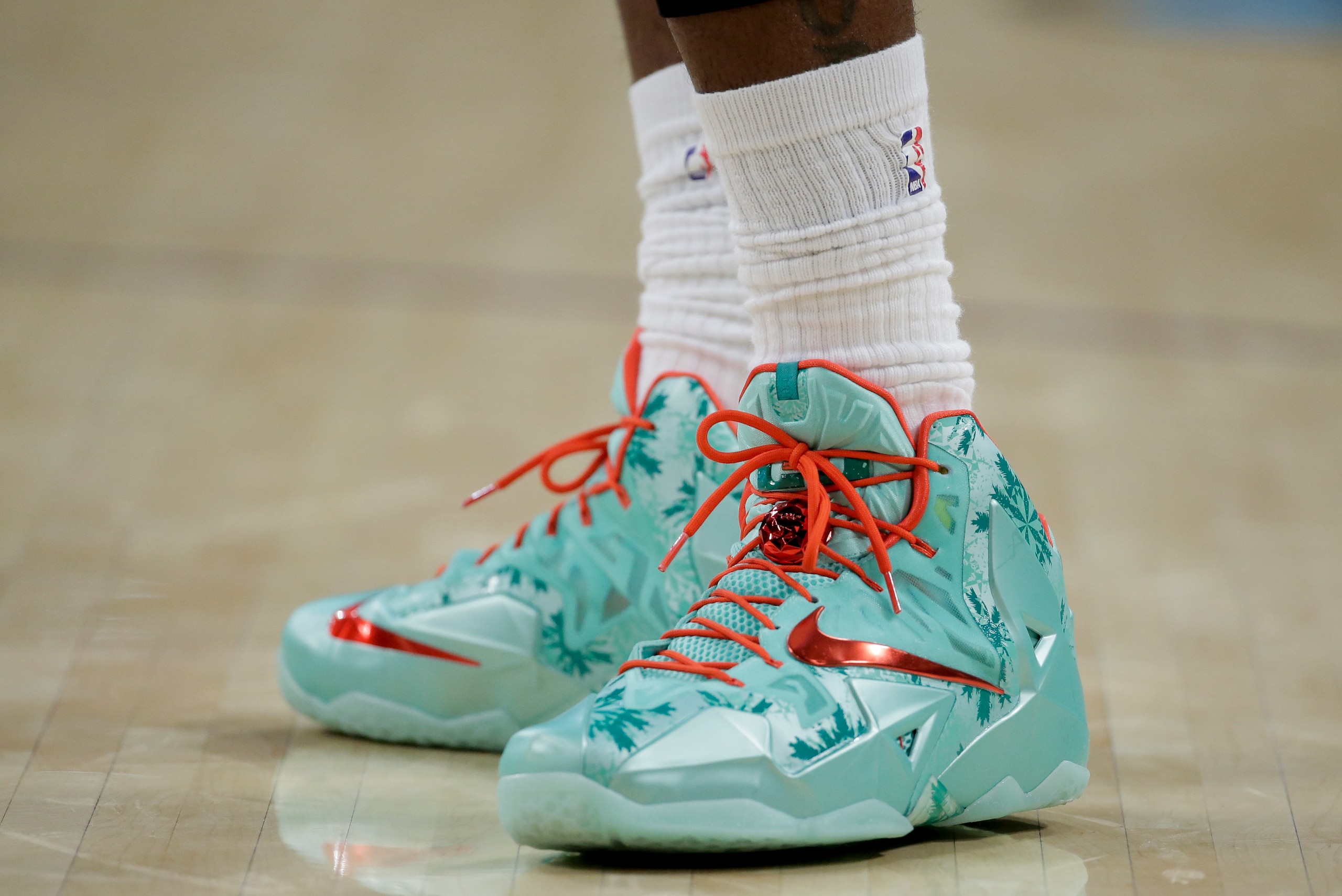
James abandoned the 11 shortly after the 2013-14 NBA regular season began due to problems with its fit, opting to play in the Nike Zoom Soldier 7 for the bulk of the regular season. By season's end, LeBron spent more time in sneakers from his more affordable secondary line than the signature model Nike was trying to push for $200.
The LeBron 12 and 13 were better in that they actually fit James' feet, but they were also met with lackluster responses from fans. The 12 was bulky, and the 13 veered back into Transformers territory with its shiny Hyperposite accents. While the 14 ditched the Hyperposite and presented a significantly slimmer upper, the shoe failed to generate interest all the same.
For a little more than three years, (starting in late 2013 until early 2017) LeBron's sneakers fizzled with each new release. At the same time, his rivals and fellow Nike athletes were seeing just the opposite results. Kevin Durant, Kyrie Irving and even Kobe Bryant, who retired in 2016, all received enthusiastic responses to their signature models.

The consistent theme among the three of them? Their shoes transitioned off the court. Look at any Kyrie, Kobe or KD from that period, and it's easy to see how the lightweight, slim sneakers would work with the equally slim denim, sweatpants and chinos popular at the time, whereas the bulkier LeBrons looked at home only on the hardwood. Pairing your Kyrie 1s with Nike Tech fleece sweatpants? No problem. Trying to go out for a night on the town in your LeBron 11s, however, might get you turned away at the door.
It was important that Nike stuck the landing with the LeBron 15. While a failure wouldn't have spelled the demise of the sportswear giant, saddling the face of your basketball division with yet another unpopular shoe is far from a good look. It needed something James would love to wear on the court that the rest of us would love to wear off it. But how could Nike construct a shoe in which the 250-pound forward would feel at home while also allowing his fans to feel as if they were him?
The answer: BattleKnit.
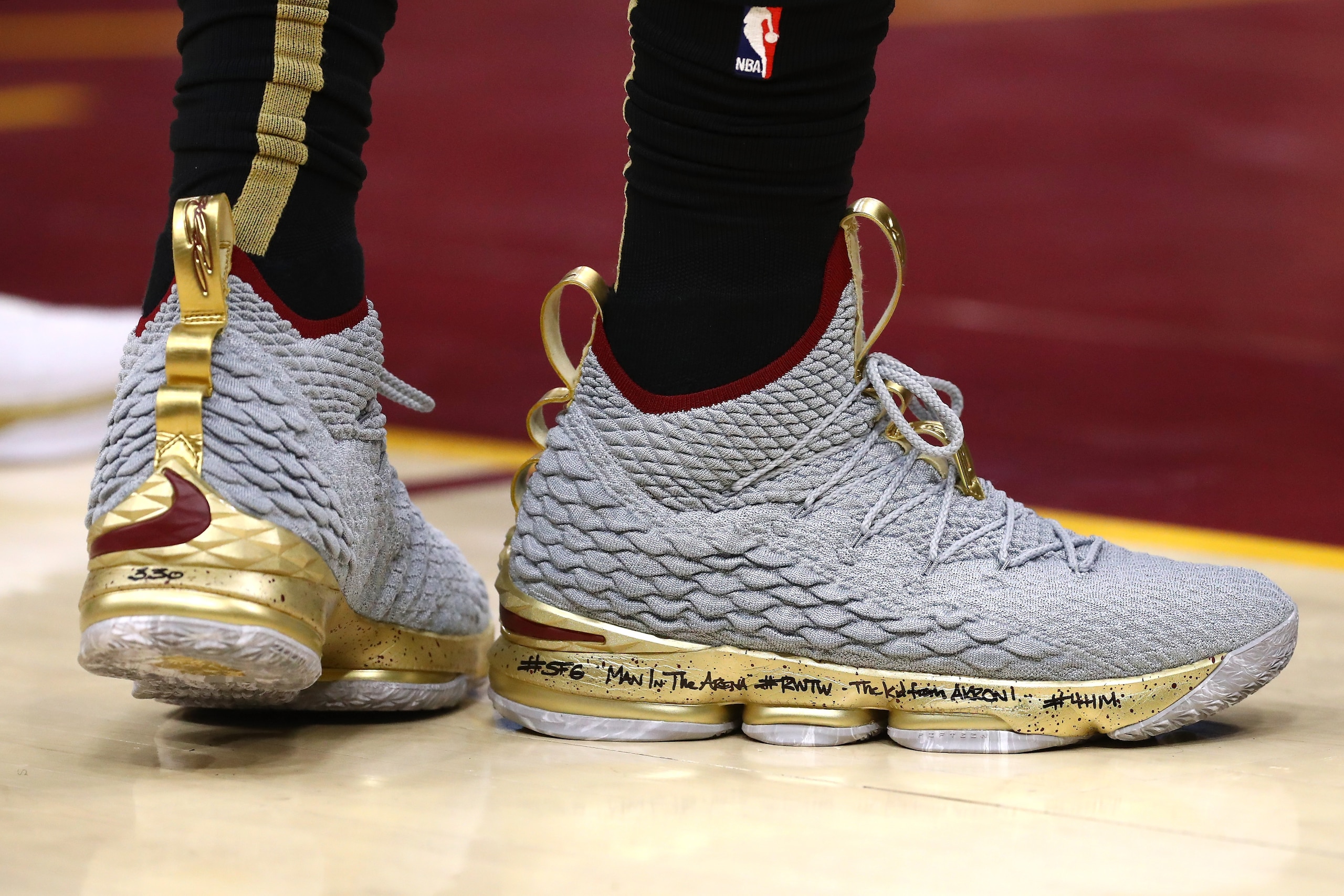
While Nike-heads are familiar with the woven technical material that has comprised the uppers of many popular sneakers—known as Flyknit—BattleKnit is a little different. "This new iteration of Flyknit ... is built specifically for LeBron," LeBron 15 designer Jason Petrie said in an interview with the brand's website. "He needed something more than what knit uppers, to date, could provide for him structurally." The 15 upper, along with a cushioning system that combines Air Max and Zoom Air units and a modern full-bootie construction, make up what James calls his "favorite shoe to date."
As any sneakerhead will tell you, your shoe is only as good as its colorways. The 15 launched in an "Ashes" design, made up of a black-and-gray upper with a white midsole and black speckles, and received a lukewarm response. Other colorways followed, some garnering slightly positive feedback, but none receiving the fire emojis and "must cop" comments every brand wants when a new colorway is released. They had the right shoe, but Nike needed a flattering, catchy look to really sell it. These days, there are two shortcuts to that end: designer collaborations and nostalgia. Nike decided to use both.
As GQ recently reported, collaborations with fashion designers are a big part of why Nike has become as cool as a sportswear brand can be in 2018, and when a brand wants to partner with a designer for a special colorway, there are few more deserving of the call than Ronnie Fieg, designer/founder of popular streetwear brand/retailer Kith.
Known for updating silhouettes new and old with special features and high-quality materials, Fieg brought the hypebeast equivalent of the Midas touch to the LeBron 15 in the form of two "Long Live the King" collections. In addition to updating the performance 15 with floral patterns woven into the BattleKnit and zippers underneath the laces for easy access, Fieg created a lifestyle version of the sneaker featuring branded straps as opposed to laces, Flyknit instead of BattleKnit and a higher collar. Every pair from the collaboration currently goes for well over retail on aftermarket sites, with some selling for more than $1,000.
Nike also employed a design strategy for the 15 it has used for years: putting colorways made popular on one shoe on a different silhouette. Be it using the classic black-and-red motif from the Air Jordan 1 on the Air Force 1 or offering every Nike model imaginable in all red following the "Red October" Air Yeezy 2s. While the effort can seem forced at times, when proper context and reason is present, the result can be the perfect mashup of nostalgia and modernity.
That was the goal of LeBron Watch, a series of LeBron 15s inspired by James' favorite Nikes. The program started with a pair of player exclusives: a blue-and-yellow 15 with a Swoosh inspired by the Waffle Trainer—one of the earliest Nike styles—and a 15 South Beach inspired by the aforementioned LeBron 8. Fans were able to purchase 15s inspired by the Diamond Turf, ACG Mowabb, Air Max 95 and more via Nike's SNKRS app. The limited-edition pairs all sold out in minutes and (as one would suspect) now go for a substantial sum on the aftermarket.
While the revised design concepts were instrumental in the 15's success, so too was the enthusiasm James himself has for the sneaker. Not only did he wear the shoe for almost every game of the 2017-18 regular season, he wore it throughout the 2018 playoffs and The Finals. That was a lot different than the previous season, when he switched to the Soldier for five playoff games, including the last four games of the Finals. After years of missteps and outdated tech besmirching the name of his signature line, James finally found a shoe fit for a king. The only question is: Where does it go from here?
When Nike sees something work, it usually sticks with it for a couple of years, if not longer. One could look at the similarities between the LeBron 7 through 10, the Kyrie 1 through 5 and, perhaps most notably, every Kobe since the Kobe 6 and see that Nike knows when it has struck gold. Though it got more people wearing LeBrons on and off court and tapped into markets James' bulky models were previously barred from, the biggest proof that the LeBron 15 was a smash hit is its successor: the LeBron 16.
Though not a carbon copy of the 15, the 16 takes the best parts of its predecessor and makes it even better, especially for those looking for something a little more sleek.
"The first thing we wanted to do was get a little lower in the cut of the shoe," James told Nike. "I wanted to get a little faster, ride a little bit closer to the court and be a little bit more dynamic."
Nike has tried to work off last year's groundbreaking upper by introducing BattleKnit 2.0, which adds another layer of yarn to increase lateral support. Taking note of its previous mistakes, Nike made sure to prioritize form and function again in the 16, teaming up with Harlem Fashion Row—a social company that provides a voice for multicultural designers—to create a lifestyle version of the shoe.
"I remember being in a room with LeBron and Mel (Melanie Auguste, global brand director of Nike Basketball), when [LeBron] said the quote about black women being the strongest people and looking at her like, 'Holy cow, he just dropped an amazing gem,'" Petrie told B/R Kicks. "And we were already working with this theme of 'the strongest' and how we could work with a team of what LeBron called the strongest people, and Mel came back with [HFR x LeBron 16]."
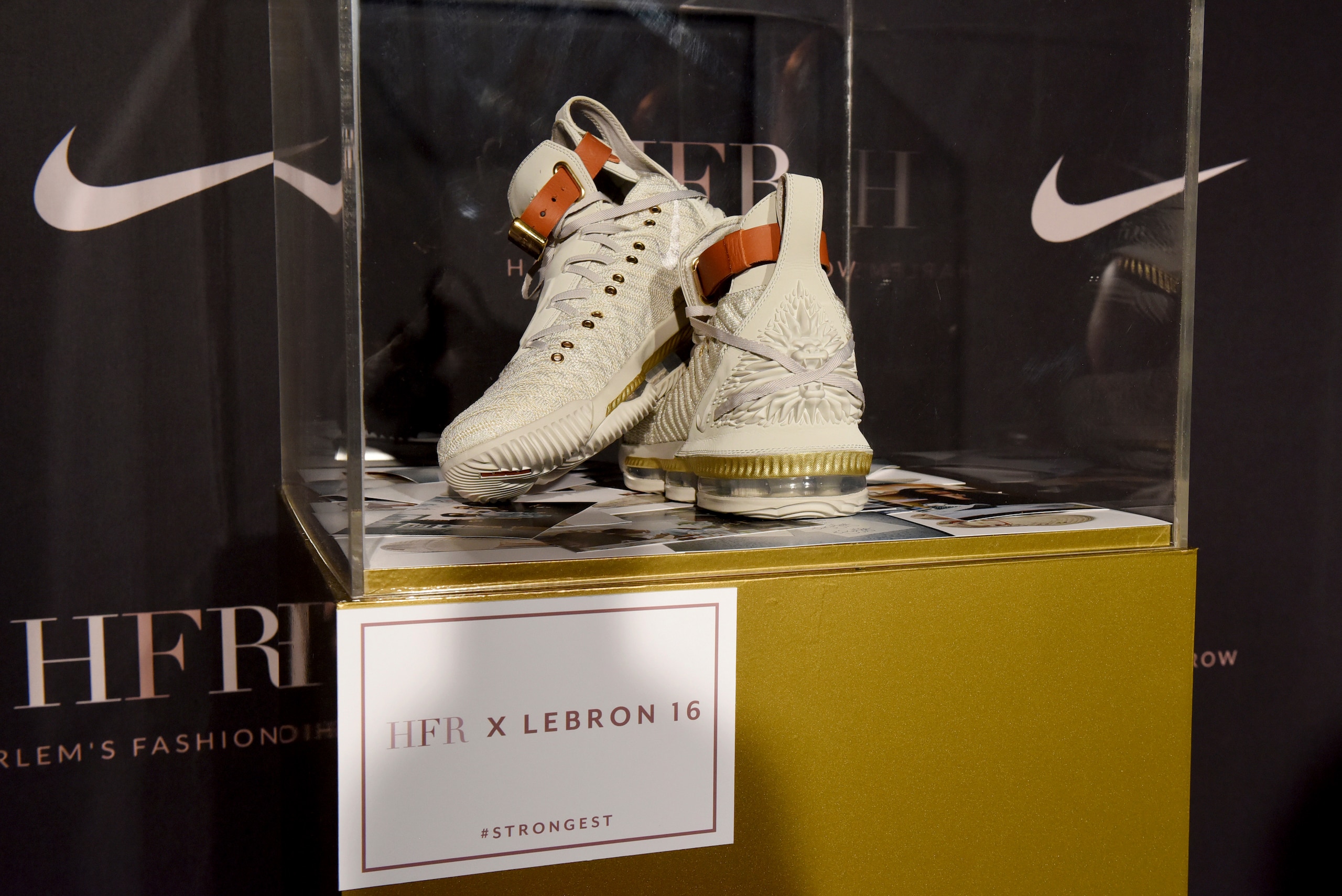
The shoes released only in women's sizes on September 7 during New York Fashion Week and were a hit, selling out instantly. Once again, in the theme of sticking with what works, Petrie confirmed that LeBron Watch would continue this season, and while he didn't confirm exactly what form it would take, he inferred that it was no longer restricted to putting retro colorways on new LeBrons.
Petrie knew he had a difficult task when James asked him to top the LeBron 15. The early returns are promising. According to Petrie, the first thing James said when he saw his newest sneaker was "That's a bad motherf--ker right there." I think he got the job done.
Anteneh Gebre is a freelance writer covering fashion and sneakers. His work can be seen at Grailed.com.

.jpg?w=2560 "NBA Gambling Charges")

.jpg?w=2560 "Jonathan Taylor Landing Spots")
.jpg?w=2560 "NFL House in Paris Closes for Protests (AP)")

.jpg?w=2560 "Trevon Diggs Cut by Seahawks")