The 2018 MLB playoffs are down to the semifinalists.
In the American League, it's the 108-win Boston Red Sox against the 103-win Houston Astros. Meanwhile, the 96-win Milwaukee Brewers and 92-win Los Angeles Dodgers are fighting for the National League crown.
The four clubs carried a collective 12-2 record through the Division Series. It's fair to expect a tad more drama in this round, which gets underway this weekend.
TOP NEWS

MLB Commissioner Defends Salary Cap

Miz Sets WS Record Already ⛽
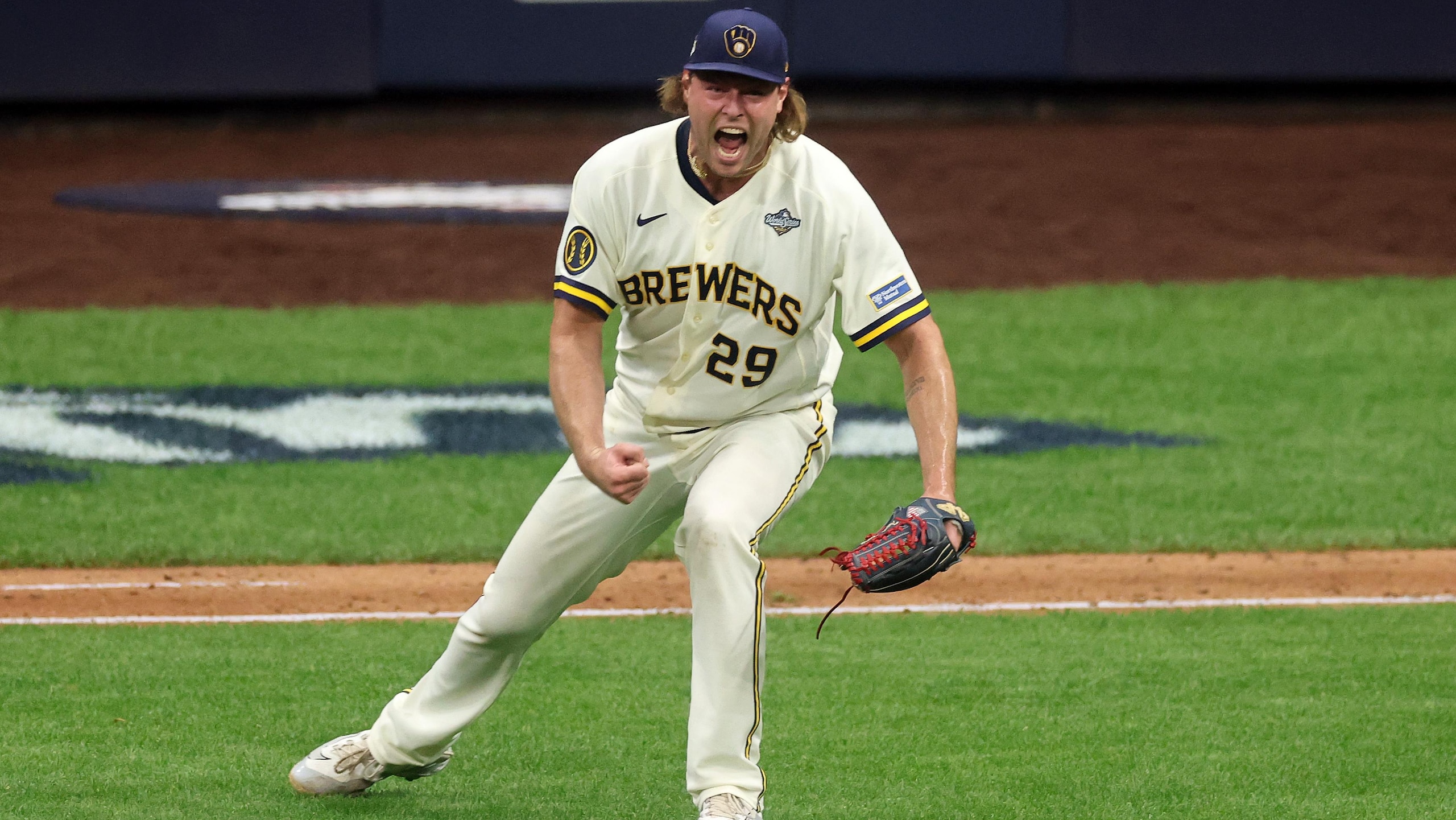
Brewers Get 1st WS Win Since 1982 💪
The odds, schedule and a prediction for each series is below.
American League Championship Series
Odds to Win World Series (per OddsShark)
Astros 91-50
Red Sox 43-20
TV Schedule
Game 1: Astros at Red Sox; Saturday Oct. 13 at 8:09 p.m. ET on TBS
Game 2: Astros at Red Sox; Sunday Oct. 14 at 7:09 p.m. ET on TBS
Game 3: Red Sox at Astros; Tuesday Oct. 16 at 5:09 p.m. ET on TBS
Game 4: Red Sox at Astros; Wednesday Oct. 17 at 8:39 p.m. ET on TBS
*Game 5: Red Sox at Astros; Thursday Oct. 18 at 8:09 p.m. ET on TBS
*Game 6: Astros at Red Sox; Saturday Oct. 20 at 5:09 p.m. ET on TBS
*Game 7: Astros at Red Sox; Sunday Oct. 21 at 7:39 p.m. ET on TBS
*If necessary
Prediction
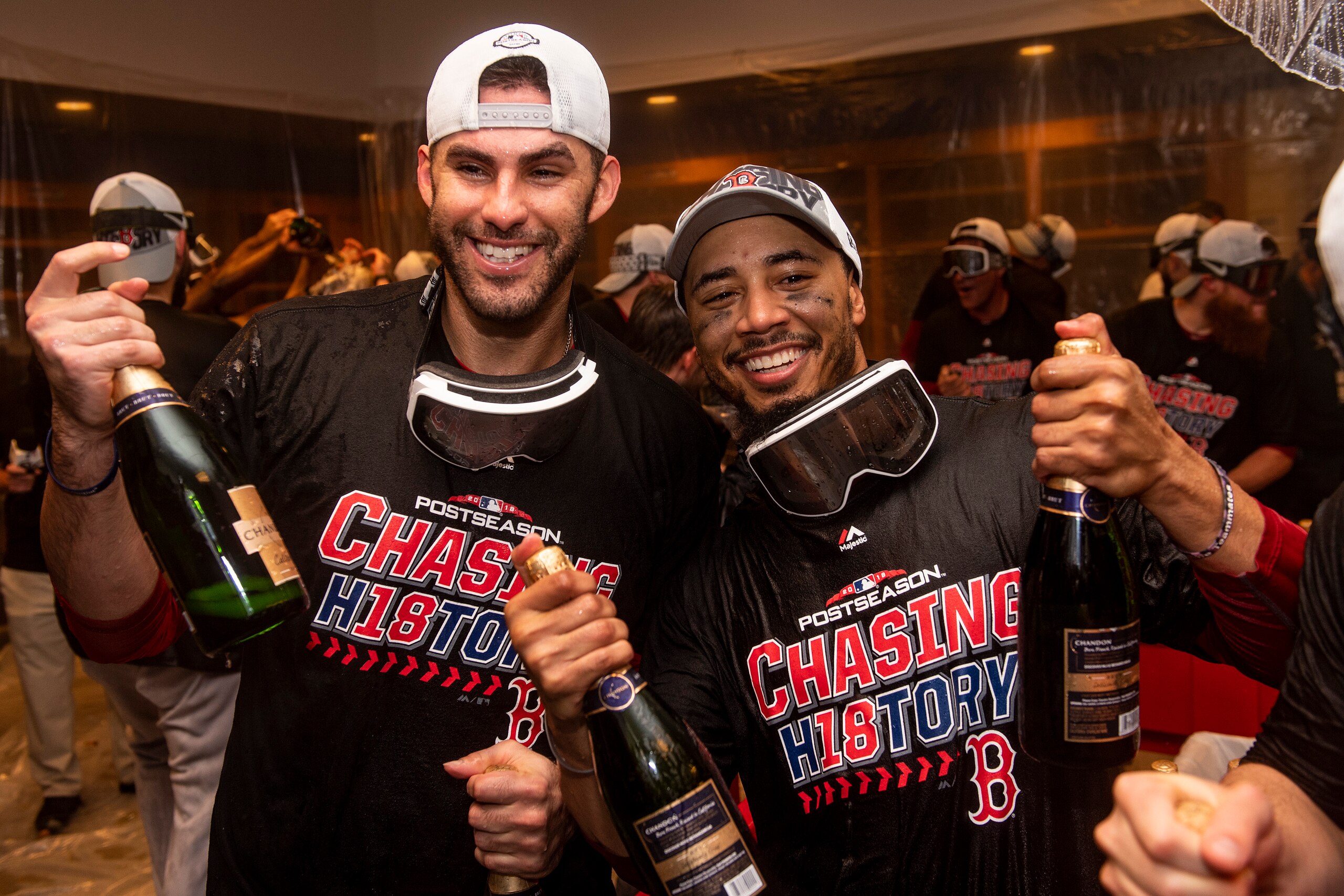
Whether you're a fan of advanced statistics or their more traditional ancestors, you still likely have these clubs pegged as the best two teams in baseball. The Sox and Astros finished first and second, respectively, in wins. They held the same spots in run differential, only the order was reversed.
Collectively, they are powerhouses. Individually, the rosters are comprised of one star after another.
"This series is largely about the players," Astros manager AJ Hinch said. "Both teams have really incredible players. You can name two managers, and you can name a couple of coaches, but you can rattle off 15 or 20 household names in this series that baseball should be proud of."
Both starting rotations are stacked and feature multiple Cy Young winners (David Price and Rick Porcello for Boston, Justin Verlander and Dallas Keuchel for Houston). While the Red Sox have the AL MVP favorite in Mookie Betts, the Astros should have a top-five finisher in Alex Bregman.
When it's this close to call on paper, you must identify the little things that could shift the balance of power in this series.
The Sox scored more runs (876-797) in part because they stole more bases (125-71). The Astros allowed fewer runs (534-647), because they paced everyone in ERA (3.11-3.75), strikeouts (1,687-1,558) and fielding percentage (.989-.986).
You could make a spirited, compelling argument for either club to come out on top. But if this plays out as close as the stats say it should, we'll side with the club that has home-field advantage, the top one-two punch (Betts-J.D. Martinez might be the league's best tandem) and a sturdier situation at closer (Craig Kimbrel saved 42 games, Houston's high man was Hector Rondon with 15).
Predicted winner: Boston Red Sox
National League Championship Series
Odds to Win World Series (per OddsShark)
Dodgers 59-20
Brewers 4-1
TV Schedule
Game 1: Dodgers at Brewers; Friday Oct. 12 at 8:09 p.m. ET on FS1
Game 2: Dodgers at Brewers; Saturday Oct. 13 at 4:09 p.m. ET on FOX
Game 3: Brewers at Dodgers; Monday Oct. 15 at 7:39 p.m. ET on FS1
Game 4: Brewers at Dodgers; Tuesday Oct. 16 at 9:09 p.m. ET on FS1
*Game 5: Brewers at Dodgers; Wednesday Oct. 17 at 5:05 p.m. ET on FS1
*Game 6: Dodgers at Brewers; Friday Oct. 19 at 8:39 p.m. ET on FS1
*Game 7: Dodgers at Brewers; Saturday Oct. 20 at 9:09 p.m. ET on FS1
*If necessary
Prediction
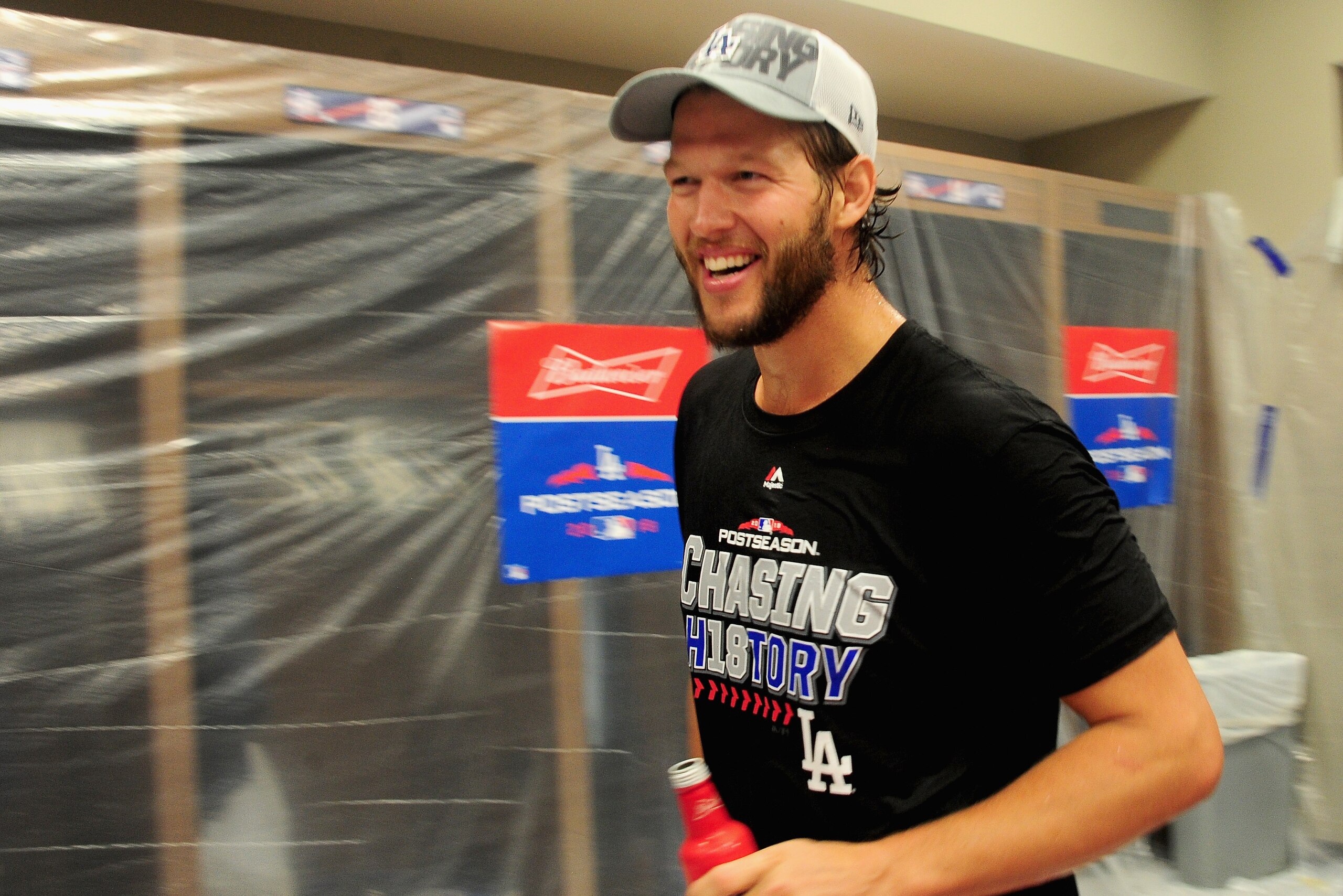
The Brewers lineup is deep and potent. Four different players clubbed at least 20 home runs—not counting midseason acquisition Mike Moustakas, who launched 28 on the year—including NL MVP favorite Christian Yelich, who slugged 36 homers, batted .326, stole 22 bases, scored 118 runs and drove in 110.
Their bullpen is electric. Milwaukee relievers ranked fifth overall (and second in the NL) with a 3.47 ERA. Three different relievers tallied double-digit saves, including standout sophomore Josh Hader, who had an absurd 15.8 strikeouts per nine innings.
However, their starting rotation is...underwhelming, to put it kindly. Their wins, ERA and strikeouts leader was Jhoulys Chacin, a 30-year-old journeyman who struck out just 156 batters in 192.2 innings. Their Game 1 starter, Gio Gonzalez, arrived in an August trade with a 4.57 ERA. Their starter for Game 2, Wade Miley, pitched to a 5.61 ERA just last season.
This is Milwaukee's potentially problematic area, and it's exacerbated by the quality of the Dodgers' starting staff. Clayton Kershaw is the best pitcher of his generation. Rookie Walker Buehler paired a 2.62 ERA with more strikeouts (151) than innings pitched (137.1). Hyun-Jin Ryu posted an almost unfathomable 1.97 ERA. Rich Hill has a sub-3.00 ERA since the start of 2015.
"[Starting pitching] is the clearest advantage in the series," ESPN.com's Tim Kurkjian wrote. "... When Rich Hill doesn't have to start until the fourth game of a series, that is a deep rotation."
Probably too deep a rotation for the Brewers to overcome.
As good as Milwaukee's lineup is, L.A.'s is better. The Dodgers scored more runs (804-754), hit more homers (235-218), had a higher OPS (.774-.747), drew more walks (647-537) and struck out less (1,436-1,458).
Milwaukee maintains an advantage in the bullpen, but it's slight (L.A. had a 3.72 ERA) and irrelevant if the Dodgers take control of these contests early. Given their edges in starters and hitters, that's exactly what they're built to do.
Predicted winner: Los Angeles Dodgers
Unless otherwise noted, statistics used courtesy of ESPN.com and Baseball-Reference.com.




.jpg?w=2560 "Jonathan Taylor Landing Spots")
.jpg?w=2560 "NFL House in Paris Closes for Protests (AP)")
.jpg?w=2560 "Trevon Diggs Cut by Seahawks")