
It doesn't take long for preseason predictions to go horribly awry in college football, and there is already a long list of major disappointments after just four weeks.
In late August, Bryce Love was the favorite for the Heisman, Tee Higgins was going to be the biggest breakout sensation in the country, USC was a fringe College Football Playoff contender and Nebraska was at least going to win a few games.
In late September, it's now time to laugh about those faulty forecasts and try to make sense of where it all went wrong.
The following 10 players, teams or units haven't come close to living up to the hype. Whether that hype was "should be the best in the country" or "figures to be adequate," they have fallen well short of that mark.
That doesn't mean they can't improve from here, but the first third of the season certainly didn't go according to plan.
Bryce Love, Stanford RB
1 of 10
It's hard to believe No. 7 Stanford has been this good while getting next to nothing out of its preseason Heisman candidate.
Not only is Bryce Love not leading the nation in rushing yards, but 15 teams have two players who are currently ahead of Love's mark of 254 yards. For the most part, we aren't talking about elite situations, either.
Sure, Ohio State's running back tandem of J.K. Dobbins and Mike Weber is on that list, as is Mississippi State's dynamic duo of quarterback Nick Fitzgerald and running back Kylin Hill. But so are Coastal Carolina, Connecticut, Virginia, Illinois and UTEP. Those last three teams each ranked in the bottom eight nationally in rushing yards per game last season.
Love finished last year with 24 carries of at least 30 yards. Through his three games this season, he has only one such rush. As a result, his incredible 8.1 yards per carry mark from last year has plunged to 4.3.
Love has at least shown up for the games that mattered. He was totally shut down in the opener against San Diego State (18 carries for 29 yards) and sat out the game against UC Davis, but he had a combined total of 225 rushing yards against USC and Oregon. (All other Cardinal players combined for six yards on 11 carries in those marquee contests.)
Even when Love shows up, he's nowhere near what he used to be. In three games against USC and Oregon last year, he averaged 144.0 yards per game and 7.7 yards per carry, compared to 112.5 and 5.5 this year.
Until he starts breaking off those huge gains again, he'll be an afterthought on his own roster behind JJ Arcega-Whiteside.
USC Trojans
2 of 10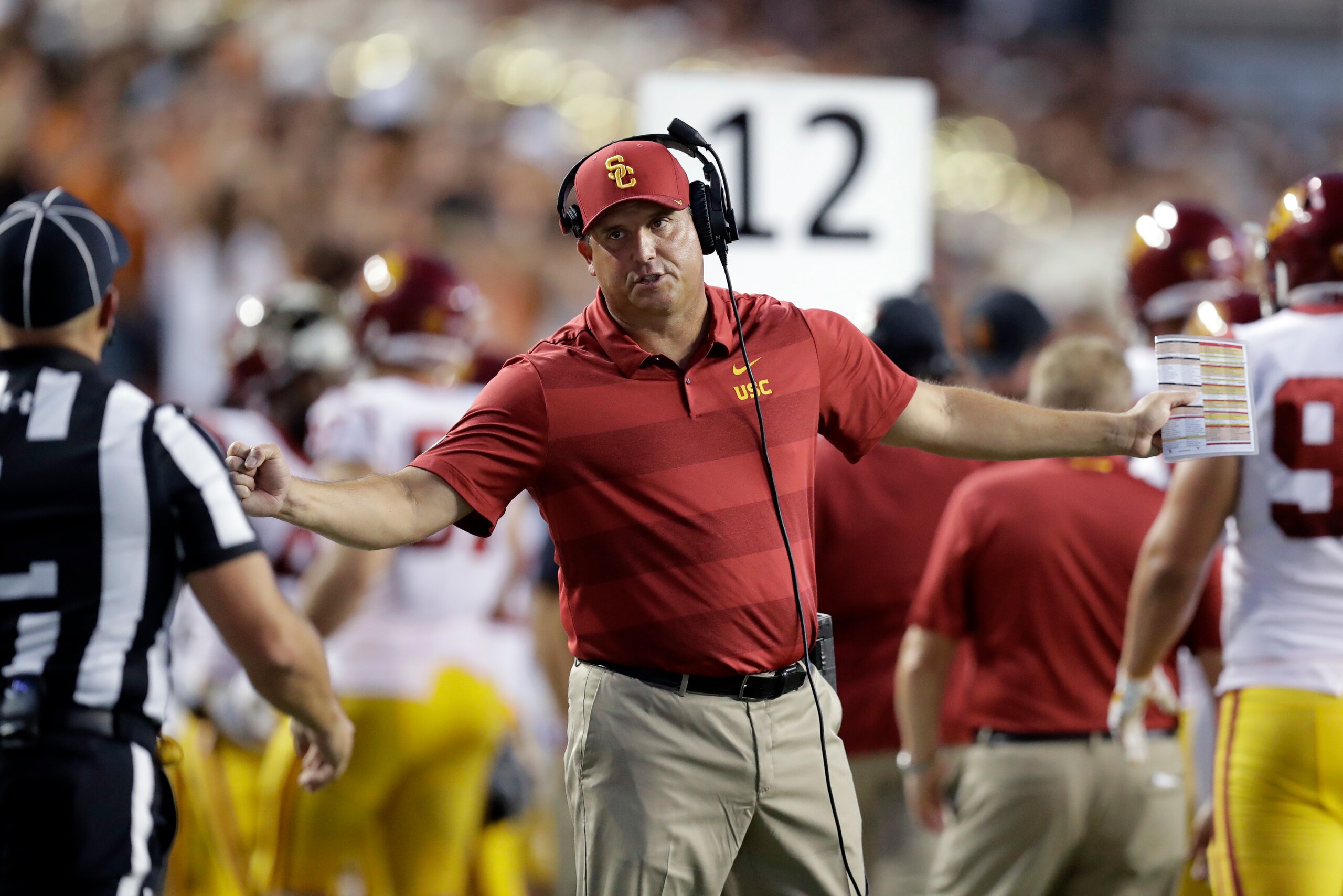
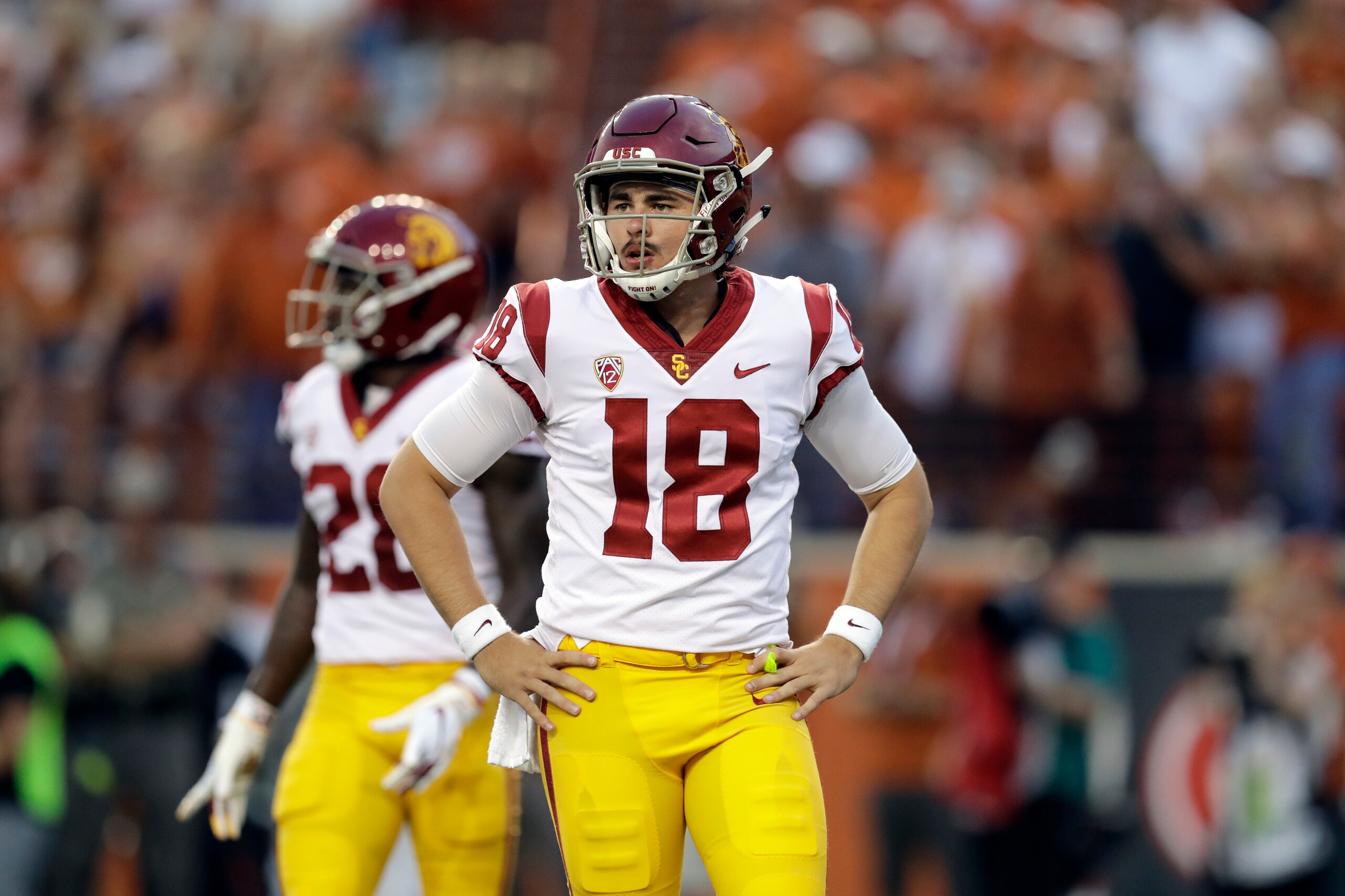
USC was drastically overrated in the preseason.
The Trojans lost their starting QB, top running back and top wide receiver as early entrants to the NFL draft. Though they replaced each of those guys with 5-star talent, they were left with little to no college experience in those spots.
Starting running back Stephen Carr got a lot of action as a true freshman last September, but he had only 25 touches in USC's final 10 games. At least he has some experience, though. Top wide receiver Amon-Ra St. Brown is a true freshman. And starting QB JT Daniels is a true freshman who would be a senior in high school right now if he hadn't graduated early and reclassified this past December.
That kind of approach might work for Duke and Kentucky in basketball, but USC's offense on the gridiron is struggling to jell.
After averaging at least 430 yards per game in seven of the last eight seasons, the Trojans are sitting at 376.0 through four games. And their best game of the season was back in Week 1 against UNLV. Over the last three games against legitimate opponents, they're at only 334.3 yards of total offense.
Perhaps the comeback win over Washington State was a sign that the tide is turning, but USC needs to win just about every remaining game to live up to its preseason ranking (No. 15). Good luck getting production that consistent from such a young team.
Trace McSorley, Penn State QB
3 of 10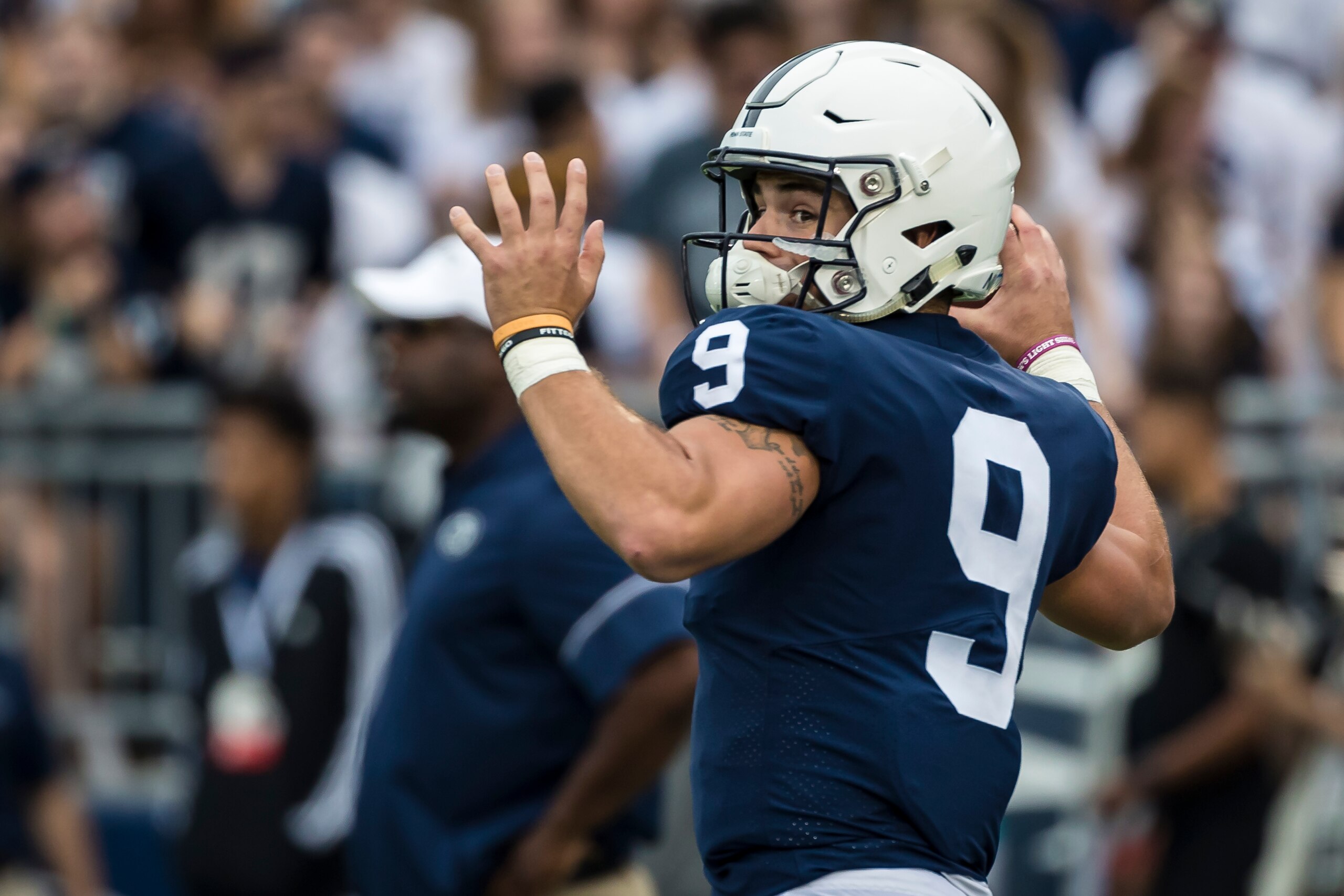
Most of the quarterbacks among the preseason Heisman favorites had major question marks attached to their names. Such as:
- Will Tua Tagovailoa even start for Alabama?
- How much of an impact will Justin Fields have on Jake Fromm's numbers?
- Did teams start to figure out Khalil Tate late in the 2017 season?
- How long will it take Shea Patterson to figure out his new offense at Michigan?
- Will Kyler Murray play baseball instead?
Trace McSorley, though? No one seemed too concerned about the Nittany Lion who had a combined 75 passing and rushing touchdowns over the previous two seasons. Even if you didn't consider him one of the favorites to win the Heisman, you at least expected him to stay in the conversation for as long as Penn State remained nationally relevant.
But perhaps losing running back Saquon Barkley, wide receiver DaeSean Hamilton, tight end Mike Gesicki and offensive coordinator Joe Moorhead was too much attrition to overcome, because McSorley's numbers have slipped considerably.
Penn State's QB averaged 266 passing yards per game over the previous two seasons, but that number is down to 191 through four games. He has yet to eclipse 230 yards in a game, even though the Nittany Lions have needed him out there much deeper into games than Alabama has with Tagovailoa or Ohio State has with Dwayne Haskins. And his completion percentage (54.2) is far worse than it was last year (66.5).
McSorley is rushing more effectively (58.8 yards per game, 5.7 yards per carry) than he did in previous years. However, that uptick in rushing yards doesn't come close to offsetting his cratering passing stats, and it still doesn't make him one of the top dual-threat quarterbacks. Oklahoma's Murray, Virginia's Bryce Perkins, Syracuse's Eric Dungey, Toledo's Mitchell Guadagni, Hawaii's Cole McDonald and Texas A&M's Kellen Mond have all put up more impressive passing and rushing numbers.
If he has a huge game against Ohio State this weekend, no one will remember his slow start to the season. But if he's just OK (or worse) against the Buckeyes, expect to see a lot of "What Has Happened to Trace McSorley?" articles next week.
.jpg?w=2560 "AP Poll Top Five Week 9")
Nebraska Cornhuskers
4 of 10
No one was realistically expecting Nebraska to contend for a Big Ten title in head coach Scott Frost's first season. Breaking in a freshman quarterback while trying to revamp a less-than-stellar run game and a downright terrible defense from a 4-8 team isn't a promising blend for an overnight transformation, particularly with so many other title contenders in the conference.
But goodness gracious, we at least thought the Cornhuskers would win a game.
Yes, a big part of the problem was Adrian Martinez suffering an injury late in the loss to Colorado and subsequently missing the game against Troy. And no one knew the would-be season opener against Akron would get cancelled due to weather. With less rain and no injury to the starting QB, perhaps Nebraska is sitting at 3-1 and well on its way to the 6-6 type of season most were anticipating.
That isn't how things played out, though. Instead, we're talking about an 0-3 team that looked nothing short of helpless in its most recent game against Michigan.
Not only is Nebraska winless, but it ranks 118th in scoring offense and 115th in scoring defense. It's hard to find anything that's going right here.
To make up for the rainout, the Huskers added a home game against Bethune-Cookman, which they should win easily. There's also a good chance they take care of business at home against Illinois. But there isn't another particularly likely W left on the schedule, which could mean a 2-10 record. Even if the Huskers find another win to get to 3-9, it would still be the program's worst winning percentage since going 1-9 more than six decades ago (1957).
Kansas State Wildcats
5 of 10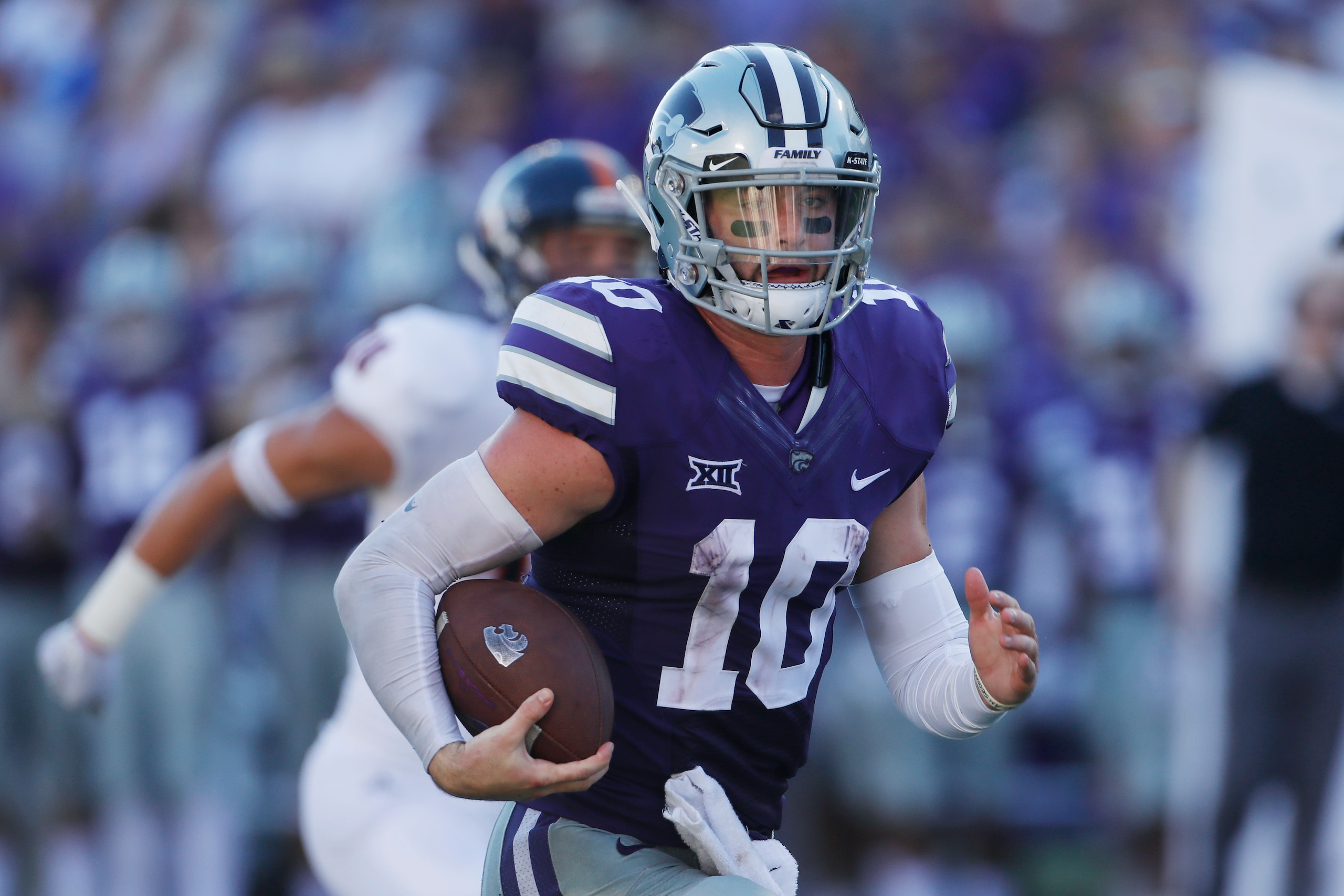
Similar to Nebraska, Kansas State went from its preseason state of "should finish within a game of .500" to its current state of "almost certainly one of the two worst teams in its conference" in a hurry.
In fact, the latest S&P+ rankings at Football Outsiders have the Wildcats ranked 89th nationally, one spot behind Kansas for dead last in the Big 12. It's a similar story in ESPN's FPI rankings, where Kansas State is five spots ahead of Kansas but 21 spots behind the next-closest Big 12 team (Baylor).
If anything, those rankings are too generous based on early returns.
The Wildcats needed 15 fourth-quarter points to avoid losing their season opener against FCS school South Dakota. Were it South Dakota State or North Dakota State, that wouldn't be a big deal. Those teams are always a threat. However, the Coyotes are nowhere near the annual contender that the other Dakota schools are. This was an alarming close call, to say the least.
Kansas State hasn't looked any better since then, practically no-showing the blowout losses to Mississippi State and West Virginia. Nick Fitzgerald and Kylin Hill combined for 370 rushing yards as the Bulldogs more than doubled the Wildcats in total offense. Against the Mountaineers, KSU finished plus-three in the turnover department but minus-29 on the scoreboard thanks to five Will Grier touchdowns.
Even in the 41-17 win over UTSA, Kansas State was sloppy, fumbling four times (two lost) and allowing the Roadrunners to gain more yards (300) than any other team has so far this season.
The Wildcats have a dreadful rushing attack and have only two legitimate threats in the receiving game. Their defense has a grand total of three sacks in four games. This might get even worse before it gets better.
If they don't win the home game against Kansas on Nov. 10, they might not win another game this season.
Tee Higgins, Clemson WR
6 of 10
One month ago, it was all but impossible to find a preseason list of potential breakout players that didn't include Clemson sophomore wideout Tee Higgins. Between Clemson's championship potential, his 5-star rating in high school and the departures of Deon Cain and Ray-Ray McCloud, it felt like a foregone conclusion that this deep threat would become one of the top receivers in the country.
Instead, he's nowhere close to the top 100 in receiving yards, with only nine catches through four games.
To his credit, Higgins is averaging 22.1 yards per reception, thanks to catches that went for 50 and 64 yards against Texas A&M. As a result, he ranks 15th nationally in yards per reception and is leading Clemson with 199 receiving yards.
But 2.25 receptions per game and 35 or fewer receiving yards in 75 percent of games? That's child's play compared to guys like Kyler Murray, Miles Sanders and Jerry Jeudy, all of whom are having the breakout campaigns that people were expecting.
Fortunately for Higgins, Clemson head coach Dabo Swinney has finally seen the light and is handing the reins to freshman QB Trevor Lawrence, who has a much better arm than Kelly Bryant and who likes looking in Higgins' direction.
Because of that, a delayed breakout could still be in the cards for Higgins, especially with Clemson's next four games coming against teams who rank in the bottom five of the ACC in passing yards allowed per game. To this point in the season, though, Higgins hasn't been anything close to a breakout sensation.
Houston's Defense
7 of 10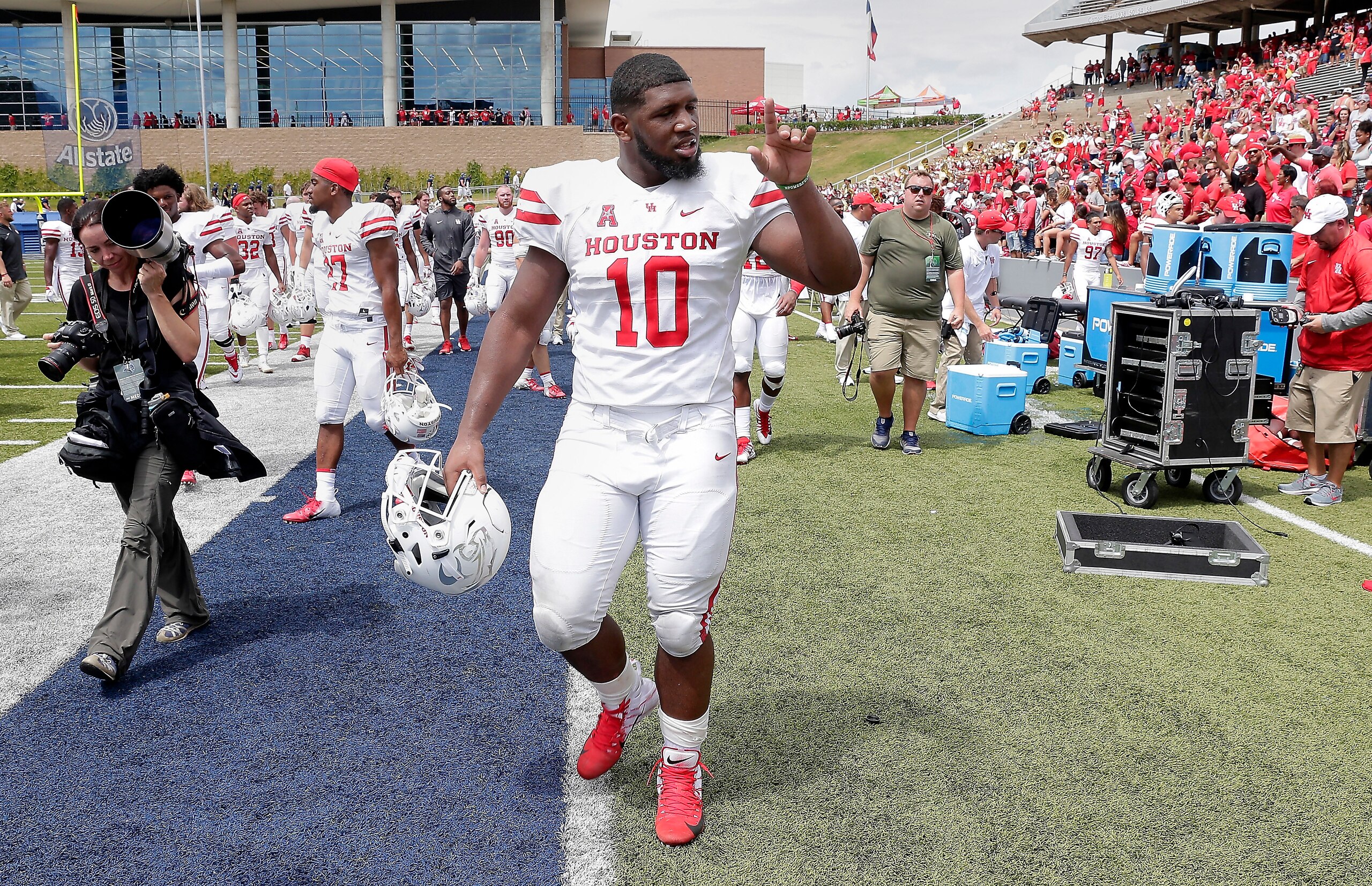
One man does not make a defense. More than 90 percent of Houston's starters on defense aren't in the conversation for the No. 1 overall pick in the 2019 NFL draft.
But how is it possible for the Cougars to be this bad on defense when they have Ed Oliver front and center on the D-line?
Even after a Week 4 blowout of Texas Southern in which they held the Tigers to only 338 yards of total offense, the Cougars rank 120th nationally in yards allowed per game (503.0).
Part of that is because Houston is exponentially better on offense—read: scoring faster—than it was last year, forcing the defense to spend a ton of time on the field. In fact, Houston's rate of 88.5 defensive snaps per game is the highest in the nation.
From a yards-per-play perspective, though, the Cougars are still worse than the national average and much worse than they were last year.
They opened the season against the same three teams as they faced last season—Arizona, Rice and Texas Tech—and in terms of both total yards and yards per play, they were much worse on defense in each game. Overall, they allowed 1,674 total yards, 5.9 yards per play and 108 points, compared to 1,134, 5.3 and 46 in 2017, respectively.
If nothing else, you'd think Houston would rank among the national leaders in sacks, both from Oliver and as a result of double-teams opening up holes for other defensive linemen. However, Houston's mark of 1.5 sacks per game is tied for 93rd nationally.
The only good news is that it hasn't hurt the Cougars, since they're averaging 52.3 points per game. They might be the top challengers to UCF in the AAC. They don't face each other during the regular season, but that potential conference championship game might be a race to 70 points.
TCU Horned Frogs
8 of 10
Even before the back-to-back losses to Ohio State and Texas, the Horned Frogs didn't look like a team that deserved to be ranked.
They struggled to move the ball against SMU in Week 2, which is not something one could often say about competent teams in recent years. Moreover, TCU usually destroys the Mustangs in this rivalry. Over the previous four years, the Horned Frogs averaged 635.5 yards per game and at least 7.5 yards per play in each contest. This year, however, those numbers were 387 and 5.6, respectively.
Those numbers were even worse in the Week 4 loss to Texas (372 and 5.2).
The issues start with QB Shawn Robinson.
For a guy who barely saw the field last year, Robinson looked great in the season opener against Southern. He threw for three touchdowns and rushed for two more. Since then, though, he has completed 57.7 percent of passes with five interceptions against only three touchdowns. His passer efficiency rating against FBS defenses is 114.0, which is almost identical to what Brandon Wimbush was doing at Notre Dame (114.2) before losing his job.
Unfortunately for the Horned Frogs, prized recruit Justin Rogers is still recovering from a torn ACL suffered in August 2017 and will probably redshirt, meaning it's Robinson or bust.
If he can't lead TCU to a victory against Iowa State this weekend, it'll be time to start wondering if this team will win enough games to become bowl-eligible.
Khalil Tate, Arizona QB
9 of 10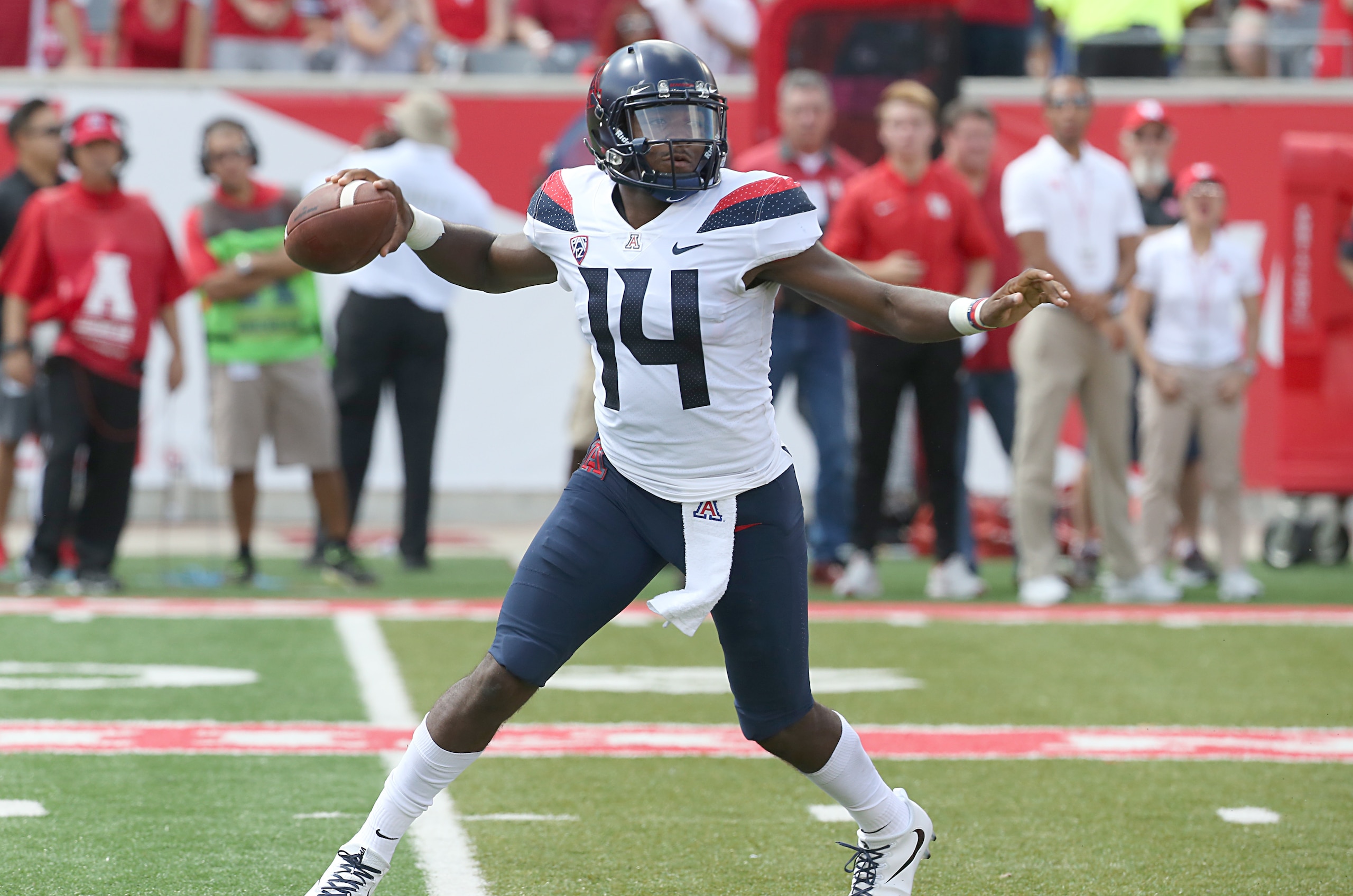
Last year, Khalil Tate was a dual-threat sensation on par with Lamar Jackson. Despite playing in the lion's share of only nine games, Arizona's QB ranked 17th nationally in total rushing yards. He led the nation in yards per rushing attempt. And while he wasn't exactly a Manning with his arm, there were a handful of games in which his passing numbers were lethal in their own right.
Factor in new head coach Kevin Sumlin, who had worked wonders with Case Keenum and Johnny Manziel in the past, and Tate was one of the most obvious candidates to win the Heisman.
But four weeks into the season, he's maybe the eighth-best quarterback in the Pac-12 and a complete afterthought at the national level.
The biggest cause of his demise is the rushing, or rather the complete lack thereof. The dude who averaged 9.2 yards per carry in 2017 is now averaging 8.0 rushing yards per game.
Last year, he ran for 206 yards against Oregon State. Last week, he had negative-nine rushing yards against the Beavers, who rank 127th nationally in rushing yards allowed per game.
Save for appearing to injure his ankle in the first half against Houston in Week 2, it looks like Tate is physically fine. It just seems as though Sumlin doesn't want him running the ball anymore, for reasons that none of us can understand.
It's not like staying in the pocket has made him a better passer, either. Tate's completion percentage has plummeted from 62.0 to 54.3. Despite a much better touchdown-to-interception ratio, his passer efficiency rating is also worse than it was last year.
Given how much fun Tate was to watch last year and how painful Arizona's games have been to watch this year, his regression is the biggest disappointment in college football.
Basically the Entire ACC
10 of 10
Clemson is quite good. Syracuse and Duke have been pleasant surprises. And who knew Virginia would win three games in the entire 2018 season, let alone in September?
As a whole, though, the ACC has been a colossal disappointment.
Florida State is at the forefront of this disaster, although the Seminoles have had the courtesy to lose only to conference foes. They were blown out by both Virginia Tech and Syracuse, and they damn near lost to Samford in between those Ls. The offense finally looked somewhat competent this past week against Northern Illinois, but they still committed four turnovers and never looked completely in control against one of the worst teams in the country.
At least Florida State escaped its upset scare against Samford. Virginia Tech can't say the same, as it lost to 0-3 Old Dominion. North Carolina handed East Carolina its only win of the season to date. And Boston College did the same for Purdue last Saturday.
Even a number of forgivable nonconference losses were made less so by being blowouts, like Louisville getting smashed by Alabama, Miami getting trounced by LSU, Pitt failing to even show up against Penn State and Wake Forest giving up 56 points to a Notre Dame squad that didn't surpass 24 in any of its first three games.
Add it all up, and this league is so weak after Clemson that it's beyond difficult to imagine a scenario in which the Tigers lose any game—regular season or conference championship—and still get selected for the College Football Playoff.
Heck, even if Clemson does get to 13-0, its schedule is going to be so weak that it might get seeded behind both the SEC champion and runner-up, provided neither one has multiple losses.
Kerry Miller covers college football and men's college basketball for Bleacher Report. You can follow him on Twitter, @kerrancejames.
.jpg?w=2560 "Colts Texans Football")
.jpg?w=2560)

.jpg?w=2560 "Rodgers Iced Out on Plane 💎")
.jpg?w=2560 "Raiders Could Start Mendoza")
.jpg?w=2560 "Mahomes Told Teammate to Leave Meeting")

.jpg?w=2560 "Lamar Being Out Shocked Ravens")
.jpg?w=2560 "Packers Safety Slams Refs 🤬")