

Getting ahead on the fantasy football waiver wire can keep you out of a bidding war or a waiver-priority battle for a coveted running back. The purpose of this article to recognize players who can make a long-term impact before they become hot commodities.
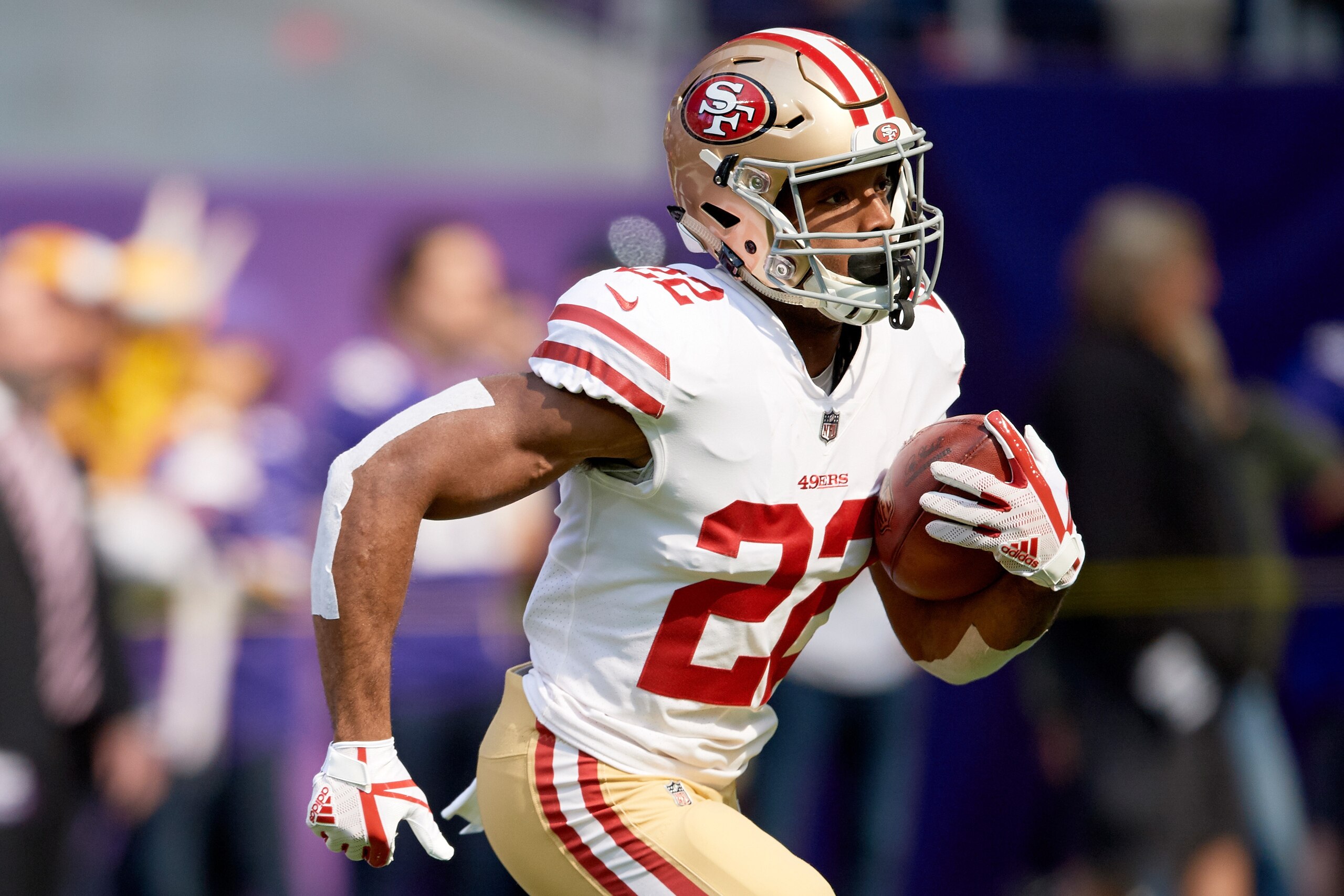
San Francisco 49ers RB Matt Breida is currently the NFL's leading rusher, so while Alfred Morris should stay in the mix for carries, Breida may already be rising in the fantasy world. That means he may be moving up your personal depth chart from potential starter to solid RB2.
The Indianapolis Colts got RB Marlon Mack back from a hamstring injury last week, yet Jordan Wilkins had the more impressive performance. This situation is far from settled, so it will be one to monitor over the coming weeks. If Wilkins can build on what he did in Week 2, he might be the player to own in that backfield.
To learn more about what’s going on in the backfields for the Carolina Panthers, Atlanta Falcons, Baltimore Ravens, Arizona Cardinals and Cincinnati Bengals, check out the Week 3 B.S. Meter. The Tennessee Titans were covered in the Week 3 Big Board. Workload Watch covers eight other RB situations that have the most fantasy implications.
Check out Matt Camp on his Fantasy Camp podcast available every Tuesday and Thursday. Click to subscribe.
Denver Broncos
1 of 8
Week 2 Workload Distribution
Phillip Lindsay: 42.4% snaps, 14 carries, 107 yards, 0 TD; 1 target, 1 reception, 4 yards, 0 TD
Royce Freeman: 24.2% snaps, 8 carries, 28 yards, 1 TD; 1 target, 0 receptions
Devontae Booker: 33.3% snaps, 3 carries, 17 yards, 0 TD; 0 targets
In only two weeks, Lindsay's strong play has completely changed the complexion of the Denver Broncos backfield. However, that shouldn't completely kill Freeman's fantasy value.
After an even split of the carries in Week 1, Lindsay took the lead in Week 2 against the Oakland Raiders. To his credit, he has delivered when given the opportunities. That should make him the lead back until further notice if the Broncos believe in rewarding production.
Freeman isn't completely off the fantasy radar, but his stock has taken a hit since the start of the regular season, when it appeared as though he was a solid RB2. Going from 15 carries to eight is bad, and with no receptions on only one target, he doesn't have much room for error. He has two carries inside the 5-yard-line, one of which he converted into a score in Week 2.
At this point, Booker's presence is simply an annoyance for fantasy owners, especially when he gets more snaps than Freeman. It's still early, so while Lindsay looks like Denver's top fantasy option and a solid RB2, Freeman can be used as an RB3/flex or to provide good depth on a team that clearly wants to run the ball.
Detroit Lions
2 of 8
Week 2 Workload Distribution
Kerryon Johnson: 46.8% snaps, 8 carries, 43 yards, 0 TD; 6 targets, 5 receptions, 23 yards, 0 TD
LeGarrette Blount: 22.1% snaps, 8 carries, 38 yards, 0 TD; 1 target, -3 yards, 0 TD
Theo Riddick: 36.4% snaps, 0 carries; 12 targets, 9 receptions, 47 yards, 0 TD
Unlike their Week 1 blowout loss to the New York Jets, the Detroit Lions went down to the wire in their 30-27 defeat to the San Francisco 49ers. However, they trailed by 17 points with 11:21 to go in the fourth quarter, so if you were hoping for a strong commitment to the run, it didn't happen.
For the second week in a row, Blount did not finish the game. A shoulder injury put him down in Week 1, and on Sunday, an ejection ended his day with 10:32 remaining in regulation. His numbers were an improvement over the minus-three yards on four carries he had in the opener, but his snaps didn't rise much from the 18.6 percent he had in Week 1.
Johnson's performance was encouraging if you're thinking big picture. Eight carries isn't enough to generate big fantasy production, but his active role in the passing game was a great sign. He also doubled his snap percentage from Week 1, so even though Johnson isn't a reliable option for fantasy yet, he's moving in the right direction. He should wind up being the clear lead back sooner rather than later.
Riddick doesn't bring much to the table other than his skills as a receiver. His 12 targets represented the most he's had since Week 5 of the 2015 season, but he clearly needs high volume in the passing game to provide any kind of value. Riddick only has value in PPR formats, and even then, he's a risky flex option.
If Johnson can keep taking touches and snaps away from Blount, he has a shot to enter RB2 territory. That's the only way the Lions will provide consistent fantasy production out of the backfield.
Indianapolis Colts
3 of 8
Week 2 Workload Distribution
Marlon Mack: 29.5% snaps, 10 carries, 34 yards, 0 TD; 2 targets, 1 reception, 2 yards, 0 TD
Jordan Wilkins: 37.7% snaps, 10 carries, 61 yards, 0 TD; 2 targets, 2 receptions, 3 yards, 0 TD
Nyheim Hines: 41% snaps, 4 carries, 7 yards, 1 TD; 1 targets, 1 reception, -7 yards, 0 TD
Christine Michael: inactive
Mack made his season debut in Week 2 after missing Week 1 with a hamstring injury. He added yet another name to consider in this confusing Indianapolis Colts backfield. Much like the Lions, the Colts need a single player to emerge from a crowded group for any chance at reliable fantasy value.
Mack was even with Wilkins in carries against Washington, but the production wasn't the same. That's a victory for Wilkins, especially since he had only 40 yards on 14 carries in the opening-week loss to the Cincinnati Bengals. Neither player had much of a role through the air, which was odd since Hines also failed to make an impact as a receiver after hauling in seven of nine targets for 33 yards in Week 1.
Mack caused about an 18 percentage-point drop for Wilkins in snap share, although he still beat out Mack yet trailed Hines. Even though Hines played the smallest role on the ground, he was the one who found the end zone on an eight-yard TD run.
Mack and Wilkins both have three red-zone carries this season, although Wilkins got the only carry inside the 5-yard line, which resulted in a loss of two yards. The roles in this backfield appear to be fluid for now, which means this isn't a group to consider for fantasy purposes until further notice.
.jpg?w=2560 "Colts Football")
.jpg?w=2560 "NFL Paris Football")
.jpg?w=2560 "Seahawks Chiefs Football")
Los Angeles Chargers
4 of 8
Week 2 Workload Distribution
Melvin Gordon: 64.3% snaps, 9 carries, 28 yards, 1 TD; 7 targets, 6 receptions, 38 yards, 2 TDs
Austin Ekeler: 41.1% snaps, 11 carries, 77 yards, 0 TD; 3 targets, 3 receptions, 21 yards, 0 TD
Most of the backfield examinations featured here focus on confusing backfields to see whether we can figure out if one player will emerge to lead the way. A look at the Chargers backfield after two weeks is more about the chances both Gordon and Ekeler stay fantasy relevant.
During the Week 1 loss to the Kansas City Chiefs, the Los Angeles Chargers played from behind for nearly the entire game, so it made sense for Gordon to pile up 13 targets, nine receptions and 102 yards. Ekeler was also involved with five receptions for 87 yards and a TD on five targets in addition to five carries for 39 yards. Gordon had a typical workload on the ground with 15 carries for 64 yards.
In Week 2, the Chargers raced out to a 14-0 lead on the Buffalo Bills and never looked back. Gordon had another busy afternoon as a receiver with six receptions for 38 yards and two TDs on seven targets, but he had only nine carries for 28 yards and a TD. Instead, Ekeler led the way on the ground with 11 carries for 77 yards with another 21 yards on three receptions (three targets). The Chargers were wise to lighten Gordon's workload in an early-season lopsided victory.
As a result, Gordon's snap share dropped from roughly 76 percent to about 64 percent, while Ekeler jumped up from 27 percent to 41 percent. The Chargers have been on both sides of one-sided affairs in the first two weeks, so it's hard to judge how much Ekeler will be involved on a regular basis. However, he's producing when called upon, which should give the team reason to keep him in an active role.
Gordon is obviously an excellent RB1, but Ekeler seems like he can touch the ball enough as a runner and a receiver to be a good RB3/flex.
Miami Dolphins
5 of 8
Week 2 Workload Distribution
Kenyan Drake: 60% snaps, 11 carries, 53 yards, 1 TD; 4 targets, 4 receptions, 17 yards, 0 TD
Frank Gore: 40% snaps, 9 carries, 25 yards, 0 TD; 1 target, 1 reception, 19 yards, 0 TD
Depending on your perspective, Drake's workload over the first two weeks might be taken as a positive or a negative. Much like Melvin Gordon, Drake hasn't been overloaded with carries, totaling 25 in the first two games for 101 yards and a TD. He also has seven receptions for 35 yards on eight targets. After posting a 74.2 percent snap share in Week 1, he dropped down to 60 percent in Week 2.
The negative side of this is the presence of Gore. Even though Drake is clearly leading the way, Gore has 18 carries for 86 yards on the season, so he isn't far behind Drake in that category. It should come as no surprise to find out Gore has a single target and reception for 19 yards. There's no reason for him to play a regular role in the passing attack. His snaps rose from 29 percent in Week 1 to 40 percent this past Sunday, the latter of which is higher than you'd like to see if you have Drake in your fantasy lineup.
Drake has four carries inside the 20, while Gore has only two. Two of Drake's carries came inside the 10, with one resulting in a TD. Gore has a single carry inside the 10 for a loss of three yards. Neither player has a carry inside the 5-yard-line.
Because the Miami Dolphins are undefeated, they may not want to mess with what's working. However, Gore's workload is heavy enough to limit Drake's fantasy upside. It might keep him fresher down the stretch, but if he doesn't have the chance to put up big numbers, having him down the stretch may not matter.
New England Patriots
6 of 8
Week 2 Workload Distribution
Rex Burkhead: 23% snaps, 6 carries, 22 yards, 0 TD; 0 targets
James White: 55.7% snaps, 4 carries, 11 yards, 0 TD; 8 targets, 7 receptions, 73 yards, 0 TD
Sony Michel: 21.3% snaps, 10 carries, 34 yards, 0 TD; 2 targets, 1 reception, 7 yards, 0 TD
In the history of fantasy football, dealing with Bill Belichick's backfields has rarely been easy or predictable. Touches typically vary by matchup, which makes sense as long as you can figure out which players are playing each role.
As of now, the only clear role belongs to White, who's the primary receiver out of the backfield. Through two weeks, he leads all New England Patriots players with 17 targets, which he has converted into 11 receptions for 111 yards and a TD. No one should be surprised to see him with only nine carries for 29 yards.
When Michel had to sit out Week 1 with his knee not ready for action, Burkhead and Jeremy Hill appeared to be in line for the carries. Hill had four for 25 yards before tearing his ACL. That put Burkhead in the driver's seat to take on more touches, which he did with 18 carries for 64 yards in addition to a reception for five yards on three targets. He played 51 percent of the snaps.
Burkhead's status was up in the air for Week 2 because he was in concussion protocol during the week, but he ended up being cleared for the matchup with the Jacksonville Jaguars. Michel was also cleared to make his NFL debut, although it was fair to think the Patriots would ease him in after missing the preseason.
They did just that with his snap percentage, which came out to 13 snaps. That means they wanted to get him the ball (10 carries, two targets) on all but one of his snaps. Even though he didn't have great production, the rookie had a busy day, which might be a sign of things to come as early as this week.
Burkhead barely outsnapped Michel, yet he saw fewer carries and fewer targets with another disappointing performance, specifically on the ground. Through two weeks, he's averaging just 3.6 yards per carry, down from the 4.1 YPC he had last season.
If you believe Belichick plays the matchups with his RBs, this could be a week to feature Michel. The Detroit Lions allowed the league's most rushing yards over the first two games in losses to the New York Jets and San Francisco 49ers. It wouldn't be a great leap to increase Michel's touches after they kept him busy in Week 2.
Remember, the Patriots made a strong investment in Michel with a first-round pick. They have the type of matchup he should be able to dominate if he gets the touches. A strong performance by Michel in Week 3 could go a long way for his standing in this backfield and on your fantasy team.
San Francisco 49ers
7 of 8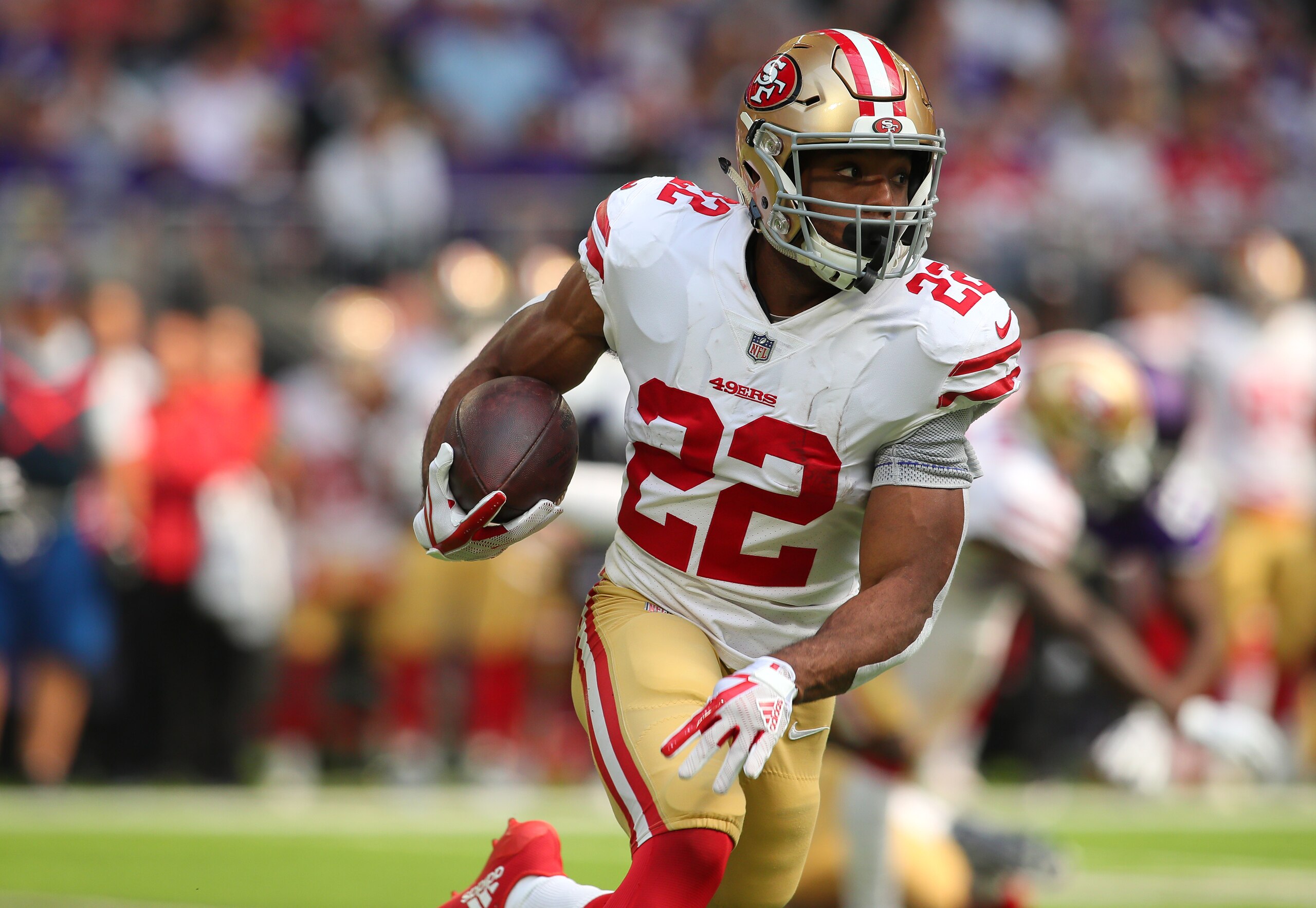
Week 2 Workload Distribution
Matt Breida: 39.1% snaps, 11 carries, 138 yards, 1 TD; 4 targets, 3 receptions, 21 yards, 0 TD
Alfred Morris: 48.4% snaps, 14 carries, 48 yards, 0 TD; 2 targets, 2 receptions, 32 yards, 0 TD
You should be both excited and cautious with Breida, who leads the NFL in rushing with 184 yards on 22 carries after two games. A big performance in Week 2 against the Lions helped to put him on top, including a 66-yard TD run, but how the 49ers handled their backfield after that score bears watching.
Breida's TD run came with 52 seconds left in the third quarter, and it put the 49ers up 27-13, giving them a healthy lead going into the fourth. A Robbie Gould field goal extended that lead to 30-13 with 11:21 remaining in the game.
From that point forward, Breida had only one carry, while Morris had seven. The former was far more productive and efficient Sunday, but the coaching staff still trusts Morris as well. Keeping Morris in the mix makes sense because he knows the offense, but it will put a limit on Breida's fantasy breakout potential.
With that said, Breida's performance should be encouraging to those looking for reliable RB fantasy production amongst a host of injuries and absences for big-name players. The 49ers have a fantasy-friendly offense, so getting the lead-back role certainly carries value. That's why Breida has entered the RB2 conversation, while Morris is still worth keeping around for depth or if you're stuck for an RB3/flex play.
Seattle Seahawks
8 of 8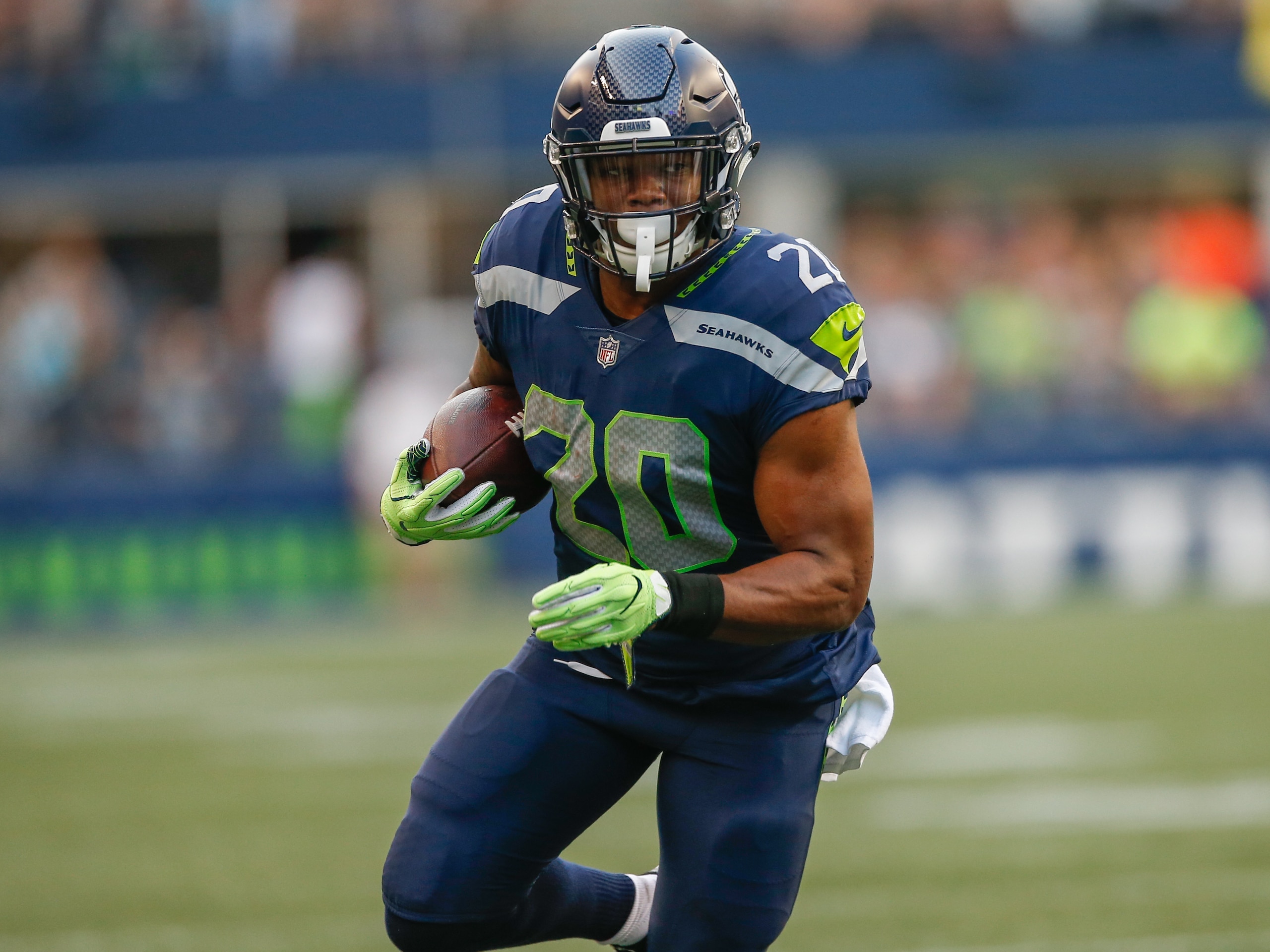
Week 2 Workload Distribution
Chris Carson: 28.8% snaps, 6 carries, 24 yards, 0 TD; 1 target, 0 receptions
Rashaad Penny: 30.3% snaps, 10 carries, 30 yards, 0 TD; 2 targets, 0 receptions
C.J. Prosise: 27.3% snaps, 0 carries; 3 targets, 3 receptions, 22 yards, 0 TD
Mike Davis: 13.6% snaps, 3 carries, 3 yards; 1 target, 1 reception, -1 yard, 0 TD
In last week's Workload Watch, we covered the even split in snaps, carries and targets for Carson and Penny, with Carson having outgained Penny 51-8 on the ground. Seattle Seahawks head coach Pete Carroll acknowledged the disparity between the two, and it seemed as though Carson would have his chance to lead the way in Week 2.
Initially, it looked like Carroll was being truthful about Carson's lead over Penny. He had the first three carries of the game, on which he gained 13 yards. However, he received only three carries the rest of the game, and his final carry came with 11:51 left in the second quarter. At the time, the Seahawks trailed the Chicago Bears 7-0. The Seahawks ran the ball only once more until 14:15 of the fourth quarter, at which point they were down 17-3.
Penny got the next eight carries and picked up 28 yards, so he went from dreadful in Week 1 to average at best in Week 2. After the game, Carroll explained Carson's lack of role in the offense by saying the second-year back was "gassed" from playing special teams and that he wanted to see what Penny could do, according to Gregg Bell of the News Tribune.
The idea of a lead back losing carries because he was overworked on special teams seems ridiculous because it is. It's also a lie when you look at Carson's special teams participation. He played two snaps on special teams in Week 2 after playing six snaps in Week 1. Are we supposed to believe Carson's two snaps on special teams "gassed" him to the point he couldn't run effectively?
If you haven't realized it by now, Carroll's words mean nothing when it comes to predicting the workloads in this backfield. The Seahawks are a poorly coached team with an atrocious offensive line and no real direction. They are wasting the talent they do have in the backfield, which has made both Carson and Penny too hard to trust until we see significant changes. That may not happen anytime soon.
When in doubt, avoid bad teams. The Seahawks are a bad team.
.jpg?w=2560)


.jpg?w=2560 "Malik Beasley Negotiating Plea Deal (AP)")