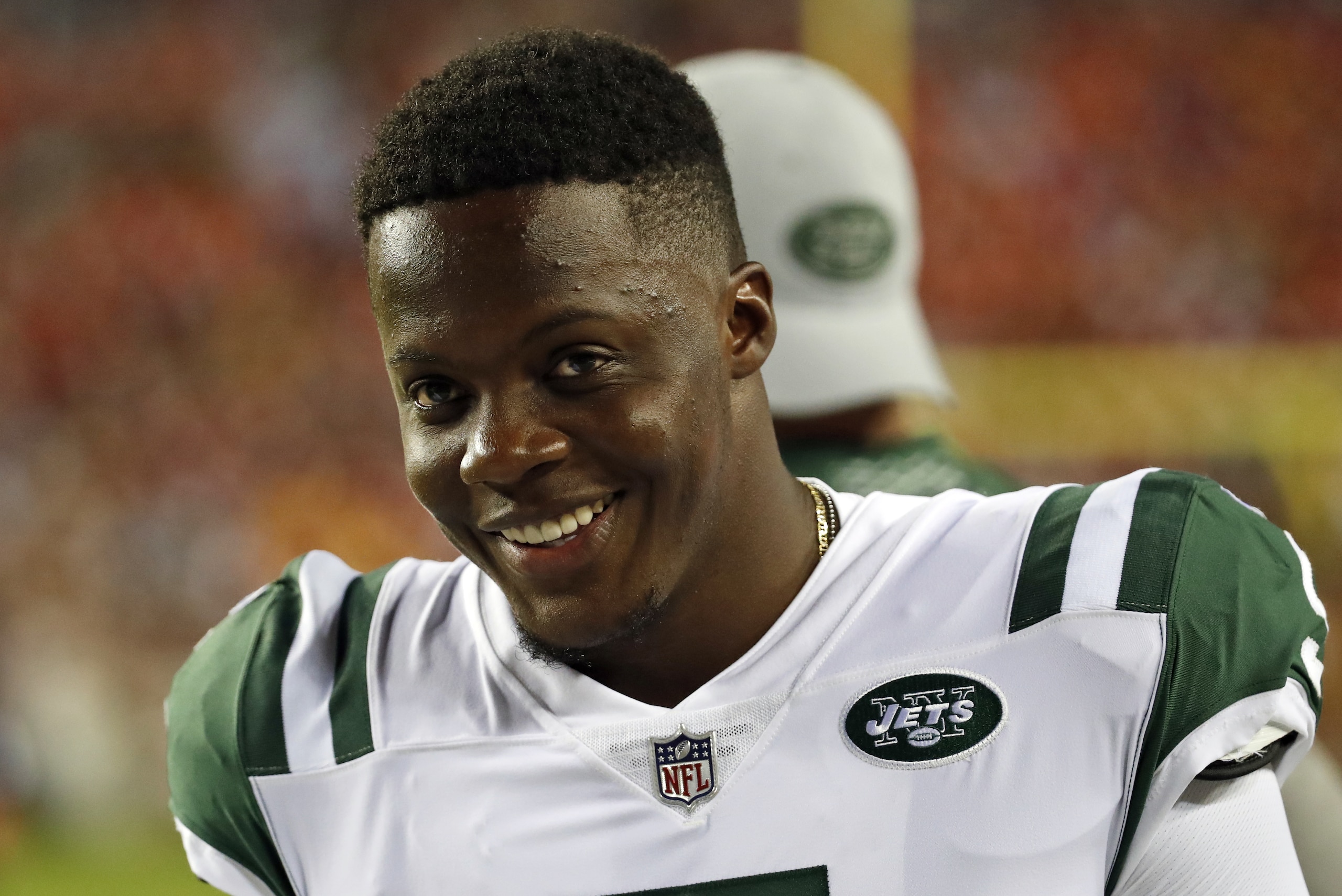

Outside-the-Box Solutions to the Teddy Bridgewater Situation
In a perfect world, some NFL team in need of a quarterback would offer the Jets a 2019 first-round pick for Teddy Bridgewater. That team would then sign Bridgewater to an $85 million, Kirk Cousins-sized deal, and the Jets would draft a great wide receiver—upon studying their depth chart, make that a great left tackle—for Sam Darnold.
Bridgewater and Darnold would then spend the next decade dueling in Super Bowls, competing for MVP awards and erasing memories of gruesome knee injuries or decades of quarterback futility. Everyone would live happily ever after.
Breaking news: This is not a perfect world, and that magical offer isn't coming.
TOP NEWS
.jpg?w=2560 "Titans Colts Football")
5 Teams Eyeing Jonathan Taylor
.jpg?w=2560 "Chiefs Giants Football")
Mahomes Told Teammate to Leave Meeting
.jpg?w=2560 "Colts Football")
Jonathan Taylor Landing Spots 📍
Teams rarely find themselves with extra 25-year-old franchise-caliber quarterbacks hanging around. But the Jets do this summer. They have both Darnold, the No. 3 draft pick who some draftniks assumed would go No. 1, and Bridgewater, the now-healthy fourth-year veteran who has completed almost 74 percent of his passes through two preseason games. Happy times, right?
Perhaps, but the situation still poses a dilemma. There's no standard solution for dealing with an expendable, young, high-quality quarterback. Last year's Jimmy Garoppolo trade was the closest thing we have to a benchmark, and that deal was such a white elephant that it almost turned Patriots headquarters into Downton Abbey.
The Jets must handle the Bridgewater situation creatively. Otherwise, they will end up with little to show for their decision to sign the former Vikings starter to a one-year, $6 million deal this offseason while other teams threw buckets of money at Cousins and Case Keenum.
As the following scenarios illustrate, no solution is perfect. But unconventional ones may be better for both the Jets and Bridgewater than conventional ones.
Scenario: Teddy Bridgewater, Jets Opening Day starter
The team announces a play-it-safe approach to Darnold's development. Josh McCown assumes the role of $10 million quarterbacks coach, which is the best role for him anyway. Bridgewater showcases his starting chops in September while the Jets wait for early-season offers from teams with quarterback injuries or regrets.
Upside
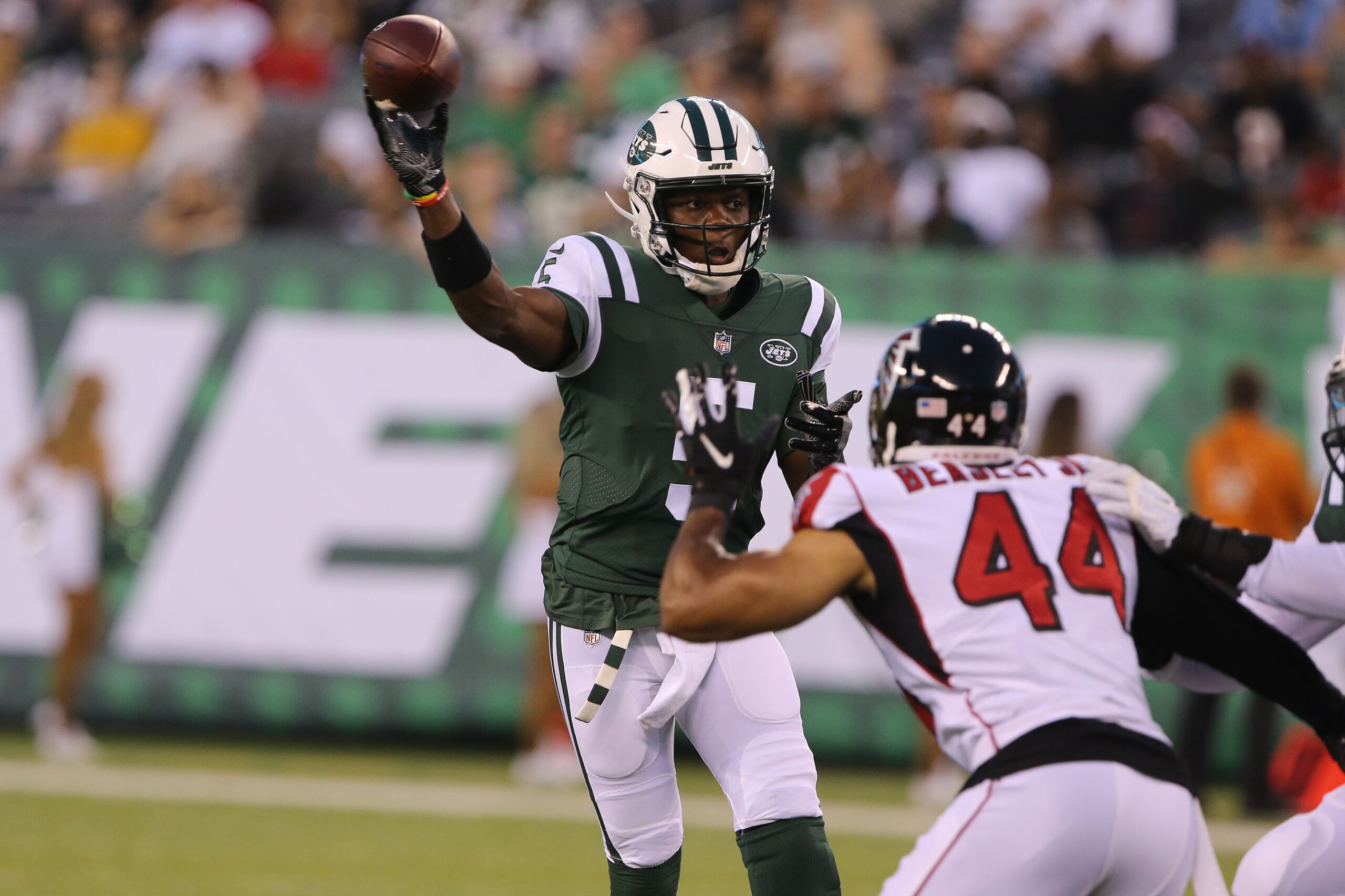
The Jets play three games in the first 11 days of the regular season, which is hardly ideal for a rookie quarterback still learning about NFL-level game-planning. They then face the vicious defenses of the Jaguars and Broncos. In other words, there are good reasons for the Jets to be cautious with Darnold at the start of the year.
McCown is the designated placeholder quarterback, but Bridgewater gives the Jets both a better chance at winning and a better opportunity to drum up trade partners.
Teams likely to lowball the Jets over the next two weeks will be more generous by Week 4 if their starter is hurt or it becomes obvious that the whole Ryan Tannehill thing has finally played itself out.
Downside
Bridgewater's one-year contract gives the Jets almost no negotiating leverage, and other front offices know it. With quarterbacks like Nick Foles and Jacoby Brissett potentially on the "good backup who could start" market early in the season, teams will be able to wait the Jets out or shop around, even during an injury crunch.
There are also fewer Mike Glennon- and Brian Hoyer-level starters this season than in past years, meaning fewer teams are likely to go shopping for long-term answers in October.
Finally, playing Bridgewater over McCown would be admitting a $10 million mistake in extending the latter's contract. NFL front offices are not big on admitting mistakes, which will inform some of our other scenarios.
Scenario: Sign-and-trade
With more than $81 million in cap space next year (via Over The Cap), the Jets can afford to lock Bridgewater into a two- or three-year contract for mid-tier starter money. They can then seek suitors for his services without worrying about the ticking clock of 2019 free agency.
Upside
A semi-affordable multiyear contract (something like Case Keenum's two-year, $36 million deal) would boost Bridgewater's trade value, as potential suitors wouldn't be renting his services for a year and worrying about him commanding Garoppolo bucks on the open market after a few quality starts. The Jets could even keep him as a custodial starter for all of 2018 and then trade him in the offseason, when teams are more generous about trading draft picks for quarterback solutions.
Bridgewater's camp should be amenable to a contract that provides instant cash and guarantees instead of waiting for a 2019 free-agent bonanza that might never come if Bridgewater is injured, buried on a bench, falters in a few starts, etc.
This is the best win-win-win scenario for all three parties. But it's also the solution that's furthest outside the box.
Downside
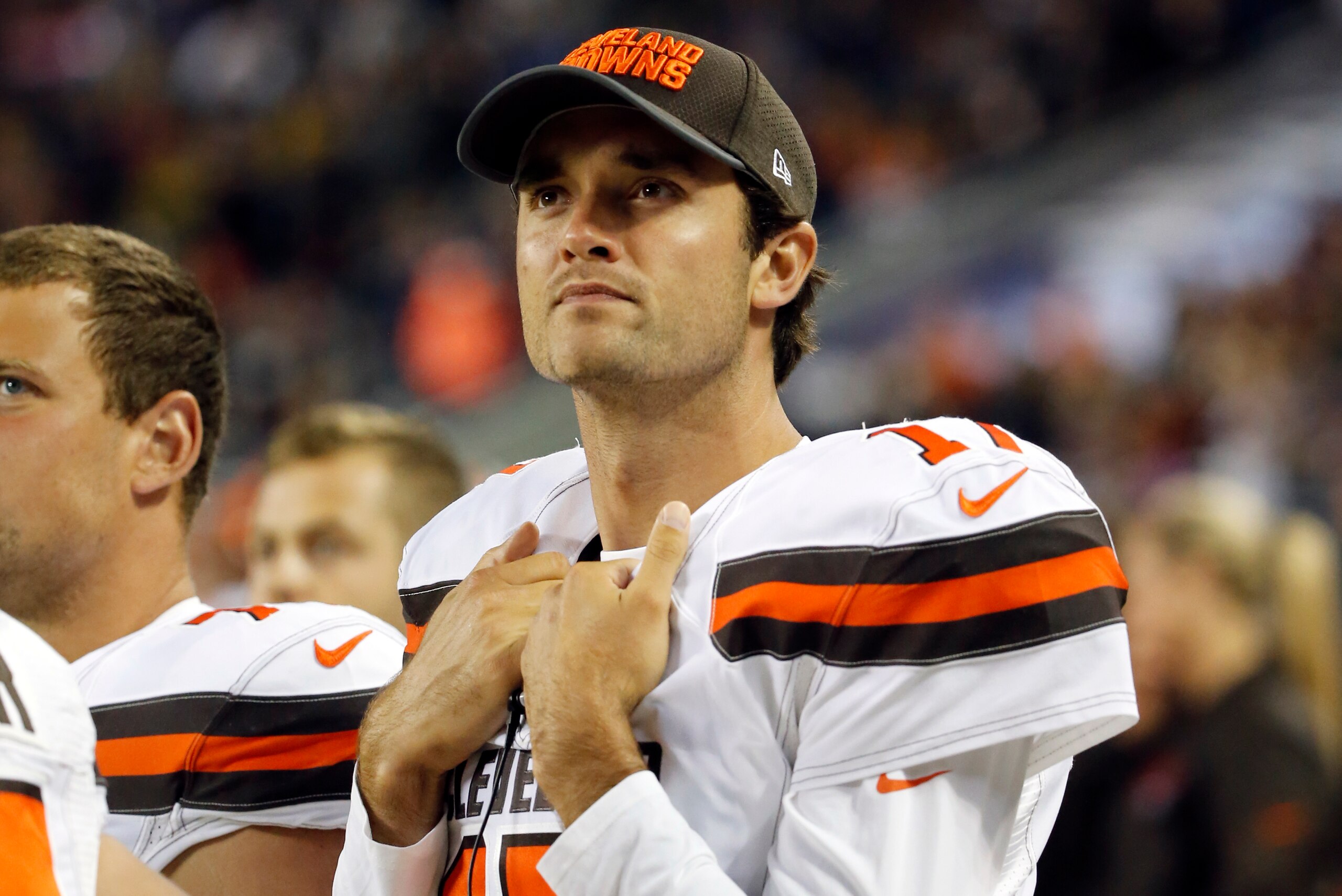
Guaranteeing roughly $30-40 million to a quarterback you plan to trade isn't exactly business as usual. The Jets would essentially be spending money to purchase future draft picks, like the Browns did last year when they ate Brock Osweiler's contract from the Texans in exchange for a draft pick. Except unlike Osweiler, Bridgewater can play, and unlike last year's Browns, the Jets have real options at quarterback. So, the Jets could end up eating a lot of that dough if it takes a year to find a trade partner, and they are already eating a lot of McCown dough.
Paying Bridgewater could also exacerbate a quarterback controversy. Imagine the back pages of the New York tabloids if Darnold loses a start or two while Bridgewater collects eight figures on the bench.
Scenario: Bridgewater to the future
The Jets find a potential partner among teams who are a year or two away from needing a franchise-caliber starter, like the Patriots, Saints or Chargers. Such teams could potentially make competitive "future" offers, like a high pick in the 2020 draft, in exchange for a combination heir apparent/ready-to-play insurance policy.
Upside
The Jets get a good deal. Bridgewater gets a good situation. Fans of top contenders get to stop worrying about Hoyer, Tom Savage or Geno Smith taking over for an injured legend.
Downside
This scenario sounds better on talk radio than it looks in real life.
The Saints have only $4 million in cap space this year and $12 million next year. They cannot fit a quality veteran backup/heir apparent into their current budget. The Chargers are also tight against the cap ceiling (roughly $9 million left this year, nearly $17 million next year), and they need to reserve future budget space for Joey Bosa, not an expensive eventual replacement for Philip Rivers.
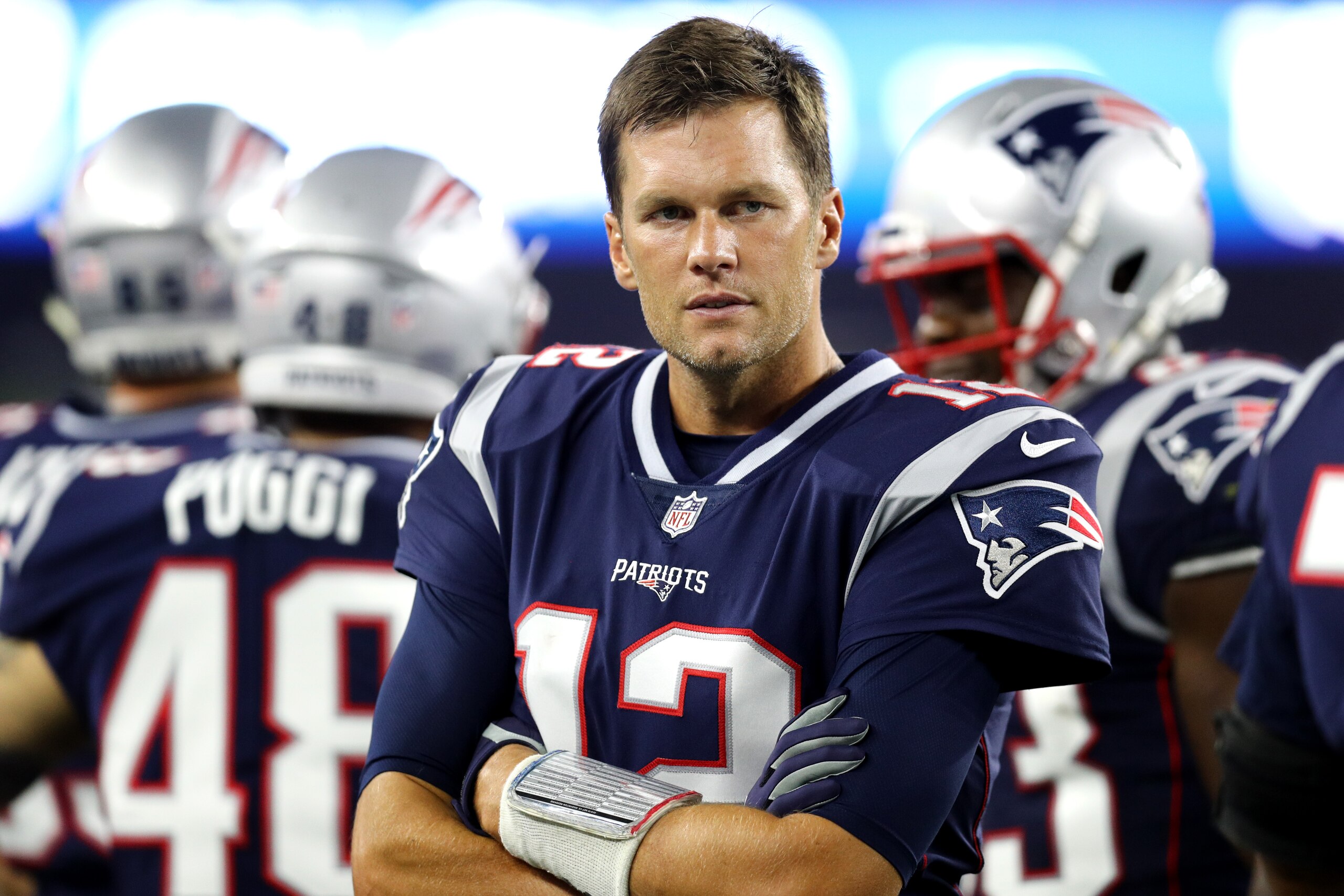
The Patriots always figure out ways to cram players they like into their budget, but on the heels of the Garoppolo trade, their current Hoyer/Danny Etling backup situation makes it clear that the guy who stars in documentaries about immortality doesn't want any quarterbacks of the future hanging around.
Scenario: The challenger trade
The Dolphins trade for Bridgewater to challenge or replace Tannehill. The Bengals trade for him as a challenger for Andy Dalton. The Buccaneers grab him to cover Jameis Winston's early-season suspension and insulate themselves from further trouble. The Jaguars acquire some Blake Bortles insurance.
Upside
Any team worried about its future with a Tannehill- or Dalton-tier starter is going to offer the Jets something decent in a trade. Bridgewater gets the chance he deserves to immediately compete for a starting job, and the team that acquires him gets a likely immediate upgrade (no rookie growing pains) for a reasonable price.
Downside
If teams settling for lower-tier starters wanted to make bold moves, they wouldn't be settling for lower-tier starters.
It's fun to speculate about deals like this, but they are anathema to the way some of these teams operate (Bengals), could signal the death knell for other coaching staffs (Dolphins) or front offices (Buccaneers) and would cause havoc for teams that already have highly combustible chemistry (Jaguars). Trades like these are unlikely to happen before the season starts, which takes us back to the initial scenario, where the Jets start Bridgewater and wait for someone else's emergency.
We've reached the crux of the Bridgewater problem: There aren't many potential suitors. Bridgewater doesn't make financial or trade-resource sense as just another backup quarterback, but no one is in the market for a franchise-caliber starter in August.
NFL teams largely do business a certain way. They allocate only so much money for backup quarterbacks and avoid trades and contracts with high backfire potential, because creativity gets coaches and general managers fired.
Unfortunately, that leads us directly to…
Scenario: The depressing, most-likely-to-happen one
As final cutdowns approach at the end of the month, the Jets trade Bridgewater for a conditional late-round pick.

Bridgewater lands on some bench, maybe as a mentor, maybe as a quasi-prospect, but mostly as an afterthought. Any new contract offer is short and cheap.
Bridgewater gets to hit the free-agent market in 2019, but unless he gets a few starts due to injury or as a Plan B to a faltering starter, he doesn't have the sizzle to command a starter's salary or opportunities and is relegated to a backup-for-hire career.
Upside
The NFL's hivemind status quo is maintained. No one does anything daring or risky to acquire a unique talent at a critical position. Teams can go back to lamenting the lack of quarterback talent while overspending on McCown types, giving the Hoyers of the world seventh chances and taking the ride-or-die approach with the likes of Tannehill.
Downside
See the upside.
Bridgewater is a perishable luxury in a buyer's market. Lots of teams may want him, but none truly need him right now, and the Jets are a nearly irrelevant middle man in danger of being cut out at the end of the year.
Bridgewater deserves a starting opportunity. The Jets deserve compensation for unearthing an overlooked starter. We deserve to watch the best possible quarterbacks every Sunday.
But it will take clever management and a little risk-taking for everyone to get what they deserve. And neither the Jets nor the rest of the NFL have a great track record of either.
Mike Tanier covers the NFL for Bleacher Report. Follow him on Twitter: @MikeTanier.
.jpg?w=2560 "Eagles Jaguars Football")
.jpg?w=2560)