


Not every NBA team can win the offseason. Some would settle for merely not losing or completely blowing it.
These teams did not.
This space is not reserved for the could-be letdowns. The Houston Rockets did not 100 percent, without question, unequivocally give the Golden State Warriors a third straight title by replacing Trevor Ariza and Luc Mbah a Moute with Carmelo Anthony (probably) and James Ennis and the return of Gerald Green. The Los Angeles Lakers deserve to be punchlined for thinking the additions of Rajon Rondo and Lance Stephenson were a good idea, but they still signed LeBron James.
Our scope has instead been adjusted to search for this summer's complete belly flops. Certain squads have not only failed to upgrade next season's product, but they've carried themselves and acted in ways that could prove damning to their future.
Charlotte Hornets
1 of 5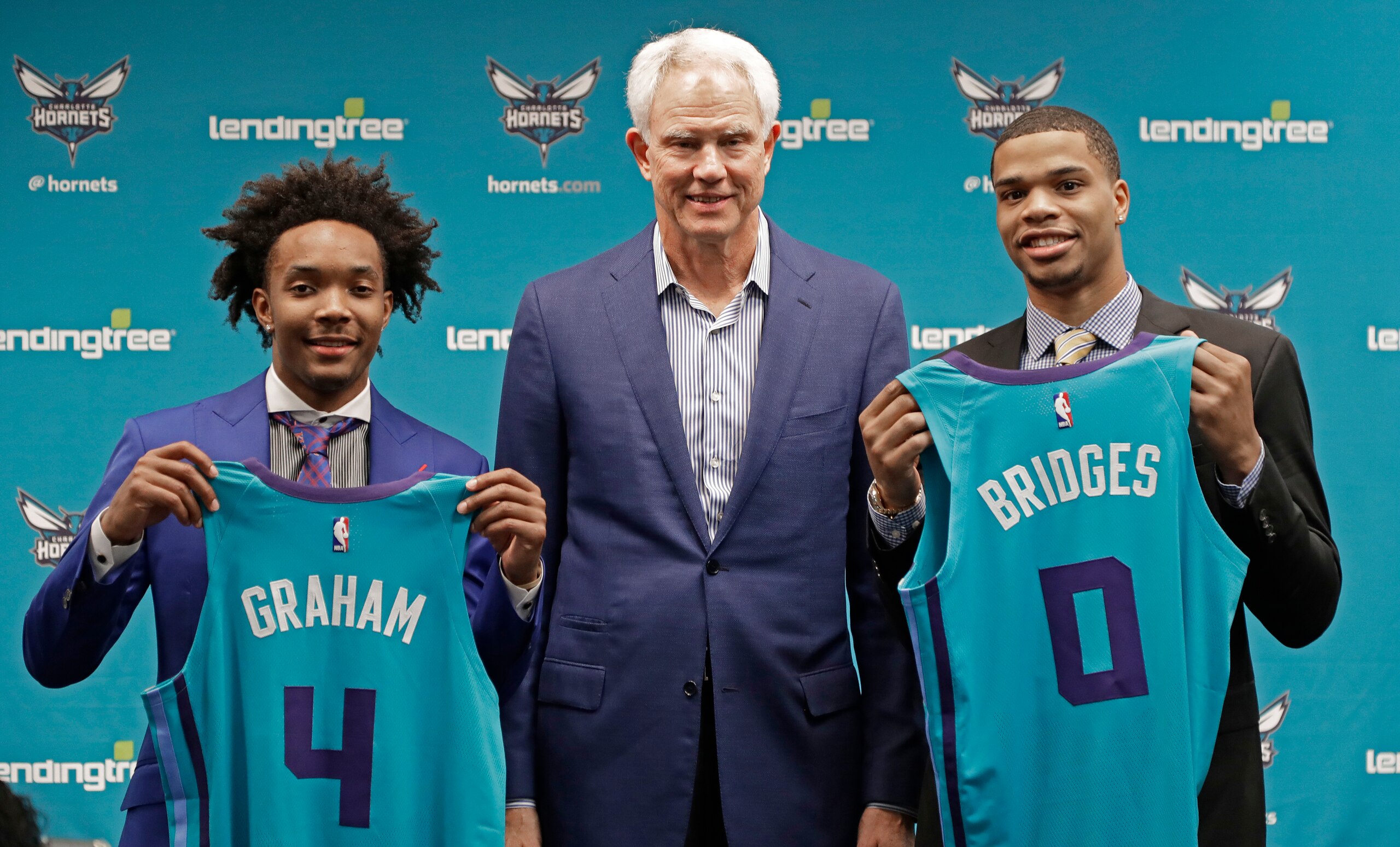
Evaluations of the Charlotte Hornets offseason should not be painted in rosier terms even if you think continuing to delay an inevitable, sorely needed rebuild is fine.
For the record: It is most definitely not fine.
Charlotte's ceiling as currently constructed isn't high enough in the Eastern Conference to keep sidestepping a ground-up reinvention. Kemba Walker's foray into 2019 free agency is a lose-lose proposition. If the Hornets don't trade him, he could leave for nothing. If he stays, they'll be into him for near-max money less than one year from his 30th birthday.
Perhaps that doesn't rub many others the wrong way. Walker is good. The East is laughably wide open. The Hornets are shooting their shot and content to contend for a first-round playoff exit. Good for them! Or something.
Except, the Hornets cannot even correctly travel in the wrong direction.
They flipped Dwight Howard to the Brooklyn Nets for extra wiggle room under the luxury tax. That trade saved them around $7.8 million in raw salary while costing them the No. 45 pick (Hamidou Diallo). Howard gave back nearly $5 million of his $23.8 million salary in a buyout with Brooklyn.
The Hornets then proceeded to sign Tony Parker to a multiyear deal because, hell, what team doesn't need an over-36 backup point guard who hasn't been a plus-offensive player since 2014-15? They also re-acquired Bismack Biyombo as a value play, the very concept of which is uncomfortable.
Lest we forget, Charlotte never tendered a qualifying offer to Treveon Graham. And why? Because the team ended up with rookie Miles Bridges, and general manager Mitch Kupchak believes the small forward position is "cluttered," per the Charlotte Observer's Rick Bonnell.
Totally makes sense. Pretty much every team is overrun with too many affordable 24-year-old wings who canned 41.2 percent of their threes last season and measured up against bigger and lankier defensive assignments.
Ah, well. At least the Hornets will have tons of cap space next summer. Oh, wait, that's right. They won't.
Chicago Bulls
2 of 5
Defend the Zach LaVine deal if you must. No one here is going to fight you. He doesn't turn 24 until March, and the Chicago Bulls viewed him as the crown jewel of the Jimmy Butler trade before Lauri Markkanen went kaboom. Letting him walk for nothing would have felt an iota of wrong.
Matching LaVine's four-year, $78 million offer sheet from the Sacramento Kings wasn't the best move in the world. It also wasn't the worst. The Bulls can justify that gamble.
Signing Jabari Parker? Not so much.
Giving him a two-year, $40 million pact doesn't jeopardize the Bulls' long-term cap sheet. They have a built-in escape clause with his team option. They can cut bait and be on their merry way next summer if things go sideways.
But the immediate fit here is bad. Parker will have to play some—read: a lot of—small forward. Head coach Fred Hoiberg can more deliberately stagger big-men minutes, but never using Markkanen, Parker and Wendell Carter Jr. together defeats the purpose of having all three.
Those stretches with Parker at the 3 stand to kill Chicago. The Milwaukee Bucks were never a net plus per 100 possessions when he played small forward, according to Cleaning the Glass. Over the past three years, they never came close to fielding an above-average defense during those minutes.
The Bulls are not any more suited to get by with Parker at the 3. Grading out as better than a bottom-five defense in those spurts would be a success.
Parker's offensive repertoire isn't worth that stark of a trade-off. He has drastically improved his outside shooting (37.1 percent on threes since 2016-17) and adds another layer of off-the-bounce shot creation. The Bulls needed exactly one of those things—the former.
Another ball-handler who effectively sets up his teammates would have been a different story. Parker isn't that guy. Chicago has enough attacking options in LaVine and Markkanen. Unless Parker develops into a pick-and-roll initiator, he'll take looks away from players, namely Markkanen, who figure more deeply into their bigger picture.
Re-signing David Nwaba would have been, and still makes for, a better fit. At the very least, the Bulls removed themselves from the salary-absorbing Olympics for what amounts to a one-year flier on Parker. Everyone over-romanticizes the prospective returns from facilitating contract dumps, but punting on the possibility entirely to pay both LaVine and Parker is next-level inexcusable.
Cleveland Cavaliers
3 of 5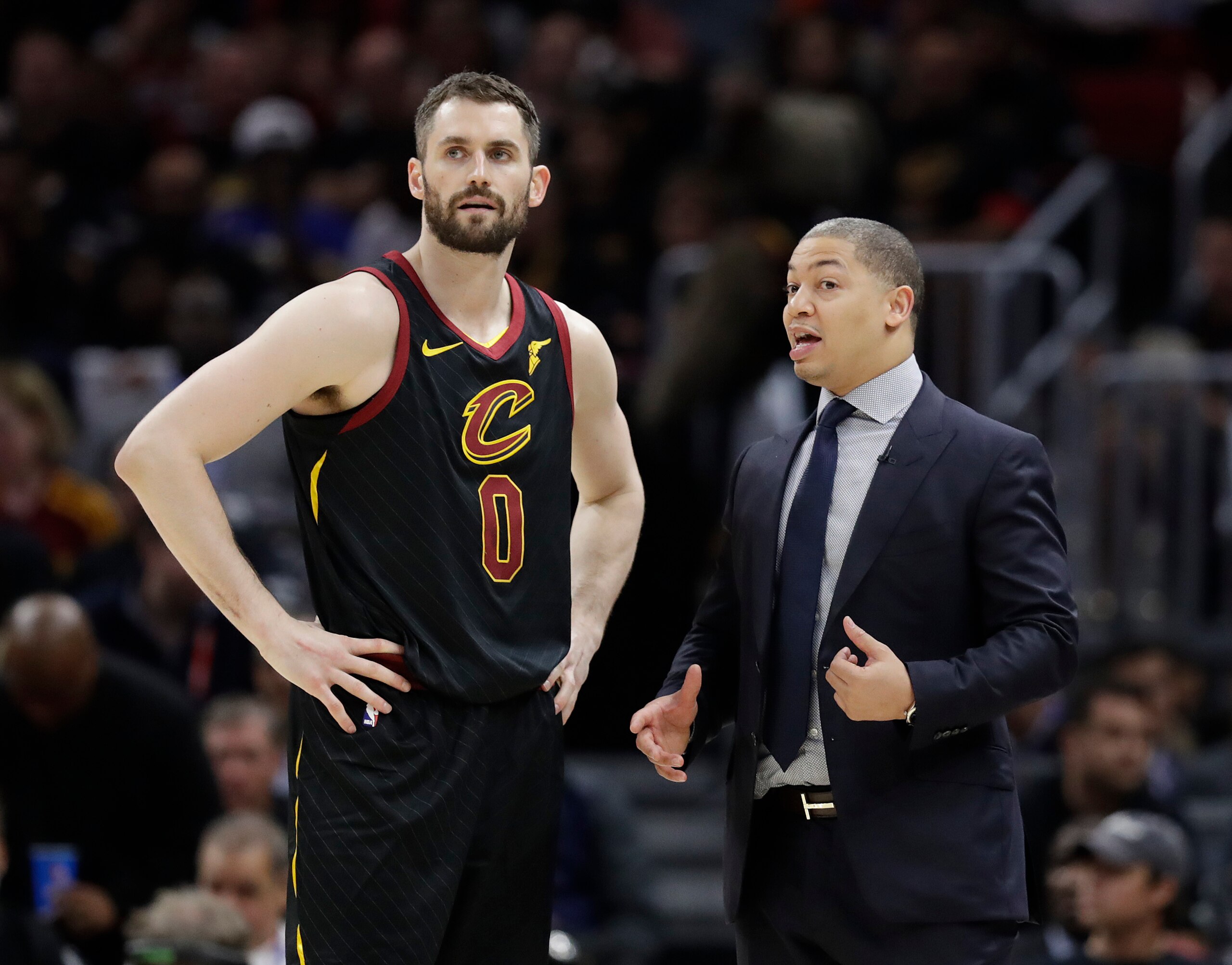
Signing Kevin Love to a four-year, $120.4 million extension is the culmination of an uncomfortable plan that has, quite clearly, been in the works since before LeBron James' official exit.
The Cleveland Cavaliers didn't tear anything down in the aftermath of his departure. They didn't approach the rest of the offseason with any perceptible urgency. Each day that went without a veteran-contract dump or veritable trade rumors was a vote for the pursuit of mediocrity. Love's extension is proof that scenario has won out.
Sure, the Cavaliers could pull a Los Angeles Clippers and flip him at the end of January when his trade restriction lifts. He may hold more value when he's not ticketed for free agency next summer. But that gives the Cavaliers an awful lot of credit—a benefit of the doubt they don't deserve.
Besides, the way Love's deal is structured infers big-picture loyalty. His salary will go unchanged in Year 3 and then decline in Year 4. Again, maybe the Cavs did this to draw in future suitors. Or maybe, as SI.com's Jeremy Woo wrote, they're genuinely trying to avoid the post-LeBron fallout:
"Stepping back, it's hard to shake the feeling that paying big to keep Love was a Dan Gilbert-driven decision, as are many big things in Cleveland, focused more on keeping the team relevant amid a two-year arena renovation project than truly building with an eye toward contention down the road. Admittedly, it's much easier to suggest a franchise tanks than to actually stomach it, but the roster as it stands is going nowhere fast and needs to be turned over. Signing Love may keep the Cavs afloat for now, but does little to accelerate that process."
Even if the Cavaliers extended Love with the intent to trade him later, they messed up.
Bottoming out immediately is the only way to recover from James' latest heel turn. Keeping Love even for a half-season compromises their draft-pick position. Lottery reformation hasn't completely nullified the incentive to lose—particularly for a Cleveland team that owes a top-10 protected selection to the Atlanta Hawks.
There were never any guarantees the Cavaliers could divest parts of their roster, including Love, into picks and prospects. Before now, though, they at least had a clear path to keeping next year's pick and enjoying leaner books. They don't anymore. They mimed the 2014 Miami Heat when they should've steered into a full-tilt facelift.



Minnesota Timberwolves
4 of 5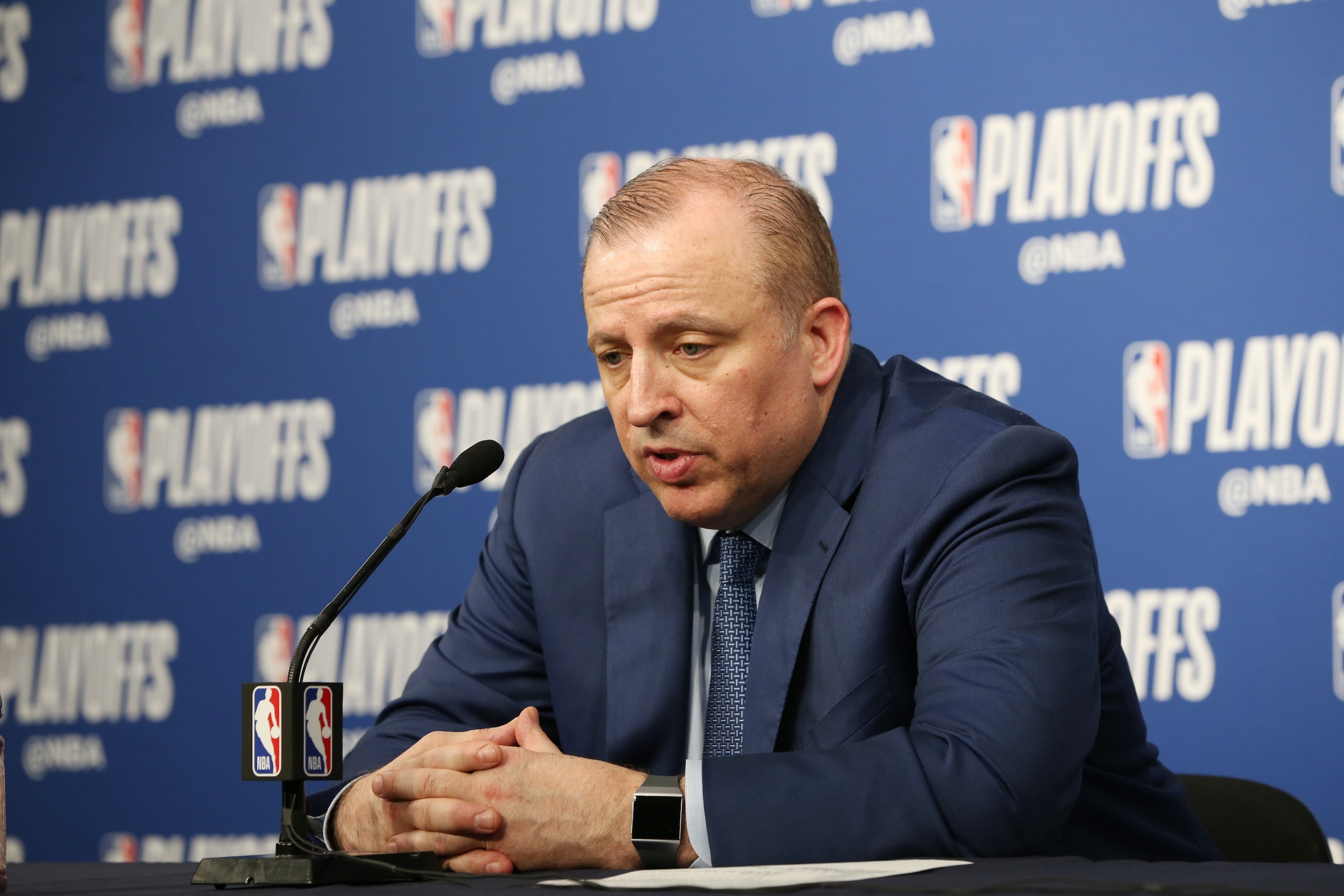
Every NBA team needs more wings who can shoot and defend. That is the era. But the Minnesota Timberwolves entered the offseason a special kind of desperate for these players.
No team attempted fewer three-pointers per 100 possessions last year, while only the Warriors and New York Knicks saw less of their outside looks go uncontested. The Timberwolves' 22nd-place defense speaks for itself yet also tells just a part of the story.
They were 29th and 30th, respectively, in opponent transition frequency following a steal or missed shot, according to Cleaning The Glass. They need mobile, rangy bodies that dissuade split-second full-court assaults.
Coach-president Tom Thibodeau even called "adding wings who can shoot threes and guard multiple positions" the team's priority, per The Athletic's Jon Krawczynski.
Please explain, then, how the Timberwolves ended up hard-capping themselves to add Anthony Tolliver while failing to sign a single wing? You cannot. It is inexplicable. Tolliver helps with the offense's spacing. He drilled 43.6 percent of his triples on 7.5 attempts per 36 minutes with the Detroit Pistons. But he is not a 2-3. Calling him a 3-4 is generous.
Rookies Keita Bates-Diop and Josh Okogie could do the trick. They both have the length to help out at the wing spots. Bates-Diop may even stand up versus some small-ball 4s.
Minnesota's draft might salvage perception of its offseason...if someone other than Thibodeau were in charge. He has never viewed youngsters as the answer to his problems. Just ask rookie-year Jimmy Butler. Or most of sophomore-year Jimmy Butler. Or Tyus Jones, who will no doubt spend 2018-19 playing in the shadow of Derrick Rose.
This all says nothing of Butler's purported distaste for his younger running mates, including Karl-Anthony Towns and Andrew Wiggins, as reported by Chicago Sun-Times' Joe Cowley and Sporting News' Sean Deveney. The Timberwolves cannot do anything about how tightly Butler wears his cranky pants, but they certainly haven't done enough to keep him from bolting as a free agent next summer.
Keep your ears to the ground. The mid-January Jimmy Butler trade sweepstakes are bound to become a thing.
Sacramento Kings
5 of 5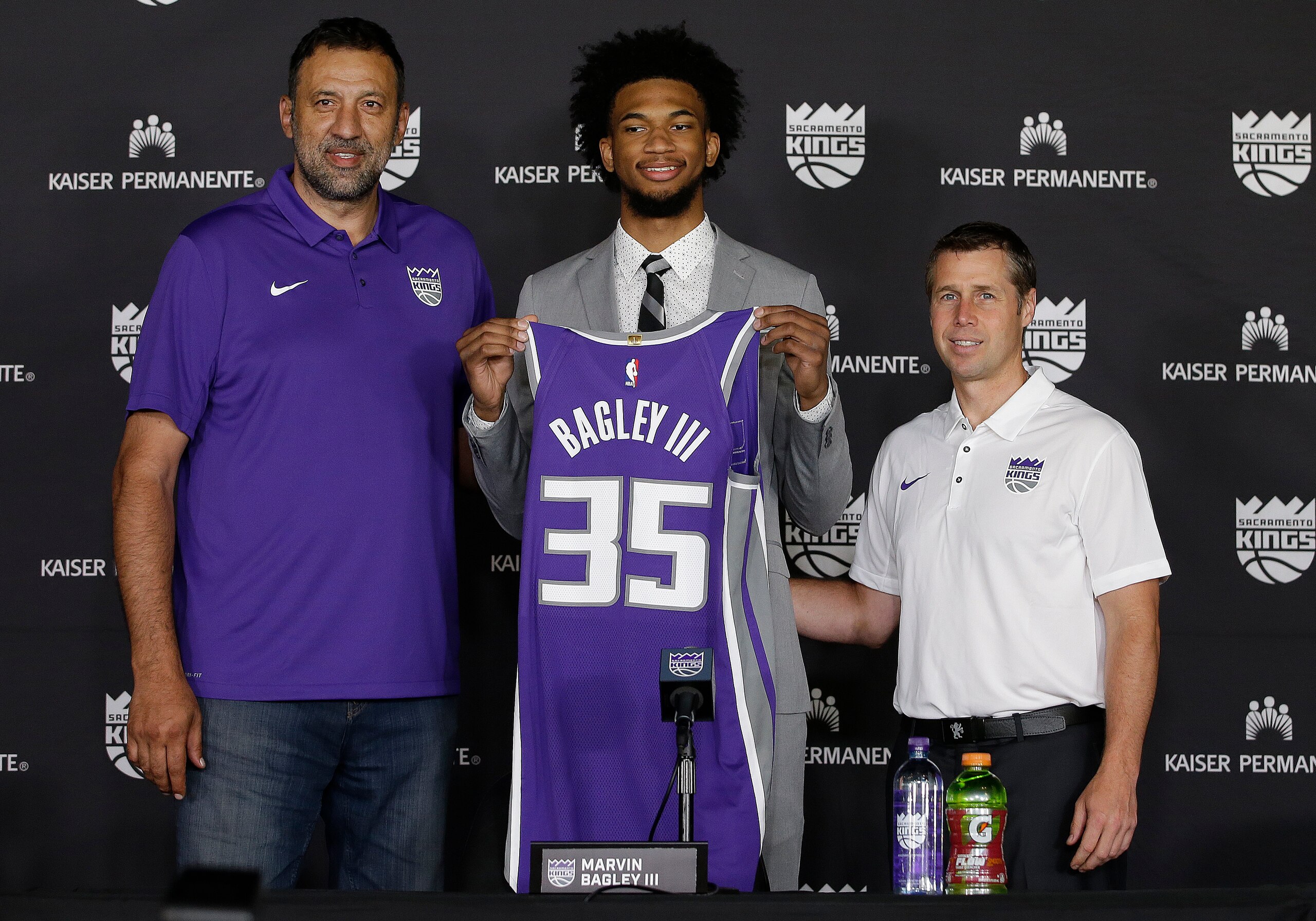
The Kings' offseason has been very on-brand—partially self-sabotaging and mostly confusing.
Drafting Marvin Bagley III instead Luka Doncic feels like something they'll wind up regretting years down the line. They could be right, too. Their logic for doing so is more troubling than the decision itself.
Sacramento didn't want to select Doncic at least in part to avoid taking the ball out of De'Aaron Fox's hands, per the Sacramento Bee's Jason Jones. This could have been interpreted as a leap of faith in the 20-year-old floor general, but the Kings inevitably signed Zach LaVine to a four-year, $78 million offer sheet (Chicago matched), so now that reasoning sounds like fart noises.
Trading Garrett Temple is whatever. He is technically more valuable to a team without its 2019 first-round pick than Ben McLemore, a 2021 second-round pick and a player who probably won't be on the opening-night roster (Deyonta Davis), but he didn't factor into the bigger picture.
Signing Nemanja Bjelica to a three-year, $20.5 million deal is less forgivable. The Kings need wings—especially after shipping out Temple. Bjelica is not a wing. Sacramento should be looking at him to play small-ball 5 before trying to use him as a 3.
Burning another roster spot on a 30-year-old doesn't jibe with the rebuilding timeline, either. Any minutes that go to Bjelica at the 3 and 4 are lost reps for Bagley, Bogdan Bogdanovic, Harry Giles, Buddy Hield, Justin Jackson or Skal Labissiere.
Leave it to the Kings, meanwhile, to eat into next year's cap space for a non-fit with a divergent timeline. Bjelica's salary doesn't prevent them from dredging up max room. They can squeeze out more than $60 million in space if they play their cards right. But why waste money when you don't have to, on a player you don't need?
And really, this is what's most alarming about the Kings' offseason. Nothing they've done is a precursor to absolute doom, but their enduring interest in the nonessential and ill-fitting nods to the complete absence of direction and vision.
Unless otherwise noted, stats courtesy of NBA.com or Basketball Reference. Salary and cap-hold information via Basketball Insiders and RealGM.
Dan Favale covers the NBA for Bleacher Report. Follow him on Twitter (@danfavale) and listen to his Hardwood Knocks podcast, co-hosted by B/R's Andrew Bailey.


.jpg?w=2560 "Jonathan Taylor Landing Spots 📍")



