


"This is an incredibly exciting day for the Los Angeles Lakers. I can't tell you how excited Southern California is today. I called our office a little while ago and the response from bringing Shaquille O'Neal to the Los Angeles Lakers has been one that's unprecedented in our history...
Featured Video
🚨 Giannis, Heat Fall To 0-3
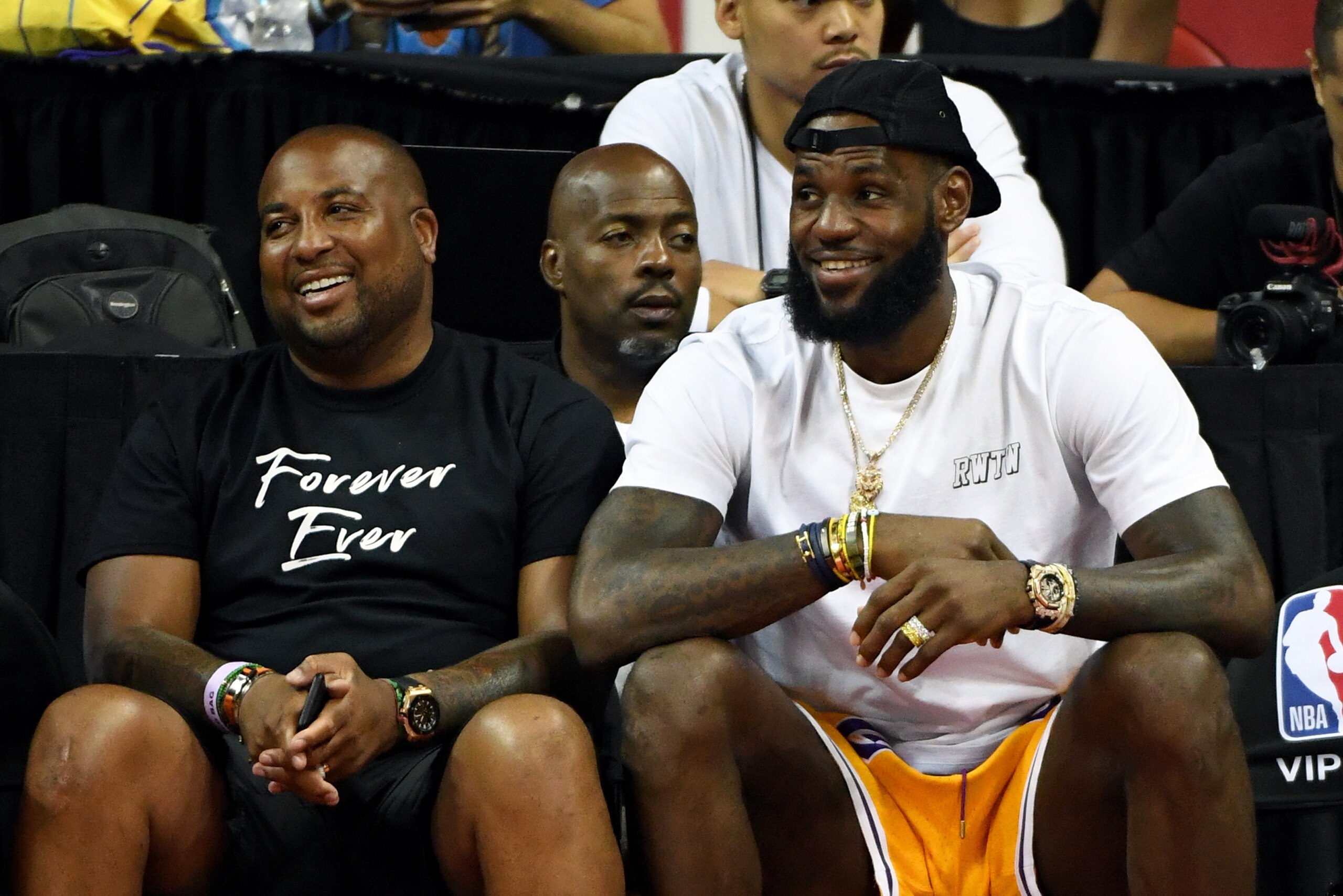

NBA Metrics 101: Where LeBron-to-LA Ranks Among All-Time Greatest FA Signings
Adam Fromal
Plenty of free agents join new teams during any given NBA offseason, but departures from stars of LeBron James' magnitude come fewer and further between. Those players are typically easier to retain with offers of max money, and even the ones sure to change jerseys are usually shopped around prior to their exits so the old organizations can receive some sort of compensation.
But James still joined the Los Angeles Lakers via the open market this summer, and he's not the first All-Star to engage in a location swap since unrestricted free agency came into being during the summer of 1988, when Tom Chambers became the first man to sign a new contract in such fashion.
James, a four-time MVP still playing out his extended prime, is the latest example. But is the Lakers' acquisition of his talents the greatest free-agency signing during the 31 seasons of unrestricted free agency's existence?
To answer that question, we're turning to some numbers. I looked at all 2,791 examples of players moving from one home to another as free agents since 1988 (also including those who played for multiple teams in either their pre- or post-free-agency seasons, since filtering them out at this stage was impossible), analyzing their ages upon entering the open market and their cumulative tallies (regular season and playoffs) in NBA Math's total points added during the two seasons prior to seeking out new contracts.
To be clear, this is not a retroactive analysis, though we are subjectively weighing age and production to determine the countdown's order.
What happened after they changed uniforms is wholly irrelevant, since we're only concerned with their status at the time of departure. Steve Nash joining the Phoenix Suns and winning a pair of MVPs, for example, doesn't outweigh his relatively limited stature after more restrained performances for the Dallas Mavericks. Only in retrospect does that become an all-time-great signing, though it was always a strong one.
Additionally, we're not including sign-and-trades in the analysis. In those transactions, the departed team receives compensation, which runs counter to the intended purpose of limiting the pool to the last 31 seasons.
10. Gilbert Arenas to Washington Wizards in 2003
1 of 10
Old Team: Golden State Warriors
New Team: Washington Wizards
Age in Previous Season: 21
Combined TPA in Two Previous Seasons: 156.67
Rarely does a player so young hit the open market and change teams, but Gilbert Arenas' situation was anomalous because the Golden State Warriors unearthed him with the No. 31 pick of the 2001 NBA draft and watched as he immediately blossomed into a star. During his sophomore campaign, he averaged 18.3 points, 4.7 rebounds and 6.3 assists while slashing 43.1/34.8/79.1 and leading the Dubs to their best record in the last nine campaigns.
Then the Washington Wizards poached him away, allowing him to blossom into Agent Zero while functioning as a historically potent offensive asset. His combined TPA of 156.67 in the two seasons prior to his departure trailed 105 other sums earned by free agents who'd change teams in an offseason during the open-market era (including all five of our honorable mentions listed below), but that's understandable when we're looking at the guard's first two professional go-rounds.
Plenty of other players have swapped squads in free agency after the conclusion of their age-21 seasons (or even earlier), but no one has done so while already experiencing the success Arenas earned. In fact, the only other young men with positive two-year TPAs were Troy Hudson in 1998 (0.4 TPA before going from the Utah Jazz to Los Angeles Clippers), Daniel Orton in 2012 (3.1 while going from the Orlando Magic to the Oklahoma City Thunder) and Darko Milicic in 2007 (21.3 while going from the Orlando Magic to Memphis Grizzlies).
Arenas is unique, truly existing in a class of his own.
Honorable Mentions:
- DeMarcus Cousins to Golden State Warriors in 2018
- Oliver Miller to Detroit Pistons in 1994
- Paul Millsap to Atlanta Hawks in 2013
- Dikembe Mutombo to Atlanta Hawks in 1996
- Ben Wallace to Chicago Bulls in 2006
9. Gordon Hayward to Boston Celtics in 2017
2 of 10
Old Team: Utah Jazz
New Team: Boston Celtics
Age in Previous Season: 26
Combined TPA in Two Previous Seasons: 371.11
Remember, we're not judging these retroactively.
Gordon Hayward hasn't made many contributions to the Boston Celtics since spurning the Utah Jazz and departing for Beantown. He was only on the floor for five minutes and 15 seconds in the season opener before going down hard and suffering a brutal injury to his lower extremities that knocked him out for the remainder of the 2017-18 calendar. His teammates thrived in his absence and nearly ended LeBron James' reign of terror over the Eastern Conference, but could they have been even better with him wearing a green uniform rather than street clothes?
We'll find out the answer in 2018-19, but it won't change his placement here. Even if he's never the same (and we're all hoping that isn't the case), he'd done so much in Salt Lake City that he still emerged as a massive free-agency addition.
Hayward was coming off the first All-Star appearance of his career, earned during a season in which he'd averaged 21.9 points, 5.4 rebounds, 3.5 assists and 1.0 steals while shooting 47.1 percent from the field, 39.8 percent from downtown and 84.4 percent at the stripe. Everything had clicked for this all-around contributor, allowing him to brush shoulders with other elites while just entering his athletic prime.
That's what we're concerned with here—the status of the player at the time of his location change. What happened afterward is irrelevant, even in extreme cases like Hayward's.
8. Vlade Divac to Sacramento Kings in 1998
3 of 10
Old Team: Charlotte Hornets
New Team: Sacramento Kings
Age in Previous Season: 29
Combined TPA in Two Previous Seasons: 449.5
Before joining the Sacramento Kings, with whom he'd make the first and only All-Star appearance of his underrated career in 2001, Vlade Divac had already thrived for the Los Angeles Lakers. Then he'd suited up for the Charlotte Hornets for two seasons, averaging a combined 11.7 points, 8.6 rebounds, 3.3 assists, 1.3 steals and 1.9 blocks while slashing 49.5/23.0/68.7.
Nothing about Divac's game was particularly outstanding. He was just a solid all-around player who did things centers weren't supposed to do in the late '90s—dishing out dimes while serving as a secondary hub of distribution in the half-court set and spacing out the floor with some mid-range jumpers. In many ways, he was an ahead-of-his time big despite the lack of scoring volume and non-elite rebounding tallies.
Of course, that also allows his age to be less of a concern, as is the case for the next player up in this countdown.
Divac's game was always going to mature well because of the skill with which he played. He wasn't wholly dependent on athletic superiority, which smoothed out his career curve and allowed him to continue producing laudable seasons long after Father Time was supposed to affect his game. In fact, he posted positive box plus/minuses throughout the entirety of his six-year tenure with the Kings, only falling into the red after rejoining the Lake Show for his age-36 go-round.
7. Al Horford to Boston Celtics in 2016
4 of 10
Old Team: Atlanta Hawks
New Team: Boston Celtics
Age in Previous Season: 29
Combined TPA in Two Previous Seasons: 452.14
Much like Divac, pre-Boston Celtics Al Horford operated with a well-rounded game that figured to be rather impervious to the effects of advancing age. He could pass like a guard, shoot threes in spot-up situations, anchor a defense while allowing wings to switch on everything and take over with short spurts of scoring prowess from all over the half-court set. If he had a distinct weakness during the prime years of his career (other than the occasional rebounding slippage), it was masked rather well by the Atlanta Hawks.
Horford's scoring average wouldn't blow anyone away. His rebounding totals were lackluster. He didn't receive due credit as a fringe MVP candidate and didn't make the All-NBA team again after an appearance in 2010-11.
But during the two years prior to his departure from the Peach State, Horford averaged 15.2 points, 7.2 rebounds, 3.2 assists, 0.9 steals and 1.4 blocks—numbers only matched by 34 qualified players throughout NBA history. And no, efficiency didn't exactly drag down this Florida product's profile, considering he rarely turned the rock over while shooting 52.1 percent from the field and 77.8 percent at the stripe.
Horford has finally started to get the credit he deserves while working under the supervision of Boston head coach Brad Stevens. But only revisionist history would fail to recognize that he was pretty darn good throughout his Atlanta tenure, as well.
6. Baron Davis to Los Angeles Clippers in 2008
5 of 10
Old Team: Golden State Warriors
New Team: Los Angeles Clippers
Age in Previous Season: 28
Combined TPA in Two Previous Seasons: 477.9
This deal ended up becoming disastrous.
Baron Davis became overpaid by such a large amount ($13.9 million in 2011-12 alone, which is a lot different than $13.9 million these days) that the Los Angeles Clippers dealt him to the Cleveland Cavaliers for Jamario Moon and Mo Williams...but they also had to give up an unprotected 2011 first-round pick as a sweetener. That selection would turn into Kyrie Irving, and the rest is history.
But again, we're not looking at these signings retroactively.
When the Clippers inked Davis to this albatross contract, he was entering his age-29 season and coming off a year in which he'd averaged a whopping 21.8 points, 4.7 rebounds, 7.6 assists, 2.3 steals and 0.5 blocks while slashing 42.6/33.0/75.0 and appearing in every single game. They had no reason to expect a precipitous decline and a shooting stroke only found on milk cartons. He'd been playing at a remarkably similar level for each of the last three seasons, only moving between 3.2 and 3.6 in box plus/minus.
That October, SlamOnline.com ranked him as the No. 16 player in the league, with Sam Rubenstein penning the following:
"What is there not to love about Baron Davis? If you’re not a fan of Baron’s, maybe there’s something wrong with you. But I will answer my own question, what is there not to love? He has been injury prone in the distant past, he shoots too many threes, and he’s not the greatest defensive player. That’s it, those are his flaws."
He was a legitimate stud at the time. Plain and simple.
5. Horace Grant to Orlando Magic in 1994
6 of 10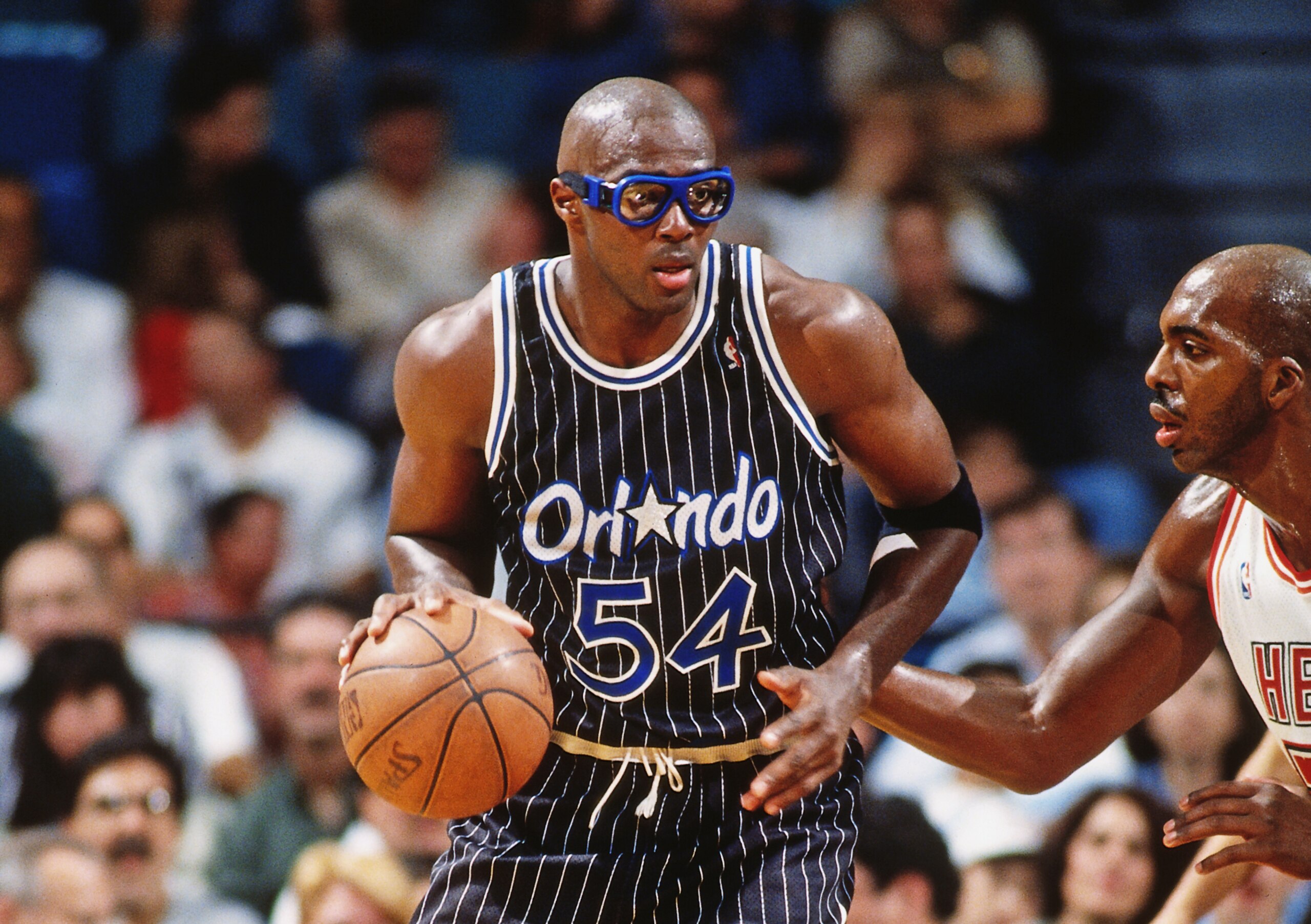
Old Team: Chicago Bulls
New Team: Orlando Magic
Age in Previous Season: 28
Combined TPA in Two Previous Seasons: 562.04
Perhaps the world fails to remember the true height of Horace Grant's powers because it's so easy for him to fade into the lengthy shadows cast by Michael Jordan and Scottie Pippen. But this big man was an integral part of the Chicago Bulls' first three-peat, and he even made the first All-Star squad of his career in 1993-94 before joining the Orlando Magic that offseason.
That wasn't merely a nod to the achievements of his team without a baseball-playing Jordan, either.
Grant averaged 15.1 points, 11.0 rebounds, 3.4 assists, 1.1 steals and 1.2 blocks while shooting 52.4 percent from the field, and that still sells his utility short. It doesn't represent just how crucial his presence was to the success of the Chicago defense or show the value his mistake-averse play retained while he fully accepted a limited offensive role.
The 28-year-old finished the regular season with the league's No. 10 score in NBA Math's TPA, lagging behind only the following luminaries: David Robinson, Hakeem Olajuwon, Pippen, Shaquille O'Neal, Karl Malone, Shawn Kemp, Mookie Blaylock, Chris Webber and Charles Barkley. He played even better on a per-possession basis during Chicago's two-round playoff venture and ended the postseason replicating his No. 10 placement despite logging fewer minutes than many other contributors.
When he jetted to the Magic, teaming up with O'Neal, Anfernee Hardaway, Nick Anderson and Dennis Scott on a squad that would advance to the 1995 NBA Finals before getting swept by the Houston Rockets, he was operating like a bona fide star.
4. Kevin Durant to Golden State Warriors in 2016
7 of 10
Old Team: Oklahoma City Thunder
New Team: Golden State Warriors
Age in Previous Season: 27
Combined TPA in Two Previous Seasons: 547.27
A top-five star changing teams via free agency while squarely in the midst of his prime isn't an everyday occurrence, and it's even rarer for that celestial contributor to join a squad that had just won a record-setting 73 games during the regular season.
So sushi-grade rare, in fact, that it's only happened once.
Kevin Durant joining the Golden State Warriors, a team that eliminated him and the Oklahoma City Thunder during the playoffs just prior to his free-agency venture, might not match up against the three remaining decisions in our countdown, but it was still an unprecedented move. You might even have heard that it "wrecked the NBA" at your local water-cooler, though that take overlooks plenty of relevant information.
And so, we've entered a new tier.
Horace Grant joining the Orlando Magic was a big deal. Ditto for Baron Davis teaming up with the Los Angeles Clippers. But those exist a stratum below a player of Durant's caliber changing locations. They weren't unquestioned All-NBA talents playing offense at historic levels while still improving the other facets of their games. They were worse players, and they were already older.
Only the moves of special talents could overtake this one. Fortunately, we have a few.
3. Shaquille O'Neal to Los Angeles Lakers in 1996
8 of 10
Old Team: Orlando Magic
New Team: Los Angeles Lakers
Age in Previous Season: 23
Combined TPA in Two Previous Seasons: 573.12
If the numbers don't sway you, perhaps this quote from then-Los Angeles Lakers executive vice president Jerry West, relayed by Mark Heisler of the Los Angeles Times, will:
"Over the last number of days, I can't tell you how many highs and lows that I've gone through...About 2:15 in the morning, when we signed the contract, was probably the most relieved I've ever felt in my life.
"I really can't explain. I've often thought that the birth of my children was something I'll never forget and just the excitement of this, for us to sign him, really ranks right there with it."
Landing a generational talent is always a big deal, but the Lakers managed to steal Shaquille O'Neal away from the Orlando Magic right after his age-23 season. The big man had already won a scoring title, led his troops to the NBA Finals and finished in the top five of the MVP voting on two separate occasions. He was a full-fledged superstar morphing the league into his own personal playground.
Oh, and the numbers actually sell him short.
O'Neal only played in 54 games during his final go-round with the Magic, missing action at the beginning of the year while he recovered from a broken thumb. His combined TPA would've been even higher with a full slate of health, though his tally still would've been dwarfed by the top two finishers.
2. LeBron James to Los Angeles Lakers in 2018
9 of 10
Old Team: Cleveland Cavaliers
New Team: Los Angeles Lakers
Age in Previous Season: 33
Combined TPA in Two Previous Seasons: 1,481.98
We don't yet know how this will play out.
Maybe LeBron James will help the Los Angeles Lakers shock the world and dethrone the stacked Golden State Warriors as he advances to his ninth consecutive appearance in the NBA Finals, this time emerging from the loaded Western Conference rather than the league's inferior half. Perhaps the Purple and Gold will experience growing pains, struggling to make the playoffs without major trades that upgrade a remarkably youthful supporting cast.
Either way, whichever extreme becomes a reality (or, more likely, when we reach a compromise between those polarities), James was a massive get for Magic Johnson's organization. After years of Lakers exceptionalism failing to land premier talents and forcing the reins into the hands of up-and-comers such as Brandon Ingram, Lonzo Ball and Kyle Kuzma, this franchise reeled in the biggest of big fish.
In this one scenario, Qui-Gon Jinn was incorrect.
Yes, James is 33 years old. He should be facing an age-mandated decline at any point now. His ball-commandeering style has made it difficult to thrive alongside him in recent seasons, and his mere presence means the Los Angeles youngsters must both adjust to the rigors of the NBA and deal with omnipresent hyperfocus on the team's trials and tribulations.
But he's still LeBron James. Even in what might typically be considered the twilight of a career, he's posting historic numbers and leaving little doubt he remains the best player in the world. His combined TPA in the previous two seasons (1,481.98) is more than double that of anyone else's, save our No. 1 finisher. Directly trailing him is 31-year-old Ben Wallace (listed among the honorable mentions), who racked up 621.89 TPA before jumping from the Detroit Pistons to the Chicago Bulls with far less fanfare.
Only one of the greatest players in NBA history leaving his old stomping grounds while squarely in the midst of his prime could dethrone this royal figure.
1. LeBron James to Cleveland Cavaliers in 2014
10 of 10
Old Team: Miami Heat
New Team: Cleveland Cavaliers
Age in Previous Season: 29
Combined TPA in Two Previous Seasons: 1,441.89
Had LeBron James joined the Miami Heat strictly through free agency, that would've been the No. 1 finisher. He hadn't yet celebrated his 26th birthday, and he was coming off a pair of seasons in which he earned a combined 1,728.35 TPA during the regular season and playoffs. That blows both his tallies listed in this countdown all the way out of the water.
But James joined the Heat via sign-and-trade, allowing compensation (two second-round picks, two first-round picks and a pick swap that was never exercised) to move back from South Beach to Northeast Ohio. And as such, that move was ineligible for our rankings, leaving his return from the Heat to the Cleveland Cavaliers as the obvious No. 1.
Not only was he four years younger than now, but he was playing at a similarly high level. James won MVP twice in his brief Miami tenure, including a 2013 honor that wasn't exactly part of the distant past when he was changing locations. Though Kevin Durant and others were challenging his supremacy, he was rather clearly the best basketballer on Planet Earth, even shooting threes at a high level to shore up what had previously been one of his few weaknesses.
The fact that Shaquille O'Neal was coming off his age-23 season when he first donned purple-and-gold threads allows him to at least sniff this top tier, but it remains a level occupied by only James himself during the modern era. He's just been that good in recent years.
Unless otherwise indicated, all stats courtesy of Basketball Reference, NBA.com, NBA Math or ESPN.com.


.jpg?w=2560 "Jonathan Taylor Landing Spots 📍")



