

MLB All-Star Voting 2018: Leaders, Standings, Final Results Release Info
The MLB All-Star Game is returning to Washington, D.C. for the first time since 1969, when the Midsummer Classic was played in RFK Stadium. The hometown team then was the Washington Senators, who would turn into the Texas Rangers three years later.
Baseball returned to the nation's capital in 2005 when the Montreal Expos became the Washington Nationals, but the All-Star Game hasn't made a D.C. appearance since then. That all changes on Tuesday, July 17.
Here's a look at the latest official All-Star voting results through Monday, July 2 via the MLB Communications office, as well as an updated look at some of the closer races through Thursday, July 5.
TOP NEWS
Brewers Stun Padres in Game 2 😧
Braves' Opener Shines vs. LA 💪
Aaron Boone Calls Out Yankees Catcher 🗣️
Per an MLB.com press release, the starters, pitchers and reserves for the American and National League teams will be revealed Sunday at 7 p.m. ET on ESPN. Following the announcement, fans can vote for the final player on each league's roster.
MLB All-Star Voting as of July 2
July 5 Update: Closest Races
What To Watch: 2018 MLB All-Star Game
The Surging Atlanta Braves
The Atlanta Braves' stacked farm system foreshadowed a likely return to National League prominence, but the team is peaking earlier than expected.
Atlanta, which is just percentage points behind the Philadelphia Phillies for first place in the National League East, should be well-represented in this year's game.
Of note, 21-year-old second baseman Ozzie Albies has been phenomenal this year, hitting 18 home runs alongside 50 runs batted in. He also sports an .837 OPS. Right now, he is holding off Chicago Cubs second baseman Javier Baez and Scooter Gennett of the Cincinnati Reds for the starting role at the keystone sack.
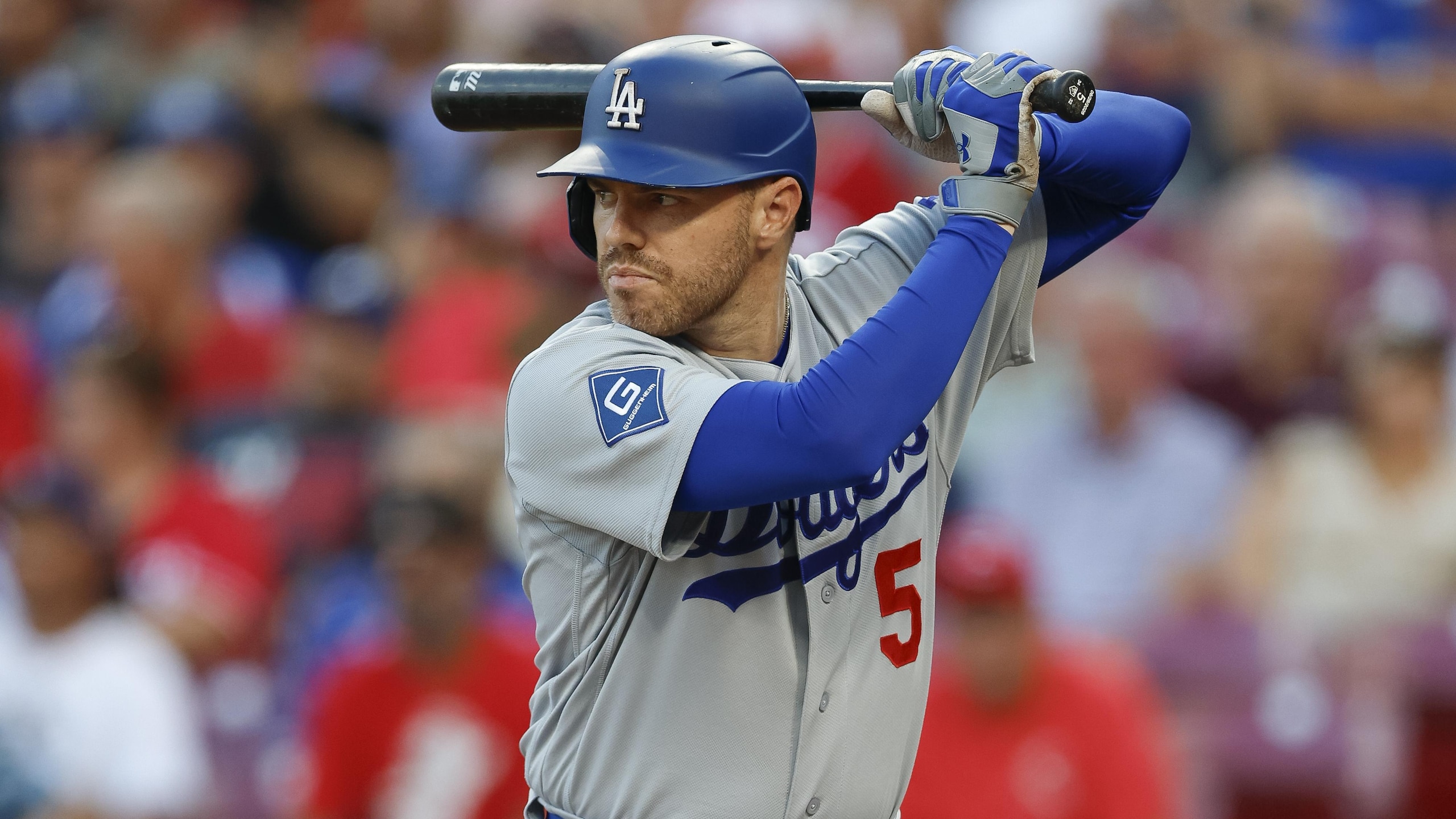
Elsewhere, first baseman Freddie Freeman is a shoo-in to start, as he's been the best hitting player at his position by far this year (both leagues included). His .921 OPS leads the team, and he is second in homers (16), RBI (57) and batting average (.304).
Freeman isn't leading the team in RBI or batting average because veteran outfielder Nick Markakis is having the best season of his career. The 13-year pro is hitting a career-high .324 alongside 10 home runs and 58 RBI. His 111 hits are also first in the NL.
Albies, Freeman and Markakis should make up one-third of the NL's starting batting lineup, but a few of their teammates could make the trip north to D.C. Of note, pitchers Sean Newcomb (8-3, 3.10 ERA, 92 strikeouts) and Mike Foltynewicz (6-5, 2.37 ERA, 114 strikeouts) could each be making appearances out of the NL bullpen.
The American League Pitching Staff
Tampa Bay Rays ace Blake Snell is 12-4 with a 2.09 ERA and 132 strikeouts in just 116.0 innings pitched. Those are stellar numbers that could warrant a starting nod in the All-Star Game in other years, but the 2018 season is stacked with AL pitchers having phenomenal campaigns.
If you take a look at ESPN's AL Cy Young predictor, Snell is just seventh on the list despite his numbers. The top seven AL starting pitchers (the New York Yankees' Luis Severino, the Houston Astros' Charlie Morton, Justin Verlander and Gerrit Cole, the Cleveland Indians' Corey Kluber, Boston Red Sox lefty Chris Sale and the aforementioned Snell) should all be making plans for Washington D.C.
Severino leads the AL with 14 victories and also sports a microscopic 2.12 ERA. He's left the mound without allowing an earned run six times this year.
Per Fangraphs, more than half of Morton's batted balls allowed are grounders (50.4 percent rate). That's in addition to a 31.5 percent strikeout rate.
Verlander had a 1.11 ERA through May, according to Baseball Reference. He's come back to Earth a little bit since then, but he's still mowing down hitters (154 strikeouts in 125.2 innings).
The third Astro (Cole) hasn't struck out fewer than five batters in any of his starts this year, and he averaged 11 punchouts per start over his first seven outings.
Kluber isn't striking out as many batters as he has in the past, but that hasn't affected his dominance. Of note, he has just a 2.9 percent walk rate, per FanGraphs, in addition to a 2.80 xFIP.
Sale is arguably the best pitcher of the bunch: Per FanGraphs, his 2.49 xFIP leads this group, as does his 36.8 percent strikeout rate and 28.1 percent soft contact rate.
Ultimately, this all spells a significant amount of trouble for the NL bats. It's possible a pitcher or two from this group doesn't make an appearance: A start on the mound the Sunday before the game could preclude that player from participating, as noted by Anthony Castrovince of MLB.com, although there is no hard rule against someone from doing so anymore.
Still, this is a murderer's row of pitchers even without one or two of them in the mix.
.jpg?w=2560)

.jpg?w=2560 "NFL investigating 2 referees for separate viral exchanges")

.jpg?w=2560 "Report: Chiefs Contact Hill's Agent")
.jpg?w=2560 "OBJ Calls Out Giants 😳")
.jpg?w=2560 "Tyreek makes another cryptic post amid Chiefs rumors")


.jpg?w=2560 "Greenlaw Talks Payton Exchange")
