

Patience is a virtue in the NBA—especially now, for a handful of teams, as the silly season nears.
More than half the league will enter the summer without cap space or meaningful flexibility. Such a cash-strapped field invariably puts pressure on the select few squads with room to spare. They'll be expected to turn highly commoditized breathing room into appreciable upgrades.
Some of the more well-off franchises have ingrained excuses. The Atlanta Hawks and Sacramento Kings are in the infancy of resets. They won't be called upon to use their cap space for anything more than bad-contract absorption.
Certain teams have no choice but to go for broke now. The Phoenix Suns aren't known for stealing top free agents under normal circumstances but are one year out from Devin Booker's cap hold spiking. Any urgency they feel to strike this summer is defensible, if necessary.
Other potential spenders are caught somewhere in the middle. They're in line for significant cap space or within distance of generating it, but they don't have that same drive or exigency to treat this offseason as a must-have opportunity.
They're either better off restricting their offseason activity or best suited waiting until next summer altogether.
Dallas Mavericks
1 of 5
Insta-turnarounds are hard to complete, but the Dallas Mavericks are interested in returning to the playoffs next year, per The Ringer's Kevin O'Connor. And they're one of the few teams with relatively effortless access to more than $20 million in space. That absence of competition, coupled with a soon-to-be 40-year-old Dirk Nowitzki, gives them both means and motive to play the market fast and loose.
"We have the cap room," owner Mark Cuban said in April, per the Dallas Morning News' Eddie Sefko. "That's why we have it—to use it. There's no reason to save it."
Counterpoint: There might be.
The Golden State Warriors aren't going anywhere. The same goes for the Houston Rockets. Other teams, like the Denver Nuggets and Utah Jazz, are primed for more organic leaps. The Mavericks could end up spending themselves silly for the right to chase a bottom-three seed.
Inviting immediately elevated expectations is also disingenuous to the learning curve of their youngsters. Dennis Smith Jr. needs the long leash associated with a rebuilding emphasis, as will Dallas' No. 5 pick.
Waiting out the market, meanwhile, puts the Mavericks in position to aim higher. The 2019 free-agency class will be deeper and younger and better suited to fill their larger voids.
For all the to-do about shoring up the middle, perhaps with Clint Capela (restricted), DeMarcus Cousins or Aaron Gordon (restricted), this team needs more combo wings. At least two of Jimmy Butler (player option), Kawhi Leonard (player option), Khris Middleton (player option) and Klay Thompson should be hitting the open market next summer. Younger possibilities more in tune with Dallas' long-term window will be up for grabs as well: Tobias Harris, Kelly Oubre Jr. (restricted), Justise Winslow (restricted), etc.
Cuban did leave open the possibility of parlaying cap space into unwanted contracts attached to assets, per Sefko. That's more in the Mavericks' wheelhouse—if they're talking about larger expiring deals.
Play their cards right, and they'll have more than $50 million in spending power one year from now. That number will dip depending on what happens with incumbent free agents like Seth Curry and Doug McDermott (restricted). Overall, though, they're looking at much cleaner books, with the outside shot of opening up dual-max slots if Harrison Barnes or Dwight Powell decline their 2019-20 player options.
And whereas smaller-time organizations need to kill themselves capitalizing on a skimpy buyer's field, the Mavericks remain a desirable landing spot in the feistiest of summers. They can, and should, navigate a more cap-rich field. The potential reward far outweighs the inherent risk.
Indiana Pacers
2 of 5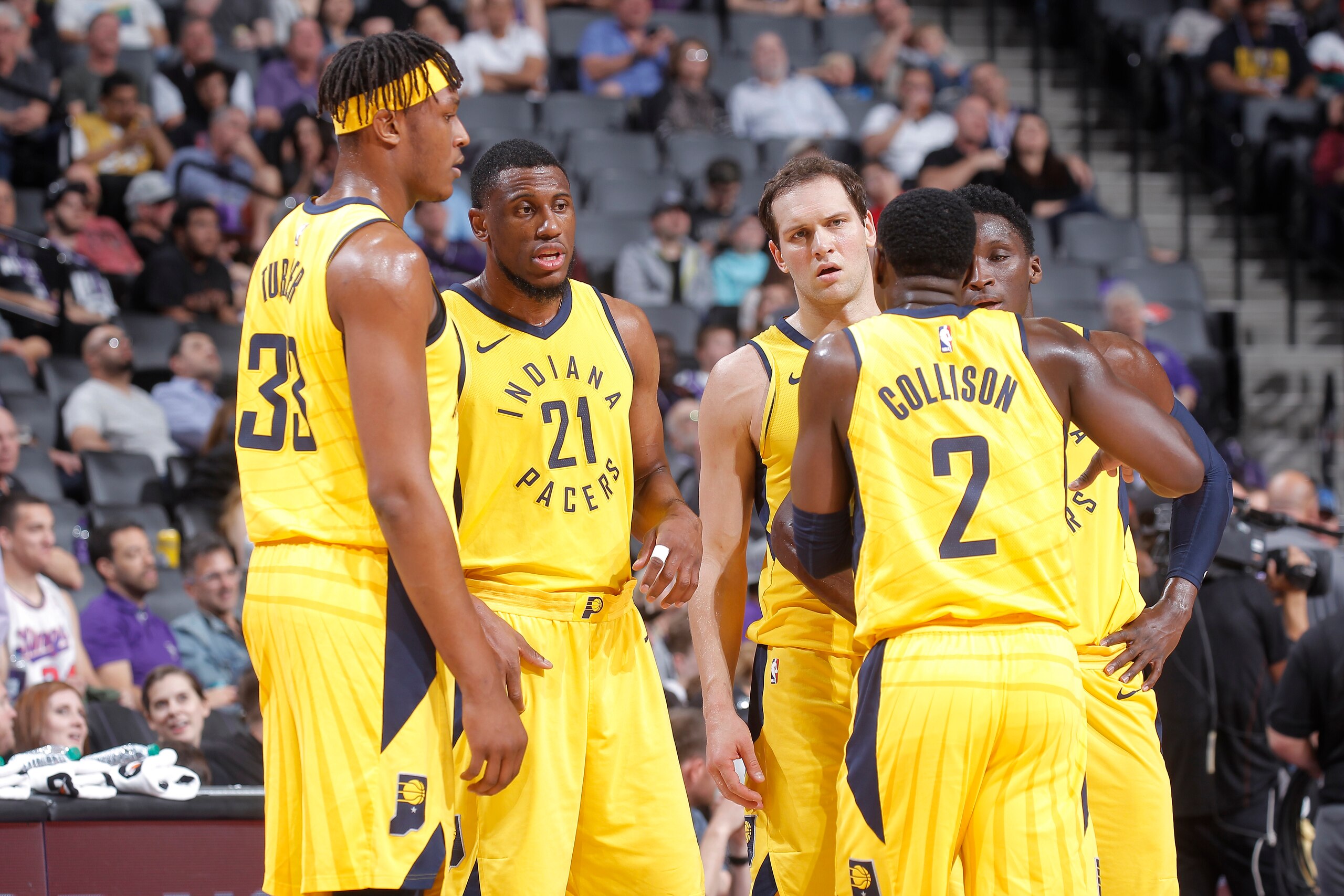
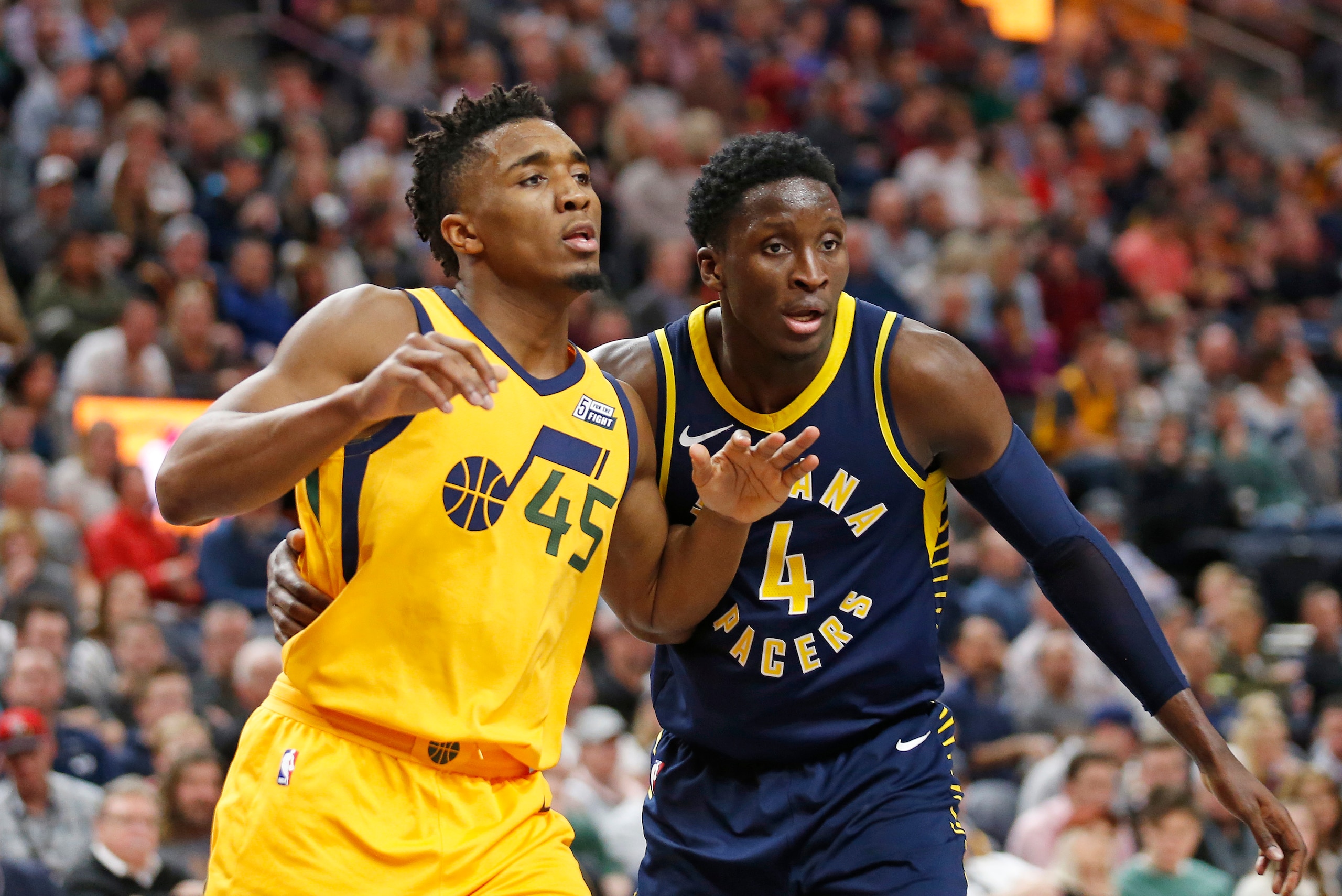
Suggesting the Indiana Pacers wait to strike in free agency is borderline criminal. The landscape is begging for buyers now, and they're touting more than $30 million in non-guaranteed money.
Scenarios exist in which they cruise past the max-space pole and have the scratch to sign two big-money names. Ignoring that flexibility comes with inbuilt risk. They're not known for appealing to free agents during normal summers. Indiana is not Dallas. Subjecting itself to a more expansive field erases the leverage it carries now.
But overreacting to a surprise 48-win campaign is even more dangerous. The Pacers need to see if this core's rise is for real—if Victor Oladipo really is an All-NBA mainstay and their opportunistic offensive model can transcend a year's worth of scouting reports.
Don't misinterpret this as doubt. Indiana is probably legitimate. Teams don't walk into near-50-victory crusades or take the LeBron James and milk-carton faces to seven games on accident.
Chalk this up to curiosity instead. The Pacers need to part ways with standout performers to squeeze the most of their ledger—mainly Lance Stephenson (team option), partially guaranteed deals for Bojan Bogdanovic ($1.5 million guaranteed) and Darren Collison ($2 million guaranteed) and Thaddeus Young, who is "seriously contemplating declining his $13.7 million player option," according to ESPN.com's Adrian Wojnarowski.
Losing Young organically is one thing. Cutting the cord on rotation staples by design is an entirely different matter. The Pacers have to believe that cap space will lure in free agents—and that the resulting signees are better alternatives.
That latter caveat represents a gargantuan assumption. Is taking a swing at restricted free agents like Rodney Hood or Aaron Gordon worth the collateral damage? Are multiyear contracts for second-tier names, such as Will Barton or Kentavious Caldwell-Pope, that much of a needle-nudger?
Next year's class offers more variety. And while the Pacers will be dealing with a bigger cap hold for Myles Turner as he enters restricted free agency ($10.2 million), their collection of expiring pacts still paves the way for nearly $60 million in room if they don't add any long-term money this summer.
Resisting the pull for smaller-scale swings will be tough. Indiana can indulge. Fliers on a Barton- or KCP-type free agent wouldn't gum up the bottom line that much. But waiting altogether doesn't equate to a massive disappointment. Not when so much imminent flexibility is on the table.
Besides, if the Pacers get the itch to adjust during the season, they're well of expiring deals will make for one helluva trade package.
Los Angeles Lakers
3 of 5
Pretty pretty please, with a smiley-Magic-Johnson-face sugar cookie on top, do not fill the comments section with molten-hot tongue-lashings just yet. Context is everything.
If the Los Angeles Lakers can sign Paul George (player option) and/or LeBron James (player option), they should do it. But their free-agent ambitions should be limited to this party of two. Beyond them, they must be prepared to wait. Pivoting into expensive contingencies does nothing for the Lakers' future. The non-LeBron, non-PG13 market is rife with underwhelming risks.
Funneling money into a second-rung star like DeMarcus Cousins or DeAndre Jordan won't spearhead a return to the playoffs. This will be the summer to poach restricted free agents, but the price of the chase won't be worth the prize when said reward is Clint Capela, Rodney Hood, Aaron Gordon, Zach LaVine, Jabari Parker et al.
Along with Wojnarowski, ESPN.com's Ramona Shelburne reported in February the Lakers would kick the can to 2019 if they whiff on their primary targets this summer. Sticking to that plan promises a crack at another crop of stars. From Jimmy Butler and Klay Thompson to Kawhi Leonard Kemba Walker, they wouldn't want for polarizing additions. James himself could hit the market if he picks up his player option (presumably to force a trade from Cleveland).
Land just one of the intended big fish, and the Lakers' penchant for patience shouldn't change. As of now, even if they re-sign Julius Randle, they'll have no trouble dredging up $50 million in wiggle room. They'll retain proximity to near-max space with George or James on the books and could easily drum up more by waiving or trading Luol Deng, who would, by that point, be an expiring contract.
There will be no shame in championing this conservative approach. The Lakers have the tantalizing youthful base to justify another developmental year. As The Ringer's Jonathan Tjarks underscored just after the trade deadline:
"Put it all together and the Lakers have a well-rounded five-man core with a lot of room to grow. Ingram and Kuzma have the chance to be primary offensive options, while Ball and Hart should become elite role players in time and Randle could develop into a perennial Sixth Man of the Year candidate. The only thing they are missing is a shot-blocking big man at center. They can roll the dice on an athletic 7-footer like Mitchell Robinson or Brandon McCoy with Cleveland’s pick or take a chance on someone like Nerlens Noel in free agency."
Nothing has changed over the past few months. And the lingering idea that the Lakers must hemorrhage urgency because they don't own their 2019 first-rounder and because they're the Lakers is flat-out dumb.
Staying lean now allots more flexibility for midseason trades when disgruntled or cagey superstars inevitably become available. And prioritizing stopgap salaries allows them to, potentially, gain early Bird Rights on Kentavious Caldwell-Pope—a could-be valuable supporting cast member for future star-stacked iterations.



New York Knicks
4 of 5
The New York Knicks' salary-cap situation rests largely on Enes Kanter. Opt out, and he'll gift them significant room, with the potential to summon even more. Opt in, and he forces them to tread water or explore more complicated cap-clearing measures.
Whatever Kanter's decision, the Knicks should be content to stand pat.
Taking on long-haul commitments doesn't make sense when they don't have anything to play for next season. Franchise cornerstone Kristaps Porzingis is recovering from a torn left ACL, and owner James Dolan has already said he's not guaranteed to return before 2019-20.
Any glitzy additions the Knicks secure now would be marginalized before Porzingis' absence. Getting him back around Christmas or just after the New Year doesn't change that. Prospective free-agent pitches will be stronger next summer, when he's presumably healthy and the team is fully acclimated to new head coach David Fizdale.
Waiting also ensures the Knicks won't have as many hoops to jump through. Porzingis' cap hold will jump in advance of restricted free agency ($17.1 million), but Kanter, Ron Baker (restricted), Emmanuel Mudiay (restricted) and Kyle O'Quinn (player option for 2018-19) all come off the books.
Hold serve for this summer, and the Knicks have a no-strings invitation to $20 million in room next July. That figure will mushroom if they waive Lance Thomas ($1 million guaranteed) or offload Courtney Lee's expiring salary into a contender's cap space.
Heck, Joakim Noah might even be tradeable with only one year left on his deal. And maybe the final two seasons and $37.1 million on Tim Hardaway Jr.'s contract won't look so bad to the outside eye.
If nothing else, the Knicks just aren't ready to spend now. They need a better idea of what they have in Mudiay, Trey Burke, Frank Ntilikina, the No. 9 pick and a post-recovery Porzingis before acting on expensive impulses. Playing their way into another high lottery pick should appeal to them more than any free agent.
Draft-lottery reform ups the risk for teams plumbing rock bottom, but the worst records still receive the best odds of landing the No. 1 selection. Hitting on a cost-controlled building block will be paramount as Porzingis enters the first year of a new deal and the Knicks wait out Hardaway's pricey albatross. Removing themselves from the ultra-aggressive offseason ranks effectively gives them three shots at unearthing that cheap sidekick in Ntilikina, the No. 9 selection or next June's first-rounder.
Utah Jazz
5 of 5
No team posted a better point differential per 100 possessions after the All-Star break than the Utah Jazz. With a plausible road to $20 million or more of space, why in the bleepity bleeping bleep wouldn't they want to pass up the opportunity to party-crash the Western Conference's aristocracy?
In two words: collateral damage.
Grinding out a $20 million slush fund demands the Jazz renounce Dante Exum (restricted), Derrick Favors and Raul Neto (restricted) while waiving Thabo Sefolosha, Jonas Jerebko, David Stockton and Ekpe Udoh. Stretching or trading Alec Burks' expiring deal affords them the maneuverability to keep Exum or Favor, but that comes as little consolation when looking at their options.
Dangling $20-million-per-year offers won't get Aaron Gordon or Jabari Parker out of their current digs. Donovan Mitchell told Wojnarowski he's prepared to recruit A-listers, but the odds of him parlaying friendships with Paul George and Chris Paul into happily-ever-afters are not good.
Utah doesn't have the cap space to sign an established marquee name anyway. Burks needs to be jettisoned on top of the free-agent and non-guaranteed exits to make it happen. Failing that, Houston or Oklahoma City must be open to sign-and-trade possibilities.
Deferring ambitions into next 2019 is more appealing when cutting through that much red tape. The Jazz have conditional access to more than $45 million in space if they don't hand out multiyear agreements this summer.
Spending the non-taxpayer's mid-level exception while re-signing Favors and Exum still leaves them sitting pretty. At worst, they should have reasonable proximity to $25 million-plus. That's more than enough to join the race for, say, Khris Middleton and close enough to get face-time with Jimmy Butler.
And unlike every other squad on this list, the Jazz aren't conceding much by letting it ride. Better health could vault them into 50-win territory. Further exploration of Jae-Crowder-at-the-4 might do the same; those lineups outscored opponents by 13.8 points per 100 possessions, according to Cleaning The Glass.
Put it this way, and the Jazz's choice is simple: Pursue minor-to-modest upgrades now or count on incumbent progress doing the same while preserving relevance in 2019 free agency? Really, given how the Jazz closed the season, this isn't a choice at all.
Unless otherwise noted, stats courtesy of NBA.com or Basketball Reference. Salary and cap-hold information via Basketball Insiders and RealGM.
Dan Favale covers the NBA for Bleacher Report. Follow him on Twitter (@danfavale) and listen to his Hardwood Knocks podcast, co-hosted by B/R's Andrew Bailey.
.png?w=2560 "Week 8 Winners & Losers 📊")

_0.png?w=2560 "Unranked Teams Cause Chaos in Rankings 📊")

.jpg?w=2560 "Jonathan Taylor Landing Spots")