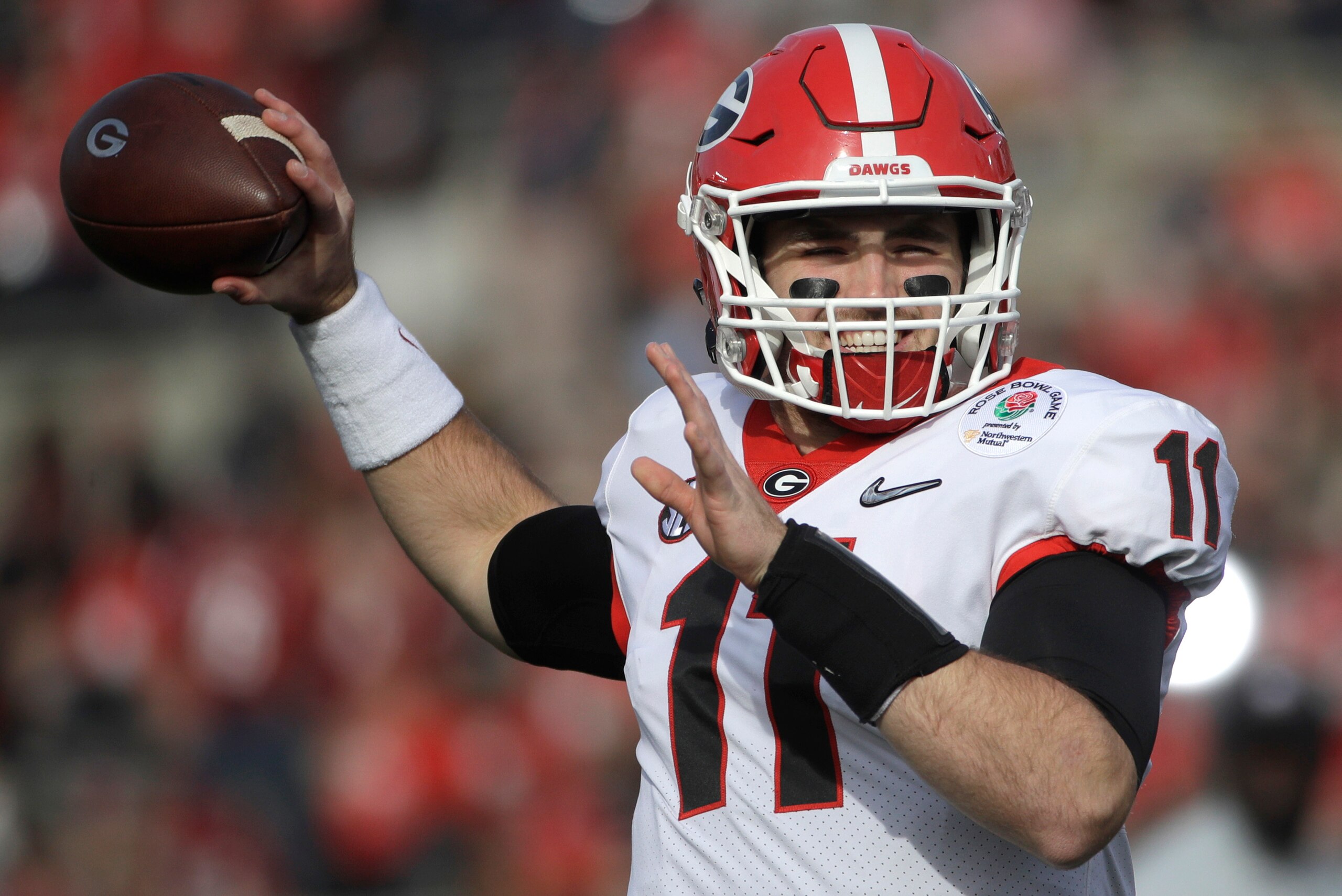

Predicting the Top 10 Offenses in College Football in 2018
Purists still love a 9-6 slobberknocker, but today's era of college football is filled with high-powered offenses racking up yards and points.
Looking ahead to the 2018 season, many scoring attacks stand out with the potential to excel. Based on a combination of scoring and yards per play, we've attempted to identify which programs will be the nation's 10 best.
Familiar teams speckle the list, which is loaded with proven offensive systems, productive returning quarterbacks and top-quality coaches.
Overall analysis about key players, weaknesses and expectations is provided for each offense highlighted.
10. Alabama Crimson Tide
1 of 10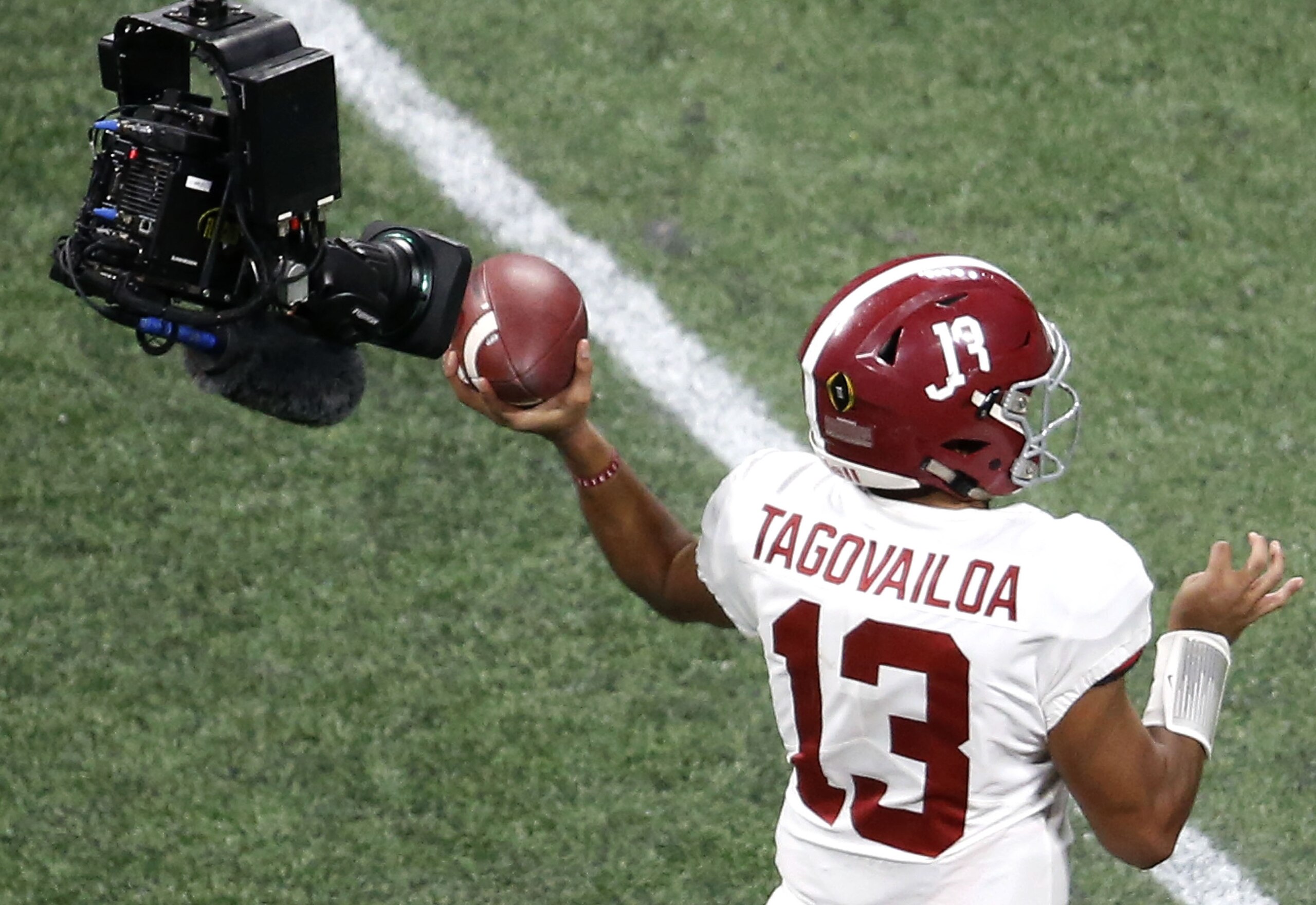
Key players: Perhaps the better question is which position doesn't fit this category. Alabama is loaded at quarterback (Jalen Hurts and Tua Tagovailoa), running back (Damien Harris and Najee Harris), receiver (Jerry Jeudy and DeVonta Smith) and offensive line (Jonah Williams, Lester Cotton, Ross Pierschbacher and Alex Leatherwood).
Potential weakness: Alabama ranked 26th in yards per pass last season. That's fine, but it could ultimately be enough to keep the Tide out of the top 10. Tagovailoa is more likely to help the number rise, so if Hurts retains the starting job, Alabama could narrowly miss the list.
What to expect: For most of the offseason, college football followers have worked under the assumption Tagovailoa will replace Hurts. Regardless, the Tide will rely on a powerful running game. The offensive line should be superb, and both Harrises are special backs.
9. Oregon Ducks
2 of 10
Key players: In the eight games Justin Herbert played last season, the offense averaged 6.8 yards per snap. That would've ranked 11th nationally. This projection assumes continued health, but Herbert's value is clear. Oregon also has a big-play threat in Tony Brooks-James and a diverse group of pass-catchers, including Dillon Mitchell and Jacob Breeland.
Potential weakness: Tyrell Crosby leaves a major vacancy at left tackle, and the offensive line battled injury problems during the spring. If the latter remains an issue while neither Brady Aiello Jr. nor George Moore Jr. lock down the left side, Oregon's potential strength up front will become a frustration.
What to expect: Marcus Arroyo will call plays for the Ducks, who should boast one of the nation's most balanced attacks. Again, that's contingent on Herbert's health, but Oregon's offense has thrived in his 16 career appearances.
8. Ole Miss Rebels
3 of 10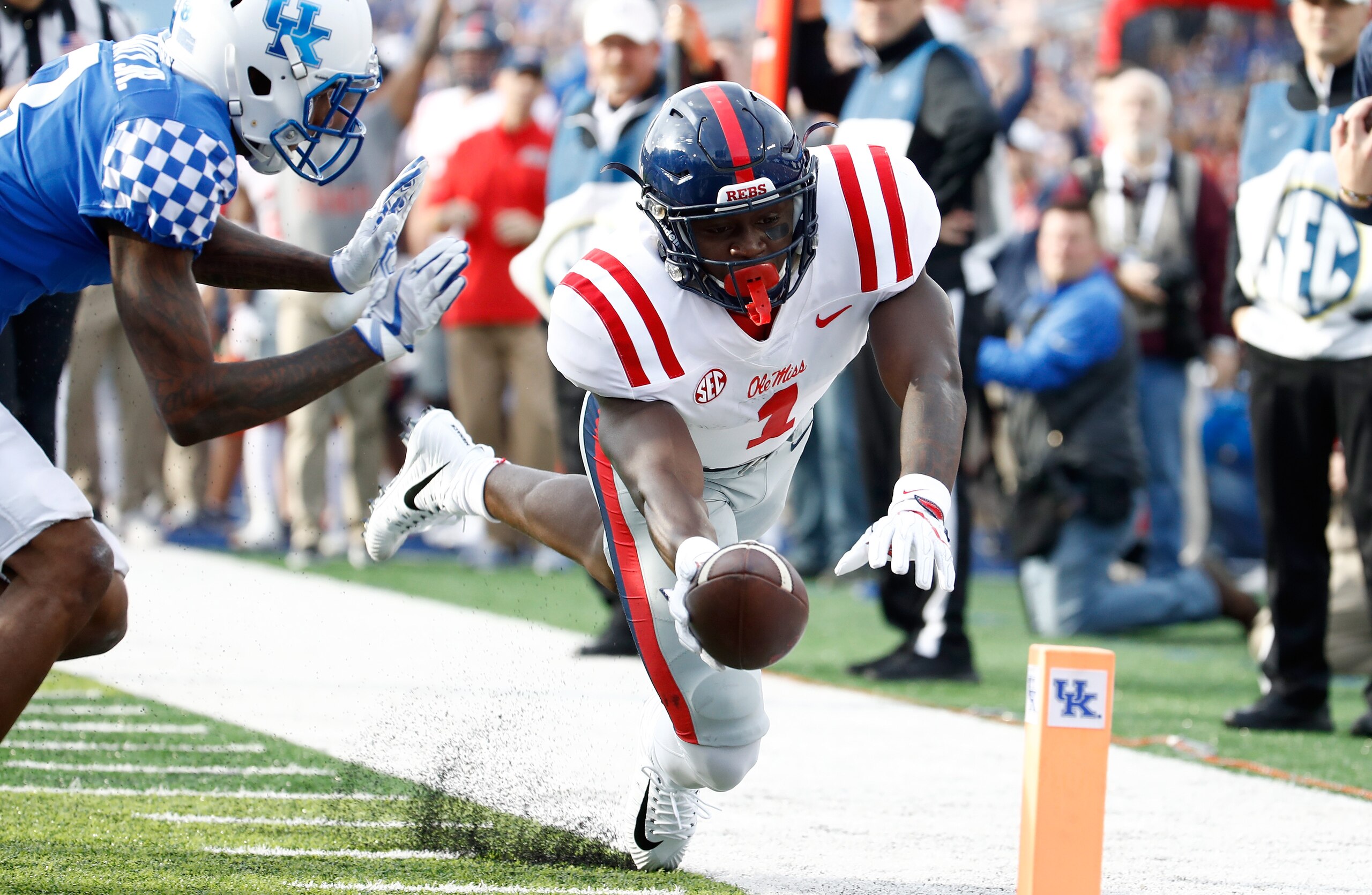
Key players: Shea Patterson is a great talent, but Ole Miss will be plenty comfortable with Jordan Ta'amu leading the offense full-time in 2018. The Rebels also have one of the more impressive receiving groups in the country with A.J. Brown, D.K. Metcalf and DaMarkus Lodge.
Potential weakness: Other than injured D'Vaughn Pennamon, the most productive returning rusher is Eric Swinney, who averaged 4.8 yards on 41 carries in 2017. Running back is an area of great concern for Ole Miss. Swinney, Armani Linton, Scottie Phillips and Pennamon (when healthy) are among the competitors for snaps.
What to expect: Even though the Rebels cannot play in a postseason game due to a self-imposed ban, they should still have an exciting offense. Ta'amu averaged 9.7 yards per attempt after replacing an injured Patterson, and the Brown-led receiving corps is exciting. Ole Miss will put plenty of points on the board this season.

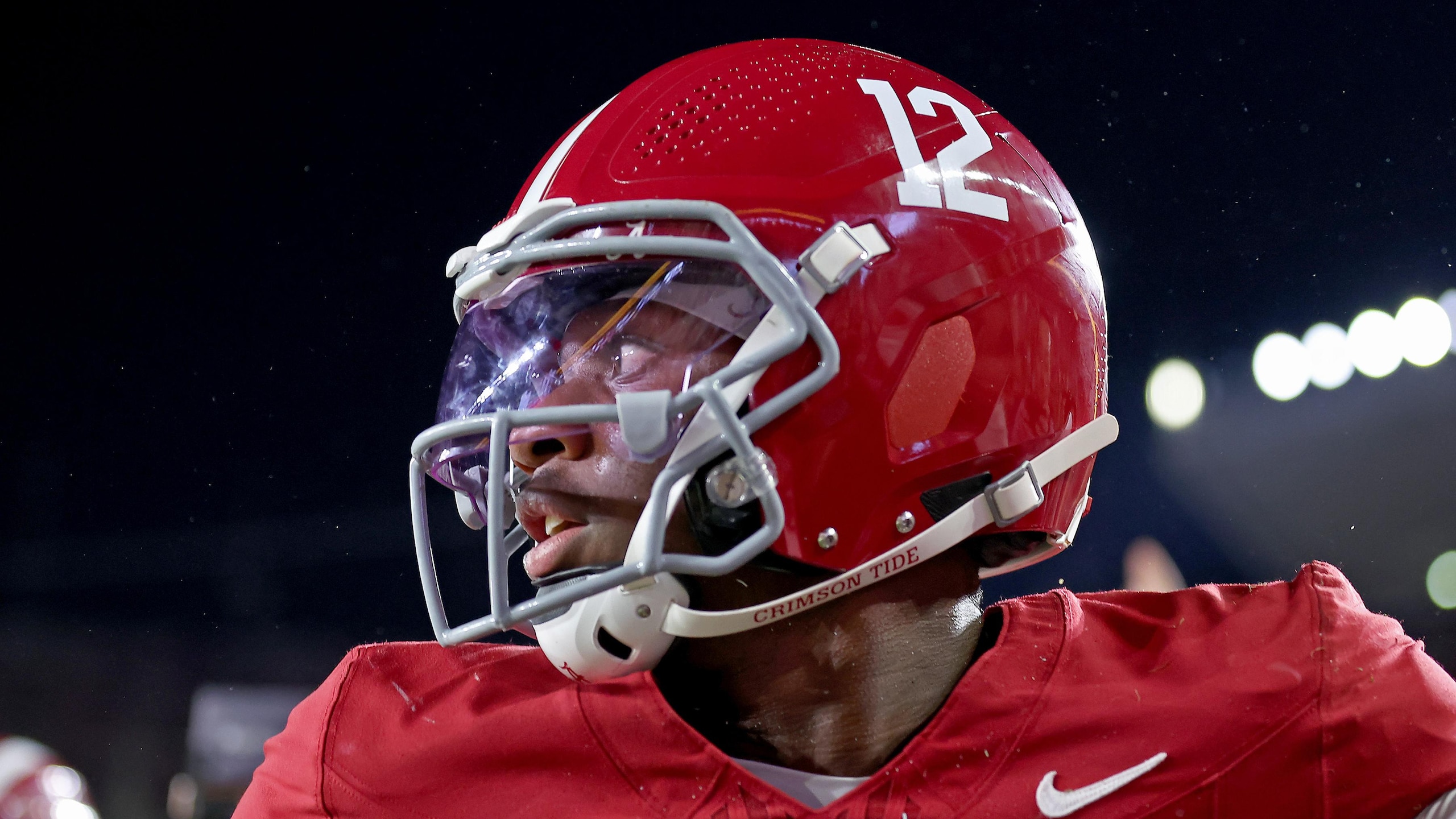

7. West Virginia Mountaineers
4 of 10
Key players: In addition to well-known quarterback Will Grier, West Virginia returns All-American receiver David Sills V. Plus, no returning wideout in the nation had more catches than Gary Jennings' 97 last year. Yodny Cajuste and Colton McKivitz are multiyear starters at left and right tackle, respectively, too.
Potential weakness: The interior of the offensive line has some experience in the likely starting unit, but depth is a concern. If any of the first-stringers miss time due to injury or underperform, the Mountaineers will be thin on trusted options.
What to expect: High-volume passing by Grier complemented by a bit of physical running from junior Kennedy McKoy. McKoy isn't as explosive as Justin Crawford, so putting this team in the top 10 will rely on his overachievement, along with a healthy season from Grier.
6. Missouri Tigers
5 of 10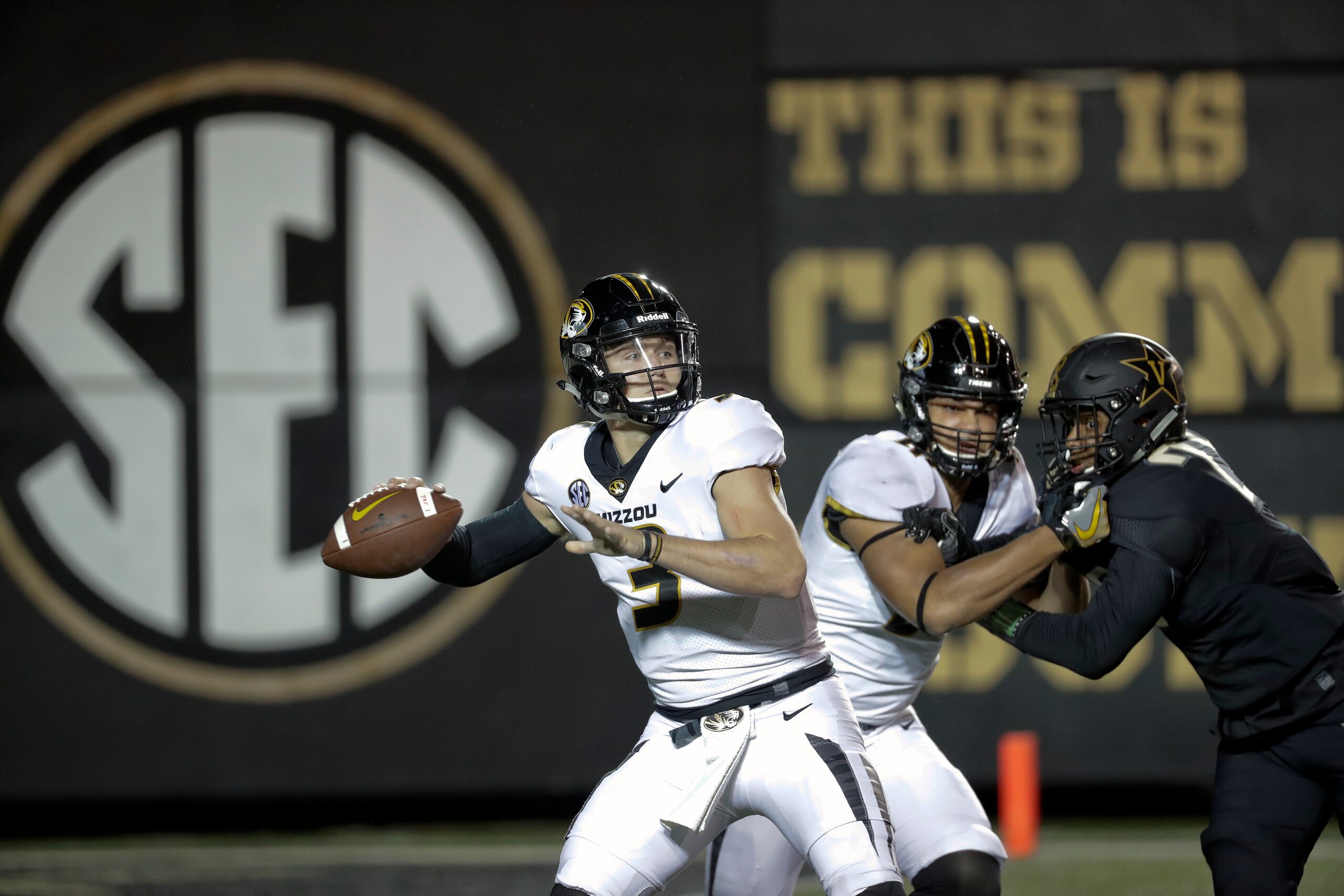
Key players: Drew Lock led the Football Bowl Subdivision with 44 touchdown passes last year, and Emanuel Hall's 24.8 per-catch average ranked second among qualifiers. Throw in 700-yard wideout Johnathon Johnson and 11-touchdown tight end Albert Okwuegbunam, and this pass-catching group is excellent. Damarea Crocket and Larry Rountree III both have 700-yard rushing seasons to their credit, too.
Potential weakness: Derek Dooley is an NFL-experienced coach, but there's no guarantee he can perfectly replace Josh Heupel, who took over for Scott Frost at UCF. Dooley has never previously held the title of offensive coordinator, so as smart as he may be, this is a new position.
What to expect: We're giving the benefit of the doubt to Dooley, whose offenses at Louisiana Tech and Tennessee gradually improved in yards per play. Missouri should again capitalize on Lock's downfield throwing ability, and a manageable schedule will help the well-rounded offense pad its numbers.
5. Florida Atlantic Owls
6 of 10
Key players: Devin Singletary secured third-team AP All-America honors in 2017 after piling up 1,918 yards and a nation-high 32 touchdowns on the ground. Plus, then-freshman wideout Willie Wright led FAU across the board with 56 catches, 657 yards and six scores.
Potential weakness: The Owls must replace quarterback Jason Driskel, who had a year of eligibility remaining but decided to pursue non-football activities. Chris Robison and De'Andre Johnson are vying for the starting gig, and any output lower than Driskel's 8.1 yards per attempt could prevent FAU from creeping into the top 10.
What to expect: Lane Kiffin is a brilliant offensive mind, but he'll happily keep the scoring attack as basic as possible if Singletary excels on the ground. Once the quarterback battle is decided, we'll know if a pro-style (Robison) or dual-threat (Johnson) option will be under center. FAU will have a dynamic offense either way, though Johnson could provide some extra excitement.
4. Ohio State Buckeyes
7 of 10
Key players: J.K. Dobbins scampered for 1,403 yards as a freshman, and Mike Weber is a superb complement in the backfield. Dwayne Haskins won't be a runner like J.T. Barrett under center, but the rising sophomore is a substantially more threatening passer than his predecessor.
Potential weakness: Depth of talent at receiver certainly isn't an issue, since the Buckeyes will use a handful of wideouts each Saturday. But who is the leader? The only player to eclipse 600 yards receiving in either 2016 or 2017 was Curtis Samuel, a running back.
What to expect: In limited action, Haskins has suggested he's the type of quarterback who can elevate a receiving corps opposite top competition. Should that be the case, the lack of a No. 1 target wouldn't be such a discouraging issue. Ohio State will lean on Dobbins and Weber, but Haskins could propel a Buckeyes offense that ranked 10th in yards per play last season to a higher level.
3. Oklahoma Sooners
8 of 10
Key players: Rodney Anderson and Trey Sermon combined for 1,905 yards and 18 touchdowns on the ground in 2017, and Marquise Brown paced Oklahoma with 1,095 receiving yards. CeeDee Lamb had 807 yards as a freshman, too. But this offense is expected to revolve around Kyler Murray, who has been explosive in limited action.
Potential weakness: Murray, a respected baseball prospect, could leave Oklahoma and pursue a professional career on the diamond. That would be an enormous loss. Otherwise, the Sooners must replace Mark Andrews, who had 22 career touchdown catches over three seasons as a hybrid tight end/receiver.
What to expect: Provided Murray chooses football over baseball, OU will be one of the country's best big-play offenses. Murray, who is a bigger running threat than Baker Mayfield, shouldn't be expected to match the 2017 Heisman Trophy winner's FBS record efficiency. But with Lincoln Riley overseeing the offense, it's safe to expect great numbers from Murray as a passer.
2. Georgia Bulldogs
9 of 10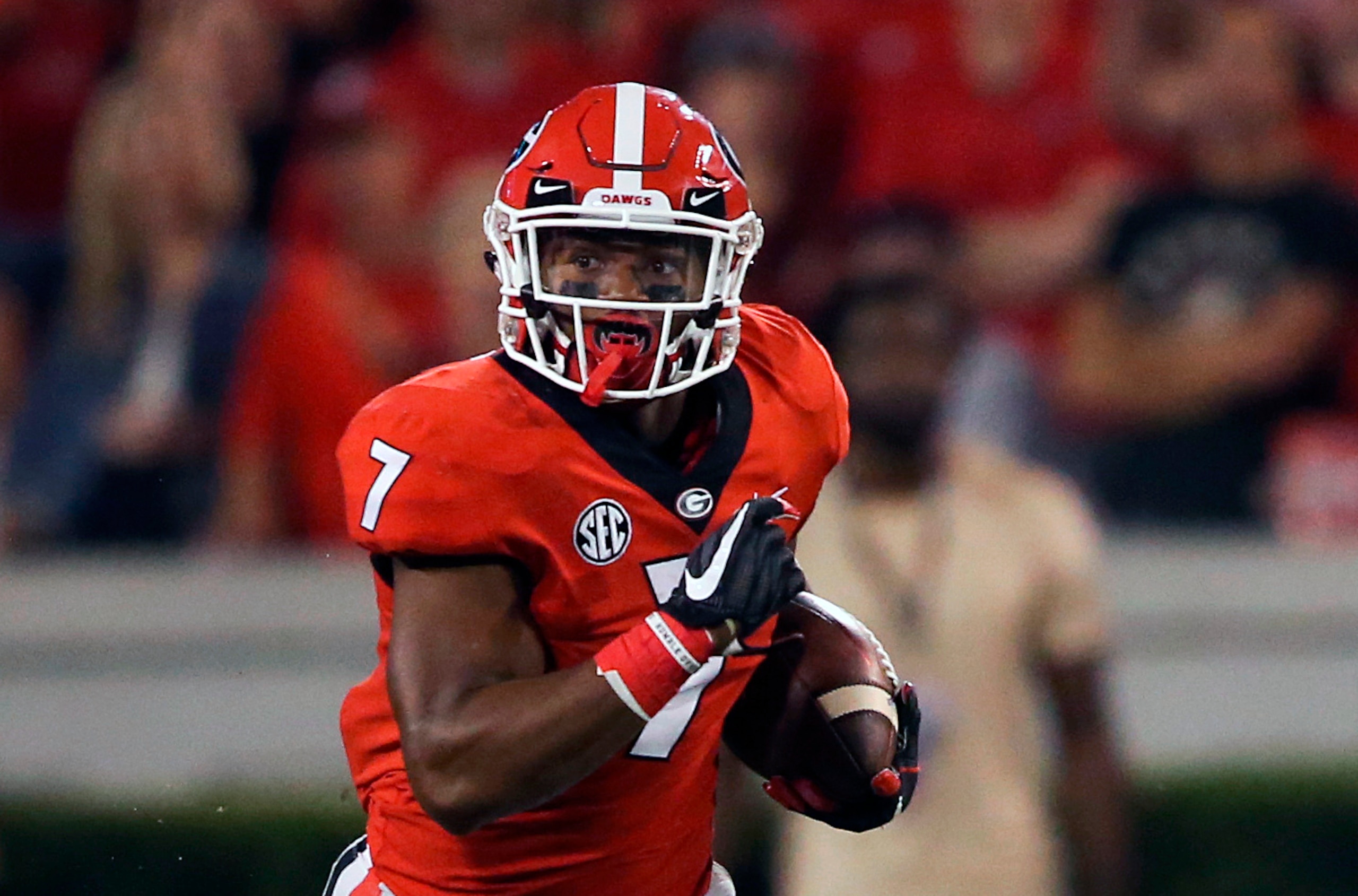
Key players: Nick Chubb and Sony Michel both used up their eligibility, but Georgia has a rising star in D'Andre Swift, who is set to lead the rushing attack. The Bulldogs will ride him behind an experienced offensive line that will also protect sophomore standout Jake Fromm. He averaged an impressive 9.0 yards per attempt as a freshman, and the receiving corps should only be improved in 2018.
Potential weakness: Tough question. Development is never guaranteed, so depth at wide receiver—while promising with Terry Godwin and Mecole Hardman—could flare as an issue. The offensive line is also shuffling to account for the departure of Isaiah Wynn. All things considered, Georgia shouldn't worry much about these negatives.
What to expect: The playbook should expand in 2018, and Fromm is a smart thrower. His productivity should be steady, even if he has more responsibilities. The Dawgs will be a run-first team with Swift, Elijah Holyfield and Brian Herrien, though. The seasoned blocking unit will propel UGA to another tremendous season statistically.
1. Central Florida Knights
10 of 10
Key players: McKenzie Milton threw for 4,037 yards, ran for 613 and scored 45 touchdowns as a sophomore. He's pretty important. Dredrick Snelson will guide the receiving corps, and starting running back Adrian Killins Jr. is one of the country's fastest players.
Potential weakness: The offensive line graduated a pair of 30-game starters in Aaron Evans and Chavis Dickey, as well as a couple of impactful backups. Heupel's up-tempo system should be friendly to a retooled, well-conditioned starting unit, but the rushing attack might need a few weeks before it's considered reliable.
What to expect: Milton is comfortable throwing to every level, yet he'll most often be whipping quick-hitters and launching downfield passes. The junior will also contribute as a runner, though the explosive stylings of Killins and Otis Anderson will highlight the ground game. Snelson should be the leading target, but Gabe Davis is a potential breakout star on the outside.
_0.png?w=2560)


.jpg?w=2560 "Love's Body Already 'Tired'")

.jpg?w=2560 "Tyreek Deal May Come Soon")
.jpg?w=2560 "Ward Nearly Walks Out of Presser ▶️")
