

Remain calm, everyone. We're entering uncharted territory. Practice your breathing. Always use the buddy system. Remember that bread crumbs aren't low-tech.
Next stop: Island of "The New York Knicks Might Be Better Off Than You Realize."
Yes, yes, yes. The rumors are true. We're about to devote an entire article to peddling optimism within the walls of Madison Square Garden. The Knicks have earned it (for their basketball practices).
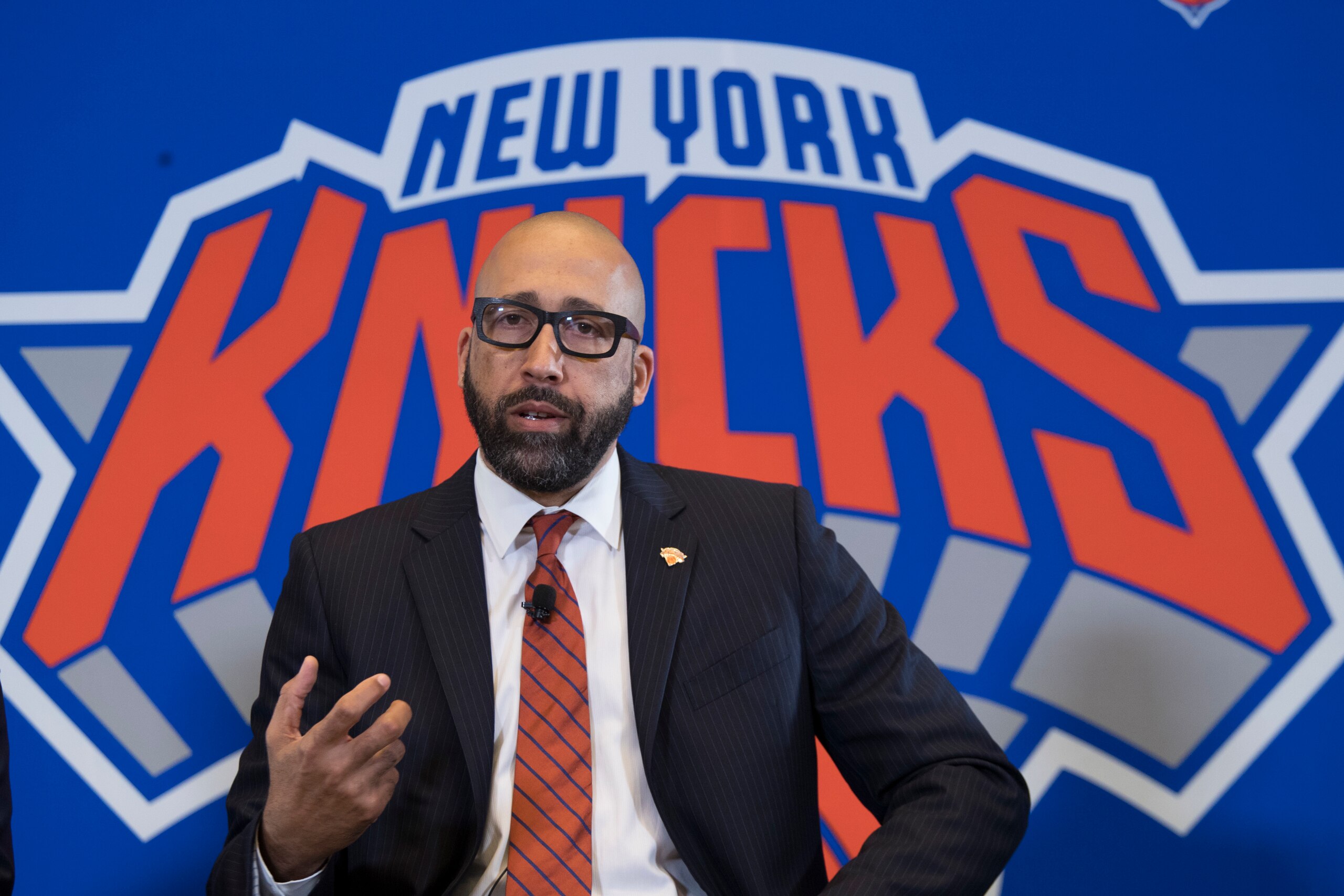
Hiring David Fizdale as their new head coach to replace Jeff Hornacek is part of their in-progress rise. His introductory presser—which was, it seems, streamed in 96p resolution from someone's 2004 model Sony Ericsson—offered a window into the mind of someone bent on rescuing the Knicks from decades-old logic and execution.
That doesn't mean everything. It might not mean anything. For all of its faults, this franchise is no stranger to winning the press conference. Knicks fans are well-accustomed to having been sold the moon only to receive fistfuls of gravel.
This time feels different, in no small part because Fizdale isn't the sole emblem of hope being sold. He's integral to what comes next, but the Knicks have a handful of other things working in their favor. Some are the offshoot of Fizdale's arrival. Others, though, have nothing to do with him at all.
David Fizdale Himself
1 of 5
Fizdale made quite the impression at his introductory press conference. We'll discuss other elements from his question-and-answer session in a bit, but his willingness to tackle some uncomfortable topics stands out relative to everything else.
Reporters in attendance asked Fizdale point-blank about him diminishing Euroleague accomplishments, and more specifically, about his poor rapport with Marc Gasol while coaching the Memphis Grizzlies. And though he wouldn't cop to downplaying accolades outside of the NBA, Fizdale owned his crummy relationship with Gasol, per the New York Post's Marc Berman:
"I really take ownership of that. We didn't necessarily click on things. That's my responsibility as a coach to get players to buy in, collaborate, come together. For whatever reason, we bumped heads. But I took that to heart. My wife can tell you better than anyone, I've been meeting with some super leaders from all industries and all walks of life and getting their feedback on how to manage and deal with different situations...and really try to dive into being better and growing from the situation."
Maybe Fizdale is all talk. That's always a possibility when talk is all we have to go on. But someone who meets with "super leaders from all industries and all walks of life" comes off as proactive, adaptive and self-reflective.
That he's spent time working on himself and his approach to player development since leaving the Grizzlies bodes well for the Knicks. They have a 22-year-old cornerstone in Kristaps Porzingis, who they have already alienated in the past, along with a handful of young guards and this June's first-round pick. They'll also want someone who appeals to bigger, more established names when they eventually look to strike in free agency.
Finding a candidate who relates to youth and can manage superstar egos at the same time isn't easy. Few head coaches are touted for their work across all player-development fronts. Fizdale is not among the exceptions just yet, but he isn't an irreversible example of the rule, either. He's a work in progress, with some encouraging anecdotes to his name.
Besides, if nothing else, he arrives in New York with marquee stamps of approval.
LeBron James? Check. Dwyane Wade? Check. Pat Riley? Check. Erik Spoelstra? Check.
Anyone associated with the Miami Heat is admittedly biased toward Fizdale. But, like, come on: Many of the most prominent figures from the Big Three era are endorsing the same guy. That near-universal support matters.
Positionless Basketball
2 of 5
Porzingis' best position has long been a point of contention around the Big Apple.
He should be a center! No, let him gobble up tinier players at the 4! But he has to play the 5 after returning from his torn left ACL!
Did Kurt Rambis really, actually, seriously, once upon a time want to use him at small forward?
Slotting Porzingis at the 5 remains the prevailing preference among fans, pundits and common-sense enthusiasts. So, naturally, the Knicks have anchored him to the power forward spot for more than 80 percent of his career, according to Cleaning The Glass.
Fizdale could have made the masses swoon by identifying the 7'3" spaghetti noodle as a center. He didn't. He also refused to call him a 4.
He refused to acknowledge the existence of positions at all.
"Why limit it? Why put a ceiling on it?" Fizdale said, per Bleacher Report's Yaron Weitzman. "I just see so many different ways to use him. Obviously, if you play him at some 5, it's like that super-lineup you're always seeing from different teams—I don't even know how you match up with him. He can play some 4. If you have another speed guy at the 4, you might even be able to play positionless."
This contempt for stereotypical designations did not end with Porzingis. During the meet-and-greet clambake, a reporter also asked Fizdale about the Knicks' glut of point guards—Trey Burke, Emmanuel Mudiay and Frank Ntilikina. He interjected midway through the question, making a to-do of emphasizing "guards" not once, but twice.
Think his aversion to positions ended there? Think again. Fizdale launched into a brief explanation of how he won't hesitate to play all three of his youngish guards at the same time if the opportunity presents itself.
The idea of running out Burke and Mudiay together is spine-chilling—a probable, if inevitable, deathblow to all defensive structure. But the larger aim here is more important than the Knicks' current makeup. Fizdale won't pigeonhole players to a specific role or shy away from experimenting with innovative-to-wacky lineup combinations.
Better Shot Profile
3 of 5
The Knicks placed second-to-last in three-point rate during the regular season. That won't stand under Fizdale.
To be clear, New York's head honcho wouldn't commit to giving the likes of Joakim Noah the green light from beyond the arc. He acknowledged the importance of catering to personnel strengths.
But the Knicks' overall shot profile won't fly. Not now, not later.
Roughly 57.2 percent of their looks came at the rim or from long distance this past year—the third-lowest mark in the league, according to Cleaning the Glass. Among every team to place in the bottom 12 of this category, only the Charlotte Hornets, Golden State Warriors and Minnesota Timberwolves finished 10th or better in offensive efficiency outside garbage time.
Something has to give. The Knicks don't have the assortment of never-miss-anything superstars the Warriors employ. Nor do they have the mid-range aficionados found in Minnesota. Porzingis is special enough to receive the go-ahead from anywhere. Everyone else needs to prioritize shot placement.
Fizdale will address this from day one, just like he did for the Grizzlies.
Around 58.5 percent of their attempts came at the hoop or from downtown in 2015-16, per Cleaning The Glass. That share jumped by roughly 6 percentage points, to 64.5, in 2016-17, Fizdale's first and only full season at the helm.
New York's initial uptick should be more pronounced. Fizdale won't have to coax Porzingis into chucking treys upon his return like he did for Gasol and JaMychal Green. And generally speaking, the Knicks have fewer non-shooters on the roster than that 2016-17 Grizzlies squad.
Reaching certain players could be tough—specifically Burke, Mudiay and Ntilikina. Between them, the Knicks have a pair of junky-two lovers (Burke and Mudiay) and one fraidy-cat shooter (Ntilikina). But Fizdale's work with Mike Conley suggests he's up to the challenge.
In the time Memphis' floor general spent with Fizdale, Conley set new career highs in usage rate and three-point frequency. The same goes for Gasol. And both of them are battle-tested veterans who were accustomed to working within a specific wheelhouse. Imagine what Fizdale could accomplish with younger non-stars and a few blanker slates.
All Eyes on 2019 Free Agency
4 of 5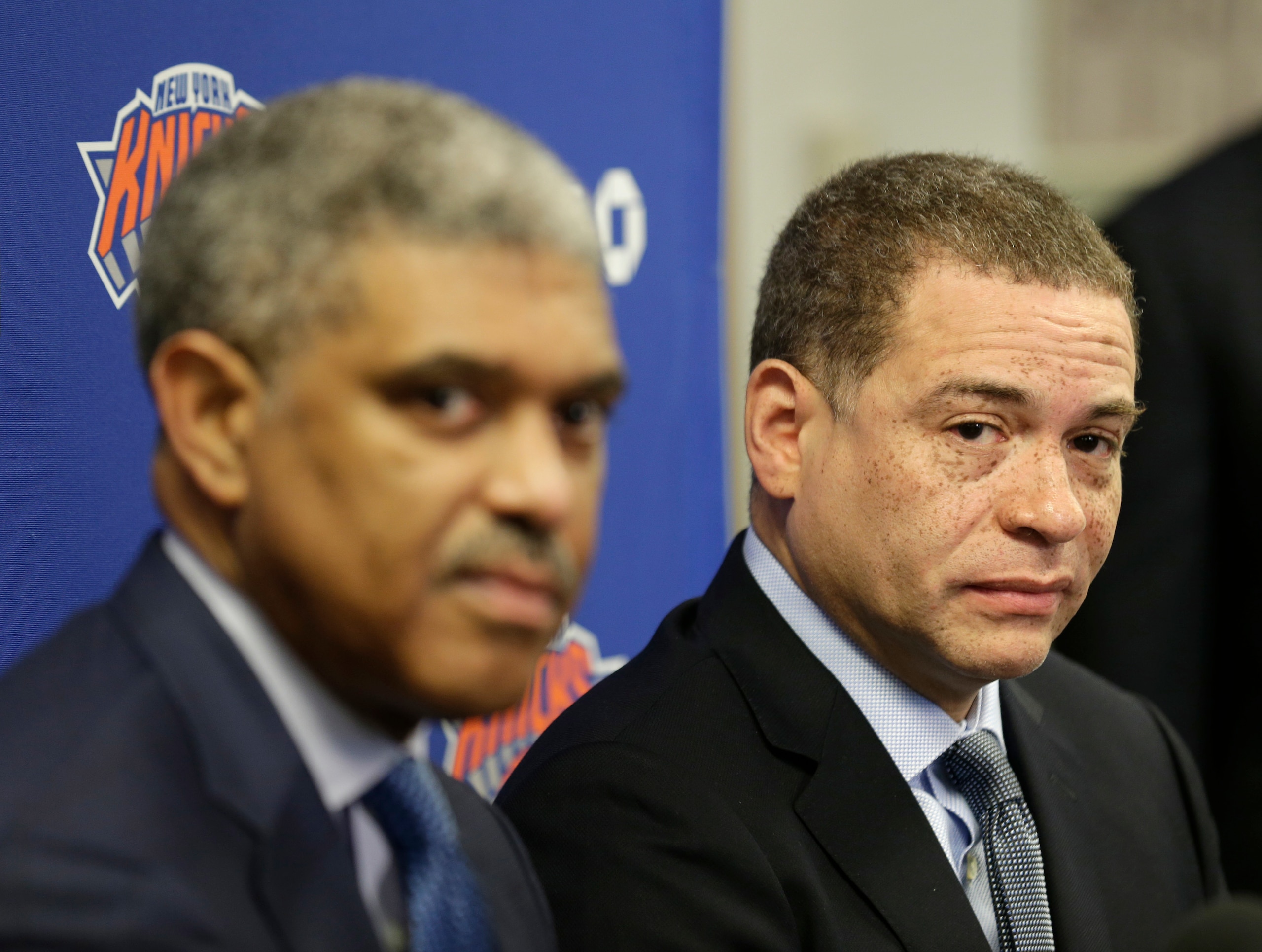
Worried about the Knicks parlaying their modest cap flexibility into bottom-line obstructions? Well, you should be. They're the Knicks. They bid against themselves for Noah. They gave Tim Hardaway Jr. 2016-type money in 2017, long after Phil Jackson departed and the free-agent market began correcting itself.
Question this team and its front office regime until it proves you should not.
Still, indulging could-be silver linings is not prohibited. Again: The Knicks appear to have made a solid hire with Fizdale. Their arc is swaddled in "To Be Determined" parental advisory labels, but general manager Scott Perry and team president Steve Mills have earned the faintest benefit of the doubt.
This applies even to their cap management and fundamental restraint. They kept themselves in check at the trade deadline to preserve wiggle room for the summer of 2019, according to ESPN.com's Ian Begley, when they'll have an easier path to max room and a grander supply of wings to pitch.
As an aside, that's another mini-victory for this Knicks front office. They now seem to understand the direction in which the NBA is headed, with like-sized combo wings everywhere. Mills hopes to land one such prototype in the draft, per Begley.
Enes Kanter's contract decision will test this front office's discipline. He hinted at declining his player option for next year after the Knicks wrapped the regular season, per Stefan Bondy of the New York Daily News. Trimming him from the ledger would arm them with upward of $15 million in cap space even if Ron Baker (obviously) and Kyle O'Quinn (not as obvious) opt into the final year of their deals.
From there, they could carve out an additional $11 million in spending power by waiving and stretching the two years remaining on Noah's contract over the next half-decade. And if O'Quinn ends up exploring free agency, the Knicks would have open-ended access to more than $30 million in space.
Perhaps this temptation won't ever present itself. Kanter is owed $18.6 million next season. It likely will take him at least two years to recoup that money in free agency—three if he doesn't solicit more than the non-taxpayer mid-level exception ($8.6 million) in this summer's skimpy market.
Except, what if it does? Will the Knicks be compelled to dredge up all of the play money they can and talk themselves into another (failed) chase for a low-seeded playoff berth? Do they have the gall to let Kanter walk if he opts out? Or will they convince themselves he's worth a long-term investment?
Handing out any contracts that spill into 2019-20 would compromise the Knicks' free-agency appeal next summer. They recognize as much and are, for now, planning accordingly. We'll have to see whether that holds.
Kristaps Porzingis' Extension Situation
5 of 5
Delaying Porzingis' extension will, most likely, be paramount to the Knicks retooling around him next summer. And it has almost nothing to do with his recovery from an ACL injury.
Waiting for Porzingis to hit restricted free agency, rather than signing him to an extension over the offseason, allows the Knicks to work with a smaller cap hold next summer. His max salary in 2019-20 will tentatively sit at $27 million—25 percent of a projected $108 million cap—which is nearly $10 million more than his $17.1 million cap hold.
That difference matters. It gives the Knicks a clear path to more than $22 million in space without waiving Noah's then-expiring contract, provided they renounce all their other free agents (including Burke and Mudiay) and ditch Lance Thomas' non-guaranteed salary.
Keeping Porzingis on the hook is not without risk. The Knicks have not built up the goodwill with him that the San Antonio Spurs did with Kawhi Leonard in 2015. He could see the absence of an extension as a slight, promises to the contrary be damned, and accept his qualifying offer for 2019-20 before entering unrestricted free agency the following summer.
Hedging against outcome might have scared the Knicks into action before. It shouldn't now. Players coming off their rookie-scale deals seldom roll the dice on their qualifying offer, and Porzingis isn't in a position to leverage New York into an over-the-top offer before he returns to the court.
Breaking ground on an extension makes sense if he's willing to take his 2019 cap hold or less on an annual basis in exchange for big-picture security. Otherwise, the Knicks have the ability to wait.
What's more: Tabling Porzingis' contract talks until next summer doesn't consign them to offering him a max deal.
Team owner James Dolan told the New York Post's Larry Brooks that the All-Star skyscraper may not play at all in 2018-19. The Knicks can spin a redshirt year even if Porzingis is ready to rock. They aren't going anywhere special with him missing more than half the year. Giving him an entire season to recover from his ACL injury would drum up the value of their draft pick in the new lottery era.
Mirroring Paul George's recovery in 2014-15 would work as well if the Knicks are overly concerned about the optics. George played in six games toward the end of the year to ensure he had some live action on his treads prior to the 2015-16 season.
Following the same arc with Porzingis would shore up the Knicks' lottery odds without inferring ulterior motives. Either way, the big man figures to enter restricted free agency without much of a post-injury sample, which could open the door for a below-market agreement. Worst-case scenario, he brokers a max offer from an outside team that New York matches—i.e., the original plan.
Consider this a roundabout way of saying Porzingis' injury permits the Knicks to maximize his rookie-scale pay grade while potentially retaining him at a slight discount without coming across as criminal or incompetent. And in New York, they call that a win.
Unless otherwise noted, stats courtesy of NBA.com or Basketball Reference and accurate leading into games on Wednesday. Salary and cap-hold information via Basketball Insiders and RealGM.
Dan Favale covers the NBA for Bleacher Report. Follow him on Twitter (@danfavale) and listen to his Hardwood Knocks podcast, co-hosted by B/R's Andrew Bailey.
.jpg?w=2560 "AEW WrestleDream Live Grades 🔠")

.jpg?w=2560 "Ex-NFLer BLASTS Fitzpatrick🤬")
.jpg?w=2560 "Myles Garrett Got Warning 👀")