
It's Getting Late Early in 2026 for These 10 MLB Stars
At a certain point, a slow start is no longer a slow start. And with almost every Major League Baseball team now at least 50 games into the 2026 campaign, it's time for some difficult conversations about stars who haven't been shining.
From Fernando Tatis Jr.'s bizarre home run hiatus to Logan Webb getting hit harder than ever before, we'll touch on 10 players who were supposed to be so much better than this.
For each player, we'll note their preseason ZiPS projection and their preseason Steamer projection to provide a gauge of what we were expecting two months ago. After that, each player's current statistics and FanGraphs WAR are listed, showing how far the proverbial apple has fallen from the tree of prognostication.
Players are presented in no particular order. Statistics current through the start of play on Saturday, unless otherwise noted.
Injured Disappointments
1 of 11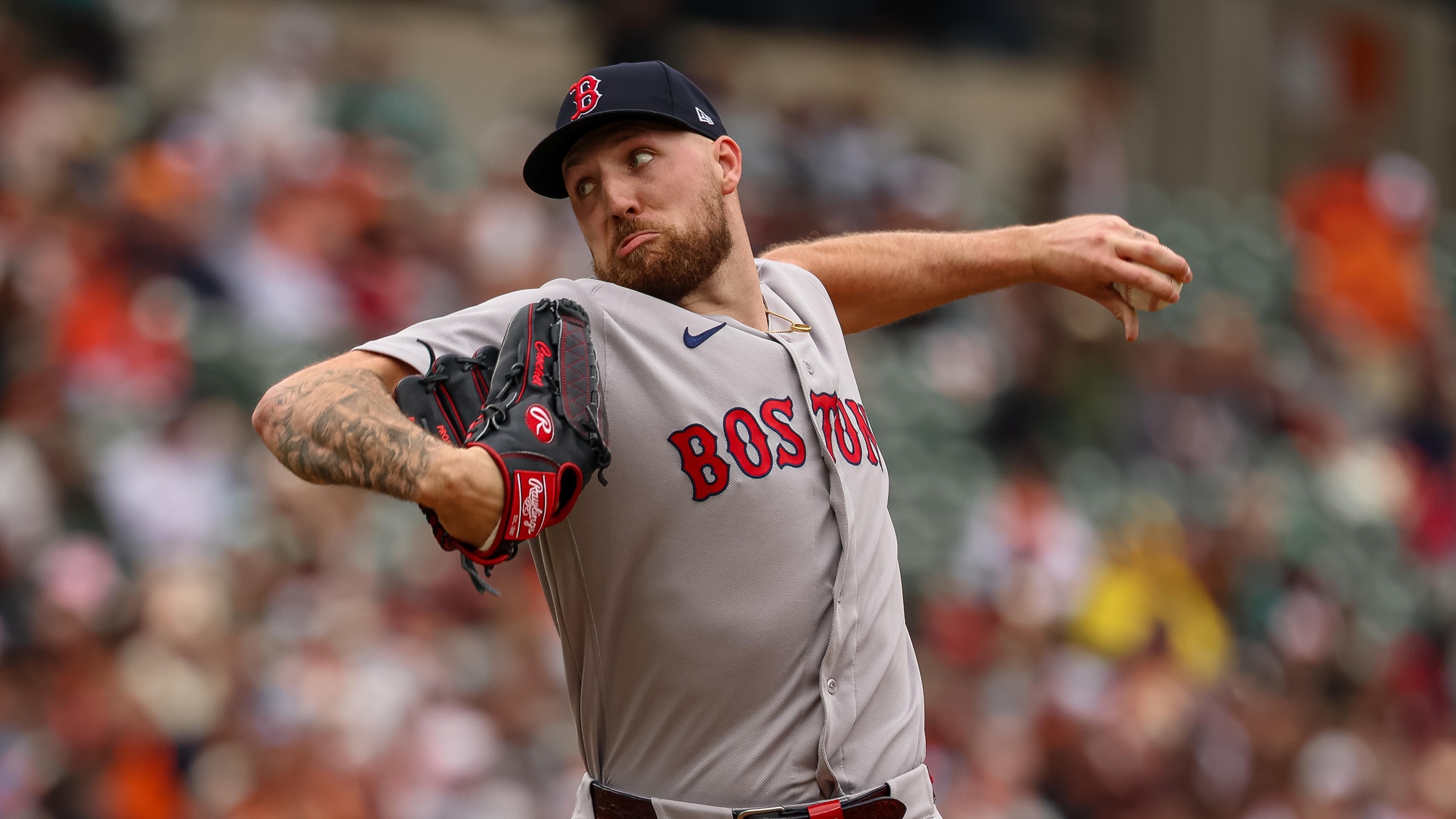
Each of these six players has been underwhelming, but has also spent at least a month on the IL. We're not necessarily giving them a mulligan, but we're also not going to rail against them for spending time on the shelf.
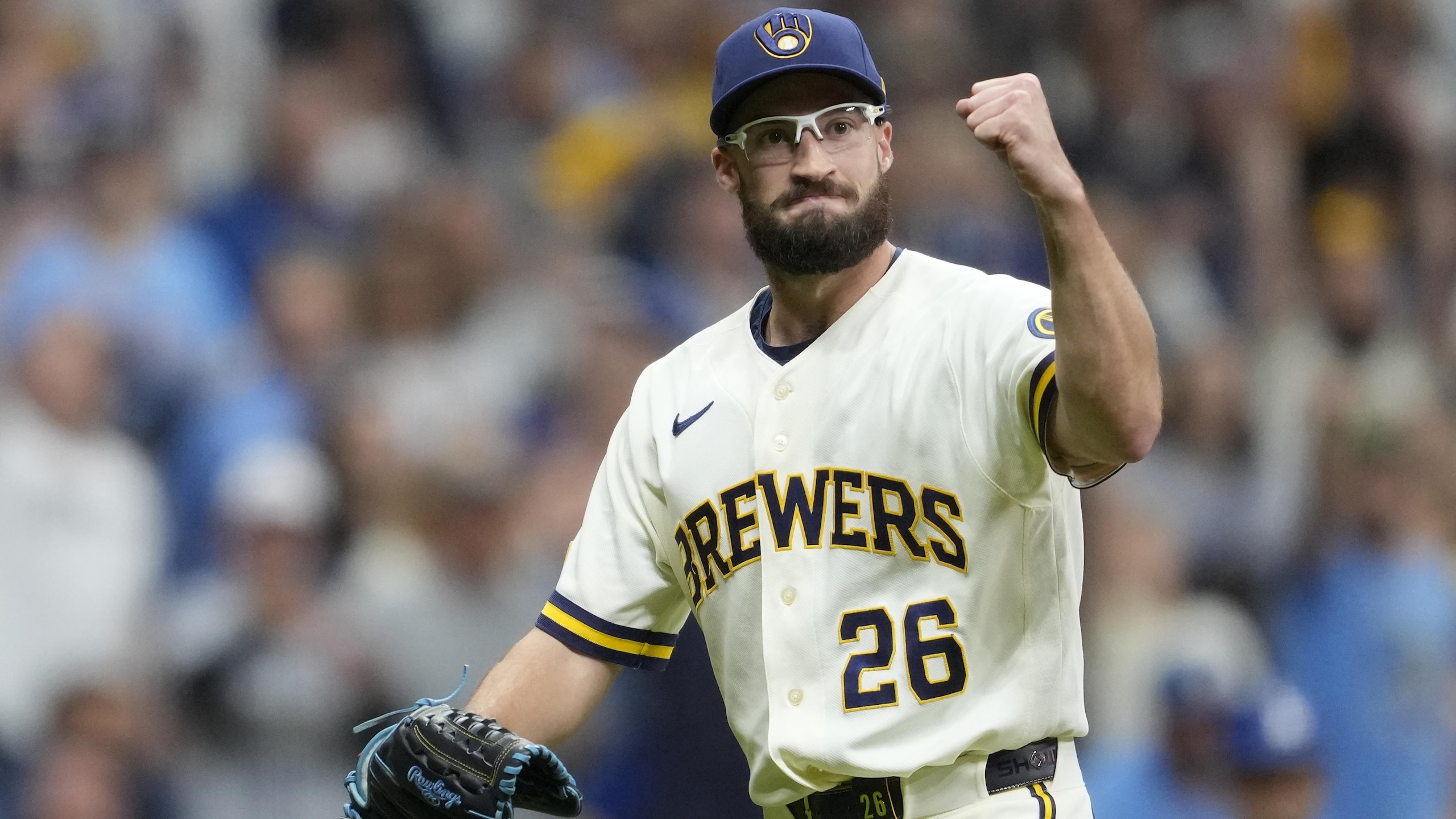
Garrett Crochet, Boston Red Sox (6.30 ERA in six starts)—Before hitting the IL with shoulder inflammation, Crochet had made three great starts and three disastrous appearances. He almost won the AL Cy Young last year and Boston was banking on him to be their ace. The combination of his absence after a hit-or-miss start is one of the biggest reasons the Red Sox have been so disappointing.
Mookie Betts, Los Angeles Dodgers (.664 OPS in 17 games played)—Betts homered twice in seven games before straining his oblique and then twice more in his first five games back after missing five weeks. But the career .290 hitter has not been anything close to the consistent weapon at the plate that we're used to seeing. (It also took him until early August to get into a groove last year, though that was attributed to an illness that caused him to lose a lot of weight.)
Francisco Lindor, New York Mets (.669 OPS in 24 games played)—The shame of the matter with Lindor (aside from the fact that he might be out for at least another month) is he was breaking out of his early slump when he injured his calf, batting .333 with an .898 OPS in his last nine games.
Wyatt Langford, Texas Rangers (.636 OPS in 20 games played)—Even before the forearm flexor strain that put him on the IL, Langford was neither walking nor slugging at anywhere close to his usual rate. His batting average was almost identical to last year, but his OPS was down more than 130 points. With Corey Seager also coming up later in this list, it's surprising Texas has been able to tread water close to .500.
Alejandro Kirk, Toronto Blue Jays (.577 OPS in five games played)—Kirk broke his thumb so early in the season that it doesn't even feel right to mention him here. However, both ZiPS and Steamer had him projected for a top 20 WAR among position players, and Toronto sure is missing his presence both in the lineup and behind the plate.
Jeremy Peña, Houston Astros (.619 OPS in 14 games played)—Peña can't catch a break this year. He missed the World Baseball Classic with a fractured fingertip, landed on the IL in mid-April with a hamstring strain and then suffered a neck injury on a collision during his rehab assignment. For now, though, he's back, and not a moment too soon for an Astros team with a season that is already on life support.
Fernando Tatis Jr., San Diego Padres
2 of 11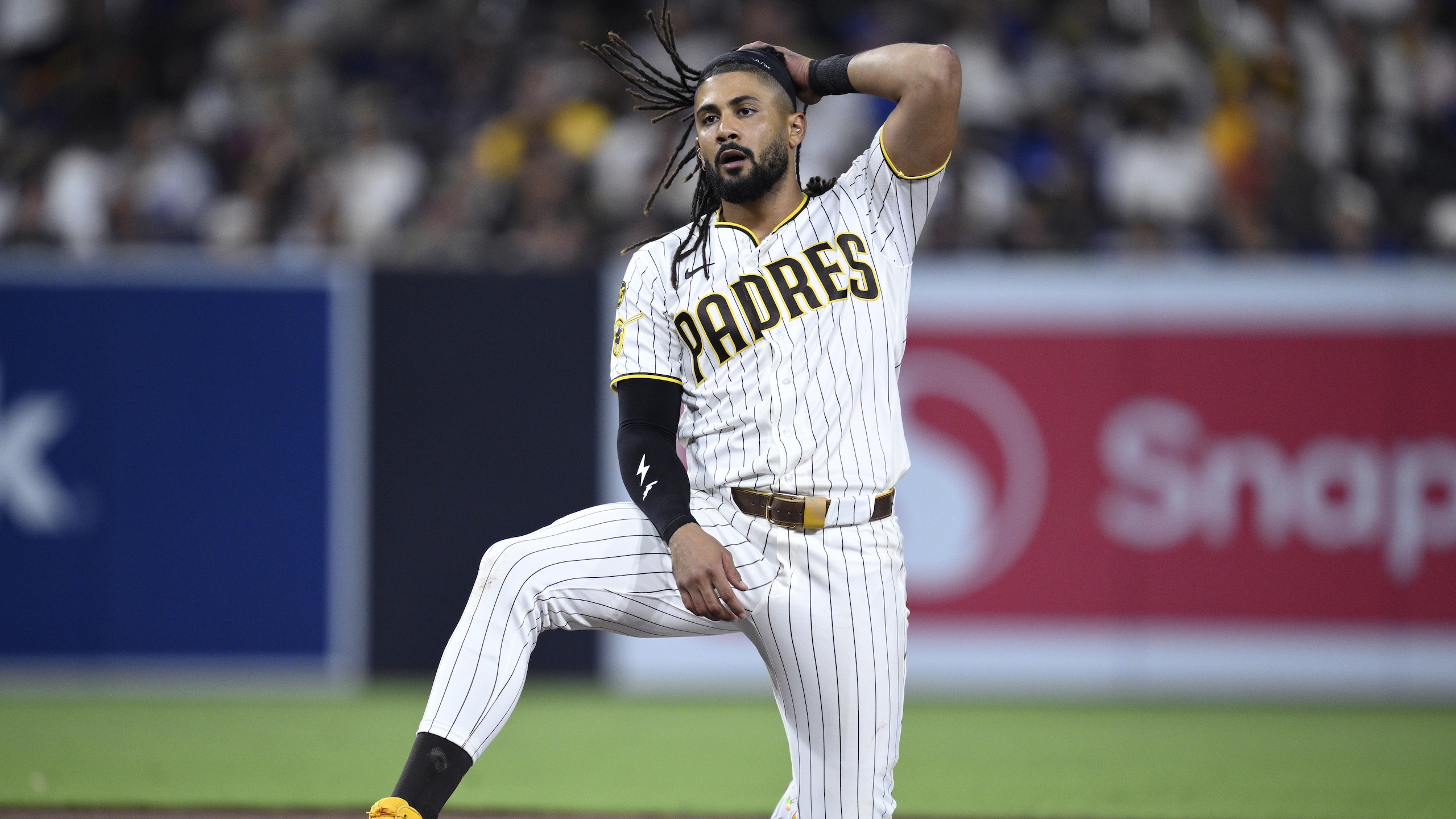
ZiPS Projection: .271/.361/.479, 28 HR, 86 RBI, 24 SB, 5.5 WAR
Steamer Projection: .275/.360/.503, 30 HR, 82 RBI, 23 SB, 5.1 WAR
Actual: .240/.316/.279, 0 HR, 15 RBI, 12 SB, 0.3 WAR
Because the Padres have one of the better records in baseball and because Fernando Tatis Jr. has provided plenty of value on defense while doing his best 2023 Mookie Betts impression of splitting his time between right field and second base, his horrific season at the plate hasn't gotten anywhere near the national attention that it probably should.
Granted, Tatis has had some extended power outages in the past. Just last season, he had both a 21-game streak and a 27-game streak without homering.
At least during those droughts, though, he was seeing the ball well, with a combined 39 walks and 35 strikeouts and an on-base percentage of just a shade under .400. He just kind of stopped hitting the ball over the wall for a while.
In going his first 49 games of this season without a dinger, though, Tatis has had 21 walks against 49 strikeouts, posting a .594 OPS that would have been unthinkable back when he was slugging .596 in the first three seasons of his career.
What's bizarre about this frigid start is that he's still crushing the ball. His hard-hit percentage of 54.4 is only slightly below what he posted in his 42 HR campaign in 2021. He's also had a barrel percentage (11.0) well above the MLB average and identical to what he posted in both 2023 and 2025.
But his launch angle is broken.
Among the nearly 200 hitters with at least 100 batted ball events this season, Tatis (0.9) is one of just three with a launch angle below 3.5 degrees. (Tatis is usually around 10 degrees.) The others at the bottom of that list are Chandler Simpson (2.0) and Justin Crawford (minus-0.6)—and Simpson has bunted in roughly five percent of his batted balls while Crawford unofficially leads the majors in Ichiro-style slap singles.
Can he fix that and start lifting hard-hit balls instead of mashing them into the ground?
Manny Machado, San Diego Padres
3 of 11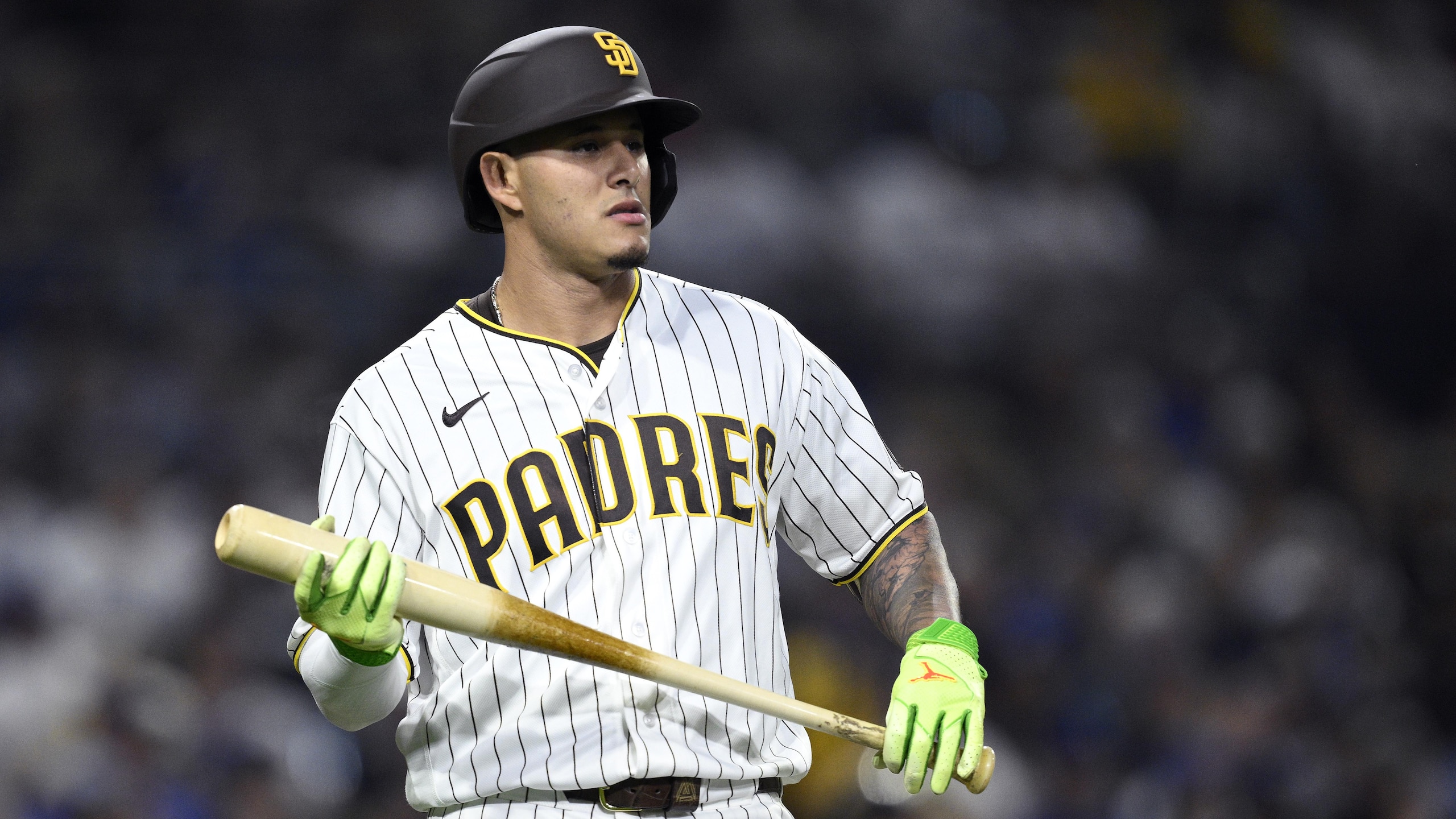
ZiPS Projection: .262/.325/.445, 25 HR, 88 RBI, 9 SB, 3.7 WAR
Steamer Projection: .268/.329/.465, 26 HR, 86 RBI, 9 SB, 3.3 WAR
Actual: .179/.271/.347, 8 HR, 24 RBI, 1 SB, 0.3 WAR
It's truly astounding that the Padres have been neck-and-neck with the Dodgers atop the NL West while getting so little out of both Fernando Tatis Jr. and Manny Machado.
At least the seven-time All-Star third baseman has swatted a handful of home runs while also providing better defense at the hot corner than he had been over the past two seasons.
But what in the world is going on with that batting average?
Machado entered the year as a career .279 hitter, but he is barely batting .100 over his last 21 games and is striking out at the highest rate of his career over the course of this full season.
To some extent, he has had some terrible luck, with a .189 BABIP that ranks dead last among 171 qualified hitters. His previous career low in that department was a .265 mark in 2017.
To another extent, though, you make your own BABIP luck. And Machado simply has not had the same exit velocity, hard-hit percentage, barrel rate or launch angle that we're used to seeing.
The particular problem is that sinkers have gone from Machado's best friend to his worst nightmare.
Per Baseball Savant, in 115 ABs that ended on sinkers last season, Machado hit .391 and slugged .504. And though that was a little more impressive than usual, it wasn't a single-season outlier. Through the first 14 seasons of his career, Machado had gone 501-for-1520 (.330) with a .488 slugging percentage against sinkers.
So far this season, however, he is 5-for-39 against sinkers, batting .128 and slugging .205.
Turning that weakness back into a strength would be a gigantic first step on the road to recovery.


Aaron Nola, Philadelphia Phillies
4 of 11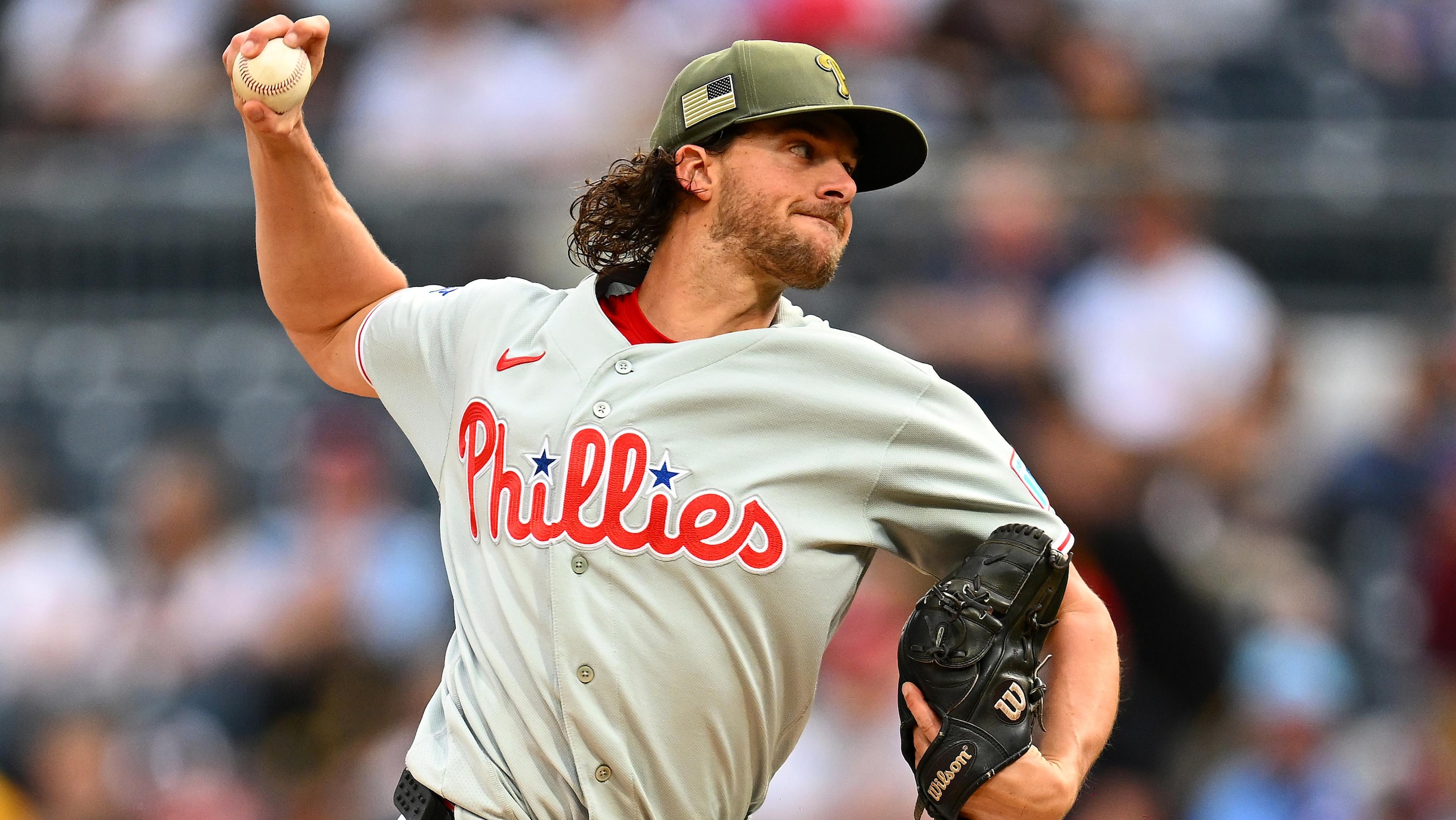
ZiPS Projection: 140.1 IP, 4.17 ERA, 3.81 FIP, 9.0 K/9, 2.5 WAR
Steamer Projection: 180.2 IP, 3.98 ERA, 3.98 FIP, 8.7 K/9, 3.0 WAR
Actual: 50.2 IP, 6.04 ERA, 4.46 FIP, 9.1 K/9, 0.5 WAR
The hope in Philadelphia was that Aaron Nola would be able to bounce back from a 2025 campaign that was the most disappointing and most injury-impacted of his career, making 17 starts with an ERA just north of 6.00.
Ten starts into the current season, though, things have gotten even worse. Nola has both the worst WHIP (1.56) of his career and the worst strikeout percentage (22.8) since his rookie year.
And it's largely because his four-seamer has become a batting practice pitch.
It's not a drop in velocity. It's actually up slightly from last season and less than one MPH below where it consistently sat prior to 2025. But maybe he's tipping his fastball in some way, because opponents are batting .417 and slugging .958 against it—compared to .228 and .427, respectively, in his first 11 years in the majors.
Things have really gone off the rails lately, too, which adds to the notion that batters might have picked up on something in his delivery.
After an OK start to the year, opponents have batted .524 and slugged 1.333 against Nola's fastball over his last five starts. Even the six field outs have been pretty loud, traveling an average distance of 307 feet. And unless you want to count Jared Triolo's sacrifice bunt, Nola has not induced a single groundout among the other 34 fastballs that have been put in play this season.
Even in slow pitch softball, it'd be darn near impossible to have that many balls put in play without a single ground out.
When he finished fourth in the NL Cy Young vote in 2022, Nola's fastball run value ranked in the 100th percentile at a +30.
This year? He's in the first percentile at a -17.
Cal Raleigh, Seattle Mariners
5 of 11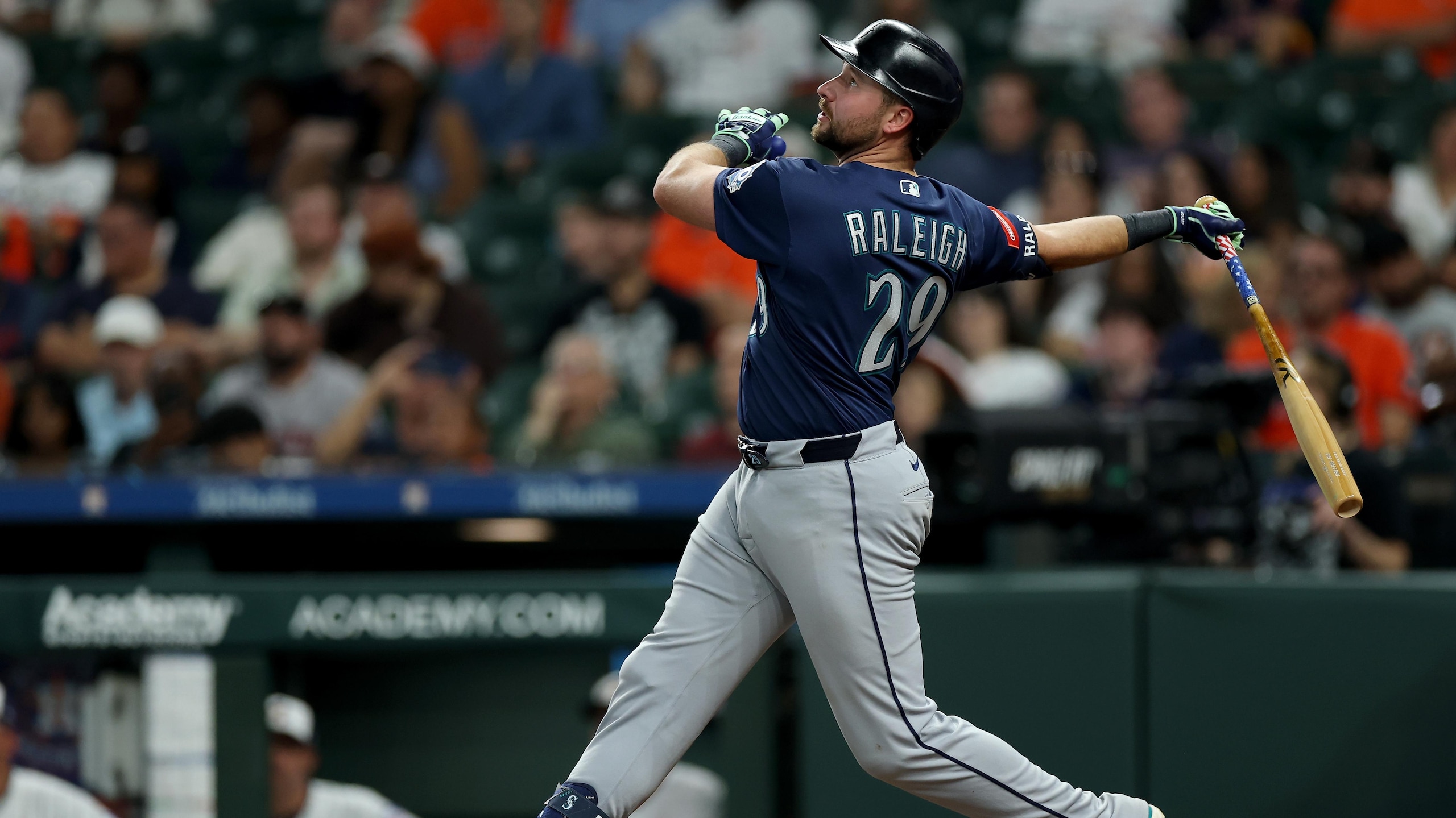
ZiPS Projection: .231/.329/.495, 40 HR, 107 RBI, 6 SB, 6.6 WAR
Steamer Projection: .230/.331/.487, 38 HR, 91 RBI, 8 SB, 5.9 WAR
Actual: .161/.243/.317, 7 HR, 18 RBI, 2 SB, 0.4 WAR
Cal Raleigh is presently on the IL with an oblique injury, but he did play in 41 games prior to landing on the shelf, making enough plate appearances that he still qualifies for a batting title (that he absolutely will not win). That is a more than big enough sample size to justify his own section here as opposed to a brief blurb in the "Injured Disappointments" group.
Here's the question, though: How much of Raleigh's rough start can be attributed to the oblique?
Because for a seven-game stretch in late April, the first runner-up for 2025 AL MVP looked like his old self, mashing five home runs in the span of 32 trips to the plate.
But a few days later, he missed the first of three straight games with a mysterious ailment, and then he couldn't hit much of anything over the next eight games before going on the IL.
Did the oblique start bothering him right after that seven-game surge?
And is it fair to chalk up the disappointing first 23 games to a 60 HR hangover, putting way more weight on his shoulders and resulting in a lot of early flailing for the fences? (Goodness knows his strikeout rate was outrageously high for the first couple of weeks.)
If that's the two-pronged case, maybe he can come back at full strength in the not-too-distant future and lock back in.
For the time being, though, what a colossal letdown this season has been from a star who was supposed to rival Aaron Judge and Bobby Witt Jr. for AL MVP again.
Willy Adames, San Francisco Giants
6 of 11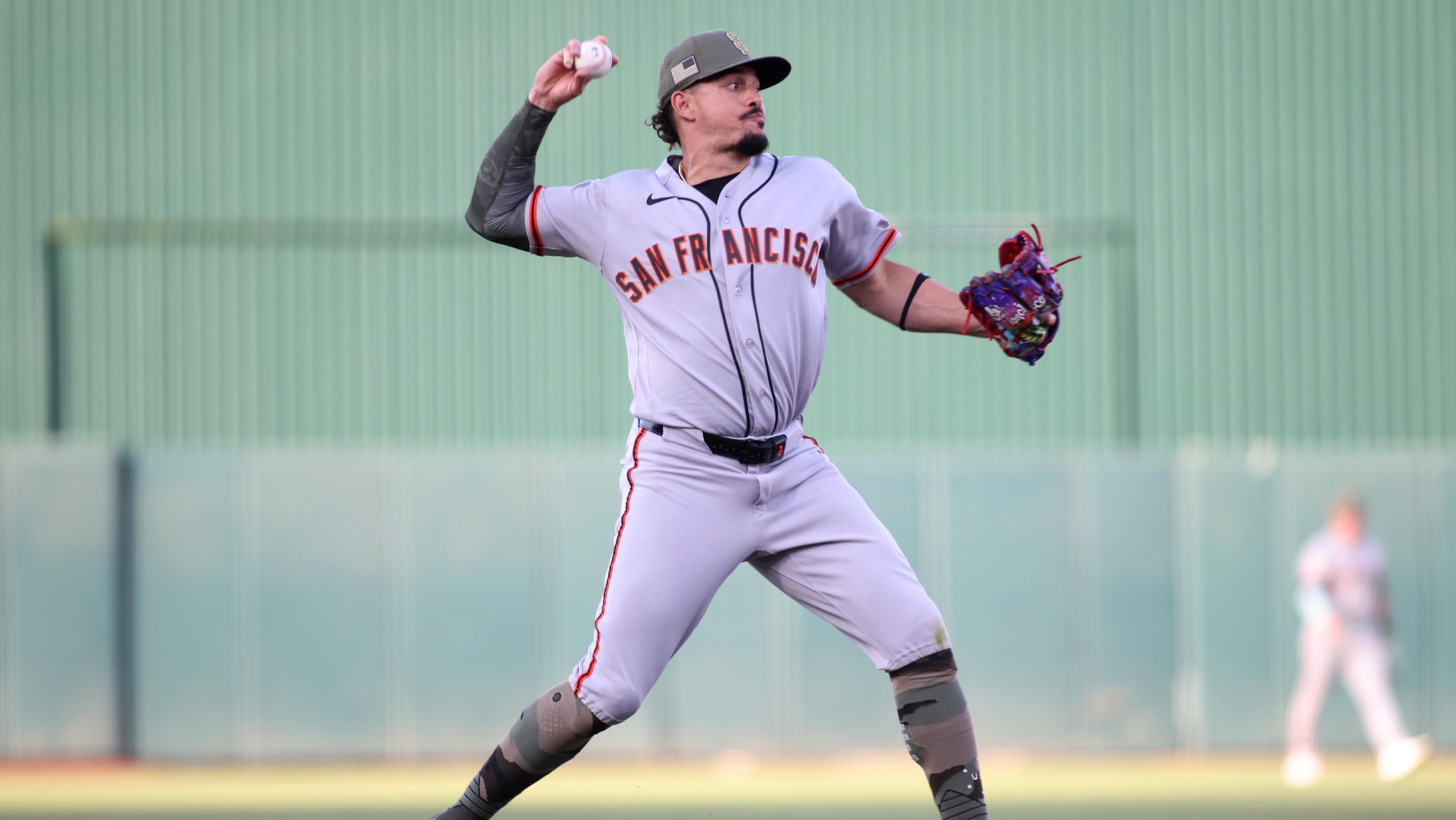
ZiPS Projection: .236/.317/.422, 25 HR, 83 RBI, 11 SB, 4.0 WAR
Steamer Projection: .233/.321/.418, 23 HR, 72 RBI, 11 SB, 3.3 WAR
Actual: .234/.270/.378, 5 HR, 16 RBI, 1 SB, -0.2 WAR
Over the past couple of weeks, Willy Adames definitely seems to have turned a corner at the plate, batting north of .300 after entering May below the Mendoza Line. (Same goes for teammate Rafael Devers, who narrowly avoided landing on this list thanks to an OPS north of .900 dating back to May 2.)
For Adames, though, that's nothing new. He is perennially a slow starter who has a career .664 OPS in March/April compared to an .800 mark in the second half. It's a big part of why he has never been an All-Star in spite of a career WAR north of 25.
Can we talk about his lack of patience/plate discipline, though?
Or the terrible defense at shortstop?
On the former front, Adames is drawing walks at by far the lowest rate (4.3 percent) of his career—in a season where the implementation of ABS has clearly contributed to the highest walk rate since 2000—while also chasing pitches out of the strike zone at his highest rate (33.2 percent).
Even during his similarly slow start through 51 games played last year, he was at least drawing walks better than 10 percent of the time. But now, his on-base percentage (.270) ranks almost bottom 10 among qualified hitters, even though his BABIP (.311) is higher than usual.
And if bottom 10 in OBP wasn't enough, Adames is also bottom five in both outs above average and fielding run value, already committing an MLB-high eight errors.
Throw in the abysmal base running—one stolen base in three attempts with a near MLB-worst four outs on base in addition to the two times caught stealing—and he has been pretty much the opposite of a five-tool player thus far.
Cole Ragans, Kansas City Royals
7 of 11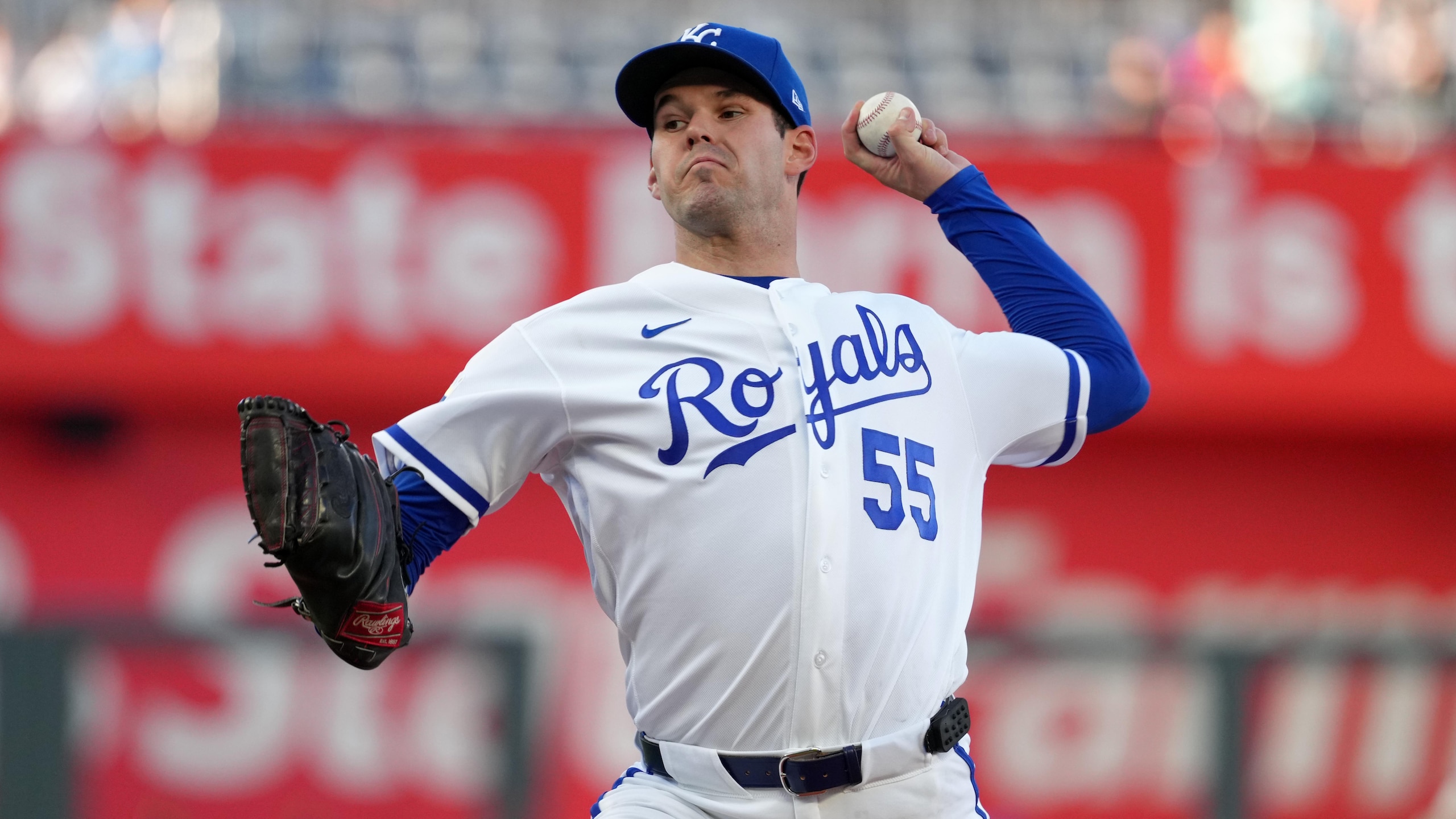
ZiPS Projection: 115.2 IP, 3.58 ERA, 3.13 FIP, 11.1 K/9, 2.9 WAR
Steamer Projection: 172.0 IP, 3.31 ERA, 3.30 FIP, 11.0 K/9, 4.1 WAR
Actual: 35.1 IP, 4.84 ERA, 6.19 FIP, 11.5 K/9, -0.3 WAR
Two years ago, Cole Ragans was an All-Star who finished fourth in the AL Cy Young vote and tossed six shutout innings in Kansas City's first postseason game in nearly a decade.
Last year, injuries limited him to 13 starts, but he was lethal when healthy, striking out better than 38 percent of batters faced.
This year, though, he is once again on the IL and was having a very Jekyll and Hyde type of year on the mound before getting hurt, just a completely different pitcher each turn through the rotation.
Starts 2, 4, 6 and 8: 21.0 IP, 1 ER, 1 HR, 7 BB, 24 K
Starts 1, 3, 5 and 7: 14.1 IP, 18 ER, 9 HR, 16 BB, 21 K
Even though half of his appearances have been rock solid, Ragans has both the worst walk rate and the worst home run rate of his career, and by a staggering margin. In fact, among the 153 pitchers who have logged at least 30 innings, Ragans has the third-worst walk rate and the fifth-worst home run rate.
The walk rate is the bigger of the two concerns there, but the good news is his fastball has been better than ever. Not faster than ever, but both the whiff rate and the batting average against his four-seamer have never been better.
His changeup and his knuckle curve, on the other hand...
Opponents hit below .200 against Ragans' changeup in each of the previous four seasons. All told, they batted .172 and slugged .253 against it. But thus far in 2026, those marks are .318 and .636, respectively.
At least that pitch occasionally works, though.
Of the five ABs this season that have ended on a knuckle curve, Ragans has allowed three home runs, a single and a flyout. Nice little .800 AVG and 2.600 SLG there. Quite the shift from what had been a .186 batting average against over the previous four years.
We'll see if he can get those secondary offerings working for him when he returns.
Bo Bichette, New York Mets
8 of 11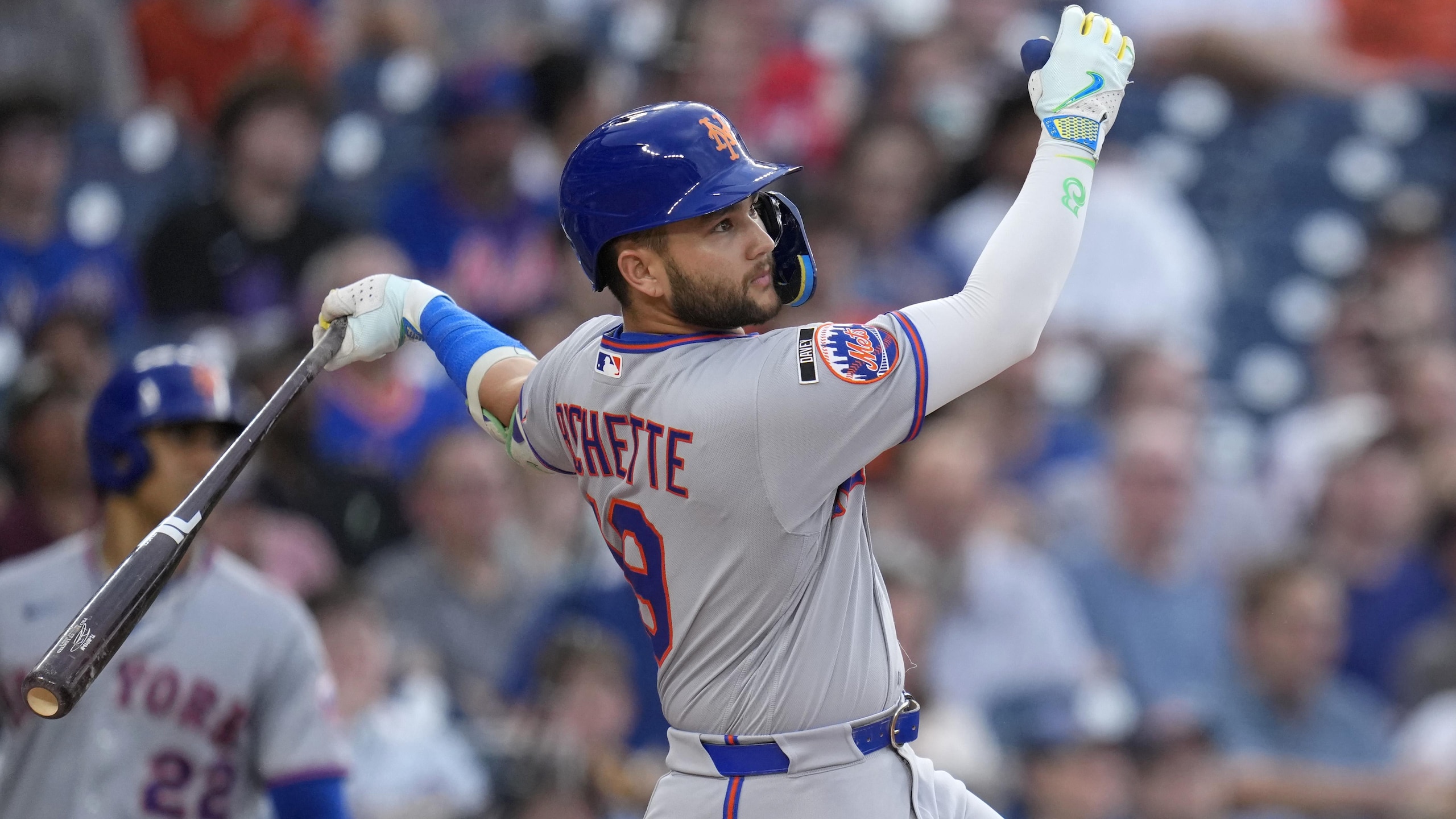
ZiPS Projection: .291/.339/.446, 17 HR, 80 RBI, 6 SB, 4.2 WAR
Steamer Projection: .288/.337/.449, 15 HR, 64 RBI, 5 SB, 3.4 WAR
Actual: .221/.271/.322, 5 HR, 27 RBI, 1 SB, 0.2 WAR
Let's start with some good news on Bo Bichette—his best work has come recently. During the four-game series in Washington this past week, Bichette went 7-for-18 with three home runs and a double, good for a 1.365 OPS.
The problem is he entered that series with two home runs, a .531 OPS and a WAR of negative-0.2 in his first 46 games with the Mets.
Is it the PCL injury that perhaps should have kept him from returning to action this past October? His sprint speed is slower than ever before and he is generating fewer infield hits than usual.
Perhaps it's the attack angle on his swing? Bichette has always had a pretty flat swing, but Statcast currently puts it at the flattest (slightly below 2 degrees) among MLB's 200 leaders in swings. (Could that swing adjustment also be related to the knee?)
Or maybe it's just some extended bad luck? Bichette had a BABIP of at least .339 in seven of the previous eight seasons, but he is down at a pedestrian .246 this season. And though he is batting .221, his expected batting average is .282, which is ever so slightly better than his career mark of .281 in that department.
It also bears mentioning that this career .290 hitter historically heats up along with the weather. He is a .316 hitter in July, August and September compared to .269 in the first three months of the year.
Maybe he's coming around after a brutal start. Or maybe it was just a good series against the Nationals.
Either way, he certainly hasn't lived up to that three-year, $126M contract thus far.
Andrés Muñoz, Seattle Mariners
9 of 11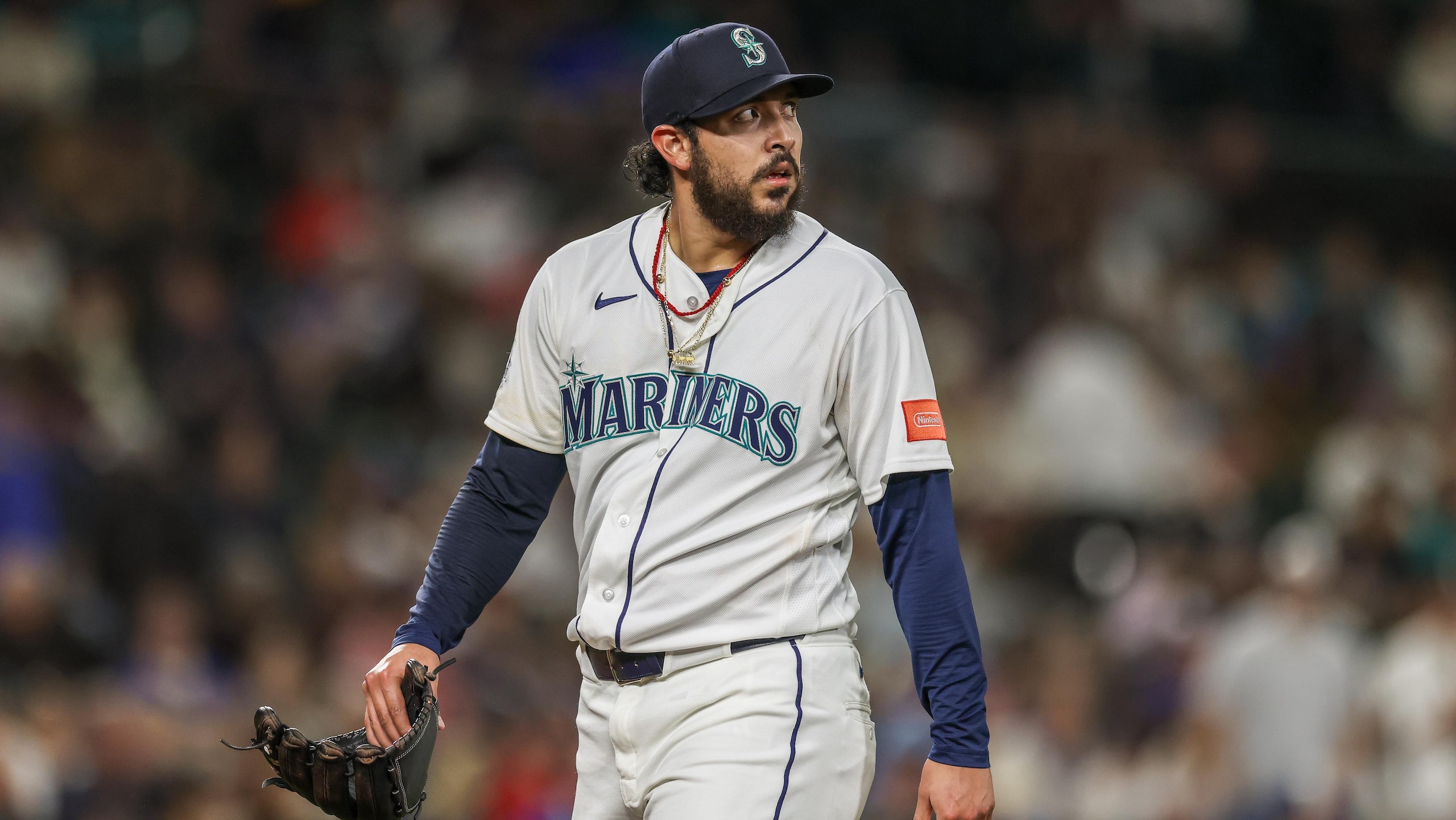
ZiPS Projection: 62.1 IP, 5-2, 28 SV, 2.89 ERA, 11.7 K/9, 0.8 WAR
Steamer Projection: 64.0 IP, 4-3, 28 SV, 2.93 ERA, 11.4 K/9, 0.8 WAR
Actual: 19.2 IP, 3-3, 9 SV, 4.58 ERA, 14.6 K/9, 0.4 WAR
We are deviating from the "nowhere close to his projected WAR" theme here, but WAR never has been a particularly useful data point when it comes to closers.
(Unanimous first-ballot Hall of Famer Mariano Rivera had a lower career fWAR than Ryan Zimmerman? And Trevor Hoffman was worth less career fWAR than Mike Lowell? Oh, okay, sure. Makes total sense.)
Over the past two seasons, though, Andrés Muñoz had been one of the best relievers in baseball, saving 60 games with a 1.92 ERA and 11.8 K/9. The only other pitcher with a sub-2.35 ERA and at least 10 saves was Emmanuel Clase and, well, we don't talk about him anymore.
So, to see Muñoz sputtering to an ERA in the mid-4's with three losses and three blown saves (six separate appearances) in the early going has been staggering.
Both his FIP (2.89) and xFIP (2.05) would have you believe this has just been terrible luck. After all, his strikeout rate (38.1 percent) has never been higher, his walk rate (8.3 percent) is lower than it had been in any of the previous three seasons and that .357 BABIP sure looks like a typo compared to what had been a career BABIP of .268 heading into 2026.
However, what FIP and BABIP fail to take into consideration is that Muñoz is getting tattooed like never before.
The barrel rate against him from 2022-25 was 6.4 percent. It is currently 14.3 percent.
After four years with a hard-hit percentage below 40 percent, he's sitting at 50 percent.
And after four years with a ground ball rate of 53.7 percent, he is at 36.4 percent.
Add it all up and he has an xwOBAcon of .513 that ranks in the bottom one percent in baseball.
We aren't talking about tough luck in the form of weakly hit ground balls turning into singles. What we're talking about is four balls that have already been hit over 110 MPH this season compared to one such batted ball in the previous three years combined.
His slider is still a great pitch, but both his four seamer and his sinker have been glorified batting practice balls. We shall see if he can get that under control.
Corey Seager, Texas Rangers
10 of 11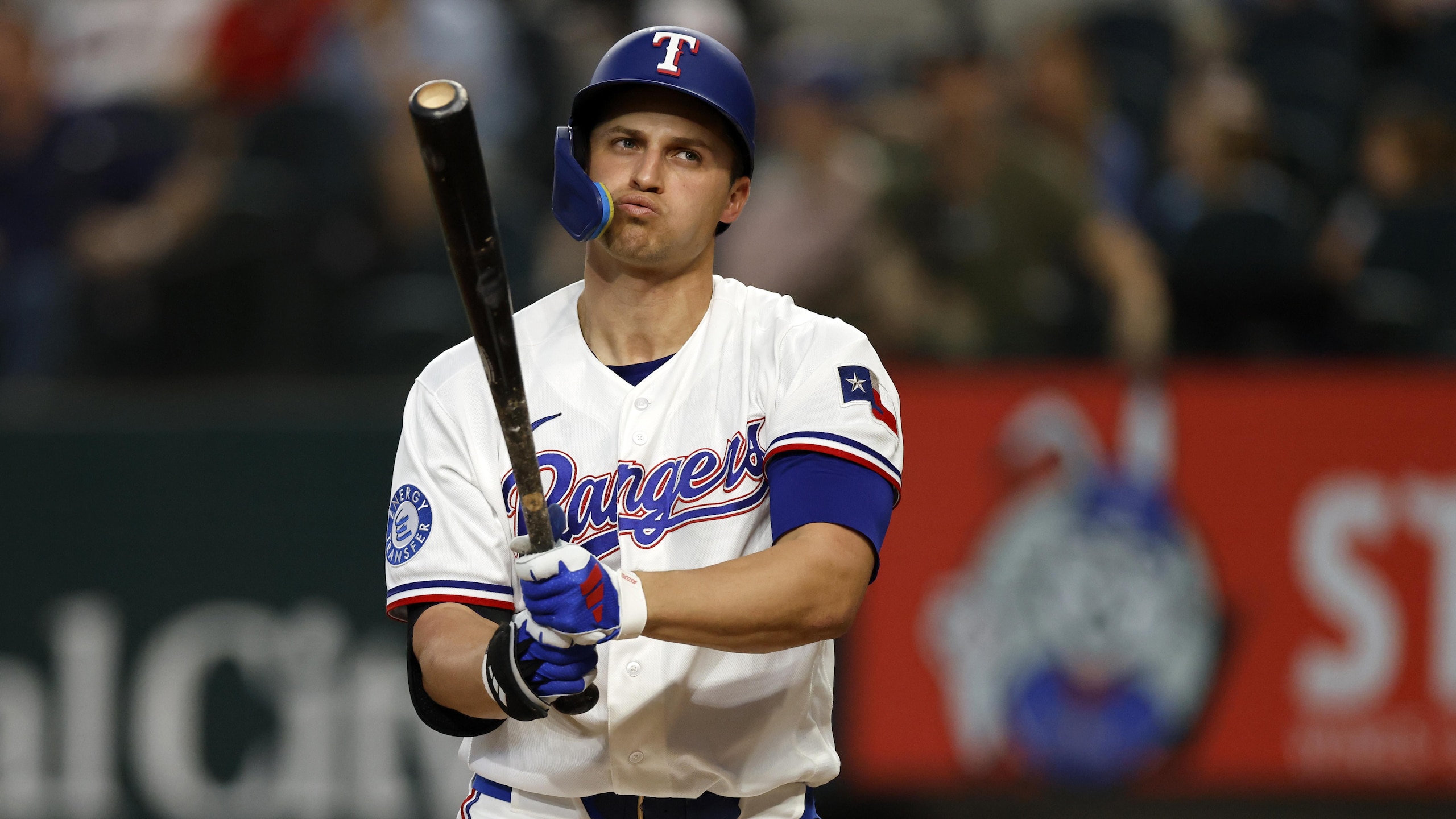
ZiPS Projection: .262/.349/.473, 23 HR, 68 RBI, 4.2 WAR
Steamer Projection: .276/.359/.499, 25 HR, 75 RBI, 4.1 WAR
Actual: .179/.286/.353, 7 HR, 20 RBI, 0.2 WAR
Over the first four seasons of his 10-year, $325M contract, Corey Seager had been worth every penny. Despite missing nearly a full season's worth of games (153) from 2022-25, he was the 12th-most valuable position player, per FanGraphs, operating at 162-game paces of 175 hits, 38 home runs, 101 runs and 99 RBI.
But after racking up three home runs and a 1.156 OPS through the first two series of this season, Seager proceeded to triple-slash .157/.260/.291 in his next 36 games before the first of his annual trips to the IL, this one for back inflammation.
What has been concerning during this slow start is his whiff rate.
Through his first 11 seasons, Seager whiffed on 25.5 percent of his swings, never more than 28.1 percent in any given season. However, he is at a 35.2 percent whiff rate this season, which is translating to a 27.5 percent strikeout rate—after eight consecutive years below 20 percent.
And the really alarming part of that already concerning information is that he is just straight up missing strikes. Seager entered 2026 with a career zone contact percentage of 84.3, but he is down at 76.7 percent this year.
Even though we're talking about a sample size of about 350 swings, that's a pretty substantial drop that suggests he isn't seeing the ball as well as usual.
Also serving as pretty strong evidence in that argument is how dreadfully Seager is hitting breaking balls this season.
Over the past three years, he went 122-for-416 (.293 AVG) against breaking balls. He hit a combined total of 28 home runs and slugged at least .540 in each of those seasons. But he is presently 5-for-46 (.109) with no home runs and 21 strikeouts.
It will be a long season if he doesn't start doing some damage against those sliders and sweepers.
Logan Webb, San Francisco Giants
11 of 11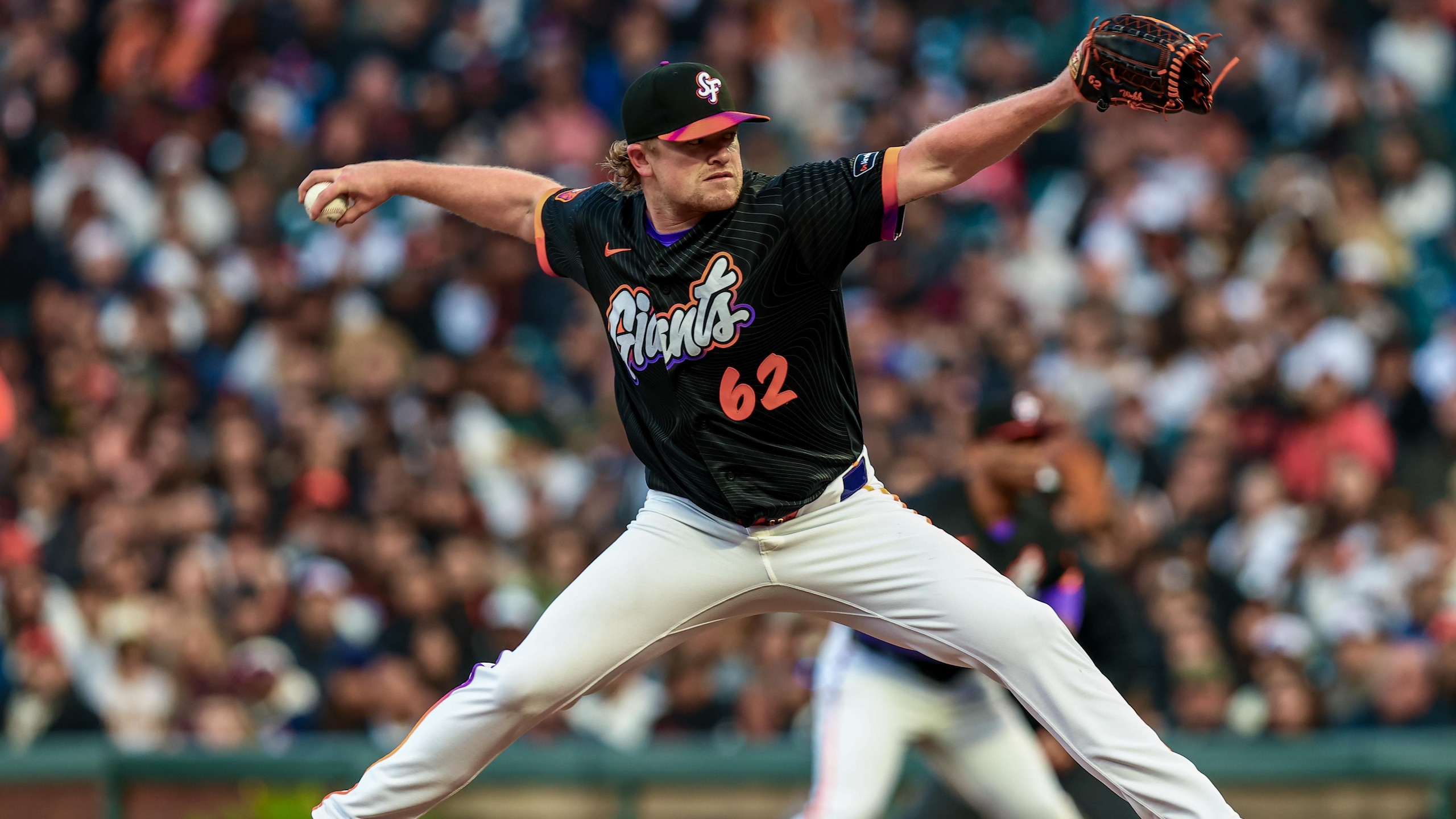
ZiPS Projection: 200.0 IP, 3.06 ERA, 2.90 FIP, 8.6 K/9, 5.0 WAR
Steamer Projection: 199.1 IP, 3.32 ERA, 3.15 FIP, 8.5 K/9, 4.1 WAR
Actual: 48.0 IP, 5.06 ERA, 3.56 FIP, 7.9 K/9, 0.7 WAR
Both preseason projections had high expectations for Logan Webb, but especially ZiPS, placing him in a tie with Paul Skenes behind only Tarik Skubal and Garrett Crochet for the highest WAR forecast.
And why not? Over the past half decade, Webb had been maybe the most consistently good—and surely the most consistently durable/available—pitcher in all of baseball, posting a 3.19 ERA and last missing a start in July 2021.
On multiple levels, though, Webb has been mortal this season, presently on the IL with knee bursitis after a collectively underwhelming first eight starts.
Both his walk percentage (7.2) and his strikeout percentage (20.2) are worse than in any of the previous five seasons, and his hard-hit percentage (49.0) is easily the worst of his career.
The positive spin on that latter front is we're largely talking about hard-hit ground balls, with opponents generating at least a 95 MPH exit velocity against Webb's patented sinker more than 60 percent of the time. He isn't suddenly getting tagged for an inordinate number of home runs or anything.
However, it can hardly be considered a promising sign that his go-to pitch is getting scalded like never before, or that he has never had a lower whiff rate (20.4 percent) even though opposing hitters have never chased pitches out of the zone at a higher rate against him (34.9 percent).
Maybe taking some time to rehabilitate that right knee fixes the problem, though?


.jpg?w=2560 "AD Trolls Bears WR on IG 😂")
.jpg?w=2560 "Viral Dan Campbell Presser 💙")
.jpg?w=2560 "Buzz: MHJ Hired Agents for Trade")
.jpg?w=2560 "Report: Steelers WR to Miss 'Weeks'")
.jpg?w=2560 "Cam Ward Says He's Not A Loser")
.jpg?w=2560 "Chargers Fall to 0-5 🤢")