
Knicks Are a Long Way from Fixed, but David Fizdale Appears to Be a Good Start
NEW YORK — By this point, Knicks fans know the deal. New coach comes in, refers to Madison Square Garden as "The Mecca" and claims working there is a dream come true. He says he's going to emphasize defense and accountability, that some sort of super-awesome culture is going to be instilled, that he knows it's been a dark few years but brighter times lay ahead.
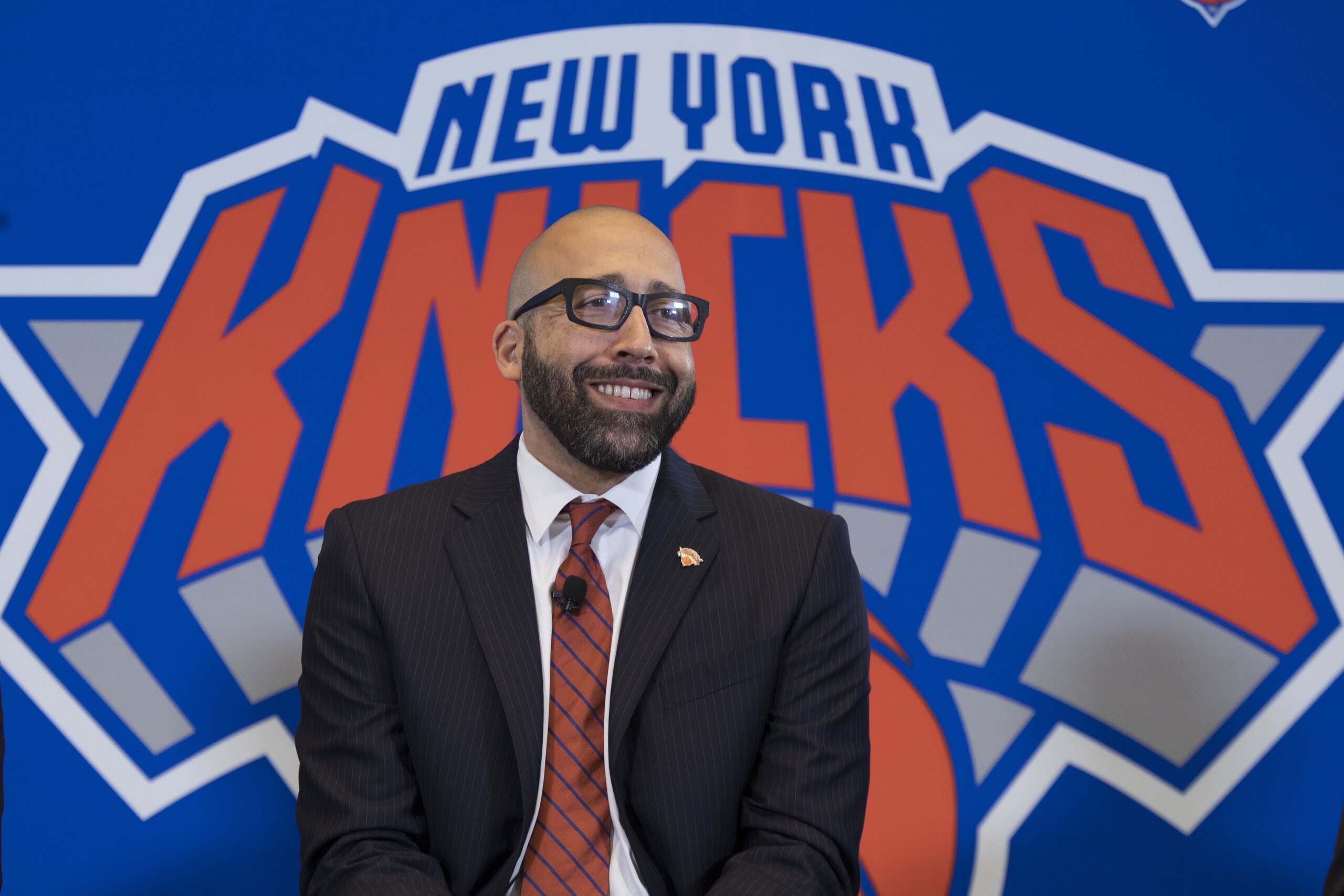
Tuesday was no different. The Knicks introduced their new head coach, David Fizdale, the 11th man to hold that position since Jeff Van Gundy left in late 2001 and the fifth since 2014 (extra snack for those poor diehards who can name the previous 10). A new head coach, of course, means another introductory press conference, and so here we were again, sitting in a hall at Madison Square Garden as the Knicks' latest liberator—in this case, Fizdale—took the stage to share the myriad ways he planned to embark on the task that has flummoxed 10 coaches and even more front office executives before him:
How to fix the Knicks.
Then again, things are a bit different this time. For one, Fizdale isn't being billed as some savior; he's just the latest piece to a puzzle being put together by team president Steve Mills and general manager Scott Perry. He's also joining a team that, as hapless as things have recently felt, finds itself in decent position moving forward. The Knicks will have cap room next summer. They have a lottery pick this year and likely one next year, too. Rookie Frank Ntilikina, who won't turn 20 until late July, is already one of the league's top defenders.
And there's Kristaps Porzingis, a talent who has the potential to grow into the type of franchise cornerstone that teams spend years searching for.
"The best way to describe him is he's the future of the NBA," Fizdale said Tuesday. "Look around who's playing right now. They all got guys super-long, super-athletic, super-skilled, super-tough-minded. He fits all of the qualities of a megastar and a guy who can really propel a franchise forward to high places."
Which leads us back to Fizdale, and Mills' and Perry's decision to entrust him with the team's future and the question of whether they were smart to do so.
Of course, one press conference, and all the platitudes and performing that come with it, can't answer this question. And so saying that the Knicks will suddenly morph into a championship-caliber defensive team because Fizdale said he wants a "loud defense that sparks the offense" would be naive.
But that doesn't mean there aren't morsels of truth to be gleaned from Fizdale's press conference—or, in this case, reasons for Knicks fans to feel optimistic about Fizdale's hiring.
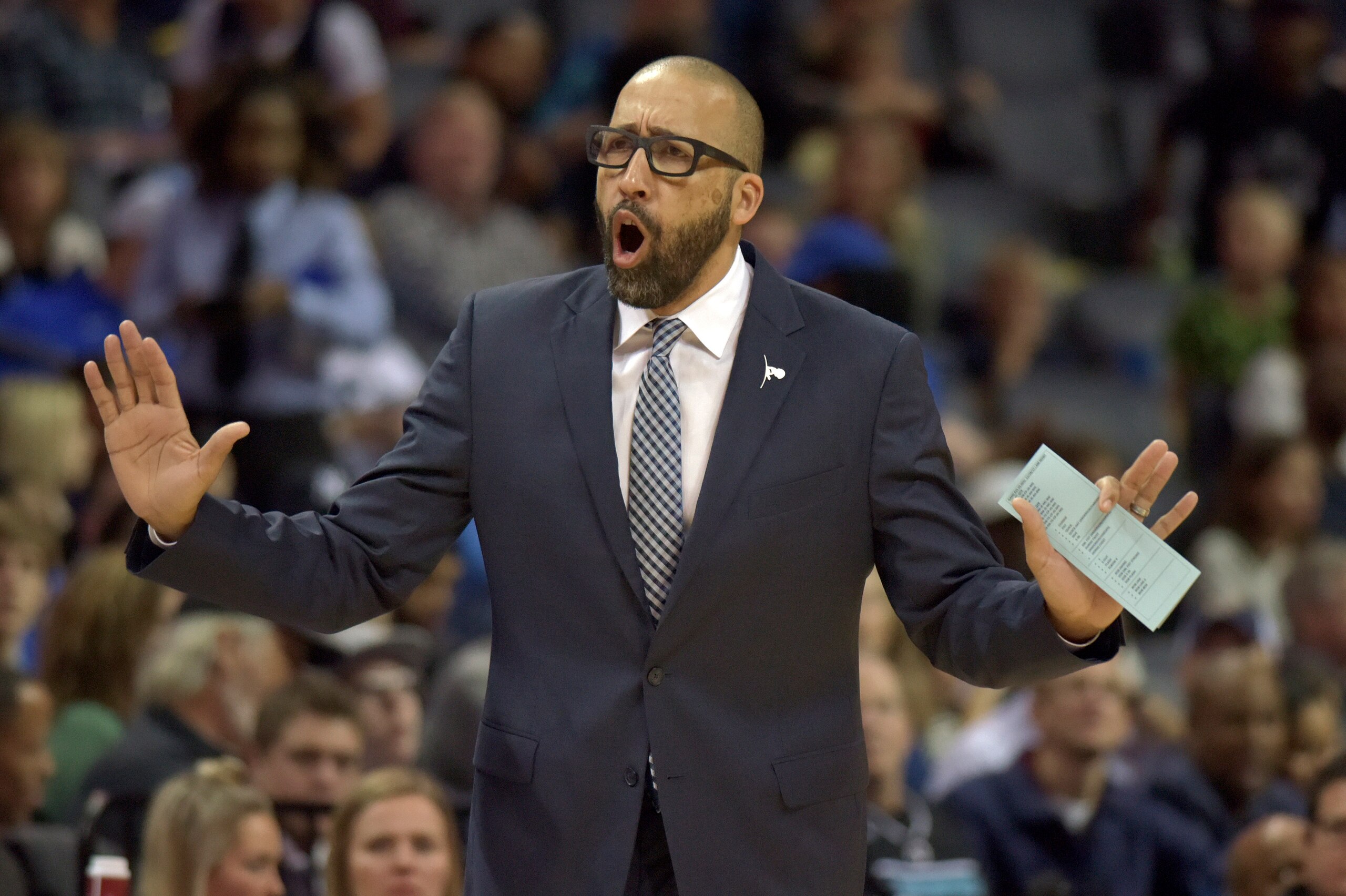
For one, Fizdale made it clear he is of the modern mindset in basketball: that size should not dictate position. When asked about whether he plans on playing Porzingis predominantly as his lone big man on the floor, or alongside a second one, Fizdale replied:
"Why limit it? Why put a ceiling on it? I just see so many different ways to use him," Fizdale said. "Obviously, if you play him at some 5, it's like that super-lineup you're always seeing from different teams—I don't even know how you match up with him. He can play some 4. If you have another speed guy at the 4, you might even be able to play positionless."
This sort of thinking, Perry added later, was one of Fizdale's attributes that appealed to the Knicks.
"You hear him talk a lot about positionless basketball, not being afraid to try different combinations," Perry said. "With where the game is going today, that's a really appealing quality that he brings."
It's not that going positionless is the solution to the Knicks' problems or a tactic they must embrace. But the fact that both coach and front office appear willing to embrace a modern strategy (unlike, say, when Jeff Hornacek laughably claimed that he'd alter the Knicks offense while Phil Jackson was still sitting in his front office perch) is a coordination of thinking and intent that hasn't been seen around MSG for years.
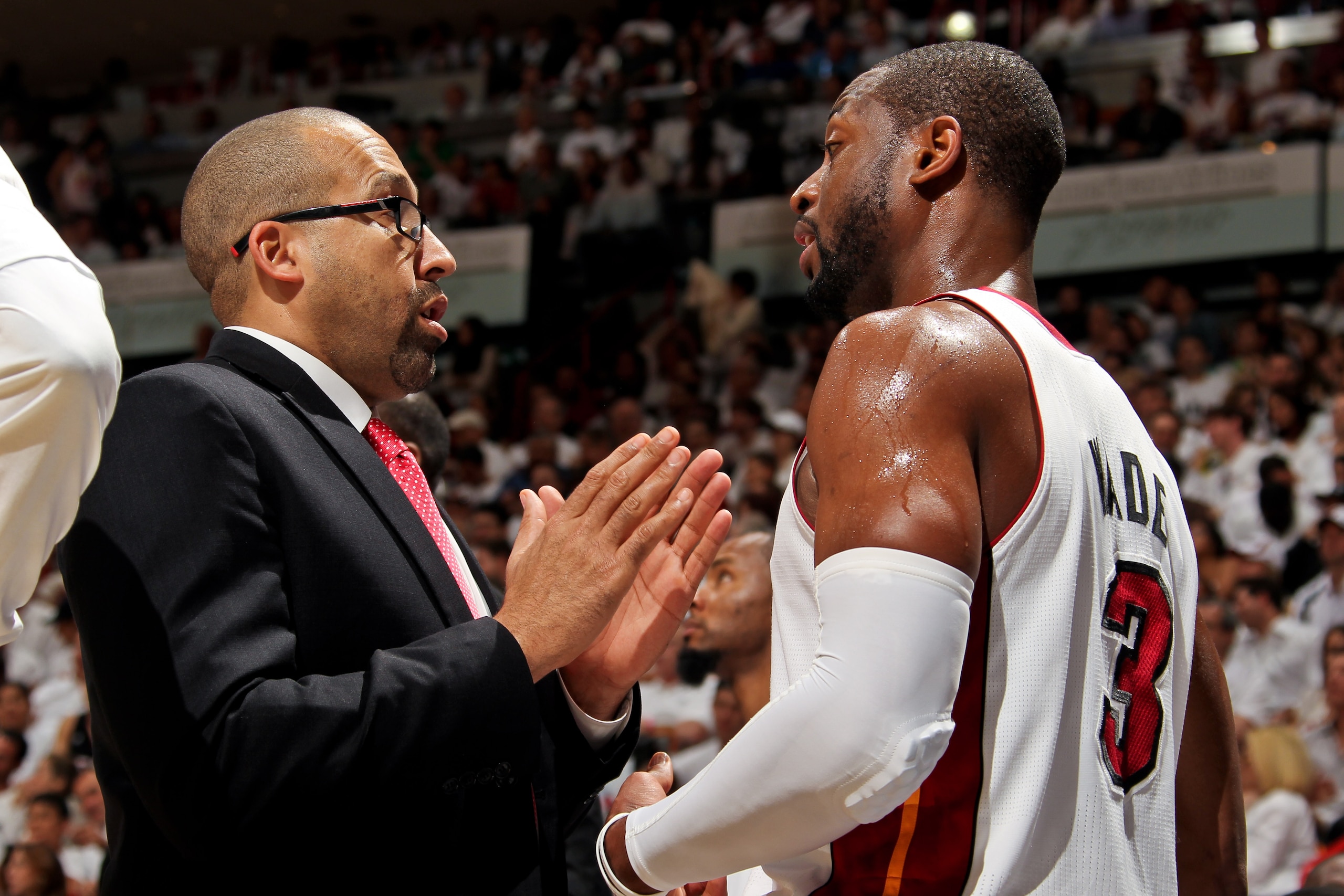
This wasn't Fizdale just preaching some key phrases that he thought his interviewees wanted to hear, either. Part of his rise through the coaching ranks, specifically with the Miami Heat, can be attributed to his ability to connect with stars like LeBron James and Dwyane Wade. But he also received a Ph.D. there in basketball philosophy from a team that has been at the forefront of much of the game's strategic advancements.
"He's really smart," said one NBA scout who worked in Miami at the same time as Fizdale. "All our coaches there loved him."
Then again, it wasn't strategy that got Fizdale run out of Memphis after just 101 games. It was his inability to communicate his desired plan with his players.
Fizdale, according to sources, and as has been reported elsewhere, butted heads with Grizzlies star Marc Gasol. His incessant call-backs to his previous employer, the Heat, irked players as well.
"I just felt like, when I went in there, I saw a team that was hitting that point where its window was shrinking, and I probably went in there a little too much guns-blazing," Fizdale said candidly Tuesday. "I didn't let certain things grow organically."
Fizdale will have to prove that he took this failure to heart, though the fact that he's not joining a perennial playoff team—like the Grizzlies were—should make it easier for him to ingratiate himself to his new players, too.
Whether he can succeed in any of these areas is something that won't be known for years. For now, the only thing that can be said with confidence is the Knicks tabbed a man who has all the attributes you look for in a new coach.
That doesn't mean there won't be another press conference in another two years. What it does mean, though, is that today the Knicks' future looks brighter than it did a few weeks ago.
Yaron Weitzman covers the NBA for Bleacher Report. Follow Yaron on Twitter @YaronWeitzman, listen to his Knicks-themed podcast here and sign up for his newsletter here.
.jpg?w=2560 "AEW WrestleDream Live Grades 🔠")
.png?w=2560 "B/R CFB Top 25 After Week 7 🔢")

.jpg?w=2560 "Ex-NFLer BLASTS Fitzpatrick🤬")