

Here comes the NBA's next batch of offseason trade targets!
At the risk of sounding lame, this summer's rumor mill should be lit. Most of the league won't have cap space, so a gaggle of buyers will need to plumb alternative improvement resources.
Stir in the usual "Well, trades happen" offseason mantra, and the groundwork for a hectic summer of phone tag among team executives is already in place.
Our latest dive down the Definitely Maybe rabbit hole will look at point guards only. (Fear not; other positions will come later.) Some have been concretely linked to the chopping block. Others find themselves in the mix because of organizational shifts or contract situations. Another is at the mercy of LeBron James' prerogative to play with stars.
But all of them have one thing in common: They're neither untouchable nor safe heading into the 2018 offseason.
Long Shots to Monitor
1 of 6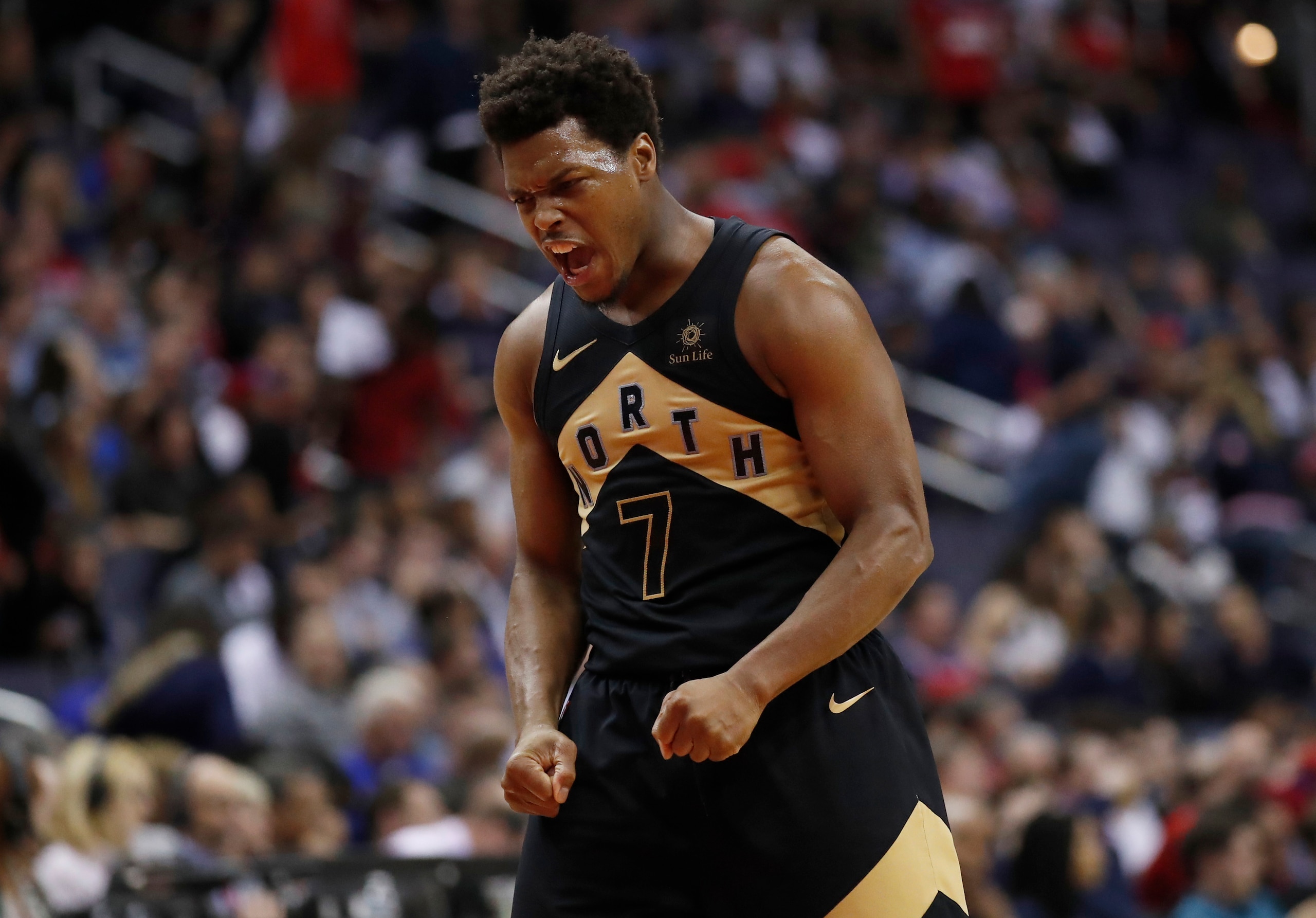
Mike Conley, Memphis Grizzlies
What's more likely: The Grizzlies finding a taker for the final three years and $97.5 million on Mike Conley's contract after he appeared in just 12 games, or the front office admitting the time to rebuild has come at all?
Kyle Lowry, Toronto Raptors
Getting manhandled by the Cleveland Cavaliers again will force the Raptors to look at everything.
Will that include moving on from Kyle Lowry? Perhaps. But trading their best player—sorry, DeMar—feels like an overreaction. Plus, Lowry is owed $64.3 million through 2019-20. His salary will be hard to reroute without accepting bad money in return.
Unless the Raptors are contemplating a full-on youth movement or the Cavaliers are building an offer around the Brooklyn Nets pick, Lowry is more safe than not.
John Wall, Washington Wizards
The Wizards need to re-evaluate their payroll allocation following a first-round flameout. Floating salaries for Bradley Beal, Otto Porter Jr. and John Wall while fleshing out the rest of the roster will be an untenable endeavor once the latter's extension kicks in to start 2019-20.
Changing out one of them for a few ancillary pieces could help deepen the rotation and free up some long-term payroll. And by "one of them," we indirectly mean Beal or Porter.
Wall shouldn't be off limits, but he'll soon make too much money. Washington would be lucky to turn the $188.4 million he's owed through 2022-23 into much more than the Los Angeles Clippers got for Blake Griffin.
Patrick Beverley, Los Angeles Clippers
2 of 6
Age: 29
2017-18 Per-Game Stats: 12.2 points, 4.1 rebounds, 2.9 assists, 1.6 steals, 0.5 blocks, 40.3 percent shooting
Advanced Stats: 12.3 player efficiency rating (PER), 4.12 total points added (TPA), minus-1.16 real plus-minus (RPM)
Contract Details: 1 year, $5 million (non-guaranteed until Jan. 10)
Right knee surgery cost Patrick Beverley most of the 2017-18 campaign, but his durability means little in the grand scheme of the Clippers' future. Their in-between trajectory complicates his standing more than anything.
Keeping Beverley is a non-decision if they're intent on regrouping and reloading for a playoff chase. They won't find someone who can pester the league's top point guards for less than the taxpayer's mid-level exception and don't have the cap flexibility to pursue a splashier replacement.
Sticking him on the chopping block doesn't even make sense if they're trying to win. Beverley doesn't earn enough to bring back an impact player on his own, and suitors will be more inclined to fork over low-end picks and prospects for someone on an expiring contract unless they're dumping unsavory salary as part of the process.
Exploring that avenue becomes a lot more appealing if the Clippers lean into a reset. Blake Griffin and Chris Paul are already gone, and DeAndre Jordan will be looking for a long-term commitment if he declines his player option. And with open-ended access to more than $60 million in cap space during the summer of 2019, the Clippers have incentive enough to let him walk.
Making that call throws them into big-picture mode. Beverley turns 30 in July and doesn't fit the timeline for a rebuilding squad—especially one that would be bent on retaining the lottery-protected pick it owes to the Boston Celtics next June.
Some team, somewhere, will offer an asset that isn't affixed to cap-clogging salary if Beverley hits the auction block. He noticeably elevates backcourt defensive ceilings without butchering the offensive pecking order. He's content to work as a tertiary ball-handler and spot-up sniper.
Over one-third of his total attempts were coming off the catch before he suffered a meniscus injury, and he routinely saw more time away from the ball during his days in Houston. Taking a $5 million flyer on his right knee is a worthwhile gamble for powerhouses or fringe contenders in need of a starting complement or second-unit punch.
George Hill, Cleveland Cavaliers
3 of 6
Age: 32
2017-18 Per-Game Stats: 10.0 points, 2.7 rebounds, 2.8 assists, 0.9 steals, 0.4 blocks, 46.0 percent shooting
Advanced Stats: 12.2 PER, minus-21.76 TPA, minus-0.27 RPM
Contract Details: 2 years, $37 million ($1 million guarantee for 2019-20)
George Hill's future with the Cavaliers is par for the roster's course: It all depends on what LeBron James (player option) does in free agency.
No one is safe if the four-time MVP signs elsewhere—save for maybe whoever the team drafts with the Brooklyn Nets pick and Cedi Osman. This isn't news. Some players might be in the clear if he stays. (Looking at you, Kyle Korver).
Hill is not one of them.
James enjoys a certain level of security beside him, even when he's not lighting up the box score or making any shots whatsoever. Hill is the steady ball-handler, sometimes game manager that the Cavaliers have failed to uncover in Jordan Clarkson and Rodney Hood and cannot afford to play in Jose Calderon. Trading him dilates a void they've yet to fully cork in the aftermath of Kyrie Irving's exit.
Short of an improbable title March, though, the Cavaliers cannot have it both ways: They cannot run this core back and expect to re-sign James.
Heads would roll in advance of next season to augment his window, and the Brooklyn selection alone won't net them everything they need. Landing impact names will demand the inclusion of non-lethal salary-matching fodder, and Hill's contract is about as digestible as it gets for the Cavaliers.
Tristan Thompson (two years, $36 million) isn't an enticing blockbuster anchor—nor is Cleveland ready to soldier on without him. Pairing Kevin Love, who owns a player option for 2019-20, with the Nets pick makes little sense if the returning player isn't Kawhi Leonard.
Clarkson's two-year, $25.9 million commitment is an albatross. J.R. Smith is essentially owed as much as Hill over the next two years when factoring in his $3.9 million guarantee for 2019-20. And at least the latter comes with the bonus benefit of maybe earning his keep.
Viewed this way, the Cavaliers' most efficient path to dealing for a marquee name includes dangling Hill and the Nets' draft choice together. He has immediate value, and his $1 million guarantee opens the door for his next team to wipe $17 million from its ledger leading into 2019 free agency.
Reggie Jackson, Detroit Pistons
4 of 6
Age: 28
2017-18 Per-Game Stats: 14.6 points, 2.8 rebounds, 5.3 assists, 0.6 steals, 0.1 blocks, 42.6 percent shooting
Advanced Stats: 15.9 PER, minus-36.10 TPA, minus-0.31 RPM
Contract Details: 2 years, $35.1 million
Reggie Jackson's place on the Detroit Pistons isn't any worse off following the dismissal of coach-president Stan Van Gundy. The $35.1 million remaining on his contract remains difficult to move following two injury-riddled seasons, and more importantly, the organization is by no means a lock to try undoing everything SVG leaves behind.
"Seeing a lot of 'well then why did Detroit let SVG make the Blake Griffin deal?'" ESPN.com's Zach Lowe wrote. "That wasn't nearly as Stan-driven as people think. Everyone was on board with it. Was never some sort of SVG Hail Mary."
Owner Tom Gores could see both value and convenience in letting the current roster construction stand. Jackson played just 32 total minutes, across four appearances, with Griffin and Andre Drummond, during which time the Pistons outscored opponents by 13.7 points per 100 possessions. The unsampled ceiling on this troika could be worth a more extensive look, particularly when it may take a sweetener to unload Jackson in the first place.
Still, regime changes are never so cut-and-dry. A new president will want to make the on-court product his own, from the coach to the players. And while Jackson isn't a hot commodity, he'll be easier to jettison than the three years, $81.3 million left on Drummond's deal or the four years and $142.2 million remaining on Griffin's pact.
Including a buffer in any potential trade should be out of the question. The Pistons don't own their first-round pick this year and aren't in position to give away cost-controlled assets. But they're also dangerously close to the luxury tax. They'll have almost $118 million on their bottom line if they guarantee everyone's 2018-19 salary—about $5 million below the projected $123 million tax line.
Flirting with that payroll would be pretty bold even if Gores and friends consider this season's Pistons an underachiever. Shopping Jackson for an assortment of cheaper spare parts gives them more leeway with the Drummond-Griffin partnership. They might be able to get away with a combination of Dwight Buycks (non-guaranteed), Langston Galloway and Ish Smith at point, and shedding enough salary to access the full non-taxpayer's mid-level exception ($8.6 million) would prove massive in this summer's scrimpy market.
Dennis Schroder, Atlanta Hawks
5 of 6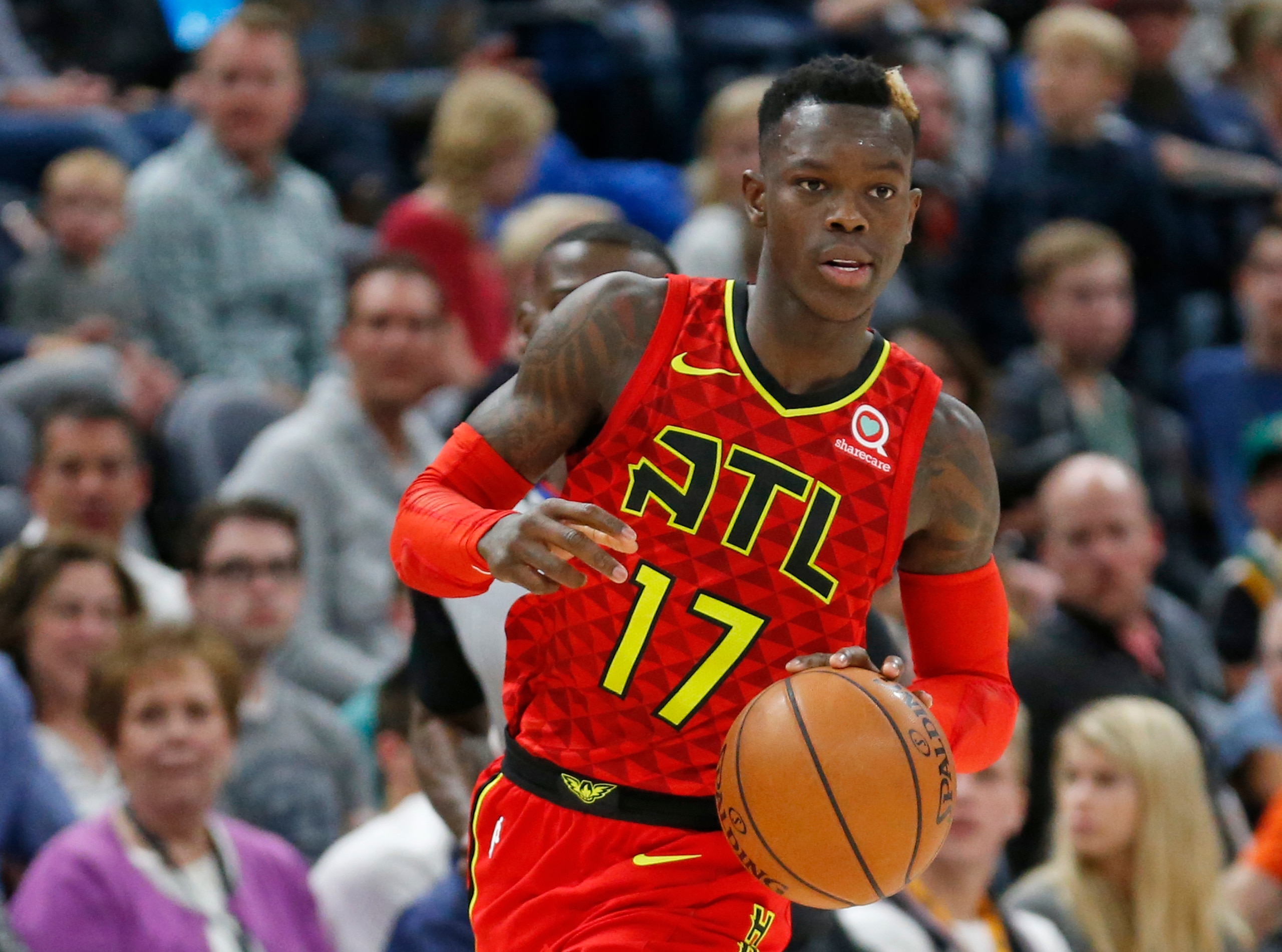
Age: 24
2017-18 Per-Game Stats: 19.4 points, 3.1 rebounds, 6.2 assists, 1.1 steals, 0.1 blocks, 43.6 percent shooting
Advanced Stats: 17.3 PER, minus-29.79 TPA, minus-1.79 RPM
Contract Details: 3 years, $46.5 million
Dennis Schroder did not earn a pass from the Atlanta Hawks during their (failed) February fire sale. He was very much available, according to Sporting News' Sean Deveney—like pretty much everyone else not named John Collins.
Atlanta's stance probably hasn't changed. Schroder is young enough to outlast a full-tilt reset, but his contract predates the arrival of general manager Travis Schlenk. Just as Mike Budenholzer wasn't his coach (or front-office comrade), Schroder is not his point guard. And we all know how the Budenholzer relationship panned out.
Bidding farewell to Schroder won't be as easy. His $15.5 million salary belies his reputation. He has no trouble reaching the rim in spacey lineups, but he's a suboptimal finisher around the hoop and roller-coaster playmaker. Evidence of his making those around him better is hard to find.
To call Schroder immovable, though, overstates the situation. He's on the right side of 25 and offered glimpses of a tantalizing fit before the Hawks lost Al Horford and dealt Jeff Teague. The Milwaukee Bucks sniffed around his services before acquiring Eric Bledsoe, per Lowe.
Another team will count on Schroder developing into an above-average floor general—and it doesn't need to be a preexisting contender.
Rebuilding squads aren't in the habit of inflating long-term salary obligations without accompanying compensation, but this year's free-agency market plays to Atlanta's advantage. The point guard pool is less than robust after Chris Paul, and a handful of younger teams are about to reinvest in their nucleus.
Maybe the Orlando Magic take a look at Schroder with Aaron Gordon's pay grade set to explode. Maybe the Phoenix Suns do the same knowing Devin Booker's salary will mushroom in 2019-20. The Hawks should have options if Schlenk continues distancing himself from the foundation laid before him—trade partners that, at the bare minimum, allow them to pivot away from Schroder without cramping their long-term flexibility.
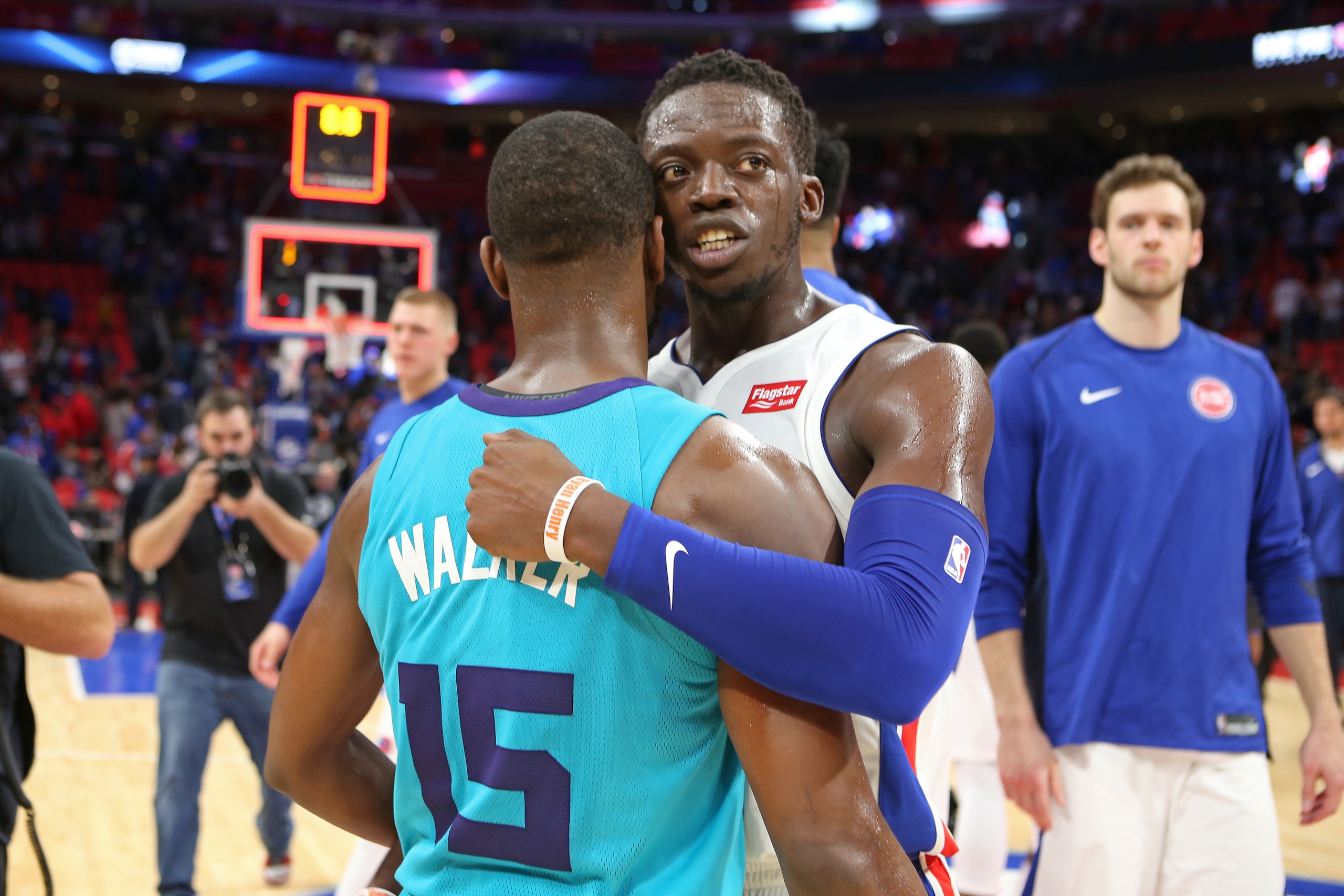
Kemba Walker, Charlotte Hornets
6 of 6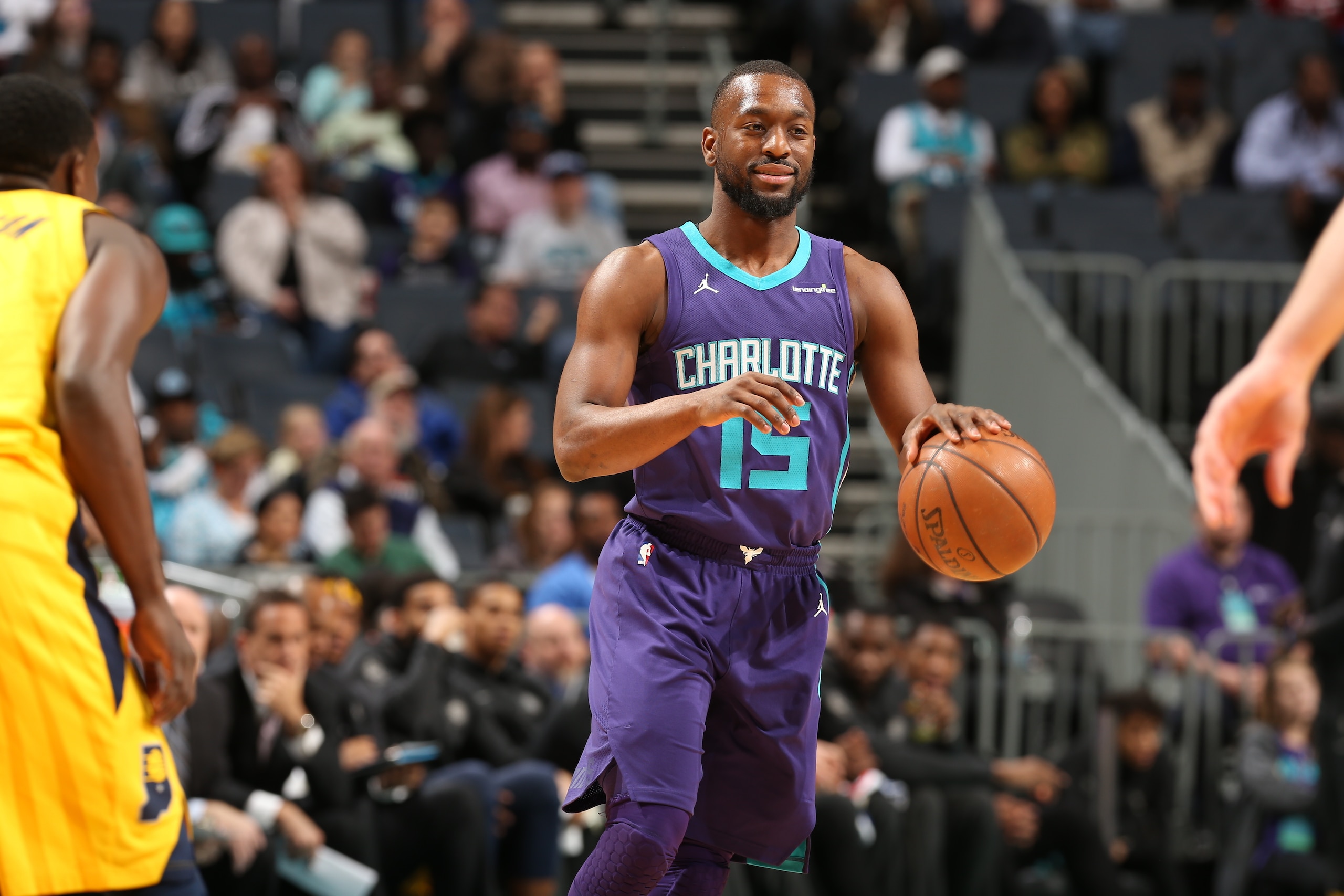
Age: 28
2017-18 Per-Game Stats: 22.1 points, 3.1 rebounds, 5.6 assists, 1.1 steals, 0.3 blocks, 43.1 percent shooting
Contract Details: 1 year, $12 million
Kemba Walker's name crept into the rumor mill this past season, per ESPN's Adrian Wojnarowski, and it's not about to leave now.
Charlotte Hornets general manager Mitch Kupchak hasn't outlined a clear plan since taking over for Rich Cho. But he has given head coach Steve Clifford the boot, and turning over the roster is the natural next step. Walker's impending free agency makes him an obvious target of any wholesale shift.
"I have no idea," he said when asked about his future in Charlotte, per the Associated Press. "That is out of my control."
The Hornets don't have the cap space or trade assets beyond him to bolster the depth chart. They'll be fortunate to avoid the luxury tax as things stand; they'll cruise past $120 million in total salary after accounting for their first-round pick and, potentially, Treveon Graham's next contract.
Charlotte isn't due for an imminent break in the clouds either. Dwight Howard comes off the books next season, but his $23.8 million cap hit will be immediately replaced, if not exceeded, by Walker's 2019-20 salary.
Realistically, then, the Hornets won't enjoy the money to reel in meaningful talent until 2020 at the absolute earliest—by which point they'll have toiled away in mediocrity's sub-floor for another two years.
Starting over is Kupchak's best play, even though it won't be the easiest. And the Hornets cannot begin to blow this group up without making Walker available. He's their ticket to pawning off Nicolas Batum (three years, $76.7 million), Michael Kidd-Gilchrist (two years, $26 million) or Marvin Williams (two years, $29.1 million) while maybe, quite possibly, if they're lucky, securing a first-round pick or prospect.
Teams will lowball Charlotte in negotiations. Prospective admirers won't want to mortgage any part of their future for the right to pay Walker a bunch of money next July.
But the Hornets are not without leverage. They played like a 46-win team with Walker on the floor this season compared to a 21-win squad whenever he caught a breather, according to NBA Math. And that's with a post-All-Star boon caked in.
So, yeah, Walker is a legitimate star—an authentic offensive hub who has shown he can carry a team. The Hornets won't get the moon for him, but his trade value is the closest they'll come to scrubbing their slate clean.
Unless otherwise noted, stats courtesy of NBA.com or Basketball Reference and accurate leading into games on Monday. Salary and cap-hold information via Basketball Insiders and RealGM.
Dan Favale covers the NBA for Bleacher Report. Follow him on Twitter (@danfavale) and listen to his Hardwood Knocks podcast, co-hosted by B/R's Andrew Bailey.
.png?w=2560 "B/R CFB Top 25 After Week 7 🔢")

.jpg?w=2560 "AEW WrestleDream Live Grades 🔠")
.jpg?w=2560 "Ex-NFLer BLASTS Fitzpatrick🤬")
.jpg?w=2560 "Myles Garrett Got Warning 👀")