
College Football Players Who Will Put Up Ridiculous Stats in 2018
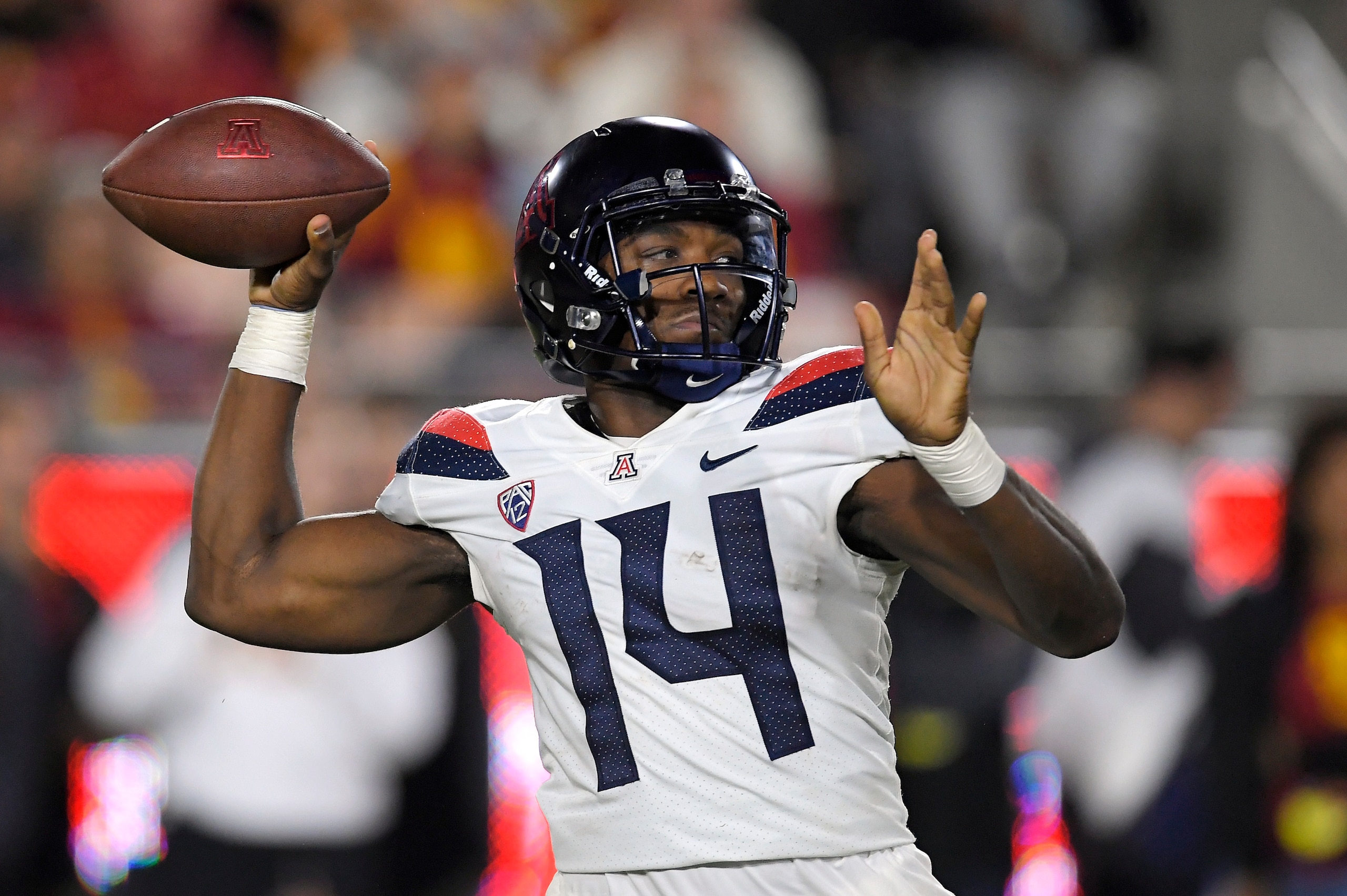
Khalil Tate was college football's biggest must-watch sensation for five weeks in 2017, and the dual-threat quarterback is at the top of the list of players who should accumulate absurd numbers in 2018.
If you prefer quarterbacks who don't get half of their stats with their legs, both West Virginia's Will Grier and Missouri's Drew Lock should throw for about two-and-a-half miles' worth of yards this fall.
Or if you prefer guys who don't throw at all, there's a good chance Stanford's Bryce Love will rush for at least 2,000 yards for a second consecutive year.
This is not intended to be a ranking of the top candidates to win the Heisman Trophy. (For that matter, it's not a ranking at all but rather a list of players in alphabetical order by last name.) Instead, these are the players who figure to be statistically dominant at their positions this coming season based on a combination of performance in previous years, roster situation and difficulty of schedule.
Honorable Mentions
1 of 11
Jarrett Stidham, QB, Auburn
Auburn has always been a run-first offense under head coach Gus Malzahn. But with running backs Kerryon Johnson and Kamryn Pettway both out of the picture and Stidham one of the best 2019 draft prospects among quarterbacks, he should put up solid numbers across the board.
McKenzie Milton, QB, UCF
Milton was one of the best quarterbacks in the nation as a sophomore, leading the Knights to an undefeated season with 4,037 passing yards and 37 touchdowns against just nine interceptions. His favorite target, Tre'Quan Smith, left a year early for the NFL, though, and the approach on offense might change a little bit with former head coach Scott Frost now holding that job at Nebraska. We still expect big things from Milton, but there are other quarterbacks with better odds of stuffing the stat sheet every week.
Jonathan Taylor, RB, Wisconsin
Taylor rushed for 1,977 yards and 13 touchdowns as a true freshman. However, this year's schedule is considerably more difficult than last year's, and a healthy Bradrick Shaw and Chris James on the depth chart ought to result in fewer carries for Taylor. (He averaged more than 20 totes per game in 2017.) Similar to Milton, we're still anticipating a big year, though.
D'Andre Swift, RB, Georgia
Nick Chubb and Sony Michel are gone, meaning the Georgia Bulldogs need to replace roughly 400 carries, 2,500 yards and 30 touchdowns from last season. That could mean a monster campaign from Swift, who had 81 carries and 17 receptions for a combined 771 yards as a true freshman last year. There are a lot of guys who will be big factors in the Bulldogs backfield, though, including incoming freshmen James Cook and Zamir White—provided the latter fully recovers from a torn ACL suffered in November. That will probably keep Swift from approaching 2,000 yards.
Diontae Johnson, WR, Toledo
Among returning players, only Buffalo's Anthony Johnson had more receiving yards (1,356) than Diontae Johnson (1,278) in 2017. This speedster was also a big factor in the return game, taking both a kickoff and a punt to the house last year. But with quarterback Logan Woodside out of eligibility, there's no telling how things will go for Toledo's passing game in 2018.
Marquise Brown, WR, Oklahoma
Baker Mayfield and Mark Andrews may be gone, but Oklahoma is still going to throw the ball a ton with Kyler Murray running the show. "Hollywood" Brown led the Sooners in receiving yards last year with 1,095 of them, and he figures to be the primary target this season.
A.J. Brown, WR, Ole Miss
2 of 11
2017 Stats: 75 receptions, 1,252 yards, 11 TD
It didn't much matter to A.J. Brown whether Shea Patterson or Jordan Ta'amu was at quarterback for Ole Miss.
He was going to put up big numbers either way.
Brown got out to a great start with Patterson. He missed most of the Week 3 game against California and had a gigantic dud (one catch for six yards) against Alabama, but he had at least eight receptions and more than 100 yards in four of his first six games.
He also finished strong with Ta'amu, racking up 34 catches for 487 yards and five touchdowns in four games in November. In the season finale against Mississippi State, Brown was on the receiving end of six of Ta'amu's 10 completed passes, including a 77-yard touchdown.
It was one of six 50-yard receptions for Brown on the season, cementing him as the biggest deep-play threat in the country heading into 2018.
Perhaps someone in a different conference will finish ahead of him in total yards, but Brown should at least be the top receiver in the SEC once again. Despite only really playing in 11 games, he had 170 more yards than the next-closest challenger in the conference (J'Mon Moore) and 435 more yards than the top returning player (Emanuel Hall).
Will Grier, QB, West Virginia
3 of 11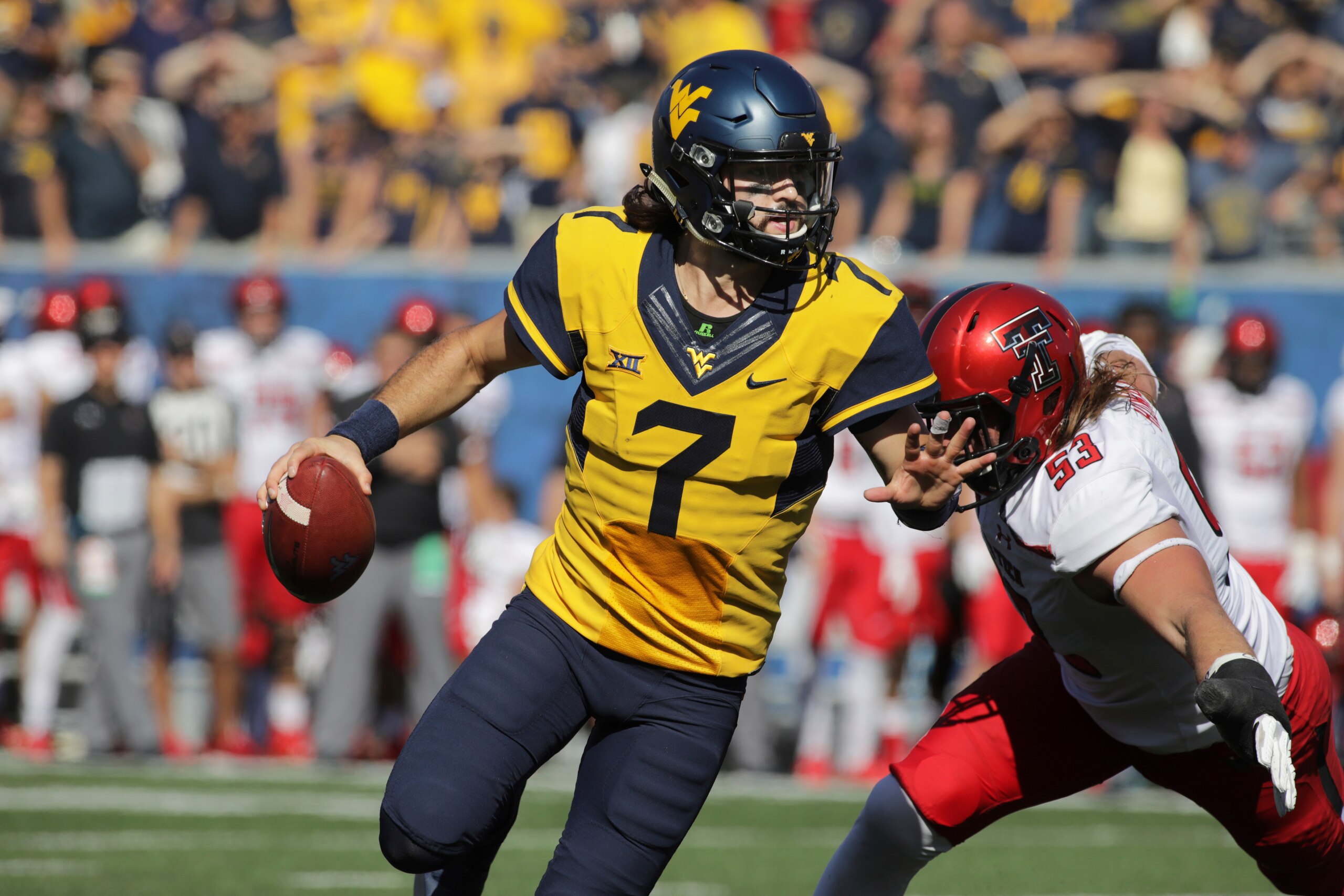
2017 Stats: 250-of-388, 3,490 yards, 34 TD, 12 INT
After Will Grier was suspended for the second half of the 2015 season and subsequently transferred from Florida to West Virginia and sat out another year, it was reasonable to wonder if he would be rusty.
He wasn't.
Actually, he was better than the version of himself that took the world by storm as a true freshman with the Gators.
Grier threw for at least 285 yards and two touchdowns in each of his first 10 games with the Mountaineers. Prior to injuring the middle finger on his throwing hand in game No. 11 and missing the rest of the season, his per-game averages were 344.0 yards and 3.4 touchdowns.
Had he stayed healthy and maintained those rates for three more games, he would have thrown for 4,472 yards and 44 touchdowns. That would have put him in third place in yards and tied with Lock for the national lead in TDs.
The Mountaineers had three receivers (David Sills V, Gary Jennings and Ka'Raun White) with at least 60 receptions and 980 receiving yards, as well as a fourth (Marcus Simms) who had a respectable line of 35 catches, 663 yards and five touchdowns. White graduated, but the other three guys will be back to help Grier chase the totals he should have reached last year.


Anthony Johnson, WR, Buffalo
4 of 11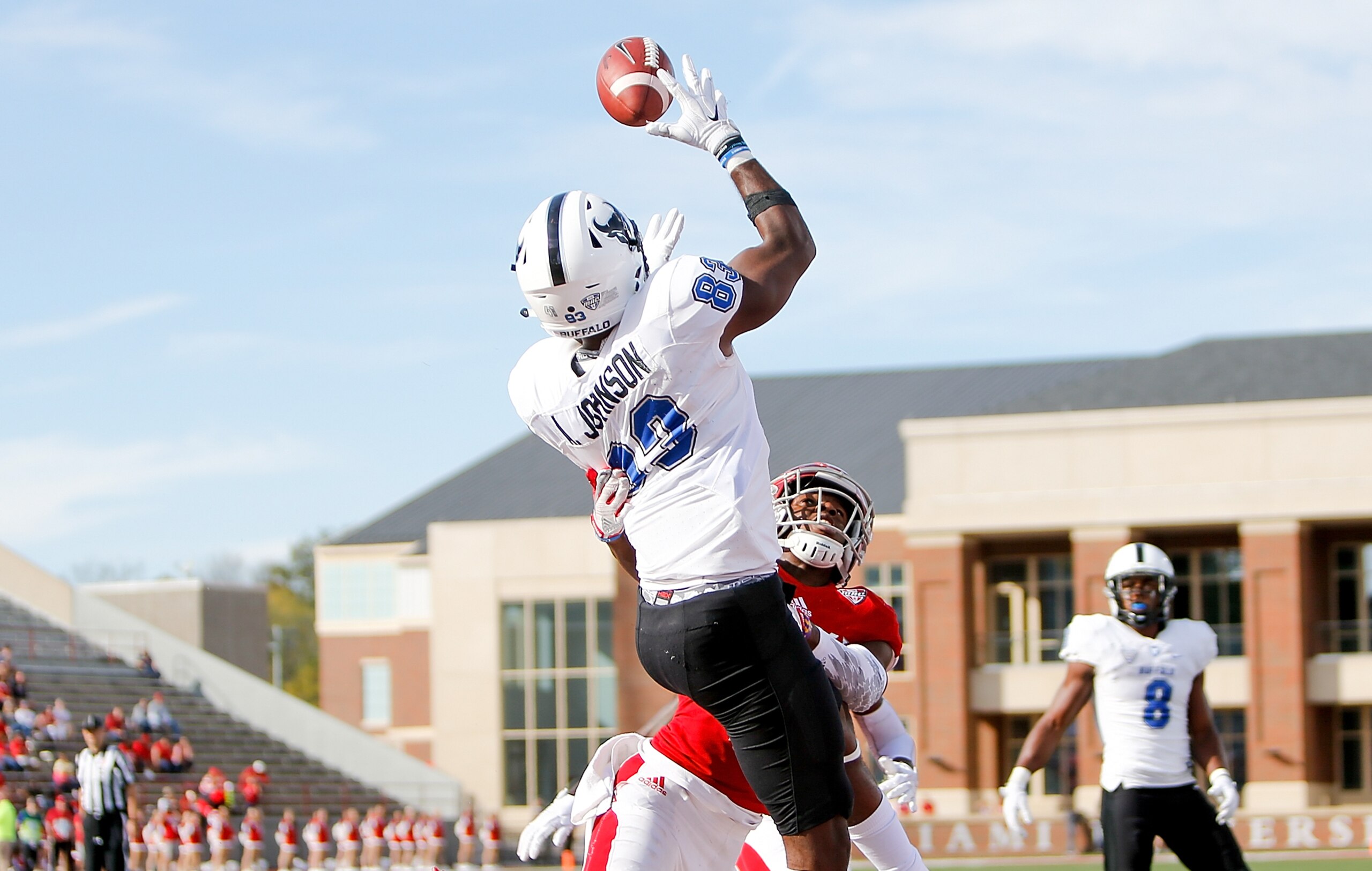
2017 Stats: 76 receptions, 1,356 yards, 14 TD
Anthony Johnson came out of nowhere last season. He was an OK wide receiver at Butler Community College and Iowa Western Community College in 2014 and 2015, respectively, but there was nothing to suggest he would rank second in the nation in receiving yards per game in his first season with the Buffalo Bulls.
The most impressive part of Johnson's campaign is he managed all those yards even though Buffalo's quarterback situation was something of a revolving door.
Tyree Jackson was the starter for the first four games, but a knee injury suffered against Florida Atlantic knocked him out for a month. Drew Anderson took over from there, but he only lasted three full weeks until suffering a season-ending shoulder injury of his own. Then it was Kyle Vantrease's turn for a game-and-a-half before Jackson was healthy enough to take the reins again.
Through it all, Johnson continued to thrive. He had at least 56 receiving yards in every contest last season, including six with 140 yards or more. Johnson was unstoppable in November, recording at least 153 yards and two touchdowns in each of Buffalo's final three games.
Jackson was the QB for all three of those contests, and the 6'7" gunslinger will be back for the Bulls. If both he and Johnson are able to stay healthy, the latter could have another big season and join Khalil Mack as the only players from Buffalo to get selected in the first three rounds of an NFL draft.
Drew Lock, QB, Missouri
5 of 11
2017 Stats: 242-of-419, 3,964 yards, 44 TD, 13 INT
There were some incredible quarterbacks in college football last season. Baker Mayfield, Sam Darnold, Josh Allen and Josh Rosen all became top 10 picks in the 2018 draft. Six other QBs threw for at least 4,000 yards.
But no one had more passing touchdowns than Lock.
He got the party started with 521 yards and seven touchdowns in the season opener against Missouri State. And that was just one of the four times that he would throw for at least 375 yards and five scores in a single game.
Both Lock and the Tigers struggled in their first three games against FBS opponents, but this Missouri offense was almost unstoppable in October and November. Lock averaged 322.5 yards and 4.1 touchdowns during an eight-game stretch in which Missouri put up 46.3 points per contest. After a 1-5 start, the Tigers finished the regular season on a six-game winning streak for a bowl appearance no one was projecting in mid-October.
Lock's favorite target (J'Mon Moore) graduated, but there are two returning wide receivers (Johnathon Johnson and Emanuel Hall) who combined for 14 touchdowns and more than 1,500 yards last year, as well as tight end Albert Okwuegbunam, who led the team with 11 touchdowns. Expect Lock to put up something in the vicinity of 4,000 yards and 40 touchdowns once again.
Bryce Love, RB, Stanford
6 of 11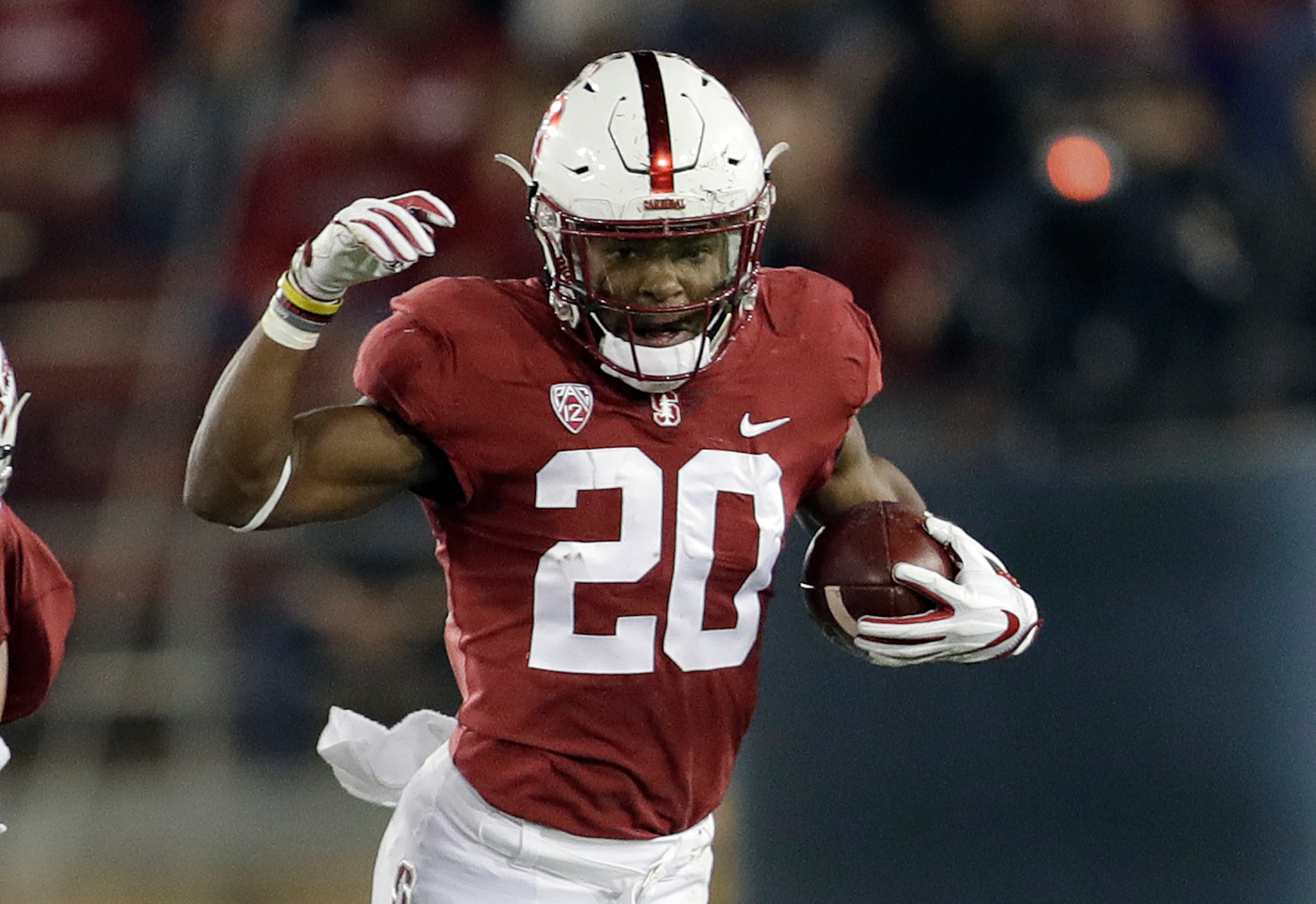
2017 Stats: 263 carries, 2,118 yards, 19 TD
Bryce Love surprised everyone by deciding to return to Stanford for one more season.
Dating back to at least 2000, the only other player to rush for 2,000 or more yards in one year and then come back for another was the guy Love was backing up in 2015 and 2016. And Christian McCaffrey probably only returned because he ran for 2,019 yards as a true sophomore and didn't have the option of declaring for the draft.
The most impressive part of Love's 2,118 yards is that an ankle injury hampered him for half the season. He missed one game against Oregon State, struggled against Washington State in his first game back and fought through the pain for the final five contests.
Through the first five games of the season, Love was nothing short of extraordinary. He averaged 217.6 yards per contest and 11.1 yards per carry. Though he only had one carry that went for 70 or more yards, Love had 13 rushes for at least 50 yards. And it didn't much matter who the opponent was, as he had at least one 50-yard gain in 11 of 13 games played.
Evidently, Love thinks he has more left to prove, though, since he's giving the Cardinal another season. Perhaps the Heisman front-runner has a 2,500-yard campaign up his sleeve if he can stay healthy in 2018.
Tony Pollard, ATH, Memphis
7 of 11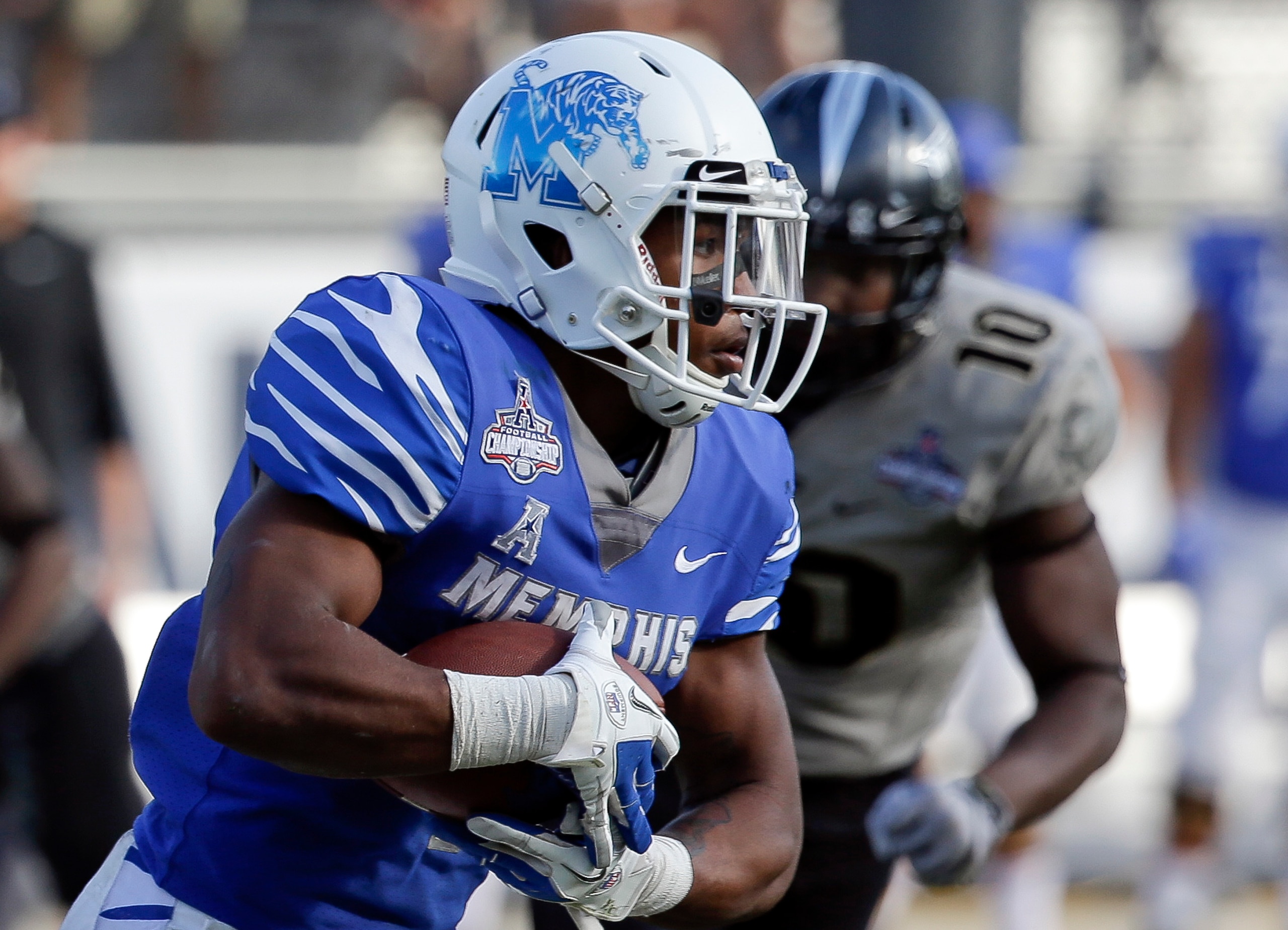
2017 Stats: 36 receptions, 536 yards, 4 TD; 30 carries, 230 yards, 2 TD; 22 kick returns, 881 yards, 4 TD
There aren't many players in the country who are more dangerous than Tony Pollard.
His prowess as a kick returner is what put this Tigers on the national radar. He had more than 1,000 return yards and a pair of touchdowns as a redshirt freshman in 2016, but last year, he averaged better than 40 yards per return while scoring four times. Teams generally kicked the ball away from him because Pollard made them pay if they let him.
He's a key cog in the Memphis offense too. Pollard didn't get a ton of touches, but he averaged 7.7 yards per carry and 14.9 yards per reception when he did get the ball. That happened only 89 times last season, but he amassed 1,649 all-purpose yards and 10 touchdowns in the process.
The combination of contributions put him in elite company. Pollard and Saquon Barkley were the only players in the country who finished last season with at least 200 rushing yards, 500 receiving yards and 400 kick-return yards. In 2015, the only player to hit all three of those marks was McCaffrey.
And Pollard should be headed for a bigger role in 2018. With leading receiver Anthony Miller (96 receptions, 1,462 yards, 18 TD) and WR2 Phil Mayhue (35 receptions, 521 yards, 3 TD) now gone, Pollard should be the No. 1 guy in this offense.
He probably won't be a top candidate for the Heisman, but he could be the MVP of the AAC.
James Proche, WR, SMU
8 of 11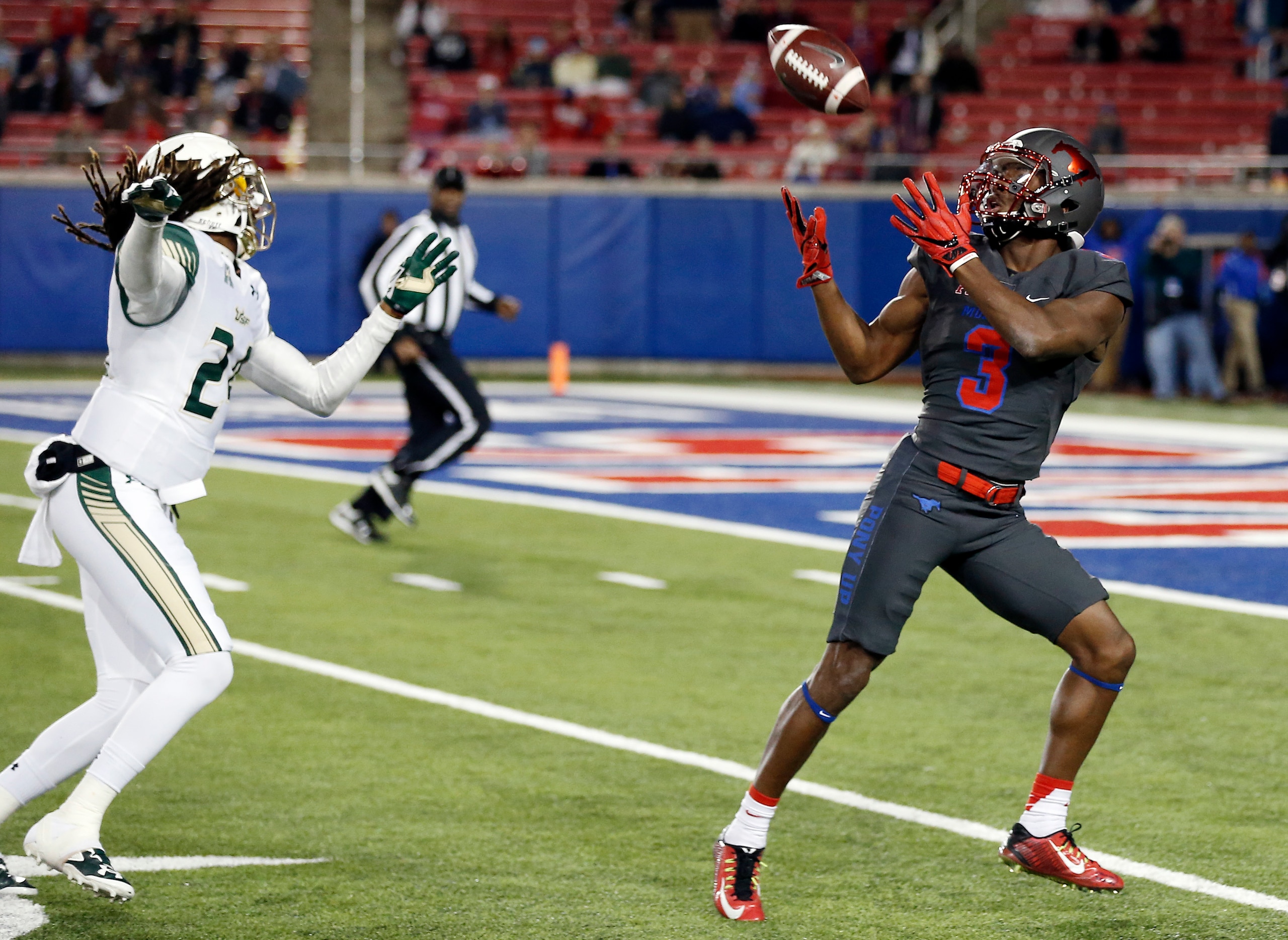
2017 Stats: 40 receptions, 816 yards, 6 TD
Of all the players on this list, James Proche put up the least impressive totals in 2017. He tied for 65th in the nation in total receiving yards and for 95th in touchdowns.
At 20.4 yards per reception, though, he had the third-best rate among players who caught at least 35 passes. And there's an obvious reason why he only made 40 catches: Trey Quinn (114 receptions, 1,236 yards, 13 TDs) and Courtland Sutton (68 receptions, 1,085 yards, 12 TDs) were the primary targets for the Mustangs.
With both of those guys now in the NFL, Proche is clearly going to be the new No. 1 guy for Ben Hicks to find in the passing game. No other returning player for SMU had more than 185 receiving yards, and the only other guys with at least 10 receptions were running backs Braeden West (18) and Xavier Jones (14).
Granted, this means Proche is also going to be the primary focus for opposing defenses. One of the big reasons he was able to make five receptions that went for at least 50 yards is that he was able to sneak by secondaries more worried about Quinn and Sutton.
But aside from the Week 3 game against Michigan, it's not like SMU is facing a bunch of elite defenses. In fact, in terms of passing yards allowed per game in 2017, the second-toughest opponent on the Mustangs' schedule is Navy, which ranked 54th.
All things considered, it wouldn't be that surprising if Proche leads the nation in receiving yards.
Devin Singletary, RB, Florida Atlantic
9 of 11
2017 Stats: 301 carries, 1,918 yards, 32 TD; 19 receptions, 198 yards, 1 TD
It took a couple of games for Devin Singletary to get going, but he was an unstoppable freight train once those wheels started churning.
In Florida Atlantic's final 10 games (all wins), Singletary averaged 155.9 rushing yards, 6.4 yards per carry and 2.7 rushing touchdowns. Factor in receiving stats and the Week 4 loss to Buffalo, and this sophomore running back scored multiple times in 11 consecutive games.
Singletary finished fourth in the nation in total rushing yards, trailing only Rashaad Penny, Love and Jonathan Taylor. In rushing touchdowns, though, he destroyed everyone. Were it not for Penny's 23, no one would have finished within 10 of Singletary's 32. In the past decade, only Wisconsin's Montee Ball (33 in 2011) has rushed to the end zone more times in a single season.
Per CFB Stats, Singletary led the nation in rushes that went for at least 10 yards, doing so 63 times. But the remarkable thing about his season total in yards is that he got there without many huge plays. While Love had 15 carries of at least 40 yards and Penny had 12, Singletary tallied just five.
Maybe he can break off a few more big ones this year. Combine that with the fact that he'll start this season already entrenched as the alpha dog in head coach Lane Kiffin's offense, and he should eclipse 2,000 rushing yards with room to spare.
Sutton Smith, DL, Northern Illinois
10 of 11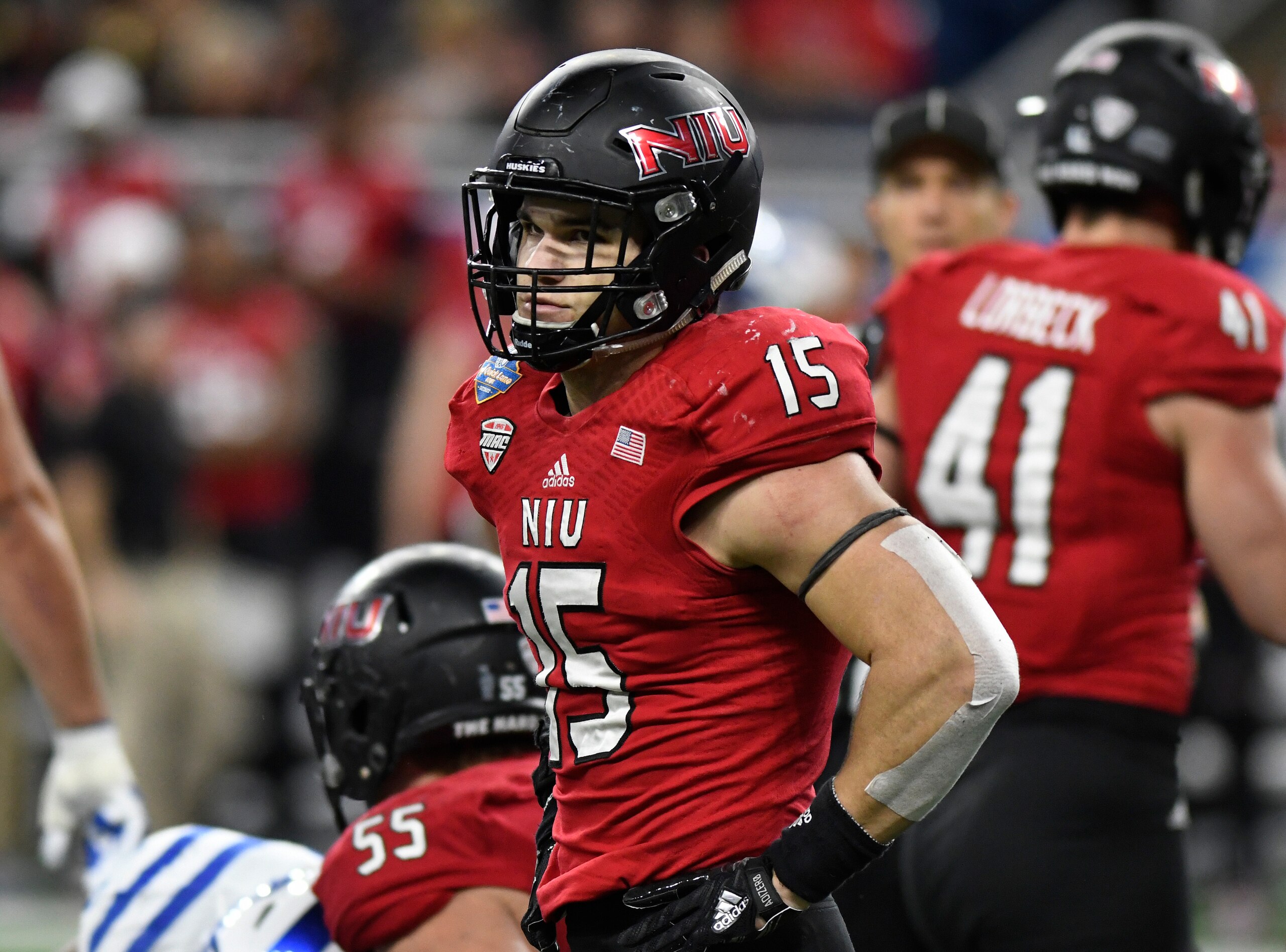
2017 Stats: 63 total tackles, 30.0 tackles for loss, 14.0 sacks, 3 fumbles forced, 3 fumbles recovered, 2 TD
Interceptions are unpredictable, and most of last year's top tacklers and pass-rushers are now in the NFL. As such, there weren't many defensive players who were viable candidates for this list.
Sutton Smith is one heck of an exception to that rule, though.
Smith tied Central Michigan's Joe Ostman for the national lead in sacks last season, and it wasn't just quarterbacks he brought down behind the line of scrimmage. He racked up a total of 30 tackles for loss, which was easily the most in the country. In fact, it's the most that any player has recorded since Arizona's Scooby Wright III in 2014.
Per Sports Reference, Smith became just the fourth player since 2000 to amass at least 29 tackles for loss in one year. And lest you think he was just capitalizing on below-average linemen in the MAC, Northern Illinois' defensive star got nine of his tackles for loss and three of his sacks against Boston College and Nebraska.
Can he repeat it, though?
Harold Landry, taken by the Tennessee Titans in the second round of this year's draft, had 16.5 sacks in 2016 before tallying just 5.0 last year for Boston College. Similarly, Louisiana Tech's Jaylon Ferguson went from 14.5 in 2016 to 7.0 in 2017. That doesn't mean Smith's numbers are doomed to drop by at least 50 percent, but it bears mentioning that it's hard to get a ton of sacks in back-to-back years.
Khalil Tate, QB, Arizona
11 of 11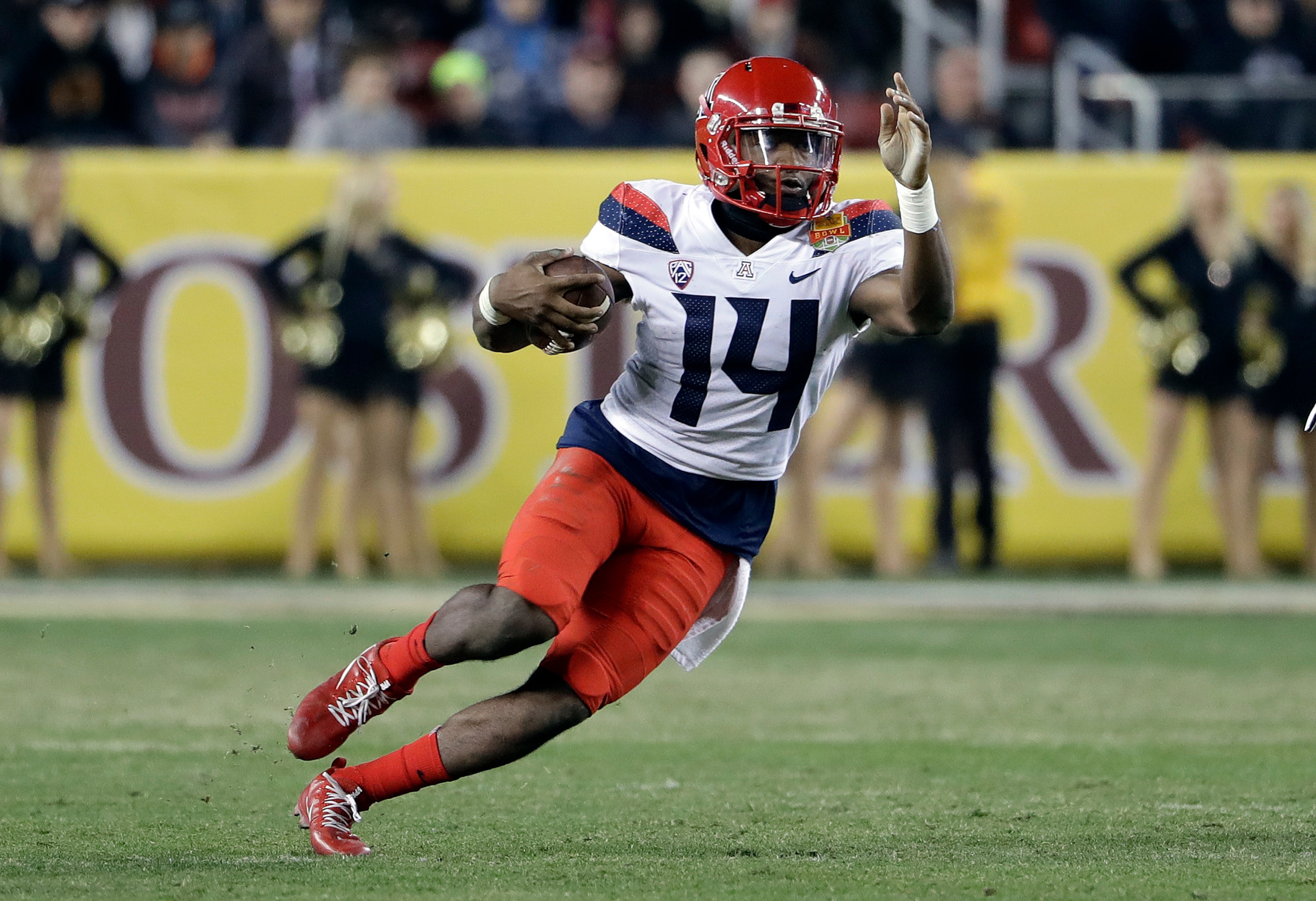
2017 Stats: 111-of-179, 1,591 yards, 14 TD, 9 INT; 153 carries, 1,411 yards, 12 TD
For five weeks in the middle of last season, Khalil Tate was the most fascinating player in the country.
It all started with the Oct. 7 game against Colorado, when Tate came on in relief after then-starter Brandon Dawkins took a big hit in the first quarter. Tate was just about perfect with his arm, completing 12 of 13 pass attempts for 154 yards and a touchdown in the 45-42 victory.
His legs were what went viral, though, as he rushed 14 times for 327 yards and four touchdowns.
Tate proceeded to both rush and throw for at least 135 yards and one touchdown in each of the next four games. During that one-month stretch, he had a total of 1,001 rushing yards, 889 passing yards and 17 combined touchdowns.
Despite barely seeing the field until the fifth game of Arizona's season, Tate quickly became a staple in the Heisman conversation. He ended up with five carries that went for at least 70 yards. Per CFB Stats, that's the most such runs that any player has recorded in a season dating back to at least 2010.
He struggled at the end of the regular season, but he threw for a season-best 302 yards and five touchdowns in the Foster Farms Bowl against Purdue. Maybe it was just one great game against a bad secondary, or maybe it was a sign of things to come in 2018.
Kerry Miller covers college football and men's college basketball for Bleacher Report. You can follow him on Twitter, @kerrancejames.
_0.png?w=2560)

.jpg?w=2560 "Love's Body Already 'Tired'")
.jpg?w=2560 "Tyreek Deal May Come Soon")
.jpg?w=2560 "Ward Nearly Walks Out of Presser ▶️")

.jpg?w=2560 "NFL investigating 2 referees for separate viral exchanges")