
5 Players Who Are Huge Risks in 2018 NBA Free Agency
This year's NBA free-agency extravaganza is going to be weird.
(Hear all those records breaking?)
Less than one-third of the league is projected to have serious cap space, which should, we think, definitely maybe liquidate contract values for the majority of available talent. But that only makes it more difficult for teams to decide which players are worth sizable commitments.
Superstars are easy, assuming they're not—spoiler alert!—coming off career-altering injuries. LeBron James, Kevin Durant, Paul George, et al. have defined sticker prices; they're no-brainer maxes.
Aging veterans, career role players, prospective ring-chasers and end-of-the-bench dice rolls are similarly simple. They won't break the bank. The most high profile among them might command an entire mid-level exception.
Struggling or injured household names are tougher to gauge. Ditto for youngsters—usually restricted free agents—on should-be cornerstone trajectories who haven't yet broached their ceiling.
They don't fit a market archetype. They're too talented or tantalizing to be picked up on the cheap, but they're not sure things at which you throw the kitchen sink. Their next contract will wind up inciting buyer's remorse or being a warranted gamble.
There will be no in between.
DeMarcus Cousins, New Orleans Pelicans
1 of 5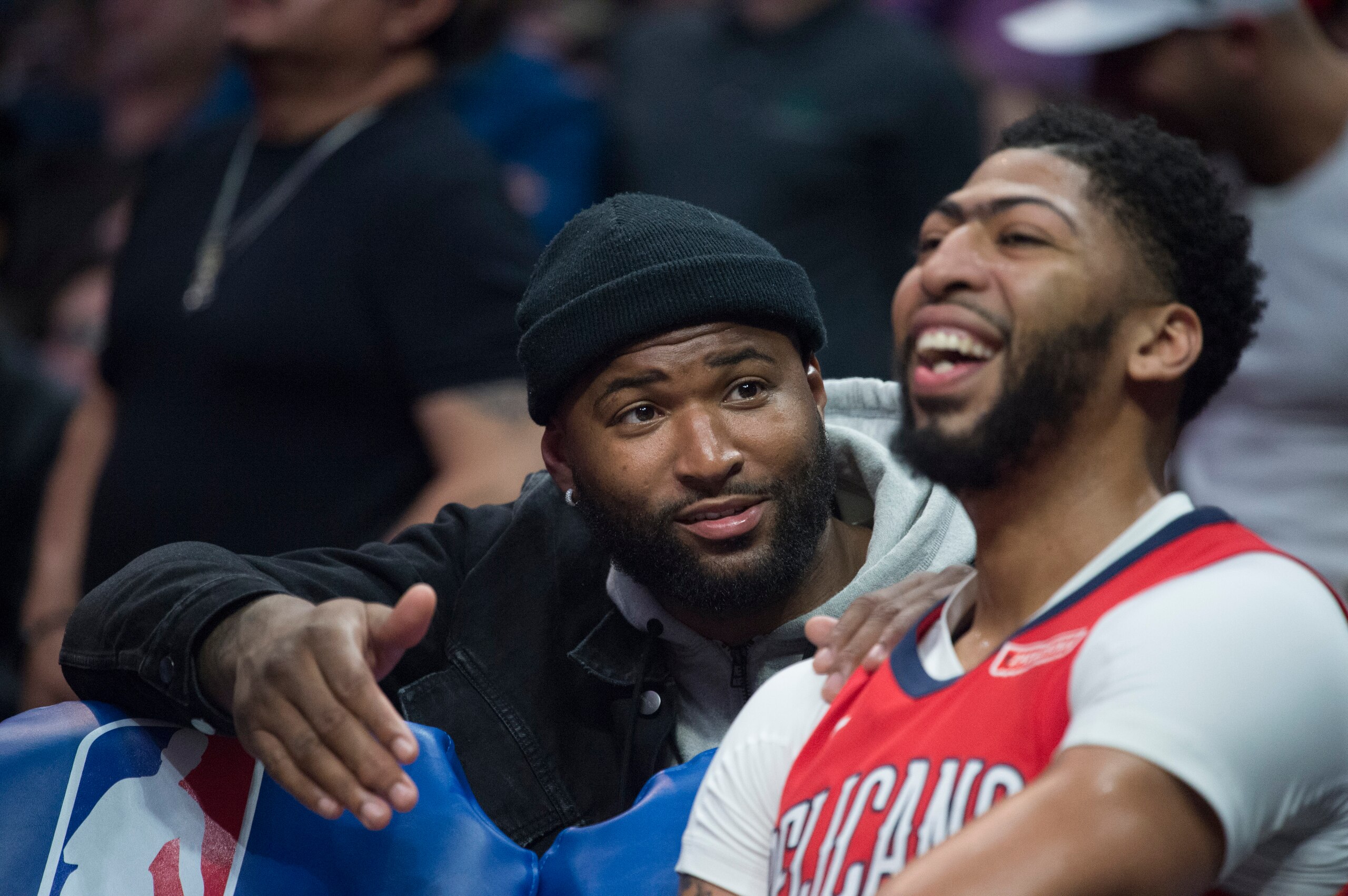
Age (as of July 1): 27
Free-Agency Status: Unrestricted
2017-18 Per-Game Stats: 25.2 points, 12.9 rebounds, 5.4 assists, 1.6 steals, 1.6 blocks, 47.0 percent shooting
Advanced Stats: 22.6 player efficiency rating (PER), 200.03 total points added (TPA), 3.73 real plus-minus (RPM)
DeMarcus Cousins should be one of the summer's few open-and-shut matters—a max-contract formality both inside and outside New Orleans. His market only ever figured to be less than resplendent because 20-plus teams couldn't afford him.
Suffering a ruptured Achilles changes everything. History has not been kind to those who've returned from a similar injury. SB Nation's Tim Cato explored the catalog in late January, and the post-recovery arcs vary from unimpressive to career-altering to flat-lining.
Cousins is a particularly unsettling case. He's the best player to ever encounter this setback in the heart of his prime. His fall-off could be noticeably more apparent than someone like Kobe Bryant, who was 34 at the time of his injury, or even Elton Brand, who was 28.
It doesn't help that Cousins has founded his stardom upon being an anomaly. Brute forces shouldn't be as nimble or comfortable working off the dribble. He can be a turnover machine; he notched the seventh-highest cough-up rate among players to clear 1,500 minutes. But that comes with the territory—the sheer volume of his role, leading fast breaks, pumping and driving and spinning off the bounce, even orchestrating some pick-and-rolls.
Signing him will be low-risk if he's interested in a short-term pact to rehabilitate his value. The Pelicans have discussed offering him a two- or three-year deal worth less than the max, according to ESPN.com's Zach Lowe. But even that qualifies as a gamble.
Cousins is eligible for a $30.3 million starting salary in his next contract. How much less is he actually going to get? Only Kareem Abdul-Jabbar, Charles Barkley, Karl Malone and Hakeem Olajuwon have more seasons averaging at least 25 points, 10 rebounds, three assists and one steal under their belt. And Cousins shoots threes. His statistical reputation will cost the Pelicans, or another team, actual money.
Get him at $15 million per year, and you're still tying up close to 15 percent of your cap with a superstar question mark for two or three seasons at minimum. That won't look great if he's a shell of his former self. And this says nothing of aggressive suitors who don't typically appeal to flashy talents. (Hi, Phoenix.) They could come over the top, with even more money, just to say they landed a big name.
Aaron Gordon, Orlando Magic
2 of 5
Age: 22
Free-Agency Status: Restricted
2017-18 Per-Game Stats: 17.6 points, 7.9 rebounds, 2.3 assists, 1.0 steals, 0.8 blocks, 43.4 percent shooting
What would Aaron Gordon's ideal contract look like this summer?
"Ideal is max," he said, per the Orlando Sentinel's Josh Robbins. "God, that would be ideal: three letters."
With the Orlando Magic?
"Yeah, definitely here," he answered. "That would be ideal. If [general manager] John [Hammond] and [team president] Jeff [Weltman] made that investment, that would be definitely ideal: Get those three letters on my name."
Gordon would get his wish if this were 2016. He'd probably be in line for a max offer if this were last summer, when the Brooklyn Nets still woke up on the right side of infinite spending power intending to net up-and-comers or clog up enemy cap sheets.
Finding that max deal will be trickier this year. (The Nets have a clear path to $15-plus million in breathing room; Gordon's max is $25.3 million.) Restricted free agents worth a damn tend to make bank. It takes overpays from rivals to get their incumbent teams to even think about letting them go. But a skimpy buyer's market promises little leverage, and more pointedly, Gordon isn't Otto Porter—that fit-anywhere wing you can live with paying too much.
Sure, he looked more comfortable on both sides after escaping the small-forward hellhole to which Orlando previously consigned him. He set career highs in all the counting-stat categories and was granted more freedom to create off the dribble and fire away from deep.
But building an offense around Gordon, either as the No. 1 or No. 2, will be tough. His efficiency amid increased volume is a red flag. He canned just 30 percent of his triples after the Magic's 8-4 optical illusion and drilled under 30 percent of his pull-up jumpers overall. He doesn't finish well on from-scratch drives (37.9 percent) and isn't someone half-court offenses can dump it to in the post.
One or more suitors will bet big on his future anyway. Combo-bigs juuust intriguing enough to groom like a wing can be irresistible, and the 2014 draft class isn't bringing a ton of talent to the restricted free-agent ranks. If the market is going to dub anyone this year's Otto Porter, it will be Aaron Gordon. He's the barometer for his fellow 2014 entries, per Sporting News' Sean Deveney.
That could be fine. Gordon splashed in enough catch-and-shoot threes (39.2 percent) to warrant some perimeter conviction, and putback, lob-finishing, fast-break artists have a place in the league. Look off his offensive limitations, however, and his defensive fit sounds another alarm. He shouldn't be chasing around wings, yet isn't a deterrent around the rim.
Opposing offenses have seen their point-blank volume increase whenever Gordon is on the floor in each of his first four seasons, according to Cleaning The Glass. He has untapped value beside another mobile big—Jonathan Isaac, for instance—but funneling anywhere near max money into an unfinished project with an uncertain peak could quickly devolve into disaster.
Zach LaVine, Chicago Bulls
3 of 5
Age: 23
Free-Agent Status: Restricted
2017-18 Per-Game Stats: 16.7 points, 3.9 rebounds, 3.0 assists, 1.0 steals, 0.2 blocks, 38.3 percent shooting
Advanced Stats: 14.6 PER, minus-34.93 TPA, minus-3.41 RPM
Zach LaVine shouldn't cost nearly as much as Aaron Gordon. He missed most of the year recovering from an ACL injury and then finished the season on the sidelines while coping with tendinitis in that same left knee. Buyers have no choice but to beware.
Plus, the secret's out on volume-shooting guards who fail to grasp the most basic defensive principles. They're not big-money magnets.
They are, in the most ideal cases, career sixth men—spark plugs off the bench deployed in measured doses, unless they're the jacked-up version of this stereotype. In other words: Lou Williams.
LaVine isn't Sweet Lou. He's more erratic working off the dribble and less effective as a primal distributor. He'd be a far more inferior defender if not for his physical profile—a 6'5" frame with vertical pop and lateral springs. And that lone advantage may have vanished following his ACL injury. LaVine looked more out of position and less interested in tracking cutters and spot-up shooters than usual during his lone season with the Chicago Bulls.
Joining a brand-new team more than halfway through the year after roughly 11 months on the shelf isn't easy. LaVine could up his efficiency and maybe, just maybe, improve his defense in time. But that's not a given. Especially on defense, where he remained out of place and unaware in perpetuity even during his brief time under Minnesota Timberwolves head coach Tom Thibodeau.
And you know what? Almost none of this matters. LaVine has the cachet of someone much better, because the Bulls treated him as such last summer. He was the crown jewel in their return on the Jimmy Butler trade. And that makes him a dangerous free agent, not just for Chicago, but to any team daring to get cute.
Consider what the Chicago Tribune's K.C. Johnson wrote:
"The Bulls historically have played hardball with restricted free agents. Butler is the biggest example. So I certainly expect some bumps in these negotiations. That’s what negotiations are for. But when you traded Butler, you absolutely had to be sold on LaVine. And you have to hope this lack of chemistry with [Kris] Dunn and LaVine comes more from lack of rhythm or time off than anything else."
This commitment was essentially confirmed by vice president of basketball operations John Paxson, who also hinted at letting LaVine surf the market to set his price tag. That opens the door for one of two outcomes: a deal that works for everyone involved or an ultra-aggressive suitor overpaying LaVine to gum up Chicago's books that either succeeds or sees said offer backfire unto itself.



Jabari Parker, Milwaukee Bucks
4 of 5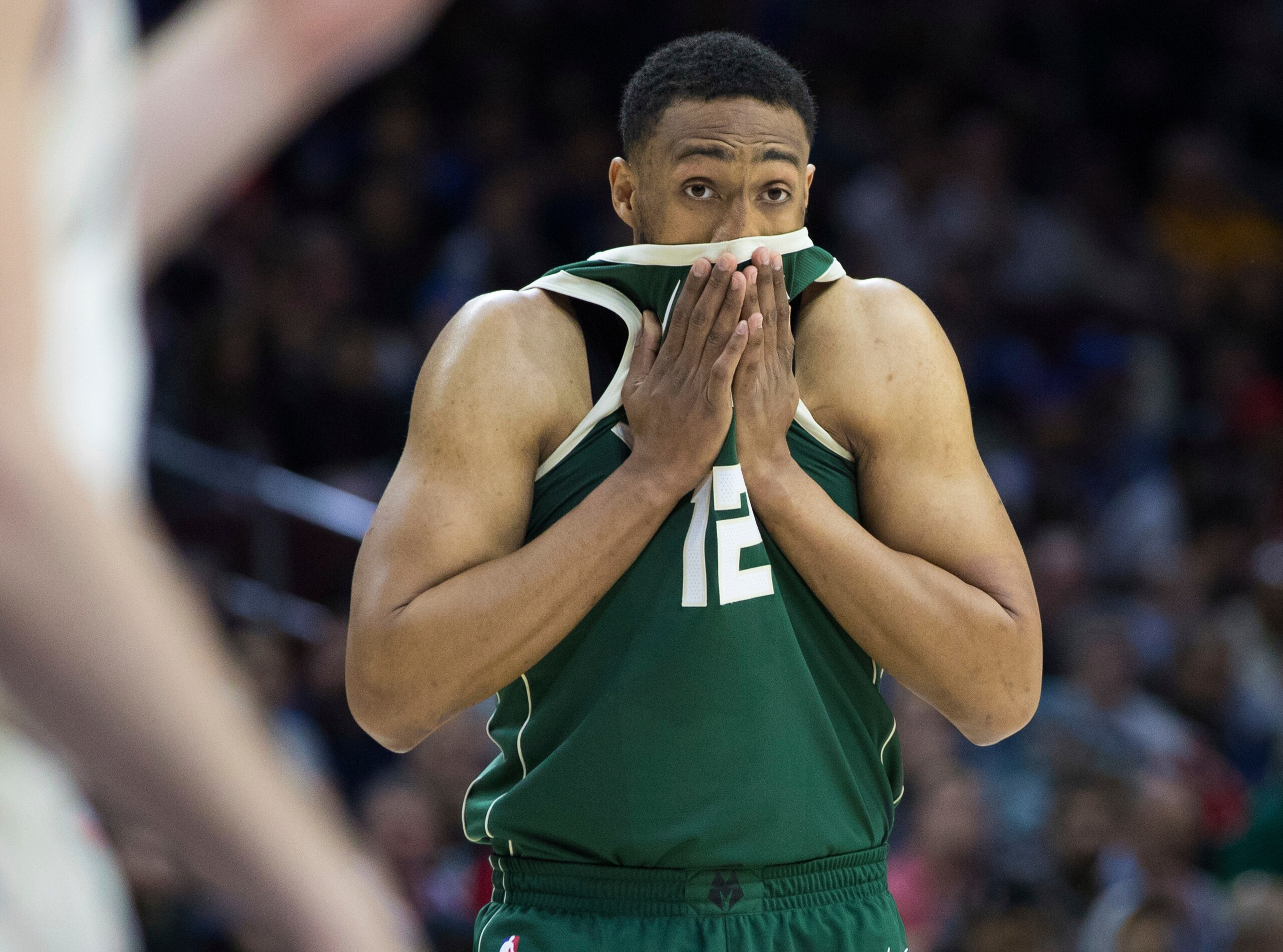
Age: 23
Free-Agent Status: Restricted
2017-18 Per-Game Stats: 12.6 points, 4.9 rebounds, 1.9 assists, 0.8 steals, 0.3 blocks, 48.2 percent shooting
Advanced Stats: 17.1 PER, minus-26.83 TPA, minus-2.91 RPM
Jabari Parker enters restricted free agency under circumstances that bear a loose resemblance to what Zach LaVine faces, albeit with a more glowing track record.
Two ACL injuries are now in his rearview, both of them in his left knee. That will scare off certain admirers in a constrictive market, and they'll keep any long-term commitment on indefinite tilt. But his offensive game is far more team-friendly than LaVine's approach. That bodes well in his search for leverage over the Milwaukee Bucks.
Parker is polished and progressively complementary. What LaVine does verges on chucking. Parker's self-sustaining cause is strong; he shot better than 50 percent on drives in the regular season and put down more than 47 percent of his looks when using between three and six dribbles. But over 40 percent of his attempts also came without putting the ball on the floor, and he dropped in 42.6 percent of his spot-up threes.
Cracks surfaced in the playoffs. Parker didn't see the floor much at first against the Boston Celtics before sneaking back into interim head coach Joe Prunty's good graces. From there, he was a classic seesaw case.
He disappeared for possessions at a time. He made shots. He missed shots. He randomly attacked the offensive glass and then faded from view. He couldn't stay in front of Boston's ball-handlers. He folded at the rim. And yet, the Bucks defense was weirdly OK when he played. The offense was not.
Giannis Antetokounmpo seems confident Parker won't be going anywhere. He has a right to be. Other teams will look at Parker, maybe even throw money at him. But the Bucks don't have the depth or cap space to let a Top Two prospect with a bunch of offensive tricks walk away for nothing.
At the same time, keeping Parker poses a real problem. He looks somewhat out of place on a roster with Antetokounmpo, Eric Bledsoe and Khris Middleton. His fit beside Antetokounmpo specifically is unspectacular.
Milwaukee was outscored by 6.3 points per 100 possessions when they shared the floor this season, following a net-negative trend that has persisted since Parker entered the league. Rolling out Antetokounmpo at the 5 is untenable if Parker mans the 4, and using John Henson as a buffer does little to remedy the awkwardness.
Again: The Bucks don't really have a say in this matter. Their capacity to level up rests with finding their Steve Kerr to replace Jason Kidd and making in-house leaps. Parker needs to work out. The problem? He might not. Yet Milwaukee must be resigned to paying him like he already has.
Isaiah Thomas, Los Angeles Lakers
5 of 5
Age: 29
Free-Agency Status: Unrestricted
2017-18 Per-Game Stats: 15.2 points, 2.1 rebounds, 4.8 assists, 0.5 steals, 0.1 blocks, 37.3 percent shooting
Advanced Stats: 12.6 PER, minus-91.90 TPA, minus-4.23 RPM
Penciling in Isaiah Thomas for a clearance-rack deal because of his hip injury oversimplifies his situation.
Yes, his stock cratered through 32 regular-season appearances, mostly during his 15-game tenure with the Cleveland Cavaliers. Yes, league executives view his recurring hip injury and the absence of surgery until this past March as a warning sign, according to Sporting News' Sean Deveney.
Yes, Thomas' pursuit of Brink's-truck money is officially over. Yes, the Association is light on starting point guard vacancies. And yes, with him turning 30 in February, the odds are against a full-fledged resurgence.
But offhandedly assuming Thomas won't have a long-term contract waiting for him undermines everything he did during the previous two seasons. Stephen Curry and Damian Lillard are the only other players who cleared 25 points and six assists per game while draining at least 37 percent of their threes in that time.
And, well, that time wasn't so long ago.
Certain teams could view the full mid-level exception ($8.6 million) as a worthwhile multiyear stab in the dark. Others, like Thomas' incumbent Lakers, could talk themselves into appreciably raising the stakes if he accepts a one- or two-season agreement.
And hey! That doesn't come across as a bad idea on the surface.
Why not poke around Thomas' future? Why not see if he could recapture the magic that fueled two of the best offensive seasons in Celtics history? Why not take a chance on an aging undersized point guard working his way back from a major injury who may be a grating locker-room presence and ill-equipped to function in an ancillary role?
What could go wrong?
Unless otherwise noted, stats courtesy of NBA.com or Basketball Reference and accurate leading into games on Friday. Salary and cap hold information via Basketball Insiders and RealGM.
Dan Favale covers the NBA for Bleacher Report. Follow him on Twitter (@danfavale) and listen to his Hardwood Knocks podcast, co-hosted by B/R's Andrew Bailey.




.jpg?w=2560 "Love's Body Already 'Tired'")

.jpg?w=2560 "Tyreek Deal May Come Soon")

.jpg?w=2560 "Ward Nearly Walks Out of Presser ▶️")