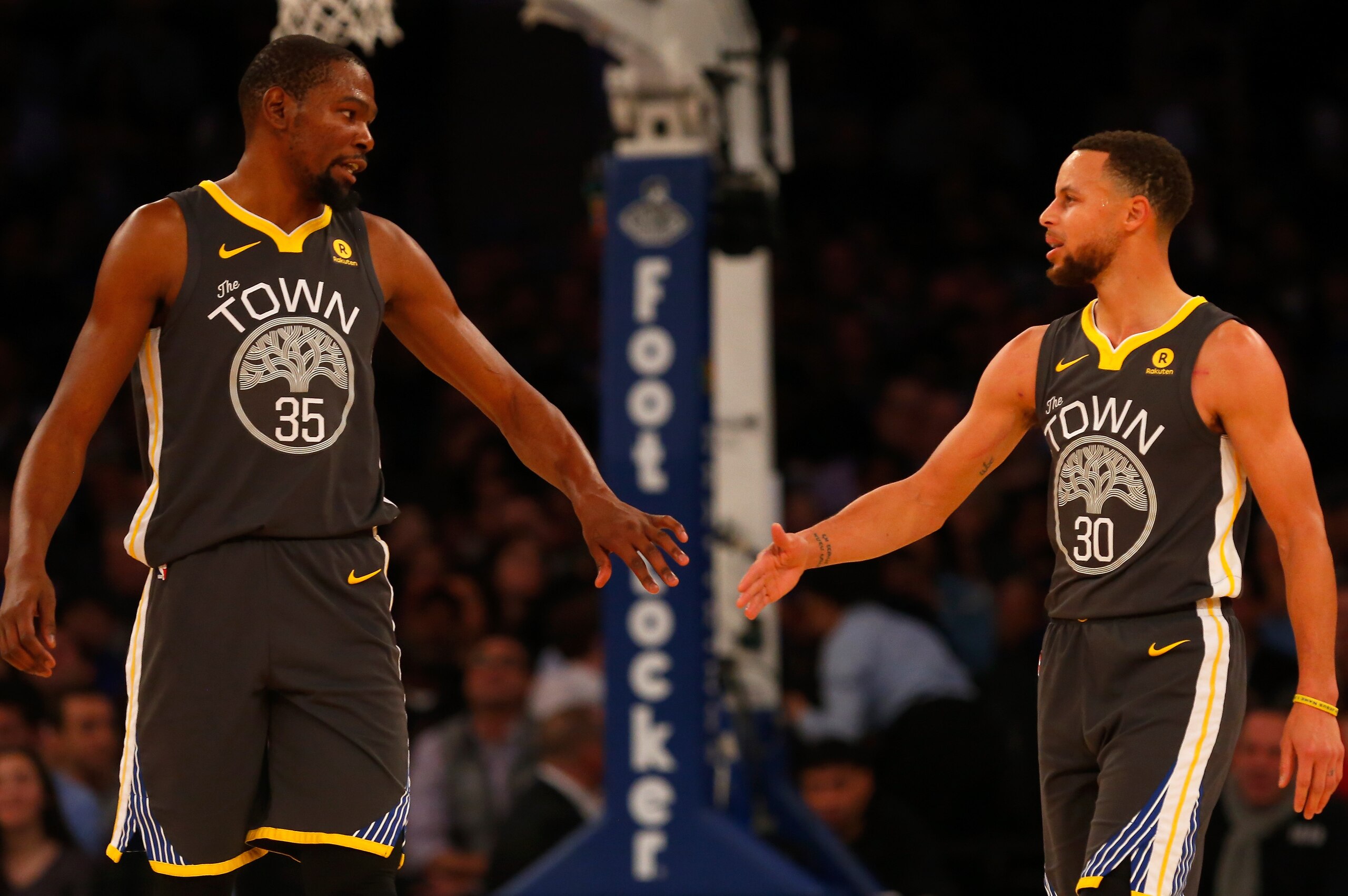

Grading Every Golden State Warriors Player as the NBA Season Winds Down
The end of the Golden State Warriors' 2017-18 season is so close that you can taste it.
It's a strange combination of relief, frustration, excitement, anxiety, familiarity and unknown. It's good, but not quite what you'd expect from Stephen Curry and Co.
For the first time under head coach Steve Kerr, the Warriors don't have the NBA's best record or the Western Conference's top seed. They also don't have a healthy Chef Curry heading into the postseason, but time only knows the extent of that concern.
These are still the defending champions; they just haven't always resembled what we're accustomed to seeing.
The 16 players on the roster—and the 17th who was until very recently—have all played a part in shaping this campaign. We're here to evaluate that by assessing how performances matched up with expectations and designated roles.
Deep Reserves
1 of 7
Omri Casspi, SF/PF*
OK, so Casspi technically isn't a Warrior anymore. He was waived Sunday to create a playoff roster spot for Quinn Cook, capping a frustrating—albeit efficient—run in Golden State.
Casspi wasn't quite an every-night regular, as injuries and a lack of aggressiveness held him back. He shattered his career shooting rates from the field (58.0) and outside (45.5), but he also set his second-lowest marks in shots per 36 minutes (10.1) and usage percentage (16.3). It might be harsh to paint him as disappointing, but he went from a possibly massive steal to the clear-cut sacrifice for Cook.
Grade: D+
16. Chris Boucher, PF/C
Save for scoring the organization's first two-way contract, Boucher has had a forgettable first season as a pro. The start was delayed by rehabbing a torn ACL, the ending has been derailed by an ankle sprain and the middle featured only a one-minute appearance at the NBA level.
Boucher has some interesting elements with length, athleticism and perhaps the contemporary combination of three-point shooting and rim protection. But he's old for a rookie (25) and painfully skinny. He did have some encouraging performances in the G League (four outings with at least 20 points and 10 rebounds).
Grade: Incomplete
15. Damian Jones, C
It took almost two seasons, but Jones has finally received the opportunity to show he belongs at this level. He's almost played as much in the last two weeks (nine games) as he had the entirety of his career before them (15 outings), and he looks capable of strengthening a center rotation.
He's still a 7'0" rim-runner-in-training, as his lack of awareness keeps him from consistently contributing (especially as a defender). But he has shown more good than bad, even if the sample size is too small to make an accurate assessment.
Grade: Incomplete
14. Kevon Looney, PF/C
Saying Looney has had his best season as a Warrior reveals more about his first two campaigns than this one. It's encouraging to see progress, but it's hard to be blown away by 3.9 points and 3.2 rebounds per game.
That said, Looney has done enough to earn himself a spot in the center-by-committee group, and he's even made four starts since the All-Star break. He offers some defensive versatility, energetic rebounding and confident shot-making of late. And he deserves some bonus points for staying ready despite not knowing when or if his name will be called.
"He's been in and out of the lineup yet never complained," Warriors coach Steve Kerr said, per Connor Letourneau of the San Francisco Chronicle. "He's just one of those guys who's a pro."
Grade: B-
13. JaVale McGee, C
Even as McGee's role changes, his style remains the same. He's a steady source of high-energy, above-the-rim play, provided he's kept on a short enough leash to maintain maximum effort and limit the exposure of his defensive awareness.
Last year, McGee was Golden State's secret weapon and surprise leader in net efficiency rating (plus-18.7). This year, he's been less effective per minute and no longer provides the same jolt (plus-4.3). He still helps the bottom line, but he's gone from making major splashes to mostly treading water.
Grade: C
12. Patrick McCaw, SG
Everything was set up for McCaw to break through as a sophomore. He looked electric in NBA Summer League and saw his primary competition for reserve wing minutes, Nick Young, clank his way to 34.5 percent shooting in the preseason. Given how good McCaw looked late last season—he had a pair of double-digit playoff performances—his stock was sky-high to start this one.
But it's been crashing ever since. Everything that could go wrong has gone wrong. He's a worse shooter from all three levels, less efficient overall and the only regular with a negative net rating. He has lost time to a wrist fracture and a spinal injury, with the latter costing him at least some playoff time. These struggles and challenges could also have a monetary cost since free agency is awaiting him this summer.
Grade: D
11. Jordan Bell, PF/C
It's interesting to think how the Warriors' center rotation would look if Bell had avoided the ankle injuries that sidelined him for most of February, plus parts of January and March. There were times the starting center gig looked like his to lose, and his on-court abilities—when channeled properly—are still the most intriguing of the non-All-Star bigs.
Bell doesn't have the role or polish to leave a statistical imprint on every game. But he was drafted 38th overall last summer and already owns the third-highest net rating on the defending champs (plus-12.0). He's way ahead of schedule, even if there's some hit-or-miss to his impact.
Grade: B
Supporting Cast
2 of 7
10. Quinn Cook, PG
Cook played a G League game in March—a 41-point, 10-assist statement that he had no business being at that level. He'll make his first playoff appearance this month as an NBA starter, continuing his improbably successful run of spelling Curry. Sources told Yahoo Sports' Shams Charania Cook's two-way contract will soon be converted to a standard two-year deal.
"We feel very comfortable going into these playoffs with him as the starting point guard," Draymond Green said, per Melissa Rohlin of Bay Area News Group. "We're good."
Whatever the best-case scenario for Cook was in October, he exceeded it a while ago. He steamrolled G League defenders with an absurd .527/.439/.949 slash line, and he's almost mirrored those numbers in the bigs (.492/.446/.905).
Grade: A+
9. David West, PF/C
Retirement was a real possibility for West last summer, making his 2017-18 campaign almost unbelievable. At 37 years young, he's been the lone fixture in the center rotation—consistently anchoring the second unit as an offensive hub from the elbows and a defensive centerpiece around the rim.
West, who made two All-Star trips in his younger days, has never had better numbers in field-goal shooting (57.8), player efficiency rating (21.3) or blocks per 36 minutes (2.7). He was rock-solid last season, and he's somehow upped the ante this time around.
Grade: A-
8. Nick Young, SG
Every once in a while, Young will tease that he might be capable of something greater. Just last month, he put five consecutive double-digit outings together, averaging 17.6 points while pouncing on offensive chances opened by a slew of injuries around him.
But those outbursts weren't efficient (41.4 percent), and his entire season hasn't been either. He's actually shooting worse with the Warriors (41.2 percent) than he has for his career (41.8), despite having at least four feet of room on more than half of his attempts. Golden State has been desperate for second-team shooting, and Young hasn't reliably answered the call.
Grade: C-
7. Zaza Pachulia, C
Last season, Pachulia fit this starting five like a glove. His no-frills, rugged style added some muscle to the Dubs' finesse, and they blitzed opponents almost every time he took the floor with the four stars. The yearlong net rating for that quintet was a preposterous plus-23.1 points per 100 possessions.
It hasn't been half as good as this season (plus-10.0), which has contributed to Pachulia losing multiple starts and sometimes not seeing action. His stats are mostly similar from last year, but he has backtracked on defense (2.42 defensive real plus-minus, down from 3.23).
Grade: C-
6. Shaun Livingston, PG
This is Livingston's fourth season in the system, and his comfort level shows. His production offers the reliability of clockwork. As a Warrior, his scoring average has never been above 6.3 or below 5.1.
He'll once again file this season in the solid-but-unspectacular drawer. There's minimal change from a year ago—a small shooting decline here, a slight scoring increase there, but nothing of substance. If he brought a range of expectations into this campaign, he'll finish right in the middle.
Grade: C
5. Andre Iguodala, SG/SF
3 of 7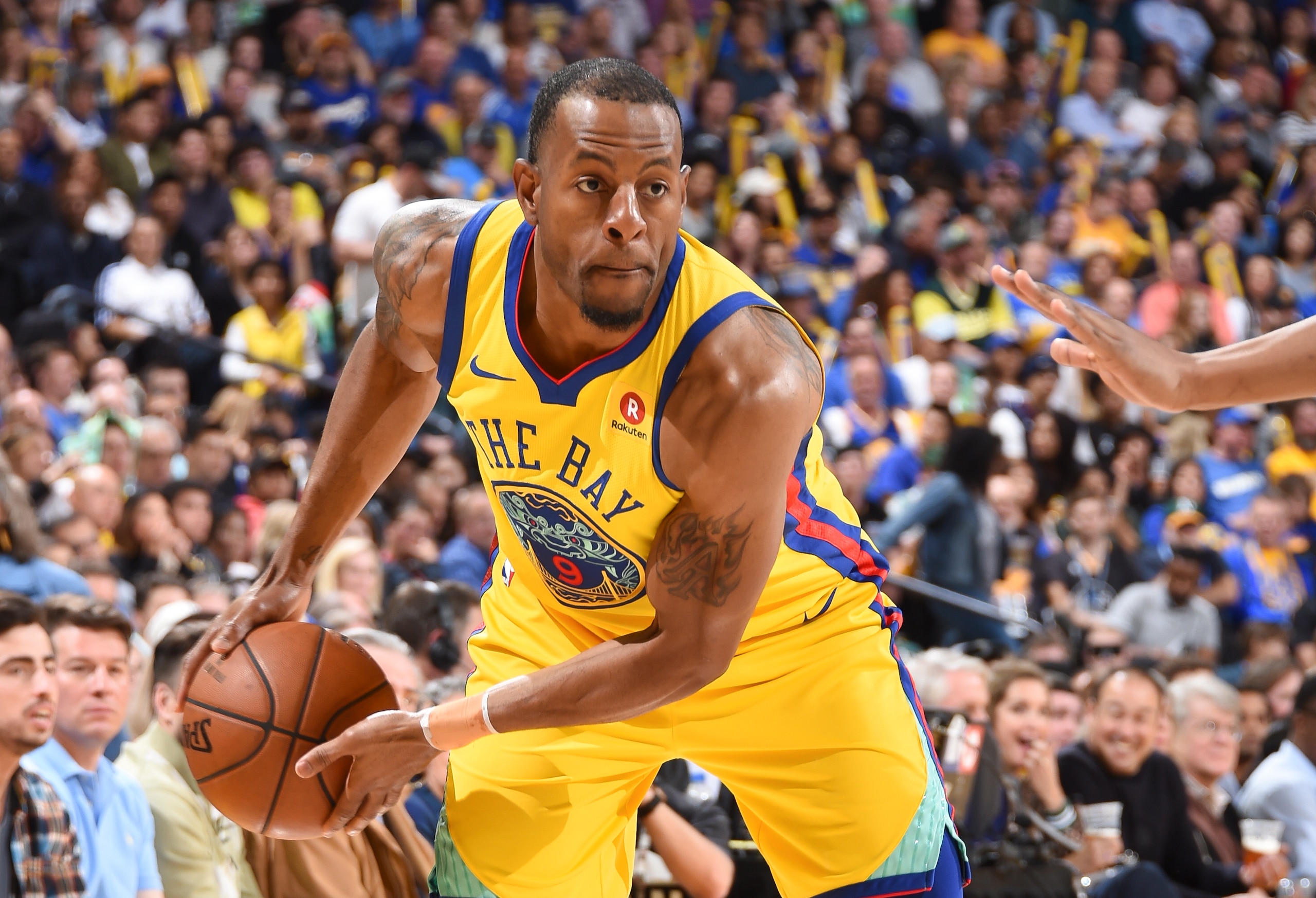
It's possible no one has a better grasp of his own basketball mortality than Andre Iguodala.
It's the reason why he waited to sign his most recent contract until Golden State guaranteed its third season. And it's also perhaps the driving force behind why the 34-year-old paces himself to ensure he'll peak at the right time.
"It's almost like a boxer," Iguodala said, per NBC Sports' Monte Poole. "You've been in a couple title fights and you know what goes into it. You know how to press yourself. You don't want to be too sharp too early. You want to be sharp just at the right time. It's pretty much that I take that approach."
The pacing brings about some brutal moments—he's had five scoreless efforts this year, logging more than 20 minutes in all of them. It's also taken forever for his three-ball to come around. He misfired on 16 of his first 18 attempts from range and carried a dismal 22.7 perimeter percentage into February.
But he seems to be positioned to rise when he's needed most (as usual). Dating back to the start of February, he's hitting 42.1 percent from distance and 53.9 percent overall. Even though the scoring column is usually the last place to look for his impact, his scoring is up 2.5 points per game since the All-Star break.
If this allows Iguodala to play his best during the postseason, the Warriors will gladly take it. That said, it'd be foolish to generously grade a player having his worst scoring season ever and shooting below his career rates from all three levels. That needs to be acknowledged, even if the overall evaluation is more nuanced.
Grade: B-


4. Klay Thompson, SG
4 of 7
This will be the first season in which Klay Thompson doesn't boost his scoring average from the previous year.
But that stands out for different statistical reasons, namely his heightened standard for shooting success. He's never been more accurate from the field (49.2 percent) or on threes (44.1). And those numbers are critical for this offense, which averages an extra 3.6 points per 100 possessions and 3.9 additional effective field-goal percentage points when he's on the floor.
"It's not just his ability to make shots. But it's his movement, pace and the thrust he has to make when we're pushing the ball and he's on the perimeter," Kerr said, per Bay Area News Group's Mark Medina. "That's a scary sight for a defensive team and for defensive players."
Thompson is also showing signs of gradual growth. This matches his best year on the boards (3.8) and ranks second in assists (2.6). As those figures hint, he's still mostly a three-and-D contributor, but every new wrinkle—like career marks from midrange—adds to his effectiveness.
He's still the least unique member of the All-Star quartet and theoretically the easiest to replace. (There are very few shooters in history like him, but a decent number of guys fill similar roles.) But that was known well before this season. And even then, he's always been critical to this system functioning at optimal levels, and he's having his best year in some of his most important areas.
Grade: A-
3. Draymond Green, PF/C
5 of 7
If you want to label Draymond Green's season as a success, you could find justification in the areas where casual fans look first. His counting categories show modest gains in points (11.1 from 10.2) and assists (7.3 from 7.0), while his field-goal (45.4 from 41.8) and free-throw (77.5 from 70.9) percentages are substantially up.
At the same time, if you find yourself feeling underwhelmed by the performance, there are arguments on that side of the coin as well.
"Coach Steve Kerr opened the season fretting about his team's ability to stay motivated on a night-to-night basis, and those concerns proved justified," Ben Golliver wrote for SI.com. "Green, long viewed as Golden State's engine, has been very good but somewhat less maniacal."
Green has almost missed as many games this year (12) as he did during the five that preceded it (13). He's been emotional as ever, but too often it has boiled over into frustration. He either holds or shares the NBA's second spot in technical fouls (15) and ejections (three).
His defense, in particular, has fallen shy of expectations. One year after a second-place finish in defensive real plus-minus, he has dipped down to 20th. His 103.5 defensive rating is easily the worst of his career, which has helped push his net rating to a four-year low (plus-9.6, down from plus-15.9 last season).
Green has still been really good, but if there were hopes for greatness, he didn't deliver.
Grade: B-
2. Kevin Durant, SF/PF
6 of 7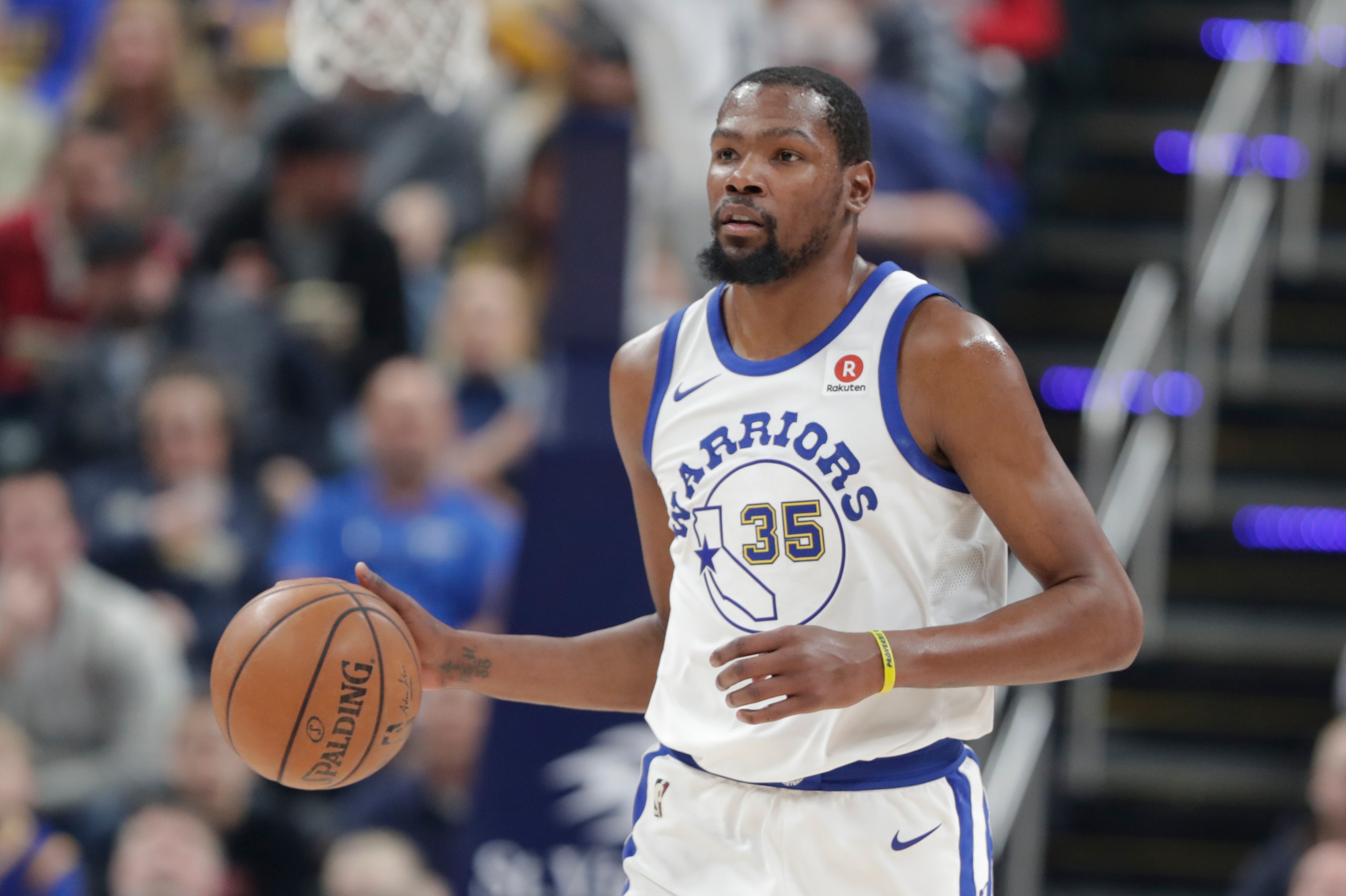
Kevin Durant's second season as a Warrior bears a striking resemblance to his first.
There are small deviations in his statistics, with few that jump off the page as noteworthy. Blocked shots would've been the obvious choice early in the year, but the difference now is negligible (1.8 from 1.6). Now, his uptick in three-point percentage (42.2 from 37.5) is perhaps most encouraging since it's coupled with a rise in attempts (6.1 from 5.0).
He has lost a decent amount of time to injury both years, but this season's felt less concerning since it was broken up in smaller chunks. He outperformed his career assist average for the second time in a row, but he also coughed up almost an additional turnover per game. He has two more 30-point outbursts than last season with one contest remaining.
If this isn't Durant at the height of his craft, he's at least climbing somewhere near the summit.
"I know exactly how I play, but I feel like I could get better at the small stuff," Durant said in December, per USA Today's Sam Amick. "I was always taught to be curious, to keep growing and not be satisfied where I am individually in my game. I continue to say that. I'm getting close to where I want to be, but I'm not there."
Durant's 2017-18 story will be defined by how he helps the Warriors in their title defense bid. But for now, it reads like a slightly cleaner and more complete version of last year's.
Grade: A-
1. Stephen Curry, PG
7 of 7
How does one make sense of the season Stephen Curry just had?
On the court, he was brilliant—even for him. His field-goal percentage (49.5), scoring average (26.4) and player efficiency rating (28.2) were all the second-best of his career. (Reminder: He's a two-time MVP.) Despite only playing 51 games, he leads the Warriors and ranks sixth overall in raw plus/minus (plus-486).
But about those absences. They started with right ankle problems reminiscent of his early-career troubles, then shifted to a sprained left MCL that put at least his first playoff round in serious jeopardy.
What's worse is that Curry's injuries do more damage than any others. Golden State isn't "Golden Bleepin' State" unless he's leading the charge.
"We can't be who we are without him," Warriors assistant Ron Adams said, per Grant Cohn of the Press Democrat. "Steph has a certain kind of flair, a certain kind of confidence that our team feeds off and our crowd feeds off. He makes the game easier for other guys on our team, simply because defenses have to pay so much attention to him."
When Curry is behind the wheel, defenses are essentially helpless. Golden State's elite marks with him include a 120.4 offensive rating and a 42.5 three-point percentage. But as soon as he sits, this becomes a mediocre attack. The offensive rating plummets to 106.7, while the perimeter percentage tumbles to 35.8.
His importance hasn't diminished, and his production has improved. That matters, but so does all the time missed. Combine it into a single assessment, and you have expectations exceeded but in no way shattered.
Grade: B+
Statistics used courtesy of Basketball Reference, NBA.com and ESPN.com.

.jpg?w=2560 "Grading WWE Raw 🔠")

.jpg?w=2560 "Bijan's INSANE 1st Half 🤩")
.jpg?w=2560 "Viral Rams Coach Vid 🖕")
.jpg?w=2560 "Injury-stricken Seahawks signing veteran RB")

.jpg?w=2560 "2 NFL Officials Suspended")