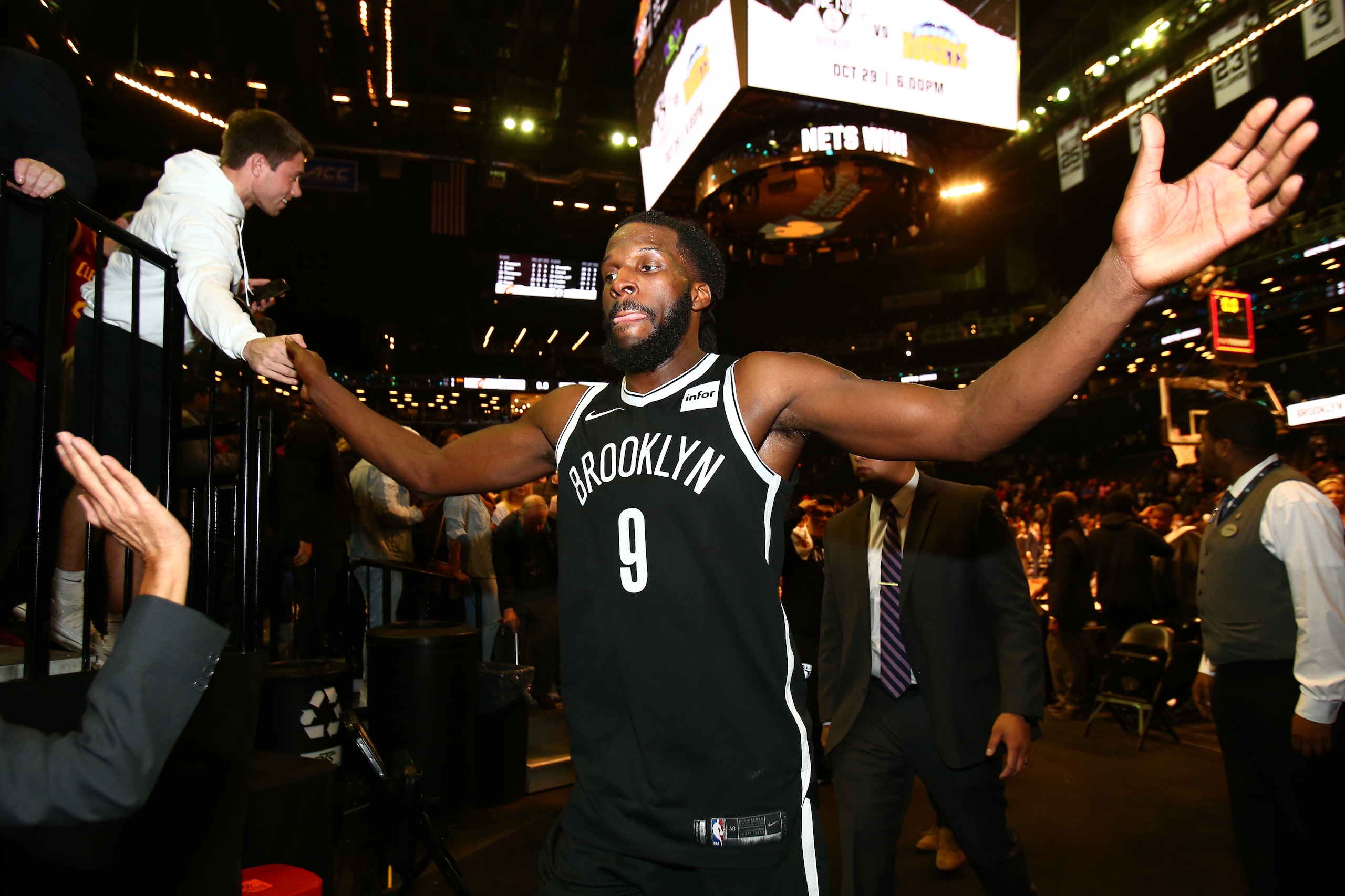

Fantasy Basketball Trade Block: Surprising Options You Should Target Immediately
Fantasy basketball leagues aren't just won by drafting well.
That's obviously an important step toward trophy-earning success, but you can't sit back and rest on your laurels after putting together a quality squad. Active maintenance is required, and you can never start too soon. Parse the waiver wire and look for bargain additions.
Just as importantly, seek out assets you can steal away with trades.
When unheralded players open a season in sterling fashion, owners can get suspicious of their success. Take advantage of that and steal away the ones who can maintain those strong starts. Fool your opponents into thinking they're selling high, when you're actually paying a reasonable price for what's quickly going to become sustained production.
If your opponent is savvy, it may cost you a more prominent player you targeted in your draft. But it's well worth it to snag someone you can rely on to be a fantasy stud, even if he's not a stud by name.
To be clear, we're not talking about stars. Instead, we're only interested in those typically drafted outside the top 75 in standard ESPN leagues, since that's where these bargains can be found.
Unless you're lucky enough to already have them on your roster, go get these guys.
Patrick Beverley, PG, Los Angeles Clippers
1 of 6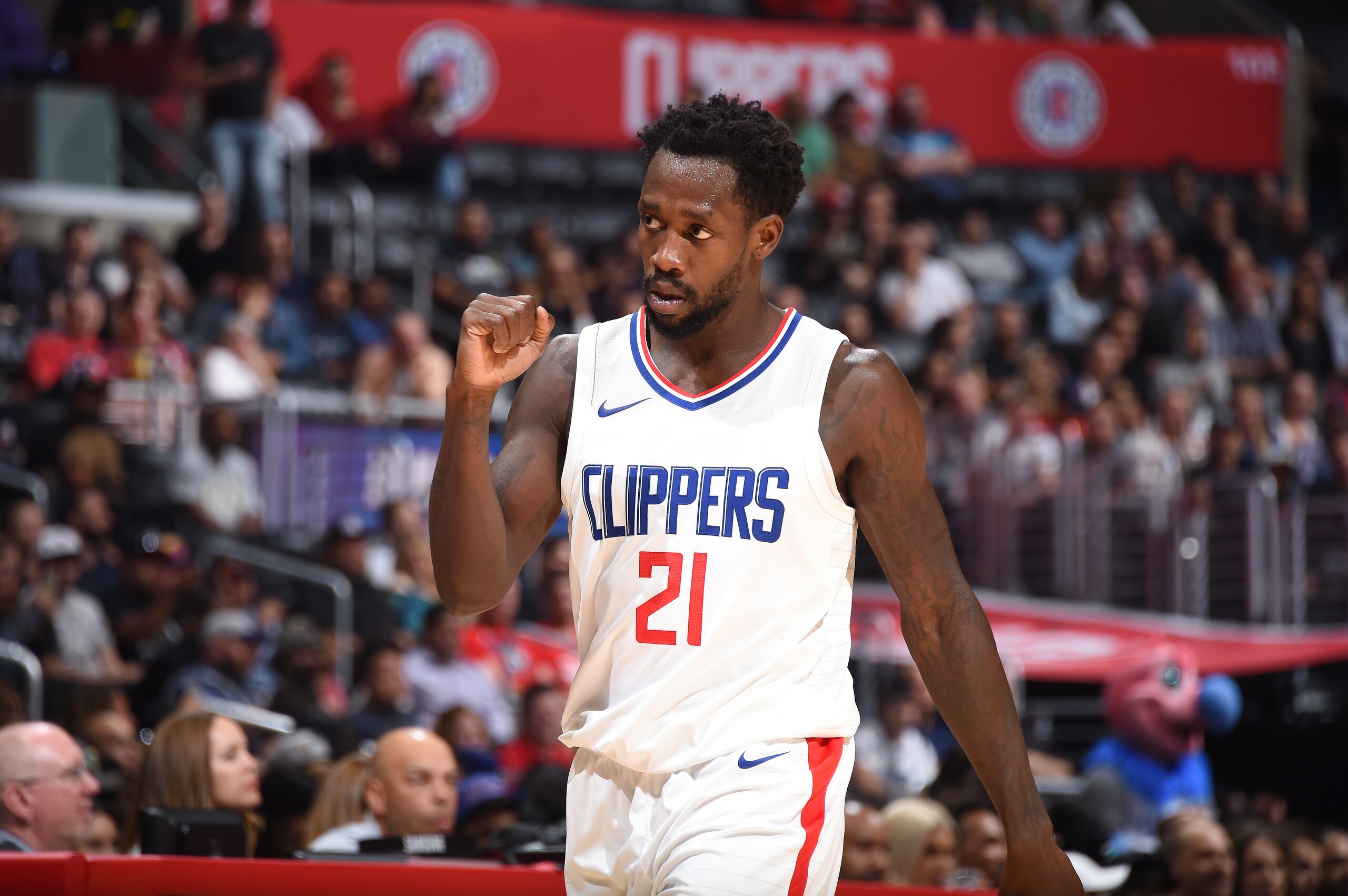
Average Draft Position (ADP): 95.5
2017-18 Per-Game Stats: 13.2 points, 3.6 rebounds, 3.2 assists, 2.6 steals, 0.6 blocks, 3.4 turnovers
Should we be surprised?
Patrick Beverley has quietly toiled away as one of the league's most underrated guards for quite some time now, and that hasn't changed following his move from the Houston Rockets to the Los Angeles Clippers. This is another perfect situation for him in just about every way.
Offensively, Beverley can serve as a secondary facilitator who takes plenty of spot-up attempts while Danilo Gallinari and Blake Griffin create offense.
Though the sample is still quite small, he's taking 3.8 such shots per game and scoring 1.3 points per possession, which leaves him in the 84th percentile. Last year, he chipped in for Houston with 1.12 points per spot-up possession (80th percentile, since the hot starts regressed to the mean throughout the year) while taking an even three attempts per contest. This early-season effectiveness isn't the least bit fluky, and the added volume should help him maintain his career-high scoring average—or at least something close to it.
But even if Beverley's points do dip, he remains a strong rebounding 1-guard who helps fantasy teams in just about every category. Few backcourt players are capable of doing everything well, and the 29-year-old has asserted himself as a beneficial presence even while his free-throw percentage (40.0 percent) remains unsustainably far below his career mark (76.0 percent).
You can thank his scoring and affinity for triples. You can thank the steal tallies—a byproduct of the freedom to gamble and harass ball-handlers with DeAndre Jordan waiting to clean up any mistakes. Above all else, you can thank the well-rounded production.
DeMarre Carroll, SF, Brooklyn Nets
2 of 6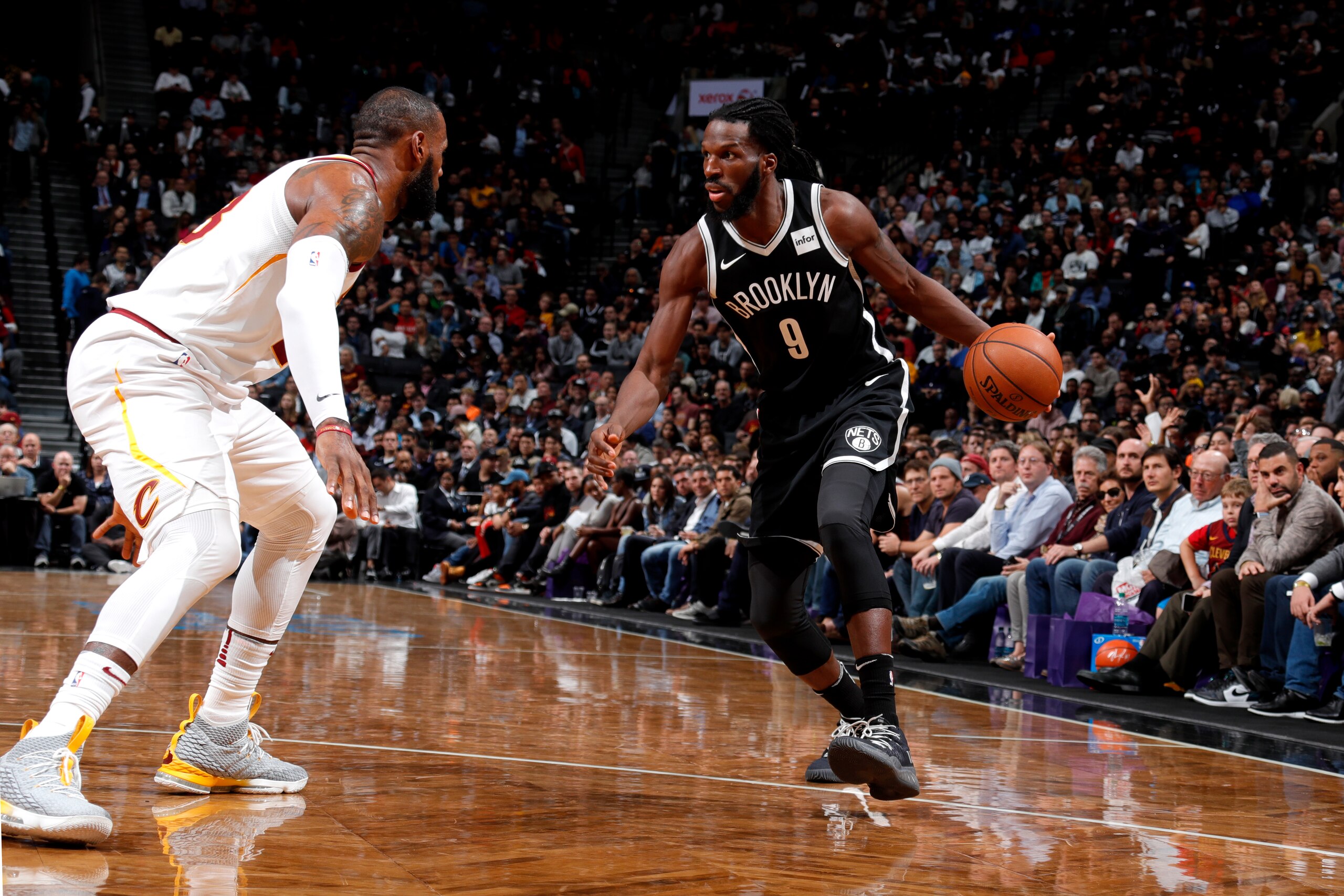
ADP: Undrafted in standard leagues
2017-18 Per-Game Stats: 14.2 points, 6.3 rebounds, 1.5 assists, 1.7 steals, 0.5 blocks, 1.0 turnovers
"It's like I left for two years and I came back home," DeMarre Carroll said during the offseason about feeling at home with the Brooklyn Nets, per Newsday.com's Jeff Logan. "You know where everything is at. It's kind of like you left this in this spot. That's how it feels. I understand the offense. I understand what [head coach Kenny Atkinson] wants. I understand where I can get my shot, where I can't do certain things. It's great to come back to this type of offense."
The small forward dropped off the fantasy radar after an ineffective final season with the Toronto Raptors, but plenty of factors are converging to work in his favor for 2017-18. Not only is he reunited with Atkinson, who served as an assistant coach with the Atlanta Hawks during Carroll's breakout pre-Raptors years, but he's also healthy and playing in an uptempo scheme that gives him more opportunities to rack up counting stats.
Brooklyn still doesn't have the talent to match up with every opponent, so it's instead intent on running them to death. And it's working. Only the Phoenix Suns have played with a quicker pace thus far, and comfort in that system has allowed the Nets to post a surprising top-five offensive rating.
Perhaps that's unsustainable, but Carroll's re-emergence isn't.
The 31-year-old is even more involved than he was with the Hawks (currently posting a career-high 18.8 usage rate) and has used his familiarity with the schemes to post bounce-back shooting percentages. He's knocking down 45.0 percent of his field-goal attempts, hitting 41.4 percent of his triples and 76.0 percent of his tries at the stripe.
Even if his three-point percentage dips slightly as the season wears on, he can withstand the hit to his scoring average by continuing to contribute in all other categories.
John Collins, PF/C, Atlanta Hawks
3 of 6
ADP: Undrafted in standard leagues
2017-18 Per-Game Stats: 11.0 points, 7.3 rebounds, 0.5 assists, 0.5 steals, 0.8 blocks, 1.0 turnovers
Sometimes, fantasy is just about opportunity.
John Collins has already asserted himself as a legitimate fantasy asset with his efficient scoring and strong rebounding numbers. He's shooting 49.1 percent from the field and 77.8 percent at the free-throw line, rarely taking ill-advised shots and showing an ahead-of-his-years ability to take what a defense is giving him. His 13.7 boards per 36 minutes also leave him ranked No. 13 among all qualified players.
Throw in the occasional steal and a block per game, and it's not hard to see why he's already a beneficial presence in the frontcourt portion of your lineup.
But he might get even better.
Collins has opened all six of his first career games on the bench, first watching as Ersan Ilyasova started, then witnessing Mike Muscala taking over that role when the original lead power forward was sidelined with knee trouble. And he's still played 19.3 minutes per contest.
What happens when he eventually takes over the starting role? What if he begins to push toward 30 minutes per game as the Hawks accept their inevitable finish in the Eastern Conference basement and start granting the youngsters even more run?
If that doesn't happen, Collins has already established a strong baseline. If it does, well, you'll be even more glad you traded for him.


Evan Fournier, SG, Orlando Magic
4 of 6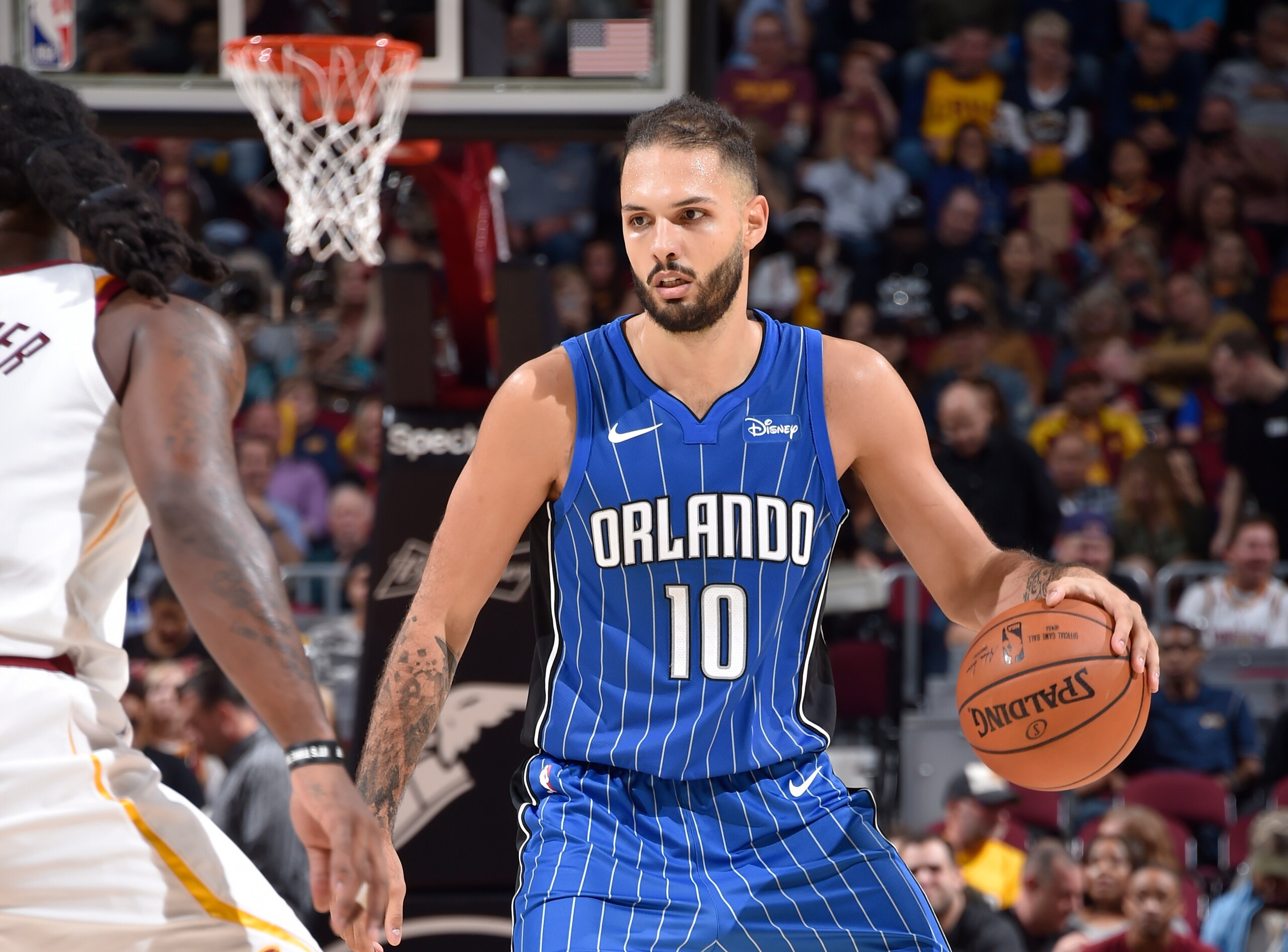
ADP: 82.1
2017-18 Per-Game Stats: 22.2 points, 4.8 rebounds, 3.6 assists, 1.6 steals, 0.4 blocks 1.6 turnovers
Evan Fournier's usage rate hasn't risen drastically since last year. In fact, it's only gone from 23.5 to 23.8. The same is true of his touch statistics—he's averaging fewer frontcourt touches per game and less time of possession. The length of his typical touch has decreased, as well.
But due to increased versatility and a red-hot shooting stroke, he's become significantly more valuable to the Orlando Magic.
Fournier likely won't continue to hit 56.0 percent of his treys while taking 5.0 attempts per game. And when that first number comes crashing back toward his career average of 38.1 percent, he'll probably see his points-per-game tally drop below 20. Even with his improvements around the basket and continued knack for putting up stats in just about every play type, he's not the unquestioned leader of a scorching Orlando offense that also prominently features Nikola Vucevic and Aaron Gordon.
All that is fine.
Fournier still has the ball in his hands enough to set up his teammates. It's the uptick in assists that makes him a do-everything shooting guard who can boost your team in any desired area—especially if you're playing in a league that also penalizes players for turnovers, since he's averaging 3.6 dimes and only 1.6 cough-ups through five appearances.
Last year, Fournier made 27.8 passes per game and produced an even 6.0 assist opportunities per contest, off which his teammates shot 49.6 percent. This year, those respective numbers stand at 23.8, 7.0 and 51.4. He's not benefitting from unsustainably lucky shooting by his counterparts; rather, he's looking to involve those running mates with significantly more frequency.
Small samples could be an explanation here, but Fournier also looks far more willing to pass in a free-flowing Magic offense. If it's not a fluke that the percent of his feeds leading to shots has risen from 21.6 to 29.4, you'll want to strike before anyone else does.
Reggie Jackson, PG, Detroit Pistons
5 of 6
ADP: 94.6
2017-18 Per-Game Stats: 15.2 points, 4.0 rebounds, 6.3 assists, 1.3 steals, 2.0 turnovers
As covered while explaining how Tobias Harris is on the road toward All-Star contention in the Eastern Conference, the Detroit Pistons small forward is a big reason for Reggie Jackson's surge back to prominence. The point guard is healthier now than he was in 2016-17, but that's by no means the only explanation behind his impressive per-game stats and growing status as a fantasy favorite at his position.
Harris' improved shooting stroke and willingness to fire away with reckless abandon draws defenders toward him. Having Avery Bradley on the wings also provides gravity. And with driving lanes freed up through the vacated space, Jackson is thriving.
Before knee tendinitis threw him off course, this floor general was becoming one of the NBA's best at probing a defense while moving toward the basket. He was capable of using his explosiveness to finish through traffic, and he also excelled at kicking the ball out to the perimeter when opposing troops compressed around him.
Now, those skills have returned. Only Dennis Schroder and Ben Simmons are taking more driving field-goal attempts per game thus far, and Jackson is still finding time to dish out 1.2 relevant assists per contest. If he grows more proficient at finishing plays at the hoop, he'll be more valuable still.
Heading into the season, no one was quite certain what version of Jackson the world would see. Was the 27-year-old doomed to obscurity and disappointment after a year in which he was arguably outplayed by Ish Smith? Would he return to form and re-assert himself as a fringe All-Star candidate in the NBA's weaker half? Would he sit between the two opposite ends of the spectrum?
Thus far, he's far closer to the positive end. And he may only keep trending up.
Skal Labissiere, PF, Sacramento Kings
6 of 6
ADP: Undrafted in standard leagues
2017-18 Per-Game Stats: 12.2 points, 5.2 rebounds, 1.0 assists, 0.6 steals, 1.0 blocks, 2.0 turnovers
Nothing about that per-game line should jump out at you, and that's perfectly fine.
Fantasy championships aren't won by finding the players who can score the most points on any given night. If anything, the opposite is true. Scan your league's waiver wire, and you'll almost assuredly find plenty of men averaging double-digit points. Finding guys who can contribute in the less glamorous categories, though, is a tougher task.
Skal Labissiere could become a high-quality scorer. He was billed as a raw prospect coming out of Kentucky, and he's just now developing into a dangerous offensive player who can leverage his smooth shooting stroke into more touches from the Sacramento Kings. Already, he's getting buckets from all over the floor and has acquitted himself well both from beyond the arc and at the charity stripe.
But the former Wildcat is also one of just 26 players averaging at least 12.0 points, 5.0 rebounds, 1.0 assists, 0.5 steals and 1.0 blocks. Last year, only 18 qualified contributors maintained those rates for an entire season. Throwing up that type of line night in and night out is rare.
"I'm still trying to get comfortable, I'm still learning," Labissiere said in mid-October, per James Ham of NBC Bay Area. "The NBA is still super new to me; I haven't even played a full season yet. As a group, we're still learning each other. I think by midyear, we'll be fine."
He's not wrong.
The 21-year-old sophomore is still raw. He's still playing just 23 minutes per game. He's still suited up in only 38 contests during his professional career.
And he's already providing this type of production.
Unless otherwise indicated, all stats from Basketball Reference, NBA.com, NBA Math or ESPN.com and current heading into games on Oct. 29.

.jpg?w=2560 "Grading WWE Raw 🔠")

.jpg?w=2560 "Viral Rams Coach Vid 🖕")

.jpg?w=2560 "Injury-stricken Seahawks signing veteran RB")