Revisiting Pittsburgh Steelers' Best, Worst Moves of 2017 Offseason
The tangible effects of the Pittsburgh Steelers' offseason moves (and the ones they didn't make) won't truly be felt until the regular season begins in September.
However, the benefit of hindsight on what the Steelers have done over the past few months can shed some light on which moves, or the lack thereof, already look to boost or harm the team for the 2017 season.
What may have been seen as a mistake may not be a few months removed from it being made, while others that seemed innocuous at the time could ultimately change the face of the Steelers' upcoming months.
With that in mind, let's take another look at the best and worst moves the Steelers have made this offseason.
Best: Switching to More Man Coverage
1 of 6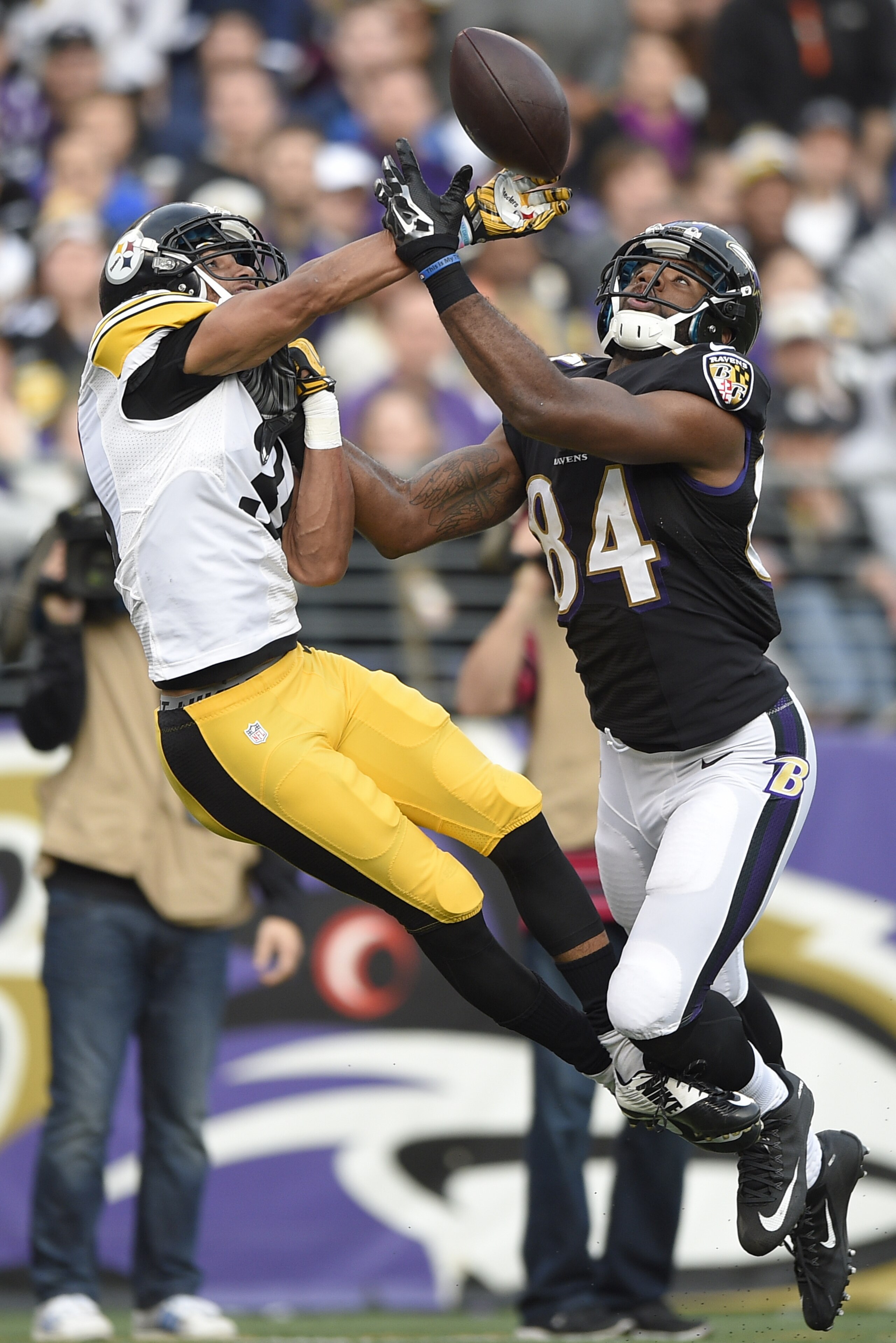
When Dick LeBeau briefly retired from his job as the Steelers' defensive coordinator—only to be hired by the Tennessee Titans not long after—the position was filled internally by linebackers coach Keith Butler.
But head coach Mike Tomlin, who was a defensive assistant around the NFL before coming to Pittsburgh, also put his stamp on that side of the ball, insisting on more zone coverage out of the Steelers' secondary.
That didn't turn out to be the best move for the Steelers, something that came into sharp focus in the team's defeat at the hands of the New England Patriots in last season's AFC Championship.
For Pittsburgh to compete with the multi-pronged passing attack of the Patriots'—and of most teams in the modern NFL—it was time to make man-to-man their goal in the secondary. And the Steelers have spent a great amount of time this offseason stressing this is their plan moving forward and a great amount of personnel resources in an attempt to make that plan a reality.
Butler has made it clear that his intent is a more traditional pass rush up front complemented by a secondary that works mostly in man coverage. And this intent has been echoed by Steelers players, including cornerbacks Senquez Golson and Artie Burns, with the latter saying: "Every team that's won Super Bowls the last couple of years has been able to play man. We want to be a team to play man, get the pressure on the quarterback and attack coverage downfield."
The Steelers haven't just changed their defensive mindset, they have also brought aboard players who can make it a reality. From Burns (Pittsburgh's 2016 first-round draft pick) to Cameron Sutton, a 2017 third-rounder; from this year's Round 1 pick, T.J. Watt, helping out with pass rush to free-agent signee Coty Sensabaugh, Pittsburgh is slowly trying to remake its defense to fit this vision.
This move to modernity will not matter if the players cannot execute the vision, namely improving the tackling in the secondary and being a consistent force in the pass rush up front without having to resort to numerous blitzing schemes (which would make the concept of man coverage in the secondary moot).
But at least the Steelers have realized what it takes on defense to win games—and championships.
Worst: The Patriots Obsession
2 of 6
When one thinks of the Steelers' biggest modern rivalries, thoughts often head within the division, toward the Baltimore Ravens or even the Cleveland Browns. But their true foes have become the New England Patriots.
Not only did the Patriots beat the Steelers, 36-17, in the AFC Championship game last season, they also defeated them in the regular season, winning 27-16 in Week 9. That brings New England's record to seven wins and two losses in the regular season while Tom Brady has been their quarterback and 3-0 in the postseason.
The Steelers' switch to more man coverage in the secondary and more traditional pass-rush formations up front is a direct response to the ways the Patriots have exploited their weaknesses over the years. And while that's not an misstep—Pittsburgh would be well-served to modernize its defensive perspective overall independent of their opponents—focusing so much energy on New England, specifically, may not be a smart move this year.
It's not just head coach Mike Tomlin's joking remarks at Robert Morris University's commencement address. What really demonstrates that the Steelers have a single-minded pursuit of the Patriots is more exemplified by linebacker Ryan Shazier's comments to ESPN that the NFL as a whole "has a Patriots problem."
While the Patriots remain favorites to be Super Bowl champions in the 2017 season, something that should cause rancor among Steelers players, making that public knowledge months before any games are played creates bulletin-board material for the Patriots, puts added pressure on the Steelers and could prove to distract them from the 14 weeks and 13 games that precede their Week 15 meeting with the hated New Englanders.
Plus, there are no guarantees that the Patriots will be the AFC's team to beat this year or that the Steelers will be in position to knock them off their postseason trail in the upcoming winter.
It's better to just take things as they come, handle opponents one by one as the schedule dictates, and keep the Patriots in the backs of their minds rather on the tips of their tongues.
Best: Signing Antonio Brown to a Long-Term Deal
3 of 6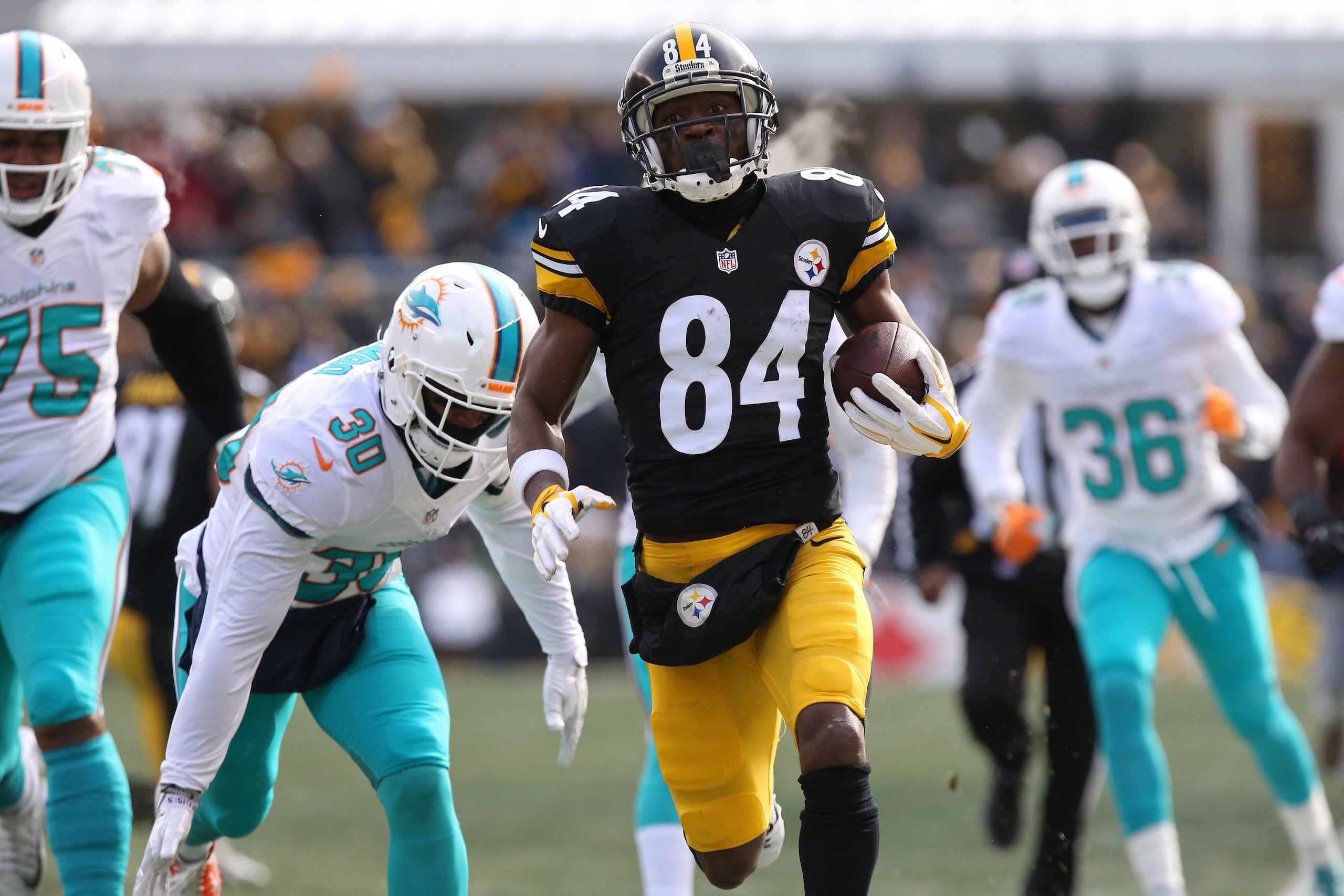
There is little doubt that Steelers receiver Antonio Brown is one of the best in the league at his job.
In seven seasons, he's had over 1,000 yards five times. He has scored 10 or more touchdowns in each of his last three years, has twice led the NFL in receptions, has been named to the Pro Bowl five times and is a two-time first-team All Pro.
So, it's not surprising that the Steelers wanted to keep the 2010 sixth-round draft pick in the fold for the long term. Pittsburgh first restructured his existing deal a year ago with a promise that a lucrative extension would follow the next season; Pittsburgh held up its end of the bargain and signed Brown to a four-year, $68 million deal with $19 million guaranteed in late February.
The Steelers could ill-afford not being able to afford Brown's salary for the seasons to come. He's quarterback Ben Roethlisberger's go-to receiver and a top playmaker and scorer for the Steelers' offense.
Last year, the Steelers had to do without Martavis Bryant for the whole year, Markus Wheaton for most of it and an injured (yet active) Sammie Coates throughout much of it. Yet, Pittsburgh's offense ranked seventh in yards and 10th in points—and fifth in passing yards and fourth in passing scores—thanks to Brown's contributions.
For Pittsburgh to remain a competitive team, they must maintain their high level of offensive performance. And one key step to doing so is keeping Brown in black and gold for the time being. Getting that contract finalized early in the offseason was perhaps the Steelers' greatest offseason success.

Worst: The Le'Veon Bell Contract Situation
4 of 6
Contract negotiations in the NFL are a two-way street, so it's hard to entirely fault the Steelers for not getting a long-term deal done with running back Le'Veon Bell yet.
Further, the Steelers and Bell still have some time to agree terms on a contract, with the deadline not arriving until July 17.
The reason for the deadline is that Bell is set to spend the season playing under a $12.12 million franchise tag; under league rules, tagged players and their teams have only until July 17 to work on a new contract. Otherwise, Bell and the Steelers will have to wait until 2018 to reestablish contract talks or otherwise team can tag the running back again, to the tune of around $14.5 million to $14.8 million for the following year.
But Bell isn't playing nice when it comes to the tag. He hasn't signed it, and he hasn't shown up to the Steelers' voluntary OTA practices or their mandatory minicamp. Granted, he is recovering from offseason groin surgery and wouldn't have been participating in either, but it's a sign the back is unhappy, to some degree, about what has and hasn't happened during the offseason.
That injury, though, and the others he has suffered—an ACL injury in 2014 and a torn MCL in 2015—coupled with his history of serving suspensions for off-the-field issues could have influenced the Steelers' decision to tag him for 2017 and not work quickly on putting together a long-term compensation package.
Still, the handling of Bell's contract situation needs to be handled delicately; for all the drawbacks in giving Bell what could be a record-setting contract at the skill position that receives the most punishment, the advantages he provides Pittsburgh's offense can mitigate them.
Not only has Bell rushed for 4,045 yards and 26 rushing scores over four seasons (47 games total), he's also caught 227 passes for 2,005 yards in that span. He defines the Steelers' offense now as much as Ben Roethlisberger or Antonio Brown; replacing him would be just as difficult as finding a quarterback as unique as Roethlisberger or a receiver as well-rounded as Brown.
While giving Bell a long-term deal has complications attached to it, the Steelers would be far better off getting it done before the July 17 deadline, rather than waiting until Bell is on the precipice of becoming an unrestricted free agent in the next offseason.
The Steelers may be damned if they do, but they'll likely be even more damned if they don't.
Best: Adding Free Agent Knile Davis
5 of 6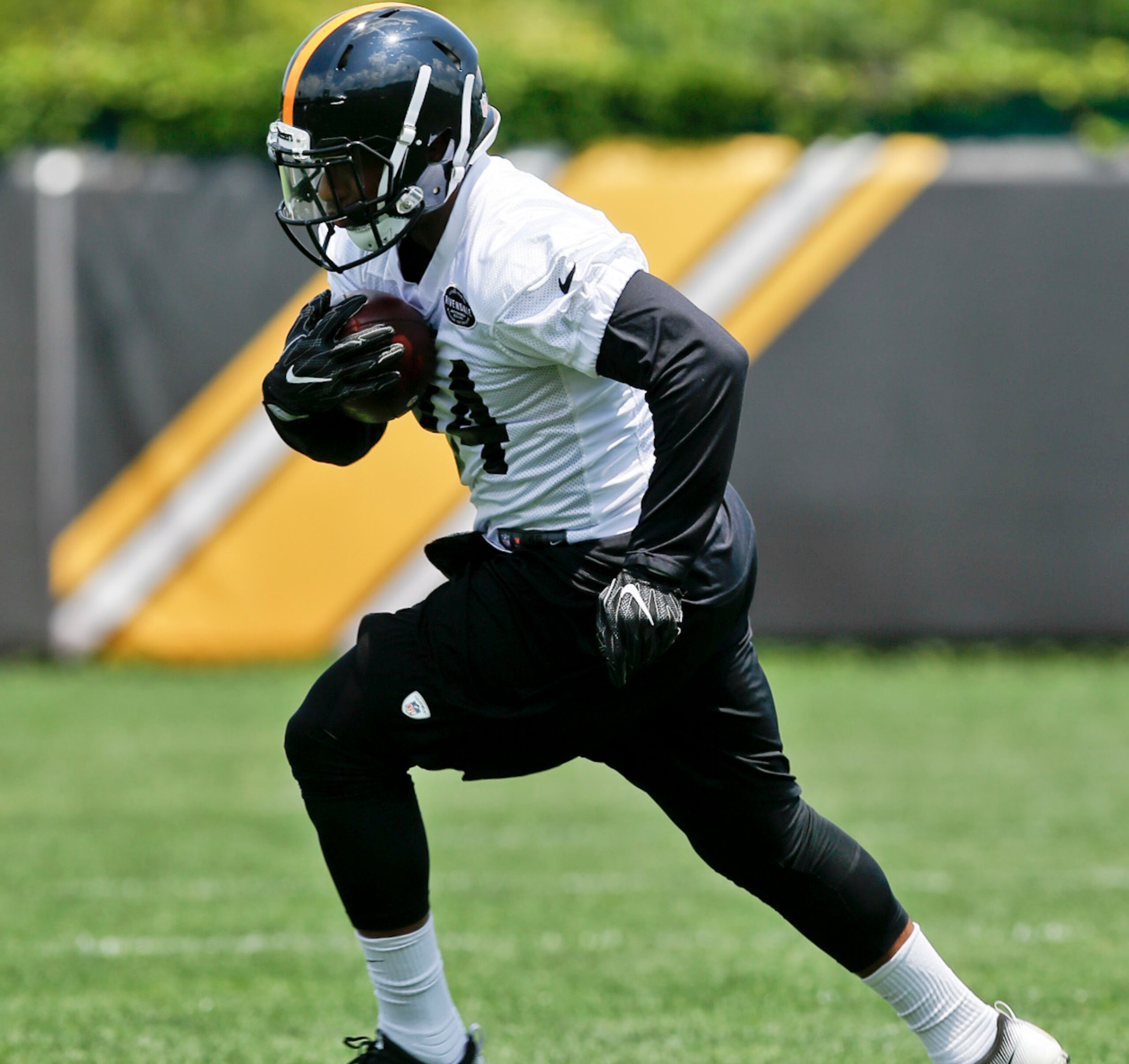
Steelers running back Knile Davis may not be a major impact player on offense this year. But that's not specifically what the veteran was signed to in a one-year, $775,000 contract as a free agent back in March.
While Davis will have an offensive spot to fill this year as the Steelers' No. 3 running back behind Le'Veon Bell and rookie James Conner (with a summertime opportunity to unseat Conner at No. 2, most likely), where he will do the greatest help for his new team is as a kick returner.
In four years, Davis has returned 73 kicks in the regular season, for 1,960 yards and two scores and has returned an additional four in the postseason, for 196 yards and a touchdown. His kick return average is 26.8 yards. In contrast, five Steelers players returned a total of 28 kickoffs in the 2016 regular season, for 603 yards. None scored and the crew averaged 21.5 yards per return.
With Davis presumably returning kicks this year, the Steelers could theoretically gain up to five yards of field-position advantage per attempt over their 2016 average and field a returner who is a threat to score a touchdown on practically every kick he runs back.
Though the Davis signing was at the time an under-the-radar addition, his ability to bring both stability and dynamism to the Steelers' previously hodgepodge kick return game could produce surprisingly valuable dividends throughout the 2017 season.
Worst: The Ben Roethlisberger Retirement Talk
6 of 6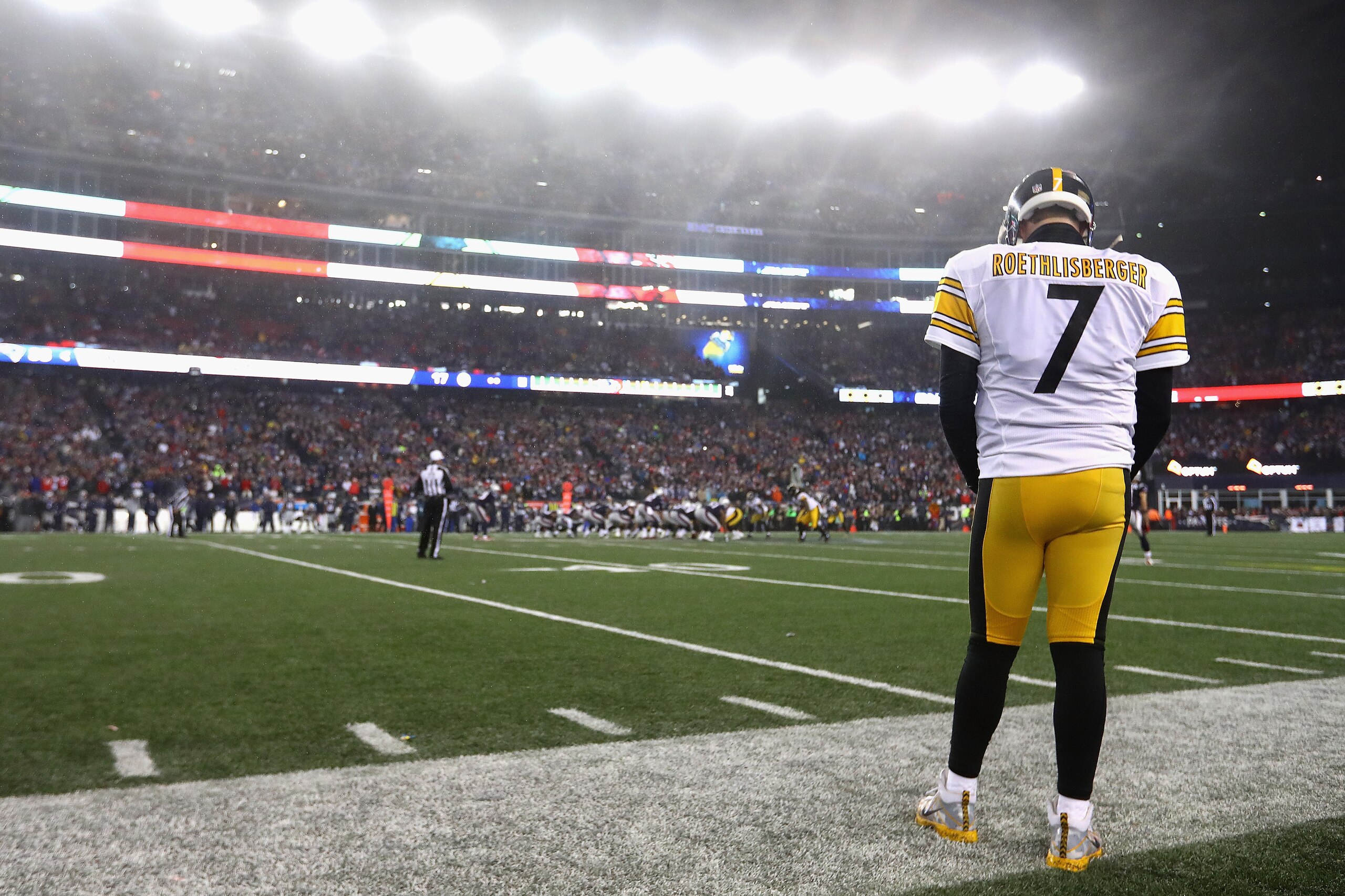
The NFL season is just 16 games long—sometimes longer for those teams fortunate enough to reach the playoffs. But with so few opportunities to work and do it well, all losses inevitably sting harder than if there were twice as many games.
So, it's not surprising when a player takes a particularly upsetting loss hard. That was the case when Steelers quarterback Ben Roethlisberger reflected on his team's AFC Championship loss to the New England Patriots in January.
Roethlisberger told Pittsburgh-area radio station 93.7 The Fan that retirement was one of the things on his mind on the heels of that loss. He lamented missed opportunities and even posited that the championship stage "was too big" for some of the team's younger players. The former comment in particular sparked a cottage industry about what was ahead for the QB, who is entering the 14th year of his career.
For what it's worth, Roethlisberger himself confirmed in May that moving on from professional football had crossed his mind at some point post-Patriots loss. But, much like the head coaches around the league who were asked if such thoughts should have been taken seriously, it never felt like a legitimate threat.
But it did serve as a distraction, however minor it may have proved to be. Roethlisberger's coaches and the Steelers' front office staff had to contemplate the future of the QB position and the dedication level of their long-time starter.
There had to have been discussions of any potential financial ramifications that a Roethlisberger retirement would spark (the quarterback signed a four-year, $87.4 million extension in 2015 and has a cap hit of $18.2 million this year). And it was ultimately a lot of stress, for nothing.
It's well within Roethlisberger's right to question whether he would like to continue his career; it is for all football players, just as it is for every person who does any job. But there is something to be said about whether it is prudent to air those questions publicly and understanding what the ramifications could be when choosing to do so.
Sometimes things are better left unsaid.
.jpg?w=2560 "Rams Eagles Football")

.jpg?w=2560 "Grading WWE Raw 🔠")