

Kyle Wright: Prospect Profile, MLB Comparison for Braves' 1st-Round Pick
Player: Kyle Wright
Position: RHP
DOB: Oct. 2, 1995 (21 years old)
TOP NEWS
Yankees Sloppy in Game 2 Loss 😬

Realistic Offseason Trade Ideas 💡

Players Who Were Worse Than You Think in 2026 ⚾
Height/Weight: 6'4", 220 lbs
Bats/Throws: R/R
School: Vanderbilt
Previously Drafted: Never
Background
Kyle Wright has come a long way since going undrafted out of high school.
He didn't even land a spot on Baseball America's top 500 prospects list heading into the 2014 draft, but he quickly carved out a role as the most reliable reliever for a good Vanderbilt team during his freshman season.
Over 29 appearances, he went 6-1 with four saves, a 1.23 ERA and 9.5 K/9 over 58.2 innings of work, and his stuff has steadily improved since he walked onto campus.
He moved into the rotation last season, playing second fiddle to eventual first-round pick Jordan Sheffield while going 8-4 with a 3.09 ERA, 1.22 WHIP and 107 strikeouts in 93.1 innings.
This season, he helped lead the Commodores to a Super Regional appearance while going 5-6 with a 3.40 ERA, 1.09 WHIP and a 121-to-31 strikeout-to-walk ratio over 103.1 innings.
Pick Analysis
Wright has the strong frame, plus athleticism and quality four-pitch mix to develop into an impact starter.
MLB.com's Prospect Watch offered up the following scouting report:
"As Wright has gotten bigger and stronger in college—he has grown an inch and added 40 pounds—his velocity has improved from 87-90 mph in high school to 91-94, with a high of 97. His best secondary pitch is a hard curveball that he employs against left-handers, and he mixes in a harder slider/cutter against righties. Wright is also developing a solid changeup.
"Wright's stuff could continue to get better, because unlike most top college pitching prospects, he still has a good deal of projection remaining. With his athleticism and arm action, he should have solid control and at least average command when he's fully developed, though he has battled the strike zone more than expected as a junior. Wright will be a frontline starter if he can master the location of his pitches."
That top-of-the-rotation potential gives Wright one of the highest ceilings in this draft.
He also has one of the highest floors among this year's crop of college arms, which makes him a relatively safe pick as well.
MLB Player Comparison: Stephen Strasburg
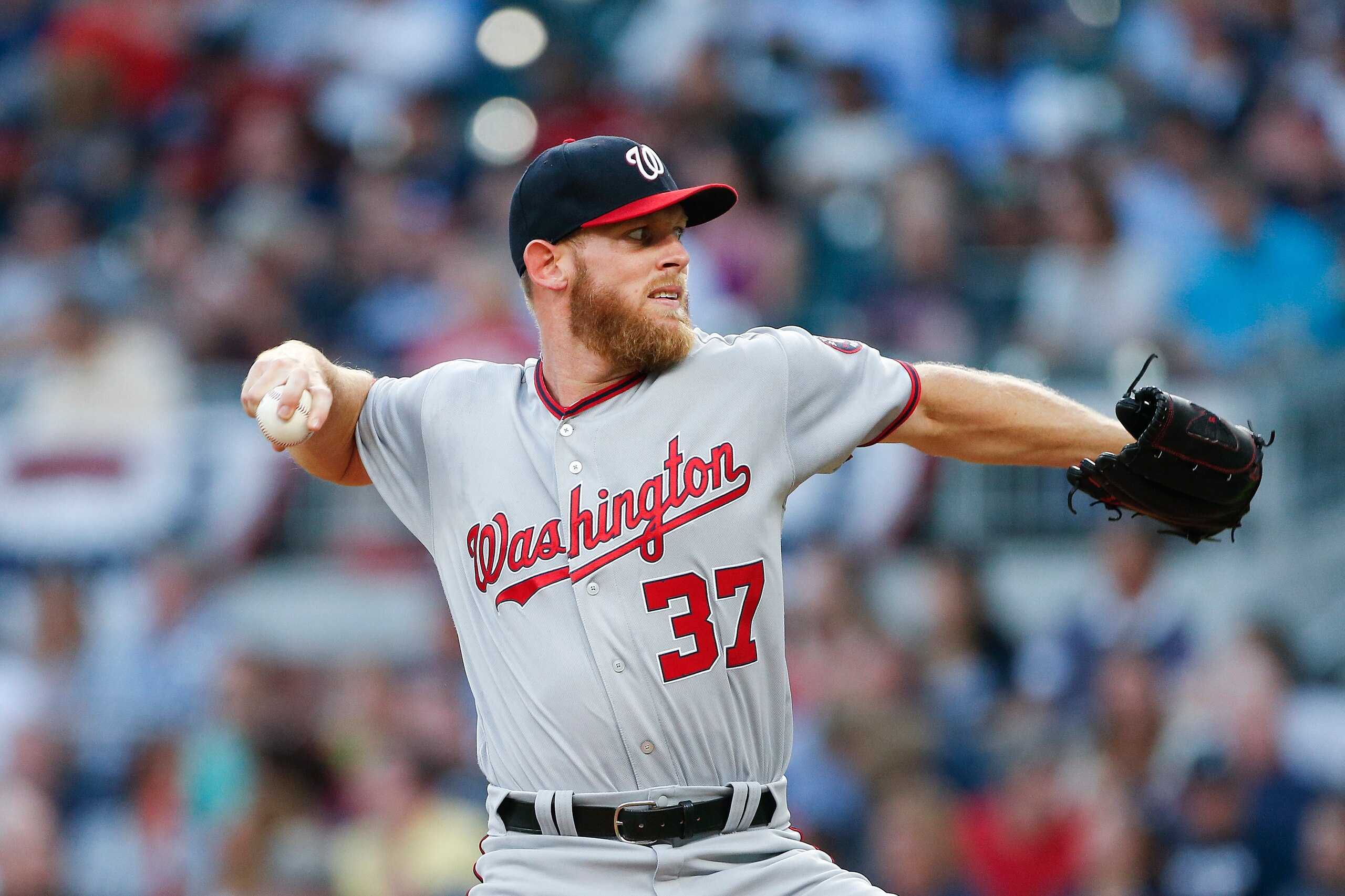
Wright might not be generating the same hype Stephen Strasburg did during his time at San Diego State, but he has a chance to develop into a similar starter at the MLB level.
Strasburg made a name for himself at the collegiate level by lighting up radar guns with triple-digit fastballs, but he's settled in as someone who consistently works in the mid-90s.
That's where Wright figures to be with a bit more polishing, and he offers up the same curveball/slider/changeup mix of off-speed stuff Strasburg brings to the table for the Washington Nationals.
Aside from their repertoires, both pitchers also have strong 6'4" frames, with Strasburg weighing in at 235 pounds and Wright checking in at 220 pounds with room to add more muscle.
Wright will likely never be a consistent double-digit strikeout-per-nine-inning pitcher like Strasburg, but he'll still whiff plenty of hitters.
Perhaps the biggest difference between the two is the health factor. Wright seemingly has smoother mechanics and exerts a bit less effort than Strasburg, so he may be better equipped to stay on the field.
Projection: Ace-caliber upside with a relatively high floor. As safe a bet as anyone in this class to spend 10-plus years in a big league rotation.
Major League ETA: 2020
Chance of Signing: 99 percent
Wright's stock is never going to be higher than it is right now and there's always the risk of injury when it comes to pitchers tacking another year onto their arms. He'll sign.
College statistics courtesy of The Baseball Cube unless otherwise noted and accurate through Sunday, June 11.

.jpg?w=2560 "Grading WWE Raw 🔠")


.jpg?w=2560 "2 NFL Officials Suspended")


.jpg?w=2560 "Viral Rams Coach Vid 🖕")