

Ranking the NBA Careers of NCAA Tournament's Most Outstanding Players
Maybe Lonzo Ball will lead UCLA to a title in this year's NCAA tournament and then become the No. 1 pick in the 2017 NBA draft. Perhaps Sindarius Thornwell and Derrick Walton Jr. will continue their rises to prominence for South Carolina and Michigan, respectively. Someone else entirely could take center stage as March Madness continues.
But their basketball journeys will still be in their infancies.
Dating back to 1939, 60 different players have been named Most Outstanding Player in the NCAA tournament and then gone on to play at least a single minute in the NBA. That number could soon swell to 61, though it's worth noting two recent winners (Louisville's Luke Hancock and Villanova's Ryan Arcidiacono) haven't joined the club.
Here, we're ranking how all of them fared at the sport's highest level, including those whose careers are still in progress. And we're looking at the entirety of their careers, taking into account both longevity and peak performance to determine the order.
As you'll soon see, whoever wins Most Outstanding Player in 2017 shouldn't get too comfortable.
Even though Michael Jordan, Larry Bird, Oscar Robertson and plenty of other legends never won the award, quite a few Hall of Famers did. But on the flip side, more than a few collegiate standouts have accomplished little to nothing in the NBA.
60-56: Lear, Smart, Simon, Sheppard, Cleaves
1 of 20
60. Hal Lear, Temple, 1956 Most Outstanding Player
Career Per-Game Stats: 1.3 points, 0.3 rebounds, 0.3 assists
Career Advanced Metrics: 1.0 player efficiency rating (PER), 33.3 true shooting percentage (TS%), 0.0 win shares (WS)
Career Accolades: None
Hal Lear helped steer Temple into the Final Four during the 1956 NCAA tournament, but he couldn't advance past Iowa. And that (or when the Owls retired his No. 6 jersey) may still be the highlight of his basketball career, since he played in only three games for the Philadelphia Warriors after they used the No. 7 pick on him a few months later.
59. Keith Smart, Indiana, 1987
Career Per-Game Stats: 1.0 points, 0.5 rebounds, 1.0 assists
Career Advanced Metrics: 0.0 PER, 34.7 TS%, 0.0 WS, minus-3.77 total points added (TPA)
Career Accolades: None
A lack of success as a player didn't deter Keith Smart from enjoying a lengthy coaching career in the NBA. He may only have played two games for the San Antonio Spurs before moving on to international leagues, but he's served as either an assistant or a head coach in the Association since 2000 and is currently on the Memphis Grizzlies' staff.
58. Miles Simon, Arizona, 1997
Career Per-Game Stats: 0.4 points, 0.4 rebounds, 0.2 steals
Career Advanced Metrics: minus-7.2 PER, 20.0 TS%, minus-0.1 WS, minus-5.43 TPA
Career Accolades: None
After working with Mike Bibby to take down three different No. 1 seeds and win the national title, Miles Simon joined the Orlando Magic as a second-round pick. He held his own defensively in 19 career minutes, but his 1-of-5 shooting performance couldn't get the job done. After failing to break into the rotation, he departed for Israel's Liga Leumit and the Maccabi Ra'anana.
57. Jeffrey Sheppard, Kentucky, 1998
Career Per-Game Stats: 2.2 points, 1.2 rebounds, 0.9 assists, 0.2 steals
Career Advanced Metrics: 8.7 PER, 44.7 TS%, 0.3 WS, minus-9.54 TPA
Career Accolades: None
Though Jeffrey Sheppard's NBA career lasted 18 whopping games, he never found the shooting stroke he possessed for the Kentucky Wildcats. It's hard to earn more trust from your coaching staff when you're hitting just 38.5 percent of your field-goal attempts and 28.6 percent of your triples while lining up at the 2.
56. Mateen Cleaves, Michigan State, 2000
Career Per-Game Stats: 3.6 points, 1.0 rebounds, 1.9 assists, 0.4 steals
Career Advanced Metrics: 8.5 PER, 44.9 TS%, minus-0.8 WS, minus-227.69 TPA
Career Accolades: None
For the first time, we have an NCAA Most Outstanding Player who lasted in the NBA for multiple seasons. The Detroit Pistons drafted Mateen Cleaves at No. 14 in 2000, and he played for four franchises over the course of six years. However, he was never even a replacement-level contributor in any of them, failing to break his way into the rotation each and every campaign as his shots just refused to fall.
Didn't Play in NBA: Jimmy Hull, Ohio State (1939); Marvin Huffman, Indiana (1940); John Kotz, Wisconsin (1941); Bob Kurland, Oklahoma A&M (1945 and 1946); Irwin Dambrot, City College of New York (1950); Bill Spivey, Kentucky (1951); B.H. Born, Kansas (1953); Anderson Hunt, UNLV (1990); Donald Williams, North Carolina (1993); Luke Hancock, Louisville (2013); Ryan Arcidiacono, Villanova (2016)
55-51: O'Bannon, Hogue, Hurley, Napier, Lee
2 of 20
55. Ed O'Bannon, UCLA, 1995
Career Per-Game Stats: 5.0 points, 2.5 rebounds, 0.8 assists, 0.6 steals, 0.2 blocks
Career Advanced Metrics: 9.1 PER, 42.7 TS%, 1.1 WS, minus-149.05 TPA
Career Accolades: None
Ed O'Bannon, fresh off his dominance for UCLA, was a top-10 pick during the 1995 NBA draft. And that's unfortunate because he'll now go down as one of the biggest busts in league history, failing to capitalize for the New Jersey Nets. The organization gave up on him after just 1.5 seasons (in spite of his mediocre defensive play on the wings) and traded him to the Dallas Mavericks as part of a larger deal.
54. Paul Hogue, Cincinnati, 1962
Career Per-Game Stats: 6.3 points, 7.1 rebounds, 0.7 assists
Career Advanced Metrics: 7.1 PER, 38.7 TS%, minus-1.1 WS
Career Accolades: None
A 6'9" center nicknamed Duke who went to Cincinnati and played alongside Oscar Robertson, Paul Hogue was the No. 2 pick of the 1962 NBA draft, behind only Bill McGill—Dave DeBusschere and Jerry Lucas were both selected with territorial picks. But after displaying immense promise on the glass during his rookie season, Hogue had the lack of depth to his game exposed. The Knicks traded him to the Baltimore Bullets as a sophomore, and he lasted nine games before never playing in the Association again.
53. Bobby Hurley, Duke, 1992
Career Per-Game Stats: 3.8 points, 1.1 rebounds, 3.3 assists, 0.4 steals
Career Advanced Metrics: 8.1 PER, 44.3 TS%, minus-1.2 WS, minus-607.56 TPA
Career Accolades: None
Would Bobby Hurley's career have gone differently if he wasn't involved in a devastating car accident during his rookie season? We'll never know. Either way, he was ineffective as a first-year point guard for the Sacramento Kings before the crash and never found a way to experience the success he had while helping lead Duke to back-to-back titles in the early 1990s.
52. Shabazz Napier, Connecticut, 2014
Career Per-Game Stats: 4.1 points, 1.4 rebounds, 1.9 assists, 0.6 steals
Career Advanced Metrics: 10.0 PER, 49.5 TS%, 1.0 WS, minus-124.36 TPA
Career Accolades: None
LeBron James was all about Shabazz Napier while he was leading the Connecticut Huskies to a second title in four seasons, and he again expressed his approval during the 2014 draft. Then the Miami Heat traded for him, and the rest is history. Unfortunately, the history isn't good: Napier flamed out in Miami and has failed to rise with either the Orlando Magic or Portland Trail Blazers, leaving serious concerns about the longevity of his ongoing career.
51. Butch Lee, Marquette, 1977
Career Per-Game Stats: 8.1 points, 1.4 rebounds, 3.2 assists, 0.9 steals
Career Advanced Metrics: 13.5 PER, 50.7 TS%, 2.4 WS, minus-105.88 TPA
Career Accolades: NBA Champion
And thus comes our first legitimate accolade. Butch Lee was a member of the 1979-80 Los Angeles Lakers, who beat the Philadelphia 76ers in six games to win a title. Of course, he played only six total minutes throughout the entire postseason run, so it's tough to get too excited about this particular ring—or the rest of his two-season career, for that matter.
50-46: Jones, Givens, Chambers, Ferrin, May
3 of 20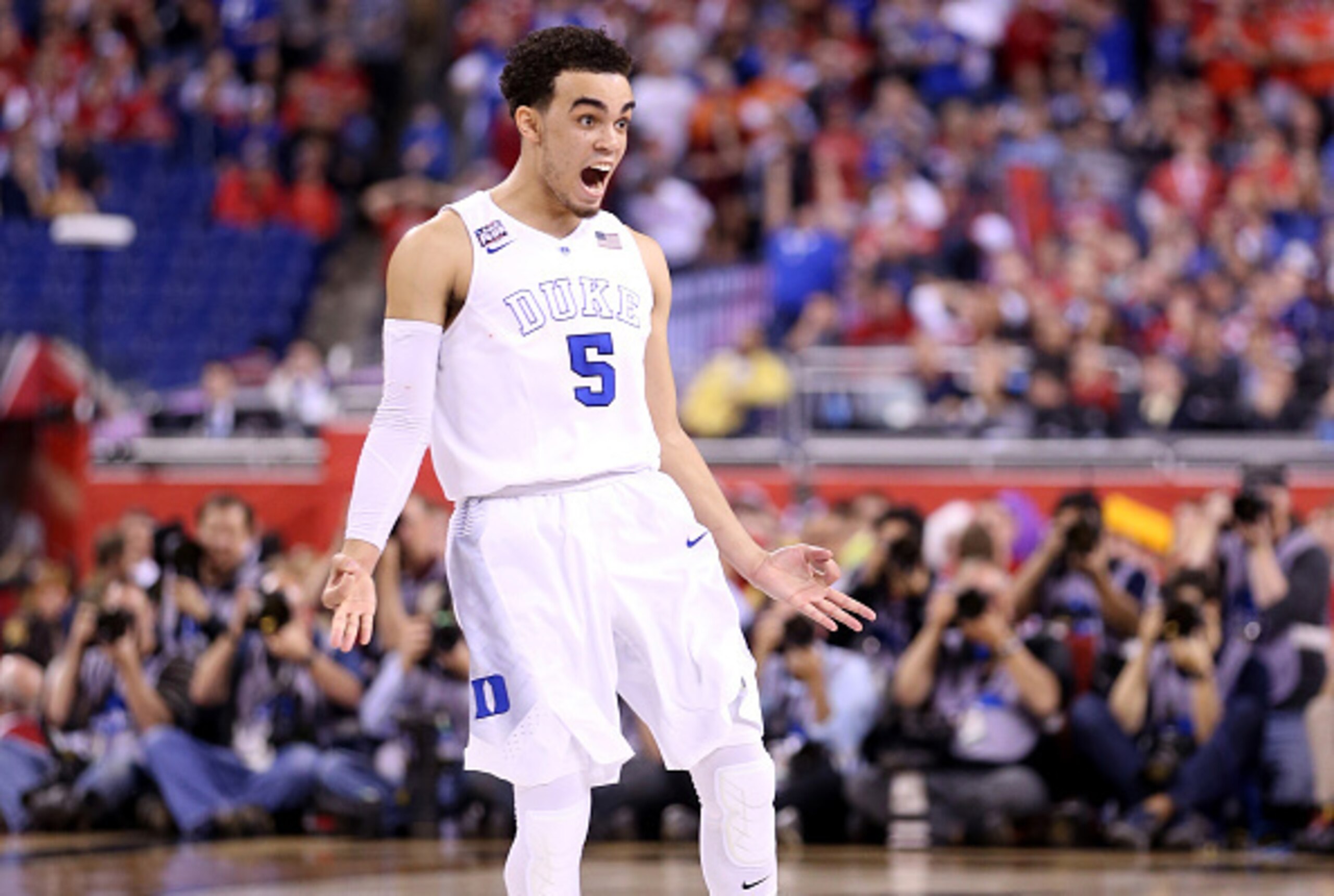
50. Tyus Jones, Duke, 2015
Career Per-Game Stats: 3.8 points, 1.2 rebounds, 2.6 assists, 0.8 steals, 0.1 blocks
Career Advanced Metrics: 12.4 PER, 48.1 TS%, 1.6 WS, minus-60.53 TPA
Career Accolades: None
There's still time for Tyus Jones to live up to the hype he earned with a sensational run for the Duke Blue Devils two years ago. But he's failed to earn more minutes thus far with the Minnesota Timberwolves, and that's not likely to change with Ricky Rubio still on the roster and Kris Dunn ahead in the point guard carousel. Perhaps with time he'll be able to climb in these rankings since he hasn't looked too out of place during his meager run.
49. Jack Givens, Kentucky, 1978
Career Per-Game Stats: 6.7 points, 2.9 rebounds, 0.9 assists, 0.8 steals, 0.2 blocks
Career Advanced Metrics: 12.3 PER, 45.1 TS%, 4.3 WS, minus-81.03 TPA
Career Accolades: None
Jack Givens never found his shooting stroke after leaving Kentucky, but his per-minute rebounding ability as a small forward played well. So too did his defense against opposing wings, allowing him to fill a substantial slot in the Atlanta Hawks rotation for two seasons before moving to the broadcasting booth. Unfortunately, his career high of 22 couldn't come close to matching his 41-point outburst against Duke to clinch the 1978 NCAA tournament.
48. Jerry Chambers, Utah, 1966
Career Per-Game Stats: 8.1 points, 3.1 rebounds, 0.8 assists
Career Advanced Metrics: 12.7 PER, 47.6 TS%, 2.8 WS
Career Accolades: None
Jerry Chambers went from Utah to the Los Angeles Lakers with the No. 7 pick of the 1966 NBA draft and turned in a solid rookie campaign. But his career never became what it could've been, as Chambers chose to serve in the military for two years before returning to the world of professional basketball. After a season apiece with the Atlanta Hawks, Phoenix Suns and Buffalo Braves, he jumped to the ABA, from which we're not counting stats and accolades in this ranking of NBA careers.
47. Arnie Ferrin, Utah, 1944
Career Per-Game Stats: 5.8 points, 4.0 rebounds, 1.6 assists
Career Advanced Metrics: 39.2 TS%, 7.6 WS
Career Accolades: Two-time NBA Champion
Arnie Ferrin won two titles with the Minneapolis Lakers while playing alongside George Mikan and the team's other megastars. But he couldn't be included in that celestial category, even if he was a four-year All-American at Utah. He scored just 7.3 points per game during the first championship run in 1949, then went for 5.4 per game while successfully defending the title one year later.
46. Sean May, North Carolina, 2005
Career Per-Game Stats: 6.9 points, 4.0 rebounds, 1.0 assists, 0.4 steals, 0.4 blocks
Career Advanced Metrics: 14.9 PER, 50.8 TS%, 2.6 WS, minus-83.27 TPA
Career Accolades: None
At 6'9", 266 pounds, Sean May was most assuredly a big man. But his size also forced him to endure some injury issues, as a knee malady ended his rookie season with Charlotte and forced him to undergo microfracture surgery before his sophomore campaign. He was never the same after that, dealing with poor conditioning and tendinitis that prevented him from suiting up in 2007-08 or experiencing much success upon his eventual return.



45-41: Kaftan, Dixon, Ellington, Singler, Heyman
4 of 20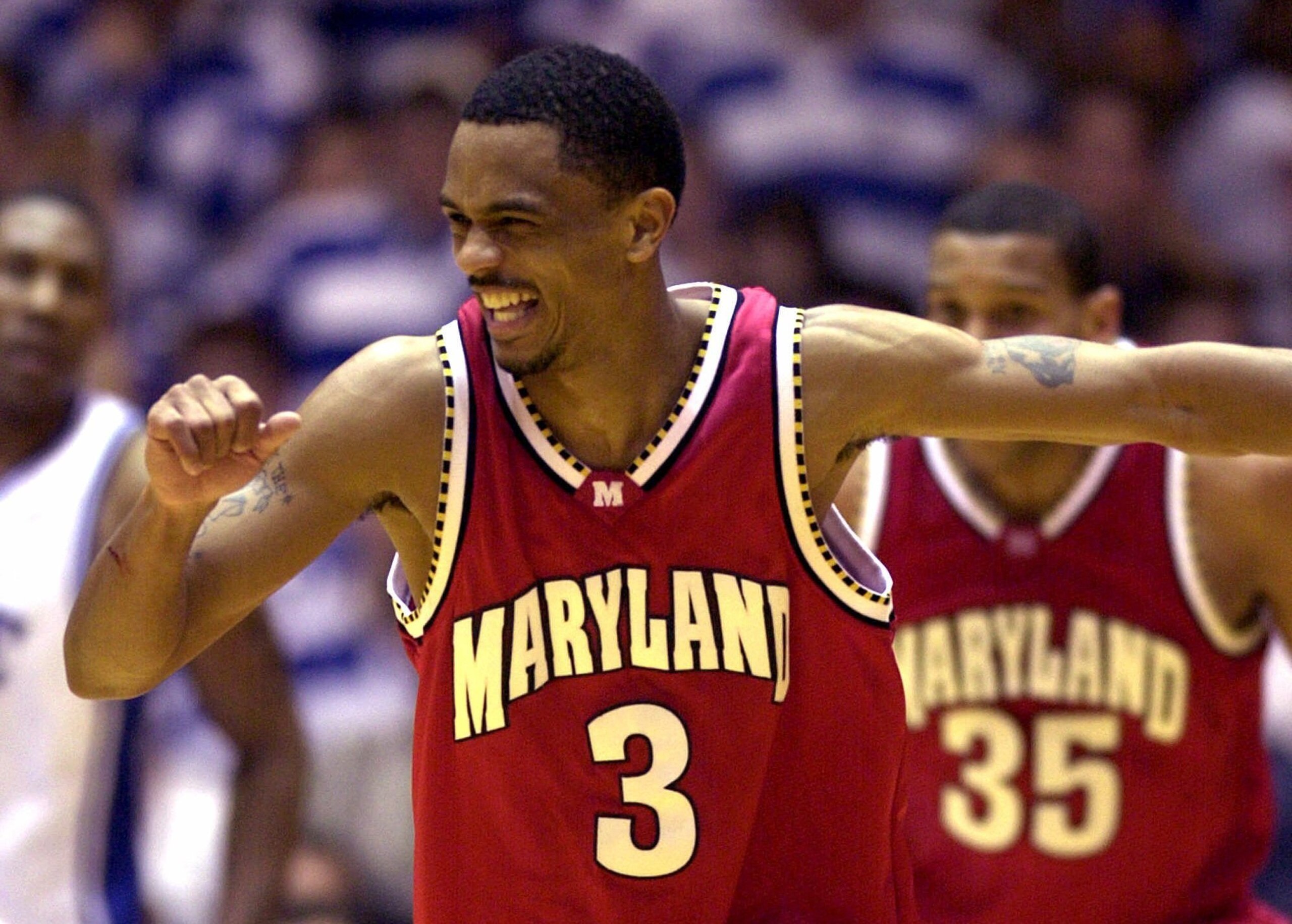
45. George Kaftan, Holy Cross, 1947
Career Per-Game Stats: 6.8 points, 3.1 rebounds, 1.8 assists
Career Advanced Metrics: 13.7 PER, 42.6 TS%, 8.9 WS
Career Accolades: None
Had George Kaftan's career lasted longer, he likely would've risen higher in these rankings. Though a 42.6 true shooting percentage would be horrific by today's standards, it was actually solid during the 1940s and early 1950s. Throughout the 1952-53 season, which Kaftan spent with the Baltimore Bullets before pulling the plug on his career, the league-average true shooting percentage was 44.5.
44. Juan Dixon, Maryland, 2002
Career Per-Game Stats: 8.4 points, 1.9 rebounds, 1.8 assists, 0.8 steals, 0.1 blocks
Career Advanced Metrics: 12.8 PER, 49.9 TS%, 6.1 WS, minus-475.79 TPA
Career Accolades: None
Juan Dixon struggled through his first few seasons with the Washington Wizards, then discovered his three-point stroke after transitioning to the Portland Trail Blazers and reuniting with Maryland teammate Steve Blake. But even then, he sacrificed what little defensive chops he possessed for the extra offensive production, and that wasn't a long-term recipe for success.
43. Wayne Ellington, North Carolina, 2009
Career Per-Game Stats: 7.5 points, 2.1 rebounds, 1.1 assists, 0.5 steals, 0.1 blocks
Career Advanced Metrics: 10.9 PER, 52.0 TS%, 10.5 WS, minus-541.53 TPA
Career Accolades: None
Wayne Ellington is currently putting together the best season of his career, as head coach Erik Spoelstra has unlocked his offensive potential with the Miami Heat. He still doesn't offer much outside of scoring, but shooting 42.3 percent from the field and 37.9 percent from beyond the arc tends to play well in a reserve role. If this isn't a fluke, he'll have a chance to pass some rivals from his collegiate career.
42. Kyle Singler, Duke, 2010
Career Per-Game Stats: 6.7 points, 2.9 rebounds, 0.8 assists, 0.6 steals, 0.3 blocks
Career Advanced Metrics: 9.6 PER, 52.9 TS%, 9.8 WS, minus-233.72 TPA
Career Accolades: All-Rookie Second Team
Whereas Wayne Ellington is getting better, Kyle Singler has seen his career stagnate. Perhaps he never recovered from Stephen Curry embarrassing him to set a record near the end of the 2015-16 campaign. But after looking like a solid low-end role player during the beginning of his professional career, which came with the Detroit Pistons, Singler has steadily declined, to the point that he's now virtually unusable.
41. Art Heyman, Duke, 1963
Career Per-Game Stats: 10.3 points, 2.8 rebounds, 2.4 assists
Career Advanced Metrics: 14.4 PER, 48.2 TS%, 4.0 WS
Career Accolades: All-Rookie First Team
Forty-seven years before Kyle Singler's Duke squad staved off a comeback effort from Gordon Hayward and the Butler Bulldogs, Art Heyman won Most Outstanding Player while leading the Blue Devils to a third-place finish. He also found a bit more success at the NBA—thanks mostly to his rookie-year efforts with the New York Knicks—before departing for the ABA just four years into his professional career.
40-36: Washington, Brewer, Delk, Dallmar, Sailors
5 of 20
40. Richard Washington, UCLA, 1975
Career Per-Game Stats: 9.8 points, 6.3 rebounds, 1.2 assists, 0.6 steals, 0.8 blocks
Career Advanced Metrics: 13.3 PER, 48.5 TS%, 10.8 WS, minus-396.55 TPA
Career Accolades: None
After leading UCLA to a victory over Kentucky in the final game of legendary coach John Wooden's career, Richard Washington went to the Kansas City Kings as the No. 3 pick of the 1976 NBA draft. But he never lived up to the accompanying expectations, even dropping out of a major rotation role just three seasons in when he basically forgot how to shoot. Washington recovered from that 1978-79 campaign, during which he shot 34.1 percent from the field, but he had trouble latching on with one team before retiring in 1982.
39. Corey Brewer, Florida, 2007
Career Per-Game Stats: 9.3 points, 2.9 rebounds, 1.6 assists, 1.3 steals, 0.3 blocks
Career Advanced Metrics: 11.9 PER, 49.9 TS%, 18.9 WS, minus-338.18 TPA
Career Accolades: NBA Champion
At least Corey Brewer is always smiling. Whether he's winning a title while filling a garbage-time role for the Dallas Mavericks or moving from the Houston Rockets to the Los Angeles Lakers in a midseason deal, Brewer can't stop looking like he's having a good time. And that has to count for something, even if he's struggled to remain effective on offense while making a solid defensive impact with his ceaseless motor.
38. Tony Delk, Kentucky, 1996
Career Per-Game Stats: 9.1 points, 2.5 rebounds, 1.9 assists, 0.8 steals, 0.1 blocks
Career Advanced Metrics: 13.8 PER, 49.4 TS%, 19.5 WS, minus-291.78 TPA
Career Accolades: None
It's impressive that Tony Delk hung around for so long despite not shooting well or passing the ball with aplomb. He's a point guard who never averaged more than 5.4 assists per 36 minutes, and he shot just 34.3 percent from downtown throughout his career. Was Delk a great defender? Nope, he just rarely made mistakes, which let him stick on rosters for 545 career games.
37. Howie Dallmar, Stanford, 1942
Career Per-Game Stats: 9.6 points, 2.3 assists
Career Advanced Metrics: 34.1 TS%, 15.1 WS
Career Accolades: BAA Champion, All-BAA First Team
Ranking Howie Dallmar is quite the challenge. He was one of the Philadelphia Warriors' leading contributors during their 1947 title run, then paced the entire BAA in assists during his follow-up campaign. But after three professional seasons (and just 146 games), he moved on and began coaching at the University of Pennsylvania.
36. Kenny Sailors, Wyoming, 1943
Career Per-Game Stats: 12.6 points, 2.0 rebounds, 2.8 assists
Career Advanced Metrics: 39.4 TS%, 17.1 WS
Career Accolades: All-BAA Second Team
"I would say that squared up toward the basket, body hanging straight, the cocked arm, the ball over the head, the knuckles at the hairline—that’s today’s classic jump shot," John Christgau, the author of "The Origins of the Jump Shot," told the New York Times' William McDonald about Kenny Sailors' shooting form. "It was unblockable." Serving as the predecessor to the modern technique, he just kept scoring and scoring during his time in the BAA and the early years of the NBA.
35-31: Williamson, Chalmers, Benson, Griffith, Pinckney
6 of 20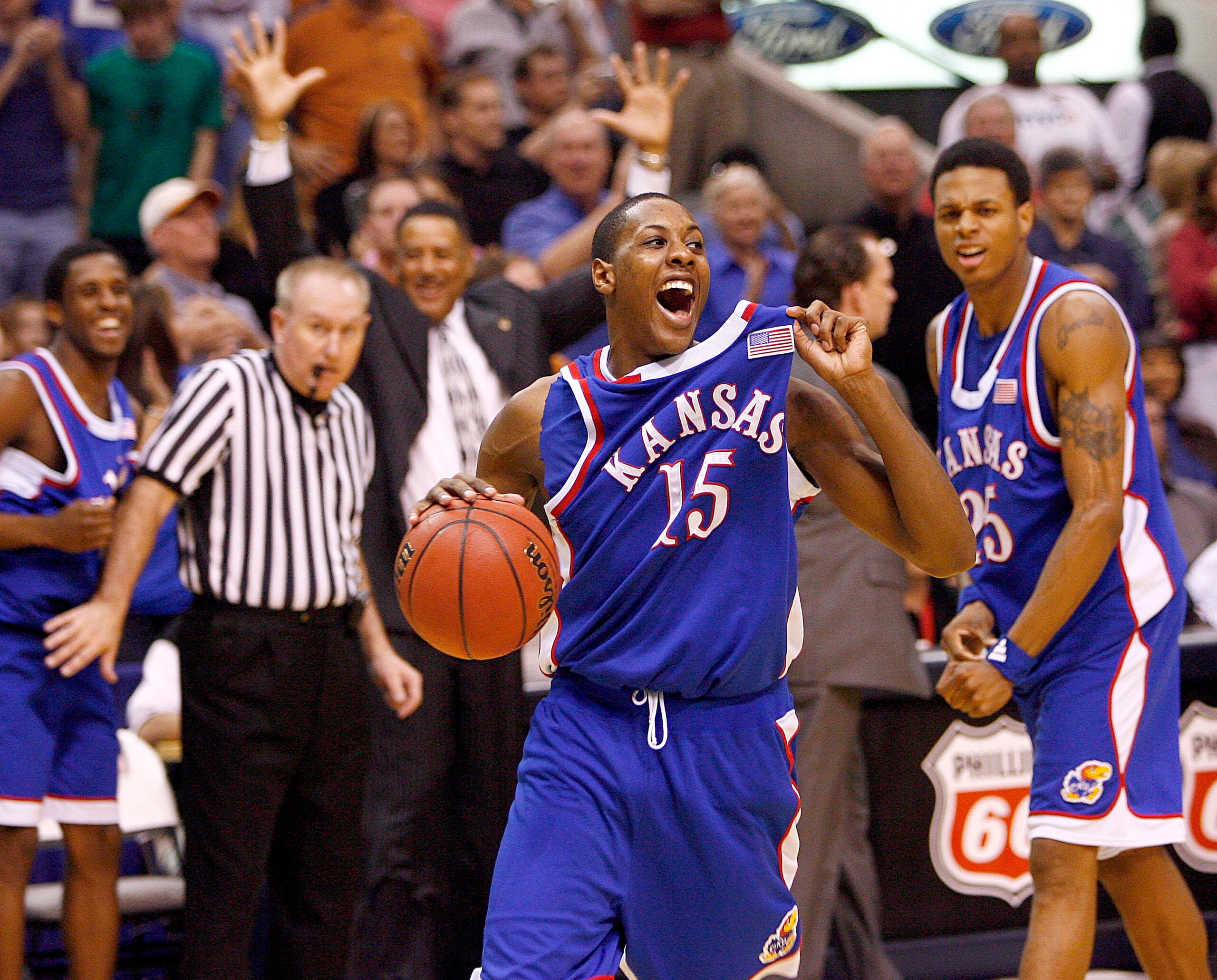
35. Corliss Williamson, Arkansas, 1994
Career Per-Game Stats: 11.1 points, 3.9 rebounds, 1.2 assists, 0.6 steals, 0.3 blocks
Career Advanced Metrics: 14.9 PER, 53.5 TS%, 34.7 WS, minus-868.82 TPA
Career Accolades: NBA Champion, Sixth Man of the Year
Considering Corliss Williamson spent over a decade in the NBA, played a substantial role in winning a title for the 2003-04 Detroit Pistons and was named the league's Sixth Man of the Year two years prior during his first full season in the Motor City, it may be surprising that he's outside the top 30. But Williamson benefitted from playing in an era that didn't value shooting, and he failed to submit a positive box plus/minus even once during his career. In fact, only 29 players have a lower cumulative score in NBA Math's TPA since the start of 1973-74.
34. Mario Chalmers, Kansas, 2008
Career Per-Game Stats: 9.0 points, 2.5 rebounds, 3.8 assists, 1.5 steals, 0.2 blocks
Career Advanced Metrics: 12.9 PER, 55.0 TS%, 31.7 WS, 154.48 TPA
Career Accolades: Two-time NBA Champion, All-Rookie Second Team
Mario Chalmers has never had an NBA moment like the one that came at the end of his junior season with the Kansas Jayhawks, where he drilled a triple to force overtime in the national championship with 2.1 seconds remaining against the Memphis Tigers. But he was a starter for the Miami Heat squad that won back-to-back rings. And for all the grief he took from the Big Three and fans unhappy that an average player was starting at one of the most glamorous positions, Chalmers avoided mistakes so well that he posted a positive box plus/minus in seven of his eight NBA seasons.
33. Kent Benson, Indiana, 1976
Career Per-Game Stats: 9.1 points, 5.7 rebounds, 1.8 assists, 0.9 steals, 0.9 blocks
Career Advanced Metrics: 14.2 PER, 53.1 TS%, 33.6 WS, 292.52 TPA
Career Accolades: None
Kent Benson's career was a roller-coaster ride. Shortly after he was made the No. 1 pick of the 1977 NBA draft, Kareem Abdul-Jabbar socked him in the jaw, retaliating to an elbow just two minutes into Benson's professional tenure. But he'd return before too long and emerge as a steady defensive center who played efficiently enough to provide positive value. He never lived up to the hype, but it's hard to knock his career as anything less than a moderate success.
32. Darrell Griffith, Louisville, 1980
Career Per-Game Stats: 16.2 points, 3.3 rebounds, 2.1 assists, 1.2 steals, 0.3 blocks
Career Advanced Metrics: 14.6 PER, 50.9 TS%, 22.0 WS, minus-597.2 TPA
Career Accolades: All-Rookie First Team, Rookie of the Year
The beginning of Dr. Dunkenstein's NBA career was phenomenal, and not just because he won Rookie of the Year one season after helping Louisville earn its first NCAA title. During his first five professional campaigns, he averaged 21.0 points, 4.0 rebounds and 3.0 assists while shooting 47.5 percent from the field and 33.0 percent fro downtown.
At one point, he even became the all-time leader in career threes. But things went downhill from there, as he missed all of 1985-86 with a stress fracture in his foot and was never the same from there. Plus, his complete lack of defensive ability, which existed even during his prime, holds him back in these rankings.
31. Ed Pinckney, Villanova, 1985
Career Per-Game Stats: 6.8 points, 5.0 rebounds, 0.9 assists, 0.8 steals, 0.5 blocks
Career Advanced Metrics: 14.8 PER, 60.2 TS%, 42.7 WS, 261.42 TPA
Career Accolades: None
After helping his No. 8-seeded Villanova Wildcats win a national championship over the Georgetown Hoyas, Ed Pinckney went to the Phoenix Suns with the No. 10 pick of the 1985 NBA draft. From there, his career was antithetical to Darrell Griffith's.
Whereas Griffith's hasn't aged well because he did little more than score in glamorous fashion, modern-day analysis has caused Pinckney's stock to rise. A defensive power forward who rarely missed from the field, he did the little things well during an era in which stardom required flash and high-scoring contributions.
30-26: Ellison, Okafor, Hazzard, Groza, Bradley
7 of 20
30. Pervis Ellison, Louisville, 1986
Career Per-Game Stats: 9.5 points, 6.7 rebounds, 1.5 assists, 0.6 steals, 1.6 blocks
Career Advanced Metrics: 15.2 PER, 54.6 TS%, 21.8 WS, 129.07 TPA
Career Accolades: Most Improved Player
Had Pervis Ellison remained in bubble wrap whenever he wasn't playing, he'd likely sit closer to No. 20 than this spot halfway up the leaderboard. Knee trouble and a freak toe injury shortened his career and limited his on-court contributions after he left Louisville.
It couldn't stop him from submitting the best campaign of anyone to appear thus far: In 1991-92, the 6'9" center thrived for the Washington Bullets, winning Most Improved Player by averaging 20.0 points, 11.2 rebounds, 2.9 assists and 2.7 blocks while shooting 53.9 percent from the field and playing phenomenal defense.
29. Emeka Okafor, Connecticut, 2004
Career Per-Game Stats: 12.3 points, 9.9 rebounds, 0.9 assists, 0.7 steals, 1.7 blocks
Career Advanced Metrics: 17.0 PER, 53.5 TS%, 44.3 WS, minus-152.9 TPA
Career Accolades: All-Rookie First Team, Rookie of the Year
Were it not for a herniated disk in his neck, Emeka Okafor may be playing today. He was still an adept defender in 2012-13 for the Washington Wizards, but that was the last time he suited up on an NBA court. And even though the big man is just 34 years old with an established reputation as a sterling interior presence, it seems unlikely he'll ever appear in another game after failing to complete a comeback for the last four years.
28. Walt Hazzard, UCLA, 1964
Career Per-Game Stats: 12.6 points, 3.0 rebounds, 4.9 assists, 0.5 steals, 0.1 blocks
Career Advanced Metrics: 15.0 PER, 49.1 TS%, 30.3 WS, minus-41.96 TPA
Career Accolades: All-Star
And thus appears our first All-Star. Walt Hazzard made the team by averaging 24.0 points, 4.2 rebounds and 6.2 assists for the Seattle SuperSonics in 1967-68, but that season stands out as a severe aberration. Though he gets all the credit in the world for that success, it's troubling that his career highs from every other campaign would give him just 16.5 points, 4.0 rebounds and 6.3 dimes. The point guard could just never get that comfortable as a scorer again, even if his passing chops never went away.
27. Alex Groza, Kentucky, 1948 and 1949
Career Per-Game Stats: 22.5 points, 10.7 rebounds, 2.4 assists
Career Advanced Metrics: 55.0 TS%, 35.9 WS
Career Accolades: All-Star, Two-time All-NBA First Team
Just imagine if Alex Groza's professional career had lasted more than two seasons. He paced the NBA in field-goal percentage and true shooting percentage during each of those campaigns, serving as one of the league's original scoring threats. But he was banned for life after being implicated in a point-shaving scandal, and it's tough to rank any higher with that hanging over your head and your career with the Indianapolis Olympians lasting a mere 130 games.
26. Bill Bradley, 1965, Princeton
Career Per-Game Stats: 12.4 points, 3.2 rebounds, 3.4 assists, 0.7 steals, 0.2 blocks
Career Advanced Metrics: 12.2 PER, 48.6 TS%, 38.8 WS, minus-465.8 TPA
Career Accolades: Hall of Fame, All-Star, Two-time NBA Champion
Bill Bradley is the first Hall of Famer to appear, but his induction was as much about his work at Princeton as his time with the New York Knicks. The small forward with (successful) political aspirations never once submitted an above-average PER, though he did win two titles with the New York Knicks and made the 1973 All-Star team. His NBA resume just doesn't scream Hall of Fame, even if that's where he wound up.
25-21: Wicks, Walker, Hamilton, Manning, Laettner
8 of 20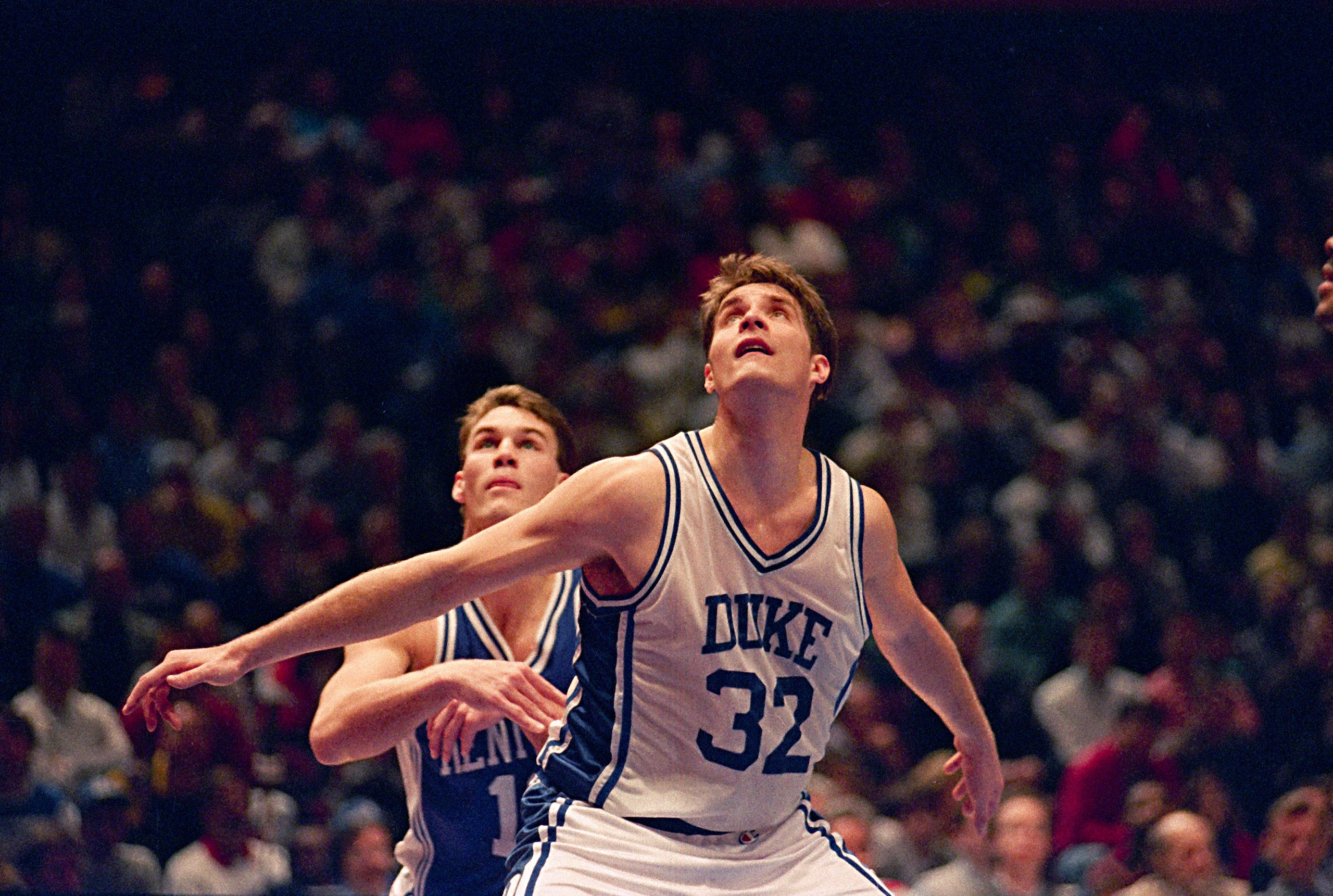
25. Sidney Wicks, UCLA, 1970
Career Per-Game Stats: 16.8 points, 8.7 rebounds, 3.2 assists, 1.0 steals, 0.7 blocks
Career Advanced Metrics: 16.2 PER, 50.2 TS%, 42.4 WS, 286.98 TPA
Career Accolades: Four-time All-Star, All-Rookie First Team, Rookie of the Year
This power forward took the NBA by storm in the early '70s, doing everything in his power to justify the No. 2 pick spent on him by the Portland Trail Blazers in the 1971 NBA draft. During the first four years of his career, he averaged 23.1 points, 10.6 rebounds and 4.4 assists, making the All-Star team each and every season. But he steadily declined from there, and his abbreviated prime was totally gone by the time he joined the San Diego Clippers for his final three years.
24. Kemba Walker, Connecticut, 2011
Career Per-Game Stats: 18.2 points, 3.9 rebounds, 5.4 assists, 1.4 steals, 0.4 blocks
Career Advanced Metrics: 18.5 PER, 52.0 TS%, 31.7 WS, 634.76 TPA
Career Accolades: All-Star
Kemba Walker's career may still be in full swing, but what he's already done is tremendous. Though the 2016-17 campaign featured his first All-Star appearance, it was far from his first successful season.
He's steadily grown for the Charlotte Hornets since his incredible postseason run with Connecticut, developing his three-point stroke and ball-handling chops in the pick-and-roll. Walker hasn't spent as much time in the NBA as those surrounding him in these rankings, but when you've never had a bad season, that's perfectly fine.
23. Richard Hamilton, Connecticut, 1999
Career Per-Game Stats: 17.1 points, 3.1 rebounds, 3.4 assists, 0.8 steals, 0.1 blocks
Career Advanced Metrics: 16.5 PER, 52.5 TS%, 62.8 WS, minus-344.31 TPA
Career Accolades: Three-time All-Star, NBA Champion
From one Connecticut star to another during a portion of the rankings that apparently only includes Most Outstanding Players from blue-blood schools.
The masked shooting guard was a tremendous scorer throughout his NBA career—never more so than throughout his tenure with the Detroit Pistons, during which he averaged 18.4 points while shooting 45.5 percent from the field, 35.4 percent from downtown and 84.9 percent at the charity stripe. Without Richard Hamilton's offensive contributions, Motor City couldn't have ridden its defense to the 2004 title quite so easily.
22. Danny Manning, Kansas, 1988
Career Per-Game Stats: 14.0 points, 5.2 rebounds, 2.3 assists, 1.1 steals, 0.9 blocks
Career Advanced Metrics: 16.9 PER, 55.2 TS%, 55.1 WS, 755.02 TPA
Career Accolades: Two-time All-Star, Sixth Man of the Year
Danny Manning's prime was incredible. Making the All-Star squad in back-to-back seasons for the Los Angeles Clippers before he was dealt to the Atlanta Hawks, the power forward established himself as a bona fide scoring stud who could torture players with his physicality and finesse in the post. But injuries would force him into a quick and unexpected decline; he never again came close to averaging 20 points after dropping 17.9 per game in 1994-95.
21. Christian Laettner, Duke, 1991
Career Per-Game Stats: 12.8 points, 6.7 rebounds, 2.6 assists, 1.1 steals, 0.8 blocks
Career Advanced Metrics: 16.9 PER, 55.7 TS%, 64.9 WS, 755.63 TPA
Career Accolades: All-Star, All-Rookie First Team
Was Christian Laettner's career a disappointment? Considering he went from collegiate superstardom to just one All-Star appearance after the Minnesota Timberwolves selected him at No. 3 in 1992, it probably was.
But even if he never lived up to the hype, he was still a productive and consistent player in a number of locations, always managing to contribute in multiple facets of the game. Two-way production can often mitigate a lack of stardom, even if the hordes who hated him at Duke will always gloat that he was a bust.
20-16: Rice, Davis, Battier, Gola, Lovellette
9 of 20
20. Glen Rice, Michigan, 1989
Career Per-Game Stats: 18.3 points, 4.4 rebounds, 2.1 assists, 1.0 steals, 0.3 blocks
Career Advanced Metrics: 16.2 PER, 55.4 TS%, 88.7 WS, 324.96 TPA
Career Accolades: Three-time All-Star, NBA Champion, All-NBA Second Team, All-NBA Third Team, All-Rookie Second Team
And so we take a substantial leap into the top 20.
Glen Rice was a thoroughly dominant wing during his three-year stint with the Charlotte Hornets, averaging 23.5 points and making the All-Star squad each season. He wasn't quite as special before or after, but he was still a strong offensive contributor who could rain in one three-pointer after another, even when faced with plenty of defensive attention. Had he been just a bit better on the defensive end, he'd have a chance to jump past the impressive names yet to appear.
19. Anthony Davis, Kentucky, 2012
Career Per-Game Stats: 22.2 points, 10.1 rebounds, 1.8 assists, 1.3 steals, 2.4 blocks
Career Advanced Metrics: 26.5 PER, 57.5 TS%, 47.5 WS, 898.71 TPA
Career Accolades: Four-time All-Star, All-Defense Second Team, All-NBA First Team, All-Rookie First Team
Ranking Anthony Davis is virtually impossible, since he's in the midst of what should be a Hall of Fame career. Despite working toward the conclusion of his fifth professional season, he's established himself as a top-10 player who can look like the NBA's best for sustained stretches. Only a handful of the men ranked ahead can claim the same.
On the flip side, volume has to matter. Davis has played just a third as many games as the next man in this countdown—fewer if postseason performances are included—and that's a chasm that can't be leapt over with sheer excellence over a much smaller sample.
Perhaps he'll move into the top 18 next season if he can lead the New Orleans Pelicans into the postseason, but that's currently too much to ask for a player with only five years of regular-season prowess under his belt.
18. Shane Battier, Duke, 2001
Career Per-Game Stats: 8.6 points, 4.2 rebounds, 1.8 assists, 1.0 steals, 0.9 blocks
Career Advanced Metrics: 12.6 PER, 55.9 TS%, 75.7 WS, 1632.69 TPA
Career Accolades: Two-time NBA Champion, Two-time All-Defense Second Team, All-Rookie First Team
Shane Battier never came close to reaching Anthony Davis' level during any one season. He never even made an All-Star squad and was a mere rotational presence during his runs to titles. Few would call him a star, even if he certainly functioned as such on the less glamorous end.
But Battier maximized his abilities each and every season, thriving as a stopper who could always help space the court. And his efforts led to one of my favorite stats of all time: Throughout his entire career, the former Duke standout never finished a season with a below-average score on either offense or defense in NBA Math's TPA breakdowns.
17. Tom Gola, La Salle, 1954
Career Per-Game Stats: 11.3 points, 8.0 rebounds, 4.2 assists
Career Advanced Metrics: 14.1 PER, 49.1 TS%, 53.2 WS
Career Accolades: Hall of Fame, Five-time All-Star, NBA Champion, All-NBA Second Team
Though Tom Gola never functioned as one of the NBA's best scorers—he certainly served as such during his exemplary collegiate career for the La Salle Explorers—he was one of the league's original triple-double threats. When this swingman wasn't putting up points in surprisingly efficient fashion, he was always willing to crash the boards and set up his teammates.
As a result, he enjoyed plenty of success. Gola helped lead the Philadelphia Warriors to a title during his rookie season, teaming up with Neil Johnston and Paul Arizin to thrash the Fort Wayne Pistons on the biggest stage. And though he could never earn another ring, he did enjoy deep postseason runs during four of his 10 professional campaigns.
16. Clyde Lovellette, Kansas, 1952
Career Per-Game Stats: 17.0 points, 9.5 rebounds, 1.6 assists
Career Advanced Metrics: 21.6 PER, 49.1 TS%, 70.6 WS
Career Accolades: Hall of Fame, Four-time All-Star, Three-time NBA Champion, All-NBA Second Team
His championship tally is a bit misleading, since the final two came while he filled a minor role for the Boston Celtics at the end of his Hall of Fame career. But Clyde Lovellette was far ahead of his time. During an era in which most bigs operated around the basket, he practiced his one-handed attempts from longer ranges until he could alter the typical playing style.
As HoopHall.com wrote in his profile, "As a pro, Lovellette became one of the first big men to move outside and utilize the one-handed set shot, extending his shooting range and offensive repertoire. This tactic allowed him to play either the small forward, power forward or center positions, forcing the opposition's big man to play out of position."
15-11: Noah, Thompson, Walton, Anthony, Lucas
10 of 20
15. Joakim Noah, Florida 2006
Career Per-Game Stats: 9.0 points, 9.4 rebounds, 2.9 assists, 0.8 steals, 1.4 blocks
Career Advanced Metrics: 17.6 PER, 53.9 TS%, 59.6 WS, 1367.92 TPA
Career Accolades: Two-time All-Star, Two-time All-Defense First Team, All-Defense Second Team, All-NBA First Team, Defensive Player of the Year
Don't be fooled into remembering Joakim Noah as nothing more than his current self. Hampered by back and knee injuries, as well as age, he's declined into a replacement-level player for the New York Knicks who can barely stay on the court. But that current form belies what he was able to do in his prime.
Lest we forget, Noah was once a Defensive Player of the Year who functioned as one of the NBA's best frontcourt distributors. He even finished the 2013-14 campaign trailing only Kevin Durant, LeBron James and Blake Griffin in the MVP voting. For a long time, the man who helped lead the Florida Gators to back-to-back titles was in the upper echelon at his position, retaining value even as the league started turning to a different breed of centers.
14. David Thompson, NC State, 1974
Career Per-Game Stats: 22.1 points, 3.8 rebounds, 3.2 assists, 0.9 steals, 0.8 blocks
Career Advanced Metrics: 19.7 PER, 56.6 TS%, 50.8 WS, 400.76 TPA
Career Accolades: Hall of Fame, Five-time All-Star, Two-time All-NBA First Team, All-Rookie First Team, Rookie of the Year
The high-flying David Thompson served as an idol to Michael Jordan, and he dominated the NBA as a scorer early in his career. He finished a tenth of a point behind George Gervin for the 1977-78 points-per-game crown and just kept throwing up massive scoring totals for the Denver Nuggets.
But playing time holds him back. Spending the first year of his professional career in the ABA limits him, but not nearly as much as his recurring injury issues and the struggles with substance abuse late in his NBA tenure, which forced him into an early retirement before he could play his age-30 season.
13. Bill Walton, UCLA, 1972 and 1973
Career Per-Game Stats: 13.3 points, 10.5 rebounds, 3.4 assists, 0.8 steals, 2.2 blocks
Career Advanced Metrics: 20.0 PER, 55.1 TS%, 39.3 WS, 1270.8 TPA
Career Accolades: Hall of Fame, Two-time All-Star, Two-time NBA Champion, Sixth Man of the Year, Two-time All-Defense First Team, All-NBA First Team, All-NBA Second Team, Finals MVP, NBA MVP
Bill Walton was a thoroughly dominant force at UCLA, and he continued his reign of terror early in his career with the Portland Trail Blazers. He's the first player to appear in this countdown with an NBA MVP to his credit, and his run from 1976-78 goes down as one of the greatest two-year stretches in league history.
However, foot injuries limited him severely after the conclusion of 1977-78, forcing him to miss three of the next four campaigns and play only 14 games for the San Diego Clippers between missed seasons. He'd eventually latch on with the Boston Celtics and excel in a role off the bench, but he clearly wasn't the same player.
If we're ranking peaks, Walton would be higher. But we're not.
12. Carmelo Anthony, Syracuse, 2003
Career Per-Game Stats: 24.8 points, 6.6 rebounds, 3.1 assists, 1.1 steals, 0.5 blocks
Career Advanced Metrics: 20.9 PER, 54.5 TS%, 96.9 WS, 886.68 TPA
Career Accolades: 10-Time All-Star, Two-time All-NBA Second Team, Four-time All-NBA Third Team, All-Rookie First Team
Carmelo Anthony will go down as one of the greatest scorers in NBA history, even if this season with the New York Knicks has been rough and he's never spent too much time just pretending to play defense. He's the living embodiment of a one-way player, but he's made it work throughout his career—both with the Knicks and the Denver Nuggets, prior to forcing his way out of the Mile High City.
How many players have averaged at least 24 points, six rebounds and three assists for their entire career? Anthony joins just 10 others—eight Hall of Famers, plus LeBron James and Kevin Durant. He's also at No. 25 on the career scoring hierarchy, and he has plenty of seasons left to keep adding to his tally.
11. Jerry Lucas, Ohio State, 1960 and 1961
Career Per-Game Stats: 17.0 points, 15.6 rebounds, 3.3 assists, 0.4 steals, 0.3 blocks
Career Advanced Metrics: 18.9 PER, 54.4 TS%, 98.4 WS, minus-7.01 TPA
Career Accolades: Hall of Fame, Seven-time All-Star, NBA Champion, Three-time All-NBA First Team, Two-time All-NBA Second Team, All-Rookie First Team
Sure, Jerry Lucas could score in volume while maintaining impressive levels of efficiency. Especially for someone who spent the bulk of his career at power forward and occasionally dabbled at center, he was a deft distributor. As a defender, he didn't leave much room for gripes.
But Lucas' legacy still centers around his work on the glass. Only Wilt Chamberlain, Bill Russell and Bob Pettit averaged more rebounds per game throughout their careers, and the Ohio State standout's run of four consecutive seasons averaging at least 19 boards will never be forgotten.
10. James Worthy, North Carolina, 1982
11 of 20
Career Per-Game Stats: 17.6 points, 5.1 rebounds, 3.0 assists, 1.1 steals, 0.7 blocks
Career Advanced Metrics: 17.7 PER, 55.9 TS%, 81.2 WS, 1101.11 TPA
Career Accolades: Hall of Fame, Seven-time All-Star, Three-time NBA Champion, Two-time All-NBA Third Team, All-Rookie First Team, Finals MVP
James Worthy made a career out of thriving as the second or third option on his team. He's one of the few legends who never once paced his squad in win shares, but he didn't need to serve as the alpha dog in order to find remarkable levels of success.
Even at North Carolina, where Worthy won Most Outstanding Player for his efforts in the 1982 NCAA tournament, the forward wasn't his team's only star. Michael Jordan, then a 19-year-old freshman, was the one who made the game-winner against Georgetown in the title game, which would serve as a springboard for the rest of his legendary career. Sam Perkins was no scrub, either.
But Worthy would go on to have some big moments of his own in the NBA—most notably when he recorded a championship-clinching triple-double in 1988 that would earn him Finals MVP. He was able to contribute in so many different areas that explosions of that ilk were possible, even if he typically backed off and ceded touches to bigger stars such as Magic Johnson and Kareem Abdul-Jabbar.
Though his last few seasons with the Los Angeles Lakers depressed some of his career numbers, he now stands as one of only 11 players with lifelong averages of at least 17 points, five rebounds, three assists and a steal while shooting at least 50 percent from the field.
9. Patrick Ewing, Georgetown, 1984
12 of 20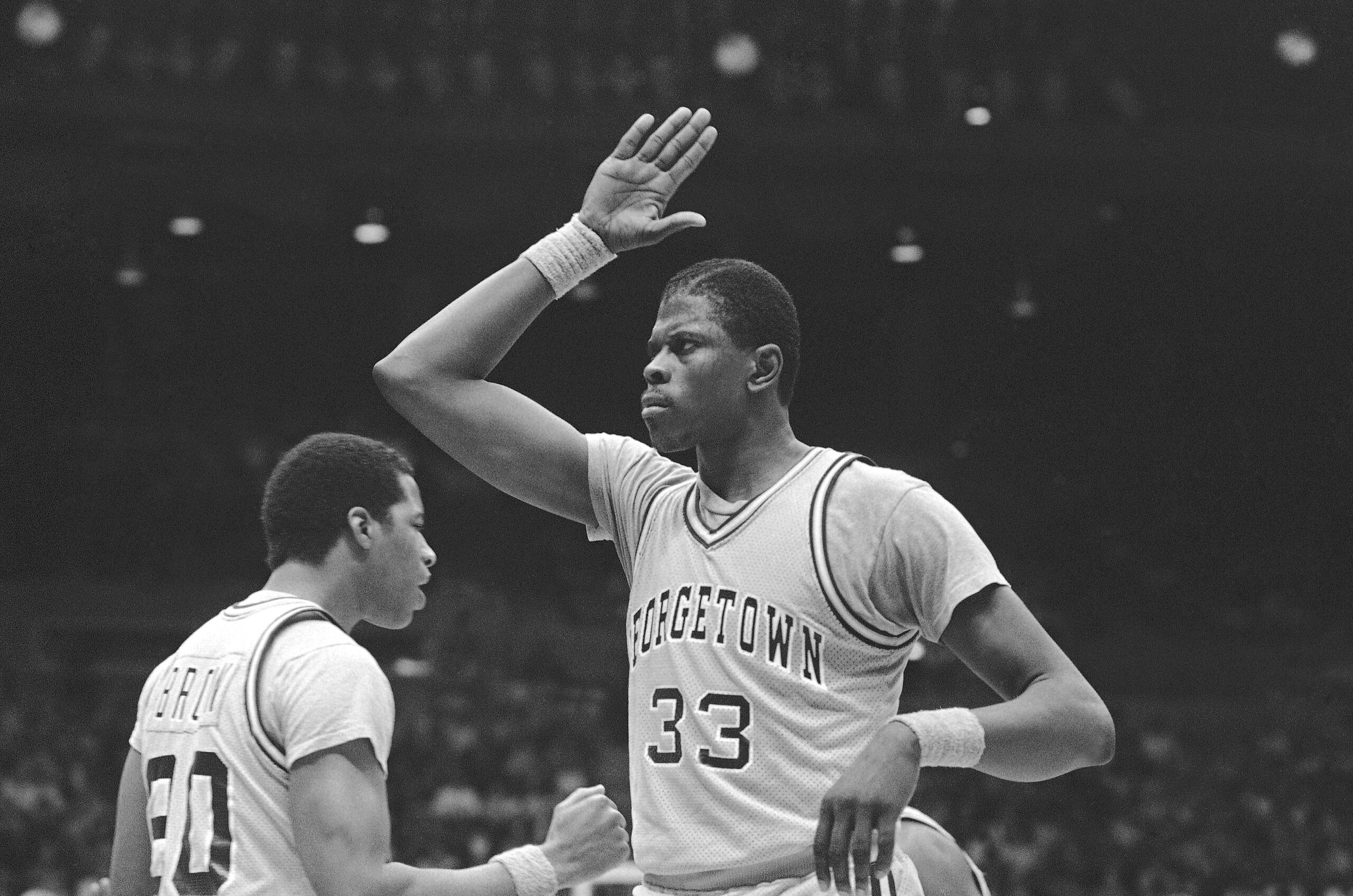
Career Per-Game Stats: 21.0 points, 9.8 rebounds, 1.9 assists, 1.0 steals, 2.4 blocks
Career Advanced Metrics: 21.0 PER, 55.3 TS%, 126.4 WS, 1626.73 TPA
Career Accolades: Hall of Fame, 11-time All-Star, All-NBA First Team, Six-time All-NBA Second Team, All-Rookie First Team, Rookie of the Year
Patrick Ewing never served as the league's best center. But he was always close, and that's basically a solid descriptor for almost every facet of his game.
He was a strong defender, even if he never won Defensive Player of the Year. He was a capable scorer who didn't typically come close to leading the league in points per game. He was a strong presence on the boards, although he couldn't finish his career with a double-digit average. He played great basketball in the playoffs, but he could never get over the hump with the New York Knicks.
Unsurprisingly, Ewing's career marks tell a similar story, which is why he was on the verge of finishing as a top-30 player in 2015's Legends 100 series but ultimately slotted in at No. 33.
8. Isiah Thomas, Indiana, 1981
13 of 20
Career Per-Game Stats: 19.2 points, 3.6 rebounds, 9.3 assists, 1.9 steals, 0.3 blocks
Career Advanced Metrics: 18.1 PER, 51.6 TS%, 80.7 WS, 1628.3 TPA
Career Accolades: Hall of Fame, 12-time All-Star, Two-time NBA Champion, Three-time All-NBA First Team, Two-time All-NBA Second Team, All-Rookie First Team, Finals MVP
Even if modern-day metrics shine a more negative light on his defensive numbers and reveal that efficiency may have hampered his offensive game, Isiah Thomas was a flat-out stud. His toughness was unsurpassed, allowing him to complete heroic feats on badly injured ankles and lead his team to the promised land during a relentlessly physical era.
And that was true in college as well.
Hall of Fame head coach Bobby Knight was notoriously tough on Thomas early in his Indiana career, even kicking him out of practices to prove no player was bigger than the team. But his discipline paid off. The point guard eventually became a team captain during his sophomore season and propelled the Hoosiers to the 1981 NCAA title, winning Most Outstanding Player in the process by averaging 18.2 points and 8.6 assists while shooting 58.9 percent from the field.
Thomas wasn't ever that efficient at the next level, but he retained his leadership abilities and tough-nosed nature. And just as Knight's discipline led to an NCAA title, those traits paid major dividends, coming in the form of two rings with the Bad Boy Detroit Pistons.
7. Elgin Baylor, Seattle, 1958
14 of 20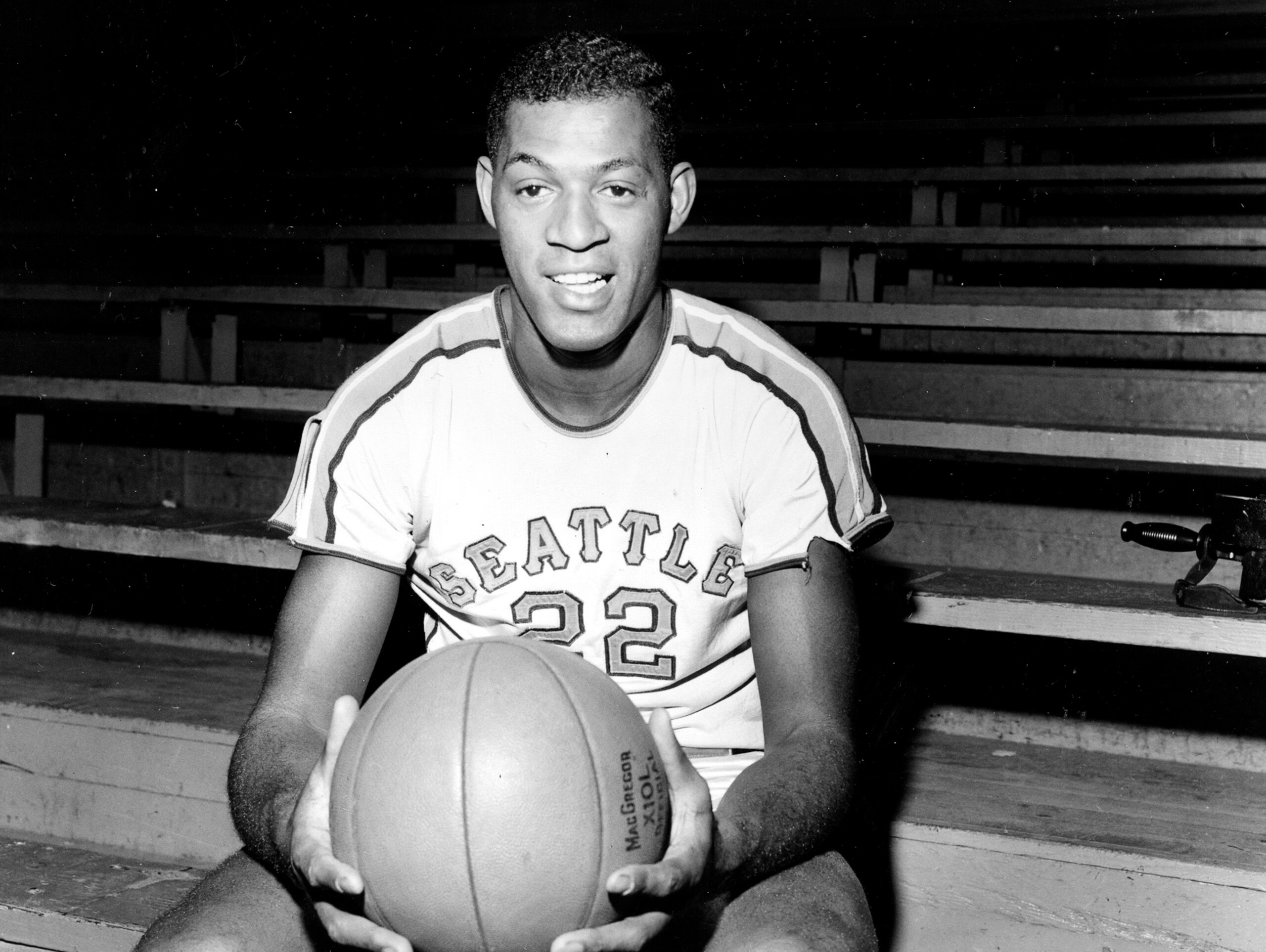
Career Per-Game Stats: 27.4 points, 13.5 rebounds, 4.3 assists
Career Advanced Metrics: 22.7 PER, 49.4 TS%, 104.2 WS
Career Accolades: Hall of Fame, 11-time All-Star, 10-time All-NBA First Team, Rookie of the Year
Imagine if Elgin Baylor's career had been a bit longer.
Though he played 14 seasons for the Lakers, who moved from Minneapolis to Los Angeles while he was under contract with the organization, the final two shouldn't really count. Injuries started to take their toll, and he suited up in a combined 11 contests during those last campaigns.
Baylor retired with just 846 games to his credit. For the sake of comparison, LeBron James is already at 1,050.
Now, imagine if Baylor's career had included a title.
Though he went on plenty of deep postseason runs, he never won the final game of the year. It wasn't until he retired that the Lakers were able to go on a historic winning streak and collect their jewelry, though that shouldn't be viewed as a knock on what this small forward brought to the proverbial table.
After all, Baylor really was a winner. He led the NBA in postseason scoring on four separate occasions and consistently achieved success on the biggest stage, even if he could never quite get over the hump. Astoundingly, that was even true at Seattle, where he was named the 1958 Most Outstanding Player even after losing to the Kentucky Wildcats in the championship game.
6. Hakeem Olajuwon, Houston, 1983
15 of 20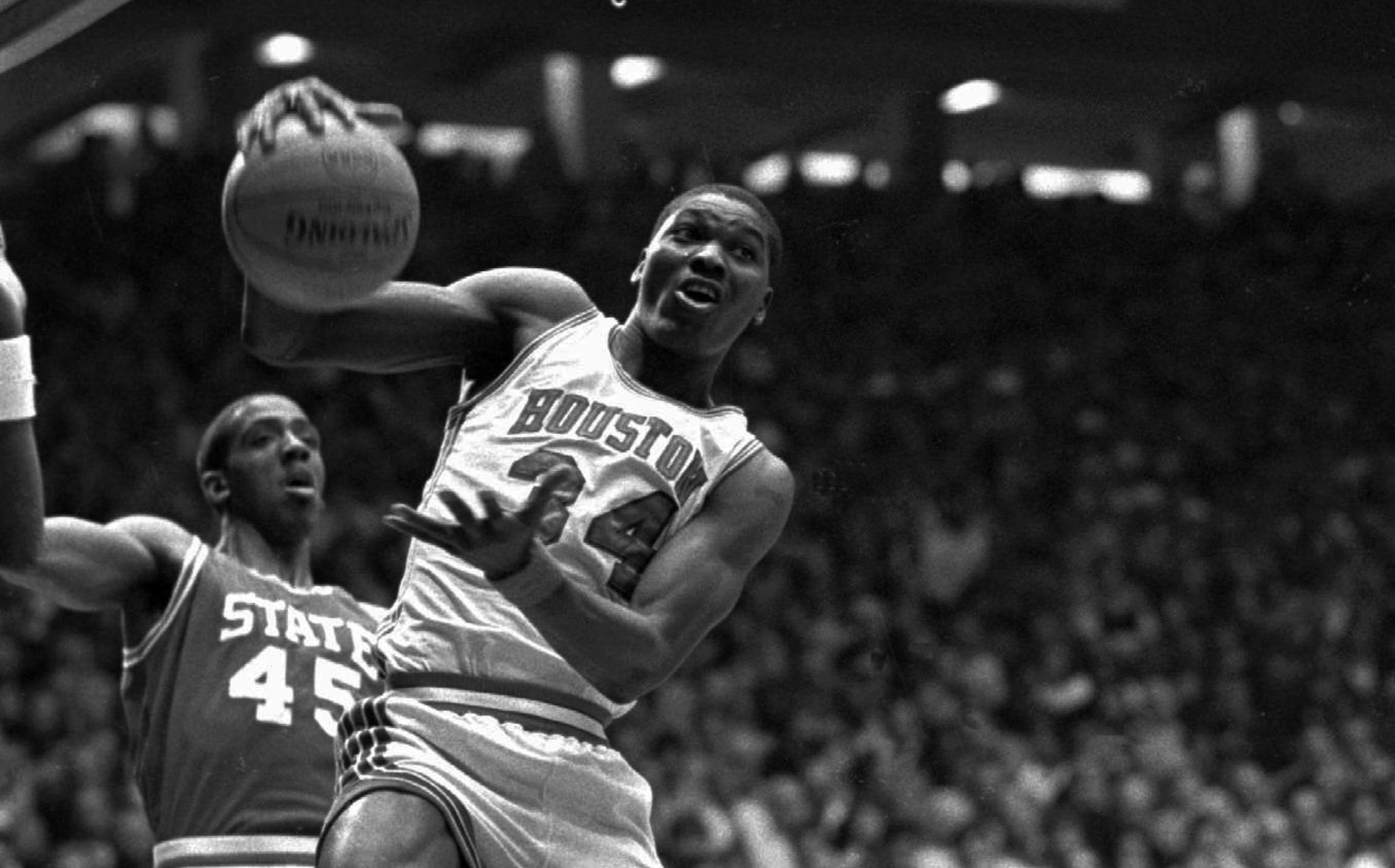
Career Per-Game Stats: 21.8 points, 11.1 rebounds, 2.5 assists, 1.7 steals, 3.1 blocks
Career Advanced Metrics: 23.6 PER, 55.3 TS%, 162.8 WS, 4379.31 TPA
Career Accolades: Hall of Fame, 12-time All-Star, Two-time NBA Champion, Five-time All-Defense First Team, Four-time All-Defense Second Team, Six-time All-NBA First Team, Three-time All-NBA Second Team, Three-time All-NBA Third Team, All-Rookie First Team, Two-time Defensive Player of the Year, Two-time Finals MVP, NBA MVP
Now we jump up a tier.
Hakeem Olajuwon (Akeem Olajuwon when he won Most Outstanding Player at Houston in 1983) may sit behind five other contributors in this countdown, but he should unanimously be considered one of the top 15 players in NBA history. His career was long and filled with every kind of success imaginable.
Just allow that list of career accolades to sink in.
Olajuwon was consistently recognized as one of the best players at his position during a time in which centers thrived. He worked against Kareem Abdul-Jabbar early in his career and embarrassed David Robinson in the playoffs nearly a decade later before operating against physical behemoths such as a young Shaquille O'Neal.
No one could stop the famed "Dream Shake," which was more of a nightmare for the opposition. That move and his finishing touch allowed him to dominate on the offensive end, even as he emerged as one of the best defenders to ever grace an NBA court.
5. Jerry West, West Virginia, 1959
16 of 20
Career Per-Game Stats: 27.0 points. 5.8 rebounds, 6.7 assists, 2.6 steals, 0.7 blocks
Career Advanced Metrics: 22.9 PER, 55.0 TS%, 162.6 WS, 110.25 TPA
Career Accolades: Hall of Fame, 14-time All-Star, NBA Champion, Four-time All-Defense First Team, All-Defense Second Team, 10-time All-NBA First Team, Two-time All-NBA Second Team, Finals MVP
Don't be fooled by Jerry West's career score in NBA Math's TPA.
That stat only dates back to the 1973-74 campaign, which just so happened to be the last professional season for this Hall of Fame guard. If anything, that should make his score even more impressive, since so few are able to remain thoroughly above average during an age-35 campaign after playing in the NBA for well over a decade. Oh, and he accumulated that much value in only 31 games.
Just for fun, let's prorate that out.
If West had always earned 110.25 TPA every 31 contests, he'd have finished his illustrious career with a score of 3314.61, leaving him sandwiched between Kobe Bryant and John Stockton for the No. 18 score of the modern era. And again, that's operating under the assumption per-game value produced in the twilight of his career was the same as that which he would have earned in his prime.
Obviously, that's a faulty assumption. Just consider the fact that he recorded 0.159 win shares per 48 minutes in 1973-74 (better than only his rookie numbers), as opposed to a league-leading 0.261 during the 1964-65 season.
4. Magic Johnson, Michigan State, 1979
17 of 20
Career Per-Game Stats: 19.5 points, 7.2 rebounds, 11.2 assists, 1.9 steals, 0.4 blocks
Career Advanced Metrics: 24.1 PER, 61.0 TS%, 155.8 WS, 5039.22 TPA
Career Accolades: Hall of Fame, 12-time All-Star, Five-time NBA Champion, Nine-time All-NBA First Team, All-NBA Second Team, All-Rookie First Team, Three-time Finals MVP, Three-time NBA MVP
The legend of Magic Johnson began well before he played center during the 1980 NBA Finals to clinch a title over the Philadelphia 76ers as the culmination of his rookie campaign. He was an otherworldly player for the Michigan State Spartans before making the sport's highest level his own personal plaything.
During his freshman season, Johnson put up spectacular numbers but could only lead his troops to the Elite Eight, where they fell to a Kentucky Wildcats squad that would go on to win the tournament. He did a bit better as a sophomore, advancing all the way to the title game and beating Larry Bird's Indiana State Sycamores to earn Most Outstanding Player and kick off a rivalry that would reinvigorate the Association.
"That title game became one of the most documented finals in history—it remains the highest-rated college basketball game ever, a contest that captivated the nation," Andy Katz wrote for ESPN.com well after the fact.
"It helped that neither program had a history of reaching the Final Four. UCLA had dominated most of the previous 15 years, but the '79 final gave us a taste of two programs that were led by stars. Bird and Magic helped set the tone for a 20-year period where players actually grabbed equal billing with the head coaches (does anyone remember who coached Indiana State?)."
Bill Hodges coached Indiana State, but that's not important.
Far more important is the incredible career Johnson put together after taking down Bird. Whether you're into numbers or the dazzling highlights he accumulated with the Showtime Lakers, you can't—or at least, shouldn't—deny that he established himself as the greatest point guard in NBA history.
3. Wilt Chamberlain, Kansas, 1957
18 of 20
Career Per-Game Stats: 30.1 points, 22.9 rebounds, 4.4 assists
Career Advanced Metrics: 26.1 PER, 54.7 TS%, 247.3 WS
Career Accolades: Hall of Fame, 13-time All-Star, Two-time NBA Champion, Two-time All-Defense First Team, Seven-time All-NBA First Team, Three-time All-NBA Second Team, Finals MVP, Four-time NBA MVP, Rookie of the Year
Wilt Chamberlain won Most Outstanding Player in 1957 for the Kansas Jayhawks, even though his 23 points and 14 rebounds came in a loss to North Carolina. He'd dominated throughout the tournament, averaging 30.3 points and 15.5 boards while shooting 51.3 percent from the field, but it wasn't quite enough to get by the Tar Heels.
He'd get revenge in the NBA.
No one has ever put up numbers quite like Chamberlain. As if his 7'1" frame wasn't enough, he may be the greatest athlete in league history—superior even when stacked up against LeBron James because of his size, speed, strength and vertical ability. And if that's still not enough, he had terrific touch with his trademark finger-rolls around the basket and could step out to hit some jumpers.
Chamberlain paced the league in scoring seven times. On 11 occasions, he led the NBA in rebounds per game, including during each of his last three go-rounds. He had the top PER during eight different campaigns. He scored 100 points in a single outing and finished a season averaging 50.4 points and 25.7 rebounds while playing 48.5 minutes per game.
The statistical feats just go on and on and on.
And on.
2. Bill Russell, San Francisco, 1955
19 of 20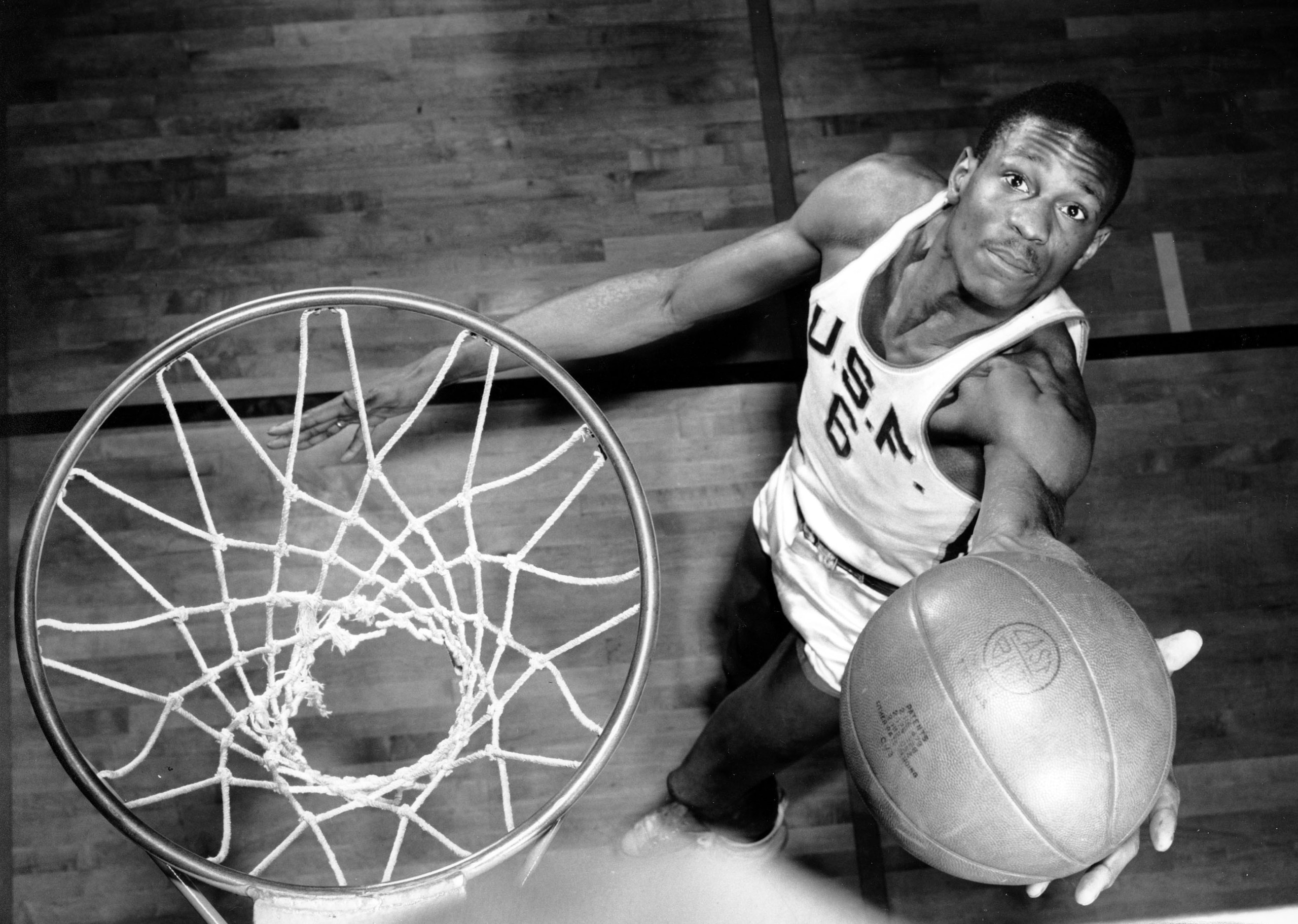
Career Per-Game Stats: 15.1 points, 22.5 rebounds, 4.3 assists
Career Advanced Metrics: 18.9 PER, 47.1 TS%, 163.5 WS
Career Accolades: Hall of Fame, 12-time All-Star, 11-time NBA Champion, All-Defense First Team, Three-time All-NBA First Team, Eight-time All-NBA Second Team, Five-time NBA MVP
Wilt Chamberlain was the statistical deity, but Bill Russell still functions as the sport's ultimate champion.
He has too many rings for his fingers, and his time at San Francisco allowed him to begin his ever-growing collection with back-to-back titles. Hal Lear won Most Outstanding Player for Temple in 1956 after leading the Owls to victory in 1956's third-place game, but Russell's superiority in 1955 allows him to make this list.
Ultimately, the choice between Russell and Chamberlain is a matter of personal preference.
Russell's case relies upon his victories and the many historically excellent defensive teams he anchored. That, in conjunction with his noteworthy offensive and rebounding contributions, has always been enough to sway me toward the Boston Celtics big man—if only barely.
He even began to change how blocked shots were viewed, sparking fast breaks by tipping rejections to his teammates so they could avoid relying on those pesky outlet passes that would slow down the pace. Had blocks and steals been recorded throughout his career, we might have a better idea of how statistically valuable to the Celtics' defensive units he was, but it's no mere coincidence his squads were always as stifling as could be.
1. Kareem Abdul-Jabbar, UCLA, 1967-69
20 of 20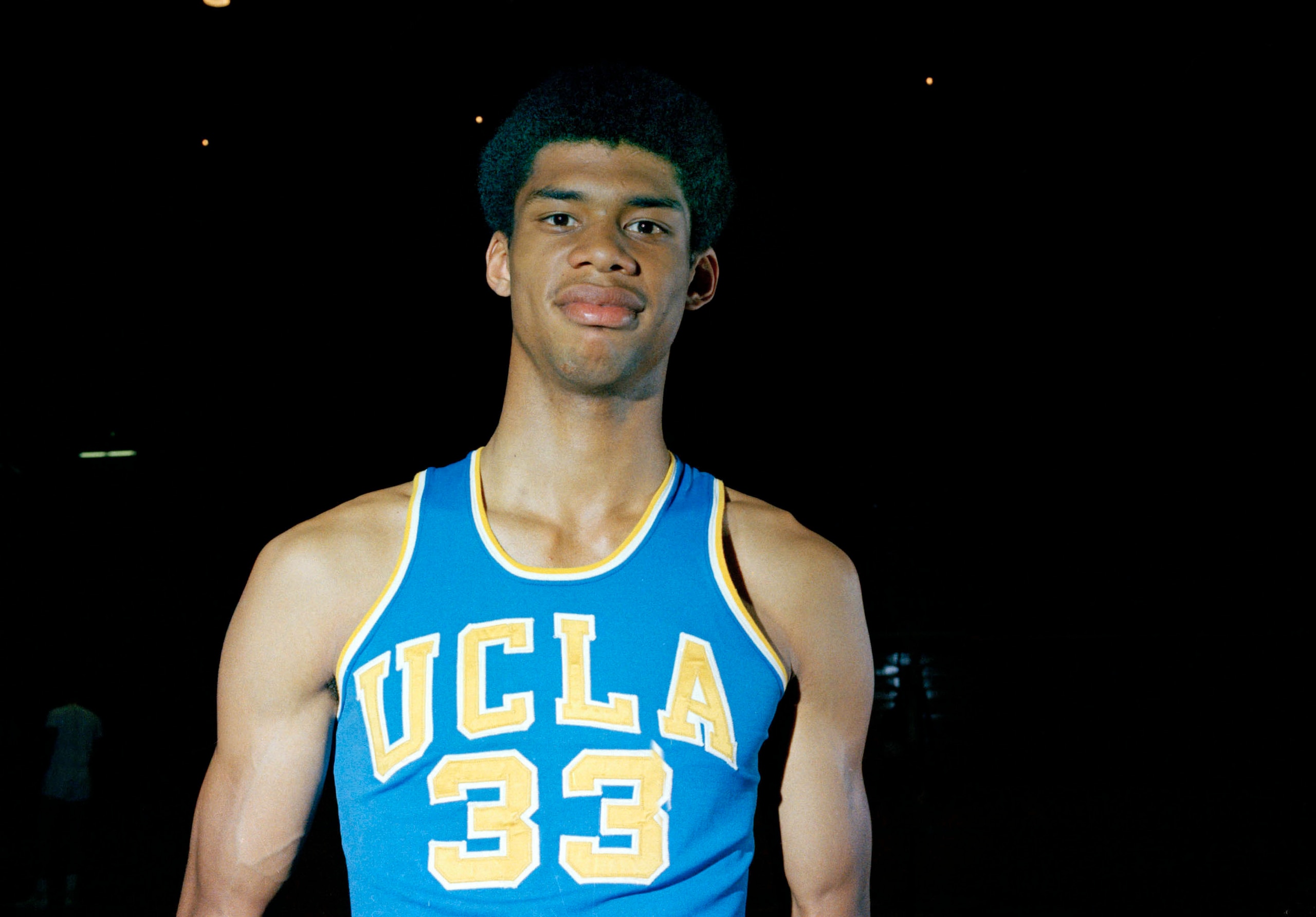
Career Per-Game Stats: 24.6 points, 11.2 rebounds, 3.6 assists, 0.9 steals, 2.6 blocks
Career Advanced Metrics: 24.6 PER, 59.2 TS%, 273.4 WS, 5532.3 TPA
Career Accolades: Hall of Fame, 19-time All-Star, Six-time NBA Champion, Five-time All-Defense First Team, Six-time All-Defense Second Team, 10-time All-NBA First Team, Five-time All-NBA Second Team, All-Rookie First Team, Two-time Finals MVP, Six-time NBA MVP, Rookie of the Year
NBA Math's TPA here is instructive, because Kareem Abdul-Jabbar (Lew Alcindor when he won Most Outstanding Player in three consecutive tournaments for UCLA) trails only Karl Malone, Charles Barkley, Michael Jordan and LeBron James throughout his career. If playoff numbers enter the equation, he jumps past the Utah Jazz power forward.
But remember: TPA only dates back to 1973-74. That was the fifth season of Abdul-Jabbar's career, and he was already a two-time MVP who'd twice led the NBA in scoring when it began. In fact, he averaged 31.4 points, 15.8 rebounds and 4.2 assists during those first four campaigns while shooting 55.6 percent from the field.
Even without including that opening salvo, Abdul-Jabbar stands out as the paragon of all-around excellence and longevity.
He was a dominant defensive player and unstoppable offensive force, thanks primarily to the infamous sky hook. He thrived as soon as he left UCLA, and he didn't stop demoralizing opponents for the entirety of two decades. He even finished with six NBA MVP awards and just as many titles.
Since neither James nor Jordan won Most Outstanding Player, Abdul-Jabbar was always going to finish off this countdown.
Adam Fromal covers the NBA for Bleacher Report. Follow him on Twitter: @fromal09.
Unless otherwise indicated, all quotes obtained firsthand, and all stats from Basketball Reference, NBA.com or NBA Math and accurate heading into games Wednesday, March 22.

.jpg?w=2560 "Raiders Could Start Mendoza")

.jpg?w=2560 "Rodgers Iced Out on Plane 💎")


.jpg?w=2560 "🚨 Week 8 AP Top 25 Poll")