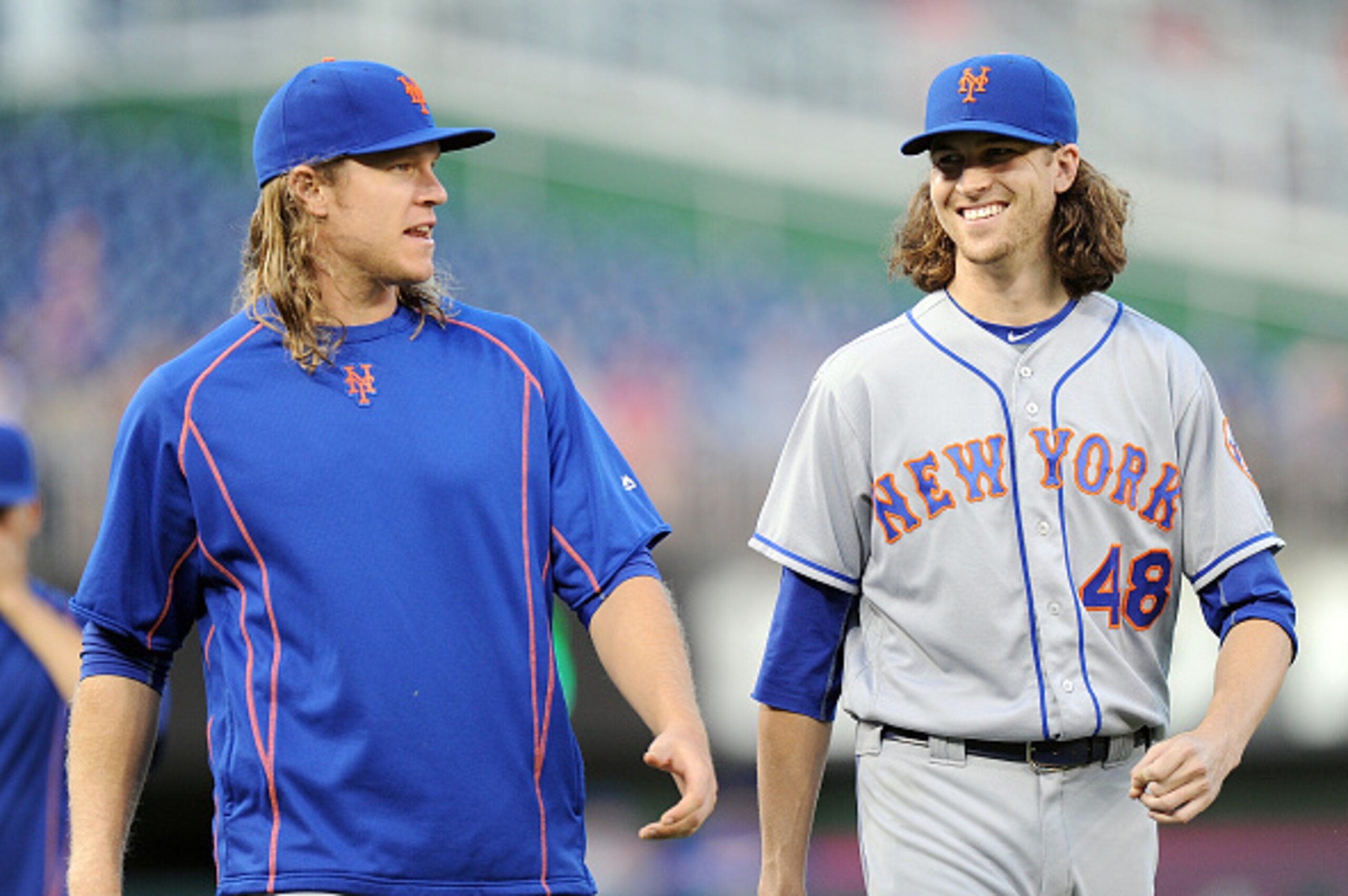


Which teams will have the most dominant starting rotations in 2017? Probably the Boston Red Sox, Chicago Cubs, Cleveland Indians, Washington Nationals and New York Mets.
Welp, that was easy. Here's something harder: Which teams will have the most dominant rotations in 2020?
That's a question I took a crack at answering last year. Thankfully, that list isn't totally obsolete. The not-as-good news is that enough has happened since then to render it in need of updating.
This will once again require confronting the flow of time and space and pretending to know how it will shape the next four years. A tall order, but three things to help make sense of things are:
- Controllable Major League Talent: What pitcher do teams have in their starting rotations now who should still be around in 2020?
- Up-and-Coming Prospects: Which talented pitching prospects will soon be surfacing in the majors?
- Payroll Flexibility: The upcoming free-agent markets are projected to be thick with starting pitching talent. Which teams will be able to afford it?
In short, we're looking for 2020 rotations that will feature established veterans, homegrown studs and/or a hired gun or two. Whatever it takes to create a rotation with both depth and upside, really.
Now, then. Let's get to it.
10. Houston Astros
1 of 10
The Houston Astros don't have the most impressive rotation right now, but give it time.
They have at least two quality pitchers controlled for the long haul. One is Lance McCullers, a former top prospect who's been overpowering when healthy. The other is Joe Musgrove, another former top prospect with a minor league track record that includes an impressive 7.8 strikeout-to-walk ratio.
Then there's Chris Devenski, who's an intriguing wild card after dominating as a long reliever in 2016. The Astros stand to benefit in the long run from getting him back in starting mode now.
The real long-term prize, however, is down on the farm.
Francis Martes is a live-armed 21-year-old with a 2.97 ERA and 8.6 K/9 in a minor league career that's already advanced as far as Double-A. He rates as Baseball America's No. 15 prospect, wherein there's only one other pitcher ahead of him. It's no wonder the Astros don't want to trade him.
With no guaranteed money on their books past 2020, just as exciting is the prospect of the Astros investing in an ace.
"We're probably going to have roughly a league-average payroll this year for the first time in a while, and I think that's going to continue to increase," general manager Jeff Luhnow said in February, via Jake Kaplan of the Houston Chronicle.
After 2017, that could mean a run at Yu Darvish or Jake Arrieta. After 2018, it could mean re-signing Dallas Keuchel. After 2019, guys like Chris Sale, Madison Bumgarner, Gerrit Cole and Rick Porcello will be available. Any one of them would complete the ensemble nicely.
9. Atlanta Braves
2 of 10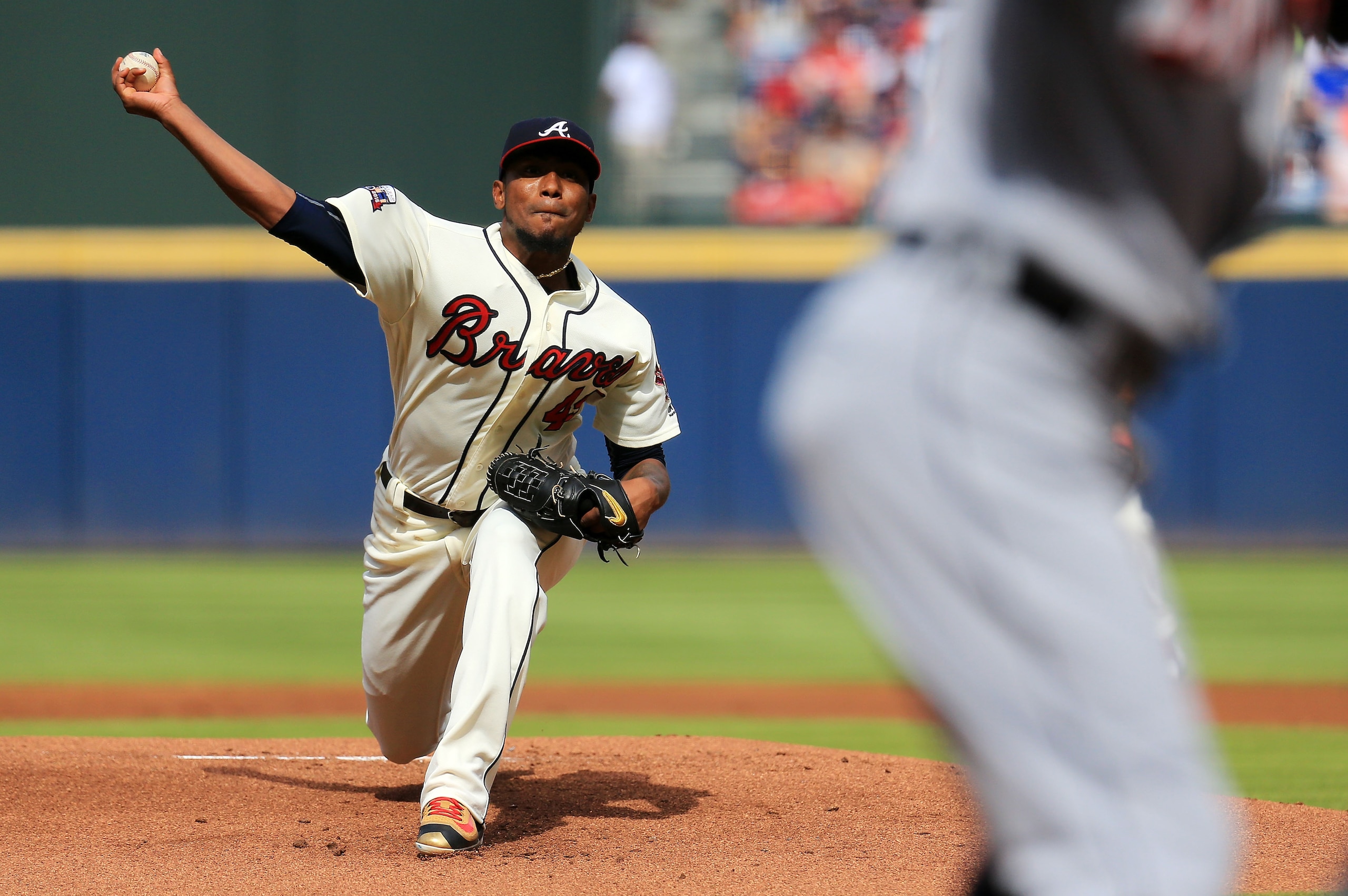
When the Atlanta Braves made the cut for last year's list, the rationale was that they simply had too much young pitching to not have a strong rotation established by 2020.
A year later, not much has changed.
Assuming the Braves exercise his $12 million option, staff ace Julio Teheran will still be around in 2020. He'll still be on the good side of 30, to boot. And just like he is now, he might still be followed by fellow talented 20-somethings: Mike Foltynewicz, Matt Wisler and Aaron Blair.
Then again, nobody in Atlanta's present rotation should get too comfortable. Not while the Braves are sitting on a farm system that Baseball Prospectus says is "flooded with potential above-average arms."
Let's bullet-point them:
- LHP Sean Newcomb: Control issues be damned, lefties who throw in the mid-to-upper 90s are not to be taken lightly.
- RHP Mike Soroka: He has good command of a plus fastball-curveball combination.
- LHP Kolby Allard: He comes with recent back trouble, but also a good fastball and curveball and an idea how to use them.
- RHP Ian Anderson: Imagine if the Jethro Tull guy could hit 95.
That's a solid list. And if I was Touki Toussaint or Max Fried, I'd feel rightfully peeved at not being included.
It's not just the Braves' huge collection of young pitching talent that must be taken seriously. They're never going to be big spenders, but their new stadium will allow them to be bigger spenders.
Thus, their future rotation begins to materialize: a bunch of homegrown youngsters with possibly a hired gun added to the mix.
8. Cleveland Indians
3 of 10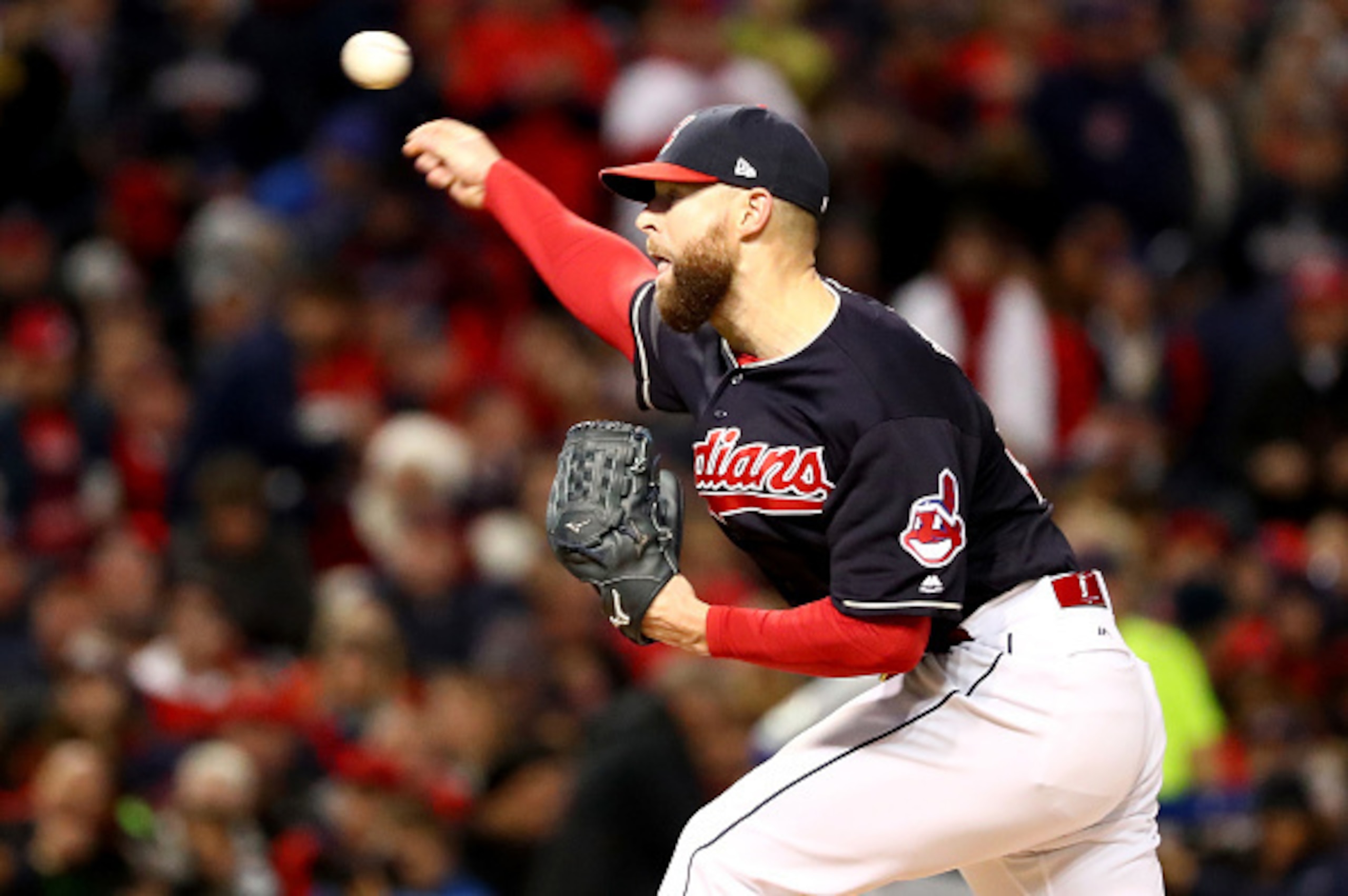
With Corey Kluber, Carlos Carrasco, Danny Salazar and Trevor Bauer leading the way, the Cleveland Indians have one of the best rotations in baseball right now.
Well, guess what: Those four are slated to still be around in 2020.
Kluber and Carrasco are signed to cheap extensions that have options for 2020. For Salazar and Bauer, it'll be their final year of arbitration-eligibility before free agency.
Of course, there's room for concern. Salazar and Bauer have yet to produce sustained results befitting of their impressive talent. And four seasons from now, Kluber will be 35 and Carrasco will be 33.
However, there is hope in the reality that Kluber and Carrasco are relative late-bloomers who don't have as many innings on their arms as a lot of pitchers in their age range.
In the event that Cleveland's rotation does find itself in need of some fresh blood in coming seasons, Triston McKenzie could be all too happy to oblige. After dominating with a 1.62 ERA and 11.2 K/9 as an 18-year-old in the low minors last year, he now rates as the No. 55 prospect at Baseball Prospectus.
Don't forget about Brady Aiken, either. Following Tommy John surgery and a rough return to action in 2016, his being drafted No. 1 by the Houston Astros in 2014 feels like ancient history. But he's previously been compared to Clayton Kershaw, and is still only 20.
Granted, the future of the Indians rotation looked brighter when Justus Sheffield was around. But with a talented foursome locked up and some intriguing arms waiting in the wings, the brightness hasn't yet faded.


7. Tampa Bay Rays
4 of 10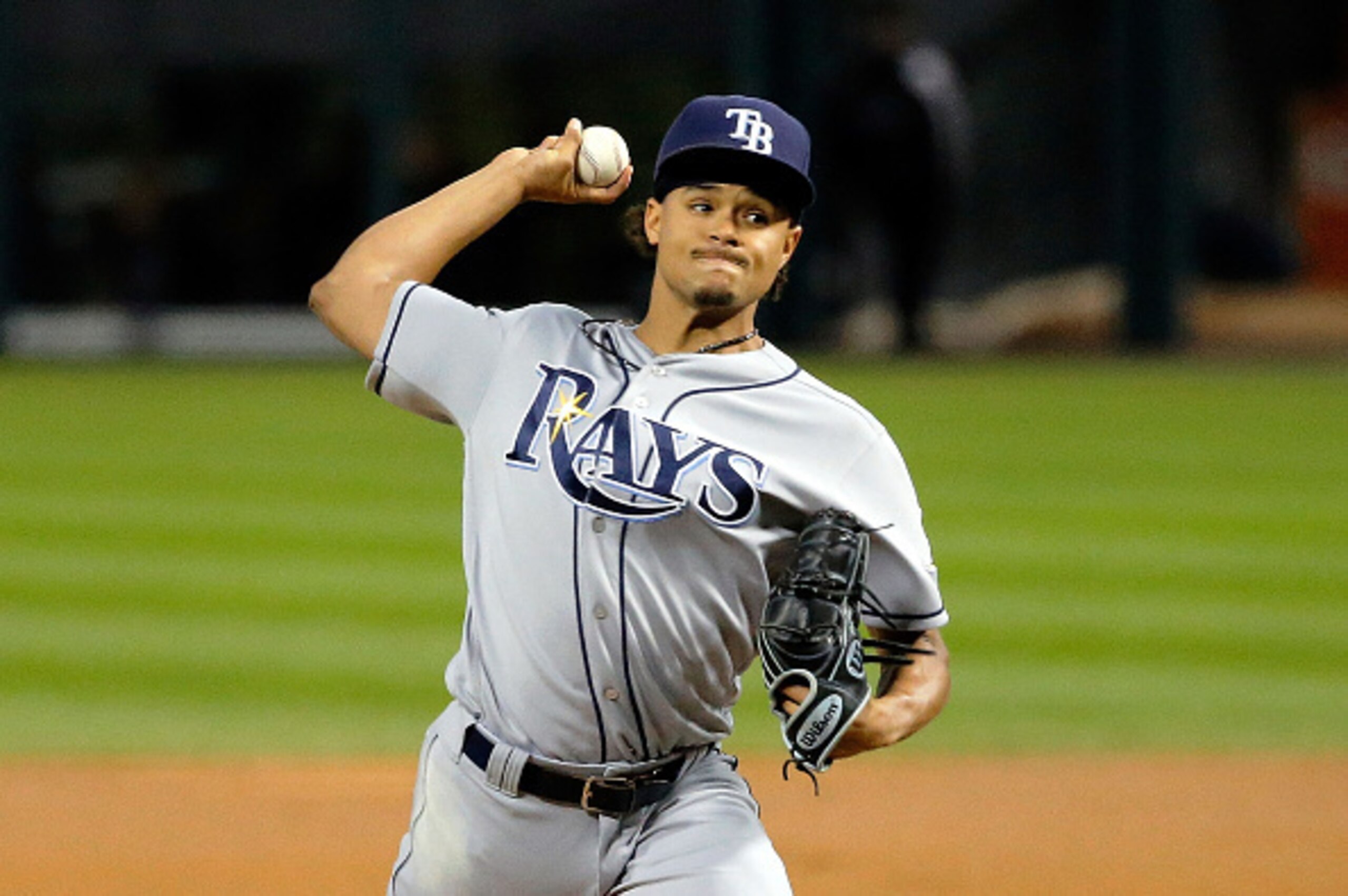
As long as he has his big arm and his cheap contract that controls him through 2021, the high demand for Chris Archer on the trade market likely isn't dying down anytime soon.
As such, the Rays will need to feel good about their chances of contending soon to feel comfortable holding on to their ace right-hander. That's a call their young pitching is ready to answer.
This time last year, left-hander Blake Snell was ranked as one of the best pitching prospects in baseball. He made good on that by showing well in the majors, shrugging off a 5.2 BB/9 to post a 3.54 ERA in 19 starts. He whiffed 9.9 batters per nine innings, thanks mainly to his exceptional spin.
Snell is ready for the next step in his age-24 season in 2017. And thanks to a recent trade, he'll soon be joined by another talented young arm: Jose De Leon.
The right-hander's downsides are that he's still a prospect and has a chronic case of homeritis. But with a career 12.1 K/9 in the minors, the 24-year-old's No. 33 ranking at MLB.com is a fair reflection of his upside.
Meanwhile, ranked just ahead of De Leon at No. 31 is right-hander Brent Honeywell. He's an intriguing prospect for his screwball alone. Add in the 2.34 ERA and 4.7 strikeout-to-walk ratio he authored at the age of 21 at High-A and Single-A last year, and he looks like a keeper.
In all, the Rays are looking at a future with four bat-missing arms in their starting rotation. Matt Andriese, who's quietly a good command-and-control pitcher, could round things out at No. 5.
6. New York Yankees
5 of 10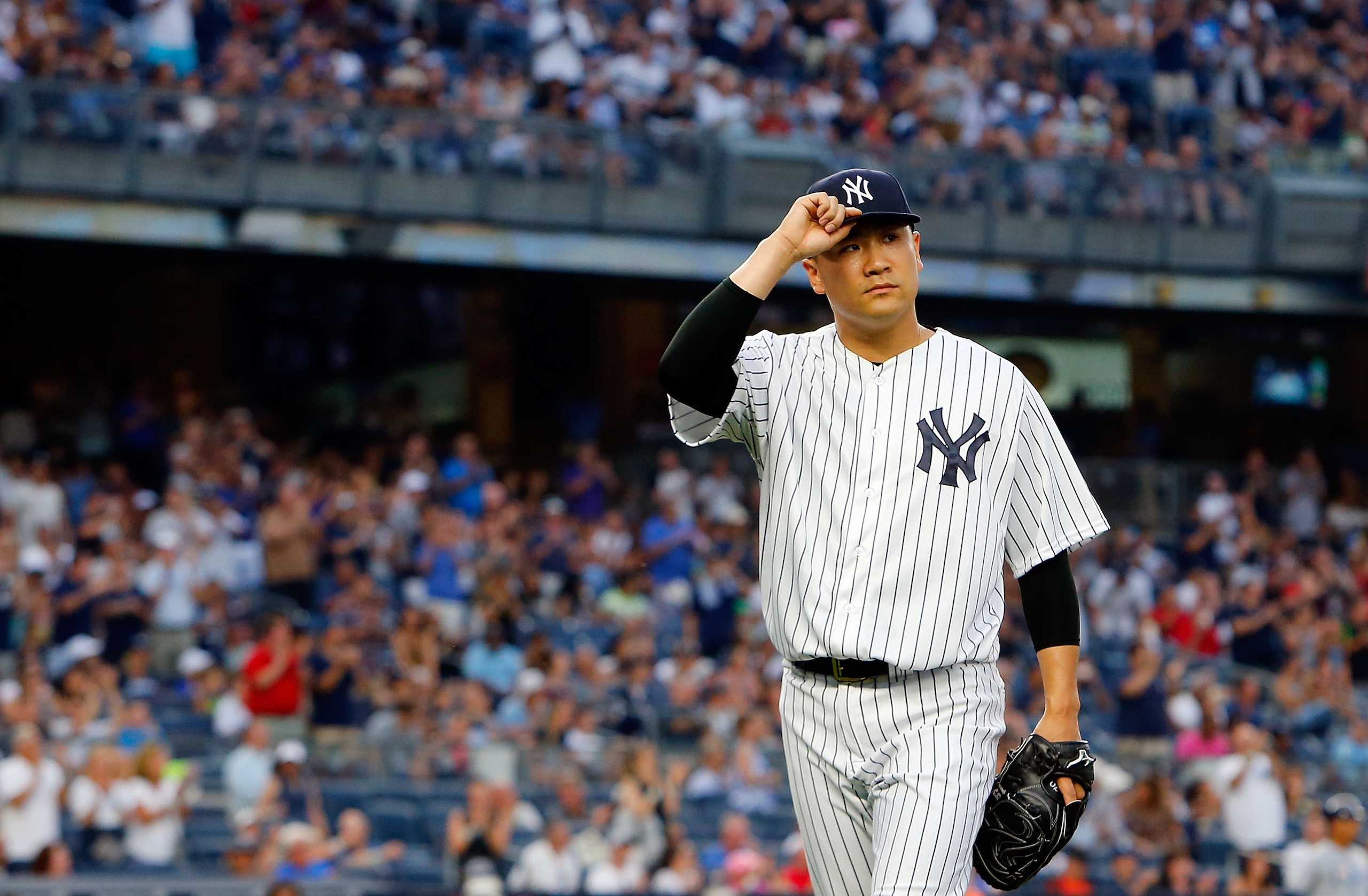
After Luis Severino's stock took a hit in 2016, Masahiro Tanaka looks like the only solid piece in the New York Yankees' starting rotation. And he has an opt-out in 2017 that could result in his exit.
But let's assume it won't. Following some injury scares in 2014 and 2015, Tanaka reestablished himself with a 3.07 ERA in 199.2 innings in 2016. If he does opt out after 2017, it would behoove the Yankees to re-sign him and thereby retain an ace they know well.
That would take care of one piece for 2018. And regardless of what happens with Severino, an injection of youth would follow swiftly.
Sheffield, acquired from Cleveland in the Andrew Miller trade, and James Kaprielian are the two best arms in a deep Yankees system. Although neither has ace upside, both project as capable mid-rotation starters and should be ready to establish themselves by next season.
Then the real fun can begin.
Even if they do have to spend more to re-sign Tanaka, the Yankees figure to have something like $130 million in space below the tax threshold after 2018. What looks like an inevitable Bryce Harper signing would eat into some of that. But even then, the Yankees would still have space for the top pitchers on the market.
Namely: Keuchel, Matt Harvey, Garrett Richards or potentially Clayton Kershaw and David Price if they use their opt-outs. And with Brett Gardner and possibly Aroldis Chapman coming off their books, the Yankees could then chase Sale, Madison Bumgarner, Cole or Porcello after 2019.
When the dust settles, the 2020 Yankees rotation should have two homegrown starters and three store-bought aces.
5. Philadelphia Phillies
6 of 10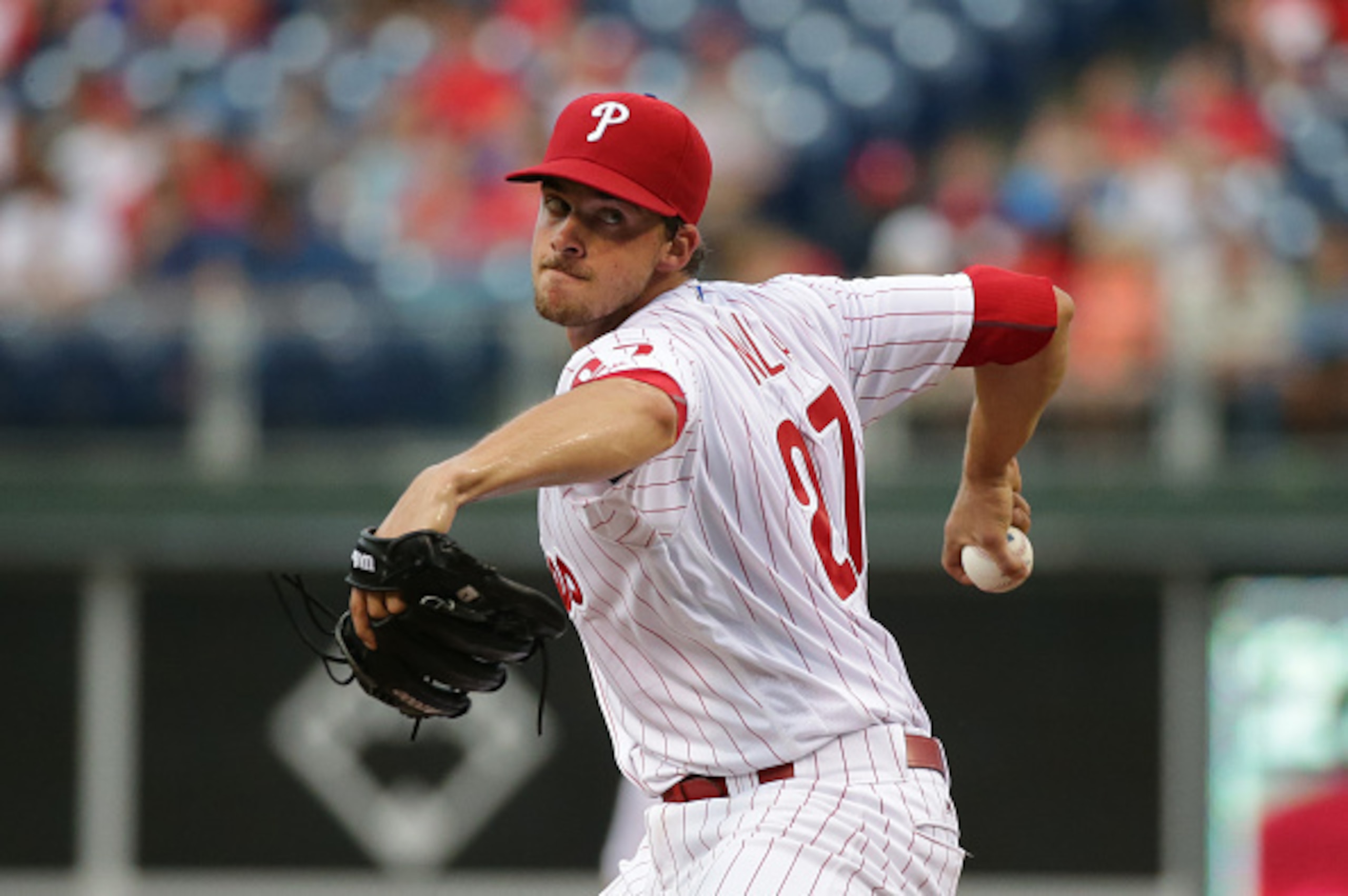
It's been a tough rebuild, but here's one thing for Philadelphia Phillies fans to get excited about: According to FanGraphs, only the New York Mets got more WAR out of 25-and-under starters in 2016.
Some of that was Vince Velasquez. Despite fading after a strong start, the 24-year-old used a high-octane fastball to strike out 152 batters in 131 innings.
Some of it was Aaron Nola. In whiffing 121 batters and walking only 29 batters in 111 innings, the 23-year-old was much better than his 4.78 ERA would indicate.
Lastly, some of it was Jerad Eickhoff. The 26-year-old worked 197.1 innings and carved out a 3.65 ERA with strong command and a trust curveball.
That's a solid trio for the Phillies to build around. For that, they have options.
They could flesh out their starting rotation with in-house pieces. Jake Thompson, Zach Eflin and Alec Asher are three quality young pitchers ready for service now. Down the line, right-handers Franklyn Kilome and Adonis Medina are two talented prospectus who could help.
Or, the Phillies could flex their financial muscle. They have only Odubel Herrera's cheap contract on their books for the long-term. That's nothing for a team that was recently keeping its payroll well north of $150 million, and the time will soon come to return to that territory.
The only question is how the Phillies will get there. That could involve spending big on an ace after 2017, 2018 or 2019. Or perhaps after all three.
One way or another, the underrated trio the Phillies have now is just the beginning.
4. Los Angeles Dodgers
7 of 10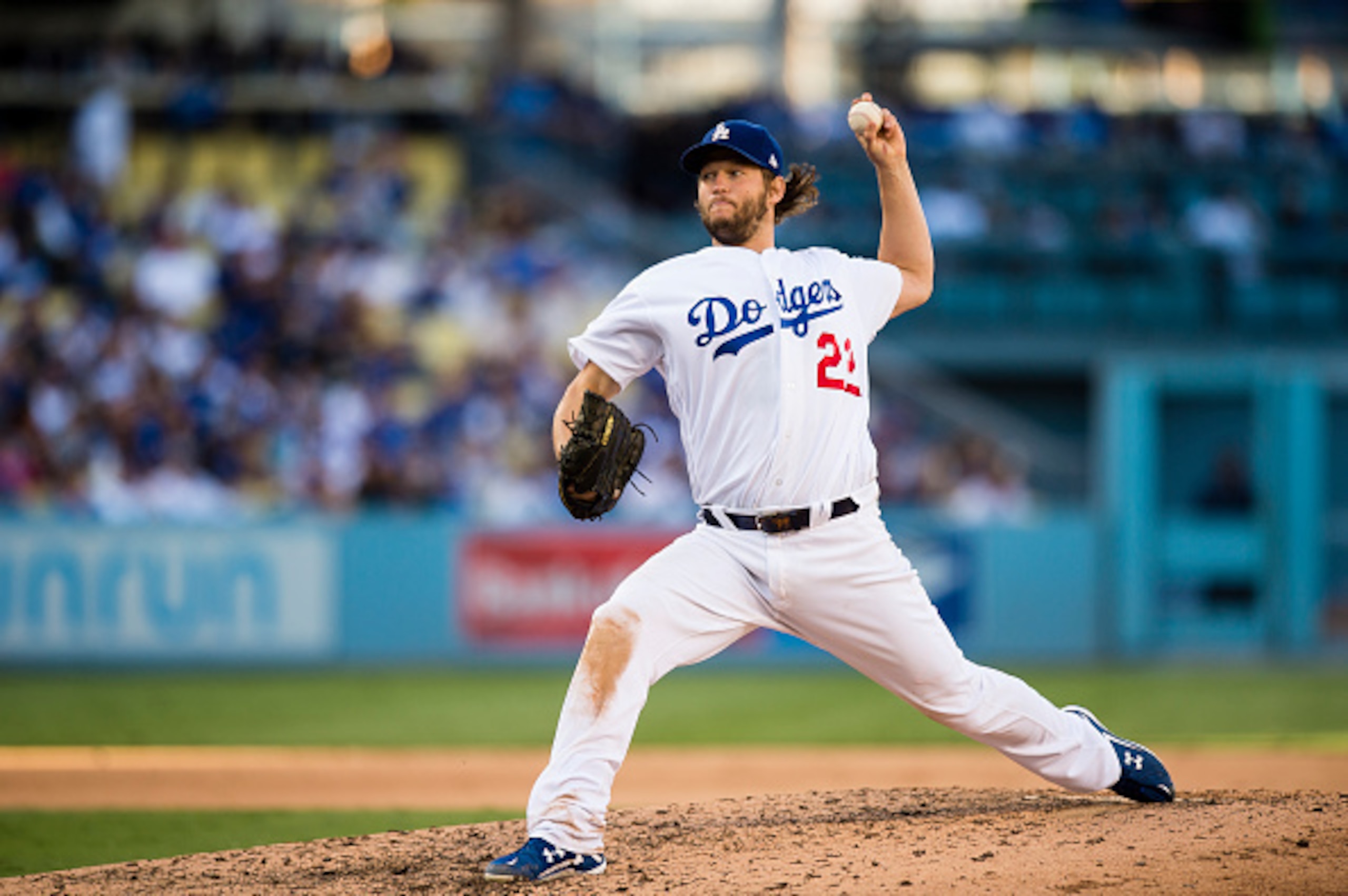
The Los Angeles Dodgers were No. 1 in last year's list, in part because they had an embarrassment of riches down on the farm.
So much for that. The Dodgers gave up three of their best young arms (Grant Holmes, Frankie Montas and Jharel Cotton) to get Rich Hill and Josh Reddick from Oakland. Most recently, they sacrificed De Leon to get Logan Forsythe.
However, at least Julio Urias is still around.
Although the hype on the former top prospect has died down, it should actually be ramping up. Despite being only 19, Urias proved he belonged in the majors with a 2.73 ERA in his final 16 appearances last year. He used elite spin to strike out 77 batters in 69.1 innings.
That'll do for a start. It may not happen this year, but Urias is going to be an ace.
In time, Yadier Alvarez may be as well. He's not yet a brand-name prospect, but he's on the up-and-up after posting a 2.12 ERA with a 12.3 K/9 as a 20-year-old in the low minors last year. Baseball Prospectus has him rated as the club's top prospect ahead of even Cody Bellinger.
That's two potential homegrown aces in the Dodgers' 2020 rotation. As for the O.G. homegrown ace, retaining Kershaw will require either doing nothing or re-signing him if he uses his opt-out after 2018. With well over $100 million in tax space on the horizon for 2019, that would be doable.
In fact, there would be enough left over for a hired gun. Add in Kenta Maeda, who's signed through 2023, and the 2020 Dodgers rotation would have it all.
3. St. Louis Cardinals
8 of 10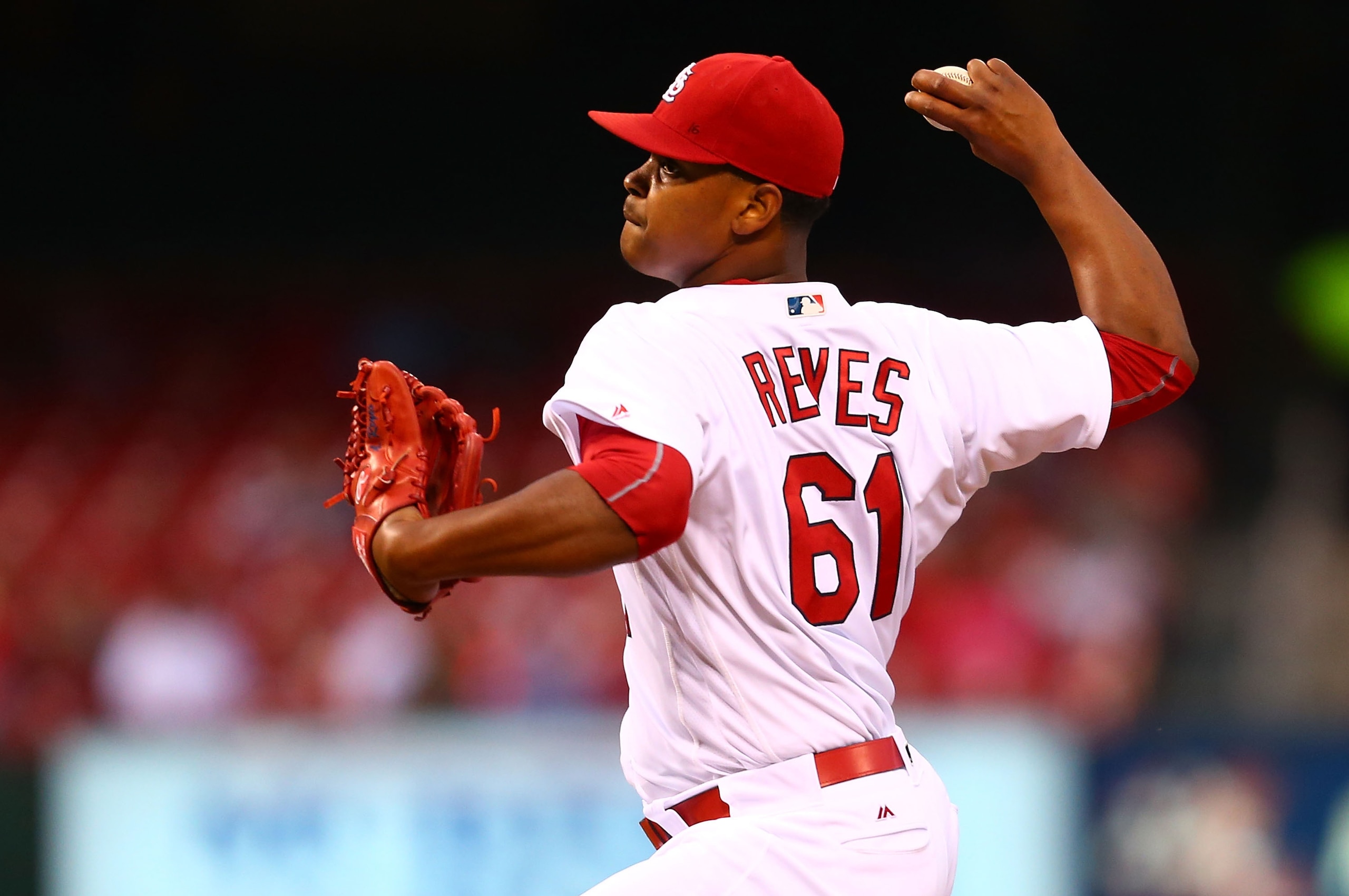
When last year's list was published, Mike Leake was the only established starter the St. Louis Cardinals had locked up through 2020. Now Carlos Martinez can be added to that list.
The right-hander recently signed a five-year extension that will keep him in St. Louis through at least 2021. He'll still only be 28 in 2020. And with an arm like his, he should be an even better pitcher than the one who has produced a 3.02 ERA with an 8.6 K/9 since 2015.
Martinez should have a co-ace by 2020: Alex Reyes. Before the young right-hander was sidelined for 2017 with Tommy John surgery, he was being talked up as the best pitching prospect in the sport.
"He combines top-of-scale velocity with two plus secondary pitches and improving command, and the durable frame gives me confidence that he'll hold up in a frontline role," one GM told MLB.com's Jonathan Mayo.
Elsewhere in the St. Louis system is Luke Weaver, who is MLB.com's No. 68 prospect. Although he's undersized at 6'2" and just 170 pounds, his fastball-changeup combination and strong command make him major league-ready right now.
Coming not soon but eventually is Sandy Alcantara, whose scouting reports read an awful lot like those of Reyes. The 21-year-old has a projectable 6'4" and 170-pound frame but is already the No. 40 prospect for Baseball Prospectus based on his ability to hit triple digits.
With several long-term contracts on their hands, it sure would help if the Cardinals could build a 2020 rotation out of pieces they already have. Four homegrown power arms plus Leake would do it.
2. New York Mets
9 of 10
The Mets rotation looked unbeatable going into last season. The injury bug took care of that, biting Harvey, Steven Matz and Jacob deGrom, and nipping at Noah Syndergaard.
Yet the hype train keeps rolling.
This has a lot to do with how much Syndergaard established himself. He didn't even have the best luck and he still put up a 2.60 ERA in 183.2 innings. Such is life when you can sit at 98 mph with good command.
Matz wasn't shabby in his own right when he was healthy, posting a 3.40 ERA in 22 starts. He and Syndergaard will still be south of 30 when 2020 comes around. Such youth will have passed deGrom by, but the former Rookie of the Year won't be ancient at 32.
As for who might fill the final two spots in the club's rotation, well, take your pick.
Seth Lugo looks like a keeper after coming out of nowhere to post a 2.67 ERA last season. He throws a low-to-mid 90s fastball and a wicked curveball, and he has more spin in general than any other Mets pitcher.
Robert Gsellman also looks like a keeper after emerging to post a 2.42 ERA in 2016. He looks like deGrom both in appearance and development, having recently developed a plus fastball and slider.
And the Mets have even more hard throwers on the way. Thomas Szapucki is a 20-year-old lefty who can hit the high 90s. Justin Dunn is a 21-year-old righty who can do the same.
In short, Syndergaard, deGrom and Matz won't have to do it all on their own in 2020. There will be stuff at the back end to match their stuff at the front end.
1. Chicago White Sox
10 of 10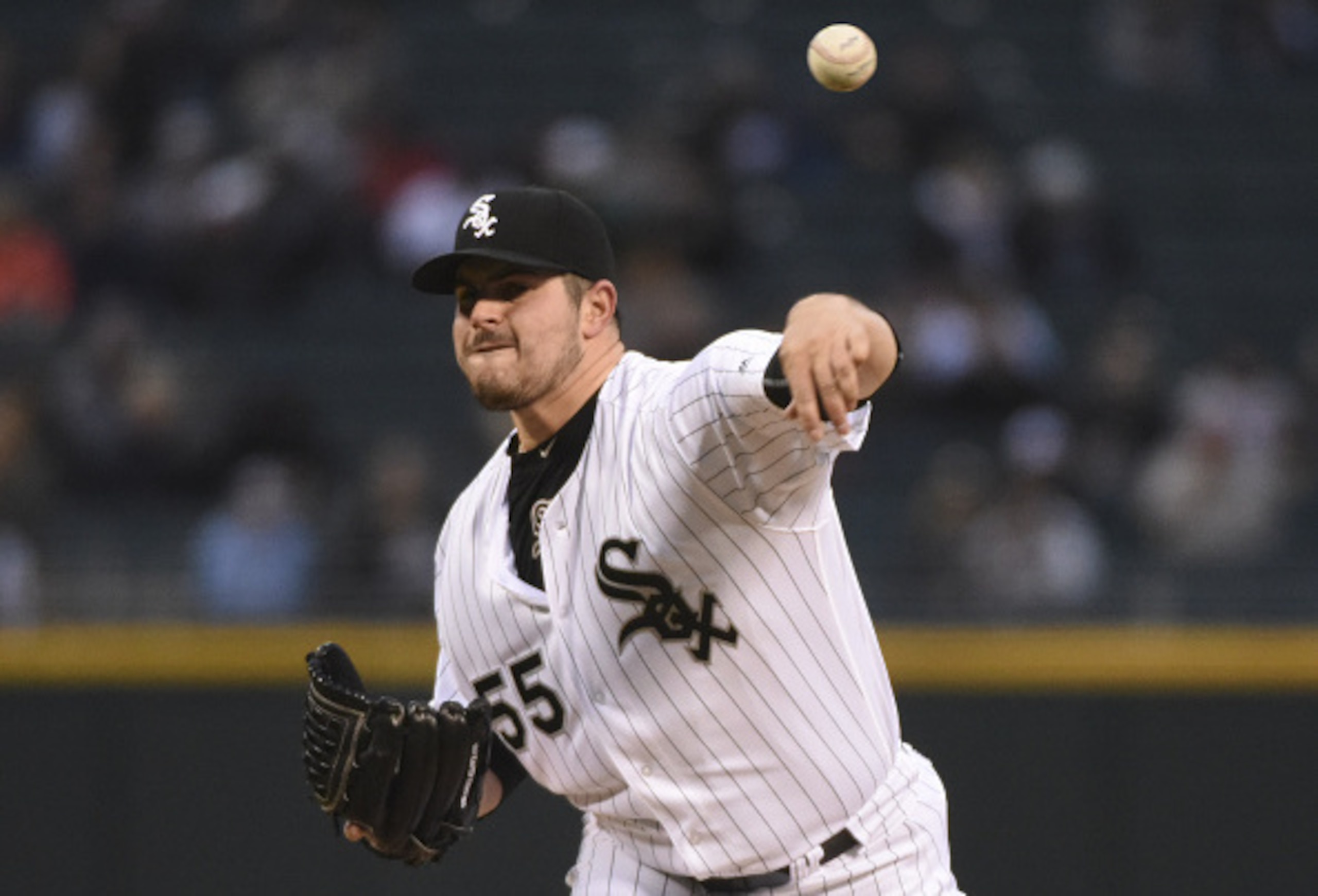
The Chicago White Sox don't have Sale anymore. Pretty soon, they probably won't have Jose Quintana anymore either.
But not to worry, for the long-term future of their rotation is many shades of ridiculous.
For starters, there's Carlos Rodon. Although the former top prospect has had ups and downs in the majors, the ups have consisted of him flashing ace potential. This includes a sustained run in the second half of 2016, when he started throwing more changeups and put up a 3.45 ERA with a 3.5 K/BB ratio.
Rodon should be an ace well before 2020, at which point he'll still only be 27. And he'll have company.
Thanks to the trades of Sale and Adam Eaton, the White Sox's farm system now includes Lucas Giolito, Michael Kopech and Reynaldo Lopez. They're MLB.com's No. 11, No. 16 and No. 46 prospects, respectively, and they have one thing in common: heat.
Only Kopech can touch as high as 105 mph, but each of the three right-handers can work in the mid-to-high 90s. Even in an age of heightened velocity, having three arms like this is something to write home about.
"The power arms seem to be certainly a trend," Chris Getz, the White Sox's director of player development, told MiLB.com's Alex Kraft. "You look at some of the teams that have had a lot of success, the guys at the front of the rotation are coming with a lot of heat. These guys have those tools."
That's four dominant arms lined up for 2020. To round things out, the White Sox can either groom another prospect—such as Carson Fulmer, Alec Hansen, Zack Burdi or Dane Dunning—or put the huge amount of payroll space they're soon going to have to good use.
Stats courtesy of Baseball-Reference.com, FanGraphs and Baseball Savant. Payroll data courtesy of Cot's Baseball Contracts.

.png?w=2560)

.jpg?w=2560 "Raiders Could Start Mendoza")


.jpg?w=2560 "Rodgers Iced Out on Plane 💎")


.jpg?w=2560 "🚨 Week 8 AP Top 25 Poll")