CFB Then and Now: How Today's Superstars Would Have Fared Across Eras
Sure, he's good now, but what about against …
It's an argument made in every sport when trying to compare players from different eras against one another. Lining their statistics side by side can't properly gauge which one is better since those numbers came against different opponents and in different systems, not to mention that fact that most sports landscapes have changed drastically over time.
Yet the debates continue over who are the best players of all time in a sport, not to mention whether ones from the past would still be considered great in today's game. A lot of this comes from a shortsighted outlook that assumes current players are among the best a sport has ever had.
Take college football for instance. Louisville quarterback Lamar Jackson is putting together one of the greatest seasons ever for a quarterback from a statistical standpoint, one that's looking more and more likely to earn him the Heisman Trophy. But Jackson is also benefiting from an uptempo system that is built around his skills as well as a time for the sport where explosive offensive numbers have become the norm.
How would Jackson look if he played at some other point in college football's illustrious history? Or how would bruising LSU running back Leonard Fournette perform if he were playing at a time when defensive players were a little harder to run over?
We've picked five of this season's best individual players and dropped them into a different point in college football history. How did they end up doing? Follow along and find out.
Jabrill Peppers in the One-Platoon Era
1 of 5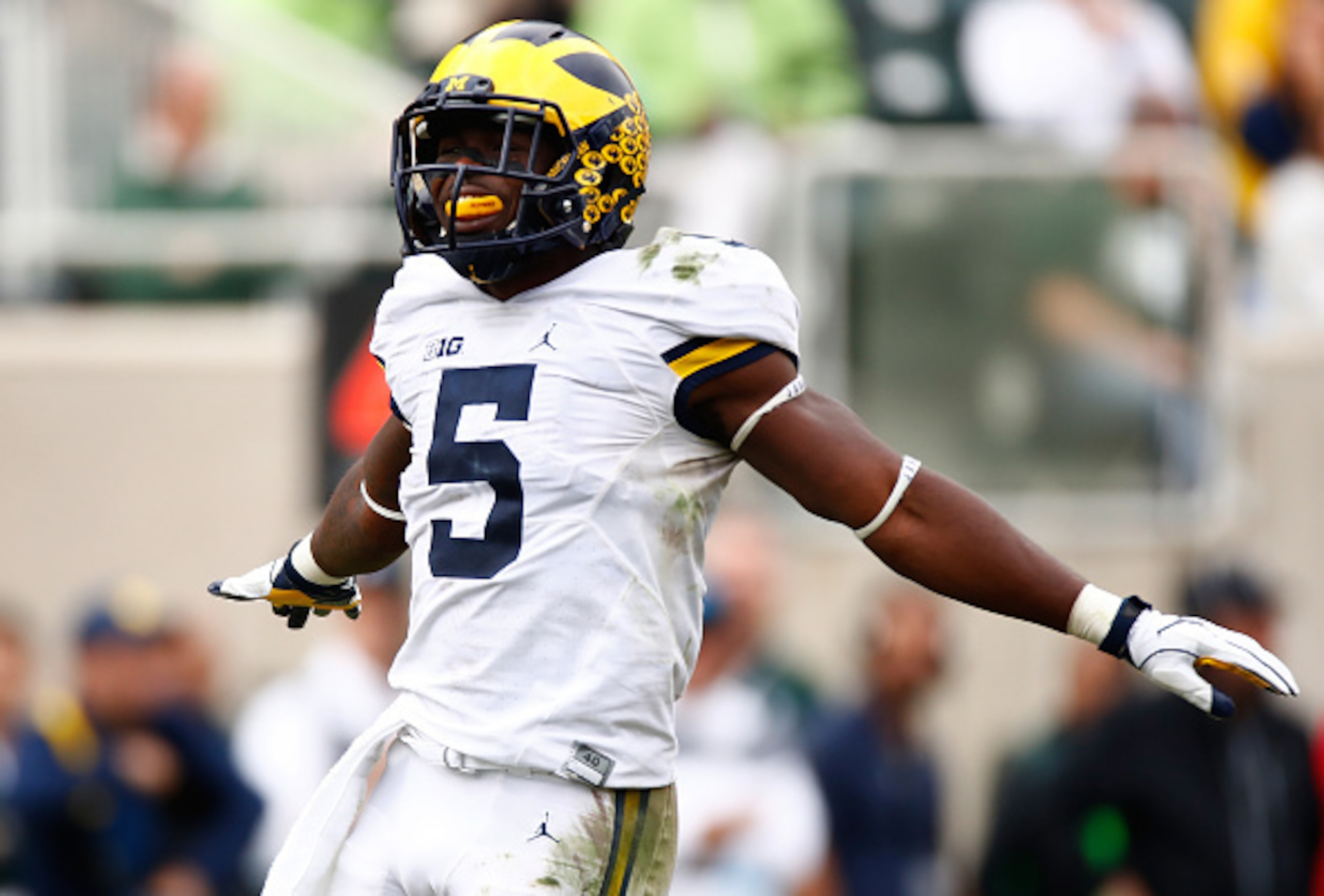
Player comparison: Sammy Baugh
College football has changed so much over the years, and one of the most significant differences has to do with roster size. FBS teams are allowed 85 scholarships and can have unlimited walk-ons to where many power-conference schools have more than 100 players at their disposal.
Back in the 1930s, '40s, '50s and '60s that number was far smaller, and for about a dozen years the rules were designed to encourage players participating on both sides of the ball. Known as the one-platoon system, everyone had a spot on offense and defense and those same people were out there for punts and kickoffs.
Nowadays it takes a special kind of player to be able to contribute in all of those areas, which is why what Jabrill Peppers is doing with Michigan so amazing. The redshirt sophomore starts on defense—and has played numerous positions—and the Wolverines have been using him more and more in offensive sets, usually as a Wildcat quarterback. He's also one of their top return men, averaging better than 17 yards on punts.
Peppers wouldn't stand out back in the one-platoon era for his diversity but for his ability to excel in every area. Most players back then were known more for one position and the other was their secondary role, unlike Peppers who seems equally valuable at every spot.
Baugh is one of the greatest multiway players from the one-platoon era, playing quarterback, defensive back and punter for TCU from 1934-36 (as well as for the school's baseball and basketball teams). Quarterback was by far his best spot, as his 1,196 passing yards and 12 touchdowns in 1936 earned him a fourth-place finish in the Heisman voting.
Leonard Fournette in the 1970s
2 of 5
Player comparison: Earl Campbell
They don't make many running backs like Leonard Fournette anymore. Back in the 1970s, though, those guys were all over the place and it made for some dominant rushing attacks.
They only played 11 games back then, plus a bowl if you were lucky, but there were only about 15 of those. Yet someone ran for at least 1,800 yards in six of 10 seasons that decade and the featured backs were getting 30 or more touches per game.
Though Fournette has dealt with ankle issues this season, limiting him to six games and 117 carries, he's still managed to run for more than 800 yards in 2015 and nearly 3,800 in his career. At 6'1” and 235 pounds he's the size of an outside linebacker but runs like a safety. He also hits like one when he takes on tacklers instead of trying to dodge them.
Fournette would be right at home during an era when most rushers ran between the tackles and took on defenders head-on, those enormous shoulder pads making the backs look even bigger than they were. A lot of them were smaller than him, though Campbell played at 5'11” and 245 pounds for Texas and in his senior year in 1977 ran 267 times for 1,744 yards and 18 touchdowns. That's comparable to Fournette's sophomore season in 2015, when he had 300 carries for 1,953 yards and 22 TDs.
Lamar Jackson in the 1980s
3 of 5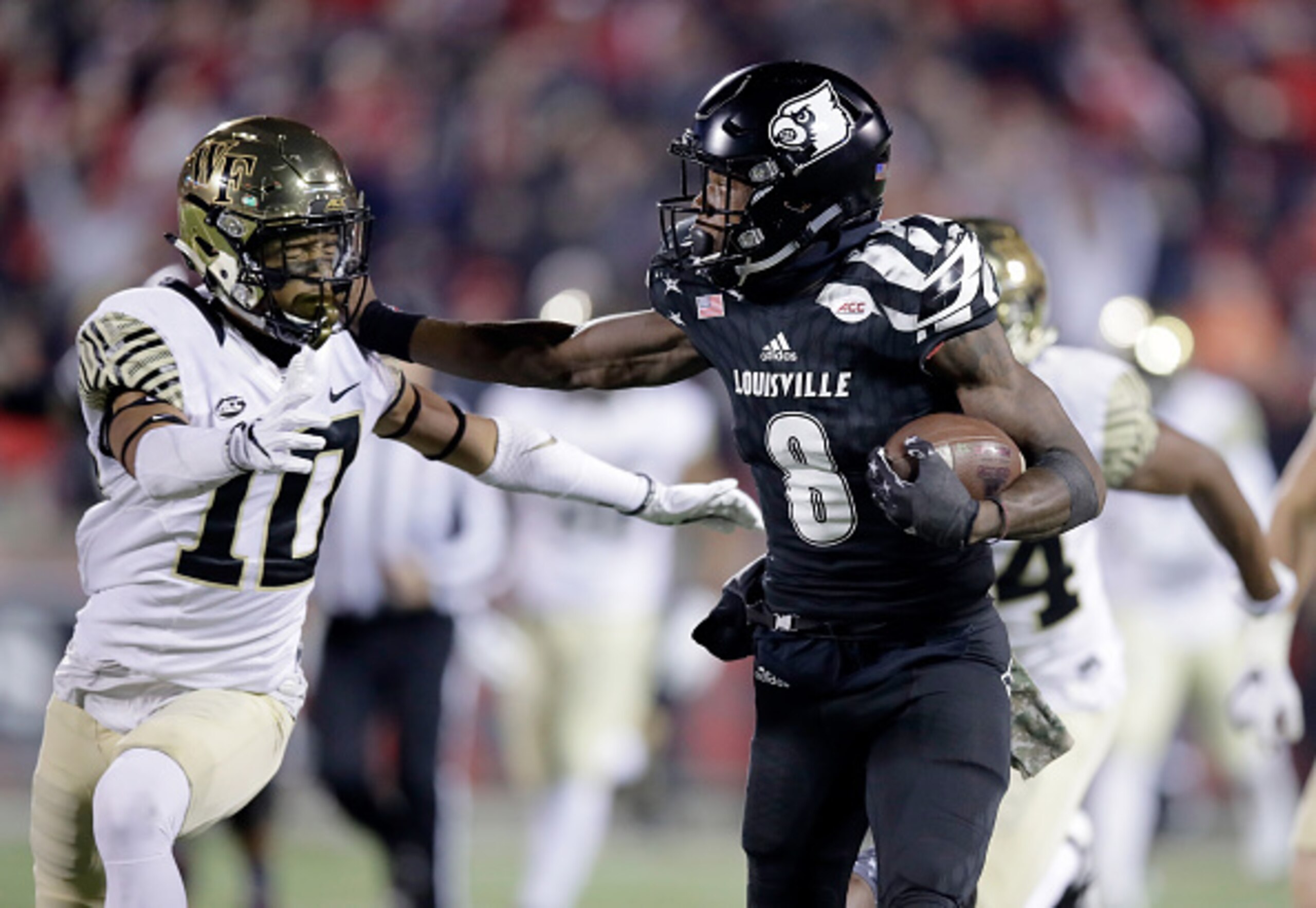
Player comparison: Major Harris
We got our first look at Lamar Jackson in Louisville's season opener in 2015, when as a true freshman he actually started as a running back but ended up throwing a pass on the Cardinals' first offensive snap. It was intercepted.
Since then Jackson has gotten exponentially better and so much of it has come from building around his best asset, which is his running ability. Though he sat out one game that season and played sparingly in a few others, he was still Louisville's leading rusher with 960 yards and 11 touchdowns while throwing for 1,840 yards and 12 scores.
This season has seen Jackson explode offensively, as his 46 total TDs are more than 100 other FBS teams have scored all season. He's throwing a lot more but is still most dangerous when he runs, with nine 100-yard games and 19 rushing scores.
Louisville coach Bobby Petrino has built the offense around Jackson, much like some coaches during the 1980s did around a mobile passer who knew when to run and when to throw. The option was far more prevalent back then and it was most effective when the QB did the bulk of the running, which is how Jackson would likely handle the position.
Harris did the same during three seasons as West Virginia's starter from 1987-89. For his career he threw for 5,119 yards and 41 TDs and ran for 2,058 yards and 18 TDs. In his final season he was the Mountaineers' leading rusher and the one who had the most carries.
If Jackson ran an option that included passing he'd likely end up throwing 40 percent of the time, keeping 35 percent and pitching the remaining 25 percent.
_0.png?w=2560)
Corey Davis in the 1990s
4 of 5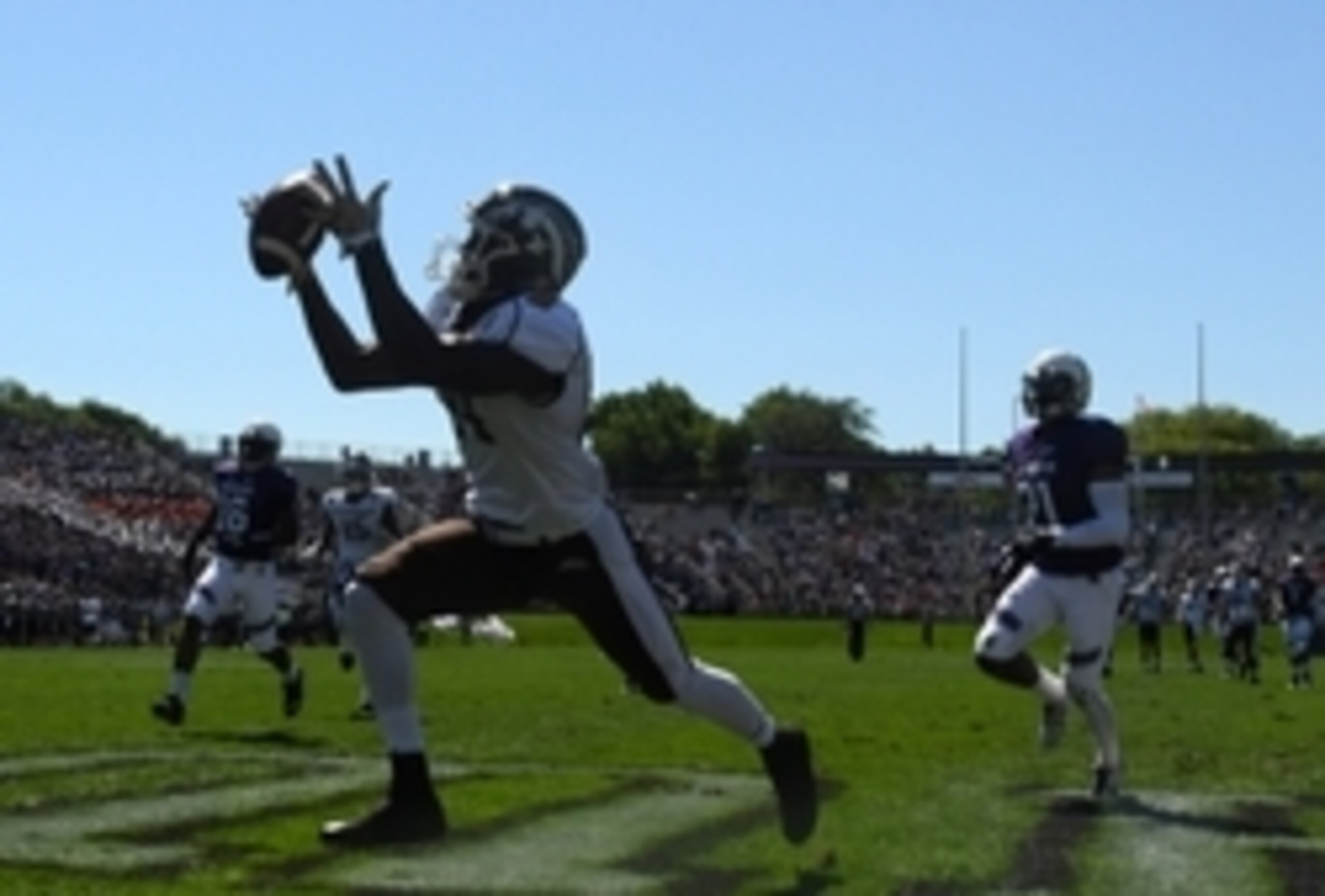
Player comparison: Randy Moss
Corey Davis is going to end his career as the most prolific wide receiver in FBS history from a yardage standpoint. The senior has caught 296 passes for 4,807 yards and 47 touchdowns for Western Michigan, which is currently second all time and just 198 yards behind FBS career leader Trevor Insley's tally with Nevada from 1996-99.
Insley played during a golden era for receivers, a decade that saw BYU's Ty Detmer become the first quarterback to throw for 5,000 yards in a season while big-armed guys like Washington State's Ryan Leaf and Louisiana Tech's Tim Rattay slung the ball all over the place. And if you could catch the ball and run you were golden.
Moss was one of those guys that QBs knew they could throw it up to them and it would get caught no matter how covered they were. With Marshall in 1996-97, he caught 174 passes for 3,529 yards with 54 TDs, the latter season when the Thundering Herd moved up from what was then known as Division I-AA.
Davis has physical dimensions that are eerily similar to Moss, who played at 6'4” and 210 pounds in college. He's 6'3” and 213 pounds and he uses every bit of that to make catches.
The 1990s were when teams with less overall talent than the big-name schools tried to balance the scales by throwing as much as possible. Davis would thrive in a system like that even more than he has in the Broncos' offense that has leaned toward the run each of the last three seasons.
Myles Garrett in the 2000s
5 of 5
Player comparison: Terrell Suggs
It's been a frustrating 2016 season for Texas A&M's Myles Garrett, with injuries keeping him from being 100 percent for many games. This has resulted in lower raw statistical numbers overall but he's still rating high with groups like Pro Football Focus, which has him atop its 2017 NFL draft board.
Even without being at full strength, the 6'5”, 270-pound junior defensive end is a freak of nature who no one can manage to slow down when coming off the edge. And it's not just against the pass but also when in there to defend the run, with 5.5 of his 9.5 tackles for loss coming on rushing plays.
The continued increase of spread offenses in college football makes it necessary for defensive linemen to be able to handle every possible assignment since it's harder to sub in and get the right guys on the field unless it's an obvious passing down. Back in the 2000s, though, when the majority of teams were still running pro-style attacks, you often saw quite a bit of shuffling on the line depending on the down and distance.
An exception was Suggs, who from 2000-02 at Arizona State was unstoppable. He's part of the reason the NCAA started tracking sacks as an official statistic, and his 24 quarterback takedowns as a junior in 2004 and 44 for his career remain the FBS records. It didn't matter how teams tried to block him or whether they moved the ball as far from him as possible. He got there, logging 65.5 tackles for loss.
Garrett has 28 sacks and 43 tackles for loss for his career, numbers slightly affected by this season's injuries but also the faster pace of the game and the wide-open nature of offenses. It's a lot harder to get to the QB when he's getting ride of the ball in two or three seconds.
Had Garrett been around a decade or so ago, Suggs' records might no longer stand.
All recruiting information courtesy of Scout.com, unless otherwise noted. All statistics provided by CFBStats, unless otherwise noted.
Follow Brian J. Pedersen on Twitter at @realBJP.
.jpg?w=2560 "Rap: Lions, LaPorta End Contract Talks")
.jpg?w=2560 "OBJ Calls Out Giants After Release")

.jpg?w=2560 "Report: Baker May Miss Up to 6 Weeks")
.jpg?w=2560 "EVERY Fantasy Football Update")