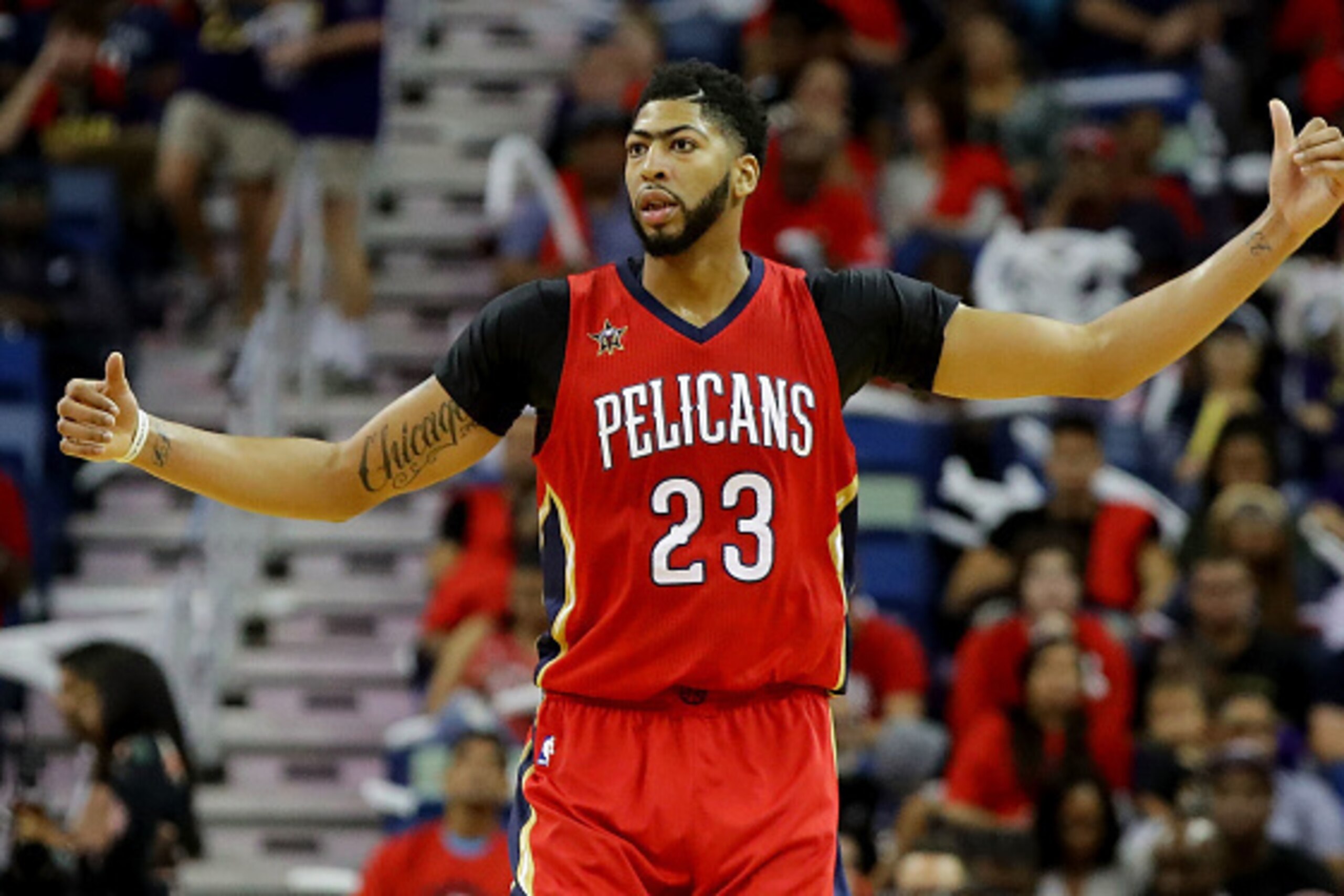

5 NBA Teams That Already Need to Sound the Early-Season Alarm
There is nothing wrong with a little early concern. Sure, the NBA season is only a little over a week old, but we have seen enough in certain instances to fear and doubt what happens next.
This skepticism comes from preseason expectations.
Some teams profiled as bona fide playoff participants or postseason hopefuls, yet they appear bound for the lottery. Others were known pretenders but have stumbled out of the gate harder than expected. And then there are a couple of situations that look just plain hopeless.
For whatever reason—be it injuries, shoddy roster construction or general underachieving—these teams must be wary of their onset struggles, lest their entire seasons become relative shams.
Dishonorable Mentions
1 of 6
Minnesota Timberwolves
Ricky Rubio's sprained right elbow is a problem for the Minnesota Timberwolves, but it's not the end of the world. Their top-five offense has been more efficient with him on the bench so far, and head coach Tom Thibodeau now gets to experiment with Kris Dunn, Zach LaVine and Andrew Wiggins as primary playmakers.
Is the team's defense a concern? Without question. Minnesota sported a bottom-three defense until it laid a 116-80 beatdown upon the shorthanded Memphis Grizzlies. Much tougher tests await.
Fortunately, the Timberwolves never portrayed themselves as playoff contenders: They are in the second year of the Karl-Anthony Towns era, four of their six most-used players are under the age of 23, and they didn't spend a ton of free-agency money trying to accelerate their standing.
Most of us put postseason burdens on a team that's in rebuilding mode. Any resulting disappointment is on us, not them.
Utah Jazz
Injuries continue to rip through the Utah Jazz's roster at an alarming rate.
Derrick Favors only just returned after nursing a left knee injury. Gordon Hayward won't play until late November at the earliest as he recovers from a broken finger. And there is no timetable for Alec Burks' return following the arthroscopic surgery he underwent on his left ankle.
These Jazz, much like last season, cannot seem to stay or get healthy. That's a big problem for a team that's been crowned the NBA's best up-and-comer.
But Utah will be close to full strength once Hayward returns and, despite a slow start to 2016-17, has put forth borderline exceptional shorthanded efforts in losses to the Los Angeles Clippers and Portland Trail Blazers. There is a light at the end of this tunnel.
Golden State Warriors
The Golden State Warriors opened 2016-17 with a 3-1 record...after blowing a 3-1 lead in the NBA Finals last June. They are clearly doomed.
Dallas Mavericks
2 of 6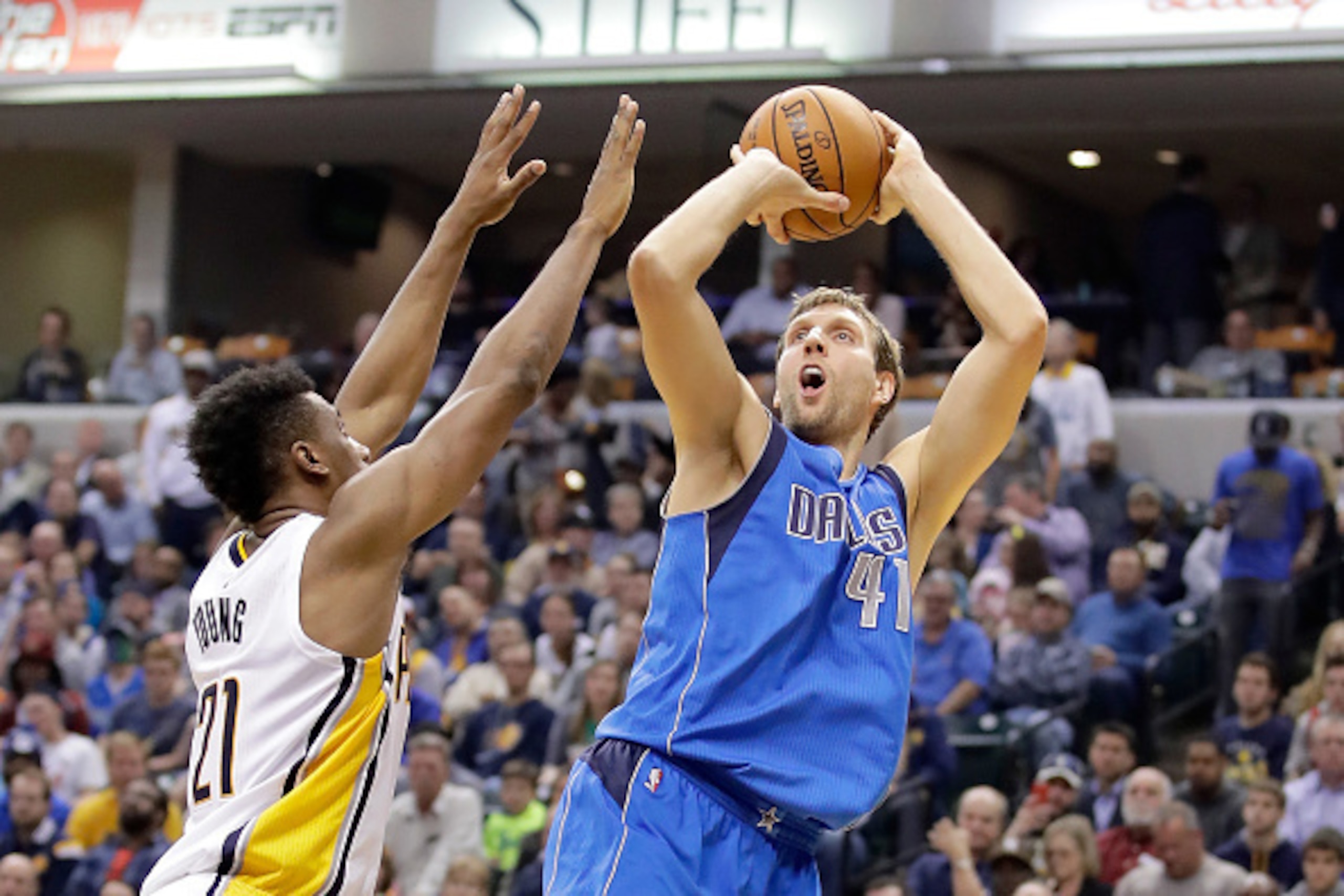
What if head coach Rick Carlisle isn't able to take an injury-prone, over-the-hill, talent-thin roster and pull a winning record—and the playoff berth that comes with it—out of his butt for the umpteenth year in a row?
That's the hard, harsh, seemingly unavoidable reality facing these Dallas Mavericks.
Deron Williams is already trying to play through a knee injury. Neither the offense nor defense ranks better than 15th. More than 68 percent of Dallas' total points have come from four players—one of whom is a Harrison Barnes impostor who's averaging 20 per game on 50 percent shooting.
All things considered, though, the Mavericks should be riding an early-season high. J.J. Barea and Barnes won't combine for nearly 37 points a night forever, Wesley Matthews is scoring (not shooting) like he never ruptured his Achilles, and Dirk Nowitzki's sole appearance saw him, a 38-year-old, top 20 points and log 38 minutes.
And yet, Dallas finds itself winless through three games.
Each loss has come by fewer than 10 points and was to a playoff hopeful. But the Houston Rockets and Indiana Pacers are bottom-rung postseason teams—the exact type Dallas must consistently rise above to guarantee a spot in the NBA's spring dance.
Time is on the Mavericks' side; depth and durability are not. The Mavs are more susceptible to a single absence than in years past and figure to lean heavily on a starting lineup consisting of injury risks (Andrew Bogut, Williams), an almost-40 star (Nowitzki) and the ultimate wild card (Barnes).
Now more than ever, it feels like Dallas' penchant for churning out postseason berths is drawing to a close.
Indiana Pacers
3 of 6
The Pacers' decision to ditch pure defensive grit for offensive flexibility isn't looking so hot right now—not for a squad that's supposed be a sure playoff pick.
Though the Pacers are playing faster, hovering around the top 10 in pace, they're only marginally more efficient. They're pumping in 1.3 points more per 100 possessions (103.7) than last year (102.4) and are still falling short of top-10 placement.
And that's with Paul George (52.2 percent), C.J. Miles (53.8) and Thaddeus Young (50.0) drilling triples at laughably high career rates. That won't continue, so this could be the Pacers' peak. And that's not worth the defensive drop-off they're sustaining.
Indiana is allowing more points per 100 possessions than all but three teams. The three-point prevention, last season's bread and butter, is among the league's most inconsistent, and the transition defense has been abysmal.
Reliable rim protection in the absence of Ian Mahinmi is the only pleasant surprise, but that's more so because rival offenses are having their way everywhere else. That's not about to change, as Michael Pina explained for Vice Sports:
"Ian Mahinmi, George Hill, and Solomon Hill aren't walking through that door. They were three smart, reliable, versatile defenders who helped the Pacers boast a top-three unit last season. Now they're gone.
George is the Pacers' savior and safety blanket—a perennial All-NBA member who's also the second-best player in the conference—but not even he has the omnipresence to mask all the two-way cracks Indiana shows. Who else can guard multiple positions with any level of competence? Who can draw fouls and sink outside shots?
"
All the usual "It hasn't been 10 games yet, dammit!" caveats apply, and the Pacers' struggles, even if season-long, might not remove them from playoff contention. But they will ensure this team never comes close to being the threat it hoped to be.


New Orleans Pelicans
4 of 6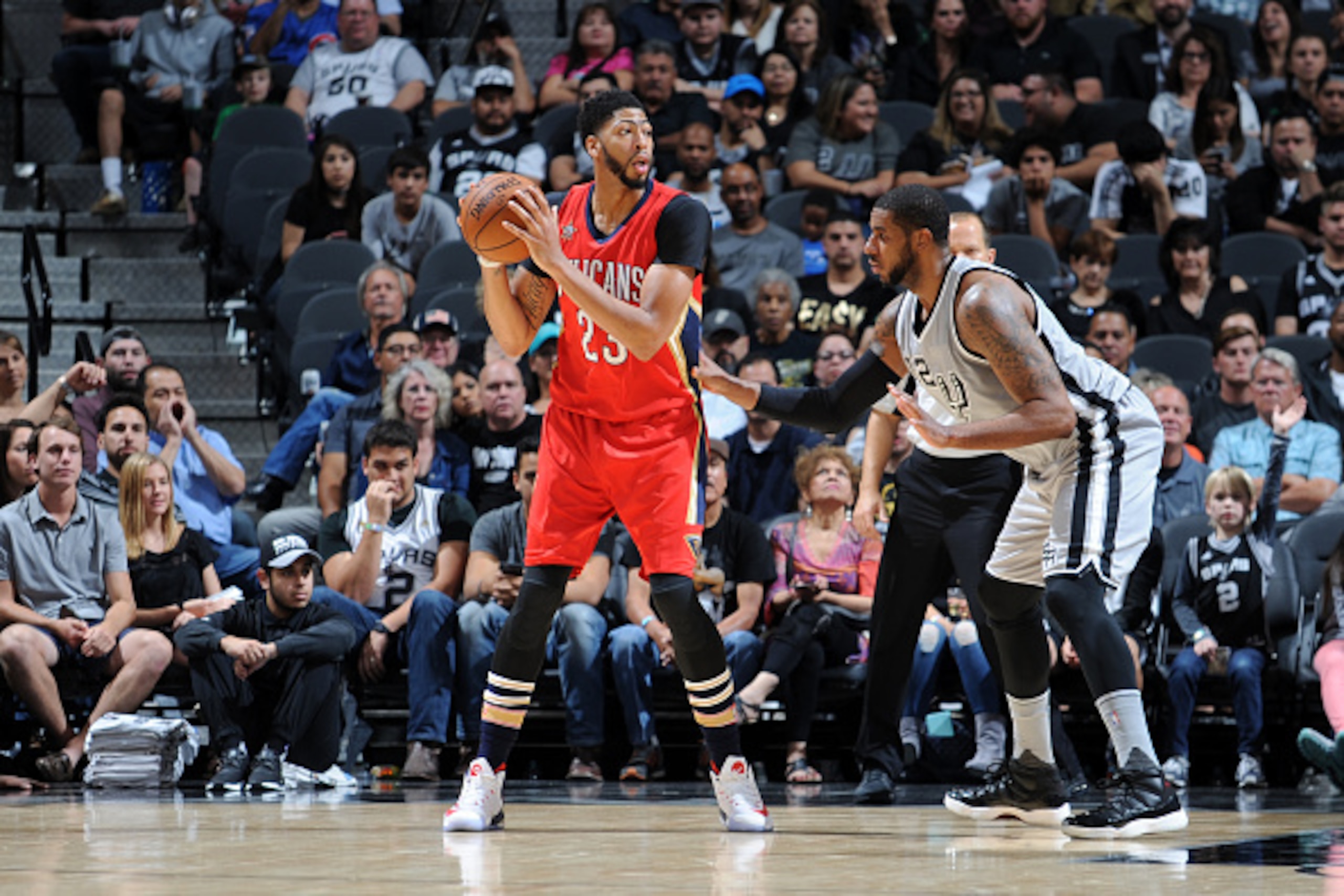
To be fair to the New Orleans Pelicans, they actually set up camp on the panic button before the start of the season. The absences of Tyreke Evans, Jrue Holiday and Quincy Pondexter were always going to lower their ceiling, and they needed to guarantee Lance Stephenson's contract just to piece together a viable backcourt rotation.
Still, things aren't looking good, even by those standards.
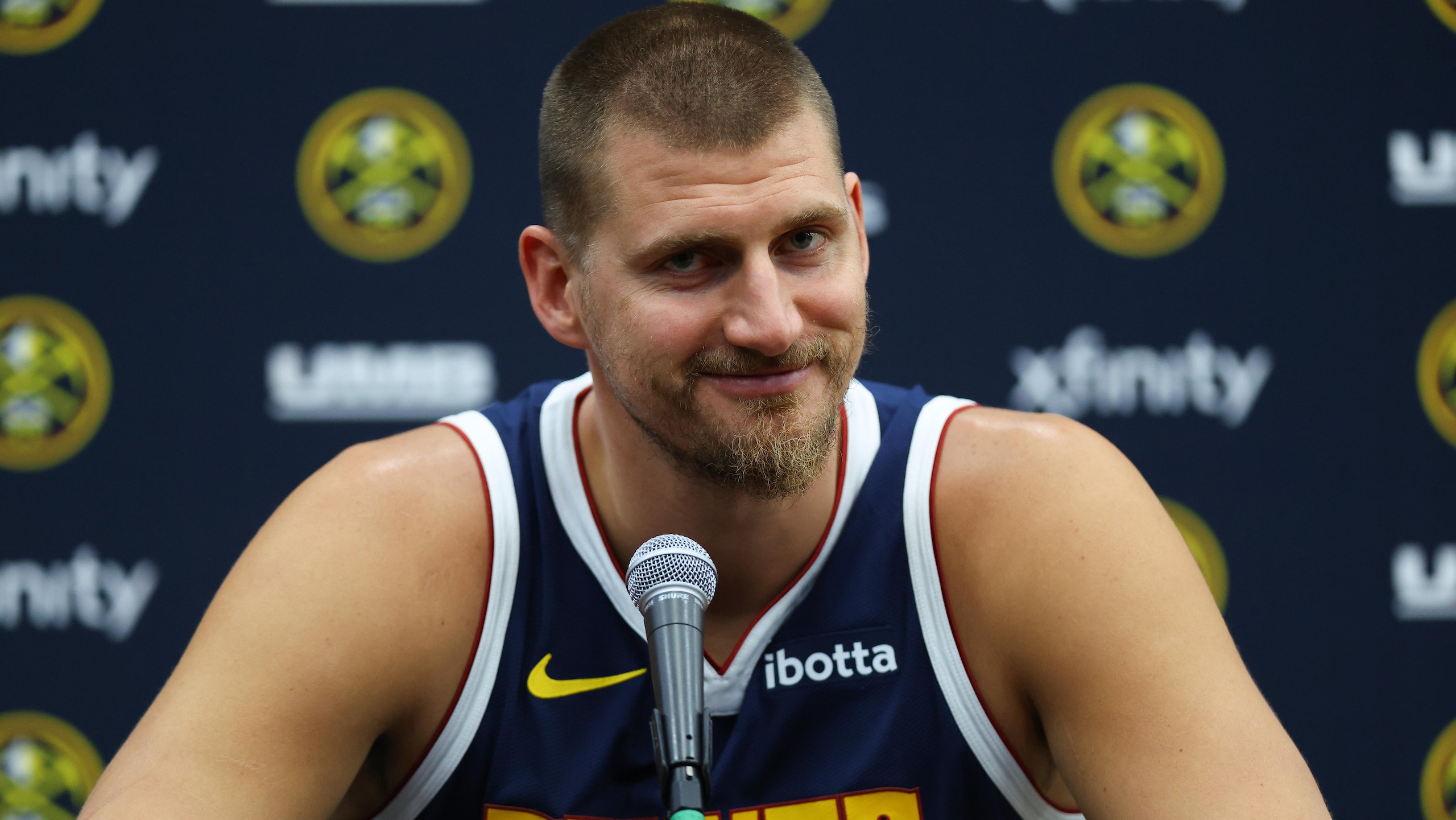
Anthony Davis opened the year by becoming the first player since at least 1983 to clear 90 points and 30 rebounds through his first two games. New Orleans lost both contests.
Then, in the third game of the season against the San Antonio Spurs, with Davis struggling on offense, the Pelicans tallied just 79 points, fell behind by as many as 27 and lost by 19. Such is life when Tim Frazier, E'Twaun Moore and Stephenson are passing around the "second-best player" stick.
Part of this early-season implosion comes as a relief. The Pelicans can exclusively focus on player development (Buddy Hield), talent evaluation (Langston Galloway, Solomon Hill, Frazier, Moore, Stephenson, etc.) and lineup experimentation (a Terrence Jones-Davis frontcourt). The hopefully inevitable returns of Evans and Holiday, both of whom are on expiring deals, might even give them a pair of February trade chips.
Except the Pelicans wasted the past few years trying to expedite their rebuild, only to end up here. And now, as Tom Ziller pointed out for SB Nation, they're less than four years away from Davis' free agency in 2020 (player option) and have no clear path toward contention.
Maybe the Pels strike lightning in a bottle with one of their many fliers. They own all of their future first-rounders, too. For their sake, then, the journey to the NBA's absolute bottom better be swift and decisive so they can begin the trek back before it's too late.
Orlando Magic
5 of 6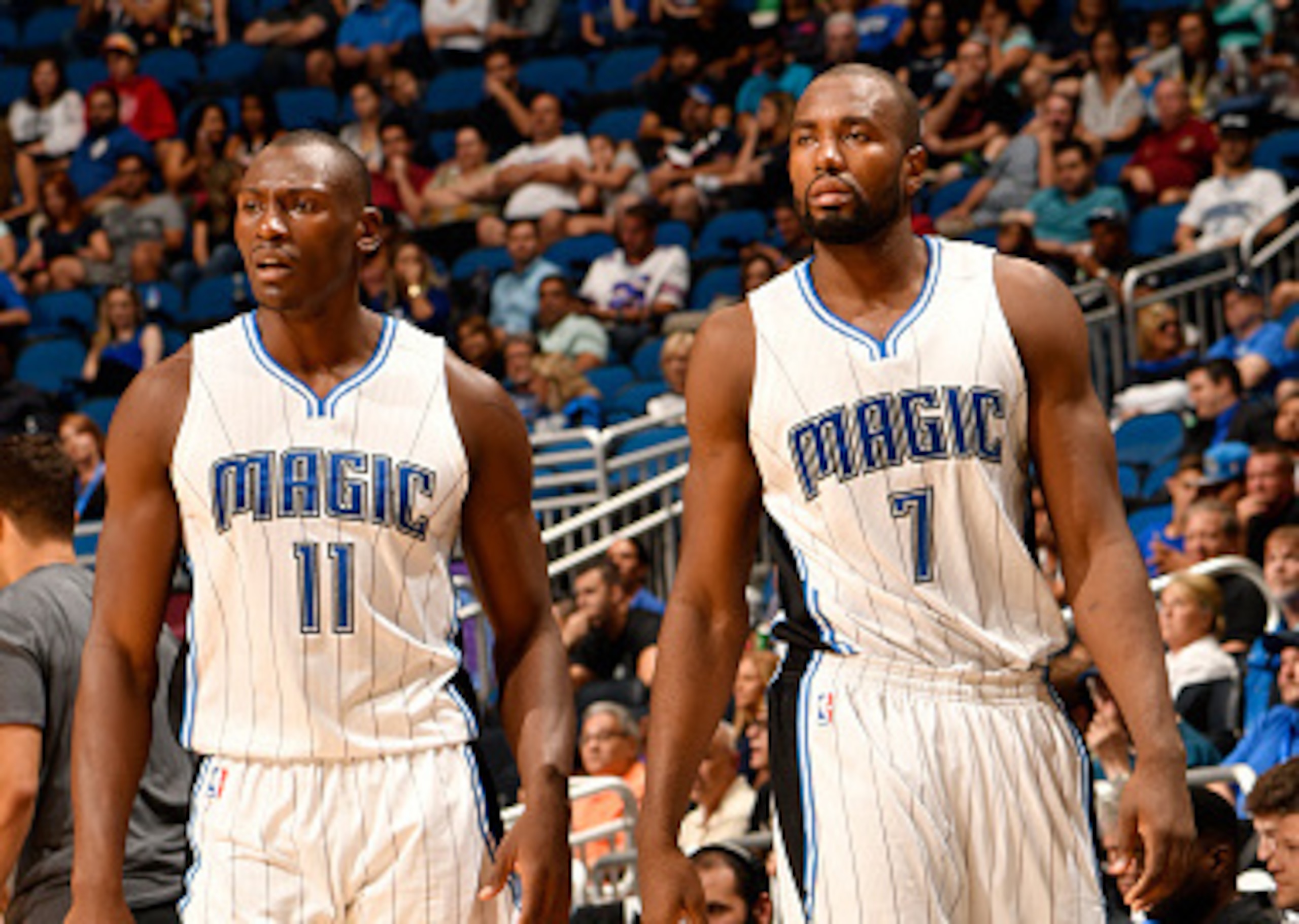
Size is supposed to be the Orlando Magic's greatest strength. "Good luck scoring on them when Bismack Biyombo subs in for Nikola Vucevic," optimists said. "The Aaron Gordon-Serge Ibaka-Biyombo frontcourt will be a defensive terror."
So much for that.
Orlando has one of the six worst defensive ratings in the league thus far, and most of its frontcourt tricycles that feature Gordon at the 3 are getting positively slammed:
| Gordon-Ibaka-Biyombo | 9 | 40.1 | 125.5 | -85.4 |
| Gordon-Jeff Green-Biyombo | 2 | 0.0 | 83.3 | -83.3 |
| Gordon-Vucevic-Biyombo | 11 | 99.7 | 91.3 | 8.3 |
| Gordon-Ibaka-Vucevic | 74 | 104.8 | 107.8 | -2.7 |
| Gordon-Green-Ibaka | 13 | 77.5 | 136.0 | -58.5 |
| Gordon-Green-Vucevic | 6 | 102.6 | 127.3 | -24.6 |
Gordon isn't the problem. He is shooting 42.5 percent overall and a respectable 36.4 percent from three-point range. Almost two-thirds of his minutes are coming at the 4—no surprise, given the lack of success from the above lineups—but he is sticking with opposing 3s and is the Magic's lone player to rank as an above-average defensive contributor.
That's the extent of Orlando's success.
Evan Fournier is scoring at a nice clip but can't get going from deep amid poor spacing. Elfrid Payton is on pace to set a new career high in points per game but has seen his assist numbers crater within a bottom-four offense. And the frontcourt-by-committee scheme just isn't working.
Vucevic's minutes and offensive usage are dipping. Biyombo is forcing Orlando to play a man down on offense. Ibaka is being pulled away from the rim on defense and used as a long-range sniper on offense. This clunky frontcourt setup was always a fragile, if hopelessly flawed, merger, and the Magic should think about breaking it up sooner rather than later.
Washington Wizards
6 of 6
"Next game is a must-win for us at home, especially against Toronto," Marcin Gortat said of the Washington Wizards' Nov. 2 matchup with the Toronto Raptors, per the Washington Post's Candace Buckner.
Well, not really, right? That's the third game of the season. Rumor has it there will be 79 more.
"Yeah, but it's a must-win," Gortat reiterated. "We can't dig a hole and start the season 0-3. Nobody wants to do that."
Must-win games shouldn't exist in November. Alas, the Wizards have stumbled that hard out of the gate. They own the league's second-worst defense and a bottom-three offense that is only a smidgen better with John Wall in the game.
Each of the losses has come against a playoff unit from last season, so there's that as a crutch. But those are the kinds of teams the Wiz must beat to earn a postseason bid of their own.
Turning to early-season caveats doesn't work here. When Markieff Morris, Andrew Nicholson and Otto Porter are your most efficient scorers, you have a problem. Mahinmi's absence (left knee injury) is not a good enough excuse for a second-to-last-place defense. Nor is his eventual return reason for unbridled optimism.
Bradley Beal probably won't shoot at career-worst clips forever. Gortat and Wall should find their pick-and-roll mojo in due time. The Wizards most likely won't shoot miles south of 30 percent from three for the entire season, not when they have Wall attacking the heart of defenses. They can't be this bad for that long.
They can, however, be penciled in for another lottery appearance if the states of their offense and defense aren't reinvented soon.
Stats courtesy of Basketball-Reference.com and NBA.com. Salary information via Basketball Insiders.
Dan Favale covers the NBA for Bleacher Report. Follow him on Twitter @danfavale.

.jpg?w=2560 "Rap: Lions, LaPorta End Contract Talks")
.jpg?w=2560 "OBJ Calls Out Giants After Release")
.jpg?w=2560 "Report: Baker May Miss Up to 6 Weeks")
.jpg?w=2560 "EVERY Fantasy Football Update")