

Will 2016 Be the Year of the Tight End in the SEC?
Georgia’s Jeb Blazevich was in his element during last month’s SEC media days. The talkative and upbeat junior tight end enjoyed everything from the food to the plane ride, and he even had no problem revealing to reporters that he and a number of teammates liked playing Pokemon Go.
“Greyson Lambert is like a Pokemaster on our team; it's just ridiculous,” Blazevich said about the quarterback.
But Blazevich was also quick to notice that there were four other tight ends representing their teams at the four-day interview gauntlet in Hoover, Alabama, and even called them “studs.” The late replacement for running back Sony Michel, who stayed home after suffering a broken arm, make it clear he was proud to be among them.
.png?w=2560)
“I think it’s an exciting time to be playing tight end in football,” Blazevich said.
With Alabama’s O.J. Howard, Arkansas’ Jeremy Sprinkle, Ole Miss’ Evan Engram and Missouri’s Sean Culkin also making the rounds, it made one wonder if this might be a breakout—or special—season for the often-overlooked position group.
In comparison, there were only three quarterbacks (Tennessee's Joshua Dobbs, Ole Miss' Chad Kelly and Texas A&M's Trevor Knight), three running backs (LSU's Leonard Fournette, Kentucky's Jojo Kemp and Vanderbilt's Ralph Webb) and four wide receivers (Auburn's Marcus Davis, Texas A&M's Ricky Seals-Jones, Mississippi State's Fred Ross and South Carolina's Deebo Samuel) at media days.
“I hope,” Blazevich said about the year of the tight end possibility. “I think the position is evolving. I think people are trying to make tight ends more versatile.”
Culkin agreed: “It’s a cool position. You can do a lot in the game of football, and it’s changed over time, the tight ends specifically.”
Although a tight end didn’t finish in the top 50 of NCAA receiving leaders in 2015, one was the MVP of the College Football Playoff National Championship Game, and another keyed what was arguably the play of the year.
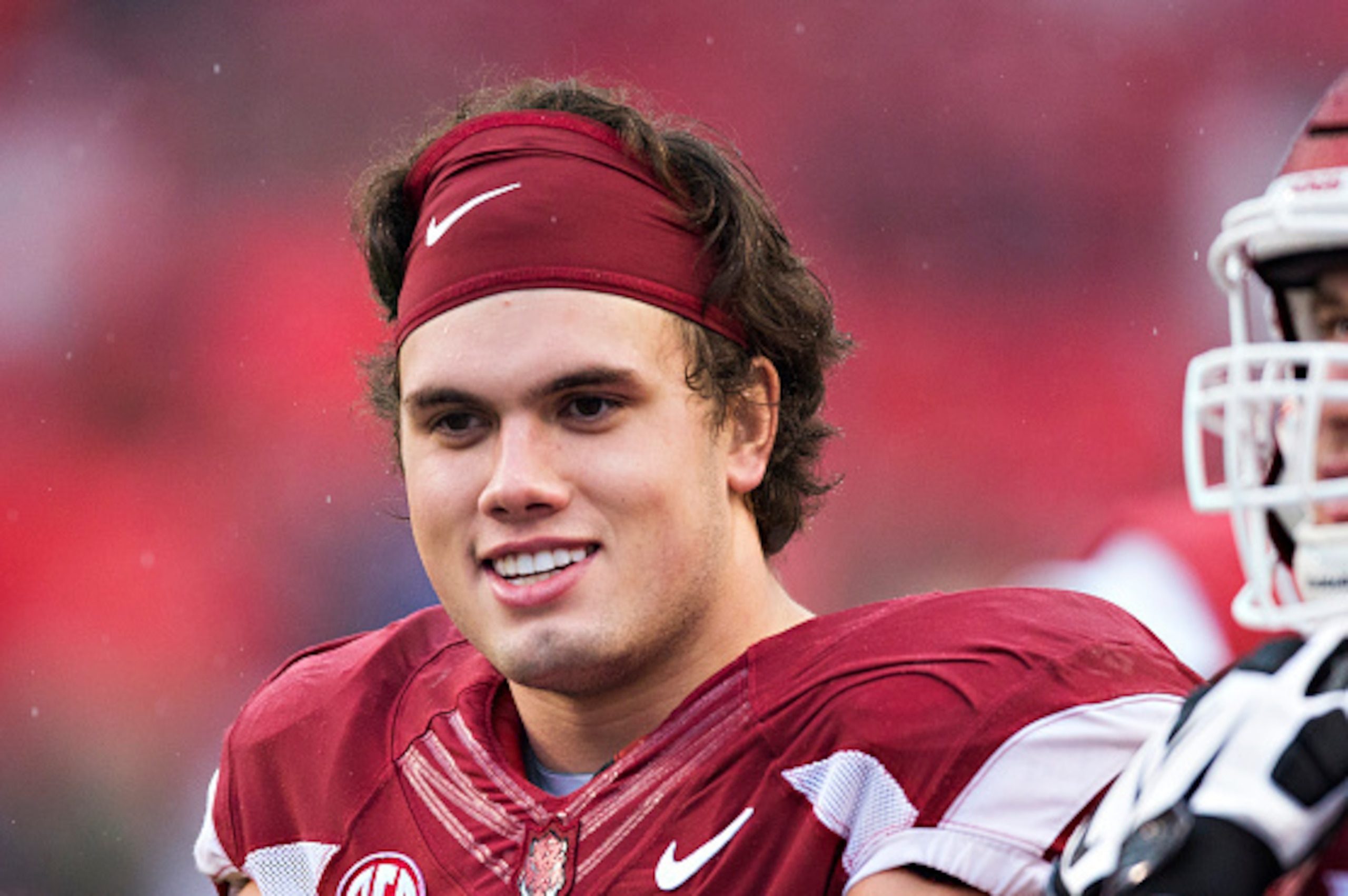
“I don’t think anything can top that one. ... It’s just a once-in-a-lifetime play,” Sprinkle said about teammate Hunter Henry’s catch and epic lateral on 4th-and-25 against Ole Miss. Brandon Allen subsequently threw his sixth touchdown pass and then ran for a two-point conversion to cap the improbable 53-52 overtime win that opened the door for Alabama’s title run.
That ended with Howard’s jaw-dropping 208 receiving yards and two touchdowns against Clemson. Henry ended up winning the Mackey Award as the nation’s top tight end, while Howard landed a championship ring.
“People kind of recognize me now, face-wise, and it’s definitely helped in notoriety,” said Howard, who last summer did a "man in the street" video in Tuscaloosa, Alabama, asking fans about the Crimson Tide football program and its tight ends. No one recognized him.
“He’s a fabulous receiver,” Alabama head coach Nick Saban said. “He's got great hands. He's got speed to stretch the field. He can make the tough catch. He can separate from man to man.”
Listed at 6’6”, 251 pounds, Howard has always been considered a bit of a physical freak, which is why he was a consensus 5-star prospect despite coming out of Autauga Academy, a small private school in Prattville, Alabama.
The biggest thing he had to work on with the Crimson Tide was his blocking, and it still took him three years to get to this point. It’s one of those positions in which development plays a huge part in eventual success.
“I look at Jeremy Sprinkle, when he got there, he was 6'6", 205 pounds,” Arkansas head coach Bret Bielema said. “If he turned sideways, you couldn't see him. He was skinny as skinny gets.
“Now he's a 6'6", 250-pound man that's ready to make his mark in tight end play in the SEC and in our team and in our conference and in this country. He can be a Mackey Award winner. He's got that much talent.”
| Name | School | Catches | Yards | TDs |
| Thomas Duarte | UCLA | 53 | 872 | 10 |
| Hunter Henry | Arkansas | 51 | 739 | 3 |
| Jake Butt | Michigan | 51 | 654 | 3 |
| Matt Welser | Buffalo | 63 | 625 | 3 |
| Ben McCord | Central Michigan | 39 | 612 | 5 |
| Terry Pettis | Middle Tennesse | 29 | 612 | 4 |
| O.J. Howard | Alabama | 38 | 602 | 2 |
| Jaylen Samuels | N.C. State | 65 | 597 | 7 |
| Bryce Williams | East Carolina | 58 | 588 | 4 |
| Billy Freeman | San Jose State | 48 | 586 | 6 |
That’s what National Football League teams are looking for, a difference-maker who might be the next Rob Gronkowski.
The New England Patriots tight end gets the most attention, but the Tennessee Titans' Delanie Walker, Gary Barnidge of the Cleveland Browns and Greg Olsen of the Carolina Panthers all had over 1,000 receiving yards last season, joining Gronk, while Washington’s Jordan Reed just missed the mark but scored 11 touchdowns.
Cincinnati Bengals tight end Tyler Eifert’s 13 receiving touchdowns were one shy of the league lead, trailing wide receivers Doug Baldwin, Brandon Marshall and Allen Robinson, and he tied with Odell Beckham Jr.
It’s a position where every team covets having a game-changing player, especially because it's so difficult to find, as it requires a big man with speed and good hands who can also block effectively. Ideally, a tight end is too big for opposing safeties to handle and too fast for the linebackers to cover.
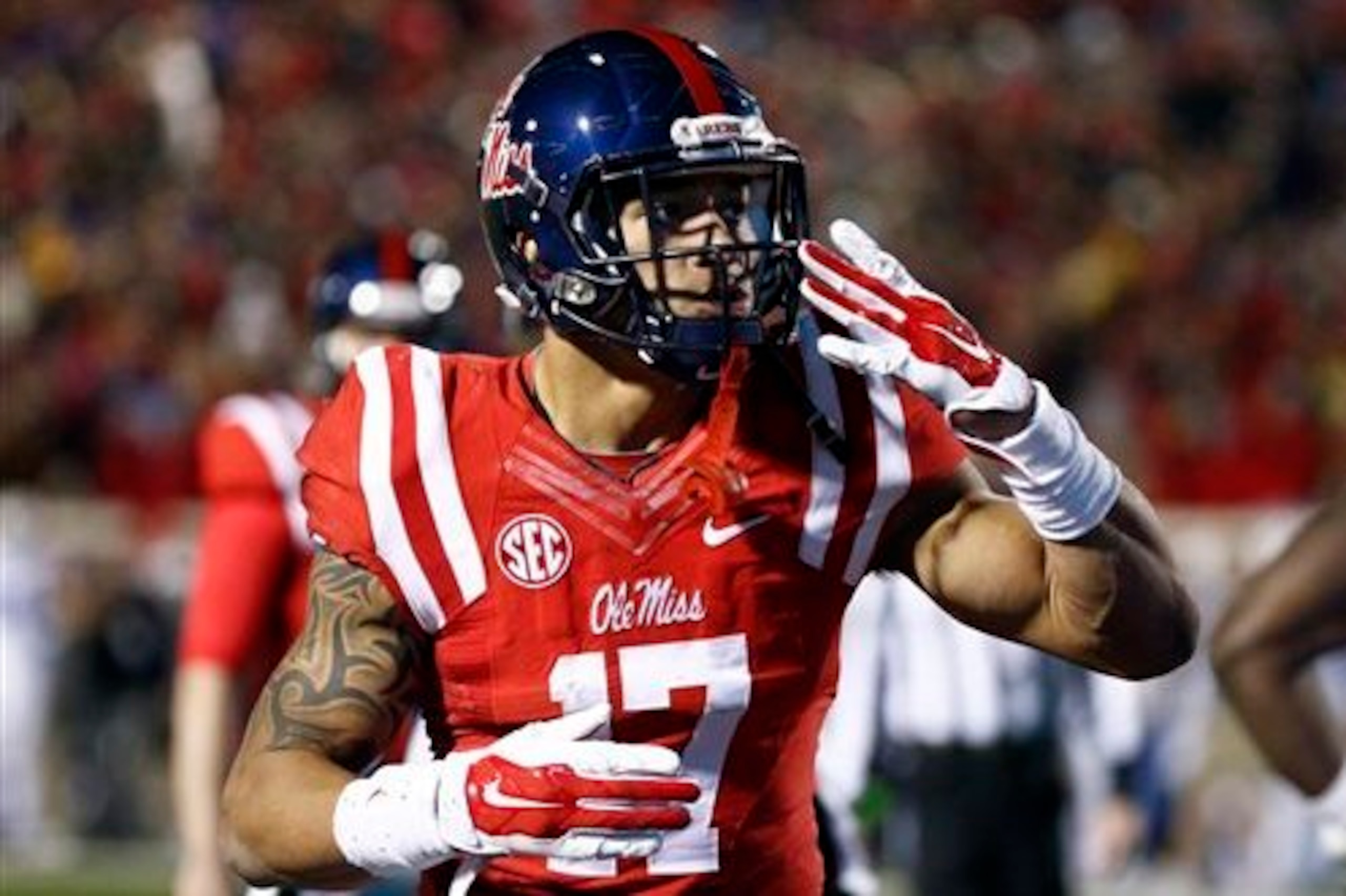
“I would say football in general is becoming a tight end game,” Howard said. “It’s hard to stop a good tight end in coverage, not just in the SEC, but overall.”
Everyone’s looking high and low. During the 2016 NFL draft, 11 tight ends were selected, down from 19 the year before, and there was almost an even split between Power Five schools and others.
Henry was the first to go in the second round to the San Diego Chargers at No. 35 overall, followed by Stanford’s Austin Hooper and Ohio State’s Nick Vannett in the third round. But then the selections came from schools such as Western Kentucky, South Carolina State, Texas-San Antonio and Montana State.
“We always try to be Tight End University; that is what we try to promote, that is what we try to claim,” Blazevich said.
Granted, Georgia has had its fair share of All-SEC tight ends, including Arthur Lynch (2013), Orson Charles (2011), Martrez Milner (2006), Leonard Pope (2004-05), Randy McMichael (2001) and Shannon Mitchell (1993), but the Bulldogs have never won a Mackey Award or had a consensus All-American at the position.
| Year | Consensus All-American | Mackey Award | Top NFL Draft Pick Following Season |
| 2015 | Hunter Henry, Arkansas | Hunter Henry, Arkansas | Hunter Henry, Arkansas (2016 draft) |
| 2014 | Nick O’Leary, Florida State | Nick O’Leary, Florida State | Maxx Williams, Minnesota (2015 draft) |
| 2013 | Jace Amaro, Texas Tech | Austin Seferian-Jenkins, Washington | Eric Ebron, North Carolina (2014 draft) |
| 2012 | Zach Ertz, Stanford | Tyler Eifert, Notre Dame | Tyler Eifert, Notre Dame (2013 draft) |
| 2011 | Dwayne Allen, Clemson | Dwayne Allen, Clemson | Coby Fleener, Stanford (2012 draft) |
| 2010 | Lance Kendricks, Wisconsin/ Michael Egnew, Missouri | D.J. Williams, Arkansas | Kyle Rudolph, Notre Dame (2011 draft) |
| 2009 | Dennis Pitta, BYU | Aaron Hernandez, Florida | Jermaine Gresham, Oklahoma (2010 draft) |
| 2008 | Chase Coffman, Missouri | Chase Coffman, Missouri | Brandon Pettigrew, Oklahoma State (2009 draft) |
| 2007 | Martin Rucker, Missouri | Fred Davis, USC | Dustin Keller, Purdue (2008 draft) |
| 2006 | Zach Miller, Arizona State | Matt Spaeth, Minnesota | Greg Olsen, Miami Hurricanes (2007 draft) |
Most programs haven’t. Since 1972, when the NCAA started specifically listing tight ends among its annual consensus All-Americans, only 30 different schools have had a player achieve that distinction, with elite programs such as Alabama, Michigan and Texas still looking for their first.
Led by BYU and Missouri with four each (although the Cougars’ Gordon Hudson repeated in 1982 and '83 and the Tigers' Michael Egnew tied for the honor in 2010), just eight schools have had more than one.
The only consensus All-American tight ends from the SEC during that stretch have been Hunter, Kentucky’s James Whalen (1999) and Ole Miss’ Rufus French (1998). Yet the Rebels haven’t had a tight end selected in the NFL draft since Carolina took Kris Mangum in 1997 as the 27th selection in the seventh round (No. 228 overall).
Those are trends that Engram and Howard hope to break this year, and both of their head coaches have said that they need to get their tights ends more involved in the passing game.
“That was most of the conversation with the coaching staff when I was making my decision to come back, so all that stuff is going to take place in the game plan once we get into the season,” said Engram, who went to elementary school with Henry and would like nothing more than to follow him as a Mackey winner.
So maybe it will be the year of the tight end in the SEC. It won’t be like last season with running backs, with Alabama’s Derrick Henry winning the Heisman Trophy after Fournette was the clear front-runner for most of the campaign, but there are a whole lot of tight ends looking to make their mark.
“I feel like our team can be really successful if I’m involved, getting the ball and getting more touches,” Engram said. “What I have to offer the team and the offense is unique.”
Quotes were obtained firsthand unless otherwise noted. Star ranking courtesy of 247Sports.
Christopher Walsh is a lead SEC college football writer. Follow Christopher on Twitter @WritingWalsh.
.jpg?w=2560 "Florida Shooting")
.png?w=2560)


.jpg?w=2560 "Latest Peyton-Colts Rumors")


.jpg?w=2560 "Landing Spots for Trade Candidates 📍")
.jpg?w=2560 "Ugly Jets Scoring Stat 😳")