Controlled Aggression & Versatility Key to Mason Holgate's Everton Breakthrough
Watching Premier League teams go through pre-season rituals can be a laborious task, and the amount of real, useful information you can extract is severely limited.
As managers will often stress, the summer exhibition matches are almost solely designed for fitness purposes, with excellent individual showings often serving as misnomers due to the casual nature of the games and, often, the regrettable skill level of the opposition.
But pre-season matches do drop the odd nugget here and there, and one thing you can identify by perusing the squad lists and watching the action is which academy players are on the verge of the first-team. From Manchester City’s Tosin Adarabioyo to Thomas Robson of Sunderland, there are youngsters on the verge, and July becomes their potential portal for success.


Perhaps more than any other, Mason Holgate used the months of July and August to his advantage, cementing himself in his manager’s thoughts and rubber-stamping his graduation to the first-team.
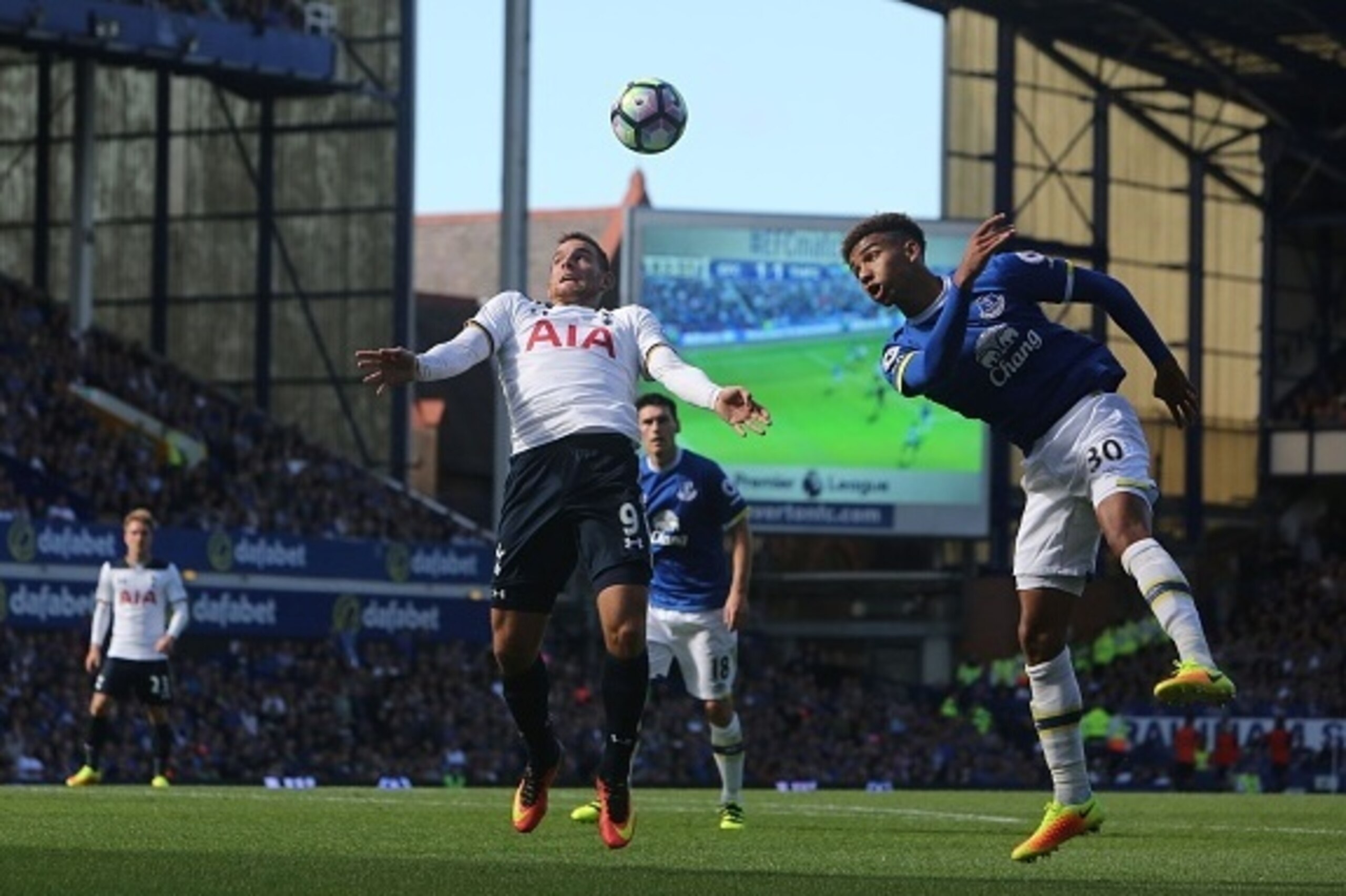
A surprise starter on the opening day of the season against Tottenham Hotspur, the former Barnsley youth product acquitted himself superbly against a UEFA Champions League side and piqued the interest of the wider Everton audience.
The Barnsley Way?
Holgate invites natural, inevitable comparisons with John Stones. They both graduated from the Barnsley youth academy—a stage upon which possession football is preached—and both have shown enough versatility to play in two positions.
There’s also a third name to throw in here when comparing him, as Joe Gomez, of Liverpool and formerly of Charlton Athletic, has similar traits and took a similar route into first-team football.
Holgate played as a centre-back for Barnsley’s youth side but broke into the senior setup at right-back, making just over 20 appearances for the Tykes in League One. His comfort and ease on the ball made it an easy switch to make, and he would roam forward frequently with the ball at his feet.

He has enough agility to ghost past players when required, and this allowed him to play a multi-faceted full-back role. Unlike a player such as Khalid Boulahrouz or Carlos Cuellar, who when switched to the right were given pure defensive briefs, Holgate was still encouraged to beat his man, take the ball in tight spaces high up and deliver crosses.
The insistence on dribbling out of danger and away from pressure we see from Stones has not manifested fully in Holgate’s game, though he rarely punts the ball clear in a panic. He is at the crest of a new wave of possession-happy young English defenders—Stones and Gomez included on that crest—and his intelligence on the ball is a thing to admire.
Controlled Aggression
When attempting to sculpt a defender who is as good on the ball as off it, there are times when the trade-off in skills goes wrong; John Terry is immaculate defensively but struggles in possession under pressure, while accusations that Stones’ defensive skill-set isn’t really good enough yet are well-founded.
In Holgate, though, there appears to something of an equilibrium: He’s comfortable on the ball and skilled at passing out from the back, but he also boasts an impressive, sharp defensive acumen.
During pre-season, be it from the right or centre, he showcased a nose for the ball and an obvious understanding of his positional responsibilities. He then impressively carried that into his Premier League debut at the weekend.
Playing neither as a right-back nor a traditional centre-back, but as a right-sided centre-back in a three-man defensive line, he excelled against a very good attacking Spurs unit. His performance was made all the better by the fact he had an out-of-position James McCarthy at right-wing back just ahead of him, and Holgate would have had to help guide the Irishman through the game positionally at times.
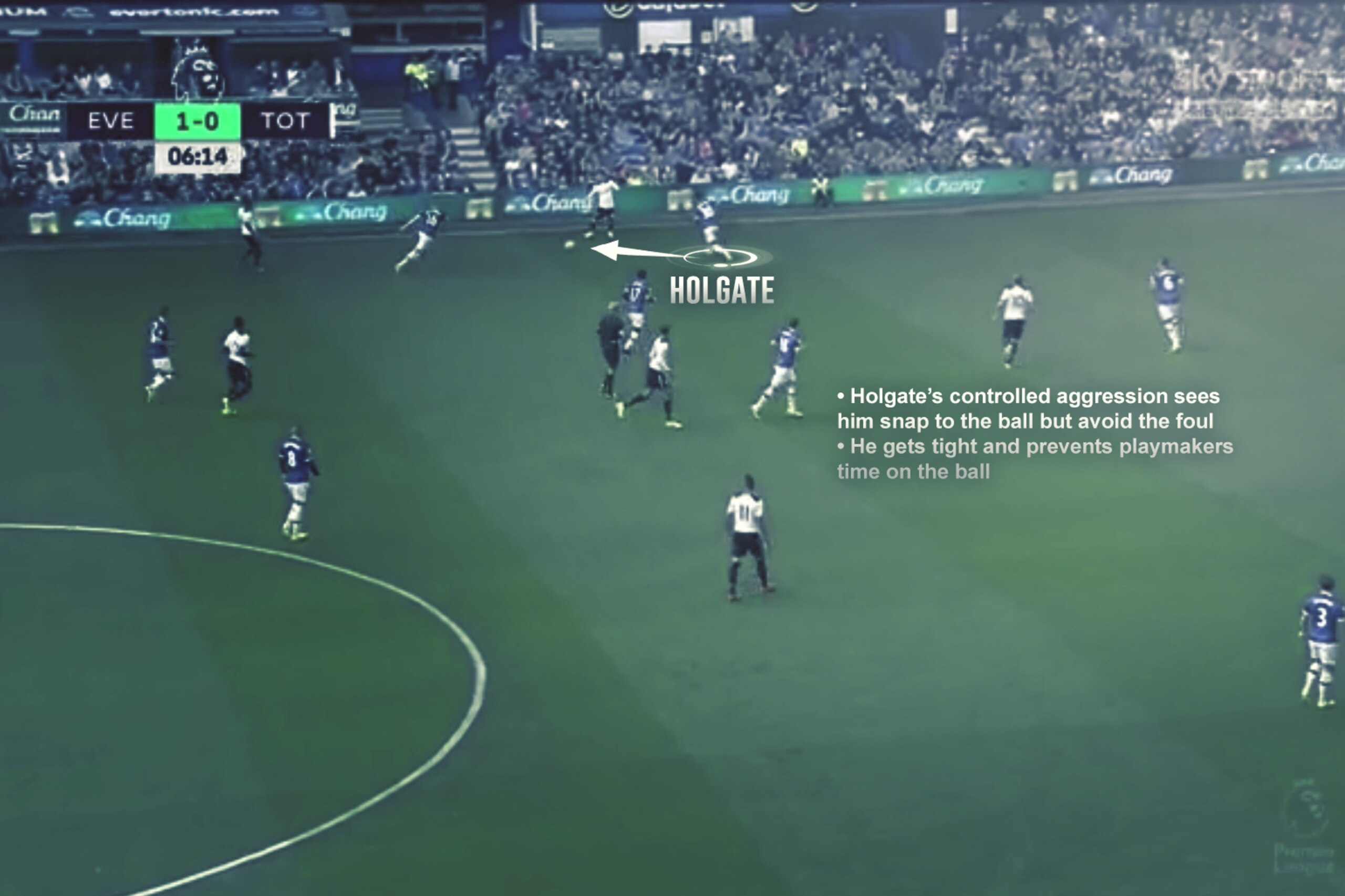
In the first 15 minutes, he showcased impressive controlled aggression and an ability to get tight—but not too tight!—to his marker. The three-man defence allowed a three vs. one at the back, and that meant Holgate could leave the line to pursue his marker when he dropped deep.
Ronald Koeman asked McCarthy to track Danny Rose and Leighton Baines to track Kyle Walker—essentially limiting them to one-on-one battles—leaving Holgate a changing marker based on who entered his zone.
Covering zonally with no set man is the harder of those two jobs, and Holgate did well. Questions will be asked of his conduct for the equalising goal—a header from Erik Lamela, who at the time was indeed his man—but credit should be heaped on the Argentinian for a great finish, and Harry Kane for a near-post run that forced Phil Jagielka to reassign marking at the last second.
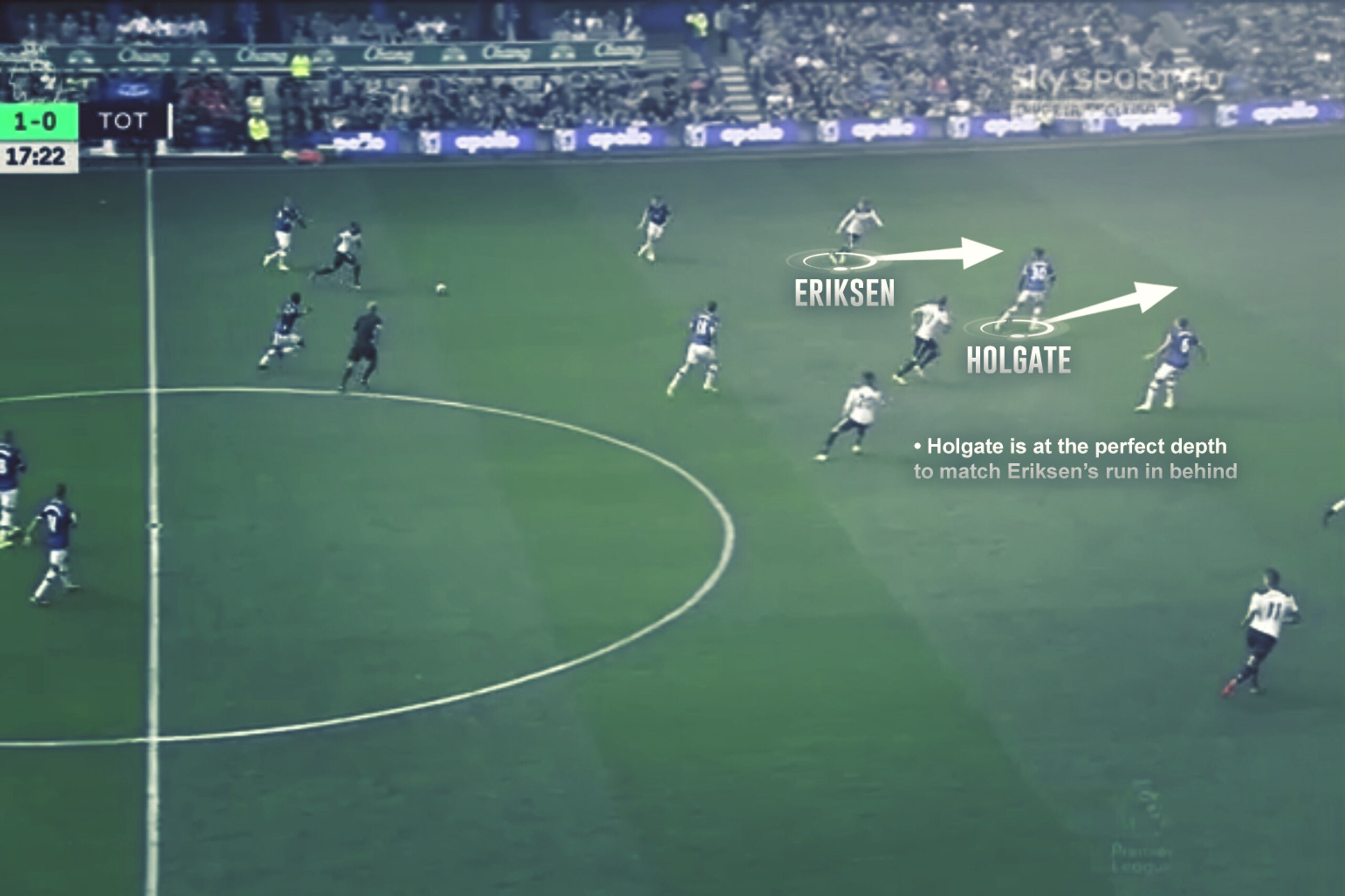
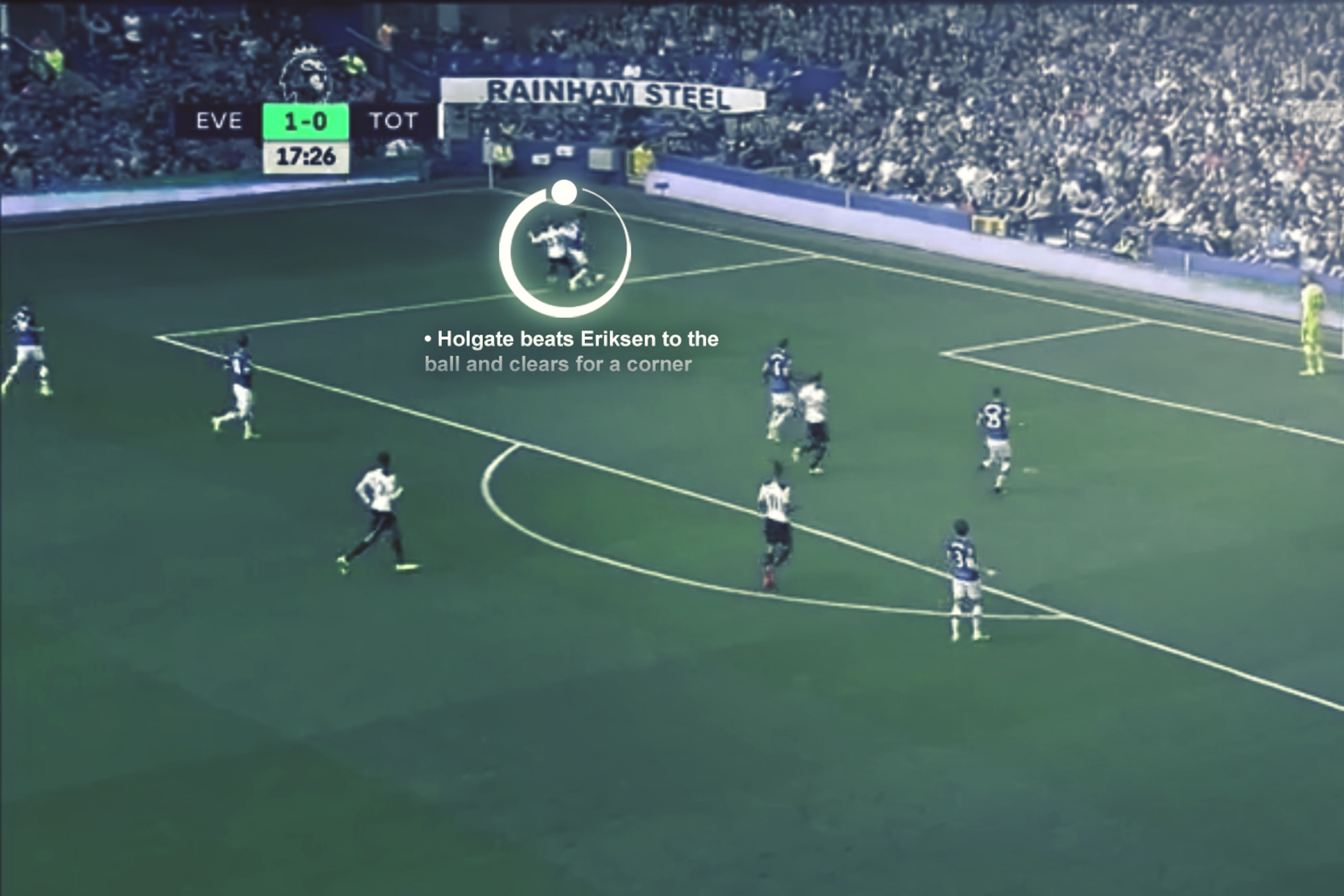
Holgate has also come to rely on his speed when it comes to tracking runs in behind, and his play is indicative of a defender who is willing to mirror a striker’s run on the turn and back himself to beat his opponent to the ball.
While you probably won’t catch him trying to match Jamie Vardy, roaming attackers who entered his zone were given a step and then closed off, just like in this example involving Christian Eriksen.
The only way in which Holgate’s style and effectiveness seen at youth level was not translated to his Premier League debut was his passing, which looked a bit shaky. He’s been known to launch wonderful cross-field switches to change the point of attack for his side, but against Spurs, he saw many of his passes intercepted and even caused a bit of worry when passing short.
Weaknesses
While the iffy passing on Saturday can be dismissed as nerves, Holgate does have obvious areas to work on. At 19 years of age, he understandably comes across as a little frail, and his body needs bulking up if he’s to stand the rigours of weekly Premier League play.
As aggressive and proactive as he is, he’ll be brushed aside by the likes of Diego Costa and Zlatan Ibrahimovic; if he gets too tight to them and is then rolled (with ease), he’s suddenly the wrong side and chasing a striker up the pitch into a pocket of space he has left.
He also needs to work on his aerial skills, most notably the timing of his jumps. If his future really is at centre-back—and it probably is, given the frame he will fill out—there’s plenty to be taught when it comes to leaving the ground and challenging for balls. He often gets sucked in—again, a product of his aggressiveness—and is hardly dominant when rising with his marker.
The two weaknesses are linked, and they’re to be expected given his size, age and style. Yes, the likes of Kurt Zouma and Jonathan Tah showed no such frailties when they were the same age, but they are entirely different types of centre-backs and had their own problems coming through (Zouma, for example, only really learned to mark properly from 2015 onward).
Facing up so strongly against the likes of Kane, Eriksen and Dele Alli on your Toffees and Premier League debut is a sure-fire way to turn heads, and Holgate did just that.
He might well drop out of the side in the short-term due to the arrival of Ashley Williams, but after breaking through in such fashion and given the concerns over the rest of Everton’s central-defensive personnel, don’t be surprised if Holgate forces his way back into the XI before the end of the season.



.jpg?w=2560 "Latest Peyton-Colts Rumors")