Down but Not Out: QBs Need Focus, Heart to Make Most of 2nd Chances
On Jan. 2, 2014, Trevor Knight was on top of the college football world.
The then-starting quarterback for the Oklahoma Sooners threw for 348 yards and four touchdowns in the Allstate Sugar Bowl against Alabama. He led his Sooners to a surprising 45-31 romp over the defending national champs to end the Tide's season on a two-game losing streak.
Everything was perfect.

Until it wasn't.
Knight guided Oklahoma to a 6-2 start in 2014—a season that included a shoutout from singer Katy Perry on ESPN's College GameDay—before a spine injury suffered late in a blowout loss to Baylor on Nov. 8 kept him out of the Sooners' final three games of the regular season.
He came back to start the Russell Athletic Bowl against Clemson. But he tossed three picks and left the door open for an offseason quarterback battle in Norman that eventual winner Baker Mayfield turned into a Katie Ledecky-esque blowout rather than a real race.
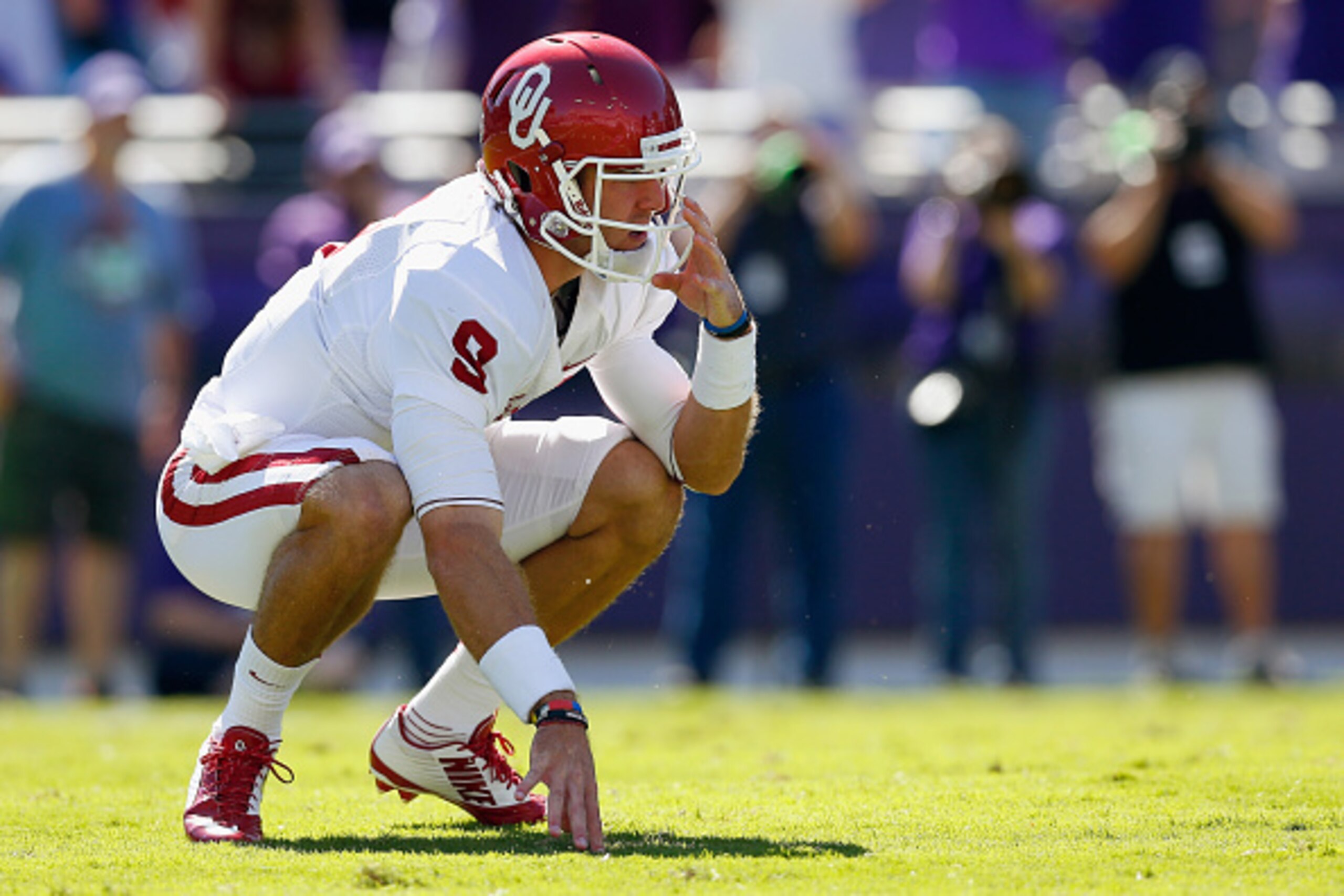
That's a good thing, if you ask his new head coach—Kevin Sumlin of the Texas A&M Aggies.
"What makes him what he is, is that he's been to the highest highs and won games against quality opponents," Sumlin said. "And he's lost his job. How you handle that can be a humbling experience, but it also can be a learning experience. He's such a mature guy, that he's handled it well, come into our locker room, been himself and earned respect."
That's what should be expected of Knight, according to Dr. Bhrett McCabe, sports and performance psychologist and founder of The MindSide.
"We've seen time after time the value of graduate-transfer quarterbacks," McCabe told Bleacher Report. "They're not taking a lot of classes, so they can essentially focus on being professional quarterbacks in the college ranks. They're older, more mature and have seen the game from a lot of angles."
Knight's primary goal when he got to College Station, shortly after Clemson knocked Oklahoma out of the College Football Playoff on New Year's Eve, was to attack this new opportunity like a pro.
"Sometimes life throws turns at you that you don't really expect, but you just pick it, run with it and run through those doors," Knight said. "Make sure it happens the right way."
Former Heisman Trophy contender J.T. Barrett is going through a similar battle at Ohio State.
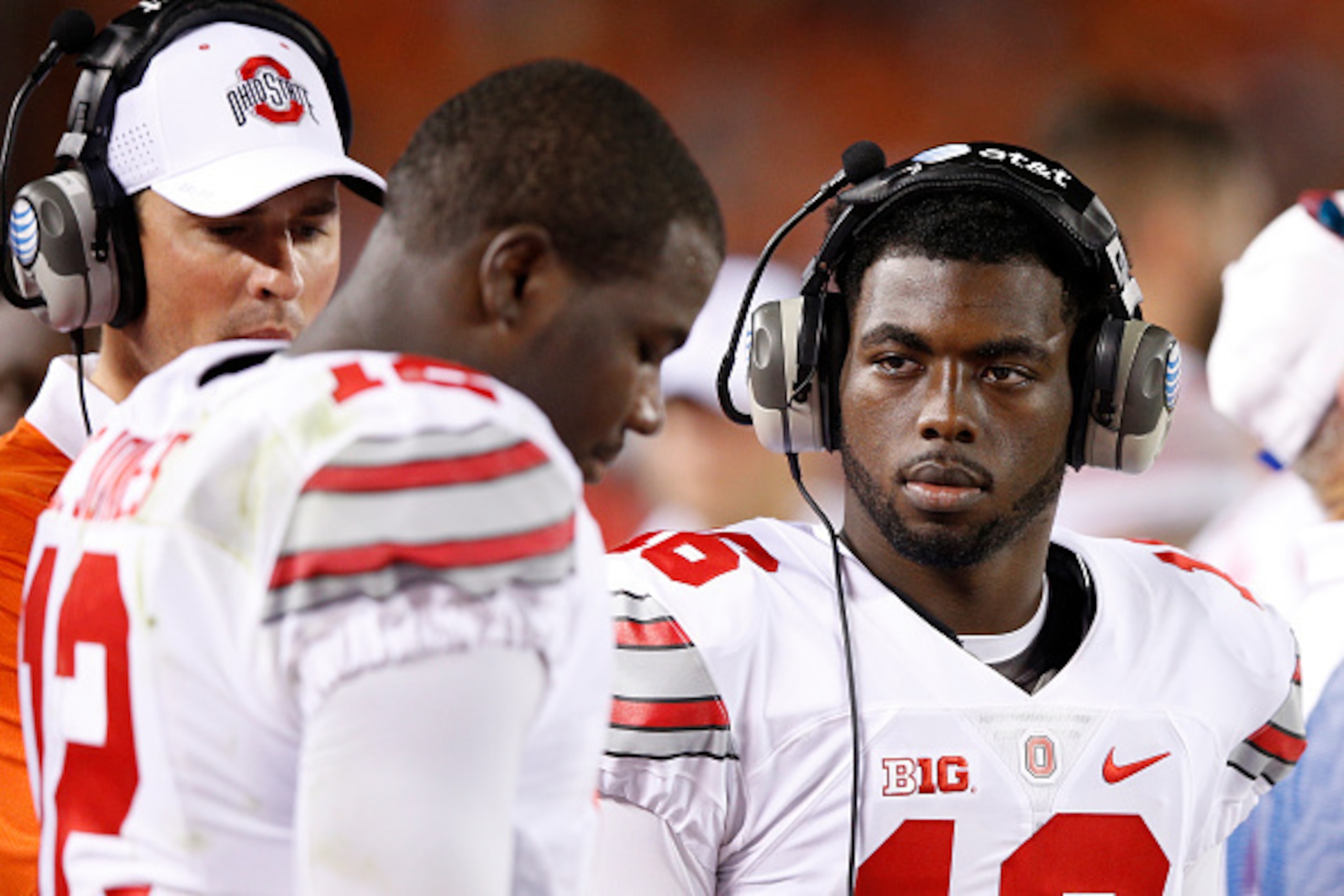
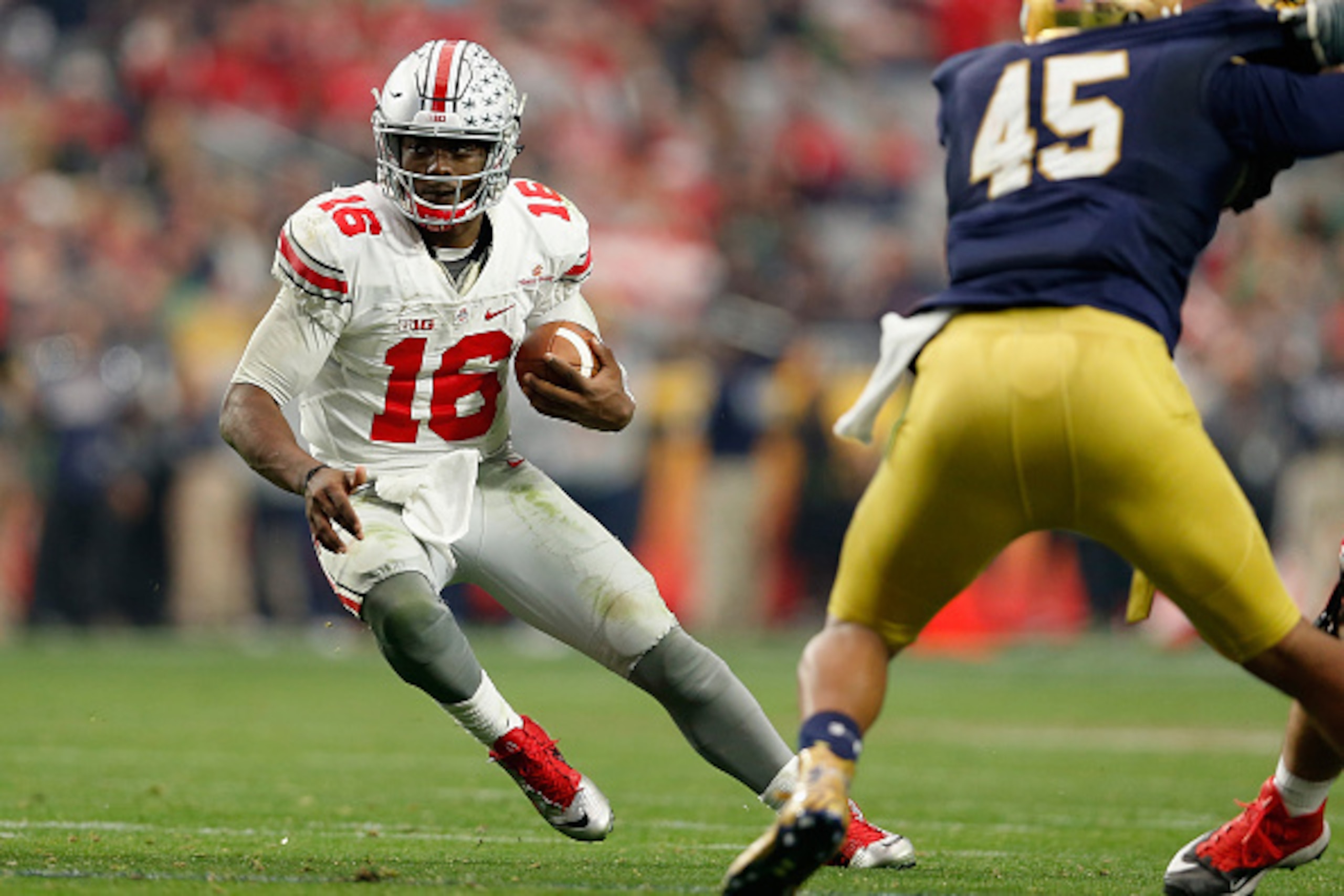
After leading his team into position to earn a playoff berth in place of injured starter Braxton Miller in 2014, Barrett accounted for 34 passing touchdowns and 11 rushing touchdowns during the regular season.
But Barrett broke his ankle in the regular-season finale against Michigan, opening the door for Cardale Jones. The latter finished off the Wolverines, dispatched Wisconsin in the Big Ten Championship Game, stunned Alabama in a national semifinal, finished off the national title versus Oregon and opened the 2015 campaign against Virginia Tech as the team's starter under center.
"Yeah, I feel like it was a little difficult, but you just try to put yourself in the best position to play, and that's all I tried to do was make sure I could focus on what I could control, and that was something that Coach [Urban] Meyer tried to do his best, as far as me and Cardale and who was gonna play just trying to make sure Ohio State had the best opportunity to win games," Barrett said, via B/R's Ben Axelrod.
Jones struggled, Barrett got healthy and eventually became the starting quarterback down the stretch during a season in which the Buckeyes were a last-second field goal by Michigan State away from running the regular-season table.
"He did not have a great training camp last year for whatever reason," Meyer said at Big Ten media days. "We had a great conversation, actually drove him to the airport on the way here, talking about that. And there was a lot of distraction with Cardale, with who is going to be playing quarterback. And he was still overcoming a pretty serious injury that took a long time to heal."
The security that Barrett feels knowing that he's "the man" at Ohio State will help him recapture his 2014 magic.
"He's the singular focus right now," McCabe said. "He's not thinking 'I have to play well to maintain my position.' He's thinking 'I have to execute the game plan that gives us the chance to be successful.' The coaching staff was doing what they thought was right. Now, the question is, how do they take a player who doesn't have that external pressure of another player and keep him focused on execution. That'll be the challenge."
Several other quarterbacks are in the same boat this year, including TCU (and former Texas A&M Aggie) Kenny Hill, former Texas Tech and current Cal Bear Davis Webb, and potentially others who are vying for roles as starting quarterbacks after being knocked down to earth by the college football world.
In fact, Webb's move to Berkley might pay off with him becoming a first-round draft pick, according to B/R video analyst Michael Felder.
For quarterbacks, having the ability to get back up after being knocked down—both figuratively and literally—is something that is incredibly challenging, especially for college players who typically haven't experienced major athletic hurdles in their lives.
The ones who can't handle it typically can't get over that mental hurdle that plagues quarterbacks who fail to live up to their own expectations or those of their teams.
"For a quarterback to get back into a proper state of mind, it's about having an execution game plan rather than a mitigation game plan," McCabe said. "Instead of looking to four wide receivers, it's having one or two with the third option of a dump off. The ones who succeed keep it simple, and allow momentum to build both psychologically and physically. Some guys struggle to do that."
For quarterbacks to make the most of their second chances, they have to trust themselves.
"When they're fully confident and their minds are clear, they can walk to the line of scrimmage and go through their 'if/then' reads," said McCabe. "So 'if the linebacker does X, I do Y.' It's very intuitive. They're trusting what they've trained themselves to do. When they're struggling, they play very preventative and say 'if the linebackers does X, I can't do Y.' That's where you see trouble."
Both Barrett and Knight have high hopes individually, and for their teams. The highs and lows they've experienced will help them now that they're considered veterans of the sport.
"It's like a flight crew," McCabe said. "The more senior flight attendants and crew have a plan in case something doesn't go right. And as passengers, the vast majority of time, we have no idea what happened. Younger, less-experienced crews can't see the full scope of solution. So their main solution is self-preservation—trying to preserve their image and capability in the hopes that a better day will come about."
Whether either or both has success with their second chances remains to be seen. But it's clear they're attacking the chance with the right mindset.
"Don't walk to something, run to something," Knight said.
Quotes obtained firsthand, unless otherwise noted. Statistics courtesy of cfbstats.com, unless otherwise noted. All recruiting information is courtesy of 247Sports.
Barrett Sallee is the lead SEC college football writer and national college football video analyst for Bleacher Report as well as a host on Bleacher Report Radio on SiriusXM 83. Follow Barrett on Twitter @BarrettSallee.
.png?w=2560)
.jpg?w=2560 "Colts Texans Football")
.jpg?w=2560 "Chiefs, Steelers Eye WR Trades")