
NFL Counterparts for College Football's Top 10 WRs
Greatness at the college level doesn't always translate to the professional game, something that applies to all sports but is especially prevalent in football. College stars who thrive in that domain aren't guaranteed to have the same success once they get into the NFL, but in looking ahead we can't help but hope they will.
Part of the process of evaluating college players is to identify who in the pro game they most resemble. This is an inexact science, by all means, but it does help give an idea of what a standout player might look like when he trades in his college uniform for one with the NFL logo on it.
Top-flight wide receivers are a key commodity in the NFL, as evidenced by the presence of at least three drafted in the first round in each of the past five seasons. The 2016 draft saw four wideouts go in the first round and 31 get taken over the course of all seven rounds, and at one point or another each of those pass-catching prospects were compared to pros.
We're doing the same with college's latest crop of standout receivers. Using Bleacher Report NFL draft expert Matt Miller's list of the top 10 draft-eligible wideouts as a guide, we've identified which pro player is their ideal counterpart.
Jehu Chesson, Michigan
1 of 10
Similar to: Braylon Edwards (retired)
A fifth-year senior who is coming into his own at the tail end of his college career, Jehu Chesson has a blend of size (6'3”, 203 lbs) and pass-catching skills and has proved to be a reliable target. This was particularly so in 2015 when 12 of his 50 receptions resulted in third-down conversions and six resulted in red-zone scores.
"Chesson is not only the best route runner in college football, but he is a natural pass-catcher with strong hands and exceptional ball skills," NFL.com's Bucky Brooks wrote.
Chesson only had 29 catches in his first three college seasons before becoming more involved in the offense, to the point that he's now Michigan's best offensive weapon. If not for the presence of Amara Darboh and tight end Jake Butt, Chesson's numbers would probably be bigger to this point and make the comparisons to Edwards more noticeable.
Edwards had three big years with the Wolverines from 2002-04 before going third overall in the 2005 NFL draft and posting four 50-catch seasons in the pros.
Stacy Coley, Miami (Florida)
2 of 10
Similar to: Ted Ginn Jr., Carolina Panthers
Labeled by Bleacher Report's Matt Miller as the best slot receiver among draft-eligible college players, Stacy Coley spends more time on the outside with Miami but has the game to translate to a more interior role in the NFL. Namely, his speed and footwork can help offset a smaller frame (6'1”, 195 lbs) that could make him susceptible to getting outmuscled by bigger pro defensive backs.
In the slot, though, Coley could take advantage of his wheels if he catches the ball in space. According to Austin Smith of DraftTek.com, Coley's game is “about finding a crease and getting to full speed.”
This is much the way Ginn has operated in the NFL when playing receiver. Though his career has been more defined by his work as a return man, this past season Carolina gave him plenty of work on offense, and he translated that into a career-high 10 touchdowns.
Coley won't be able to fall back on special teams to help him get by, though, so his senior year will be about rounding out his receiving game and looking to handle the physical aspects better.
Corey Davis, Western Michigan
3 of 10
Similar to: Marvin Jones, Detroit Lions
Corey Davis heads into his senior year with a good chance to become the FBS career receiving yards leader. But while that will make for a significant achievement that defines both his persistence and longevity, it doesn't necessarily translate to becoming as prolific in the pros.
The 6'3”, 213-pound Davis has 3,778 yards on 234 receptions with 33 touchdowns in three seasons. Another 1,228 yards—a number he surpassed in both 2014 and 2015, despite now-departed teammate Daniel Braverman catching 194 passes for 2,368 yards in that span—and he'll surpass former Nevada receiver Trevor Insley's record of 5,005 yards from 1996-99.
Never heard of Insley? That's because he went undrafted out of college and his only NFL experience came in 2001, when he had 14 catches and one TD with the Indianapolis Colts. That's the case with most of the top names on the FBS career receiving list, since most were four-year players who stayed in college because they weren't good enough to turn pro early.
Davis is the exception to that rule, as he'd have gotten a serious look had he come out last year. By staying in for that extra season he could lose value but can also use that time to hone his skills. Jones did the same by staying a fourth year at California, despite strong sophomore and junior campaigns, and though he was a fifth-round draft pick he's coming off a strong 2015 season that enabled him to sign a four-year, $40 million contract with Detroit.
.png?w=2560)
Malachi Dupre, LSU
4 of 10
Similar to: Michael Floyd, Arizona Cardinals
Depending on the stats he's able to put up this season, Malachi Dupre could end up having some of the lowest career receiving numbers of any potential first- or second-round NFL draft pick in some time. That's more due to the offense he plays in, as in his two years at LSU the Tigers have averaged 171 passing yards per game.
It's better to judge Dupre by what he does when he actually gets the ball thrown his way, which is convert. The 6'4”, 195-pound junior has 57 receptions and 11 of those have gone for touchdowns, including six of 43 in 2015.
"Dupre has proven to be a big-play threat and someone who can make plays down the field," Fansided.com's Jon Dove wrote.
Given more targets—either this season or when he gets into the NFL—his production translates to that of Floyd, who has 19 TDs on 209 receptions in four seasons with the Cardinals.
Travin Dural, LSU
5 of 10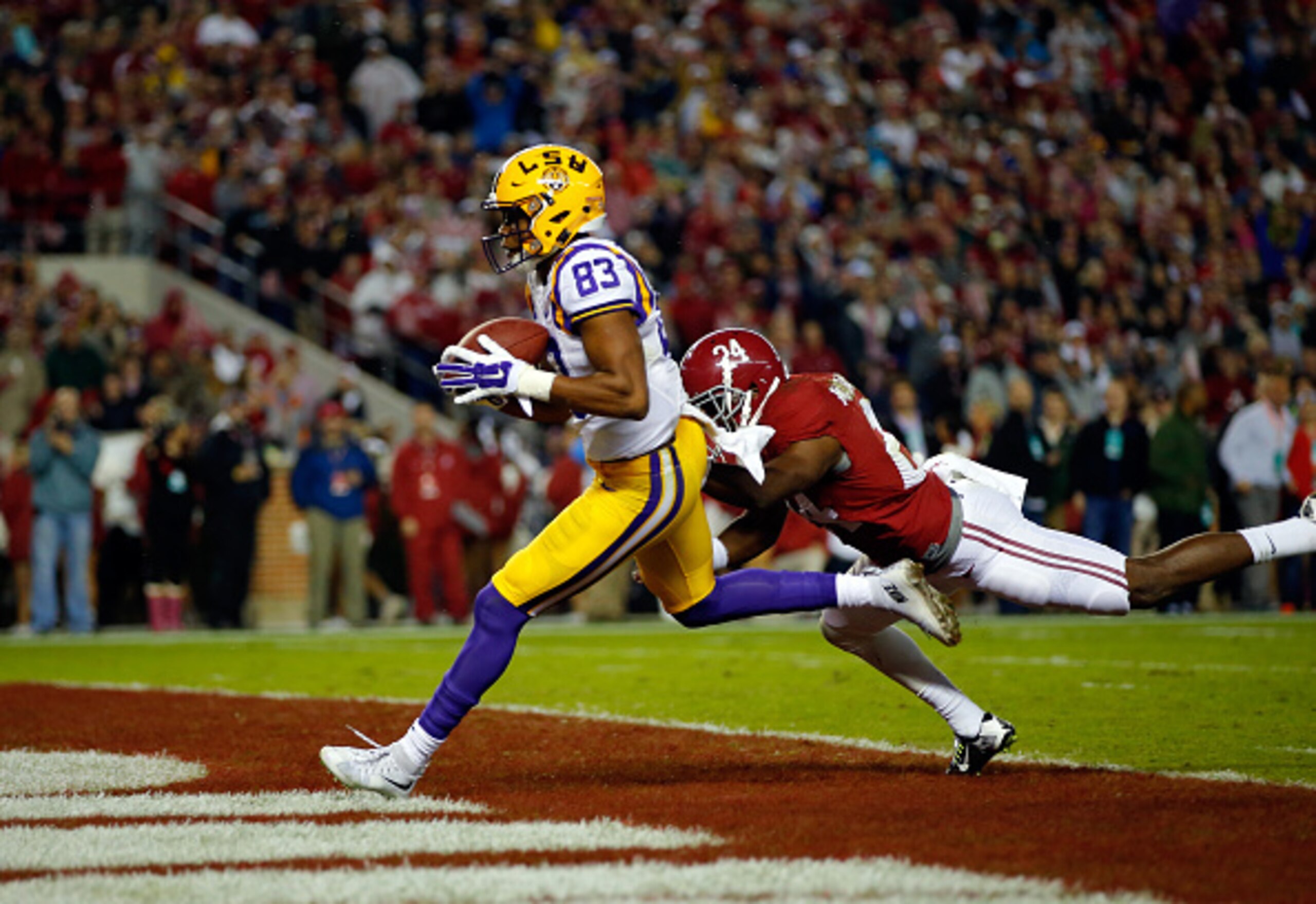
Similar to: Michael Crabtree, Oakland Raiders
Just like teammate Malachi Dupre, concerns about Travin Dural are directly related to the few opportunities he's had to show himself in LSU's pass-anemic offense. But additional red flags came up after Dural suffered a gruesome leg injury last fall, pushing back his pursuit of an NFL career for at least another year.
A fifth-year senior, the 6'2”, 230-pound Dural had 28 catches for 533 yards with three touchdowns in the Tigers' first 10 games in 2015 before tearing a hamstring in November. He was around 200 pounds at that time, but in preseason camp he's coming in much closer to 230, with Dural blaming the massive weight gain on Popeye's chicken.
If given the opportunity, Dural could have a big final season, which would make it easier to see why Crabtree makes for a good comparison. When at Texas Tech, Crabtree was far more productive—he had 231 catches in just two college seasons—but also could catch passes at all levels. Dural has 12 touchdowns in 72 career receptions, with 20 of those catches going for at last 25 yards and 22 of 24 receptions on third down have led to conversions.
Cooper Kupp, Eastern Washington
6 of 10
Similar to: Brian Hartline (free agent)
The FCS level doesn't get nearly as much national attention as the FBS, and understandably so, yet quality players and teams tend to come out of there each and every year. Just look at the 2016 NFL draft, where North Dakota State quarterback Carson Wentz was taken second overall.
If someone from FCS is going to go early in the 2017 draft, Cooper Kupp is the odds-on favorite.
The 6'2”, 215-pound redshirt senior has put up monster numbers in his career, with 311 receptions for 4,764 yards and 56 touchdowns in 39 games. Some of that production can be discounted by the quality of many FCS opponents, but Eastern Washington has played FBS teams each year and Kupp has dominated against them as well with 28 catches for 510 yards and eight TDs in those contests.
"Despite lacking blazing speed, Kupp works his release from different spots on the line of scrimmage and gains extra yards after the catch," Athlon Sports' Craig Haley wrote.
Kupp's strength and persistence compares favorably to Hartline, who has caught 344 balls in seven NFL seasons but is currently without a team for 2016.
Gabe Marks, Washington State
7 of 10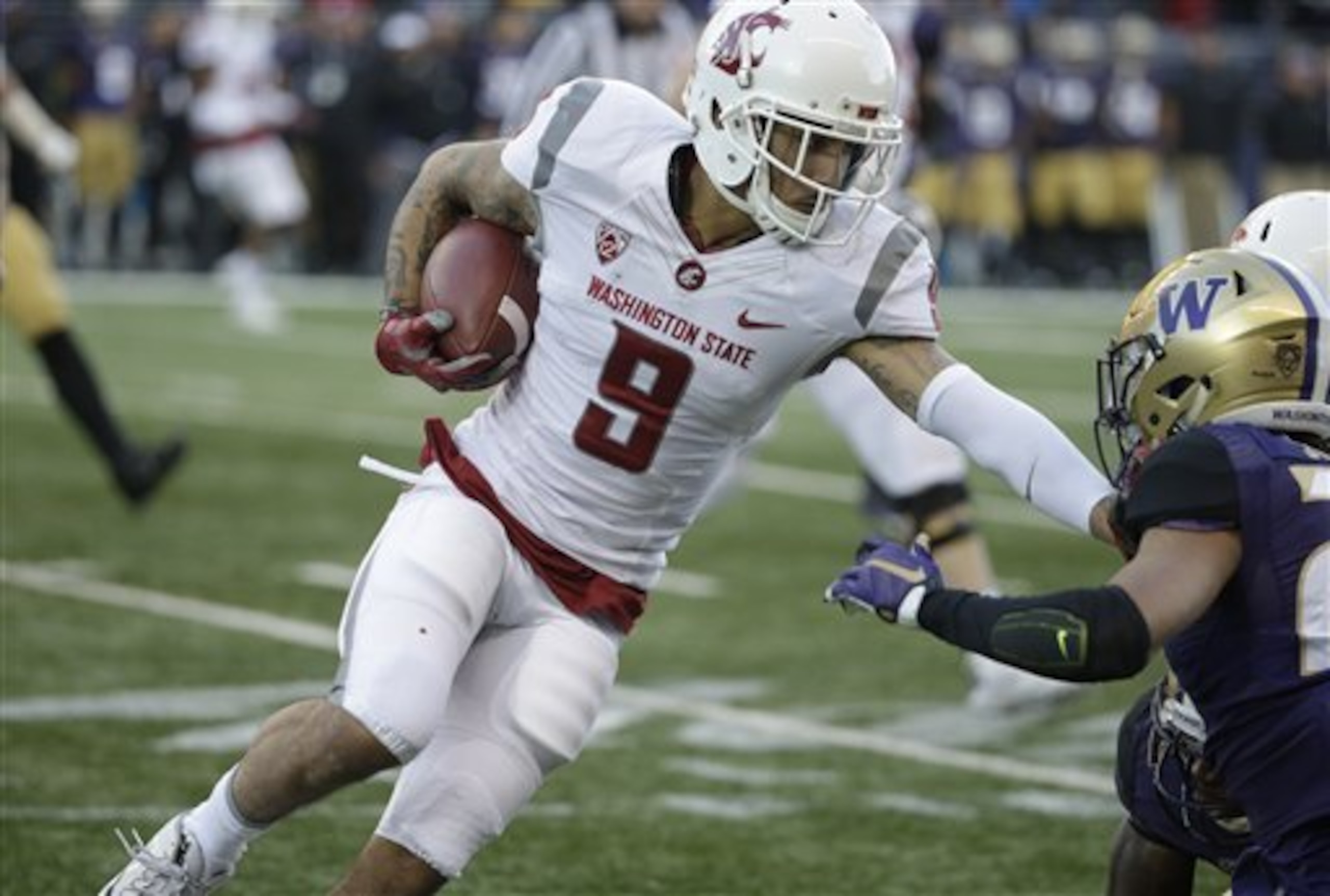
Similar to: Wes Welker (free agent)
A receiver whose college numbers are likely to get discounted because of the system, Gabe Marks shouldn't be judged simply on the fact his coach (Washington State's Mike Leach) prefers to throw the ball more than 70 percent of the time. Instead, he should be rated on what he does with all of those opportunities, which paints him in a much better light.
The 6'0”, 190-pound senior has 227 receptions for his career, including 104 last season. He turned that into 1,192 yards and 15 touchdowns, with 10 of those TDs in the red zone.
Don Williams was WSU's deep threat, while Marks was the possession receiver and he handled that job masterfully, and it's how he'll be able to make it in the NFL with continued development.
Marks is a few inches taller than Welker, but they are cut from the same cloth. Welker played for Leach at Texas Tech and parlayed his possession skills into a long pro career that's included five 1,000-yard seasons.
Fred Ross, Mississippi State
8 of 10
Similar to: Jarvis Landry, Miami Dolphins
Mississippi State hasn't had a wide receiver drafted since 1996, but Fred Ross figures to end that drought assuming he continues to perform like he did last season. The 6'2”, 205-pound senior had a school-record 88 catches for 1,007 yards in 2015, though teammate De'Runnya Wilson (who turned pro and went undrafted) was the bigger scoring threat with 10 touchdowns to Ross' five.
A slot receiver who has the size to play further from the middle if needed, Ross' biggest strength is his ability to turn short catches into big plays. CBS Sports' Dane Brugler noted Ross "works back to the ball well and understands how to manipulate space in his routes to turn catches downfield and weave through the defense."
That will make Ross a desirable prospect if he's able to generate yards after the catch since in the NFL the passes have to come out quicker due to pressure on the quarterback.
Landry has developed into a top-tier pro receiver in just two seasons by turning short passes into much more, and Ross has the potential to do the same.
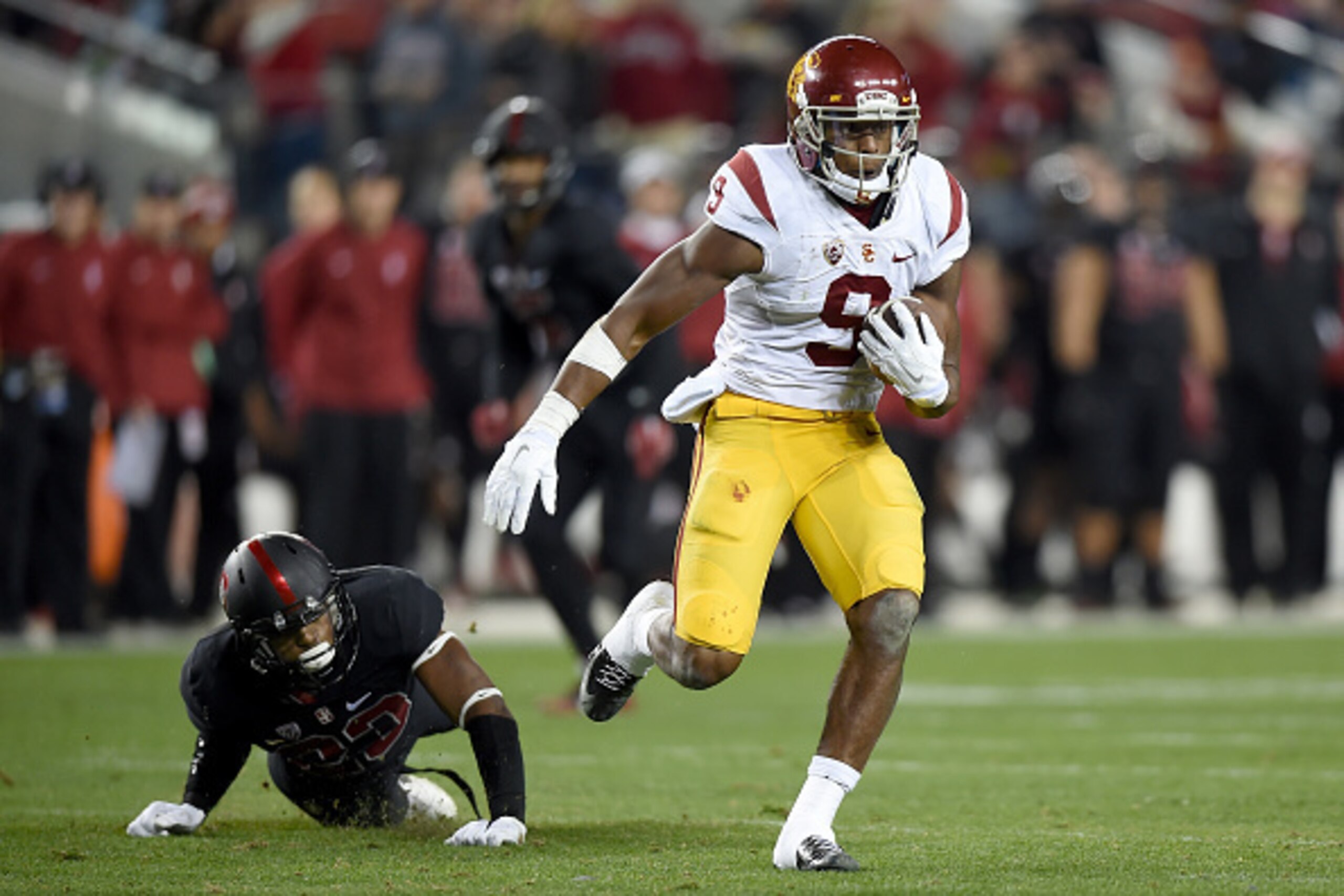
JuJu Smith-Schuster, USC
9 of 10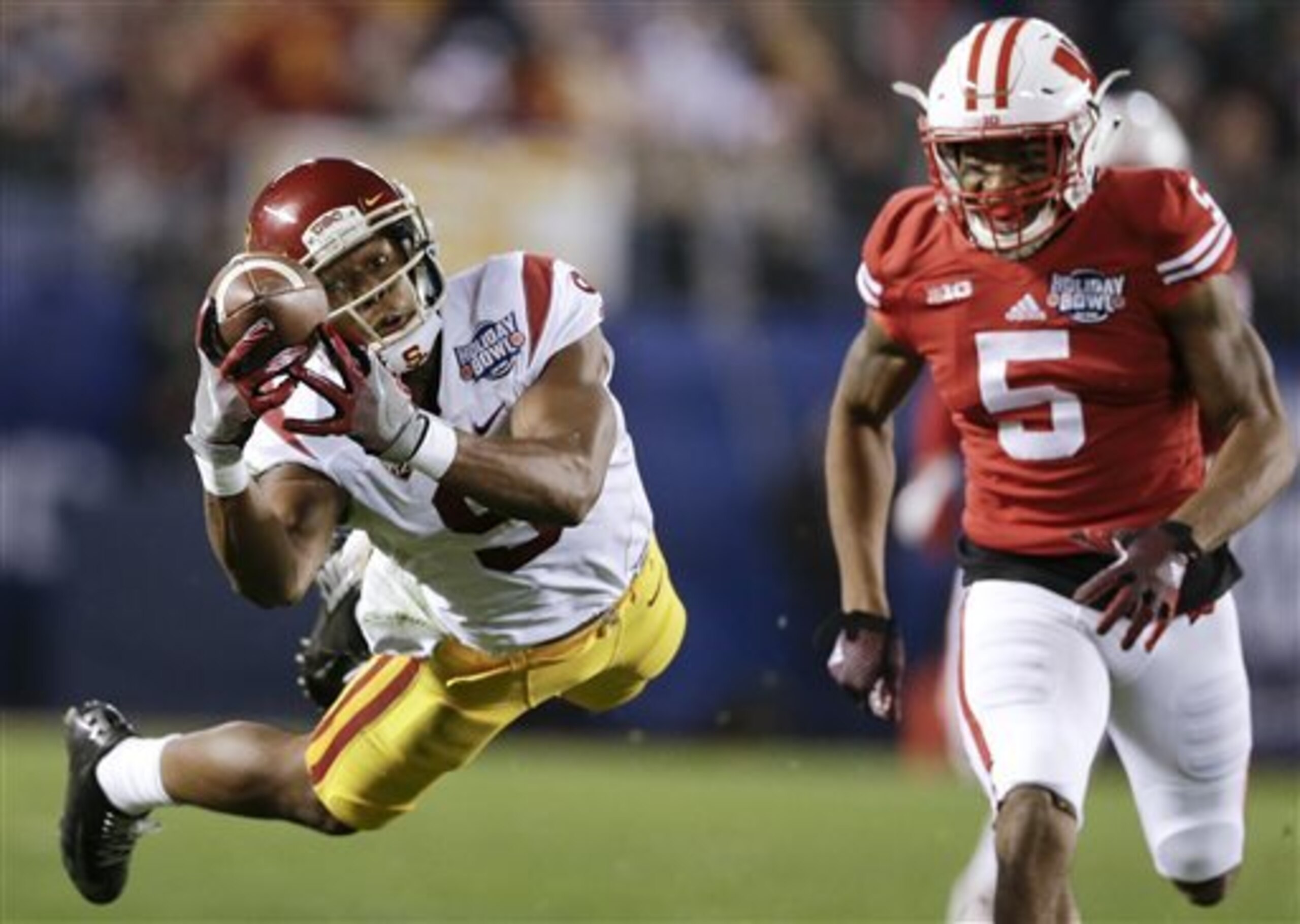
Similar to: Robert Woods, Buffalo Bills
JuJu Smith-Schuster is the most complete wide receiver in college football today, something the numbers back up. According to SB Nation's Bill Connelly, no other player in 2015 was in the upper half nationally in catch rate, target rate, yards per catch and yards per target.
Another such season is expected from the 6'2”, 220-pound junior, who last year had 89 catches for 1,454 yards and 10 touchdowns. It was his first season as USC's top receiver following a solid freshman season, and he's trending upward like so many other Trojans wideouts have in the past 20 years.
The trick for Smith-Schuster will be to translate his college success to the next level, which many recent standout USC receivers haven't done. Since 2000 there have been 10 USC wideouts taken in the first three rounds, three in the first round, but most haven't been able to live up to that draft placement.
Woods has come closest, with three solid seasons so far for the Bills, though a groin injury impacted his play in 2015. Smith-Schuster has had to fight through injuries as well, breaking his hand midway through last season but not missing any time.
Mike Williams, Clemson
10 of 10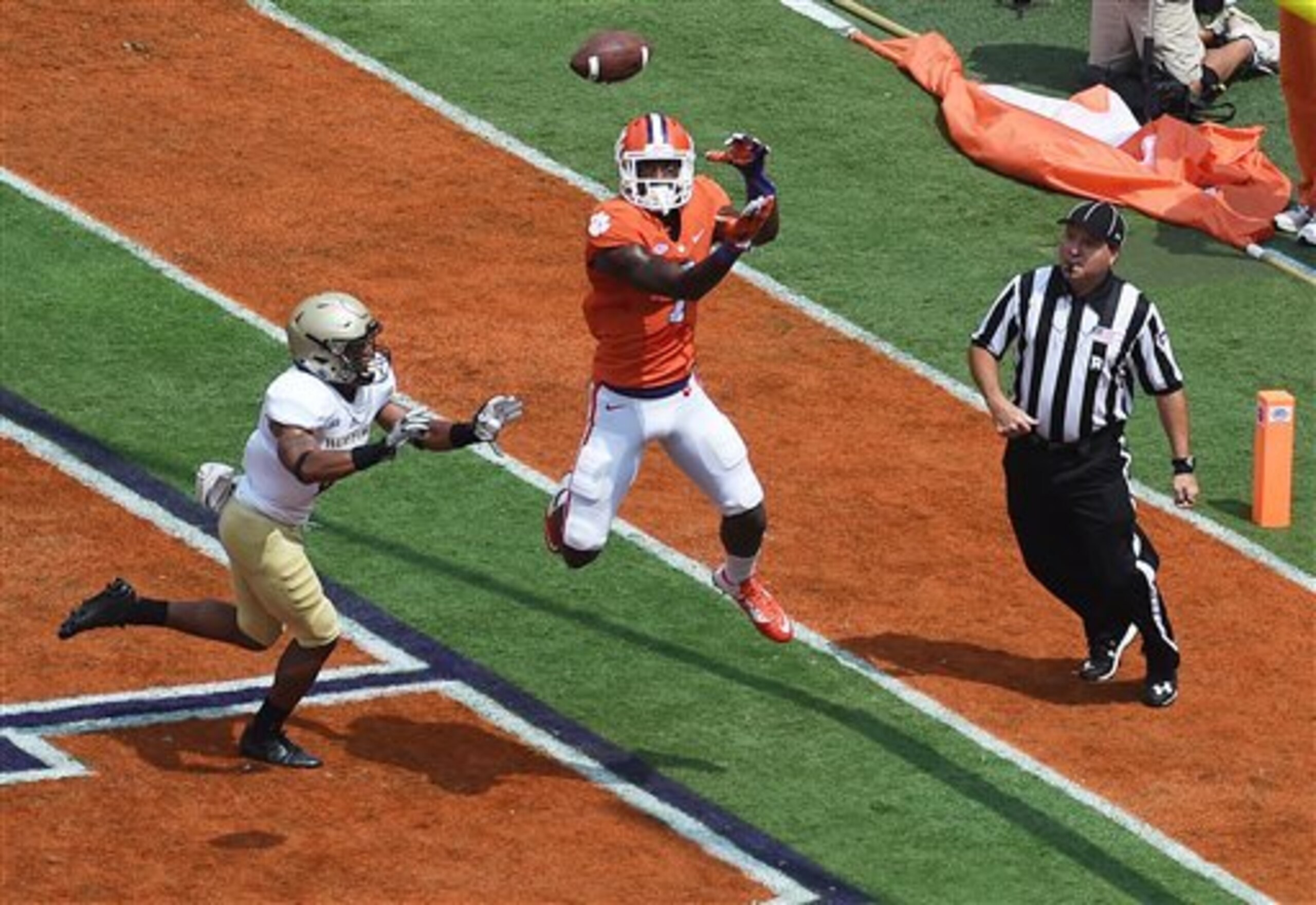
Similar to: Martavis Bryant, Pittsburgh Steelers
A neck injury sustained in Clemson's 2015 opener knocked Mike Williams out for the rest of the season and threatened his career. He seemed like a shoo-in to turn pro after what would have been his junior season, but instead he's now trying to fight back to the level he was at in 2014 when he averaged 18.3 yards per catch for the Tigers.
The 6'3”, 225-pound Williams is a huge target, the ideal body for going up in traffic and catching contested passes, but he's also great at tracking down deep balls and seems to haul in anything that's within reach. At least, that's how he was before getting hurt, so NFL scouts will be watching closely to see if there's any change in his skill set this fall.
"He looks like he’s picked up right where he left off last year, and probably ahead of where he was last year," Clemson receivers coach Jeff Scott, who has coached former Tigers-turned-NFL-stars such as Bryant, DeAngelo Hopkins and Sammy Watkins, per Aaron Brenner of the Post and Courier. "I think he has potential to be as good as any guy that we’ve had here.:
Williams compares favorably with all of those recent Clemson standouts, but Bryant is the best fit because of his size. Bryant is 6'4” and 211 pounds and uses that height to his advantage, as Williams does.
All recruiting information courtesy of 247Sports, unless otherwise noted. All statistics provided by CFBStats, unless otherwise noted.
Follow Brian J. Pedersen on Twitter at @realBJP.
.jpg?w=2560 "Florida Shooting")
.png?w=2560)


.jpg?w=2560 "Latest Peyton-Colts Rumors")



.jpg?w=2560 "Landing Spots for Trade Candidates 📍")
.jpg?w=2560 "Ugly Jets Scoring Stat 😳")