Why 2016 Is a Critical Year for Teddy Bridgewater's Development
Imagine you’re an NFL general manager desperate to land a franchise quarterback—which means you’re also clinging to a job.
Dream of a world where Minnesota Vikings quarterback Teddy Bridgewater is available through a trade.
The price would be steep, because that’s standard operating procedure with any QB swap. But focus only on this question: Would you want Bridgewater—the Bridgewater of right now, and the one who has been wildly inconsistent over two seasons—to be your franchise arm?
.jpg?w=2560 "Colts Football")
.jpg?w=2560 "Commanders 49ers Football")
.jpg?w=2560)
The Vikings faced that question two years ago during the 2014 draft. Their emphatic answer was “yes!” as they traded back into the first round, shipping off second- and fourth-round picks to the Seattle Seahawks for Bridgewater.
Their answer is still the same, though it's out of necessity, because restarting at quarterback means multiple people around an organization lose jobs.
So the Vikings are hoping Bridgewater can go through a third-year course correction. They’re waiting for the fleeting moments of brilliance that came during his rookie year—when he finished with the third-highest all-time rookie completion percentage (64.4)—to show up more often.
But to push his team—which is coming off its best regular season since 2009—into the next tier, Bridgewater has to fix a core flaw.

He needs to connect much more often on deep throws. That’s where we see the gap between the quarterback who is only NFL driftwood—floating along with his tenuous grasp on a roster spot—and the QB who is a legitimate difference-maker.
Although his deep-ball issues were mostly of his own doing, the amount of times Bridgewater faced a crumbling pocket in 2015 didn't help matters. Forcing your young quarterback to navigate his way through a cloud of chaos is always a surefire way to stifle development.
Opponents sacked Bridgewater 44 times, the sixth-highest total in the league. Worse, pressure came his way on a staggering 46.9 percent of his dropbacks in 2015, according to Pro Football Focus.
That’s 4.4 percentage points more than any other quarterback.
| Teddy Bridgewater | 243 | 46.9 |
| Russell Wilson | 249 | 42.5 |
| Carson Palmer | 239 | 42.0 |
| Nick Foles | 146 | 41.0 |
| Philip Rivers | 282 | 39.7 |
Bridgewater was close to facing a swarm on half of his dropbacks.
To put that into greater, more damning perspective, we can flip back to 2007, the furthest PFF’s advanced metrics archives go. Over that stretch of nine seasons, only one other quarterback saw his pressure percentage climb above 45 percent. And that example comes with an asterisk because it was the Seahawks’ Russell Wilson in 2014. His comfort away from the pocket and affinity for improvising can lead to more pressure situations.
In fairness, injuries turned the feeble human wall in front of Bridgewater into one made of, say, foam instead of brick. Right tackle Phil Loadholt (Achilles) and center John Sullivan (back surgery) didn’t play at all in 2015 after suffering preseason injuries.
But constantly buzzing defenders isn’t a new problem, as Bridgewater has been sacked 83 times over two NFL seasons. That number gets more depressing when you remember Minnesota eased him in as a rookie when he made 12 starts.
Enter Alex Boone, the former San Francisco 49ers guard signed as a free agent this offseason who allowed only 17 pressures in 2015, per PFF. He also finished tied for 15th out of 62 qualifying guards in pass-blocking efficiency. Boone may have taken a step back in recent years, but he should still represent a sizable upgrade at the position.
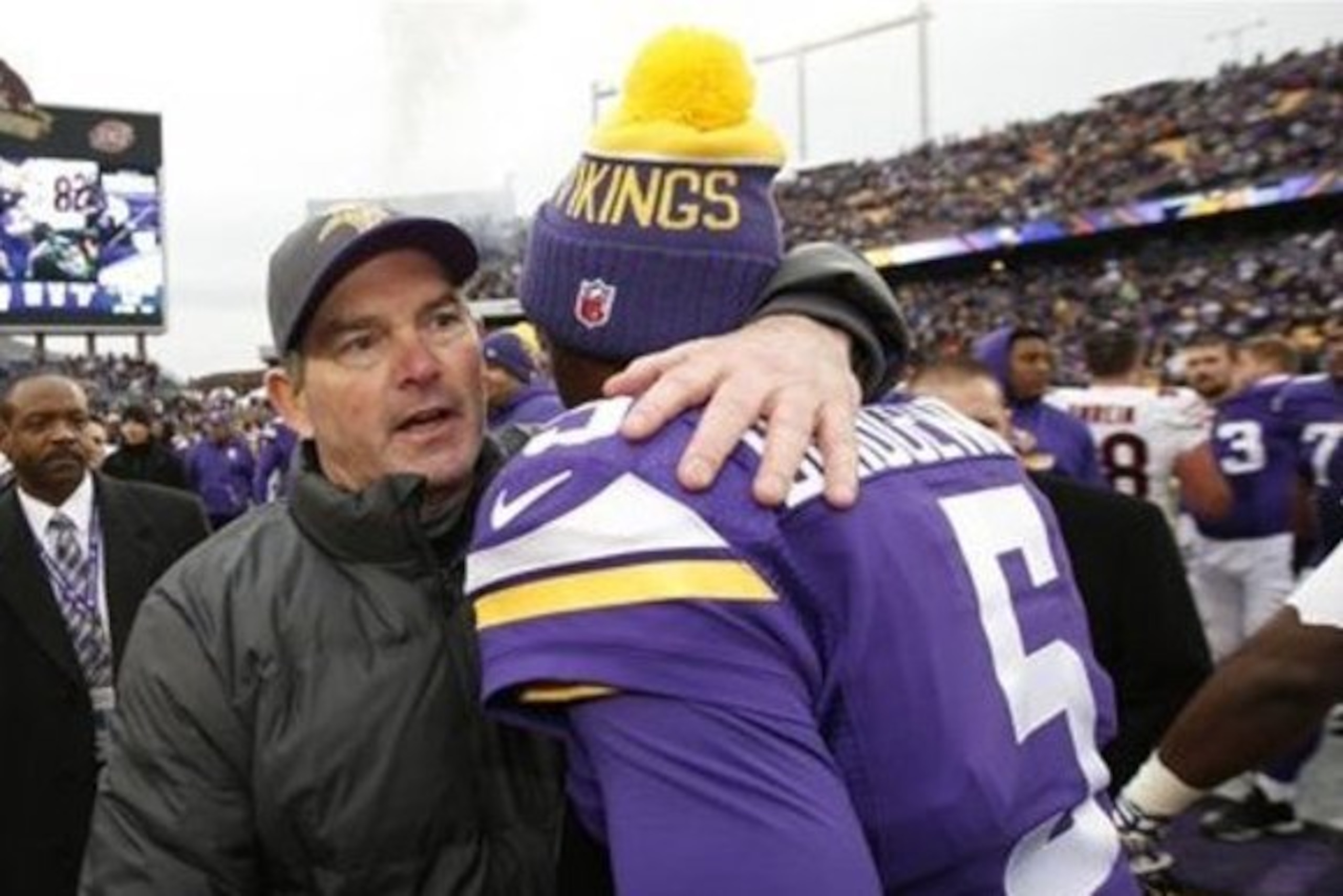
Then there’s fellow free-agent signee Andre Smith, who will likely beat out Loadholt for the starting right tackle job in training camp. Smith is similar to Boone in that he may be on the decline, but the 29-year-old still upgrades the Vikings offensive line.
Toss in the now-healthy Sullivan—who was a top-two-rated center in 2012 and 2013, according to PFF—and all signs are pointing toward blocking competence in front of Bridgewater for the first time in his career.
Let’s assume that best-case scenario unfolds for the Vikings offensive line and Bridgewater can focus more on the passing part of being a quarterback instead of the scrambling and ducking part. Even then there’s a hole to climb from, and he needs to do it when the degree of difficulty is at its highest.
That’s the thing about trying to be a franchise quarterback. A team doesn’t invest in its hopeful offensive cornerstone and then become fine with him only having success when the difficulty level is lower on short to intermediate pass attempts.
As a rookie, it looked like Bridgewater would adapt well. Then, as the deep-passing sample size he gave us grew, his accuracy shrunk.
| 2014 | 41 | 46.3 |
| 2015 | 48 | 37.5 |
Bridgewater’s pass attempts that traveled 20-plus yards through the air increased only mildly in his second season. Yet you’re reminded of the “Homer at the Bat” episode of The Simpsons when noting his disastrous tumble in accuracy.
He’s Ozzie Smith, and Bridgewater needs to emerge from the Springfield Mystery Spot in 2016.
His deep throwing was such a sore spot that Bridgewater wasted Mike Wallace, who is known for doing one thing well as a receiver—and only one thing.
Wallace runs fast and hopes to find a ball in his general vicinity somewhere deep downfield. That approach worked earlier in his career with the Pittsburgh Steelers, especially in 2010 when Wallace averaged 21.0 yards per reception. Between that year and 2011, he caught 132 passes for 2,450 yards and 18 touchdowns.
That’s what Wallace can do when used properly and paired with a quality deep passer. At his career peak in 2010, he caught 14 balls that sailed for 20-plus yards, per PFF. His total during one season in Minnesota? Two.
That total for a receiver who has one job (run far and catch balls) offers the best barometer for how much Bridgewater limped through his sophomore season.
Turning to the ground game, a run-first offense will be implemented in Minnesota as long as running back Adrian Peterson remains a Viking. And the threat of Peterson muscling his way through the middle for a large gain leads to openings downfield.
This happened frequently enough in 2015, and Bridgewater wasted golden opportunities with misfires.
A glaring example came in Week 11 against the Green Bay Packers in a 30-13 loss. It involved Wallace, too, and the result was a squandered chance to get back into a game.
The Vikings trailed by two touchdowns with 5:20 left in the fourth quarter. They had possession on their 25-yard line. Hope was dwindling, but for Minnesota, the game could be taken off life support with one quick, precise downfield strike.
Offensive coordinator Norv Turner dialed up a vertical route for Wallace and gave him an ideal matchup. Turner asked Wallace to streak by Packers cornerback Damarious Randall, who had a fine season but was still a rookie.
Wallace did his part. Randall gave him about a six-yard cushion while protecting against being beaten deep. But Wallace still slipped by easily and gave his quarterback this juicy open look:
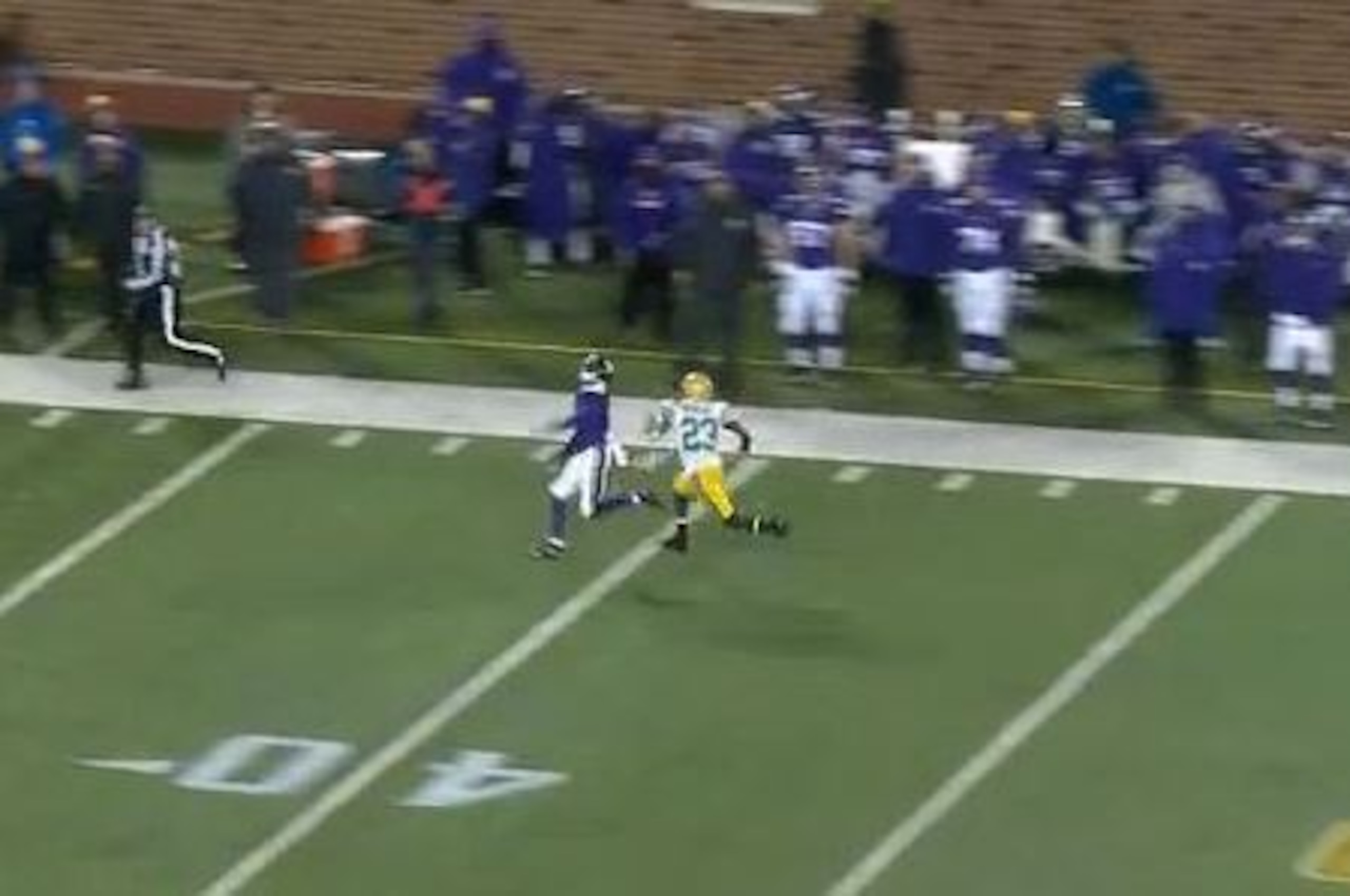
Notice the space between receiver and defender. That’s a full stride of separation 35 yards downfield.
That isn’t wide open, and Bridgewater still faces a challenge here, one we may take for granted too often. He has to fire a ball deep enough that Wallace can snatch it while still cruising toward a touchdown. And it has to be high enough that Randall can’t knock the ball away as he flails.
But advancing upward means making the difficult plays look easy more often.
And the difficulty knob on this throw was cranked down several notches because of a rare sight: a clean pocket for Bridgewater to step into.
Note the large yellow circle of cozy protection as he gets set to release:

On one end, no pass-rusher laid a fingernail on the quarterback. On the other, Randall only grazed Wallace as the ball spiraled down.
But the thwack of mitts meeting ball didn’t follow. Instead, there was a thud, as Wallace had to reach and Bridgewater could do little more than shake his head. Again.

Bridgewater’s overall completion percentage is deceiving—and maddening—throughout his two NFL seasons and 29 starts (including playoffs).
He’s completed 64.9 percent of his 849 regular-season attempts. His success rate was a few ticks above that in 2015, with Bridgewater’s 65.3 completion percentage leaving him tied for ninth among the 37 quarterbacks who took at least 25 percent of their team’s snaps, per PFF.
But then you’re greeted by sadness after looking down a few other columns in his 2015 game logs. Remember those times in college when you opened what was assumed to be a pizza box with slices still waiting, only to find emptiness? Yeah, that sort of sadness.
Bridgewater averaged a pitiful 201.9 passing yards per game in 2015. There are times when that’s not a reliable metric because quality passing is always more important than quantity. But then another number socks you in the gut: nine. That’s the number of times Bridgewater’s per-attempt yardage fell below 7.0 in a game, bottoming out at 4.2 during a flameout against the Seattle Seahawks in Week 13.
Collectively, the story these numbers tell will make you remove chunks of hair because they show that ball placement isn’t Bridgewater’s issue. And neither is decision-making based on his modest nine interceptions in 2015.
His primary problem is taking those same fundamentally sound skills and mechanics that make him successful in the short to intermediate range and transferring them beyond the second level. He briefly showed an ability to do that as a rookie, but then it faded fast.
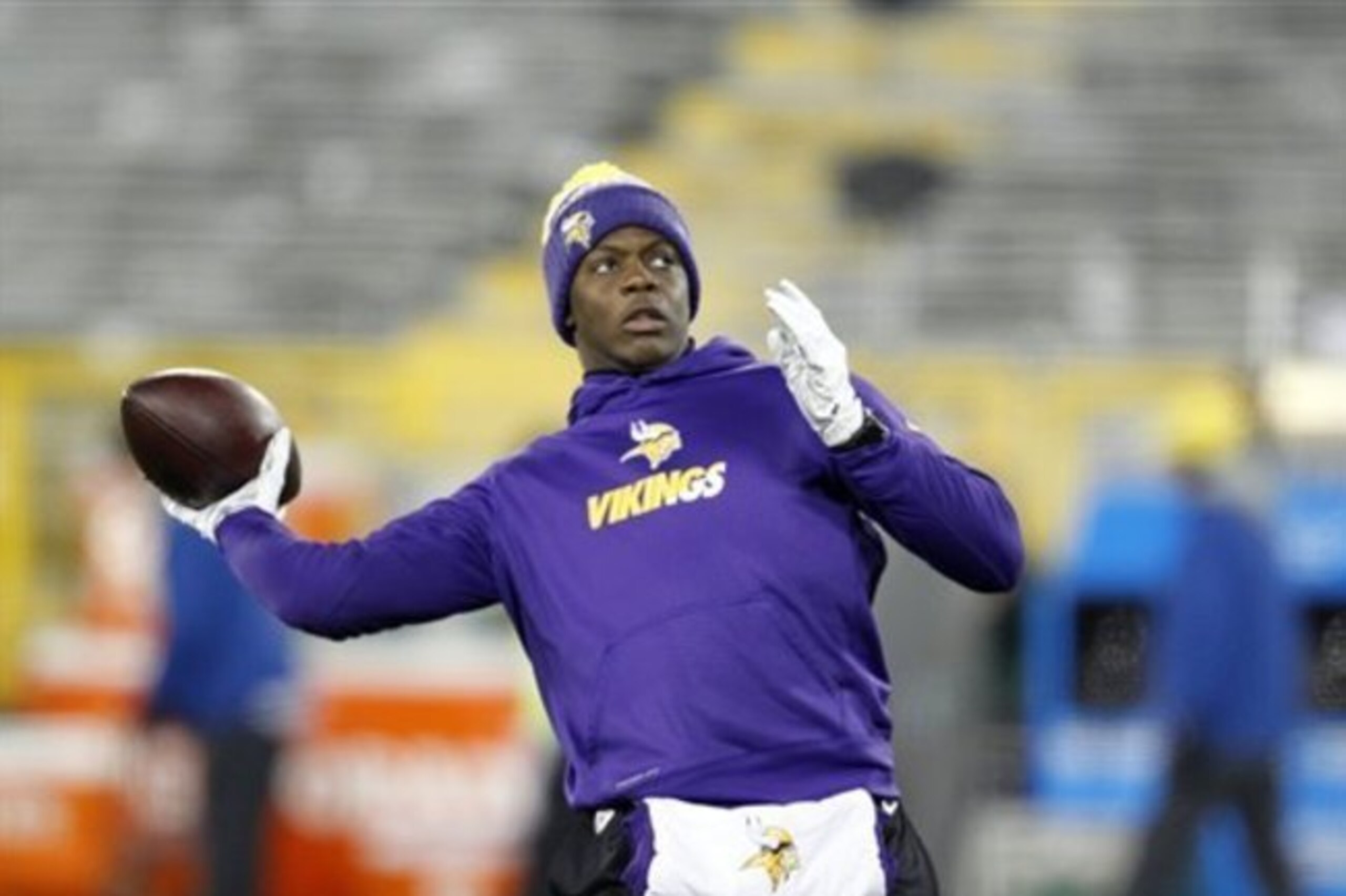
Is there hope for improvement? Of course, because hope always hovers around a still-young, still-growing quarterback who came from a pro-style college offense.
Bridgewater isn’t far removed from a 2013 season with the Louisville Cardinals when he was accurate to all areas of the field. He completed 71.0 percent of his passes at an average of 9.3 yards per attempt.
The Vikings’ goal for two years has been to find that Bridgewater. It would be better if he found himself, and maybe he initiated that process earlier this offseason.
In April, Bridgewater organized private workouts in Florida with his top targets, including tight ends Kyle Rudolph and MyCole Pruitt and wide receivers Stefon Diggs, Jarius Wright, Charles Johnson, Cordarrelle Patterson and Adam Thielen.
His teammates dubbed it the “Teddy Two Gloves Passing Academy,” according to Chris Tomasson of the Pioneer Press. Then, later during minicamp, Vikings head coach Mike Zimmer noticed an immediate difference in Bridgewater's deep ball, per Tomasson:
"I think we’re just focused on it a little more. There was a play last week that kind of showed me the progression. ... (Bridgewater) saw the safety bite a little bit and just hung it right down the middle of the field about 55 yards and a perfect strike. So those are the kind of things I see that two years ago or even early last year, I don’t think he would have done. ... He just looks more comfortable and confident.
"
Patience barely exists with young first-round quarterbacks anymore. We crave perfection and want it now, which isn’t fair in most cases. But Bridgewater could be showing the seeds of something just as important: progress.
He needs to keep that going into training camp and through September when the results of his deep heaves start to matter again.
Between Diggs and first-round rookie Laquon Treadwell, there’s plenty of support set to mature alongside Bridgewater. Now the guy in the middle of that youthful huddle has to prove he’s worthy of being the Vikings' leader and carrying around the title of franchise quarterback for years to come.
.jpg?w=2560 "DOLPHINS-AIKMAN")




.png?w=2560 "Week 8 Winners & Losers 📊")