

Is Christian McCaffrey or Leonard Fournette College Football's Best Back?
They’re so talented, yet so different. Leonard Fournette and Christian McCaffrey are unquestionably college football’s top-two tailbacks, but their differences make them intriguing. As both enter their junior seasons, they’ve dazzled fans with their skill sets.
Fournette, LSU’s star back, runs with power and violence. McCaffrey, Stanford’s versatile superstar, moves with speed and agility and has tremendous versatility. As we prepare for 2016, it’s easy to see that, barring injury, they’ll be the top-two runners in America; after all, they’re the top returning rushers following Heisman Trophy winner Derrick Henry’s dash to the NFL.
TOP NEWS

🚨 NC State Fires Head Coach

Malachi Toney Sets ANOTHER Record
Watch: Birds eye view of field rush after CFB upset
But which runner is better? Fournette or McCaffrey? Their differing styles make it hard to choose, but here’s a look at which back will be college football’s best this fall.
As it turned out, all Christian McCaffrey needed was a chance. Two years ago, he had just 42 carries for 300 yards in a rather middling Stanford rushing attack. He showed promise near that season's end, carrying 11 times for 64 yards in a rout of UCLA and averaging 8.1 yards on seven carries in a Foster Farms Bowl romp over Maryland.
His 2015 debut was inauspicious (12 carries, 66 yards in a 16-6 loss to Northwestern), but once McCaffrey hit his stride, he never looked back. He rushed for at least 100 yards in 11 of Stanford’s final 12 games (rushing for 94 yards in a 38-36 win over Notre Dame). It’s no coincidence that the Cardinal went 11-1 in that stretch, won the Pac-12 and demolished Iowa in the Rose Bowl to cap the season.
He finished the year with 2,019 rushing yards and eight touchdowns, averaging 6.0 yards per carry. McCaffrey also led Stanford in receptions and receiving yards with 45 catches for 645 yards and five touchdowns.
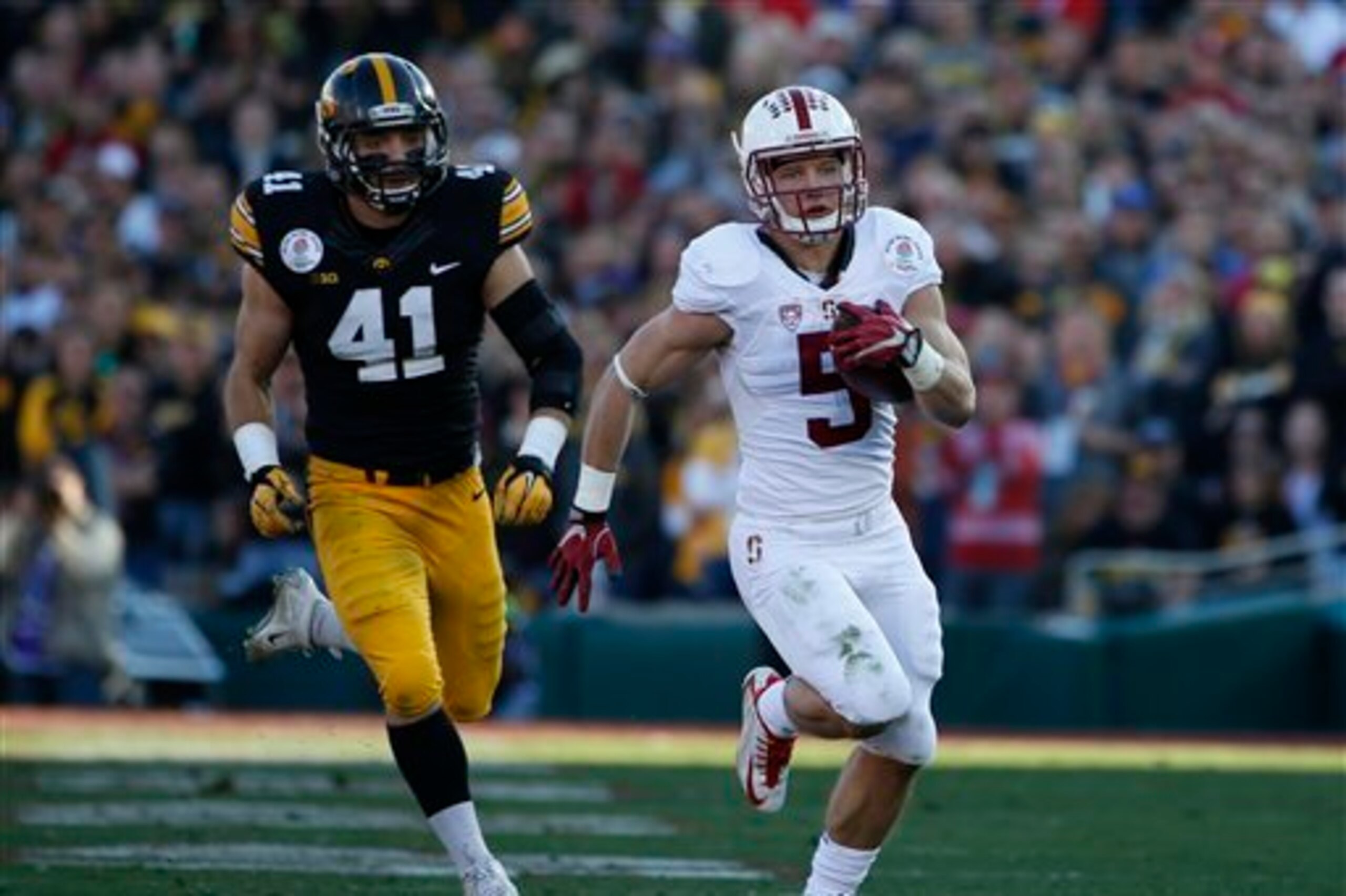
Oh, and he was also a standout special teams player. He averaged 8.6 yards on 15 punt returns (including a 66-yard score) and 28.9 yards on 37 kick returns, including a 98-yard touchdown.
The 45-16 Rose Bowl rout of Iowa was a perfect showcase for his skills. On the opening play from scrimmage, McCaffrey took a screen pass 75 yards for a touchdown. He added a 66-yard punt return score and rolled up a bowl-record 368 all-purpose yards, with 172 on the ground and 105 through the air. He became the first player ever to surpass 100 yards rushing and receiving in a Rose Bowl game.
McCaffrey led the nation in all-purpose yardage and finished second behind Henry in the Heisman Trophy voting, with his Rose Bowl tour de force giving voters a reason to regret their choice.
Stanford director of sports performance Shannon Turley told ESPN.com’s David Lombardi that McCaffrey is Stanford's most unique player ever.
“Christian is authoring his own binder,” Turley said. “He’s carving his own path. He’s unlike anybody we’ve ever had.”
Fournette arrived in Baton Rouge with the burden of hype. He was considered the nation’s consensus top recruit, and he faced additional pressure as a New Orleans native playing for LSU, Louisiana’s flagship program.
2014 was an up-and-down beginning. Fournette managed just 18 yards on eight carries in his college debut against Wisconsin and didn’t get his first 100-yard game until the fifth week against New Mexico State, going for 122 yards and two scores.
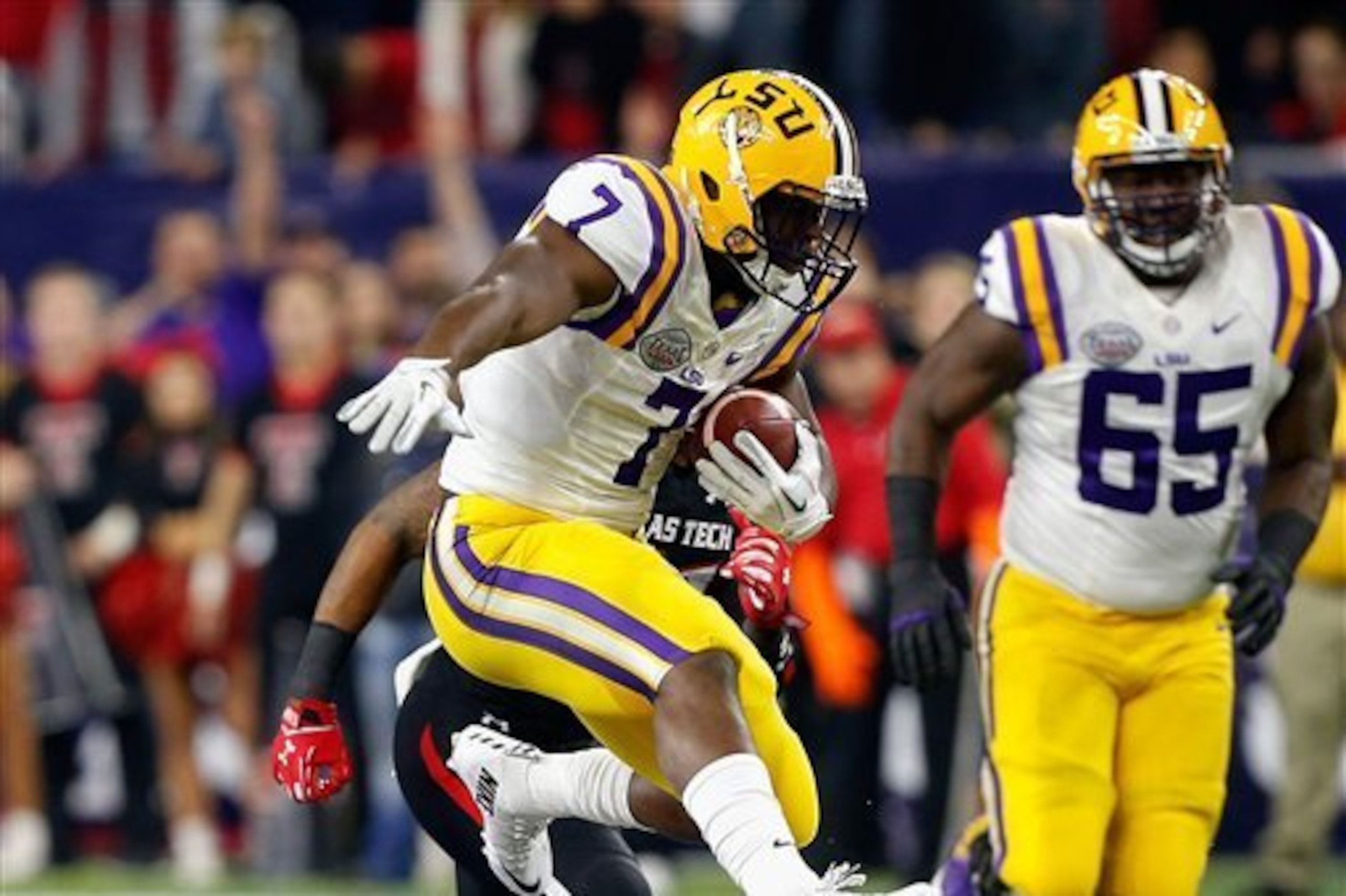
He had five 100-yard rushing games, but he saved his best for last in the Music City Bowl against Notre Dame. Fournette carried 11 times for 143 yards and two touchdowns (including an 89-yard dash). He also returned a kick 100 yards for a touchdown in a 31-28 defeat, finishing his freshman season with 1,034 rushing yards and 10 scores.
That was good. 2015 was great. Even though LSU’s opener against McNeese State was cancelled by persistent thunderstorms, Fournette still rushed for 1,953 yards in 12 games, averaging 162.8 rushing yards per game. By comparison, McCaffrey played 14 games, averaging 144.2 rushing yards per game.
He reached at least 100 yards in 10 of 12 games, surpassing the 200-yard mark four times (against Auburn, Syracuse, Eastern Michigan and in the Alamo Bowl against Texas Tech).
Per Athlon’s Lance Dozier, Fournette had the third-most “explosive” runs (30-plus yards) in college football last season.
A seven-game stretch of 150-yard rushing games placed Fournette at the forefront of the Heisman Trophy discussion and thrust LSU into College Football Playoff discussion. However, when his team needed him most, Fournette was missing in action.
Alabama shut him down in a 30-16 defeat, yielding just 31 yards and a touchdown on 19 carries. The following week, Fournette improved somewhat, going for 91 yards and a score on 19 carries in a 31-14 loss to Arkansas. The next week was more of the same; 108 yards on 25 carries in a 38-17 loss to Ole Miss.
Fournette wasn’t the same back, and he fell out of the Heisman race while head coach Les Miles nearly lost his job. He rebounded against Texas A&M and Texas Tech, going for a combined 371 yards and five touchdowns in a pair of victories.
As goes Fournette, so goes LSU. It’s also worth noting that as a freshman, he managed a combined 88 yards and no touchdowns on 26 carries in losses to the Crimson Tide and Razorbacks.
There’s no denying his raw talent and his ability to run around, over and through tacklers with a blend of power and speed. But Fournette’s track record in big games is a concern, and while he can catch balls out of the backfield (19 receptions for 253 yards and a touchdown as a sophomore), he doesn’t match McCaffrey’s marks there. He has also shown skills as a kick returner, but he didn’t return a single kick in 2015.
It’s a very close race, but McCaffrey’s wide skill base and overall consistency make him the nation’s best back. The best part, of course? We have all of 2016 to make a final decision, and that’ll be a lot of fun.
.png?w=2560)

.jpg?w=2560 "Malik Beasley Negotiating Plea Deal (AP)")

.jpg?w=2560 "Jonathan Taylor Landing Spots")
.jpg?w=2560 "Aikman Blasts Cowboys WR 🫣")