Every Top 25 College Football Team's Most Valuable Asset
Conference and national championship dreams are the result of a complete team, but each college football program can point to a singular key contributor along the way.
In order for any team in the preseason top 25 to reach its ceiling in 2016—whether that's the College Football Playoff or simply being in conference contention—the following person likely is the critical piece. If he succeeds, the team will. If not, the program may falter.
While players are the common choice because of previous contributions, roster changes, versatility and depth, the list is not limited to on-field talent. Coaches can be the most valuable asset, too.
The list order is based on Bleacher Report's post-spring practice top 25.
Miami: Brad Kaaya, Quarterback
1 of 25
New defensive coordinator Manny Diaz faces a tough job, but Miami's hopes in 2016 rest between the ears of quarterback Brad Kaaya, who is heading into his third season as the starter.
Kaaya nearly led the 'Canes to victories over Florida State in both 2014 and 2015. He's 0-6 against ranked opponents but 12-6 otherwise—including a 10-2 record at home against unranked foes.
Although that success against average-or-worse opponents will keep Miami in the Coastal Division picture, Kaaya needs to provide the final winning boost versus top competition.
Wisconsin: Vince Biegel, Linebacker
2 of 25
While Jack Cichy's versatility is a significant part of the defense, Vince Biegel is the most impactful. As a junior in 2015, he amassed 66 total tackles with 14 for loss and eight sacks.
Following Joe Schobert's departure, Biegel will have a new starter on the opposite side—likely in T.J. Watt but potentially Jack Cichy.
And with games against LSU, Michigan State, Michigan and Ohio State by Oct. 15, Biegel's presence is crucial to helping Watt or Cichy join the full-time role and Wisconsin to stay in West Division contention.
Washington State: Luke Falk, Quarterback
3 of 25
After a bizarre season-opening loss to Portland State, Washington State rode quarterback Luke Falk to nine victories—the program's highest mark since 2003.
Falk threw for 4,561 yards and 38 touchdowns, compiling a 9-2 record after the unexpected shortcoming. The only losses were at Cal (34-28) and against No. 3 Stanford (30-28).
But the Cougars dropped another outing. A concussion sidelined Falk, and rival Washington destroyed Wazzu, 45-10.
With Falk on the field, Mike Leach's team is a legitimate contender in the Pac-12 North Division.


_0.png?w=2560)
Oregon: Charles Nelson, Wide Receiver
4 of 25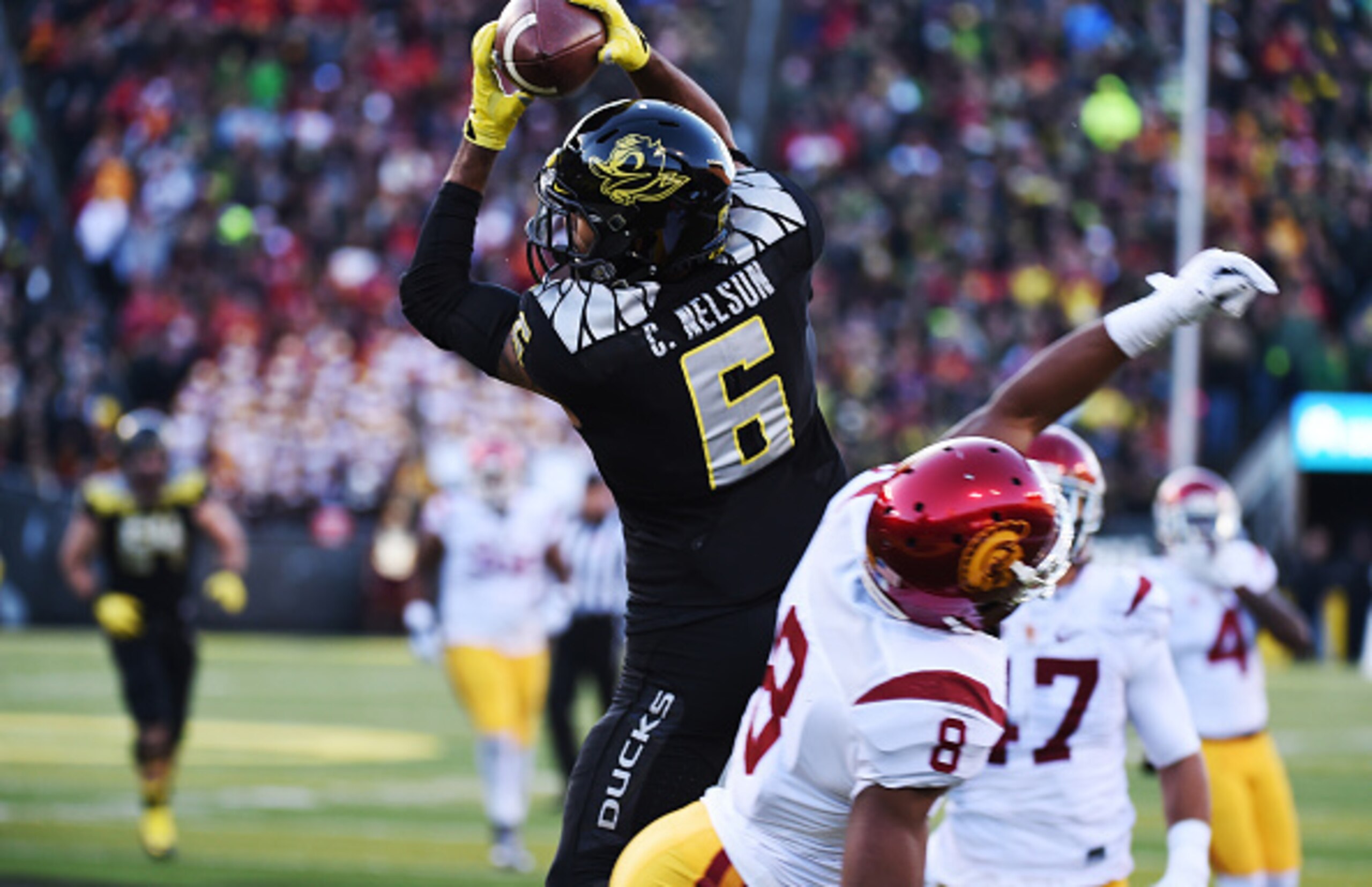
Charles Nelson is focusing on offense after playing both ways in 2015, but he could switch back to defense if injury necessitates it. Plus, Nelson is a factor on special teams.
As a sophomore, he caught 17 passes, scored four offensive touchdowns, registered 47 tackles, picked off two passes and compiled a 26.6-yard return average—No. 21 nationally.
Nelson won't have as wide a range of responsibilities next season, which should only make him more dangerous.
TCU: KaVontae Turpin, Wide Receiver
5 of 25
KaVontae Turpin slowly worked his way into the lineup as a freshman. A four-touchdown explosion against Texas sealed his place.
The 5'9", 153-pound wideout ended the year with 45 receptions, 649 yards and eight scores. Turpin also recorded 27.0 yards per kick return—15th best in the country—and returned a punt for a touchdown.
Now that Josh Doctson and Kolby Listenbee have headed to the NFL, Turpin will be the featured receiver for TCU.
Iowa: C.J. Beathard, Quarterback
6 of 25
Iowa wants to prove its 2015 campaign was no fluke. The program won't have a chance if C.J. Beathard isn't healthy.
He stepped into the starting role and tallied a 61.6 completion percentage, 2,809 yards, 17 touchdowns and just five interceptions. Beathard also scampered for 237 yards and six scores, though groin and hip injuries turned the dual-threat quarterback into a pocket passer down the stretch.
Beathard's mobility is a key to the Hawkeyes accomplishing more than another division crown, but they won't be more than a bowl team if he's not available for the entire season.
North Carolina: Ryan Switzer, Wide Receiver
7 of 25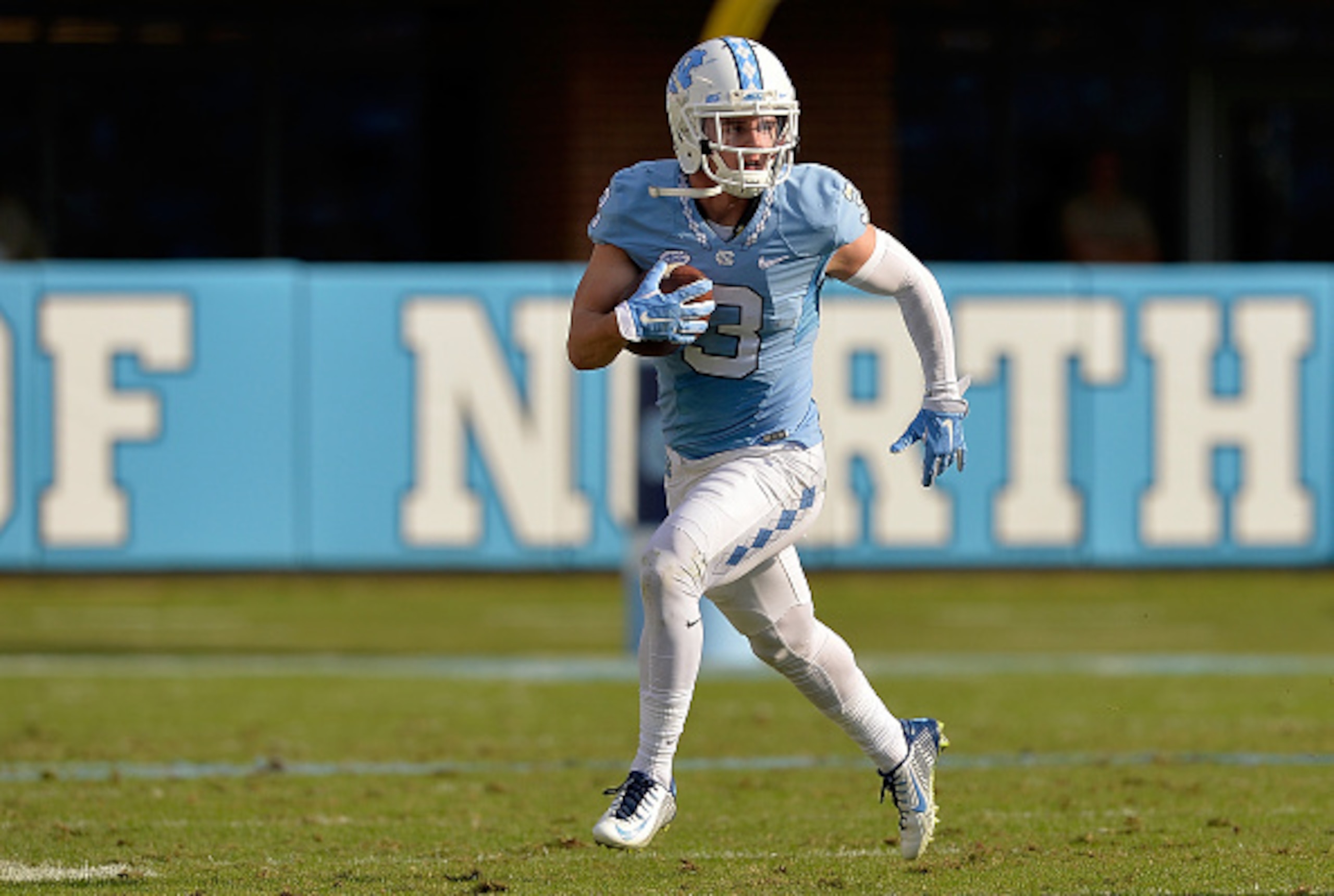
Ryan Switzer is on the verge of a Football Bowl Subdivision record. He's returned seven punts for touchdowns during his college career, and two more would give Switzer the all-time mark.
Program bests might fall, too.
He paced North Carolina with 55 catches last season, pushing the two-time first-team All-ACC standout to 147 through three years. Switzer is 59 away from passing Quinshad Davis.
Switzer's versatility and team-leading production are impossible to replace with one person.
Washington: Jake Browning, Quarterback
8 of 25
Washington head coach Chris Petersen made the forward-thinking move by starting Jake Browning as a true freshman. That experience is invaluable for the program in 2016.
Browning encountered some expected struggles, but he still finished with 2,955 yards and 16 touchdowns. The Huskies' worst loss with Browning under center was by just 11 points.
As long as he's healthy, Washington could become this season's breakout team. While the nonconference slate is easy, the Pac-12 schedule includes home games against Stanford and USC.
Though the Huskies' success is mostly dependent on Browning, he should be ready for the challenges after starting in 2015.
USC: Adoree' Jackson, Cornerback
9 of 25
Selecting anyone other than Adoree' Jackson would just be silly, and that's the polite way to phrase it.
Last season, he collected 35 tackles, eight pass breakups and one interception. Jackson caught 27 passes for 414 yards—the second most on the team—and two touchdowns. He returned two punts for scores. In 2014, the speedster took back a pair of kickoffs.
Jackson contributes in all three facets—and multiple ways in all three. There's no way for USC to easily replace what he does.
Michigan State: Malik McDowell, Defensive End
10 of 25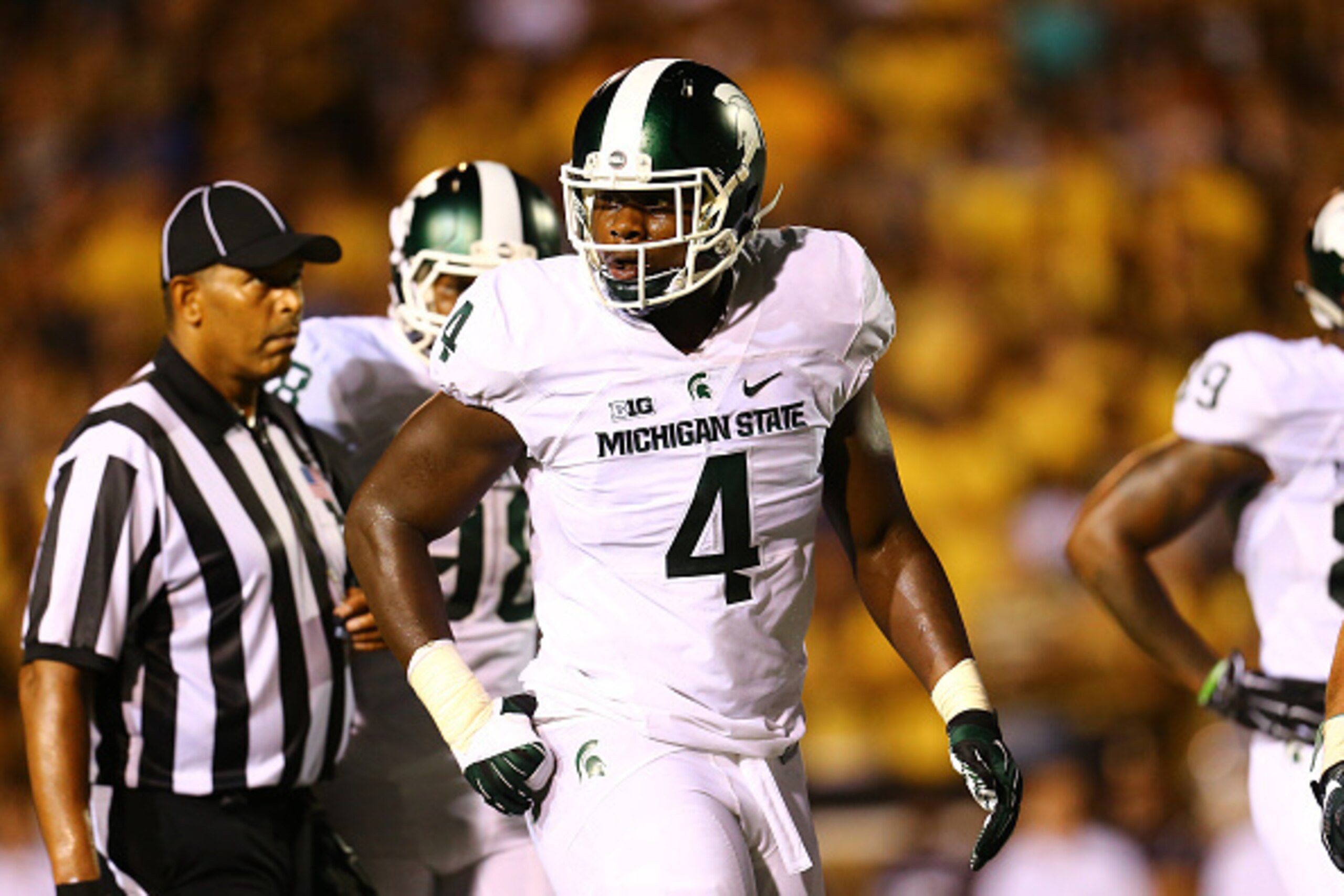
Michigan State lost three starters on the defensive line, but the coaches want Malik McDowell to help replace each of them.
"They're trying to play me everywhere up front, I'm doing whatever they ask, I don't have any discomfort playing any position," McDowell said, per MLive's Mike Griffith. "Just working on the pass rush, and dominating every play."
McDowell amassed 41 tackles with 13 for loss and 3.5 sacks last season, adding eight hurries, two forced fumbles and a pick-six.
Since the Spartans will ultimately rely on the defense to carry the 2016 squad, McDowell is the team's most important player.
Georgia: Sony Michel, Running Back
11 of 25
Without question, Nick Chubb is the best running back. But there's no guarantee he'll be healthy. Either way, Georgia won't have a problem giving Sony Michel regular opportunities.
He rushed for 1,161 yards and eight touchdowns last season, averaging 110.6 yards per game while replacing Chubb. Michel also caught 26 passes for 270 yards and three scores.
The Bulldogs need to neither rush Chubb nor bury him in a massive workload upon return. That's all thanks to Michel being a reliable backup and capable starter.
Stanford: Christian McCaffrey, Running Back
12 of 25
Without Christian McCaffrey, Stanford is probably an eight-win team at best in 2016. The offense must replace a longtime quarterback, most of the offensive line and a few top receivers, while the defense lost a couple of starters in each positional unit.
But the Cardinal boast the best playmaker in college football. McCaffrey racked up an FBS-record 3,864 all-purpose yards last year.
Keeping McCaffrey healthy while completely relying on him is the ultimate test, but it's one Stanford has no choice but to attempt.
Louisville: Lamar Jackson, Quarterback
13 of 25
Lamar Jackson's performance during the final two games of 2015 raised the question of why Bobby Petrino kept using Kyle Bolin.
Against Kentucky and Texas A&M, Jackson totaled 769 offensive yards and seven touchdowns. He only completed 20 of 47 pass attempts, but Jackson’s elite mobility should atone for his passing struggles—something he's seemingly addressed.
To be clear, the spring game is not a perfect indication of future success. Still, it's impossible to ignore Jackson’s performance. He finished 24-of-29 with 519 yards and eight touchdowns.
Louisville returns four offensive linemen and its entire group of skill-position players. Jackson has enough surrounding talent to wreak havoc in the ACC. But if his passing hasn't improved, the quarterback carousel will likely continue.
Houston: Greg Ward Jr., Houston
14 of 25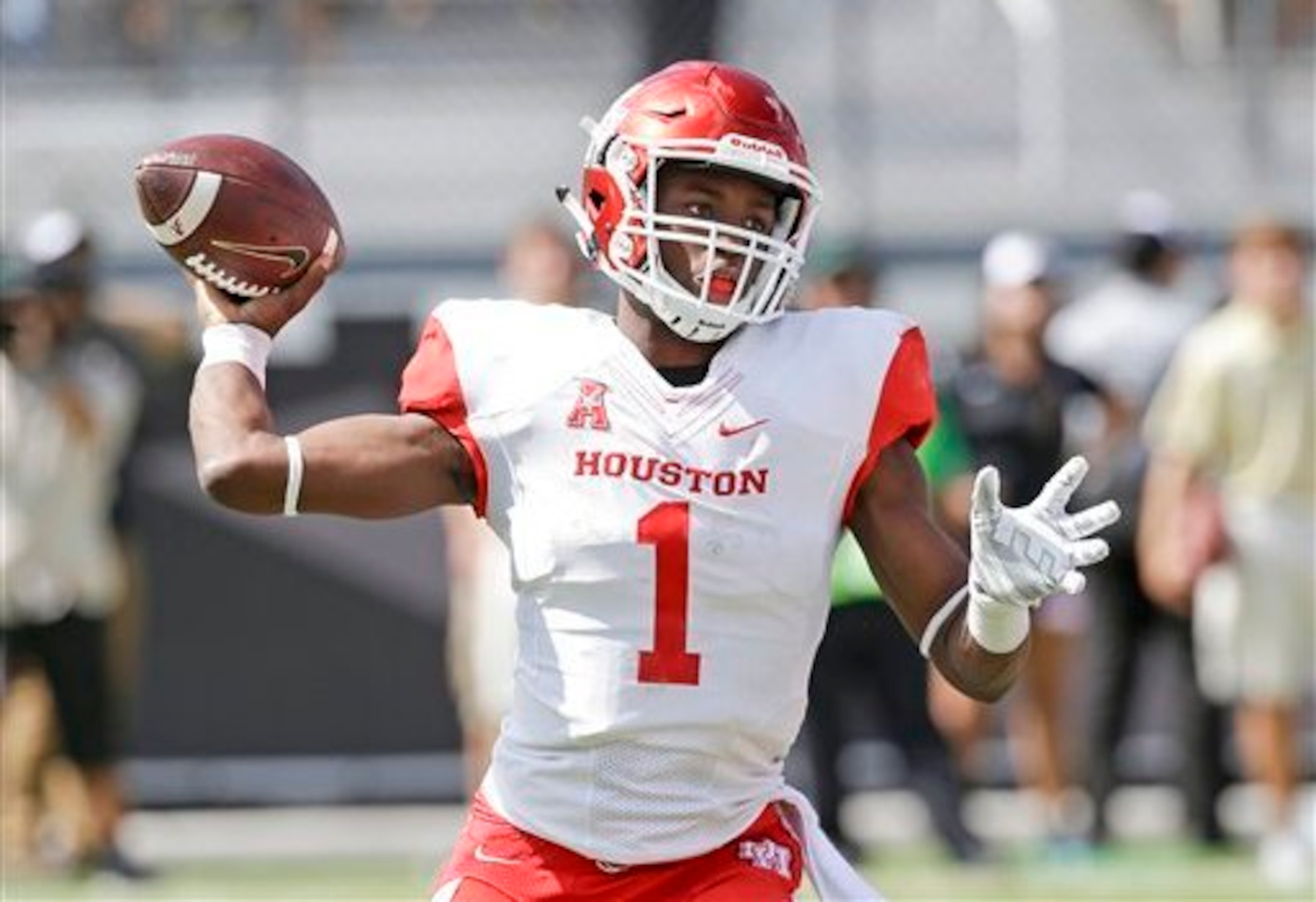
If you prefer calling Tom Herman the most valuable asset, you won't find an argument here. However, Greg Ward Jr. gets the slight nod because we've seen what Houston is without him.
Kyle Postma led an amazing fourth-quarter comeback against Memphis after Ward exited because of injury. But one week later, the Cougars lost to Connecticut. Ward later guided Houston to a blowout win over No. 18 Navy and shocked Florida State in the Peach Bowl.
The dual-threat quarterback piled up 2,828 yards, 17 touchdowns and just six interceptions, running for 1,108 yards and 21 scores.
Herman's system has helped Ward become one of the nation’s most dynamic quarterbacks, but the Cougars aren't potential playoff party-crashers without him behind center.
Notre Dame: Mike Sanford, Offensive Coordinator
15 of 25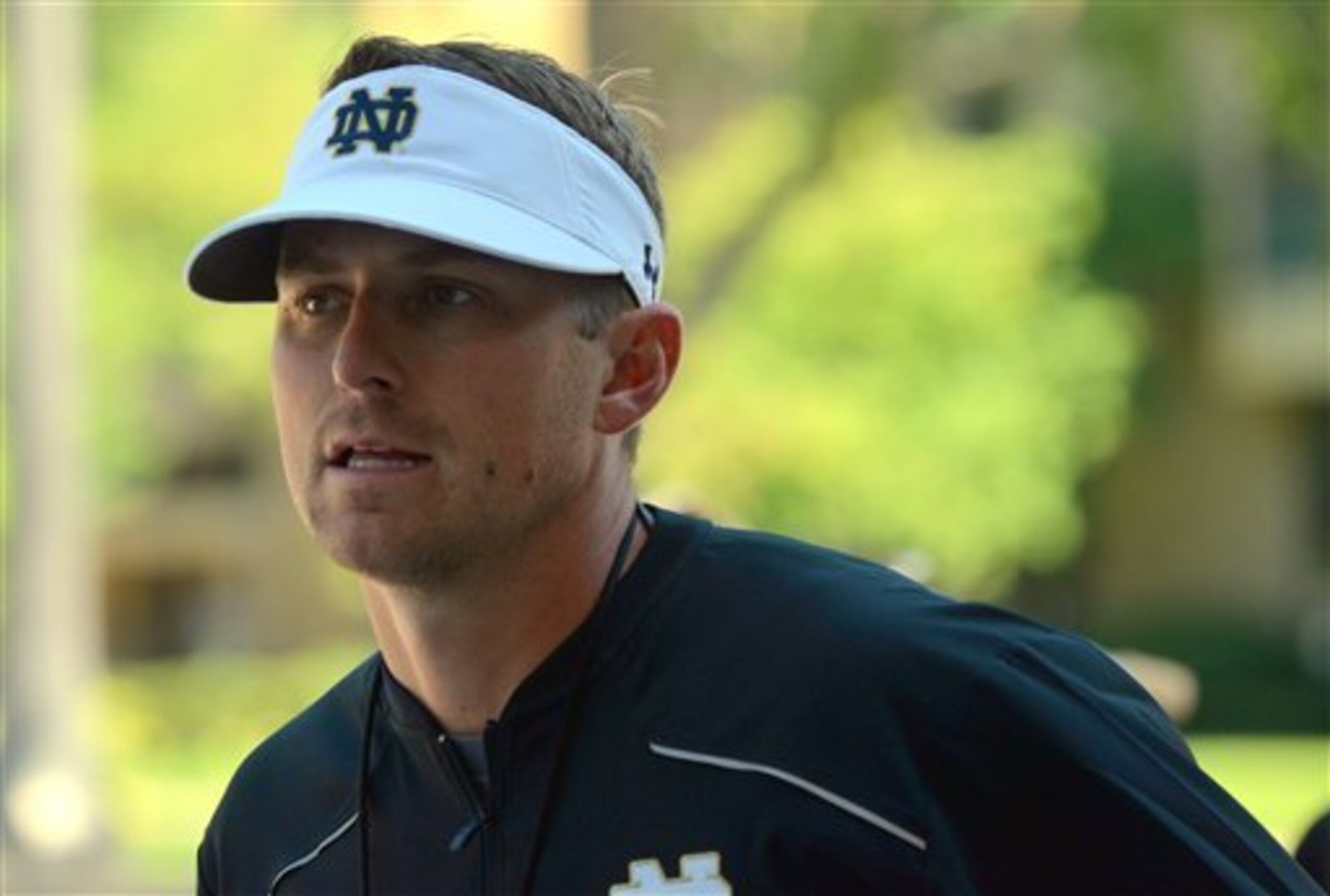
DeShone Kizer spent 2015 spring practice as the third-string quarterback. Seven quarters into the regular season, he was the No. 1 guy. Kizer ultimately lifted Notre Dame to a 10-3 record.
His rapid development was a product of Mike Sanford's coaching, which eased the pressure on Kizer and instead placed it on Will Fuller and a veteran receiving corps.
This season, the offensive coordinator's biggest challenge is to minimize the impact of the Fighting Irish's inexperienced wideouts while using a proven option at quarterback—all while hoping the defense plays well enough to avoid high-scoring shootouts.
If 2015 was any indication, Sanford is prepared for the job.
Ohio State: Urban Meyer, Head Coach
16 of 25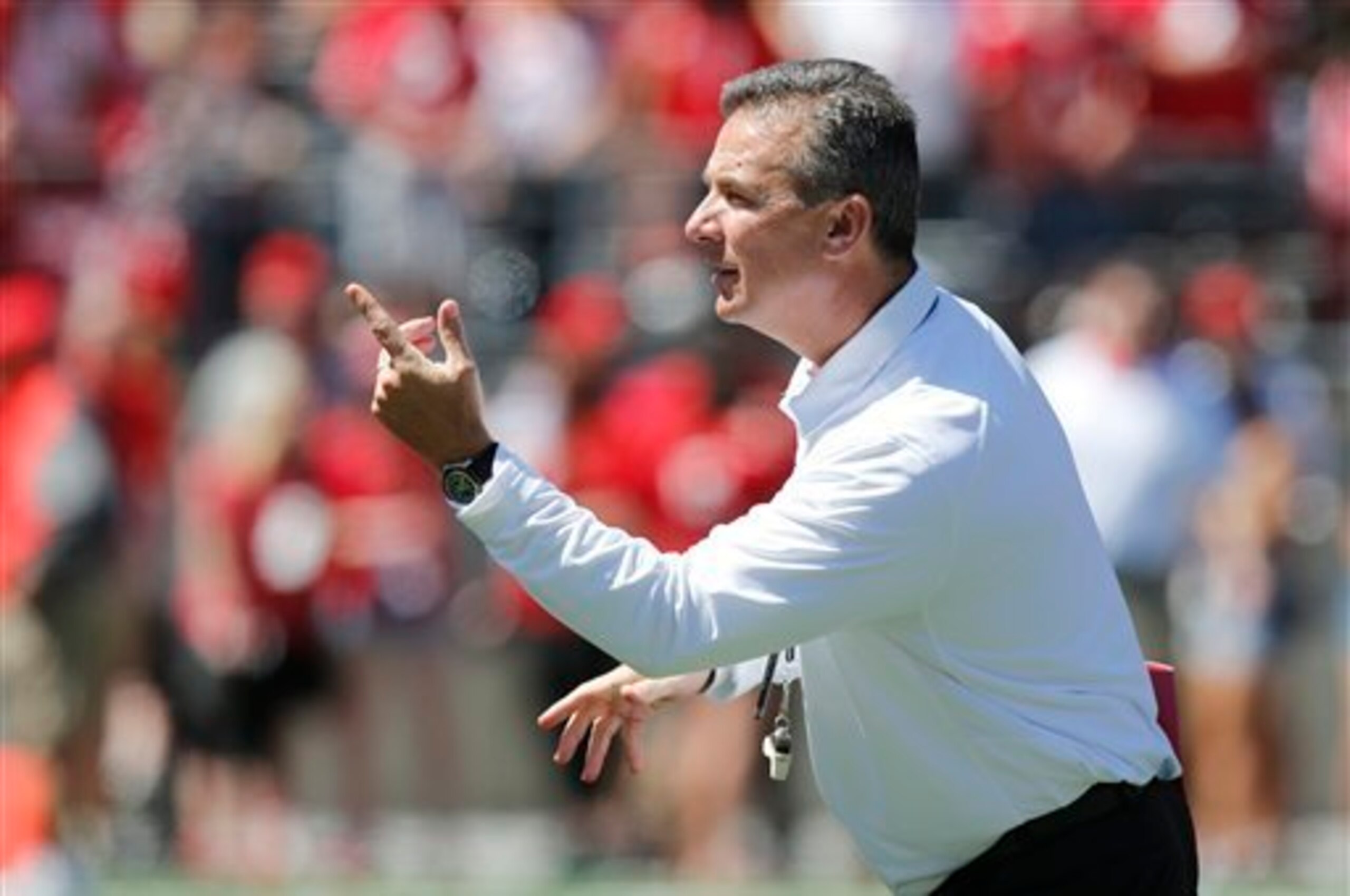
According to SBNation's Bill Connelly, only Massachusetts lost more production than Ohio State.
It's fair to say the Buckeyes must replace a little more talent than the Minutemen—and every program, for that matter. Ohio State had 12 players drafted, and three more signed free-agent contracts.
Since Urban Meyer's arrival, though, just one program (Alabama) has a better average recruiting ranking than the Buckeyes, who are 50-4 under the head coach.
How quickly can the potential-filled roster develop into a cohesive, dominant team? Meyer and his staff are the main contributors to that answer.
Ole Miss: Chad Kelly, Quarterback
17 of 25
Despite losing five starters on the offensive line and leading receiver Laquon Treadwell, the Ole Miss offense isn't in terrible shape. Experienced backups and top recruits can fill the voids.
Oh, and that Chad Kelly is a pretty great quarterback.
He tallied 4,042 yards and 31 touchdowns through the air, running for 500 and 10 more. During the final four games, Kelly recorded 17 total scores while throwing a single interception.
Shea Patterson is the future of the program, but the Rebels undoubtedly have a better chance to win the SEC in 2016 with Kelly.
Baylor: Kyle Fuller, Center
18 of 25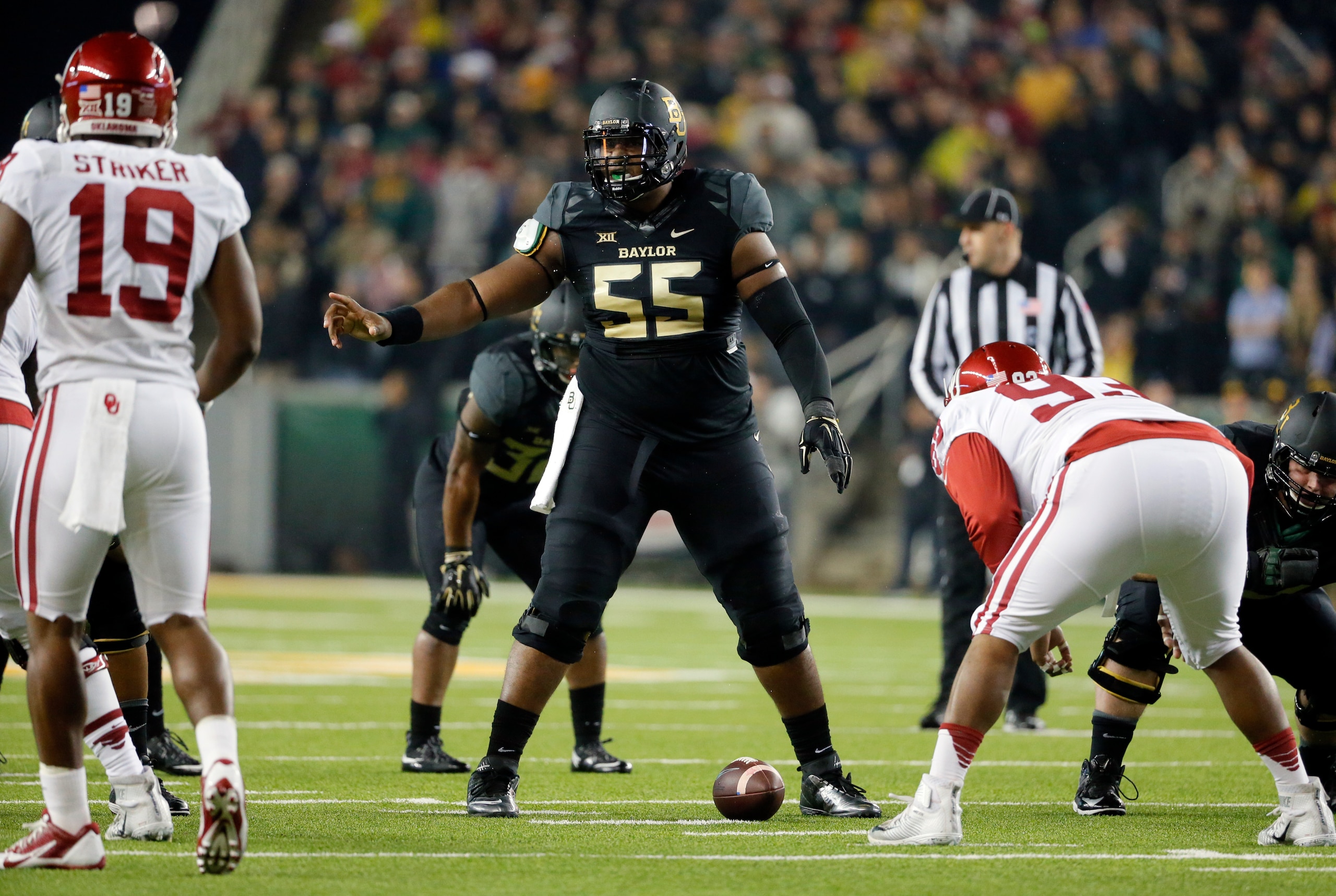
Although the Baylor offense is designed to mitigate the struggles of offensive linemen in pass protection, that doesn't mean any player can handle the responsibilities.
The Bears boasted the nation's No. 1 offense in 2015, but Kyle Fuller is the lone returner up front. Spencer Drango and a couple of other multiyear starters used up their eligibility.
A center, Fuller is the linchpin of an inexperienced unit that allowed 12 sacks during the spring game.
Baylor will have enough troubles on the line anyway, so the offense needs to avoid errant snaps and poor pre-snap communication. Fuller should help the Bears not worry about those potential issues.
Tennessee: Derek Barnett, Defensive End
19 of 25
Tennessee has three potential first-round picks on defense, and Derek Barnett could be the best of the bunch.
As a freshman, the defensive end racked up 72 tackles with 20.5 for loss, 10 sacks and eight hurries. Last season, Barnett collected 69 stops, 12.5 for loss, 10 sacks and seven hurries.
Corey Vereen, Shy Tuttle and Kahlil McKenzie are respectable complementary pieces, but Barnett is the driving force of an inconsistent unit. If he struggles, the Vols defense will, too.
Oklahoma: Baker Mayfield, Quarterback
20 of 25
Baker Mayfield is a tremendously productive college quarterback. Obviously, he's important. But the dual-threat gunslinger is basically Oklahoma's only option, too.
True freshman Austin Kendall is the primary backup. Though the 4-star may eventually develop into the No. 1 guy, it'd take a heroic effort for Kendall to help the Sooners return to the College Football Playoff if Mayfield misses an extended period of action.
Last year, Mayfield amassed 4,105 yards of total offense and accounted for 43 touchdowns in Lincoln Riley's wide-open attack.
LSU: Leonard Fournette, Running Back
21 of 25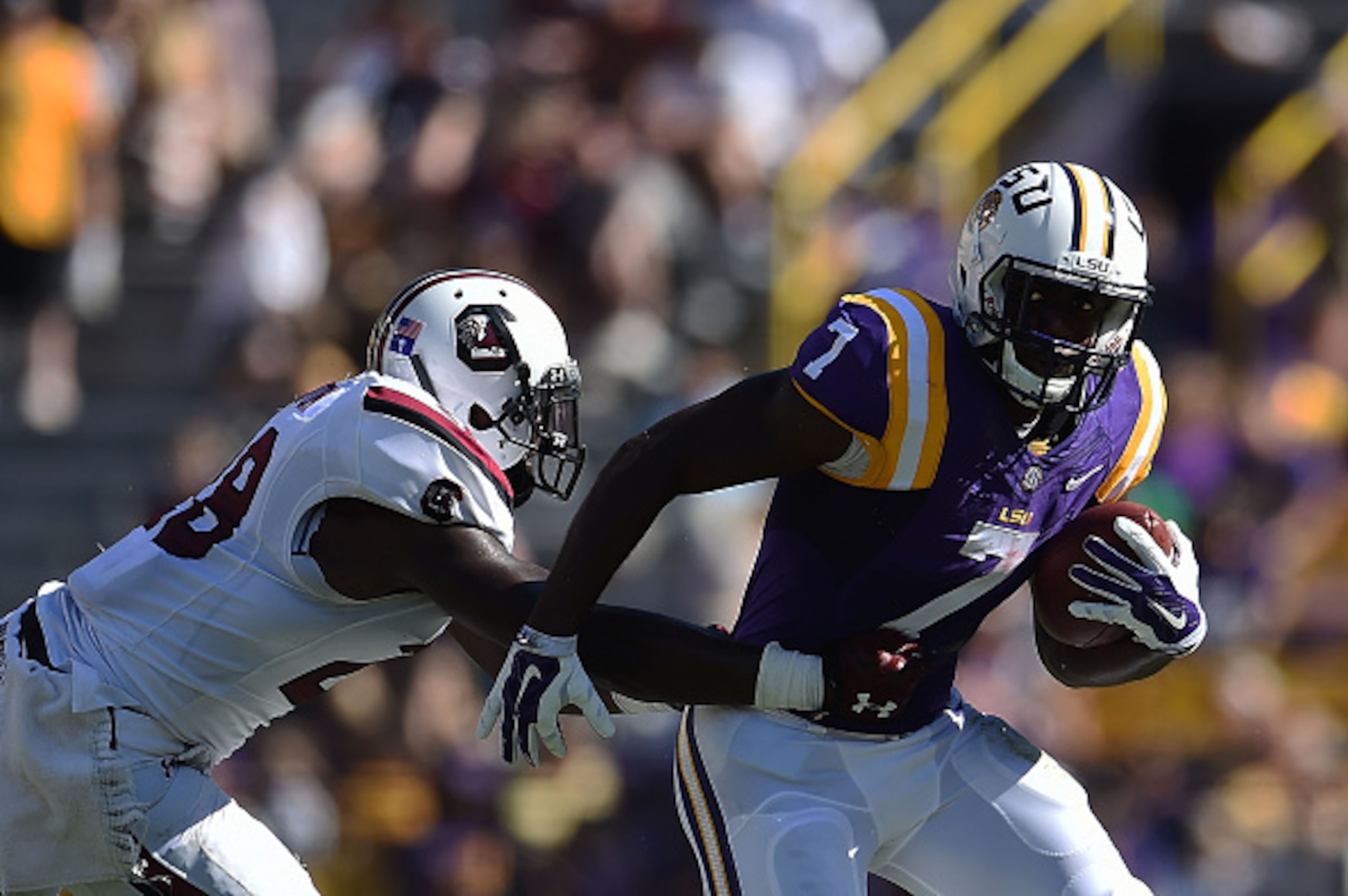
"Once-in-a-lifetime player" probably fits the mold of "most valuable asset," wouldn't you say? Leonard Fournette is a luxury Les Miles and Co. will try not to waste next season.
After topping the 1,000-yard mark and averaging 26.0 yards as a kick returner two years ago, he stepped into the workhorse role. Fournette accumulated 1,953 yards and 22 touchdowns in just 12 games.
It's not a coincidence that his three lowest rushing averages last season came during LSU's three losses, or that each time Fournette averaged six-plus yards per carry, the Tigers won by at least 10 points.
Give him a little room, and Fournette will carry LSU.
Michigan: Jabrill Peppers, Linebacker
22 of 25
Some parts of college football nation have screamed Jabrill Peppers is this offseason's most overrated player. That's laughable.
Peppers had 45 tackles with 5.5 for loss and 10 pass breakups last season. He averaged 27.9 and 11.4 on kick and punt returns, respectively, adding eight receptions and two rushing touchdowns.
But statistical versatility doesn't accurately describe what makes Peppers great. Defenses pay an inordinate amount of attention to him, which frees teammates for explosive gains. Michigan State called two straight timeouts because of Peppers' alignment.
That's simply what he does on offense in a limited role. In 2016, the versatile star is shifting from nickelback to outside linebacker. However, that means the Wolverines always have at least five defensive backs, even if they're in a 4-3.
Name one other player who can do all that.
Florida State: Derwin James, Safety
23 of 25
Derwin James has no limitations. The safety is a heady defender with a nose for the football.
"It usually makes a great player when you have ability, intelligence and instincts," head coach Jimbo Fisher said, according to Safid Deen of the Tallahassee Democrat.
As a true freshman, James tallied 91 stops with 9.5 for loss and 4.5 sacks. He broke up four passes, recorded two hurries, forced a couple of fumbles and recovered one.
James—who sometimes will play D-end in passing situations—should be the best player on an excellent FSU defense.
Clemson: Deshaun Watson, Quarterback
24 of 25
Last season, Deshaun Watson became the first quarterback ever to throw for at least 4,000 yards and run for 1,000 more. He totaled 47 touchdowns, leading Clemson to the brink of a championship.
The Tigers again have national title aspirations, but the dual-threat quarterback staying healthy is imperative for them to reach that goal. Nick Schuessler and Kelly Bryant cannot match Watson's impact.
Watson—whom Bleacher Report's Matt Miller currently projects as the No. 1 overall pick of the 2017 NFL draft—is an irreplaceable, record-setting weapon behind center.
Alabama: Lane Kiffin, Offensive Coordinator
25 of 25In 2015, Alabama offensive coordinator Lane Kiffin appeared to have an easy job. Call a run, and let Heisman Trophy winner Derrick Henry destroy some people.
But Kiffin's mix of play action and screen passes kept defenses off balance while never straying too far from the offense's biggest strength. Plus, after arriving in Tuscaloosa, he helped the Crimson Tide add an uptempo style to its repertoire.
Kiffin is a master at creating game plans and making adjustments. For all the deserved criticism he's received as a head coach, Kiffin is a brilliant offensive mind.
All recruiting information via 247Sports. Stats from cfbstats.com or B/R research. Quotes obtained firsthand unless otherwise noted. Follow Bleacher Report CFB Writer David Kenyon on Twitter @Kenyon19_BR.

.jpg?w=2560 "NFL investigating 2 referees for separate viral exchanges")
.jpg?w=2560 "Report: Chiefs Contact Hill's Agent")
.jpg?w=2560 "OBJ Calls Out Giants 😳")
.jpg?w=2560 "Tyreek makes another cryptic post amid Chiefs rumors")