After Bending NBA to Their Will, Warriors Find Basketball Magic Has Its Limits
OAKLAND, Calif. — Belief is a powerful thing, and for two NBA seasons and two mystical springs, the Golden State Warriors spun more belief and basketball magic than any team on the planet.
They mocked conventional wisdom and trampled the boundaries of what was thought possible, or reasonable.
There were no barriers they couldn't shatter.
TOP NEWS

Pic of LeBron's Helicopter Commute 🚁

Duren Calls Out 'False' Rumors

NBA Power Rankings Entering Preseason 🔢
Three-pointers? They would shoot, and make, more than any team ever.
Take away the three-point line? They'd just fire from 26 feet. Thirty feet. Half court. No matter.
Seventy-three wins? Impossible. Until the Warriors did it.
A 3-1 deficit in the Western Conference Finals? A death knell. Until the Warriors decided it wasn't.
Limits? There were none. Not for Stephen Curry and his buddies.
They made it their mission to stretch reality, to contort the game to their own design, forcing the entire league to adapt to the Warriors Way.
So when Curry pranced around the three-point line on Sunday night—with the Warriors trailing 92-89 in the final minute of the final game of the 2016 Finals, with Kevin Love dancing and stumbling in front of him—there was only one expectation:
Curry would fling one of those impossible rainbow jumpers, tie the game and somehow power the Warriors past the Cleveland Cavaliers once more. Defying expectations is what they do.
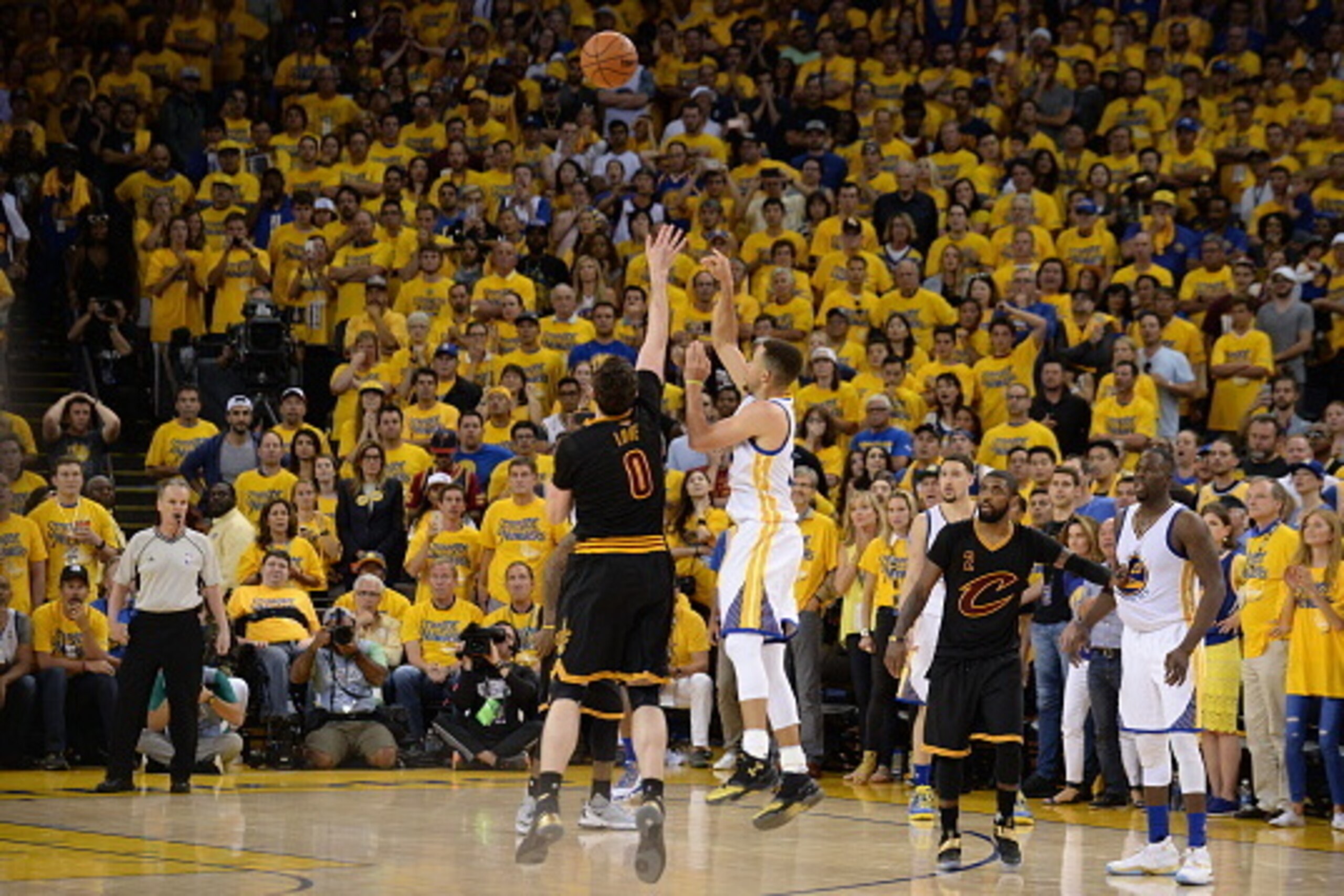
But the ball smacked the rim and then the backboard, and soon LeBron James was heading to the opposite foul line to secure a 93-89 victory and the first championship in Cavaliers history.
After a rollicking 22 months, the Warriors' magic had run out. Their title defense was dead.
Curry missed four times from behind the arc in the final four minutes of Game 7—all shots that would have been frowned upon in a prior era but seemed perfectly reasonable for this team.
Even in defeat, the Warriors were reminding us how much they have changed the game and how we view it.
They reminded us, too, of how fragile these things are, even for one of the greatest teams the NBA has ever seen.
The Warriors did survive Curry's ankle and knee injuries in the early weeks of the postseason. They did rally back from that 3-1 deficit to the Oklahoma City Thunder. Then they created a hurdle they could not overcome.
Yes, to a significant extent, this defeat is about Draymond Green, that groin punch and that suspension.
The Warriors were on their way to a Game 4 victory, and a commanding 3-1 series lead, when Green, in a fit of anger, flung his fist at James' crotch. It was an impulsive, unnecessary and ultimately selfish act. And it cost the Warriors dearly.

Green had already reached the points limit for flagrant fouls in the playoffs and was suspended by rule. His absence in Game 5 left a massive hole in the Warriors defense—and James and Kyrie Irving rumbled right through it for 41 points each and a series-turning victory at Oracle Arena.
Green returned in Game 6, but James and Irving never stopped rumbling. The Cavaliers completed their own impossible run, handing the Warriors their first three game-losing streak in two-and-a-half years.
And the Warriors became the first team ever to lose the championship after holding a 3-1 lead.
We cannot know for certain that the Warriors would have clinched the title in Game 5 if Green had played. But every indicator, statistical and otherwise, pointed that way. And just about everyone in the NBA—or everyone outside Cleveland—expected it.
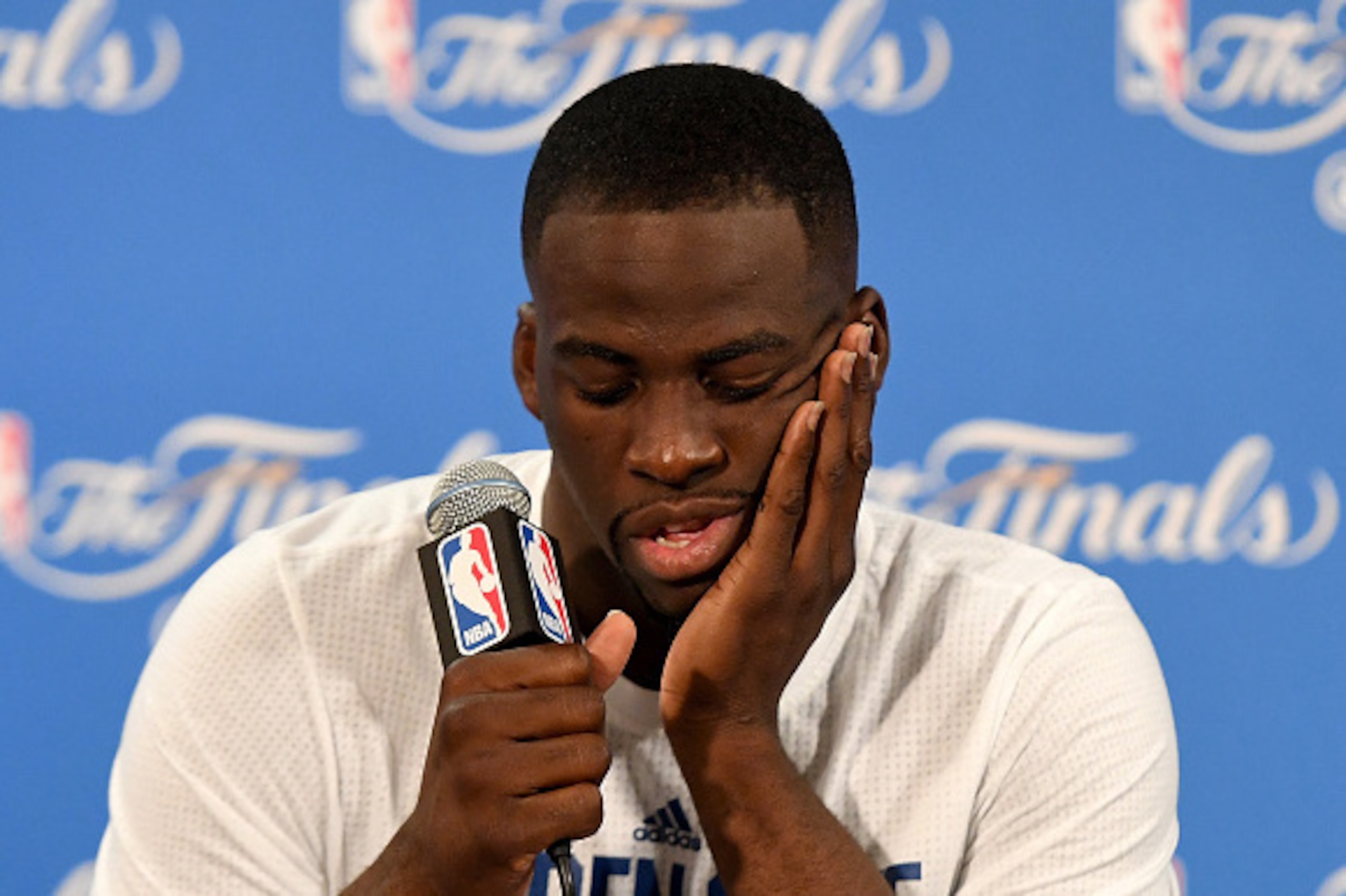
"I blame myself for everything," Green said earnestly from the podium Sunday night. "That's just who I am. I think as a leader that's important. Hey, I'm not afraid to take the blame. I do think that's where the series turned. … I'm not afraid to say that it's my fault. I think it was."
The Warriors had absolutely dominated through four games. James had been solid, but not otherworldly. His supporting cast had produced a big matrix of meh. There was no reason to think that would change.
Then one swing to the crotch changed everything.
It wasn't just the suspension or the Game 5 loss. The Warriors also lost starting center Andrew Bogut to a knee injury that night. They would play the rest of the series without their best rim protector, and with a rejiggered rotation.
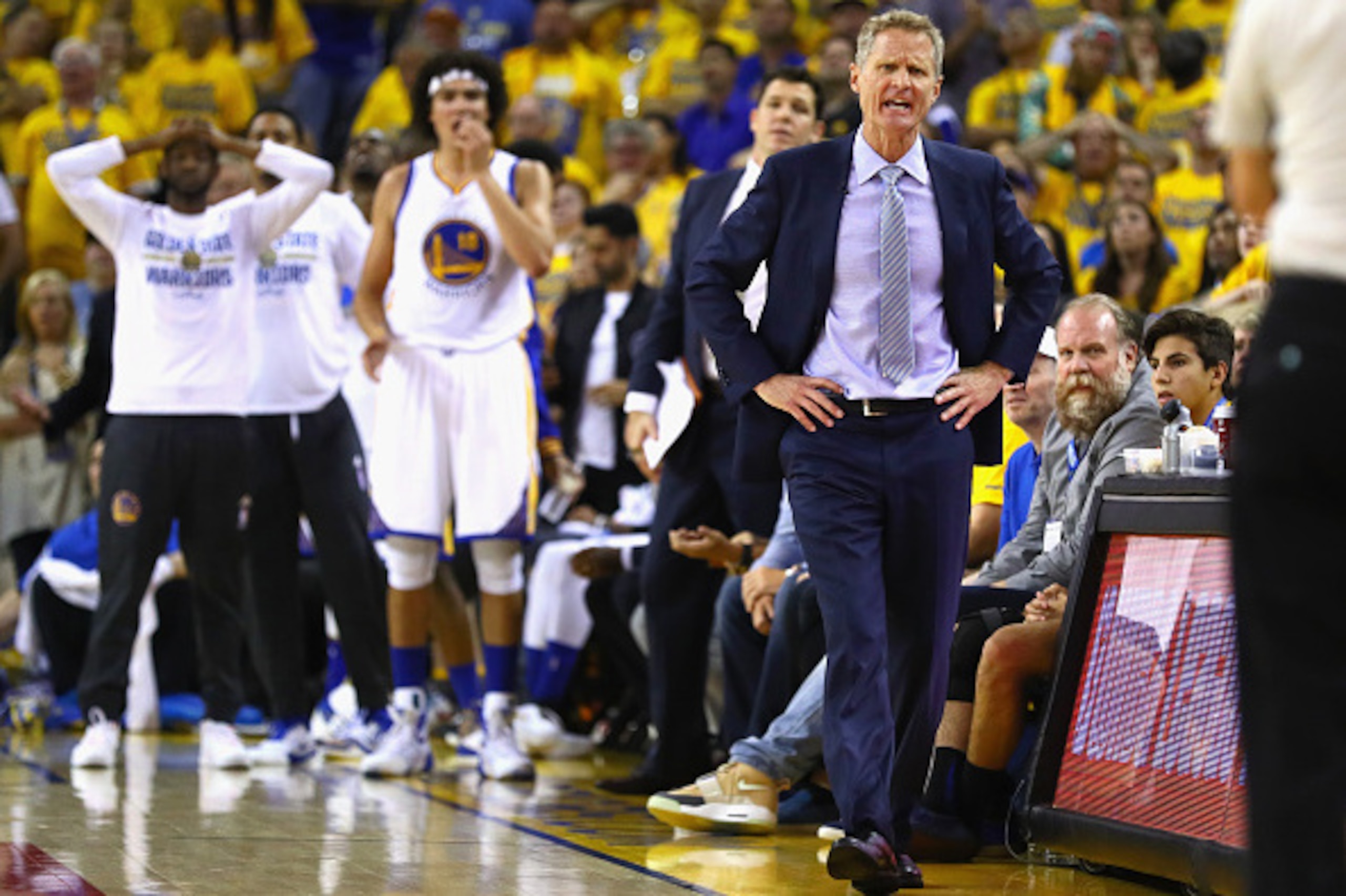
"This is why you can't mess around," coach Steve Kerr said on Sunday. "Not that we messed around, but this is why every game counts. Game 5 was really the key. That was the turning point of the whole series. We didn't play well enough to win. It was a tough game for us with the circumstances, and I thought they had two guys who played epic games, Kyrie and LeBron. And that changed the whole series."
History will be Green's final judge, and the sentence may be harsh. You could argue he belongs next to Scott Norwood and Bill Buckner among the all-time championship goats. Except at least Norwood and Buckner earned their scorn on the field while trying to make a play.
Green earned his infamy in absentia—watching his team disintegrate on television, from a luxury suite in an adjacent baseball stadium.
Standing in a quiet hallway outside the home locker room on Sunday night, Warriors general manager Bob Myers insisted Green was not solely to blame.
"I think it's not fair," Myers told Bleacher Report. "I would shake Cleveland's hand and say they beat us. But everybody gets to write their own version of it."
Redemption was within Green's grasp on Sunday. Indeed, he was so brilliant—32 points, 15 rebounds, nine assists, two steals—that Bay Area fans would have happily expunged his record, if only the Warriors had won.
Along press row, there was a momentary debate in the fourth quarter: Could Green, crotch shots and all, actually be the Finals MVP if the Warriors prevailed?
Now everyone's legacy is complicated. These Warriors can now claim the greatest regular-season record of all time and the worst Finals collapse ever. They are inspiring and a colossal disappointment, all at once.
"I think what lasts is the people you do things with," Myers said. "Even losing with certain people, which is what happened, I think can be memorable in the Finals. But what we accomplished in the regular season, I get to choose what that means for me."
Myers added: "For me, it was gratifying. It's not how we wanted it to end, but it can't just be about the championship, even though a lot of people will make it that way."
That second championship was tantalizingly close. The Warriors held a four-point lead midway through the fourth quarter before James wiped it out. The score was knotted at 89-89 for nearly four minutes before Irving nailed a pull-up three-pointer—a Warriors specialty—over Curry with 53 seconds left.
At the other end, Curry did his best to shake free at the arc. He dribbled and danced and juked, and he made Love sway and stumble. But his shot, that mystical, myth-making jumper, was off by an inch or two.
James scored the final point with a free throw, pushing the lead to 93-89. The Warriors were left with 10.6 seconds to save their title defense, and still the arena roared with hope.
Ten seconds to erase a four-point deficit? It wasn't a realistic expectation. Yet for two seasons, these Warriors have made the improbable seem reasonable—and that may be their greatest victory of all.
Howard Beck covers the NBA for Bleacher Report and is a co-host of NBA Sunday Tip, 11 a.m.-1 p.m. ET, on SiriusXM Bleacher Report radio. Follow him on Twitter @HowardBeck.

.jpg?w=2560 "NFL investigating 2 referees for separate viral exchanges")

.jpg?w=2560 "Report: Chiefs Contact Hill's Agent")
.jpg?w=2560 "OBJ Calls Out Giants After Release")
.jpg?w=2560 "Tyreek makes another cryptic post amid Chiefs rumors")

.jpg?w=2560 "Greenlaw Talks Payton Exchange")