Baylor Had No Choice to Fire Art Briles, but Is It Enough to Spark Real Change?
Moments before the university announced the removal of one of the sport’s most successful football coaches in the wake of a devastating sexual assault scandal, Art Briles deleted his Twitter account.
He didn’t say goodbye. One moment it was there, and the next it was not. The page that once housed all of the coach’s outer thoughts en route to this great program revival was replaced by a simple but somehow appropriate message: “@CoachArtBriles does not exist.”
For the foreseeable future, Briles will not exist.
.png?w=2560)
The once-anointed offensive savant with the smooth, ear-comforting Texas drawl will vanish out of sight, and the wreckage left behind will be addressed and revisited for many years—perhaps even decades.
There will include an abundance of hours logged in court rooms, enormous settlements, NCAA involvement and, trumping any action or financial recourse, healing for the complainants whose voices were silenced.
The touchdowns and wins—even the shiny new stadium on the water, a product of Briles' incredible football acumen—will not suddenly disappear. They will remain a part of Baylor football, but they will each come with a cautionary tale of how it all came to be.
If the success of a program becomes bigger than the people and city it represents, this is what can happen.
If that doesn’t serve as a memorandum to those bearing witness to one of the most catastrophic and unprecedented moments in the history of amateur athletics, then what will?
Last fall, Baylor hired the law firm Pepper Hamilton LLP to conduct an investigation into the football program and the way certain procedures were handled—whether the school was doing its part to protect other members of the university.
Although the entirety of the investigation was not released, Baylor’s “Findings of Fact” produced some horrifying conclusions. It also showcased why one of the nation’s most coveted head coaches was let go without protest:
"Baylor failed to take appropriate action to respond to reports of sexual assault and dating violence reportedly committed by football players. The choices made by football staff and athletics leadership, in some instances, posed risk to campus safety and the integrity of the University. In certain instances, including reports of a sexual assault by multiple football players, athletic and football personnel affirmatively chose not to report sexual violence and dating violence to an appropriate administrator outside of athletics. In those instances, football coaches or staff met directly with a complainant and/or a parent of a complainant and did not report the misconduct. As result, no action was taken to support complainants, fairly and impartially evaluate the conduct under Title IX, address identified cultural concerns within the football program, or protect campus safety once aware of a potential pattern of sexual violence by multiple football players.
"
Technically, Briles hasn’t been fired yet. Per the Baylor release, he has been “suspended indefinitely with intent to terminate according to contractual procedures.” Read through the legalities attached, and one can surmise that a decision that once seemed difficult was made a formality.
One can only assume that more changes are imminent. They have to be.
Athletic director Ian McCaw was merely sanctioned for the time being. Former university President Ken Starr was transferred to a different role out of the public eye.
According to Pat Forde of Yahoo Sports, defensive coordinator Phil Bennett is in line to be the interim coach, and Kendal Briles (Art Briles’ son) is also on the staff at present. It is unknown whether the rest of the staff will stay together.
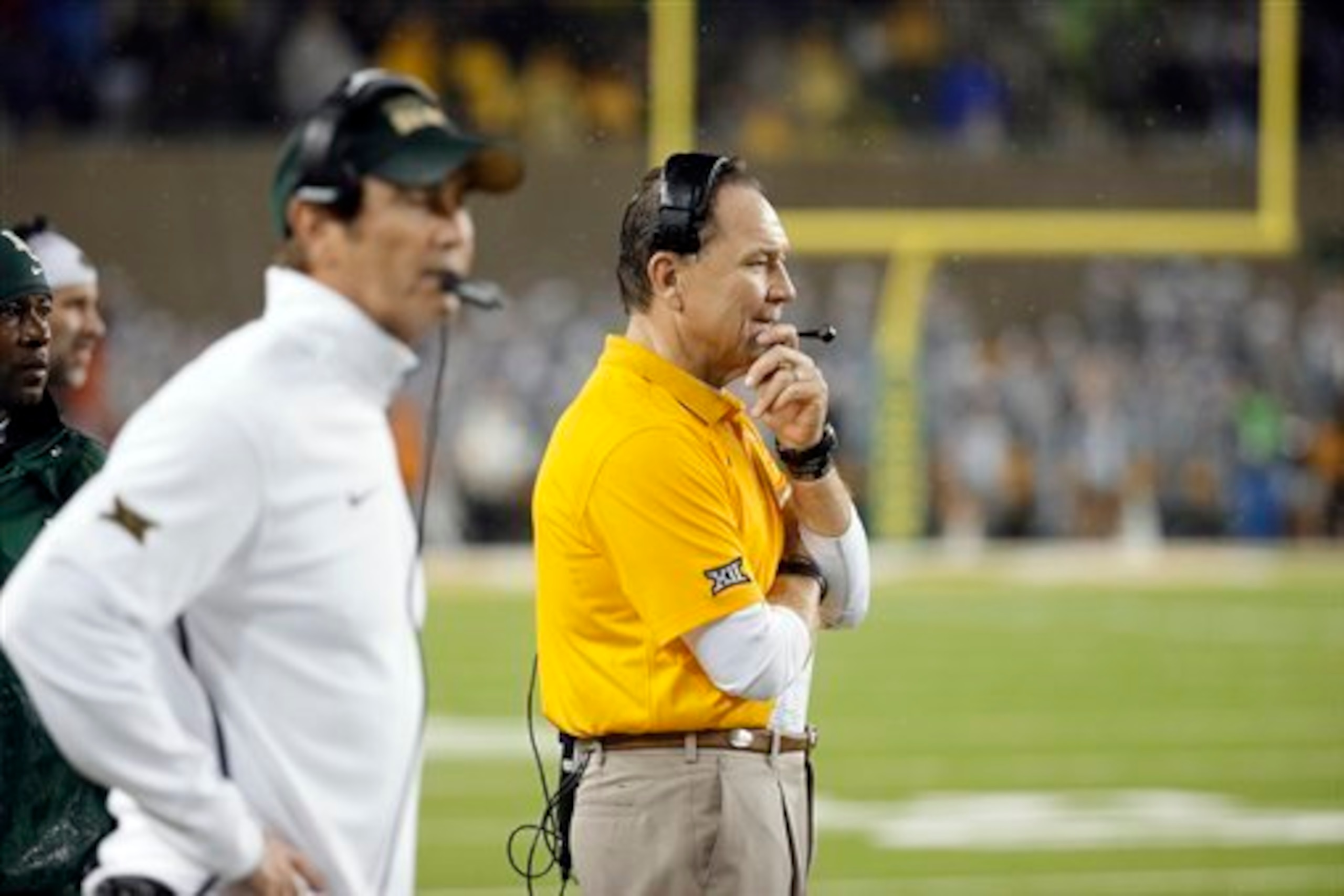
The lack of changes could be the product of complex legalities still unfolding behind the curtain. That can be the only reasonable explanation as to why more sweeping changes have yet to be announced or further details provided.
Things cannot simply stay the course—not with all that has been undone.
"Additional members of the Administration and Athletics program have also been dismissed,” per Baylor's release. “Neither the individuals nor the disciplinary actions will be publicly identified.”
The full Pepper Hamilton report, which has not been revealed, undoubtedly has names and specific transgressions regarding how the program lost its way. Without these, it is impossible to know what role members of the university played.
Perhaps Briles operated without knowledge these moments ever took place. Perhaps he played a significant role in shielding these developments from the necessary university authorities.
Whether his direct involvement is eventually revealed, this was his program. These were people he hired and trusted. Ultimately, this falls on him.
His shocking departure will undoubtedly serve as a notice to all administrators and head coaches. Given his success and previous standing—seemingly beloved by all, blessed with a level of job security matched by few—the message that no individual is bigger than the school or any action could not have been more directly articulated.
In that regard, Baylor has sent a powerful message. It has sent shock waves through a sport that has garnered the general reputation that winning trumps all.
When the NCAA eventually intervenes—a process that is still in its infancy—this message will only be further pronounced.
“Our students and their families deserve more, and we have committed our full attention to improving our processes, establishing accountability and ensuring appropriate actions are taken to support former, current and future students,” chair of the Baylor Board of Regents Richard Willis said in the release.
In some regard, Baylor has done this.
It fired its mighty, all-powerful football coach, perhaps the university’s most valuable revenue-driving asset. It did so without batting an eye, which is not something that should be glossed over.
And yet, there are still people in positions of power who will blend together the before and after—individuals who will stay on in similar or modified roles. Unless further accountability is addressed, how can Baylor fully distance itself from this situation?
It is unreasonable and unfair to assume every member of the athletic department played a part in this downfall. But in keeping members of the administration on staff and providing little context as to why, Baylor has opened this critical portion up for interpretation.
How perception of the university ultimately evolves will depend a great deal on what happens next. This was a powerful first step in starting over, but it cannot be the only step taken.
What truly happens next—not in Waco, Texas, but for those watching it all unfold from an arm's length away—will be the most everlasting. While Baylor can do everything in its power to turn its own wrongdoings into an example, real change must come naturally.
It must come from coaches, athletic directors and administrators finally recognizing that enough is enough. That winning—while critically important—is only a small portion of what defines a program and university as successful.
Adam Kramer covers college football for Bleacher Report. You can follow him on Twitter @KegsnEggs.
.jpg?w=2560 "Florida Shooting")
.png?w=2560)


.jpg?w=2560 "Latest Peyton-Colts Rumors")
.jpg?w=2560 "Ugly Jets Scoring Stat 😳")

.jpg?w=2560 "Landing Spots for Trade Candidates 📍")