

Baylor Saga Serves as Disheartening Lesson for Other College Football Programs

This is not a column about who should be fired at Baylor. We'll get there. This is a column about pulling something of substance—something everlasting—from a toxic situation.
This is about trying to salvage something (anything) from a situation in which sexual assault has become terrifyingly common at a major university and ensuring that those following along take the necessary steps to avoid a similar fate.
Following a slew of sexual assault allegations against players inside the Baylor football program dating back to 2009, there are now questions about the way these situations were reported and if anyone inside the university had prior knowledge of them before they came to light.
.png?w=2560)
ESPN's Outside the Lines has explored the issue at length, producing troubling findings with each installment of a still-developing story.
In its most recent revelation, perhaps the most damning revelation surfaced: "According to the police documents, at least some Baylor officials, including coaches, knew about many of the incidents, and most players did not miss playing time for disciplinary reasons. None of the incidents has been widely reported in the media."
Even with so much uncertainty still airborne, jobs yet to be lost, accountability to be delegated and conclusions to be made (or reestablished), the doomsday scenario in Waco, Texas, is something that all the college football programs should be keenly following.
This is a chance to ensure that things never take this turn. It's a conversation that should be taking place in offices, boardrooms and film rooms. The details that are still to emerge will ultimately quantify the outrage for many. But for the programs hoping to avoid the same dreaded fate, there have already been many lessons learned.
If there were ever a time to completely deconstruct the inner workings of a program and a university—a moment to lift up the hood and dissect a program's foundation—this is that moment.
Last September, in the wake of this disturbing trend, Baylor partnered with the law firm Pepper Hamilton LLP to investigate how the university has dealt with sexual assault claims in the past.
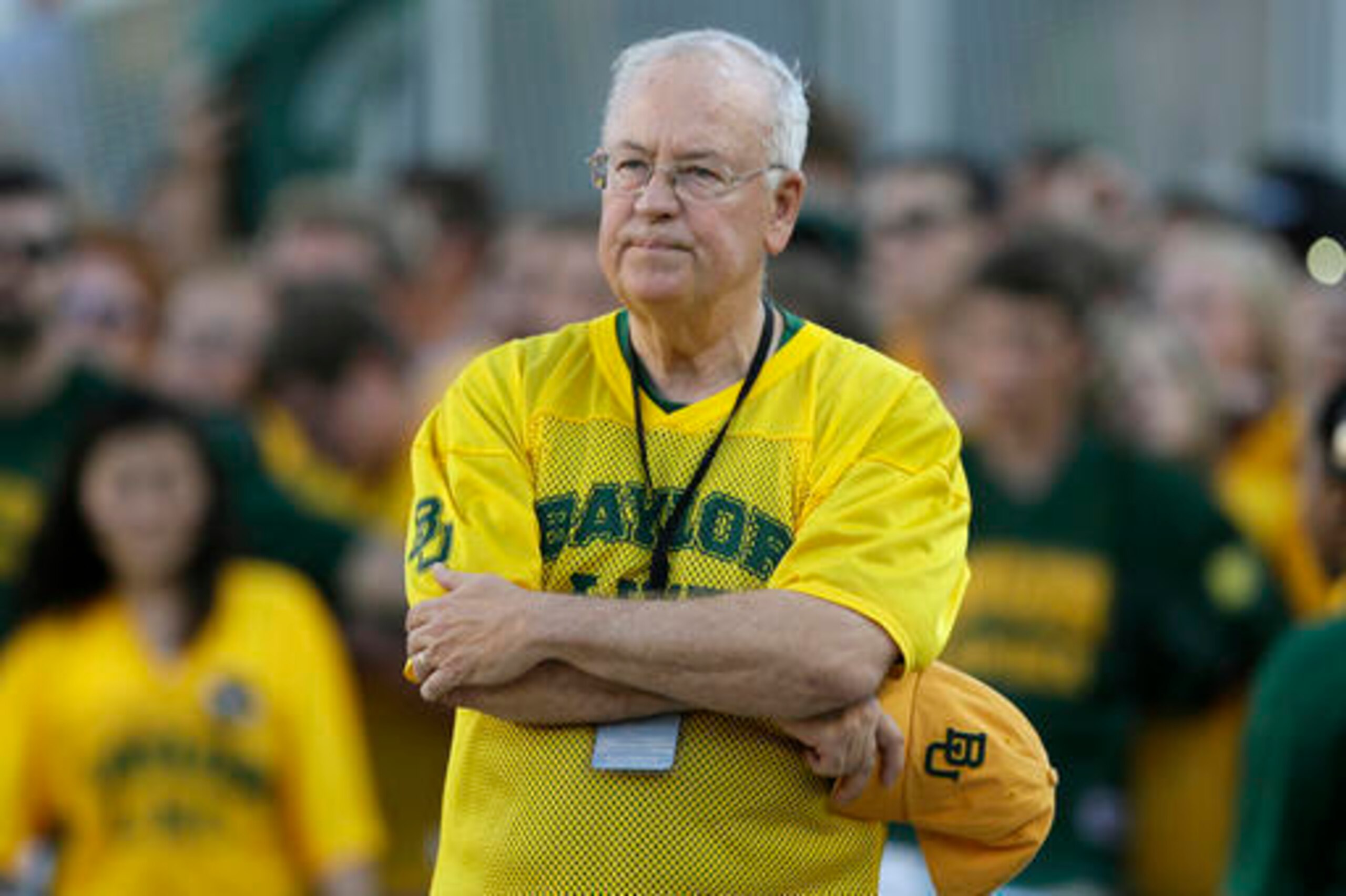
One football season and many months later, it would appear that an announcement to these findings is forthcoming. Following Tuesday's report from Chip Brown of Scout.com that Baylor president Ken Starr had been fired, Lori Fogleman, a Baylor spokeswoman, released the following statement:
"The Baylor Board of Regents continues its work to review the findings of the Pepper Hamilton investigation and we anticipate further communication will come after the Board completes its deliberations.
We will not respond to rumors, speculation or reports based on unnamed sources. But when official news is available, the University will provide it. We expect an announcement by June 3.
"
The alleged assaults involve human beings and the way justice was, or wasn't, applied in instances of criminal acts.
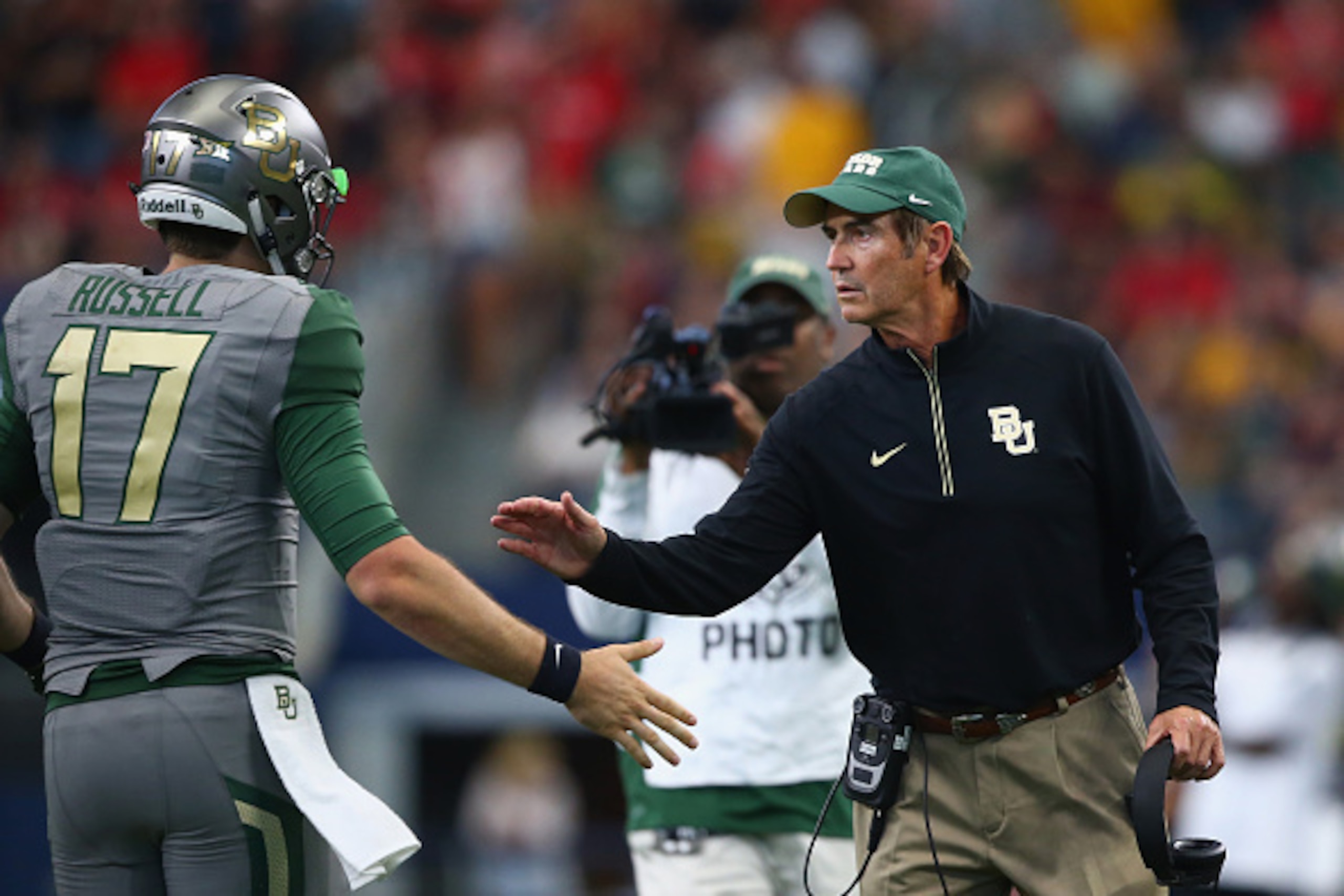
But the backdrop for it all is a big, blossoming business. It's a budding football power that has won 32 games over the past three seasons—the most successful stretch in its history—and the architect, head coach Art Briles, who has helped produce such spectacular results along with a new stadium and newfound interest in a once-dormant brand.
How these two intersect will dictate the future of a program. The questions at the center of it all are both simple and deeply important: How could these alleged atrocities have been avoided? And did individuals within the program knowingly abandon procedure, morality and justice to protect the golden goose?
Not a single firing has been made official. The very notion of quantifying punishments, legal or otherwise, has yet to truly be broached, either. And yet, the damage is already so pronounced that this will serve as a giant billboard of what college programs must avoid.
Baylor is not alone in this regard. Tennessee is involved in a wide-ranging lawsuit claiming numerous allegations of sexual assault. There are also questions about the way these situations were dealt with and the order in which information was shared. The situation is fluid, just like it is in Waco. But the residual negativity is tangible.
It shouldn't take something of this horror to trigger a response from others. And yet, there is no better time for others to look at their body of work squarely in the mirror than right now, at the eye of the storm.
No sport operates with a copycat mentality more than football. Stealing plays and concepts is not only accepted, it's essential. What works and what doesn't often drives the way the game is played. Somewhat seamlessly so, it morphs into something completely unique without anyone realizing what was taking place.
When Auburn returned a missed field goal against Alabama to win the 2013 Iron Bowl in spectacular, gut-wrenching fashion, Ohio State head coach Urban Meyer implemented the play at his weekly practice almost instantaneously.
He saw an entire season destroyed for someone else, and he wanted his team to benefit from someone else's football misfortune. It wasn't a leap of faith; it was a tactical adjustment.

If such a mentality can exist in playbooks and personnel, one can only hope that such moments of clarity can, and should, occur in other elements of the program...ones that carry far more importance than a game or even a season.
This has become the story of the offseason, trumping the boisterous satellite camp discussion with ease. What happens at Baylor matters more than anything since Penn State—more than Ole Miss and any other pressing punishment churning through the NCAA's random penalty generator.
This is the time a complete system check should take place. It begins with the coaching staff and the young men that are recruited to play at the program. This is the start of the cycle and the most integral part.
It's not just who is recruited, but what these players are taught when they're on campus. How to act. How to treat women. The price to be paid when these reasonable expectations aren't met, no matter the talent.
It only takes one player or staff member—a deplorable action from one person—to impact the perception of that university as viewed by the general population. When these actions start to add up, tendencies are formed. Perception shifts further, fair or not.
Never before has stockpiling a program with quality human beings and values felt more important than it does right now.
From there, those tasked with ensuring the program runs as planned must do their part to prevent any notion of blatant misconduct. From the university president to the athletic director to those who rarely receive air time, there must be continuity from within.
It is not the responsibility of one person to do right. Just like it's not a burden one person must carry when things go wrong. The situation at Baylor is a product of many people and many bad decisions.
Whether it's taking a moral stand or protecting the bottom line—or hopefully a combination of the two—the transgressions of someone else can serve as the building blocks for many. With so much money being poured into these programs yearly, with sponsorships and enrollment and billions of dollars at stake, this is a reminder of how much there is to lose.
It is unknown just how Baylor will be impacted on this front, although the repercussions, no matter what is determined and announced in the coming weeks and months, will be substantial.
Briles' future at Baylor will be decided soon. So will Starr's. Other coaches and administrators will be held accountable for their actions. There is no changing that; this has already been decided. But there is hope that this will stand for something more for so many others.
One couldn't view this stance as turning a negative into a positive. Not when the negative is this dark and far-reaching. Not when lives and families are impacted in a way that we could never understand. Not when the positive should be decent, common practice.
But if others are tasked to reassess their purpose, that's something to build on. It's a time to determine whether winning is getting in the way of leading a safe and reasonable business. It's a time to ensure that the people inside and outside the program are protected.
Perhaps, then, this experience can serve as an invaluable teaching experience for others, albeit one at a tremendous cost.
.jpg?w=2560 "Florida Shooting")
.png?w=2560)


.jpg?w=2560 "Latest Peyton-Colts Rumors")



.jpg?w=2560 "Ugly Jets Scoring Stat 😳")
.jpg?w=2560 "Landing Spots for Trade Candidates 📍")